
lovethailand home >Northeastern Travel Attractions >Nong Bua Lamphu Travel Attractions >Na Klang >Na Klang > Wat Santitham Banphot (Wat Phu Noi)
TL;DR: Wat Santitham Banphot (Wat Phu Noi) is located at Na Klang Subdistrict, Na Klang District, Nong Bua Lam Phu Province, open Daily, hours 08.00 – 17.00.
Wat Santitham Banphot (Wat Phu Noi)
Open Days: Daily
Opening Hours: 08.00 – 17.00
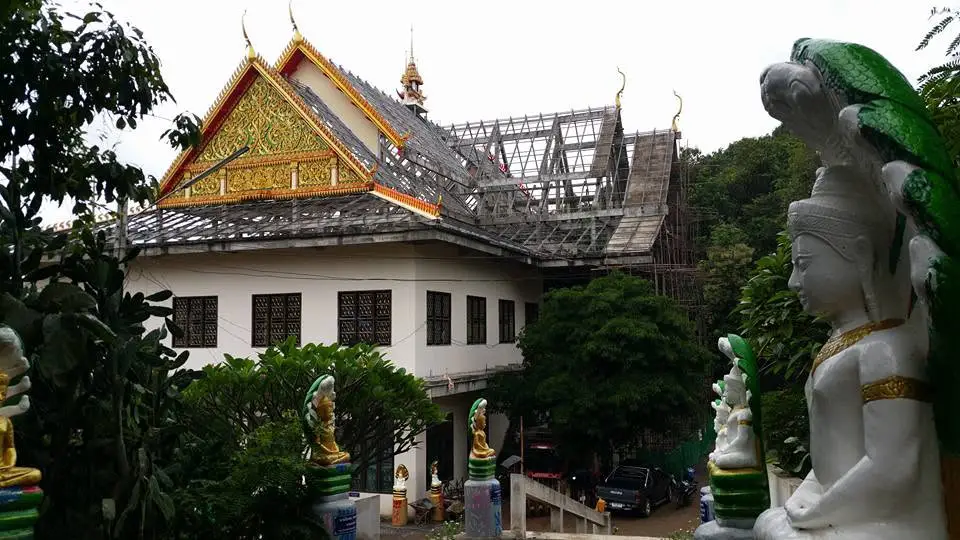
Wat Santitham Banphot, also known as Wat Pa Phu Noi, is a forest temple on Phu Noi hill in Na Klang District, Nong Bua Lam Phu Province. It is an important Buddhist, archaeological, artistic, and cultural site. The temple is known for a sacred Buddha footprint, 8 groups of ancient stone sema boundary markers placed in the 8 directions, and a peaceful forest-temple atmosphere suitable for meditation and contemplative visits. Each sema group contains 4 stone markers, and some of the markers are carved with Bodhisattva figures, forms resembling stupa finials, and other ancient designs. The temple is open daily from 08.00 to 17.00 and is suitable for travelers who want to pay respect, practice mindfulness, study ancient stone markers, and experience an important cultural site in Na Klang District.
Wat Santitham Banphot is located in Na Klang Subdistrict, Na Klang District, Nong Bua Lam Phu Province. It is widely known by local people as Wat Pa Phu Noi because it stands on Phu Noi, a small hill in the Ban Phu Noi area. The hilltop location gives the temple a different character from ordinary lowland temples. Visitors experience the site through a combination of forest atmosphere, steps, hillside paths, archaeological traces, and a sense of sacred elevation. This makes the temple suitable not only for sightseeing, but also for quiet reflection, meditation, and learning about the relationship between Buddhism, landscape, and ancient sacred space.
The importance of Wat Santitham Banphot does not come only from its quiet forest setting. It also comes from the archaeological value of Phu Noi. The ancient stone sema markers found here are major evidence of the area’s historical and religious significance. In Buddhist tradition, sema markers are used to define a sacred boundary for monastic rites. The presence of many sema groups on Phu Noi shows that this area was once a carefully organized sacred site. The arrangement may also reflect a relationship with an older religious complex or sacred structure, before the area continued its spiritual role as a forest temple in the present day.
The stone sema markers at Wat Pa Phu Noi are arranged in 8 groups placed in the 8 directions. Each group contains 4 stone markers. This arrangement suggests a deliberate sacred layout rather than a random placement. Visitors should pay attention to the position of each group because the distribution of the markers helps reveal the structure of the ancient sacred space. Some markers are carved with Bodhisattva figures, some show forms resembling stupa finials, and some preserve details that reflect a combination of Buddhist symbolism, religious architecture, and sacred landscape on the hill.
The Bodhisattva carvings found on some sema markers make the site especially valuable in terms of Buddhist art. A Bodhisattva represents compassion, spiritual cultivation, and the ideal of working toward enlightenment for the benefit of others. The forms resembling stupa finials also show the connection between architectural symbolism and sacred boundary marking. Although the stone markers have passed through many centuries, their remaining forms still function as stone documents. They preserve traces of old faith, artistic language, and the ritual importance of this hilltop area.
Phu Noi is also meaningful as a sacred landscape. A hill naturally creates a feeling of separation from the ordinary world. In Thai and Isan religious culture, temples on hills often suggest quietness, spiritual elevation, and a place suitable for retreat. When the hill is combined with ancient sema markers, a Buddha footprint, and an annual religious festival that remains active today, Wat Santitham Banphot becomes a place where ancient sacred geography and present-day Buddhist practice meet clearly.
The name Wat Santitham Banphot matches the character of the place. “Santitham” refers to peaceful Dhamma, calmness, and spiritual serenity. “Banphot” means mountain or hill. Together, the name suggests a hill of peaceful Dhamma, a place on higher ground suitable for religious practice and mental calm. The local name Wat Pa Phu Noi is more direct and describes the geography of the site: a forest temple on Phu Noi. Both names describe the temple accurately, one through spiritual meaning and the other through place identity.
The Buddha footprint enshrined at the temple is another reason why local worshippers and visitors come to Phu Noi. In Buddhist culture, a Buddha footprint symbolizes remembrance of the Buddha, walking in the path of the Dhamma, and respectfully following the teachings. Many visitors begin their visit by paying respect to the footprint before walking to the sema-marker groups and other areas of the temple. Paying respect to a Buddha footprint on a hill also creates a strong symbolic experience: one physically ascends to a higher place while mentally turning toward the Dhamma.
Wat Santitham Banphot is particularly suitable for meditation and quiet practice. Its forest setting offers a calmer atmosphere than crowded tourist temples. The hill area has trees, shade, open air, and stillness that support mindful walking and seated meditation. Visitors should not treat the temple only as a photography stop. The best way to understand Wat Pa Phu Noi is to slow down, walk quietly, observe the ancient stones, and allow the atmosphere of the forest temple to settle the mind.
The temple is also well known for the Tak Bat Thewo Rohana tradition, held annually after the end of Buddhist Lent on the first waning-moon day of the 11th lunar month. This ceremony reenacts the Buddhist story of the Buddha descending from Tavatimsa Heaven after teaching the Dhamma to his mother. At Wat Santitham Banphot, the hilltop setting makes this tradition especially vivid. Monks descend the temple steps from Phu Noi to receive alms from the people waiting below, creating a powerful religious image that links the landscape with Buddhist narrative.
The Tak Bat Thewo Rohana ceremony at Wat Santitham Banphot is distinctive because the natural topography of the temple becomes part of the ritual. The monks descending from the hill evoke the image of the Buddha’s descent from heaven. The difference in elevation between the upper temple area and the lower gathering area is not merely physical. It becomes part of the ceremony’s meaning. This makes the annual event visually memorable and spiritually meaningful for local people and visitors.
The festival also includes a procession that reenacts the Buddhist narrative. The procession may include symbolic figures such as devas, celestial beings, Indra, and a procession carrying a Buddha image down from the top of Phu Noi. These elements make the story accessible to people of all ages, including children, students, and travelers who may not know the details of Buddhist cosmology. The event is therefore both a merit-making ceremony and a cultural learning space for the Na Klang community.
The annual tradition reflects strong cooperation among monks, local leaders, Na Klang Municipality, government offices, local administrative organizations, village leaders, merchants, community elders, and the general public. The gathering of many people turns the temple into a living center of faith. Wat Santitham Banphot therefore functions not only as a forest temple and archaeological site, but also as a community stage where Buddhist belief, local identity, and cultural continuity are expressed every year.
Phra Athikan Patonrit Khambhirapanyo, also known as Phra Ajarn Nueng, is the abbot of Wat Santitham Banphot. His role and the support of the monastic community are important for maintaining the forest temple, the archaeological area, the hill path, annual religious events, and the general atmosphere of practice. A forest temple that also contains ancient remains must be cared for continuously. Religious life, cleanliness, visitor order, and cultural preservation all have to work together in order to protect the temple for the future.
When arriving at the temple, visitors should begin from the lower area and gradually walk up toward the important parts of Phu Noi. The climb should be taken carefully, especially during the rainy season or after rainfall, because steps and paths can become slippery. Important areas include the Buddha footprint, the ancient stone sema-marker groups, meditation areas, and the spaces used during the Tak Bat Thewo Rohana ceremony. Visitors should walk quietly and avoid disturbing monks, local worshippers, or people who come for meditation.
The charm of Wat Santitham Banphot lies in the combination of 3 dimensions: nature, Buddhism, and archaeology. Nature gives the temple its calmness. Buddhism brings people to the site through faith and practice. Archaeology gives the hill historical depth. The sema markers are not merely old stones; they connect the past with the present. The Buddha footprint is not only an object of worship; it symbolizes walking in the path of the Dhamma. The Tak Bat Thewo Rohana tradition is not only an annual event; it brings the hill, the temple, and the community together through a living ritual.
For travelers interested in Isan art history, Wat Pa Phu Noi deserves careful attention. The stone sema markers reflect ancient forms of sacred boundary marking. Their arrangement in 8 groups, each with 4 markers, is an important feature for understanding the structure of the old sacred area. Some markers display Bodhisattva carvings, some resemble stupa finials, and some preserve inscriptions or ritual traces. Visitors who want to study these details should walk slowly, observe respectfully, and avoid touching the ancient stones unnecessarily.
Proper conduct is important when visiting the temple. Visitors should dress modestly, wear shoes suitable for walking up a hill, avoid loud noise, avoid playing music, keep the area clean, and never climb on or stand on the sema stones. Writing on ancient objects, moving stones, or disturbing any part of the archaeological area is inappropriate. Families visiting with children should supervise them closely because the site has steps and hill paths. Respectful behavior helps protect both the sacred atmosphere and the cultural heritage of the temple.
Getting There is straightforward by Highway 210 on the Nong Bua Lam Phu – Loei route. When reaching Na Klang Municipality, turn left and continue for about 1.5 km. The temple is about 30 km from Mueang Nong Bua Lam Phu. The route is suitable for private cars or local hired vehicles. Travelers coming from Nong Bua Lam Phu town can drive toward Na Klang, while those coming from Loei can also use Highway 210 to reach the Na Klang area before continuing to the temple.
Visitors should allow at least 1 hour for worship, walking to the important points, and viewing the sema markers. Those who want to observe the stones in detail or spend time in meditation should allow 2 hours or more. The best times to visit are morning and late afternoon because the weather is more comfortable for walking up Phu Noi. Midday visits are possible, but visitors should bring drinking water, sun protection, and appropriate clothing while still respecting the temple setting.
Travelers interested in local tradition should plan a visit during the period after the end of Buddhist Lent, on the first waning-moon day of the 11th lunar month, when the annual Tak Bat Thewo Rohana ceremony takes place. The atmosphere during the festival is very different from ordinary days. Large numbers of people gather, a Buddhist narrative procession is held, and monks descend the temple steps to receive alms. Visiting during the festival reveals the temple’s role as a living center of local faith. Visiting on ordinary days offers a quieter forest-temple and archaeological experience.
The temple area can be understood through several zones: the lower entrance and gathering area, the steps or path up Phu Noi, the Buddha footprint area, the 8 groups of ancient stone sema markers, the meditation and forest-temple area, the natural shaded zones, and the ceremonial area used during the annual Tak Bat Thewo Rohana festival. Understanding these zones helps visitors plan the visit in a logical sequence and avoid missing the main points of the site.
Wat Santitham Banphot is suitable for many types of travelers. Merit-making visitors can pay respect to the Buddha footprint and make offerings. History lovers can study the stone sema markers and the old sacred landscape. Cultural travelers can visit during the Tak Bat Thewo Rohana ceremony. Nature-oriented visitors can enjoy the hill and forest atmosphere. Those seeking a quiet place for practice can use the temple as a space for reflection and mindfulness.
A travel route around Na Klang District can begin at Wat Santitham Banphot in the morning, then continue to Lam Phaniang Canal, Wat Phu Pha Yao, Wat Phu Thua Thong, or Tham Pha Cho according to available time. Visitors continuing toward Mueang Nong Bua Lam Phu can add Wat Si Khun Mueang, King Naresuan Shrine, Thao To Waterfall Forest Park, or the 150 Million Year Old Stone Shell Museum. This route provides a good combination of forest temple, archaeology, nature, and provincial history.
Restaurants and accommodations around the temple are mostly located in Na Klang town and along the main road. Visitors should plan meals before or after the temple visit. Local restaurants, cafes, and small food shops can be found in the Na Klang area. Accommodation options include small resorts and local hotels suitable for travelers who want to stay near the Nong Bua Lam Phu – Loei route. Those who want more choices can stay in Mueang Nong Bua Lam Phu and visit the temple as a half-day trip.
Wat Santitham Banphot gives visitors a complete experience of calmness, faith, and historical learning. The Buddha footprint provides a focus for devotion. The stone sema markers reveal the ancient sacred significance of Phu Noi. The forest-temple atmosphere supports mindfulness. The Tak Bat Thewo Rohana ceremony shows how the hill landscape can become a living stage for Buddhist narrative and community faith. This is why the temple should not be seen merely as a hilltop temple, but as an important cultural and spiritual landmark of Nong Bua Lam Phu.
In summary, Wat Santitham Banphot or Wat Pa Phu Noi is one of the most meaningful places to visit in Na Klang District. It brings together a Buddha footprint, 8 groups of ancient stone sema markers, hilltop forest-temple atmosphere, archaeological traces, meditation space, and the annual Tak Bat Thewo Rohana tradition after Buddhist Lent. Visitors who want to gain the most from the site should come respectfully, walk slowly, observe the ancient markers carefully, and treat the temple and its heritage with care.
| Name | Wat Santitham Banphot, Also Known As Wat Pa Phu Noi |
| Location | Na Klang Subdistrict, Na Klang District, Nong Bua Lam Phu Province |
| Address | Ban Phu Noi, Na Klang Subdistrict, Na Klang District, Nong Bua Lam Phu 39170, Thailand |
| Highlights | Buddha footprint, 8 groups of ancient stone sema markers on Phu Noi hill, forest-temple atmosphere, and the annual Tak Bat Thewo Rohana tradition after Buddhist Lent |
| History | A hilltop sacred site with ancient stone sema markers, associated with an old religious landscape and traces of ancient Khmer-related and Buddhist sacred space |
| Name Origin | Wat Santitham Banphot means a mountain of peaceful Dhamma, while Wat Pa Phu Noi refers to the forest temple located on Phu Noi hill |
| Distinctive Features | A forest temple on a hill suitable for meditation, with a Buddha footprint, ancient sema markers, and an important local Buddhist festival |
| Important Archaeological Elements | 8 groups of stone sema markers placed in the 8 directions, each group containing 4 markers; some markers are carved with Bodhisattva figures, stupa-like forms, and inscriptions |
| Travel Information | Take Highway 210 on the Nong Bua Lam Phu – Loei route. At Na Klang Municipality, turn left and continue about 1.5 km. The temple is about 30 km from Mueang Nong Bua Lam Phu |
| Current Status | An active forest temple, religious site, archaeological area, and annual Tak Bat Thewo Rohana ceremony venue of Na Klang District |
| Open Days | Daily |
| Opening Hours | 08.00 – 17.00 |
| Fees | No general admission fee for worship and normal visits |
| Facilities | Worship area, meditation area, steps and path up Phu Noi, religious activity courtyard, parking area around the temple, and viewing areas for the ancient stone sema markers |
| Main Areas / Zones | 1. Lower entrance and temple courtyard 2. Steps and path up Phu Noi hill 3. Buddha footprint area 4. 8 groups of ancient stone sema markers 5. Forest-temple meditation area 6. Tak Bat Thewo Rohana ceremony area |
| Abbot / Caretaker | Phra Athikan Patonrit Khambhirapanyo, Also Known As Phra Ajarn Nueng |
| Main Contact Number | 084-175-3613 |
| Official Website / Official Page | Wat Santitham Banphot Phu Noi, Na Klang District, Nong Bua Lam Phu Facebook Page |
| Important Tradition | Tak Bat Thewo Rohana ceremony, held annually after Buddhist Lent on the first waning-moon day of the 11th lunar month, with a Buddhist narrative procession and monks descending the temple steps to receive alms |
| Nearby Tourist Attractions | 1. Lam Phaniang Canal, about 4 km 2. Wat Phu Pha Yao, about 10 km 3. Wat Phu Thua Thong, about 11 km 4. Tham Pha Cho, about 12 km 5. Wat Siri Buntham, about 14 km 6. Wat Tham Erawan, about 23 km |
| Nearby Restaurants | 1. Thung Na @ 9DEE Cafe, about 4 km 2. Por Piang Cafe, Ban Kut Hae, about 8 km, Tel. 089-896-9487 3. Ban Yai Boon, about 6 km, Tel. 093-276-7844 4. Restaurants in Na Klang Municipality Area, about 2 km 5. Local Food Shops Along Highway 210, Na Klang Area, about 2 km |
| Nearby Accommodations | 1. Tontan Resort Nong Bua Lam Phu, about 4 km, Tel. 092-282-3613 2. Khamkoon Resort, about 8 km 3. Pialo Resort Na Klang, about 5 km 4. Sakae Thong Resort, about 6 km 5. Sabye Dee Resort Na Klang, about 4 km |
Frequently Asked Questions (FAQ)
Q: Where is Wat Santitham Banphot or Wat Pa Phu Noi located?
A: Wat Santitham Banphot or Wat Pa Phu Noi is located in Ban Phu Noi, Na Klang Subdistrict, Na Klang District, Nong Bua Lam Phu Province, about 30 km from Mueang Nong Bua Lam Phu.
Q: What are the opening days and hours of Wat Santitham Banphot?
A: The temple is open daily from 08.00 to 17.00.
Q: Is there an admission fee for Wat Santitham Banphot?
A: There is no general admission fee for worship and normal visits. Visitors may make donations according to personal faith.
Q: What is the main highlight of Wat Pa Phu Noi?
A: The main highlights are the Buddha footprint, 8 groups of ancient stone sema markers placed in the 8 directions, the hilltop forest-temple atmosphere, and the annual Tak Bat Thewo Rohana tradition after Buddhist Lent.
Q: Why are the stone sema markers at Wat Pa Phu Noi important?
A: The sema markers are important archaeological evidence. There are 8 groups, each with 4 markers. Some are carved with Bodhisattva figures, stupa-like forms, and inscriptions, showing the sacred importance of Phu Noi in the past.
Q: Who is the abbot of Wat Santitham Banphot?
A: The abbot is Phra Athikan Patonrit Khambhirapanyo, also known as Phra Ajarn Nueng.
Q: When is the Tak Bat Thewo Rohana ceremony at Wat Santitham Banphot held?
A: The ceremony is held annually after Buddhist Lent on the first waning-moon day of the 11th lunar month. Monks descend the temple steps to receive alms, accompanied by a Buddhist narrative procession.
Q: What should visitors prepare before visiting Wat Santitham Banphot?
A: Visitors should dress modestly, wear shoes suitable for walking uphill, bring drinking water in hot weather, behave respectfully, and avoid touching or climbing on the ancient stone sema markers and archaeological remains.
 Category: ●Places of Worship
 Group: ●Temple
Last Update : 1 MonthAgo
 Last Update : 1 MonthAgo
 Click to Access the Navigation Map GPS
Wat Santitham Banphot (Wat Phu Noi) Map

 Art, Culture and Heritage
 Historical Sites and Monuments(4)
 Landmarks and Memorials(1)
 Art, Craft Centres, Tradition(1)
 Museums(3)
Temple(10)
Museums(3)
Temple(10)
 Other Sacred Sites(6)
 Suburban Living
 Village, Community(3)
 Nature and Wildlife
 National Parks and Marine Reserves(3)
 Mountain (Doi)(5)
 Dam, Reservoir, Lake(5)
 Waterfalls(1)
 Caves(6)
 River, Canal(2)
 Bays and Beaches(1)
 Other natural attractions(3)


