
lovethailand home >Northeastern Travel Attractions >Nakhon Phanom Travel Attractions >Na Kae >Na Kae > Phra That Si Khun
TL;DR: Phra That Si Khun is located at Ban Na Kae Noi, Moo 3, Na Kae Subdistrict, Na Kae District, Nakhon Phanom Province 48130, Thailand, open Daily, hours 08:00–18:00.
Phra That Si Khun
Open Days: Daily
Opening Hours: 08:00–18:00
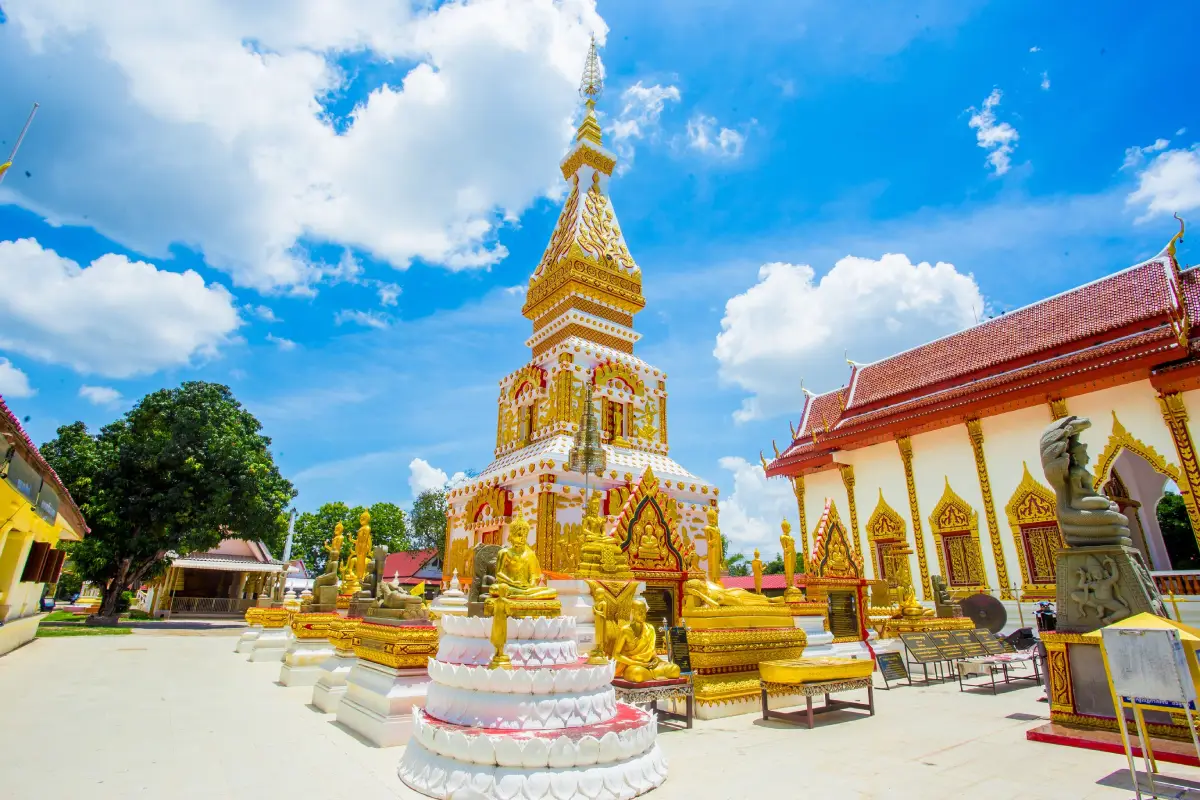
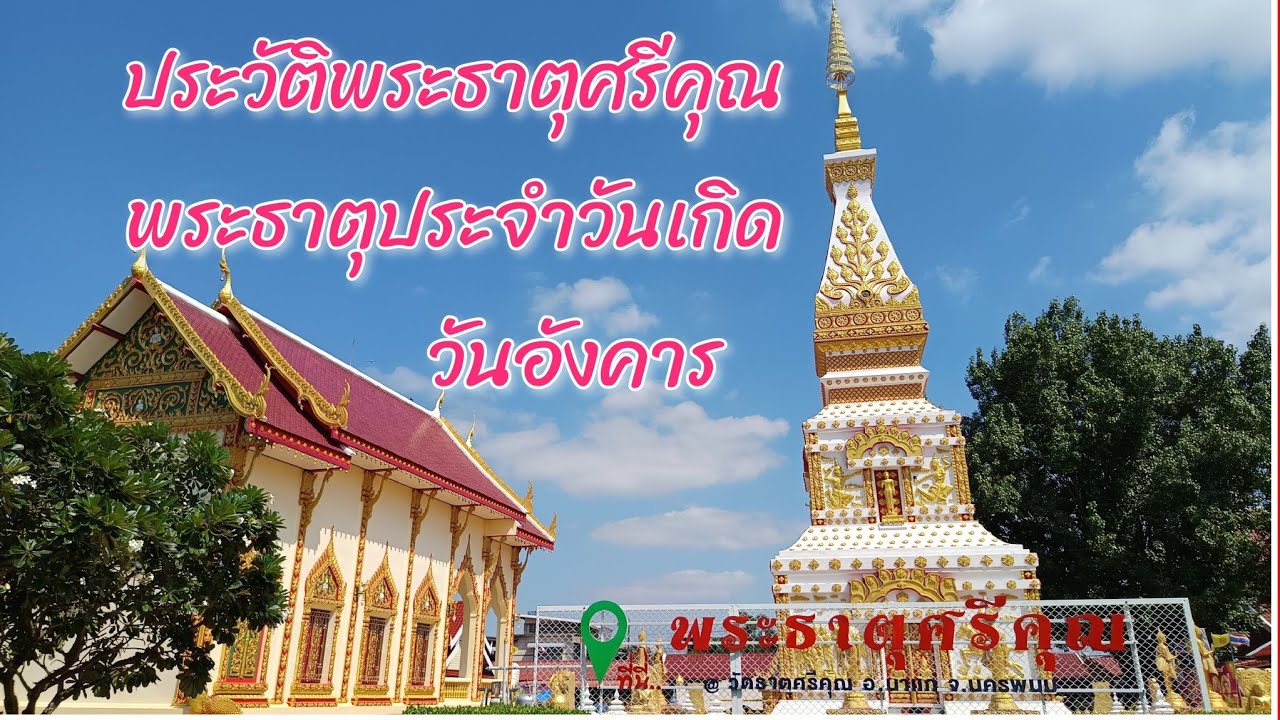
Phra That Si Khun in Nakhon Phanom Province, also written as Phra That Si Khun or Phra That Si Koon in different Romanisation systems, is enshrined within Wat That Si Khun at Ban Na Kae Noi, Na Kae Subdistrict, Na Kae District. It is the principal sacred monument of the local community and one of the eight birthday stupas associated with the days of the week in Nakhon Phanom. Phra That Si Khun represents Tuesday and is especially respected by people born on that day. The approximately 24-metre-high square stupa resembles Phra That Phanom in its upper structure, although its first level is divided into two sections and decorated with stucco reliefs, while its second level is noticeably shorter. The interior enshrines relics associated with the Venerable Maha Moggallana, Sariputta, and Maha Kaccana. The temple is open daily without an admission fee and is suitable for pilgrims, cultural travellers, historians, and visitors following the province’s eight-birthday-stupa route.
The importance of Phra That Si Khun extends beyond its identity as the Tuesday birthday stupa. The temple is connected with the settlement history of Na Kae, the migration of Phu Thai communities, and the preservation of archaeological evidence from different historical periods. From the main courtyard, the stupa rises as the visual and spiritual centre of the compound. Nearby are an ordination hall, ancient stone boundary markers, a preaching hall, a reclining Buddha carved from an old santol tree, and multi-headed naga sculptures reflecting the religious culture of the Mekong region. A visit should therefore include more than a brief prayer at the main stupa. Taking time to explore the entire compound reveals how architecture, archaeology, local history, and continuing Buddhist practice remain connected.
Wat That Si Khun stands at Ban Na Kae Noi, an old community within Na Kae District. The surrounding district lies between agricultural plains, the Kam River basin, and the Phu Phan mountain range, giving the area a distinctive combination of cultural heritage and natural scenery. Both the spellings “Si Khun” and “Si Koon” appear in signs, maps, and tourism information. The official religious name commonly used today is Wat That Si Khun, while the “Si Koon” form remains popular because the word koon suggests multiplication or an increase in dignity and good fortune, corresponding with local beliefs about the merit gained from worshipping the stupa.
The temple began as an abandoned religious site hidden in forest. No surviving inscription identifies the original construction date of the earliest stupa. Local accounts record that the monument was rediscovered between approximately 1797 and 1817 by Phu Thai Wang and Phu Thai Kapo migrants who had crossed from territories east of the Mekong and were searching for a place to establish a settlement. Leaders remembered in the community narrative include Nai Som Phaeo, Nai On, and Nai Cha. While surveying the area, they found an old brick-and-plaster stupa with a base measuring approximately 12 metres across. The damaged structure leaned toward the northwest and had an overall form reminiscent of Phra That Phanom.
The settlers also discovered a structure locally called Hor Khun, a guardian shrine or sacred pavilion made from large hardwood logs. Finding both the ruined stupa and Hor Khun in the same area convinced the community that the site possessed religious and social significance. After confirming that the surrounding land and water sources were suitable, families moved into the area, cleared land for farming, built homes, and restored the abandoned temple. The re-establishment of Wat That Si Khun was therefore directly linked with the establishment of the early Na Kae community.
Local tradition explains the temple’s name through three words. “That” is the northeastern Thai and Mekong-region term for a stupa containing sacred relics. “Si” is linked in oral history with a place where elephants once rubbed their bodies against trees to relieve an itch. “Khun” refers to the Hor Khun shrine found near the ancient monument. Together, the words became That Si Khun, interpreted by local residents as a temple containing a dignified stupa that brings religious merit and benefit to the community.
Residents restored the temple and stupa in several stages. Local and provincial records mention restoration during the late nineteenth century, followed by major reconstruction during the mid-twentieth century. Between the 1940s and 1950s, a new stupa was constructed around the surviving base of the earlier monument. Building around the original core allowed the community to preserve the sacred location without completely removing the older structure. The stupa visible today should therefore be understood as the result of several periods of devotion rather than a monument completed in a single construction phase.
On 20 January 1947, officials and local leaders brought relics from India for the people of Na Kae to worship. These were identified with three leading disciples of the Buddha: Maha Moggallana, Sariputta, and Maha Kaccana. After reconstruction, the relics were enshrined inside Phra That Si Khun together with sacred objects discovered around the old base. This event strengthened the status of the site as a major Buddhist monument and transformed it into a place where devotees could pay respect to relics associated with the Buddha’s eminent disciples.
Excavation during the restoration revealed numerous religious objects, including metal Buddha images, stone sculptures, powdered-material images, and other sacred items. After construction was completed, these objects were placed inside the new stupa. This practice followed a regional tradition in which material connected with an earlier monument was retained within the rebuilt structure. Phra That Si Khun therefore acts as a layered historical record, preserving archaeological objects, religious memory, and the contributions of several generations within a single sacred monument.
The architecture of Phra That Si Khun is visibly related to Phra That Phanom, the influential prototype for many stupas in Nakhon Phanom Province. The monument is approximately 24 metres high and rises from a square base toward a slender upper spire and finial. Its first level contains two distinct sections decorated with stucco motifs, creating a more segmented base than that of Phra That Phanom. The second level is shorter and more compact, while the overall vertical profile remains clearly recognisable. White surfaces, gold details, and coloured ornamentation allow the stupa to stand out against the open courtyard and surrounding temple buildings.
The main orientation is toward the southeast, a direction associated with Tuesday in the local birthday-stupa system. Buddha images positioned around the monument allow devotees to worship from several directions and create an impression that the sacred relics are symbolically protected. Local interpretations connect the monument’s direction, height, and design with the strength, courage, and determination traditionally attributed to Tuesday-born people.
Although the stupa is particularly associated with Tuesday, visitors born on any day are welcome to worship here. Local belief holds that paying respect at Phra That Si Khun increases dignity, wisdom, determination, professional progress, and the ability to overcome difficult competition. These beliefs form part of the temple’s living spiritual culture rather than a restriction based on the visitor’s birthday. Travellers may respectfully pray for stability, education, work, courage, or clarity of mind regardless of the day on which they were born.
The connection with Tuesday also relates to the reclining Buddha posture traditionally assigned to that day in Thai Buddhist custom. A reclining Buddha rests on the right side with the head supported by the right hand. The image represents calm awareness, composure, and the Buddha’s complete control of mind. Tuesday-born personalities are often described in popular belief as energetic, decisive, and strong-willed. The reclining posture provides a complementary lesson: strength should be guided by mindfulness, compassion, and careful judgement.
Common offerings include flowers, incense, candles, puffed rice, scented water, and simple devotional items available locally. Pink flowers are popular among Tuesday-born worshippers because pink is associated with Tuesday in Thai colour symbolism. Some local practices use four incense sticks and two white candles. Elaborate offerings are not necessary. Visitors should focus on respectful behaviour, quiet concentration, and placing offerings only in areas designated by the temple.
A suitable sequence begins by paying respect at the main worship point and then walking clockwise around the stupa three times if conditions permit. Visitors who cannot use incense may simply make a wai and contemplate the Triple Gem. During circumambulation, remain quiet, do not cross directly in front of people who are praying, and avoid touching stucco decoration or architectural surfaces. The three circuits should be treated as a period of reflection rather than a task to be completed as quickly as possible.
The ordination hall near the stupa is surrounded by 11 ancient stone sema boundary markers. These include both undecorated stones and examples carved with Buddhist symbols such as stupas, the purnaghata or overflowing vessel, lotus petals, and bead-divider patterns. Their style has been classified within the Dvaravati period, approximately the fourteenth to sixteenth Buddhist centuries, making them more than one thousand years old. The stones demonstrate that Na Kae possessed religious importance long before the development of the modern settlement.
Sema stones define the sacred boundary of an ordination hall where formal monastic ceremonies take place. The placement of the stones in relation to the eight directions reflects an established spatial system, while the total of 11 indicates that more than one marker may have been installed at certain points. Visitors should observe the stones without climbing, sitting, leaning, or rubbing the carved surfaces. Continuous contact and skin oils can gradually damage ancient stone.
Multi-headed naga sculptures near the ordination hall contribute to the distinctive religious atmosphere of the Mekong region. Nagas appear throughout temples in Nakhon Phanom and northeastern Thailand as protectors of Buddhism, symbols of water, fertility, and the relationship between communities along the Mekong River. At Wat That Si Khun, the naga imagery links the temple with the wider cultural landscape of the Kam River, the Mekong, and the Phu Phan mountains.
Another major object of worship is the reclining Buddha known as Phra Phuttha Chao Yai Ong Tong Saen Suk, enshrined in the preaching hall. The image was carved from an entire santol tree, locally called ton mak tong, which had grown in the temple for nearly 200 years. The tree was almost 10 metres high with a trunk circumference of approximately 3 metres. After it fell during a storm in 2016, the abbot, monks, and residents decided to preserve its value by transforming the trunk into a reclining Buddha rather than allowing the wood to decay.
The wooden image is approximately 1 metre high and 3 metres long. Its fine grain and natural colour remain visible across the carved surface. Creating a Buddha image from a tree that had shaded the temple for generations carries an important message about renewal. Something damaged by a natural event became a lasting object of faith. The reclining posture also complements the temple’s role as the Tuesday birthday stupa, allowing Tuesday-born devotees to worship both the sacred stupa and their associated Buddha posture within the same compound.
The carving project was initiated under the guidance of Phra Khru Bowon Phothiwat and the temple’s monastic community with support from local residents. It demonstrates the temple’s role in preserving Buddhism and community memory. The old tree did not disappear after falling but continued in a new form as Buddhist art. Its story offers lessons about impermanence, respect for natural resources, and the transformation of loss into something beneficial to the wider community.
Wat That Si Khun remains an active centre of Buddhist practice. Regular activities include merit-making on Buddhist observance days, chanting, meditation, sermons, community ceremonies, and moral-development programmes. The temple has also served as a recognised provincial meditation centre. Visitors who wish to join an organised retreat should contact the temple in advance because schedules, accommodation, and regulations vary according to the monastic calendar.
The Abbot and Caretaker is Phra Khru Bowon Phothiwat, also recorded as Phra Khru Bowon Phothiwat Prayun, who serves as abbot of Wat That Si Khun and ecclesiastical district chief of Na Kae. Resident monks assist in caring for the stupa, religious buildings, ceremonies, and public activities. Conservation of the stupa, ancient sema stones, and temple landscape requires cooperation between the monastic community, cultural agencies, local government, and residents. Visitors should follow all signs and monastic instructions, especially when restoration or large events are taking place.
The annual Phra That Si Khun worship festival is one of Na Kae District’s most important traditions. It is held together with the Bun Maha Chat or Bun Pha Wet festival during the fourth lunar month, so the Gregorian dates change each year. In 2026, the event took place from 2 to 5 March. Activities included worship ceremonies, Buddhist merit-making, the Vessantara Jataka sermon, cultural performances, local products, community food, and events organised by district agencies. The festival continues to unite religion, local culture, tourism, and community enterprise.
Bun Maha Chat centres on the recitation of the Vessantara Jataka, the story illustrating generosity, sacrifice, and the cultivation of spiritual perfection. In northeastern Thailand, Bun Pha Wet is one of the annual Heet Sip Song traditions. Combining the sermon festival with the worship of Phra That Si Khun allows residents to pay respect to the relics, listen to Buddhist teaching, make merit, and reunite with relatives. Travellers seeking a lively cultural experience should attend during the annual event, while those wishing to study architecture and archaeology in peace should visit on an ordinary weekday morning.
On normal days the compound is quiet and welcoming. The open courtyard provides clear views of the stupa from several directions. Morning temperatures are comfortable for worship, while late-afternoon light enhances the gold and coloured details of the monument. The cool season from November to February is the most comfortable period for walking around the site. During the hot season, avoid the middle of the day because the paved courtyard becomes very warm. Rainy-season visitors should bring an umbrella and wear footwear suitable for slippery surfaces.
The temple can be understood through several functional areas. The first is the main stupa and circumambulation courtyard. The second is the ordination hall and Dvaravati sema stones. The third is the preaching hall containing the reclining wooden Buddha. The fourth includes Buddha images and naga sculptures around the religious buildings. The fifth consists of monastic residences and meditation areas, which should not be entered without permission. Understanding these areas helps visitors explore the temple without interrupting worship or monastic life.
A practical visit begins at the designated parking area, followed by worship at the main stupa. After circumambulation, visitors can observe the ordination hall and ancient sema stones, continue to the preaching hall to pay respect to the wooden reclining Buddha, and finish by reading available information or resting in the courtyard. Allow approximately 60 to 90 minutes for a relaxed visit. During the annual festival, at least two to three hours are recommended because of ceremonies, markets, and performances.
Visitors should wear clothing that covers the shoulders and knees, speak quietly, and silence mobile phones inside religious buildings. Remove footwear where indicated. Never climb the stupa base, sit on sema stones, touch archaeological carvings, or pose in an inappropriate manner directly against a Buddha image. Ask permission before photographing monks, ceremonies, or individuals engaged in private worship.
Drone use requires prior permission from the temple and compliance with Thai aviation regulations. Drone noise can disturb monks, meditators, and worshippers, while flying over crowds during festivals creates a safety risk. Good ground-level photographs can be taken from the front and side courtyards, where the stupa, ordination hall, and naga sculptures can be framed without entering restricted areas.
No ticket is required and there is no admission fee. Visitors may make a voluntary donation through official donation boxes or other channels designated by the temple. Donations support utilities, maintenance, monastic education, restoration, and community activities. Do not attach banknotes to the stupa or place money directly on Buddha images, as this can stain and damage religious surfaces.
Facilities include parking, rest areas, worship points, toilets, and temporary stalls selling flowers or refreshments during busy periods. Additional food and community-product stalls are arranged during the annual festival. The courtyard is relatively accessible for elderly visitors, although several buildings have steps. Wheelchair users should travel with assistance and check access to the preaching and ordination halls on arrival.
Getting There from That Phanom, follow Highway 212 for approximately 7 kilometres before joining Highway 223 toward Na Kae for about 20 kilometres. Once in Na Kae, follow signs to Ban Na Kae Noi and Wat That Si Khun. The total road distance from Wat Phra That Phanom is approximately 27 kilometres and the drive normally takes 30–40 minutes. The route is paved and suitable for cars and motorcycles.
From Nakhon Phanom city, take Highway 212 south through That Phanom and continue via Highway 223 into Na Kae District. The journey is approximately 75 kilometres and takes around 1 hour 15 minutes to 1 hour 30 minutes. A full-day itinerary may combine the Nakhon Phanom riverfront, Wat Phra That Phanom, Phra That Si Khun, and natural attractions around Na Kae.
Travellers approaching from Sakon Nakhon can use Highway 223 toward Na Kae and navigate directly to coordinates 16.944639, 104.496611. The route passes agricultural communities, and drivers should watch for motorcycles, local vehicles, and farm machinery, especially in the evening. Public transport within Na Kae is limited, so a rental car or vehicle with a driver is the most convenient choice for travellers visiting several locations.
A half-day local route can combine Phra That Si Khun with Huai Si Khun Reservoir and Wat Phu Phan Udom Tham at Dan Sao Khoi. A full-day route may add Wat Tham Phra Wet, Phra That Pho Thong, or Wat Tham Sung Doi Sawan. These places demonstrate the diversity of Na Kae, from sacred stupas and archaeological remains to forest temples, caves, rock plateaus, and mountain viewpoints.
Dan Sao Khoi is associated with an old story of young men and women meeting while travelling to collect forest products. Its rock plateau on the Phu Phan range offers broad views of the surrounding landscape. Road conditions should be checked during the rainy season. Wat Tham Sung Doi Sawan occupies higher ground and is known for mountain scenery and meditation. Travellers visiting these natural sites should carry water, wear footwear with good traction, and remove all rubbish.
Na Kae offers northeastern Thai food, casual restaurants, coffee shops, and contemporary cafés. Yuu Cafe is located within the town, while Home Specialty Coffee and Roaster appeals to coffee enthusiasts. Wow Steak and Coffee provides substantial meals, and MER’NA Cafe and Restaurant offers a rural atmosphere. Operating schedules may change, so calling in advance is recommended, especially for groups or travellers arriving late in the day.
Nearby accommodation consists mainly of small hotels and resorts, including Amonrat Place Nakae, Teerana Place, Pranee Resort, Ban Pak Por Phiang, and Suanyang Resort. Most properties are convenient for travellers with private vehicles, but room numbers are limited. Advance booking is essential during the Phra That Si Khun festival, the Phra That Phanom pilgrimage period, long weekends, and New Year holidays. Travellers seeking larger hotels and more extensive facilities may stay in That Phanom or Nakhon Phanom city and visit Na Kae as a day trip.
Phra That Si Khun can form part of the Eight Birthday Stupas of Nakhon Phanom route: Phra That Phanom for Sunday, Phra That Renu for Monday, Phra That Si Khun for Tuesday, Phra That Maha Chai for Wednesday daytime, Phra That Marukkha Nakhon for Wednesday night, Phra That Prasit for Thursday, Phra That Tha Uthen for Friday, and Phra That Nakhon for Saturday. Visiting all eight requires at least two or three days because the monuments are distributed across several districts.
For history-oriented travellers, Phra That Si Khun offers considerably more than a birthday blessing. The compound brings together Dvaravati sema stones, a rediscovered abandoned stupa, migration history, twentieth-century reconstruction, relics brought from India, and a modern reclining Buddha carved from an ancient tree. Each element illustrates how local communities preserve older heritage while continuing to create new religious meaning.
Families can use the temple as an outdoor learning site. Children can learn the difference between a stupa and an ordination hall, the function of sema stones, Dvaravati art, the lives of the Buddha’s disciples, the conservation of an old tree, and the meaning of Bun Maha Chat. Adults should remind children that the compound remains an active place of worship: running around the stupa, climbing structures, and touching ancient objects are inappropriate.
International visitors are welcome regardless of religious background. Remove shoes before entering buildings, avoid sitting with feet directed toward a Buddha image, do not stand unnecessarily above seated monks, and never touch the head of a monk or novice. Describing the monument as a “Tuesday birthday stupa containing relics associated with three eminent Buddhist disciples” provides a more complete understanding than presenting it only as a fortune-seeking destination.
During the annual festival, arrive before the main evening activities to avoid traffic congestion. Parking near the temple may fill quickly, and temporary lots may be used. Carry some cash for local food and community products, protect personal belongings, and follow the pedestrian routes established by officials. Purchasing food, textiles, and local products provides direct support to residents.
Conservation must protect the stupa, sema stones, religious buildings, and the surrounding landscape. Rain, humidity, sunlight, constant touching, and heavy use can gradually damage archaeological materials. Visitors can assist by avoiding climbing, writing, rubbing carvings, attaching gold leaf outside designated areas, or removing fragments as souvenirs. Photography is the safest way to preserve a personal memory without harming the site.
A visit to Phra That Si Khun therefore offers far more than a prayer for good fortune. Travellers encounter the relationship between an ancient religious site and a living community, observe architecture inspired by Phra That Phanom, view Dvaravati boundary stones, pay respect to relics of eminent disciples, and learn the story of a reclining Buddha created from a nearly 200-year-old tree. Together, these features explain why the temple remains the spiritual landmark of Na Kae District.
Phra That Si Khun is an appropriate destination for pilgrims, Tuesday-born devotees, cultural travellers, photographers, historians, and visitors seeking a quieter side of Nakhon Phanom. Allowing at least one hour, dressing respectfully, and exploring every section with care will provide a much deeper experience than a brief photographic stop. Combined with the natural attractions, restaurants, and accommodation of Na Kae, the temple forms the centre of a rewarding cultural and spiritual journey through southern Nakhon Phanom Province.
| Name | Phra That Si Khun at Wat That Si Khun |
| Alternative Names | Phra That Si Koon, Wat Phra That Si Khun, and Wat That Si Koon |
| Location | Ban Na Kae Noi, Moo 3, Na Kae Subdistrict, Na Kae District, Nakhon Phanom Province 48130, Thailand |
| Coordinates | 16.944639, 104.496611 |
| Site Type | Buddhist temple, important local sacred monument, and Tuesday birthday stupa |
| Associated Birthday | Tuesday |
| Highlights | A 24-metre stupa, relics associated with three eminent disciples, 11 Dvaravati sema stones, and a reclining Buddha carved from an ancient santol tree |
| Rediscovery | Rediscovered between approximately 1797 and 1817 by Phu Thai Wang and Phu Thai Kapo settlers in Na Kae |
| Restoration | Restored in several stages, with a new monument constructed around the original stupa base during the mid-twentieth century |
| Architectural Features | Approximately 24 metres high, resembling Phra That Phanom, with a two-section square first level, stucco decoration, and a shorter second level |
| Enshrined Relics | Relics associated with Maha Moggallana, Sariputta, and Maha Kaccana, together with sacred objects discovered during restoration |
| Archaeological Features | Eleven Dvaravati sema stones, both plain and carved with stupas, purnaghata vessels, lotus petals, and bead patterns, dating to approximately the fourteenth–sixteenth Buddhist centuries |
| Important Buddha Image | Phra Phuttha Chao Yai Ong Tong Saen Suk, a reclining Buddha carved from a nearly 200-year-old santol tree |
| Main Areas | 1. Main stupa and circumambulation courtyard 2. Ordination hall and Dvaravati sema stones 3. Preaching hall and reclining Buddha 4. Buddha-image and naga area 5. Monastic residences and meditation areas |
| Annual Festival | Phra That Si Khun Worship and Bun Maha Chat Festival during the fourth lunar month; the 2026 event was held from 2–5 March |
| Abbot | Phra Khru Bowon Phothiwat (Prayun), Ecclesiastical District Chief of Na Kae |
| Open Days | Daily |
| Opening Hours | 08:00–18:00 |
| Admission Fee | Free admission; voluntary donations are welcome |
| Facilities | Parking, toilets, rest areas, worship points, and temporary food and community-product stalls during the annual festival |
| Visitor Etiquette | Dress respectfully, remove shoes before entering buildings, remain quiet, do not climb the stupa, do not sit on sema stones, and request permission before photographing ceremonies or monks |
| Recommended Visit Duration | Approximately 60–90 minutes, or at least 2–3 hours during the annual festival |
| Travel Information | Approximately 27 km from That Phanom via Highways 212 and 223, and approximately 75 km from Nakhon Phanom city |
| Temple Contact | +66 86 235 1999 |
| Nearby Tourist Attractions | 1. Huai Si Khun Reservoir, approximately 2 km 2. Wat Phu Phan Udom Tham (Dan Sao Khoi), approximately 9 km 3. Wat Tham Phra Wet, approximately 14 km 4. Phra That Pho Thong at Wat Tham Pho Thong, approximately 19 km 5. Wat Tham Sung Doi Sawan, approximately 22 km 6. Wat Phra That Phanom Woramahawihan, approximately 27 km |
| Nearby Restaurants | 1. Yuu Cafe', approximately 2 km, Tel. +66 81 805 4047 2. Home Specialty Coffee and Roaster, approximately 3 km, Tel. +66 85 995 9505 3. Wow Steak and Coffee, approximately 3 km, Tel. +66 88 536 4752 4. MER’NA Cafe and Restaurant, approximately 6 km, Tel. +66 95 168 3549 5. KFC PTT OR Na Kae, approximately 9 km, Tel. +66 63 216 5825 |
| Nearby Accommodations | 1. Amonrat Place Nakae, approximately 2 km, Tel. +66 93 460 0413 2. Teerana Place, approximately 2 km, Tel. +66 89 123 0018 3. Pranee Resort, approximately 3 km, Tel. +66 93 554 9017 4. Ban Pak Por Phiang, approximately 3 km, Tel. +66 89 996 1492 or +66 89 821 8940 5. Suanyang Resort 1, approximately 8 km, Tel. +66 95 672 7609 |
Frequently Asked Questions (FAQ)
Q: Where is Phra That Si Khun located?
A: Phra That Si Khun is located inside Wat That Si Khun at Ban Na Kae Noi, Moo 3, Na Kae Subdistrict, Na Kae District, Nakhon Phanom Province. The coordinates are 16.944639, 104.496611.
Q: Which birthday is associated with Phra That Si Khun?
A: It is the birthday stupa for people born on Tuesday and is connected with the reclining Buddha posture traditionally assigned to Tuesday.
Q: What are the opening hours and admission fee?
A: The temple is open daily from 08:00 to 18:00. Admission is free, although visitors may make a voluntary donation.
Q: Whose relics are enshrined inside Phra That Si Khun?
A: The stupa enshrines relics associated with Maha Moggallana, Sariputta, and Maha Kaccana, together with sacred objects discovered during restoration.
Q: What are the main attractions inside Wat That Si Khun?
A: Important features include the approximately 24-metre stupa, the ordination hall, 11 Dvaravati sema stones, naga sculptures, and a reclining Buddha carved from a nearly 200-year-old santol tree.
Q: When is the annual Phra That Si Khun festival held?
A: The festival takes place during the fourth lunar month together with Bun Maha Chat. Dates change each year; the 2026 event was held from 2 to 5 March.
Q: How do travellers reach Phra That Si Khun from Wat Phra That Phanom?
A: Follow Highway 212 and then Highway 223 toward Na Kae. The road distance is approximately 27 km and the journey usually takes 30–40 minutes.
Q: How long should visitors spend at Phra That Si Khun?
A: Allow approximately 60–90 minutes to worship at the stupa and see the sema stones, ordination hall, and reclining Buddha. During the annual festival, allow at least 2–3 hours.
 Category: ●Places of Worship
 Group: ●Other Sacred Sites
Last Update : 3 MonthAgo
 Last Update : 3 MonthAgo
 Click to Access the Navigation Map GPS
Phra That Si Khun Map
Recommend

 Art, Culture and Heritage
 Historical Sites and Monuments(3)
 Landmarks and Memorials(2)
 Art, Craft Centres, Tradition(3)
 Museums(3)
 Educational Places
 Library(1)
 Temple(23)
 Church(1)
Other Sacred Sites(11)
 Suburban Living
 Village, Community(5)
 Nature and Wildlife
 National Parks and Marine Reserves(1)
 Dam, Reservoir, Lake(5)
 Waterfalls(2)
 River, Canal(3)
 Bays and Beaches(3)
 Other natural attractions(2)
 Entertainment and Agricultural
 Zoos and Aquariums(1)
 Farms, Parks and Ecotourism(2)
 Shopping
 Shopping and Night Market(1)
 Travel Articles, Recipes
 Travel Review, Food Review(1)


