
lovethailand home >Northeastern Travel Attractions >Mukdahan Travel Attractions >Muang Mukdahan >Si Bun Rueang > Mukdahan Indochina Market
TL;DR: Mukdahan Indochina Market, Mukdahan attractions : Suburban Living, Local Market.
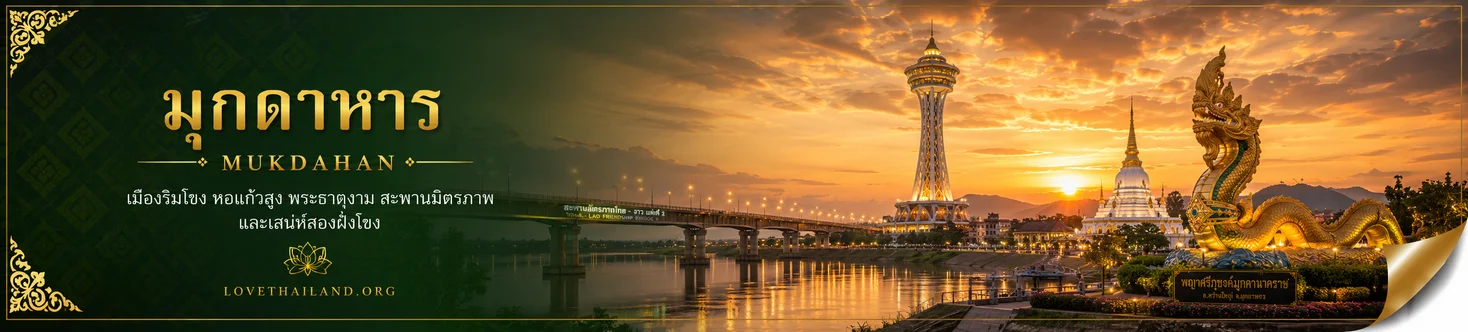
Mukdahan Indochina Market
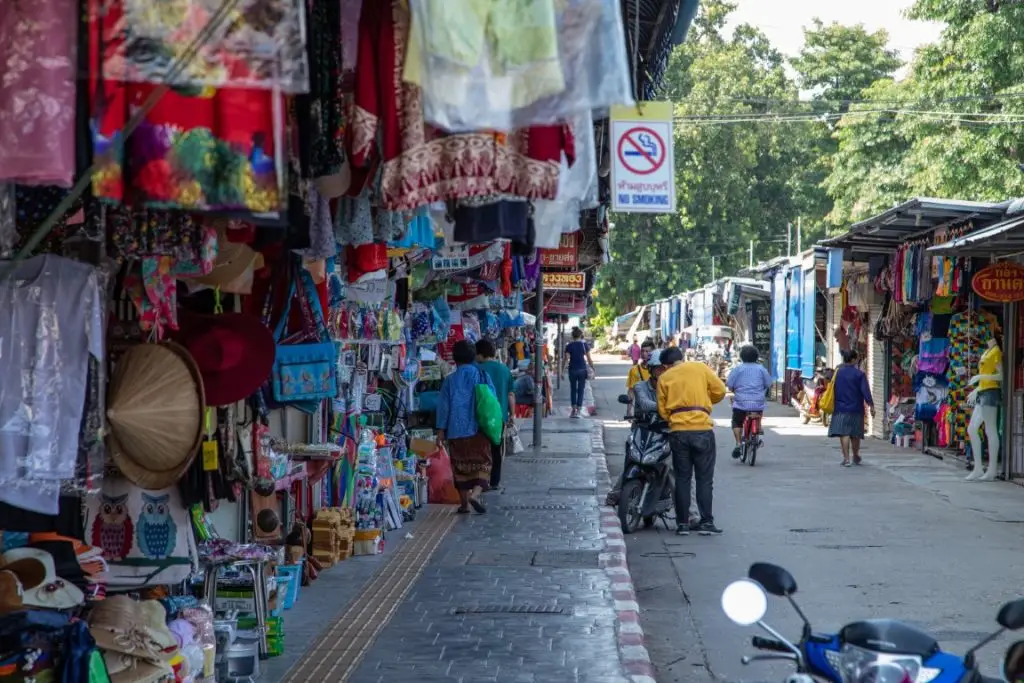
Open Days: Daily
Opening Hours: 08.00 – 17.00. Individual vendors may begin trading or close at different times.
Mukdahan Indochina Market is a historic border-trading market and major visitor attraction in central Mukdahan. It stands on Samran Chai Khong Road in Si Bun Rueang Subdistrict, directly in front of Wat Si Mongkhon Tai and beside the Mekong River. The market is commonly associated with Mukdahan’s identity as a “Gateway to Indochina” because the city faces Savannakhet in Laos and forms part of a regional transport and trading route extending toward Vietnam. Visitors can shop for imported and locally produced goods, observe the culture of a Thai–Lao border city, pay respect at nearby religious sites, sample food influenced by Vietnamese and Lao communities, and walk along the Mekong within a single compact district.
Indochina Market is more than a souvenir stop. It is part of Mukdahan’s commercial structure and the city’s collective memory. Long before the Second Thai–Lao Friendship Bridge was built, passengers and goods crossed the Mekong by boat. The waterfront, landing areas, shops, temples, and nearby streets formed a connected trading district. Products arriving from the opposite bank were exchanged, sold, and redistributed to other districts in Mukdahan and neighboring provinces. The market therefore developed in response to everyday border commerce rather than solely as a purpose-built tourist attraction.
The market began taking a recognizable form around 1980, when traders sold goods from carts and small roadside stalls. As Mukdahan expanded and cross-border movement increased, the number and variety of vendors grew. Merchandise associated with Laos, Vietnam, China, Russia, and Thailand appeared in the same district. This gave the market a distinctive identity compared with an ordinary provincial fresh market. Labels, languages, packaging, textile designs, and household products from several supply networks could be encountered in one walk.
The word “Indochina” in the market’s name does not mean that every item is manufactured in an Indochinese country. It refers more broadly to Mukdahan’s position in a regional system of transport, migration, and trade. The city faces Kaysone Phomvihane, commonly known to travelers as Savannakhet, and lies along the East–West Economic Corridor connecting Myanmar, Thailand, Laos, and Vietnam. The market symbolizes the movement of products, people, languages, food traditions, and cultural influences through the Mekong border region.
The market currently welcomes visitors every day, with general trading hours from approximately 08.00 to 17.00. Vendors do not all open and close at the same time. Shops serving local morning customers may begin early, while some stalls gradually close during the later afternoon. Travelers wishing to see the largest number of open shops should arrive between 09.00 and 15.00. Those interested in the riverfront atmosphere and photography can add an early-morning or late-afternoon walk.
The year 2026 marked an important stage in the market’s redevelopment. Mukdahan Municipality and the provincial authorities accelerated a long-running project to repair structures, reorganize traders, and improve the riverfront. Vendors who had operated from metal-roofed roadside structures were allocated spaces within the underground market. Obstructive structures were removed to create a cleaner and more open waterfront environment while preserving commercial space for established traders.
Visitors who remember the old market may therefore find a different layout. Some stalls have moved underground, the road frontage is less crowded by improvised structures, and the upper public area is being connected more clearly with the Mekong landscape. Travelers should enter through a principal access point, follow municipal signs, and explore the underground trading area. An open-looking roadside should not be interpreted as evidence that the market has disappeared; much of the current commercial activity is located inside or below the renovated structure.
The market can be understood through several functional areas. The underground section contains many of the formally allocated vendor spaces. Surrounding commercial buildings and street-level shops provide additional retail, food, and services. Samran Chai Khong Road and the public riverfront form the outdoor walking zone. Wat Si Mongkhon Tai and the Shrine of Chao Mae Song Nang Phi Nong create a nearby religious and historical zone. Event areas may be activated for municipal walking streets, cultural programs, festivals, and special markets.
The underground market distinguishes Indochina Market from a conventional open-air shopping street. Indoor passages provide some protection from strong sun and rain and allow vendors to operate within a more organized layout. Visitors should explore more than the first row of stalls because shops deeper inside may specialize in different merchandise. Entrances and exits may be located in separate places, so families and groups should remember where they entered and agree on a meeting point.
Clothing and textiles remain among the most popular categories. Visitors may find ready-made garments, sinh skirts, sarongs, mudmee fabric, local textiles, scarves, trousers, fabric bags, and fashion accessories. Some products are manufactured in Thailand, while others enter the supply chain through Laos, Vietnam, or China. Buyers should inspect seams, measurements, color consistency, and fabric type. Sizing systems can differ between manufacturers, making it useful to try on clothing when the vendor permits.
Silk and mudmee textiles connect the market with Mukdahan’s craft heritage. Buyers should ask whether an item is handwoven, machine-woven, or printed, where it was produced, and how it should be cleaned. Handwoven textiles may contain slight variations in line and pattern as a result of the process. Such variations should not automatically be treated as defects. Purchasing from a vendor who can explain origin, material, and care gives the buyer a better understanding of what is being purchased.
Household merchandise is another major category. Kitchen utensils, plates, bowls, glasses, cookware, knives, spoons, plastic storage items, small tools, and decorative objects are commonly available. Some products have designs or formats rarely found in standard department stores. Shoppers should check for cracks, sharp edges, loose handles, and structural weakness. When a glazed container or imported food-contact product lacks clear instructions, the buyer should ask whether it is suitable for heat, food storage, or microwave use.
Small electrical appliances and electronic accessories have long been associated with the market. Products may include radios, flashlights, portable fans, charging devices, cables, headphones, clocks, and travel accessories. Buyers should check voltage, plug type, certification marks, warranty conditions, and the vendor’s return policy. An inexpensive electrical product is not automatically suitable for continuous or high-power use. Damaged cables, missing labels, and products that cannot be tested should be avoided.
Souvenirs include magnets, key rings, decorative objects, wooden crafts, baskets, naga-themed products, and items featuring the Mekong or friendship bridge. Travelers should consider the size, weight, and fragility of each purchase. Breakable goods should be wrapped carefully and carried by hand rather than placed under heavy luggage. Choosing products made in Mukdahan or nearby communities gives the souvenir a clearer connection with the destination.
Packaged food and snacks are especially popular during weekends and public holidays. Coffee, tea, biscuits, Vietnamese-style snacks, dried fruit, nuts, seasonings, dried fish, processed meat, and imported packaged products may be available. Buyers should check production dates, expiration dates, ingredients, allergen information, and package condition. Swollen, leaking, opened, or unlabelled food should not be purchased.
Lao and Vietnamese coffee products are frequently sought as gifts. They may be sold as beans, ground coffee, blended powder, or instant mixtures. Buyers should read the proportion of coffee, sugar, creamer, and additional ingredients because products marketed as coffee can contain very different amounts of coffee itself. Air travelers should choose sealed packaging to prevent strong aromas from spreading through luggage.
The surrounding district is known for Vietnamese and Mekong-influenced food. Nem nuong, Vietnamese steamed rice-skin dumplings, khao piak sen, Vietnamese-style rice-noodle soup, baguette sandwiches, and local chicken noodles can be found within walking distance. These dishes reflect the history of Thai residents with Vietnamese ancestry and the continuing connections between communities on both sides of the Mekong. A market visit can easily be combined with a breakfast, lunch, or café stop without requiring a vehicle.
Weekends, long holidays, and major festivals bring the largest crowds. Visitors from neighboring provinces and organized groups often stop to buy gifts before returning home. More vendors may be open at the same time, but parking and walkways become busier. Travelers seeking a quieter shopping experience should arrive on a weekday morning. Those who enjoy a lively atmosphere may prefer Saturday or Sunday but should allow additional time for parking and queues.
Bargaining is acceptable for certain goods, particularly clothing, household products, and multiple-item purchases. It should be conducted politely. Some vendors display fixed prices, while handmade community products reflect substantial labor and material costs. Asking for a modest discount on a larger purchase is more appropriate than aggressively reducing the value of a craft item. When an agreement cannot be reached, the customer should thank the vendor and leave without confrontation.
Cash remains the most convenient payment method for small stalls. Many Thai vendors also accept domestic bank transfers or Thai QR payments, but credit-card facilities are not universal. International visitors should carry Thai baht in smaller denominations. Lao kip and other currencies should not be assumed to be accepted. Asking about payment before selecting a large quantity of goods prevents difficulties at the checkout stage.
A receipt or clear payment record is useful for electrical products, expensive purchases, and goods sold with a warranty. Photographing the stall name, number, and contact details can help if a problem is discovered later. Many shopfronts look similar, making it difficult to return to the correct vendor from memory alone. Ordinary goods should be counted and inspected before leaving because an exchange may be inconvenient for travelers living far from Mukdahan.
Imported appearance does not guarantee that every product was manufactured in the country suggested by its branding. Some items are produced elsewhere and distributed through regional trading centers. Origin should be assessed through the label, manufacturer, importer, and certification details. Counterfeit goods should be avoided because they create legal, quality, and safety risks.
Medicine, herbal products, cosmetics, and dietary supplements require particular care. Buyers should choose products with clear manufacturer information, Thai labelling, registration numbers, and safety instructions. Products claiming to cure serious diseases without reliable medical information should not be used. Travelers with chronic illness, pregnancy, allergies, or ongoing medication should consult a healthcare professional before trying unfamiliar remedies.
International travelers must also consider customs and biosecurity rules in their destination country. Meat, plants, seeds, animal products, alcohol, tobacco, medicine, and fresh food may be restricted. The fact that a product is legally available in a Thai market does not mean it can be carried through every border or airport. Wildlife products and objects that may involve protected species should never be purchased.
Wat Si Mongkhon Tai stands immediately behind or opposite the market and can be included in the same walk. The temple is one of Mukdahan’s important Buddhist sites and contains Phra Chao Ong Luang, a revered Buddha image. Visitors should cover shoulders and knees, remove shoes before entering religious buildings, avoid pointing their feet toward the principal image, and keep their voices low. Large shopping bags should not be placed where they obstruct worshippers or temple walkways.
The Shrine of Chao Mae Song Nang Phi Nong is another nearby place of devotion associated with Mukdahan’s founding traditions. Residents visit to pay respect and make offerings. Travelers should read local instructions, avoid moving ceremonial objects, and request permission before photographing people involved in worship. Visiting the market, temple, and shrine together demonstrates how commerce, faith, and urban history occupy the same riverside district.
The Mekong promenade provides a place to rest after shopping. Across the river lies Savannakhet Province in Laos, with riverside settlement patterns visible from Thailand. Morning conditions are often calm, with light arriving from the Lao side. Late afternoon provides softer temperatures and an attractive urban river atmosphere. Visitors should be cautious around steps, wet surfaces, embankment edges, and areas without protective barriers.
From certain sections of Mukdahan’s riverfront, the Second Thai–Lao Friendship Bridge can be seen far to the north when visibility is clear. The bridge is approximately 1,600 metres long, rather than 1,800 metres as stated in some older promotional descriptions. Because it lies several kilometres from the market, visitors should not expect a close or detailed view. Those wanting to photograph the bridge should travel by road to a designated viewpoint or the border-crossing area.
The Second Thai–Lao Friendship Bridge opened in late 2006 and transformed road travel between Mukdahan and Savannakhet. It carries passenger and freight traffic, but Indochina Market is not an immigration checkpoint. Travelers going to Laos must use the official bridge border crossing and carry the correct passport, visa, vehicle, and customs documents. Crossing the river directly from the market is not permitted.
For international visitors, the market offers an introduction to a border city without requiring a border crossing. Product labels, food, clothing, and shop styles demonstrate the proximity of Thai, Lao, Vietnamese, and Chinese cultural networks. English signage may be limited in smaller stalls. Translation applications, photographs of labels, and a written Thai product name can make communication easier. Vendors are accustomed to customers from different places and often use calculators or simple gestures to confirm prices.
General market photography is normally possible, but permission should be requested before taking close portraits of vendors, photographing merchandise inside a shop, or recording customers eating. Some traders do not allow detailed product photography. Visitors should not block a narrow passage to stage a photograph or handle goods in a way the vendor has not approved. A brief request before taking a picture demonstrates respect.
Families should supervise children closely around narrow aisles, stairs, roads, and areas used by motorcycles. Children should not handle fragile goods or toys without permission. Strollers are easier to use during quieter periods, and the underground access route should be checked in advance. Older travelers should rest regularly, drink water, and avoid prolonged exposure to midday heat. Groups should establish a meeting place in case members become separated.
Mukdahan can be extremely hot during the dry and hot seasons. Breathable clothing, a hat, sunscreen, and regular hydration are essential. The underground market provides shade, although busy passages may feel warm or crowded. Travelers with heart conditions, blood-pressure problems, or heat sensitivity should visit in the morning and stop immediately if they feel dizzy or unwell.
Rainy-season visits provide a greener river landscape, but pavements and market floors may become slippery. A compact umbrella, rain jacket, waterproof bag, and shoes with good grip are useful. Textiles, paper products, and electrical items should be protected from moisture. Shopping bags should not be placed on wet ground or beneath roof edges where water drips continuously.
The cooler period from November to February is particularly pleasant for walking through the market and along the Mekong. Early mornings can feel cool when wind moves across the river, making a light outer layer useful. This period overlaps with New Year travel, when the market may become crowded and vendors offer blankets, gloves, seasonal clothing, and gifts. Accommodation should be reserved early during major holidays.
There is no admission charge. Visitors may enter, browse, visit the riverfront, and leave without purchasing a ticket. Expenses arise from purchases, food, certain parking areas, or personal services. Free entry makes the market suitable for budget travelers and short stops, although supporting local vendors through useful purchases and nearby meals contributes to the district’s economy.
Facilities include market passages, underground retail space, toilets, rest areas, designated parking, a municipal coordination presence, and the adjacent Mekong promenade. Because the market is centrally located, pharmacies, convenience stores, banks, cash machines, restaurants, and hotels are nearby. Travelers requiring a particular accessible toilet or step-free entrance should ask municipal staff or vendors at an entrance before beginning the visit.
Parking requires advance consideration on weekends. Some roadside areas are restricted to maintain traffic flow and emergency access. Vehicles should only be left in clearly permitted locations and must not block shops, ramps, temple gates, or market entrances. When the closest areas are full, travelers can use public parking elsewhere in central Mukdahan and walk a short distance. Photographing the parking location helps when the market is exited by a different route.
Mukdahan Municipality is responsible for market-space administration, vendor organization, public-order coordination, and landscape management. Questions concerning vendor spaces, events, complaints, or lost property can be directed to the municipality at 042-611-227 during government office hours. Emergencies should be reported directly to on-site personnel, police, or the appropriate emergency service.
A half-day visit can begin at approximately 08.30 with Phra Chao Ong Luang at Wat Si Mongkhon Tai, followed by the Shrine of Chao Mae Song Nang Phi Nong. Visitors can then explore the underground market, purchase gifts, and stop for Vietnamese food or coffee before walking along the Mekong. The route takes approximately 3–4 hours and suits travelers continuing to another district in the afternoon.
A full-day itinerary can add Mukdahan Tower for a higher view of the city, lunch in the central district, and Wat Roi Phra Phutthabat Phu Manorom for the large naga image and broad Mekong panorama. Travelers can return to the riverfront for dinner. Visiting the market in the morning allows shopping to be completed before the hottest part of the day.
A 2-day, 1-night itinerary can use the first day for the market, Wat Si Mongkhon Tai, the shrine, Mukdahan Tower, and a riverside dinner. The second day can include the Second Thai–Lao Friendship Bridge viewpoint, Wat Roi Phra Phutthabat Phu Manorom, or Phu Pha Thoep National Park depending on available time. Staying in central Mukdahan makes an early market visit convenient.
The closest attractions are Wat Si Mongkhon Tai and the Shrine of Chao Mae Song Nang Phi Nong, both within walking distance. Samran Chai Khong Road and the promenade are directly adjacent. Mukdahan Tower is approximately 3 km away, while Phu Manorom and the friendship bridge require a vehicle. Planning the route by direction reduces unnecessary backtracking.
Nearby food options include cafés, Vietnamese restaurants, Thai food, local noodles, and riverside dining. Goodmook Traveller Cafe serves coffee and desserts on Song Nang Sathit Road. Or Aem specializes in Vietnamese food. Mukda Kai Ban Noodle serves chicken noodles and Vietnamese-influenced chicken salad. Krua Saigon provides Vietnamese dishes and can accommodate groups. Nudpob Rimkhong is suitable for an evening Thai meal beside the Mekong.
Accommodation ranges from riverfront properties to budget hotels. Riverfront Hotel Mukdahan is located on Samran Chai Khong Tai Road and is convenient for walking or a short ride to the market. Ploy Palace Hotel and B2 Mukdahan are central options. Hotel de Ladda provides a more fully serviced riverside stay. Hotel Muq and Hop Inn Mukdahan suit travelers using a vehicle and wanting a base in the city.
Getting There by private car is straightforward. From Chayangkun Road or Highway 212, enter Mukdahan Municipality and continue toward Samran Chai Khong Road and Wat Si Mongkhon Tai. The market stands in front of the temple beside the Mekong. Use the coordinates 16.540880, 104.732120 and watch for Indochina Market signs. Reduce speed near the destination because pedestrians, motorcycles, and vehicles searching for parking share the streets.
Mukdahan Bus Terminal is approximately 3 km from the market. Motorized tricycles, local hired vehicles, and available ride-hailing services can complete the journey. Agree on the fare or check the application price before departure. Travelers with large luggage should leave it at their accommodation because crowded passages and underground stairs are not convenient for multiple suitcases.
Mukdahan Province has no commercial airport. Common gateways include Nakhon Phanom, Sakon Nakhon, and Ubon Ratchathani airports, followed by a rental car, van, or arranged transfer. Anyone planning to shop on the departure day should allow time for packing goods and reaching the airport. Large quantities of liquid, fresh food, and fragile goods may be unsuitable for air travel.
Rail travelers can arrive at Ubon Ratchathani Station and continue by bus or rental car for more than 160 km. Mukdahan currently has no railway station. Connections should be planned with adequate time. Travelers reaching the city in the evening should visit the market the following morning because most vendors close during the late afternoon.
Indochina Market reflects Mukdahan’s cultural diversity. The province is associated with Phu Thai, Thai Kha, Kaleung, Thai Yo, Thai Saek, Thai Kula, Chinese-descended, and Vietnamese-descended communities. This diversity appears through food, clothing, language, religious practice, festivals, and commercial networks. The market should therefore be understood as more than a place for inexpensive goods; many of its products and businesses are connected with the movement and settlement of people throughout the Mekong region.
Municipal and provincial festivals often use the market and riverfront, including Songkran programs, Indochina food events, cultural presentations, and walking streets. Dates change each year, and these events do not operate daily. Travelers seeking a particular festival should check the current municipal calendar. Road closures, changed parking arrangements, and extended vendor hours may apply during major events.
Sustainable support for the market includes buying only useful goods, selecting local products, carrying a reusable bag, and refusing unnecessary packaging. Visitors can carry refillable water bottles but should protect merchandise from spills. Waste should be separated and placed in designated containers. Feeding birds or animals on the riverfront can create litter and disrupt the local environment.
Personal belongings require attention when the market is crowded. Bags should remain closed, and phones or wallets should not be left on counters. Travelers do not need to carry excessive cash. Groups should agree on a meeting point and return time. Lost property should be reported promptly to nearby vendors, the market coordination point, or municipal staff.
The market is suitable for travelers who want shopping and urban exploration in the same place. Approximately 2–3 hours is sufficient for the retail sections. A half day is more appropriate when the temple, shrine, food, and Mekong promenade are included. Visitors seeking a specific product can save time by carrying a photograph or written Thai name. Those who do not intend to shop can still study the border-trading environment, eat local food, and enjoy the riverside without paying an entrance fee.
The market’s principal appeal is the close relationship between commerce, city history, religion, food, and the Mekong. A visitor can begin with a temple, browse imported and local goods, speak with traders, eat Vietnamese-influenced food, and end the walk facing Laos. This combination distinguishes Indochina Market from a conventional shopping center. Although the physical layout has changed through redevelopment, its role as a meeting place and symbol of a border city remains significant.
The 2026 revitalization provides an opportunity to create a safer, more orderly, and visually open riverfront. Its success also depends on visitors entering the underground market and supporting the established vendors relocated there. Concentrating only on the appearance of the upper promenade while ignoring the traders below would weaken the local economy. Informed purchases, respect for regulations, and responsible use of public space allow redevelopment and livelihoods to support one another.
Mukdahan Indochina Market is therefore more than a final shopping stop before leaving the province. It tells the story of Mukdahan’s relationship with Savannakhet, the importance of the Mekong, the shift from boat-based trade to bridge transport, and the cultural diversity of the city. Travelers who browse slowly, read labels, speak with vendors, visit the temple, and spend time by the river will understand why the market remains a Gateway to Indochina in a historical and cultural sense rather than merely as a tourism slogan.
| Name | Mukdahan Indochina Market |
| Location | Samran Chai Khong Road, Si Bun Rueang Subdistrict, Mueang Mukdahan District, Mukdahan 49000, in front of Wat Si Mongkhon Tai |
| Coordinates | 16.540880, 104.732120 |
| Attraction Type | Border-trading market, shopping attraction, and Mekong riverfront destination |
| History | Developed from carts and small traders around 1980 before expanding into a center for imported goods and local products in the Mukdahan border district |
| Importance | Represents Mukdahan’s role as a Gateway to Indochina and a commercial connection between Thailand, Laos, Vietnam, and the wider Mekong region |
| Current Status | Open following major reorganization and revitalization in 2026, with roadside vendors relocated into underground market spaces |
| Open Days | Daily |
| Opening Hours | 08.00 – 17.00; individual vendors may open and close at different times |
| Admission Fee | Free admission |
| Main Products | Clothing, local textiles, mudmee fabric, household goods, cookware, small electrical products, packaged food, coffee, snacks, souvenirs, and local products |
| Main Areas / Zones | 1. Underground market and allocated vendor stalls 2. Surrounding shops and commercial buildings 3. Clothing and textile area 4. Household, cookware, and electrical goods area 5. Packaged food, snacks, and souvenir area 6. Samran Chai Khong Road and Mekong promenade 7. Wat Si Mongkhon Tai and Chao Mae Song Nang Phi Nong Shrine 8. Municipal event and walking-street areas |
| Facilities | Toilets, rest areas, market passages, designated parking, coordination point, nearby ATMs, restaurants, convenience stores, and Mekong promenade |
| Caretaker | Mukdahan Municipality |
| Caretaker Contact | +66 42 611 227 |
| Travel Information | Located in central Mukdahan on Samran Chai Khong Road in front of Wat Si Mongkhon Tai, approximately 3 km from Mukdahan Bus Terminal; accessible by car, motorized tricycle, or local hired vehicle |
| Recommended Time | 09.00 – 15.00 for shopping; morning and late afternoon for the riverfront; November–February for the most comfortable weather |
| Shopping Precautions | Check labels, expiration dates, electrical standards, origin, and warranty terms; protect personal belongings in crowded periods and park only in permitted areas |
| Nearby Tourist Attractions | 1. Wat Si Mongkhon Tai and Phra Chao Ong Luang, about 0.1 km 2. Chao Mae Song Nang Phi Nong Shrine, about 0.2 km 3. Samran Chai Khong Road and Mekong Viewpoint, about 0 km 4. Mukdahan Tower, about 3 km 5. Wat Roi Phra Phutthabat Phu Manorom, about 7 km 6. Second Thai–Lao Friendship Bridge, about 8 km |
| Nearby Restaurants | 1. Goodmook Traveller Cafe, about 0.4 km, Tel. +66 85 841 2185 or +66 42 042 198 2. Or Aem Vietnamese Food, about 0.4 km, Tel. +66 82 787 2360 3. Mukda Kai Ban Noodle, about 0.5 km, Tel. +66 92 464 5228 or +66 65 615 3691 4. Krua Saigon Mukdahan, about 0.6 km, Tel. +66 42 615 303 or +66 81 320 1318 5. Nudpob Rimkhong Restaurant, about 1.5 km, Tel. +66 86 459 6263, +66 61 929 2459, or +66 89 711 6063 |
| Nearby Accommodations | 1. Riverfront Hotel Mukdahan, about 0.6 km, Tel. +66 42 612 948-9 or +66 81 703 1705 2. Ploy Palace Hotel, about 1 km, Tel. +66 42 614 988 3. B2 Mukdahan Boutique & Budget Hotel, about 1.2 km, Tel. +66 42 040 123 4. Hotel Muq, about 1.5 km, Tel. +66 63 787 5555, +66 42 040 888, or +66 42 040 999 5. Hotel de Ladda, about 2 km, Tel. +66 42 611 499 6. Hop Inn Mukdahan, about 2.2 km, Tel. +66 2 080 2222 |
Frequently Asked Questions (FAQ)
Q: Which days and hours is Mukdahan Indochina Market open?
A: The market is open daily, generally from 08.00 to 17.00. Individual stalls may begin or finish trading at different times. The most practical shopping period is 09.00–15.00.
Q: Is there an admission fee for Indochina Market?
A: No. Entry to the market, nearby temple district, and Mekong promenade is free.
Q: What can visitors buy at Mukdahan Indochina Market?
A: Products include clothing, textiles, mudmee fabric, household goods, cookware, small electrical items, packaged food, coffee, snacks, souvenirs, and merchandise supplied through Thailand, Laos, Vietnam, China, and other trading networks.
Q: Is the market still open after the redevelopment?
A: Yes. The market remains open. In 2026, roadside vendors were reorganized and many were moved into the underground market, so visitors should explore the interior rather than looking only at the upper road area.
Q: Can the Thai–Lao Friendship Bridge be seen from the market?
A: The bridge can be seen far to the north from certain riverfront locations when visibility is clear. It is approximately 8 km from the market and about 1,600 metres long.
Q: Is Indochina Market a border crossing to Laos?
A: No. Travelers going to Savannakhet must use the official checkpoint at the Second Thai–Lao Friendship Bridge and carry the correct immigration documents.
Q: How much time should travelers allow for the market?
A: Allow approximately 2–3 hours for shopping. A half day is more appropriate when Wat Si Mongkhon Tai, the shrine, local food, and the Mekong promenade are included.
Q: Who manages Mukdahan Indochina Market?
A: The market is managed by Mukdahan Municipality. The municipal office can be contacted at +66 42 611 227 during government office hours.
```
 Category: ●Suburban Living
 Group: ●Local Market
Last Update : 3 MonthAgo
 Last Update : 3 MonthAgo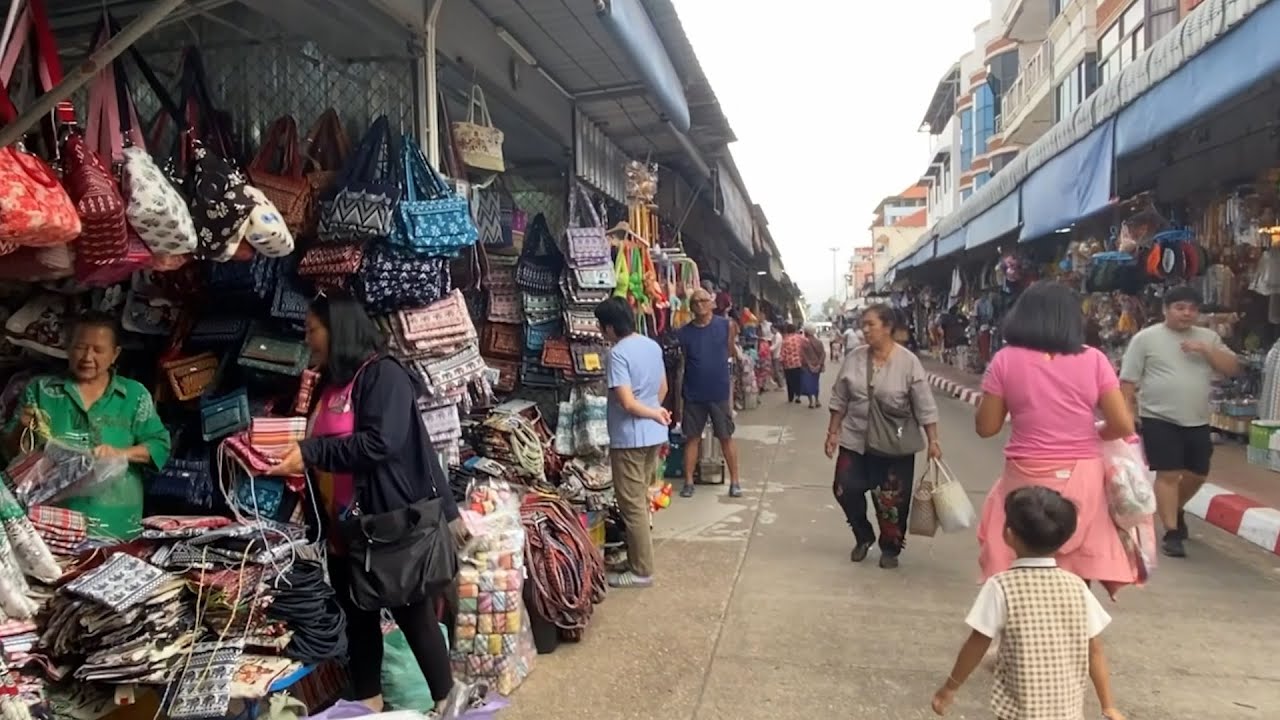
 Click to Access the Navigation Map GPS
Mukdahan Indochina Market Map
Recommend

 Art, Culture and Heritage
 Historical Sites and Monuments(2)
 Landmarks and Memorials(3)
 Art, Craft Centres, Tradition(2)
 Museums(1)
 Places of Worship
 Temple(17)
 Other Sacred Sites(4)
 Village, Community(4)
Local Market(2)
Village, Community(4)
Local Market(2)
 Nature and Wildlife
 National Parks and Marine Reserves(4)
 Mountain (Doi)(5)
 Dam, Reservoir, Lake(3)
 Waterfalls(5)
 Caves(2)
 River, Canal(2)
 Bays and Beaches(1)
 Other natural attractions(1)
 Entertainment and Agricultural
 Farms, Parks and Ecotourism(1)
 Travel Articles, Recipes
 Travel Review, Food Review(1)


