
lovethailand home >Northeastern Travel Attractions >Loei Travel Attractions >Chiang Khan >Chiang Khan > Wat Tha Khaek
TL;DR: Wat Tha Khaek is located at Moo 4, Ban Noi, Chiang Khan Subdistrict, Chiang Khan District, Loei Province 42110, Thailand, open Daily, hours 06.00 – 18.00.
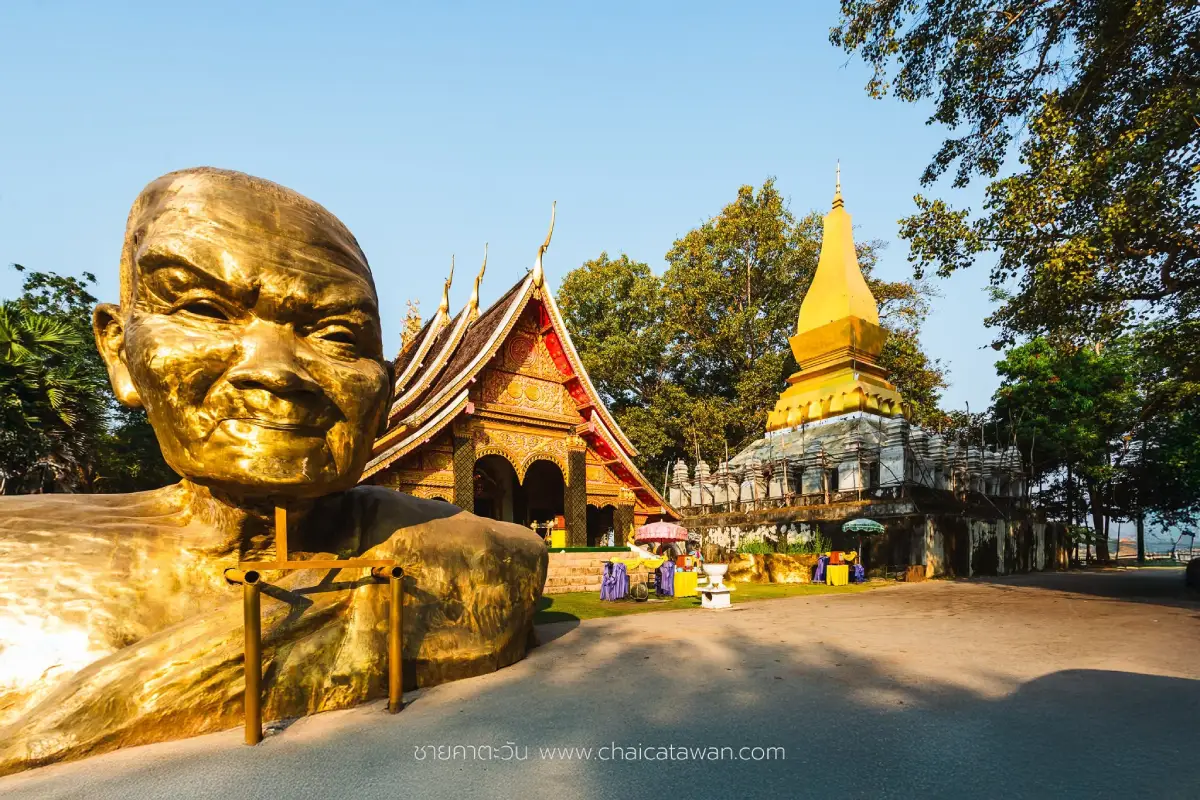
Wat Tha Khaek
Open Days: Daily
Opening Hours: 06.00 – 18.00
Wat Tha Khaek in Loei Province is an ancient riverside Buddhist temple located in Ban Noi, Chiang Khan Subdistrict, Chiang Khan District, Loei Province. The temple stands along the Mekong River, about 2 kilometers from Chiang Khan town and before Ban Noi village and Kaeng Khut Khu. Today, Wat Tha Khaek is a Dhammayuttika temple and one of the most meaningful cultural and religious places in Chiang Khan. It is especially known for 3 ancient sandstone Buddha images inside the ordination hall. These images, locally respected as the 3 sibling Buddha images, have long been regarded as sacred by the people of Chiang Khan. For foreign travelers who want to understand Chiang Khan beyond wooden houses, riverside cafés, and the walking street, Wat Tha Khaek offers a deeper view of Mekong culture, Lan Xang heritage, Thai Buddhist faith, and the history of forest monks in northeastern Thailand.
The temple’s location is essential to its identity. The Mekong River is not only a natural border between Thailand and Laos but also an old cultural route. For centuries, people, monks, traders, stories, beliefs, and artistic styles moved along this river. A riverside temple such as Wat Tha Khaek therefore carries the memory of travel, settlement, faith, and exchange. The temple stands on alluvial land along the Mekong, in a peaceful setting where visitors can feel both religious calm and the openness of the river landscape. This gives Wat Tha Khaek a character that is different from urban temples. It is a temple shaped by water, memory, and movement.
The name Wat Tha Khaek is also connected with local memory. Local people once called it Wat Tha Khae, with khae referring to crocodiles in the local dialect. In the past, the stone landing area near the temple by the Mekong was said to have been a place where crocodiles often appeared and rested in the sun. Over time, the name gradually became Wat Tha Khaek. This story shows how closely the temple was connected with the river environment. The name is not merely a label; it preserves a memory of the Mekong, stone landings, local speech, and the natural world that once surrounded the community.
According to the inscription associated with Wat Tha Khaek, the temple was established in 1666 during the late Ayutthaya period and within the wider historical context of the Lan Xang cultural world. The inscription records that Thao Suwan Phaeo Phai, a prince connected with the Lan Xang royal family of Luang Prabang, built the temple to dedicate merit to his consort and daughter, who had died in a boat accident on the Mekong while traveling. This story gives the temple a deeply human meaning. Wat Tha Khaek was not built only as a religious structure; it was also an act of remembrance, grief, merit-making, and devotion.
The history of Wat Tha Khaek includes several layers. Some local traditions connect the temple with early Chiang Khan settlement and older movements of people along the Mekong. Other accounts emphasize the 1666 inscription and the Lan Xang connection. Later, the temple became abandoned for a period before being revived through the work of forest monks and local residents. These multiple layers are important because they show that Wat Tha Khaek is not a simple historical site with only one story. It is a living place where inscription, legend, local memory, and monastic history overlap.
The most important religious objects at Wat Tha Khaek are the 3 ancient sandstone Buddha images known locally as the 3 sibling Buddha images. They are housed inside the ordination hall and are deeply respected by local people. The first is Luang Pho Saen Mongkhon, a seated meditation Buddha image made of sandstone, about 60 centimeters wide at the lap and about 1.20 meters high. The second is Luang Pho Chok, also a seated meditation sandstone Buddha image, about 70 centimeters wide at the lap and about 1.20 meters high. The third is Luang Pho Chai, a sandstone Buddha image in the naga-protected posture, about 65 centimeters wide at the lap and about 1.20 meters high. Together, they form the spiritual heart of the temple.
The phrase 3 sibling Buddha images gives these sacred images a strong emotional meaning. They are not viewed only as separate ancient sculptures but as a sacred group with shared identity, local stories, and community devotion. They are enshrined behind the main Buddha image of the ordination hall, known as Luang Pho Chiang Thong of Wat Tha Khaek, which was created in 1994 in the subduing Mara posture. The placement of these images allows visitors to see both the contemporary revival of the temple and its older sacred inheritance in the same space.
The discovery and preservation of the 3 sibling Buddha images are closely connected with Thai forest monks. In 1927, Luang Pu Sao Kantasilo, Luang Pu Chob Thanasamo, Luang Pu Khamla Khantitharo, and a small group of monks stayed at the abandoned Wat Tha Khaek for meditation. Luang Pu Sao and the monks, together with people from Chiang Khan, helped clear and restore the ruined structures. During this process, they found the ancient Buddha images inside the old ordination hall. Luang Pu Sao used old bricks and stones to create a temporary base for the images. This episode connects the temple with the Thai Forest Tradition and gives the site spiritual significance beyond its age.
In 1926, several respected forest-monk masters traveled through Chiang Khan and stayed at Wat Tha Khaek when it was still abandoned. These included Luang Pu Mun Bhuridatto, Luang Pu Sing Khantayakamo, Luang Pu Maha Pin Panyaphalo, Luang Pu Thet Thetsarangsi, Luang Pu Louis Chandasaro, Luang Pu Fan Acharo, and other monks and novices. The presence of these teachers makes Wat Tha Khaek an important place in the memory of the Thai Forest meditation lineage. To a casual visitor, the temple may appear as a quiet riverside temple. To those familiar with Thai Buddhist monastic history, it is a place touched by some of the most respected meditation masters of modern Thai Buddhism.
Luang Pu Chob Thanasamo later became especially important to the revival of Wat Tha Khaek. In 1976, he wished to restore the temple and assigned monks and disciples to help rebuild and care for the site. Old ruins were cleared, the ancient Buddha images were protected, and temporary structures were built to support religious use. In 1980, Phra Achan Daeng Chanthawangso came to stay at the temple, and Luang Pu Chob assigned him to serve as the abbot. From that period onward, Wat Tha Khaek became more firmly connected with the Dhammayuttika order and the living tradition of forest-monk practice.
Today, Wat Tha Khaek remains an active temple rather than a static archaeological site. It was officially raised from an abandoned temple to a temple with resident monks on 14 March 1983 and received its consecrated boundary on 27 July 1991. These milestones allowed the temple to resume its full religious function. This is important for visitors to understand. Wat Tha Khaek is not only a heritage attraction. It is a functioning Buddhist temple where monks live, devotees come to make merit, and sacred objects are still worshipped.
The ordination hall is the central area of the visit. Inside are the main Buddha image, the 3 sibling Buddha images, and the atmosphere of quiet devotion that defines the temple. The ordination hall also contains the Wat Tha Khaek inscription, an important stone inscription that records information about the construction of the old religious building. The inscription is a slate pillar, about 18 centimeters wide and 79 centimeters high, with 6 lines of text. The first line indicates an era corresponding to 1666. This makes the inscription one of the most important objects for understanding the temple’s history.
Around the ordination hall, visitors may notice old bricks and architectural remains. These are believed to relate to earlier structures or the former ordination hall that existed before the present building. Such traces show that the temple changed through many periods: construction, abandonment, forest-monk meditation, restoration, and modern religious use. These physical remains help visitors see that history is not only written in documents. It is also visible in bricks, stones, inscriptions, and the placement of sacred images.
The atmosphere of Wat Tha Khaek is calm and shaded. The temple is close to the Mekong River, and in some areas visitors can appreciate the river landscape and the quiet mood of a riverside temple. This setting makes the temple suitable for slow, respectful visiting. Travelers should not rush through the temple as a quick stop before Kaeng Khut Khu. A meaningful visit should include time to pay respect in the ordination hall, observe the inscription and old remains, walk quietly around the grounds, and reflect on the temple’s long connection with Chiang Khan.
The first main area is the ordination hall and the 3 sibling Buddha images. This is the spiritual heart of the temple. Visitors should remove their shoes before entering, speak softly, and avoid touching sacred objects unless permitted. Photography should be done respectfully and without disturbing people who are praying. This area is not only beautiful; it is a living worship space for local people.
The second area is the inscription and archaeological remains. Visitors interested in history should pay attention to the stone inscription and old architectural traces around the hall. These objects help explain why Wat Tha Khaek is important as a cultural and archaeological site. The inscription connects the temple with the 17th century and the Lan Xang world, while the old remains show earlier layers of temple construction and restoration.
The third area is connected with Luang Pu Chob Thanasamo and the Thai Forest Tradition. Wat Tha Khaek is remembered as a place where respected forest monks once stayed and practiced meditation. Luang Pu Chob later supported the revival of the temple, and nearby areas are associated with his memory and educational legacy. Visitors interested in Buddhist meditation history should spend time understanding this connection because it gives the temple a deeper spiritual context.
The fourth area is the Mekong riverside atmosphere. The river gives the temple its character and links it to Chiang Khan’s broader cultural landscape. Standing quietly near the riverside area helps visitors understand why temples along the Mekong often feel different from inland temples. The river brings openness, memory, travel, and cross-border cultural connection into the temple space.
The fifth area is the monastic and meditation space. Because Wat Tha Khaek is an active temple, visitors should avoid entering monks’ residences or restricted areas without permission. The temple should be approached as a sacred place, not only as a sightseeing location. Modest dress, quiet behavior, and respect for monastic life are essential.
The sixth area is the travel route connecting Wat Tha Khaek with Ban Noi and Kaeng Khut Khu. The temple sits in an excellent location for a cultural route. Visitors can begin with the temple, then continue to Kaeng Khut Khu for the Mekong river bend and local products, and later return to Chiang Khan town for the walking street, old wooden houses, temples, and riverside accommodation. This makes Wat Tha Khaek a convenient and meaningful stop in a Chiang Khan itinerary.
Getting There is simple from Chiang Khan town. From Chiang Khan District or Chiang Khan Hospital, take Highway 211, also known locally as Si Chiang Khan Road, heading east toward Kaeng Khut Khu for about 2 kilometers. The entrance road to Wat Tha Khaek is on the left. Continue about 200 meters along the local road, and the temple will be on the left. Visitors can travel by private car, motorcycle, rental vehicle, bicycle, or local transport from Chiang Khan.
For visitors staying near Chiang Khan Walking Street, the temple is only a short ride away. The trip usually takes around 5 to 10 minutes depending on traffic. It is easy to combine Wat Tha Khaek with Kaeng Khut Khu in the same morning or afternoon. Families and elderly visitors may prefer a car or local transport, while active travelers may use a bicycle or motorcycle, especially in the cooler parts of the day.
Wat Tha Khaek is open daily from 06.00 to 18.00 and does not charge an admission fee. Morning visits are peaceful and cooler, while late afternoon visits can be pleasant before returning to Chiang Khan town for the walking street. Visitors should avoid entering after the opening period and should be considerate if religious activities are taking place.
Although there is no admission fee, visitors may make merit according to their faith in designated areas. The absence of a fee should not lead to careless behavior. Visitors should keep the temple clean, avoid touching ancient objects, and respect monks and worshippers. These simple actions help preserve the temple for local people and future travelers.
The best way to visit Wat Tha Khaek is slowly. Start at the ordination hall, pay respect to the 3 sibling Buddha images, observe the main Buddha image and the sacred interior, then look at the inscription and old architectural traces. After that, walk quietly around the temple grounds and appreciate the Mekong setting. A slow visit allows the temple’s layers of meaning to become clearer.
For families, the temple is a useful cultural classroom. Children can learn about sandstone Buddha images, inscriptions, ancient temples, the Mekong River, and respectful temple behavior. The visit can help young travelers understand that history is not only found in books but also in real places, old stones, sacred images, and community stories.
For Buddhist visitors and those interested in meditation traditions, Wat Tha Khaek is meaningful because of its connection with Thai forest monks such as Luang Pu Sao, Luang Pu Mun, Luang Pu Fan, Luang Pu Louis, and Luang Pu Chob Thanasamo. These names represent an important spiritual lineage in Thailand. The temple’s revival through forest-monk devotion gives it a special place in the religious landscape of Chiang Khan.
For international travelers, Wat Tha Khaek offers a clear introduction to Mekong Buddhist culture. It combines ancient sandstone Buddha images, Lan Xang-related history, Thai Forest Tradition, an active temple community, and a riverside setting. It should be understood as a historic riverside Buddhist temple rather than only a short photo stop on the way to Kaeng Khut Khu.
A good itinerary begins at Wat Tha Khaek in the morning, continues to Kaeng Khut Khu, and then returns to Chiang Khan town for lunch, riverside walking, temple visits, and the evening walking street. Visitors with more time can also include Wat Si Khun Mueang, Wat Tha Khok, Phu Thok Chiang Khan, Wat Phra Phutthabat Phu Khwai Ngoen, or the Chiang Khan Skywalk. This route combines religion, history, river scenery, food, and local life.
The most important rule when visiting Wat Tha Khaek is to respect both faith and heritage. Visitors should dress modestly, remove shoes before entering the ordination hall, keep noise low, avoid touching the Buddha images or inscription, and refrain from climbing or leaning on old remains. A respectful visit protects the temple and allows both locals and travelers to share the space properly.
In summary, Wat Tha Khaek in Loei Province is one of the most important historic temples near Chiang Khan. Located beside the Mekong River before Kaeng Khut Khu, it preserves 3 ancient sandstone Buddha images, a significant inscription, old architectural remains, and the memory of Thai forest monks who helped revive the temple. It is open daily from 06.00 to 18.00 with no admission fee. For travelers who want to understand Chiang Khan more deeply, Wat Tha Khaek is an essential stop that reveals the spiritual, historical, and riverside identity of the district.
| Name | Wat Tha Khaek, Loei Province |
| Location | Moo 4, Ban Noi, Chiang Khan Subdistrict, Chiang Khan District, Loei Province 42110, Thailand |
| Address | Wat Tha Khaek, Ban Noi, Chiang Khan Subdistrict, Chiang Khan District, Loei Province 42110, beside the Mekong River before Kaeng Khut Khu |
| Coordinates | 17.904931 N, 101.683407 E |
| Highlights | An ancient Dhammayuttika riverside temple on the Mekong River with 3 sacred sandstone Buddha images, a historical inscription, ancient architectural remains, and links to Thai forest-monk masters |
| History | According to the temple inscription, Wat Tha Khaek was built in 1666 by Thao Suwan Phaeo Phai, a prince connected with the Lan Xang royal family of Luang Prabang, as a merit dedication to his consort and daughter who died in a Mekong boat accident. The temple later became abandoned and was revived through the devotion of forest monks and local people. |
| Distinctive Features | A peaceful temple beside the Mekong River, located on alluvial riverside land, suitable for paying respect, learning local history, observing Buddhist heritage, and continuing to Kaeng Khut Khu |
| Key Things To See | The 3 sibling sandstone Buddha images, Luang Pho Chiang Thong main Buddha image, Wat Tha Khaek inscription, ancient structural remains, Mekong riverside atmosphere, and areas connected with Luang Pu Chob Thanasamo |
| Important Buddha Images | 1. Luang Pho Saen Mongkhon, sandstone seated meditation Buddha image, about 60 cm wide and 1.20 m high 2. Luang Pho Chok, sandstone seated meditation Buddha image, about 70 cm wide and 1.20 m high 3. Luang Pho Chai, sandstone naga-protected Buddha image, about 65 cm wide and 1.20 m high |
| Main Areas / Zones | 1. Ordination Hall And The 3 Sibling Buddha Images 2. Luang Pho Chiang Thong Main Buddha Image Area 3. Wat Tha Khaek Inscription And Ancient Remains Area 4. Luang Pu Chob Thanasamo And Thai Forest-Monk Heritage Area 5. Mekong Riverside Viewing Area 6. Monastic And Meditation Area 7. Route Connection To Ban Noi And Kaeng Khut Khu |
| Abbot / Caretaker | Managed by Wat Tha Khaek; the abbot is Phra Achan Daeng Chanthawangso |
| Travel Information | From Chiang Khan District or Chiang Khan Hospital, take Highway 211 or Si Chiang Khan Road east toward Kaeng Khut Khu for about 2 km. The entrance road to Wat Tha Khaek is on the left. Continue about 200 m, and the temple is on the left. |
| Current Status | Open as an active Dhammayuttika Buddhist temple and cultural tourism site beside the Mekong River in Chiang Khan District |
| Open Days | Daily |
| Opening Hours | 06.00 – 18.00 |
| Fees | Free Admission |
| Facilities | Ordination hall, worship area, Mekong riverside temple grounds, temple courtyard, parking area, and route connection to Ban Noi and Kaeng Khut Khu |
| Main Contact Number | 042-812-812, 083-443-5878 |
| Official Website / Official Page | Important Archaeological Sites Database in Thailand, Tourism Authority of Thailand, and Wat Tha Khaek Luang Pu Chob Thanasamo Facebook Page |
| Nearby Tourist Attractions | 1. Ban Noi Tourist Service Center, about 1 km 2. Kaeng Khut Khu, about 2 km 3. Chiang Khan Walking Street, about 3 km 4. Wat Si Khun Mueang, about 4 km 5. Wat Tha Khok, about 4 km 6. Phu Thok Chiang Khan, about 8 km 7. Wat Phra Phutthabat Phu Khwai Ngoen, about 12 km 8. Chiang Khan Skywalk, about 23 km |
| Nearby Restaurants | 1. Cafe de River / Chiang Khan River Mountain Resort, about 2 km, Tel. 042-822-191, 083-616-4961 2. Khrua Nu Cha, Chiang Khan Hill Resort, about 2 km, Tel. 081-860-8810 3. Joom Nua Yai Pat Chiang Khan, about 4 km, Tel. 042-822-079, 087-762-9228 4. Pa Bua Wan Khao Pun Nam Jaew, about 4 km, Tel. 083-418-9809 5. Baan Tid Din Chiang Khan, about 4 km, Tel. 088-022-2999 6. Baan Supichaya / Toffee Coffee By Baan Supichaya, about 4 km, Tel. 085-608-7557 |
| Nearby Accommodations | 1. Chiang Khan River Mountain Resort, about 2 km, Tel. 042-822-191, 083-616-4961 2. Chiang Khan Hill Resort, about 2 km, Tel. 094-591-5251 3. Baan Tid Din Resort Chiang Khan, about 4 km, Tel. 088-022-2999 4. Baansupichaya Hotel, about 4 km, Tel. 085-608-7557 5. Riverside Chiang Khan Resort, about 6 km, Tel. 084-336-7525, 042-821-477 6. Baan Rim Khong Chiang Khan, about 4 km, Tel. 042-821-007, 087-221-3430, 085-609-8191 |
Frequently Asked Questions (FAQ)
Q: Where is Wat Tha Khaek located?
A: Wat Tha Khaek is located at Moo 4, Ban Noi, Chiang Khan Subdistrict, Chiang Khan District, Loei Province 42110, beside the Mekong River before Kaeng Khut Khu.
Q: What are the opening days and hours of Wat Tha Khaek?
A: Wat Tha Khaek is open daily from 06.00 to 18.00.
Q: Is there an admission fee for Wat Tha Khaek?
A: No. Admission is free. Visitors may make merit according to their faith in designated areas.
Q: What is the most important highlight inside Wat Tha Khaek?
A: The main highlight is the 3 ancient sandstone Buddha images known as the 3 sibling Buddha images: Luang Pho Saen Mongkhon, Luang Pho Chok, and Luang Pho Chai.
Q: Why are the 3 sibling Buddha images important?
A: They are sacred sandstone Buddha images deeply respected by the people of Chiang Khan and are among the most important religious objects inside the ordination hall.
Q: How is Wat Tha Khaek connected to Luang Pu Chob Thanasamo?
A: Luang Pu Chob Thanasamo played an important role in reviving Wat Tha Khaek, and the temple is also associated with several respected Thai forest-monk masters who once stayed and practiced meditation there.
Q: Who is the abbot of Wat Tha Khaek?
A: The abbot of Wat Tha Khaek is Phra Achan Daeng Chanthawangso.
Q: What nearby places can be visited after Wat Tha Khaek?
A: Nearby places include Kaeng Khut Khu, Chiang Khan Walking Street, Wat Si Khun Mueang, Wat Tha Khok, Phu Thok Chiang Khan, Wat Phra Phutthabat Phu Khwai Ngoen, and Chiang Khan Skywalk.
 Category: ●Places of Worship
 Group: ●Temple
Last Update : 3 MonthAgo
 Last Update : 3 MonthAgo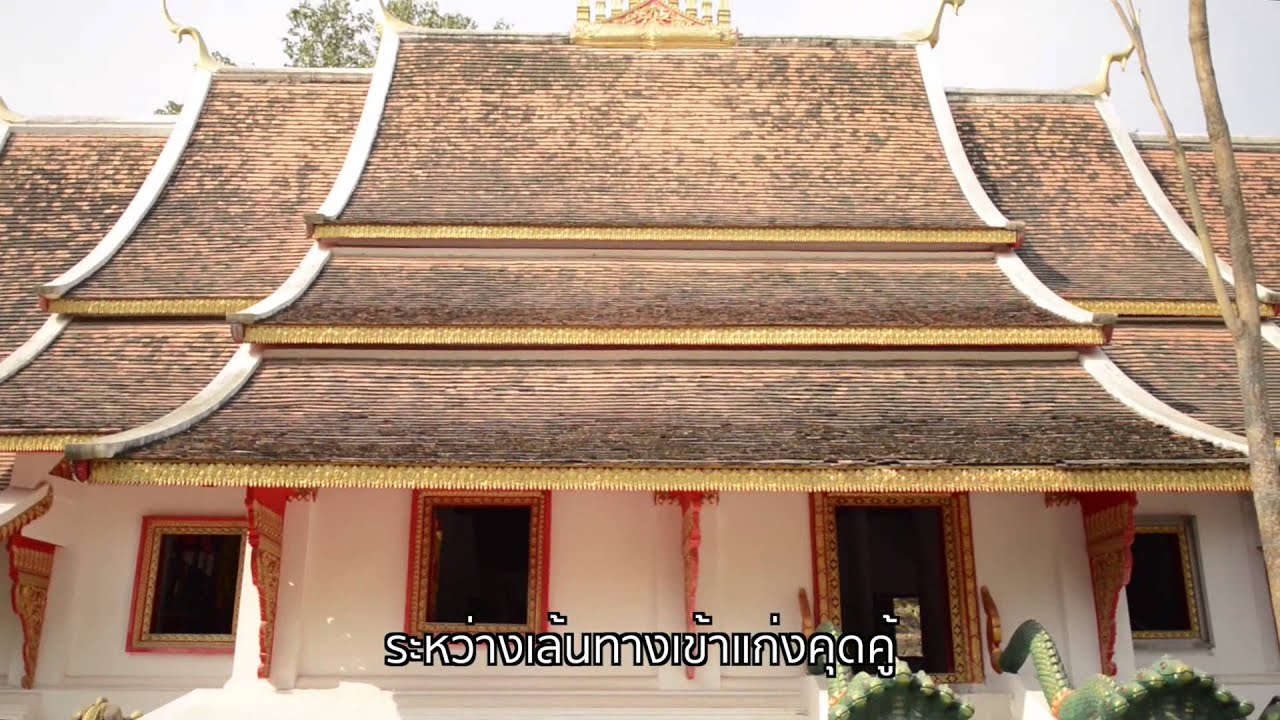
 Click to Access the Navigation Map GPS
Wat Tha Khaek Map
Recommend

 Art, Culture and Heritage
 Historical Sites and Monuments(2)
 Landmarks and Memorials(3)
 Art, Craft Centres, Tradition(2)
 Museums(4)
 Art Gallery(1)
 Educational Places
 Educational Gardens, Farm(2)
Temple(16)
Educational Gardens, Farm(2)
Temple(16)
 Other Sacred Sites(8)
 Research and Development
 Royal Project(3)
 Suburban Living
 Village, Community(3)
 Local Market(1)
 Nature and Wildlife
 National Parks and Marine Reserves(5)
 Mountain (Doi)(10)
 Dam, Reservoir, Lake(7)
 Waterfalls(21)
 Caves(3)
 River, Canal(5)
 Bays and Beaches(1)
 Other natural attractions(1)
 Entertainment and Agricultural
 Farms, Parks and Ecotourism(8)
 Waterpark(1)
 Outdoor and Adventure Activities(2)
 Travel Articles, Recipes
 Travel Review, Food Review(1)


