
lovethailand home >Northeastern Travel Attractions >Khon Kaen Travel Attractions >Phu Pha Man >Wang Sawap > Tat Yai Waterfall
TL;DR: Tat Yai Waterfall is located at Phu Pha Man National Park, Khon Kaen Province, near the boundary between Phu Pha Man District, Khon Kaen and Nam Nao District, Phetchabun, open Daily, hours 08.30 – 16.30.

Tat Yai Waterfall

Open Days: Daily
Opening Hours: 08.30 – 16.30
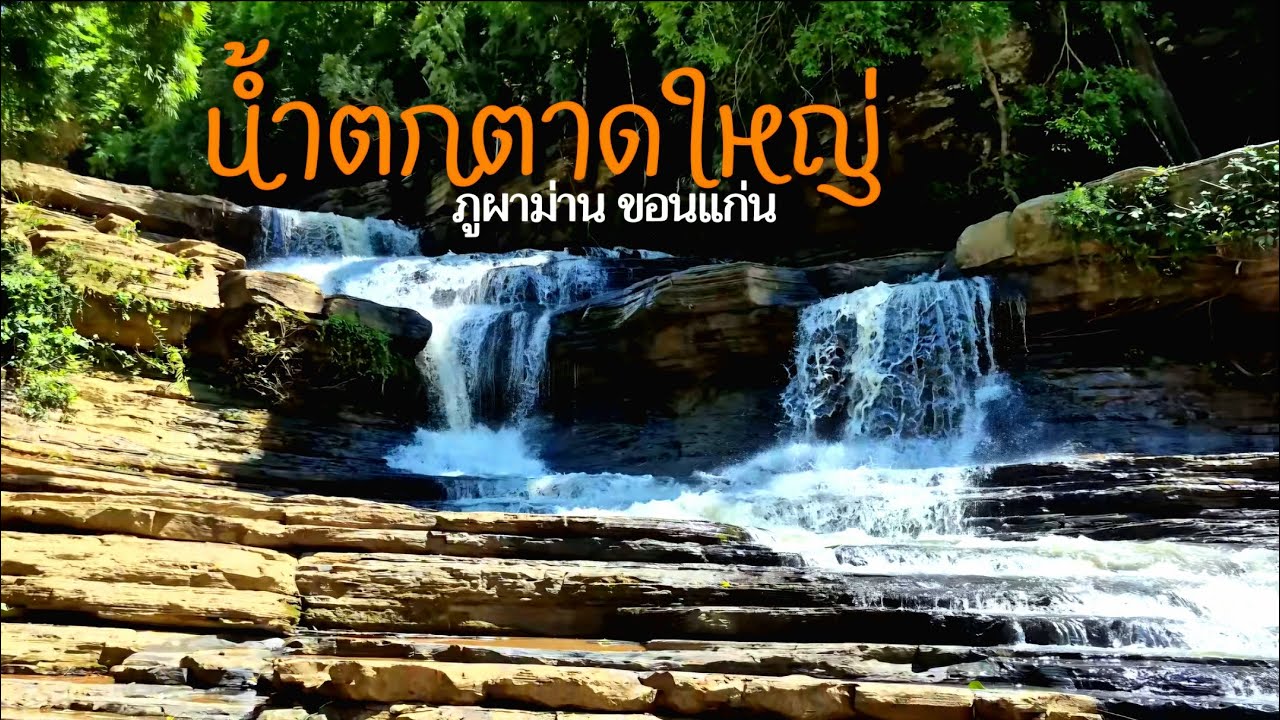
Tat Yai Waterfall in Khon Kaen Province is one of the most impressive natural waterfalls in Phu Pha Man National Park. Located in the mountainous forest landscape of the park, near the boundary area between Phu Pha Man District in Khon Kaen Province and Nam Nao District in Phetchabun Province, the waterfall is known for its multi-tiered flow and dramatic final drop. Tat Yai Waterfall has about five levels, and the last level is the highest and most beautiful, with an approximate height of 80 meters. During the rainy season, the water volume is strong and the waterfall becomes especially powerful, while in the dry season the water level decreases significantly.
Tat Yai Waterfall is suitable for travelers who want to experience a major waterfall in Khon Kaen rather than a small roadside stream. Its beauty lies not only in the height of the final drop but also in the journey of water through rock layers, forest, and mountain terrain. The waterfall is formed by Huai Tat Fa, where water descends in a stair-like sequence before reaching the final high cascade. This gives Tat Yai a layered character: part stream, part forest waterfall, and part dramatic cliff cascade.
For international travelers who want a clear overview, Tat Yai Waterfall is a large waterfall inside Phu Pha Man National Park. It has about five levels, with the final level reaching approximately 80 meters. The waterfall is most beautiful from the rainy season to the early cool season, when rainfall increases water volume and the surrounding forest becomes green and fresh. In the dry season, water levels are much lower. The site is best suited to nature travelers who are prepared for forest conditions, slippery paths, seasonal weather, and a more serious outdoor visit.
The name “Tat Yai” describes the waterfall well. In northeastern Thai usage, “tat” often refers to a waterfall or water flowing over rock formations, while “yai” means large. The name reflects the scale of the waterfall, especially the final level, which is the most outstanding section. When water pours over the high rock face during the rainy season, the name feels fully appropriate because the waterfall shows both power and beauty.
Tat Yai Waterfall is created by water from Huai Tat Fa flowing down natural rock levels. Instead of appearing as a single drop, the waterfall descends through several stages. Some sections flow gently over stones, some form smaller cascades, and the last section falls from a much greater height. This structure makes the waterfall visually rich and allows visitors to understand how mountain streams shape the landscape over time.
The rainy season is the most impressive time to visit Tat Yai Waterfall. Rainfall increases the flow of Huai Tat Fa, and the waterfall becomes wider, stronger, and more dramatic. The forest around the waterfall is also greener, the air feels cooler, and the spray from the high cascade creates a refreshing atmosphere. However, rainy-season beauty comes with risk. Paths may be slippery, stream levels may rise quickly, and weather can change without warning. Visitors should follow park guidance and avoid the route if heavy rain or flash-flood warnings are present.
In the dry season, Tat Yai Waterfall has much less water. The view can change significantly, with the water flow becoming light and some sections appearing dry. However, the dry season can still reveal the rock structure, cliff form, and forest terrain more clearly. Travelers who want to see the waterfall at its fullest should visit during the rainy season or early cool season, while those who prefer easier ground conditions may choose a safer period after the heavy rains have passed.
Tat Yai Waterfall should not be treated as a quick stop. Because it is a large waterfall in a national park landscape, visitors should allow enough time for travel, route confirmation, walking, resting, photography, and returning before evening. A morning start is strongly recommended. Before entering the waterfall route, visitors should contact or ask Phu Pha Man National Park staff about current access, trail conditions, water levels, and safety warnings.
Phu Pha Man National Park is a landscape of limestone mountains, cliffs, caves, forests, streams, and waterfalls. Tat Yai Waterfall is one part of this wider natural setting. Nearby travel can be combined with Bat Cave, Pha Nok Khao, Tat Fa Waterfall, local viewpoints, and mountain-view cafés or restaurants in Phu Pha Man District. However, Tat Yai requires more preparation than casual viewpoint stops, so it should be placed as the main natural activity of the day rather than an afterthought.
Getting There is easiest by private car, rental car, or hired vehicle. From Khon Kaen city, travel toward Chum Phae and Phu Pha Man District, then continue into the Phu Pha Man National Park area. Use the park office or visitor service point as the main reference before continuing to the waterfall route. Because access conditions can change with weather and season, visitors should confirm the starting point, walking distance, route status, and safety advice with park staff on the day of travel.
Preparation is important for visiting Tat Yai Waterfall. Visitors should wear proper hiking or non-slip shoes, bring drinking water, flexible outdoor clothing, rain protection during the rainy season, waterproof protection for phones or cameras, mosquito repellent, a towel, and a bag for carrying trash out. Groups should stay together and avoid leaving the main route. Mobile signal may not be reliable in forested areas, so visitors should not rely only on online maps once inside the natural zone.
Safety is the most important part of visiting Tat Yai Waterfall. Rocks and paths near the waterfall can be slippery because of algae, moisture, and spray. Visitors should not run, jump, climb on risky rocks, or approach cliff edges for photographs. Swimming or entering the water should be avoided in areas with strong flow, unknown depth, or poor visibility. Children and older travelers should remain in safe areas and should be closely supervised.
Tat Yai Waterfall is best suited to travelers with reasonable physical readiness and an interest in real nature. Those who enjoy forest paths, waterfalls, and seasonal landscapes will appreciate the experience. Travelers with limited mobility or those expecting a very convenient roadside attraction should ask the park in advance before deciding to enter the route. The waterfall is rewarding, but it requires respect for terrain and weather.
For photography, Tat Yai Waterfall is highly dramatic because the final level reaches about 80 meters and is surrounded by forest and rock. The best images are usually taken when water volume is high and light is not too harsh. Morning or overcast conditions can help capture more detail in the water and rocks. Camera users should protect equipment from spray, and mobile phone users should use waterproof protection. No photograph is worth stepping onto unstable wet rock or approaching dangerous edges.
The waterfall also has environmental value. As part of the Huai Tat Fa water system, it shows how rain, forest, rock, and streams interact in the Phu Pha Man landscape. A healthy forest helps regulate water flow, reduce erosion, and support the stream system that feeds the waterfall. Protecting the forest around Tat Yai is therefore directly connected to preserving the waterfall itself.
Responsible travel is essential. Visitors should not leave trash, remove plants or stones, use soap or shampoo in streams, feed wildlife, or make loud noise that disturbs the natural setting. A large waterfall in a relatively sensitive forest environment can be affected quickly by careless behavior. Keeping the route clean and following park rules helps preserve Tat Yai Waterfall for future visitors.
A practical one-day itinerary from Phu Pha Man should start in the morning at the park office or agreed meeting point. Visit Tat Yai Waterfall as the main activity, then return before late afternoon. Afterward, travelers can eat in Phu Pha Man town or visit Bat Cave in the evening if time allows. This itinerary combines a major waterfall experience with one of Phu Pha Man’s best-known natural phenomena.
For a two-day trip, staying overnight in Phu Pha Man is recommended. On the first day, travel from Khon Kaen city to Phu Pha Man, enjoy a viewpoint, café, or relaxed local meal, and stay overnight. On the second day, begin early for Tat Yai Waterfall. This plan reduces fatigue from long driving and gives more flexibility if weather conditions change.
Restaurants near Tat Yai Waterfall are mostly located in Phu Pha Man District and along routes outside the national park. Options include local restaurants, mountain-view cafés, and casual food shops such as Pha Man Fun Cafe and Restaurant, Krua Khun Took Phu Pha Man, Hug Pha Man, MAPAK MAHUG CAFE', and food shops around Pha Nok Khao. Visitors should eat before or after the waterfall trip because there may be no regular food service near the waterfall route.
Accommodation near Tat Yai Waterfall includes national park accommodation and camping at Phu Pha Man National Park, as well as private stays in Phu Pha Man such as Pha Man Fun, Pha Man Khiri Mok, The Villa Lake View Phu Pha Man, and Homestay Takayai Phu Pha Man. Staying in the area makes it easier to start early and adjust plans according to weather and trail conditions.
The key point to remember is that Tat Yai Waterfall changes dramatically by season. The rainy season brings the most powerful and beautiful water flow, but also the highest safety risk. The dry season has less water and a different appearance. The best balance is often after consistent rain when the weather is stable and the route is open. Always check with Phu Pha Man National Park before making the waterfall the main purpose of the trip.
In conclusion, Tat Yai Waterfall in Khon Kaen Province is a major waterfall in Phu Pha Man National Park, with about five levels and a dramatic final drop of approximately 80 meters. It is most impressive during the rainy season, when water from Huai Tat Fa flows strongly through the forest and rock layers. This is a destination for prepared nature travelers who want to experience the deeper, wilder side of Phu Pha Man. With proper planning, safety awareness, and respect for national park rules, Tat Yai Waterfall can be one of the most memorable natural experiences in Khon Kaen.
| Name | Tat Yai Waterfall |
| Location | Phu Pha Man National Park, Khon Kaen Province, near the boundary between Phu Pha Man District, Khon Kaen and Nam Nao District, Phetchabun |
| Address | Phu Pha Man National Park Area, Phu Pha Man District, Khon Kaen 40350, Thailand |
| Highlights | Large waterfall with about five levels, formed by Huai Tat Fa. The final level is the highest and most beautiful, approximately 80 meters high. |
| History | An important natural waterfall in Phu Pha Man National Park, recognized as one of the outstanding large waterfalls of the Phu Pha Man landscape |
| Name Origin | “Tat” refers to a waterfall or water flowing over rock formations, while “Yai” means large, reflecting the scale and height of the waterfall. |
| Distinctive Features | Water descends in stair-like levels over natural rock layers, with the final cascade reaching approximately 80 meters. |
| Travel Information | Travel by private car from Khon Kaen city toward Chum Phae and Phu Pha Man District, then enter Phu Pha Man National Park. Confirm route status with park staff before visiting the waterfall. |
| Current Status | Natural attraction inside Phu Pha Man National Park, accessible according to trail conditions, season, and park safety announcements |
| Open Days | Daily |
| Opening Hours | 08.30 – 16.30 |
| Fees | Phu Pha Man National Park entrance fee: Thai adults 20 baht, Thai children 10 baht; foreign adults 100 baht, foreign children 50 baht; motorcycle 20 baht; car 30 baht |
| Facilities | National park visitor services, parking in service areas, park accommodation, camping area, welfare shop, and natural trail access subject to park guidance |
| Main Areas / Zones | Park office, visitor center, waterfall trailhead, nature trail, upper waterfall levels, middle waterfall levels, final waterfall level, waterfall viewpoint, and surrounding forest area |
| Caretaker | Phu Pha Man National Park, Department of National Parks, Wildlife and Plant Conservation |
| Main Contact Number | 043-001-753, 064-168-2251 |
| Official Website / Official Page | Phu Pha Man National Park - Phuphaman National Park |
| Nearby Tourist Attractions | 1. Phu Pha Man National Park Office, about 15 – 25 km depending on the access route 2. Bat Cave, Phu Pha Man, about 20 – 30 km 3. Pha Nok Khao, about 20 – 30 km 4. Tat Fa Waterfall / Phu Pha Man Waterfall Routes, about 10 – 20 km depending on the route 5. Blue Lagoon Phu Pha Man, about 25 – 35 km 6. Nong Samor Viewpoint, about 25 – 35 km |
| Nearby Restaurants | 1. Local Restaurants in Phu Pha Man District, about 15 – 25 km 2. Pha Man Fun Cafe and Restaurant, about 20 – 30 km 3. Krua Khun Took Phu Pha Man, about 20 – 30 km 4. Hug Pha Man, about 20 – 30 km, Tel. 081-636-4787 5. MAPAK MAHUG CAFE', about 20 – 30 km 6. Jae Kim Pha Nok Khao, about 20 – 30 km |
| Nearby Accommodations | 1. Phu Pha Man National Park Accommodation and Camping Area, about 15 – 25 km, Tel. 043-001-753 2. Pha Man Fun Khon Kaen, about 20 – 30 km, Tel. 061-327-9222 3. Pha Man Khiri Mok Khon Kaen, about 20 – 30 km, Tel. 095-169-9564 4. The Villa Lake View Phu Pha Man Khon Kaen, about 22 – 32 km, Tel. 088-159-8249, 084-798-6009 5. Homestay Takayai Phu Pha Man, about 20 – 30 km, Tel. 088-648-9640 |
Frequently Asked Questions (FAQ)
Q: Where is Tat Yai Waterfall located?
A: Tat Yai Waterfall is located inside Phu Pha Man National Park, Khon Kaen Province, near the boundary between Phu Pha Man District in Khon Kaen and Nam Nao District in Phetchabun.
Q: How many levels does Tat Yai Waterfall have?
A: Tat Yai Waterfall has about five levels. The final level is the highest and most beautiful, reaching approximately 80 meters.
Q: What are the opening hours of Tat Yai Waterfall?
A: Visitors should enter during Phu Pha Man National Park operating hours, from 08.30 to 16.30.
Q: Is there an entrance fee for Tat Yai Waterfall?
A: The waterfall is inside Phu Pha Man National Park, so visitors pay the park entrance fee: Thai adults 20 baht, Thai children 10 baht, foreign adults 100 baht, and foreign children 50 baht.
Q: When is the best time to visit Tat Yai Waterfall?
A: The best time is from the rainy season to the early cool season, when the waterfall has strong water flow. In the dry season, the water level is much lower.
Q: Is Tat Yai Waterfall suitable for families?
A: It is suitable for families who are prepared for a nature route, but children must be supervised closely because paths, rocks, and waterfall areas can be slippery and risky.
Q: What attractions can be visited after Tat Yai Waterfall?
A: Nearby attractions include Bat Cave, Pha Nok Khao, Blue Lagoon Phu Pha Man, Nong Samor Viewpoint, Tat Fa Waterfall routes, and the Phu Pha Man National Park office.
Q: Are there accommodations near Tat Yai Waterfall?
A: Yes. Options include Phu Pha Man National Park accommodation and camping area, Pha Man Fun, Pha Man Khiri Mok, The Villa Lake View, and Homestay Takayai Phu Pha Man.
 Category: ●Nature and Wildlife
 Group: ●Waterfalls
Last Update : 3 MonthAgo
 Last Update : 3 MonthAgo
 Click to Access the Navigation Map GPS
Tat Yai Waterfall Map
Recommend

 Art, Culture and Heritage
 Historical Sites and Monuments(7)
 Landmarks and Memorials(3)
 Art, Craft Centres, Tradition(2)
 Museums(4)
 Educational Places
 Museum for Study(2)
 Places of Worship
 Temple(27)
 Other Sacred Sites(5)
 Suburban Living
 Village, Community(3)
 Local Market(1)
 National Parks and Marine Reserves(5)
 Mountain (Doi)(1)
 Dam, Reservoir, Lake(4)
Waterfalls(8)
 Caves(9)
 River, Canal(10)
 Bays and Beaches(3)
 Islands(1)
 Other natural attractions(5)
 Entertainment and Agricultural
 Zoos and Aquariums(2)
 Animal camps and shows(2)
 Farms, Parks and Ecotourism(7)
 Waterpark(3)
 Travel Articles, Recipes
 Travel Review, Food Review(1)


