
lovethailand home >Northeastern Travel Attractions >Khon Kaen Travel Attractions >Nam Phong >Sai Mun > King Cobra Village
TL;DR: King Cobra Village is located at Ban Khok Sa Nga, Village No. 6, Sai Mun Subdistrict, Nam Phong District, Khon Kaen Province, open Daily, hours 09.00 – 16.00.
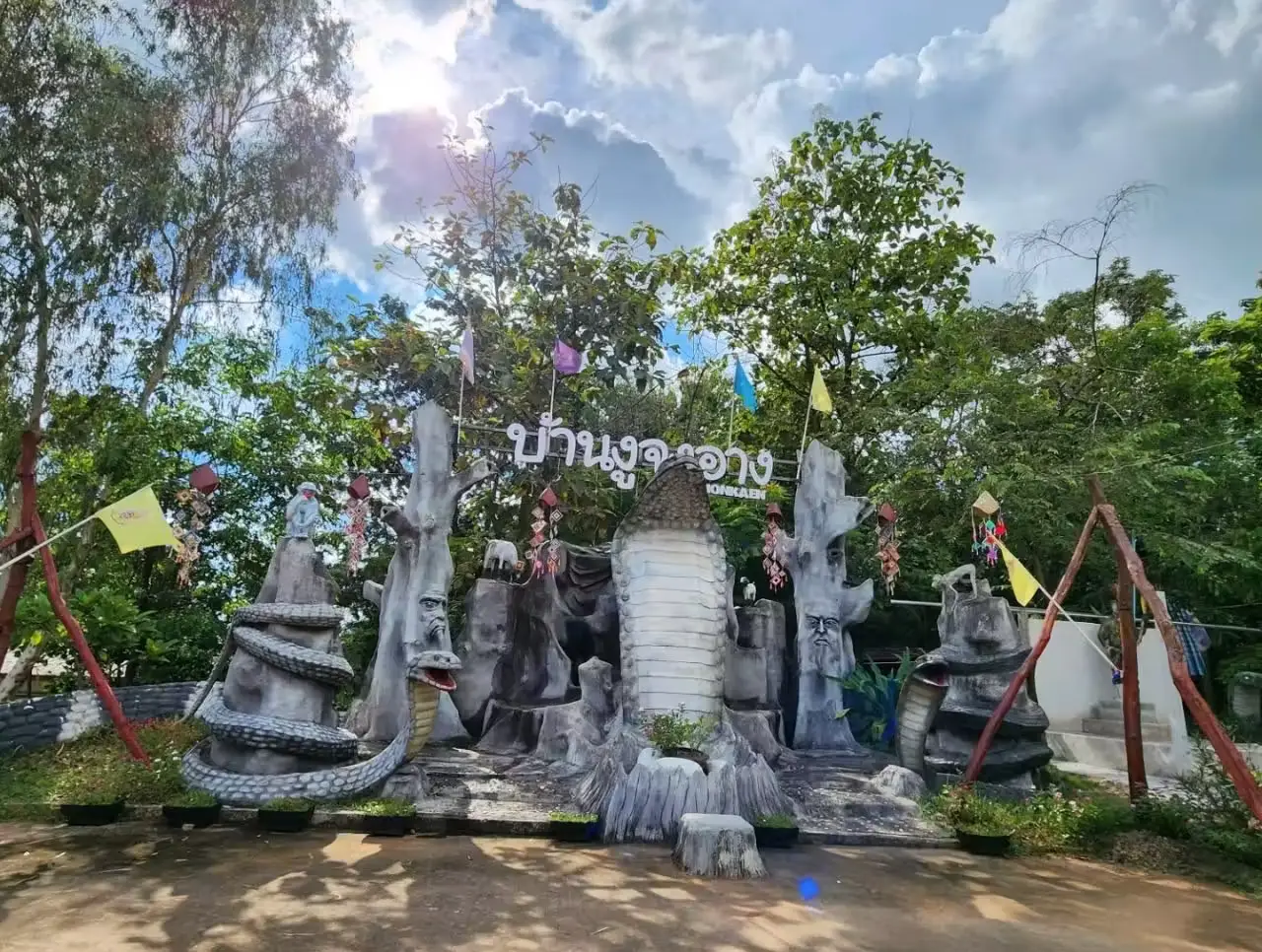
King Cobra Village
Open Days: Daily
Opening Hours: 09.00 – 16.00
King Cobra Village at Ban Khok Sa Nga in Sai Mun Subdistrict, Nam Phong District, Khon Kaen Province, is one of the most distinctive community-based cultural attractions in northeastern Thailand. The village is famous for its king cobra performances, traditional herbal medicine heritage, snake-related exhibitions, and the unusual way local people have built a cultural identity around living and performing with king cobras. For foreign travelers, this is not just a snake show. It is a living community story shaped by rural livelihoods, herbal medicine, performance culture, courage, and the ability of local people to adapt their traditional knowledge into tourism.
Ban Khok Sa Nga was originally a rural farming community. For generations, villagers combined rice farming with selling traditional herbal medicine. In the past, herbal medicine sellers did not have permanent shops, modern advertising, or online platforms. They had to travel on foot from village to village, carrying herbal products and explaining their benefits directly to local people. This work required endurance, knowledge of medicinal plants, strong communication skills, and the ability to gain trust from villagers in many different communities.
A major turning point came in 1951, when Ken Yongla, a local herbal medicine practitioner from Ban Khok Sa Nga, looked for a way to attract people to gather and listen to his herbal medicine presentation. Instead of walking from house to house, he brought a cobra to perform as part of his sales demonstration. The snake performance immediately drew attention. People gathered to watch, and the herbal medicine seller could speak to a larger audience at once. This practical idea became the starting point of a unique community tradition that later turned Ban Khok Sa Nga into the well-known King Cobra Village.
Although cobra performances were successful in attracting an audience, working with cobras was extremely dangerous because cobras can spit venom and cause serious injury. Ken Yongla later changed from using cobras to using king cobras and began passing on the skills to other villagers. These skills included catching snakes, observing snake behavior, keeping a safe distance, understanding body language, and performing with confidence. During breaks from farming, villagers traveled in groups to perform with snakes while selling herbal medicine. Over time, snake performance became both an income source and a shared identity of the community.
The reputation of Ban Khok Sa Nga grew gradually. What began as a practical technique for selling herbal medicine became a nationally recognized attraction. Many villagers learned how to perform with king cobras, and some households became known for keeping and training snakes. This created a strong public image of Ban Khok Sa Nga as a village where people live close to king cobras and possess specialized knowledge passed down through families. This makes the village very different from ordinary rural communities in Thailand.
The main performance area is connected historically with Wat Si Thamma and the community’s snake show grounds. Today, visitors can see a large performance stage, king cobra cages, snake-related exhibitions, souvenir shops, herbal products, and tourist facilities. The performances may include king cobra handling demonstrations, snake dancing to music, theatrical snake acts, and the well-known boxing-style performance between a human performer and a king cobra. These performances are dramatic, but they are also based on long experience and specialized local skills.
Some performers from the village became famous under performance names such as Krarong Noi Mueang Isan and Thongkham Luk Thongchai. These names show that the snake performance tradition is not only about danger but also about personality, stage identity, and local entertainment culture. A skilled performer must combine courage, timing, body control, experience, and deep familiarity with the snake’s behavior. The show may look exciting to visitors, but it should be understood as a trained performance that ordinary visitors must not imitate.
The most important safety rule at King Cobra Village is to observe from designated areas only. King cobras are large venomous snakes. Visitors should never approach the stage, touch cages, extend hands toward the snakes, use flash too close to animals, or encourage children to move near restricted areas. Families with children should supervise them closely at all times. The performance involves highly experienced handlers, and the actions seen on stage are not safe for the general public to copy.
Besides live performances, visitors can learn from snake exhibitions and cages that display different snakes with educational signs. These areas help visitors understand the appearance, behavior, and importance of snakes, especially the king cobra, which has become the symbol of Ban Khok Sa Nga. The educational part of the visit helps balance excitement with knowledge. Travelers can learn about snake safety, how local people understand snakes, and how the community has turned a dangerous animal into part of its cultural identity.
The village also includes several supporting areas such as king cobra cages, souvenir stalls, herbal medicine shops, a stage area, and a pond where visitors can make merit by feeding fish. Some descriptions of the attraction also mention other animals such as monkeys, mongooses, bears, and crocodiles within the broader show area. Together, these elements make King Cobra Village a mixed community attraction: part performance venue, part folk museum, part herbal medicine market, and part rural cultural destination.
The deeper importance of King Cobra Village lies in its herbal medicine heritage. The village did not begin as a tourist attraction. It began with rural people who knew herbs, made medicine, traveled to sell it, and needed a way to gather audiences. The snake show was originally a tool for communication and trade. Over time, that tool became a powerful identity. Many visitors now know the village mainly because of king cobras, but behind the performance is a long story of herbal knowledge, rural survival, and local entrepreneurship.
As tourism developed, the village adjusted its facilities to receive more visitors. Instead of relying only on household-based shows or temple grounds, the community created a more organized performance area with a stage, snake cages, exhibitions, shops, parking, toilets, and visitor services. This development made the experience more convenient and safer for tourists. It also helped the community manage tourism more systematically while preserving the tradition that made the village famous.
Visitors should understand that King Cobra Village combines culture, performance, education, local economy, and safety concerns. It is not a place for careless behavior. Travelers should respect the performers, follow instructions, avoid restricted areas, keep the site clean, and treat the village as a living community rather than a theme park. This respectful approach helps preserve the dignity of local people and the meaning behind the attraction.
The best time to visit is from morning to early afternoon. The performance area operates during daytime hours, and morning visits are usually more comfortable in terms of heat. Visitors can watch the show, explore the exhibition, take photos, buy herbal products, and support local souvenir stalls. A typical visit takes around 1 to 2 hours, but travelers interested in community history, photography, and local products may want to spend more time.
There is no compulsory admission fee. Visitors can support the performance and the care of animals by giving donations according to their satisfaction. This donation-based model helps support performers, animal care, maintenance, and the community economy. Travelers should prepare small cash for donations, souvenirs, herbal products, or local food. Supporting the village directly helps maintain this unique community tradition.
Photography is possible, but visitors should do it carefully and respectfully. Good photo spots include the village entrance sign, the snake cages, the performance stage, herbal product stalls, the fish pond, and village surroundings. However, visitors should avoid unsafe angles, should not cross safety boundaries, and should ask permission before photographing local residents or private houses. Responsible photography is especially important in community-based tourism.
Getting There from Khon Kaen city is easiest by private car or hired vehicle. Drive along Mittraphap Road, Highway No. 2, toward Nam Phong District. Around the Nam Phong area, turn onto Highway No. 2039 toward Kranuan District and continue for about 16 km. Follow signs to King Cobra Village, then turn into the local road toward Ban Khok Sa Nga. The village is about 50 km from Khon Kaen city. The route is suitable for private cars, vans, and tour buses.
Public transportation is also possible but requires more planning. Travelers can take a bus or local route toward Nam Phong or the Dao Sing-Kranuan route, get off near the Nam Phong intersection, and continue by local transport or skylab vehicle to King Cobra Village and Wat Si Thamma. Since local transport may not run continuously throughout the day, visitors should arrange the return trip in advance, especially if they are foreign travelers or visiting in the late afternoon.
King Cobra Village can be combined with other attractions in Nam Phong District and nearby areas. Possible stops include Phra That Kham Kaen, Nong Wai Dam, Wat Udom Khongkha Khiri Khet, Bang Saen 2 and Chom Thong Beach near Ubolratana Dam, and Wat Phra Bat Phu Phan Kham. A half-day trip can focus on the village and a meal in Nam Phong, while a full-day route can combine the village with cultural and nature attractions in northern Khon Kaen.
For foreign visitors, King Cobra Village is a rare place to understand a specific local identity of Isan. It combines snake performance, herbal medicine, rural trade, folk entertainment, community tourism, and the relationship between people and dangerous animals. To appreciate the village fully, visitors should look beyond the excitement of the show and understand the background of Ken Yongla, the herbal medicine sellers, and the villagers who transformed a difficult rural livelihood into a cultural attraction.
King Cobra Village at Ban Khok Sa Nga is therefore much more than a place to watch snakes. It is a story of how local people used knowledge, courage, creativity, and performance to survive economically and create a strong community identity. From walking village to village to sell herbs, the people of Ban Khok Sa Nga developed a tradition that now attracts visitors from across Thailand and beyond. For travelers who visit with respect, caution, and curiosity, this village offers one of the most memorable cultural experiences in Khon Kaen.
| Name | King Cobra Village, Ban Khok Sa Nga |
| Location | Ban Khok Sa Nga, Village No. 6, Sai Mun Subdistrict, Nam Phong District, Khon Kaen Province |
| Address | Ban Khok Sa Nga, Village No. 6, Sai Mun Subdistrict, Nam Phong District, Khon Kaen 40140, Thailand |
| Coordinates | 16.695143586501484, 102.92819979228219 |
| Highlights | King cobra performances, herbal medicine heritage, snake exhibitions, king cobra cages, community shops, and cultural tourism at Ban Khok Sa Nga |
| History / Importance | The tradition began from herbal medicine selling. In 1951, Ken Yongla introduced snake performances to attract audiences, leading to the development of the famous King Cobra Village |
| Name Origin | The name comes from the village’s long association with king cobra keeping and performances, which developed from herbal medicine sales demonstrations |
| Distinctive Features | A community attraction known for king cobra shows, traditional herbal medicine, and a rare cultural identity connected to living and performing with snakes |
| Travel Information | From Khon Kaen city, take Mittraphap Road, Highway No. 2, toward Nam Phong District. Turn onto Highway No. 2039 toward Kranuan and follow signs to King Cobra Village. The total distance is about 50 km |
| Current Status | Open as a community tourism site and king cobra performance village |
| Open Days | Daily |
| Opening Hours | 09.00 – 16.00 |
| Fees | No compulsory admission fee; visitors may support the show and animal care by donation |
| Facilities | Parking area, toilets, souvenir shops, community product stalls, exhibition area, snake cages, and snake performance stage |
| Main Areas / Zones | 1. King cobra performance stage 2. King cobra cage and display area 3. Snake education exhibition area 4. Wat Si Thamma and historical performance area 5. Fish-feeding merit pond 6. Souvenir and herbal medicine shops 7. Ban Khok Sa Nga community area |
| Caretaker / Related Authorities | King Cobra Village Ban Khok Sa Nga, Thailand King Cobra Breeders Club, and Sai Mun Subdistrict Administrative Organization, Nam Phong District, Khon Kaen Province |
| Main Contact Number | 061-3310728, 083-2658498, Sai Mun Subdistrict Administrative Organization 043-000933 |
| Official Website / Official Page | King Cobra Village Facebook page and Sai Mun Subdistrict Administrative Organization |
| Nearby Tourist Attractions | 1. Wat Si Thamma, Ban Khok Sa Nga, about 1 km 2. Phra That Kham Kaen, Nam Phong District, about 25 km 3. Nong Wai Dam, Nam Phong District, about 28 km 4. Wat Udom Khongkha Khiri Khet, about 35 km 5. Bang Saen 2 and Chom Thong Beach, Ubolratana Dam, about 55 km 6. Wat Phra Bat Phu Phan Kham, Ubolratana District, about 58 km |
| Nearby Restaurants | 1. Bo Thong Samrit Chaeo Hon, Nam Phong, about 18 km, Tel. 043-373529, 087-2256974 2. Krua Khun Yai Khon Kaen, about 20 km, Tel. 097-9591791 3. KIM Cafe’ Nam Phong, about 20 km 4. Anna Isan Cafe Nam Phong, about 18 km 5. Local Isan restaurants around Nam Phong intersection, about 18 km 6. Restaurants around Phra That Kham Kaen, about 25 km |
| Nearby Accommodations | 1. Nana Resort Nam Phong, about 18 km, Tel. 087-5449944 2. Peek Mai Villa Ban Maya, about 25 km 3. Baan Anchan Nam Phong, about 25 km 4. The Money Inn Resort Khon Kaen, about 45 km 5. JJ Villa Khon Kaen, about 50 km, Tel. 043-245833 6. Chaipat Hotel Khon Kaen, about 52 km, Tel. 043-239059 |
Frequently Asked Questions (FAQ)
Q: Where is King Cobra Village located?
A: King Cobra Village is located at Ban Khok Sa Nga, Village No. 6, Sai Mun Subdistrict, Nam Phong District, Khon Kaen Province, about 50 km from Khon Kaen city.
Q: What are the opening hours of King Cobra Village?
A: It is open daily from 09.00 to 16.00. Morning to early afternoon is the best time to visit the show and exhibition areas.
Q: Is there an admission fee?
A: There is no compulsory admission fee. Visitors may support the performance and animal care through donations.
Q: What can visitors see at King Cobra Village?
A: Visitors can see king cobra performances, snake handling demonstrations, snake dancing, boxing-style performances between a handler and a king cobra, and snake-related exhibitions.
Q: Is King Cobra Village suitable for children?
A: Yes, children can visit, but parents must supervise them closely and keep them away from the stage, cages, and restricted animal areas.
Q: How can visitors travel to King Cobra Village?
A: From Khon Kaen city, take Mittraphap Road toward Nam Phong District, turn onto Highway No. 2039 toward Kranuan, and follow signs to Ban Khok Sa Nga.
Q: What facilities are available?
A: Facilities include parking, toilets, souvenir shops, herbal medicine stalls, exhibition areas, snake cages, and a performance stage.
Q: What nearby places can be visited after King Cobra Village?
A: Nearby places include Phra That Kham Kaen, Nong Wai Dam, Wat Udom Khongkha Khiri Khet, Bang Saen 2, and Wat Phra Bat Phu Phan Kham.
 Category: ●Entertainment and Agricultural
 Group: ●Animal camps and shows
Last Update : 3 MonthAgo
 Last Update : 3 MonthAgo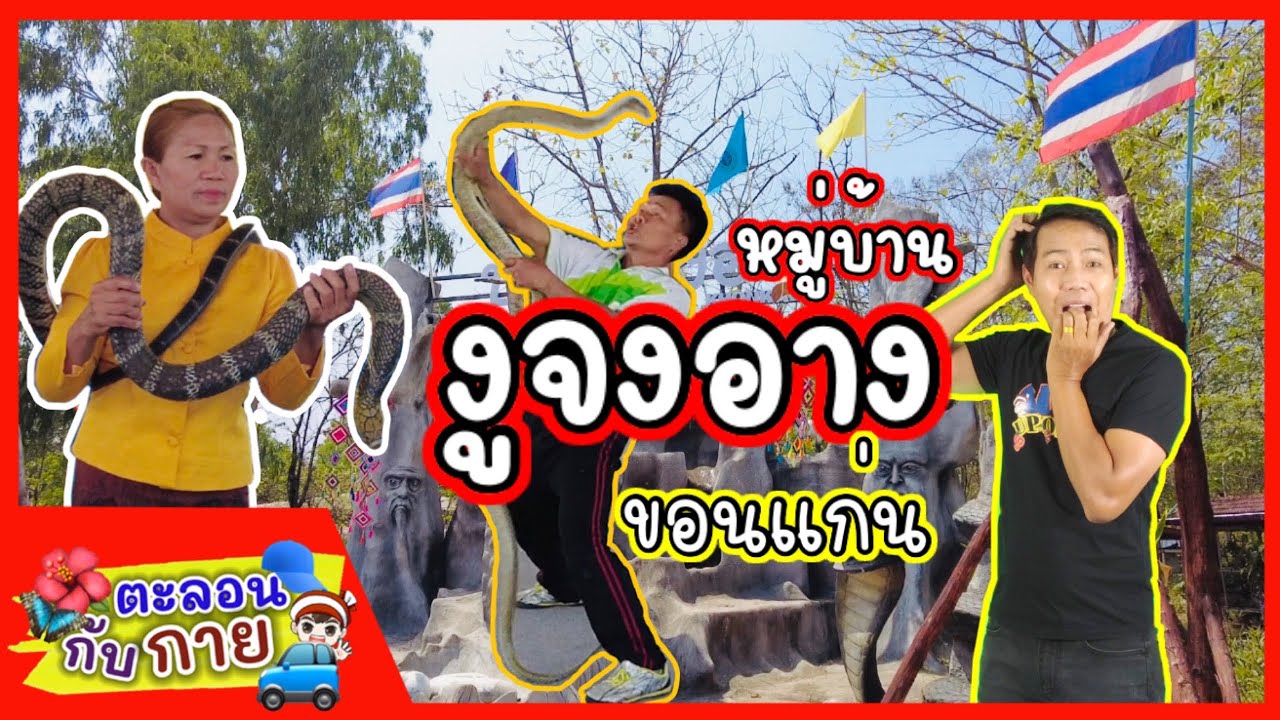
 Click to Access the Navigation Map GPS
King Cobra Village Map
Recommend

 Art, Culture and Heritage
 Historical Sites and Monuments(7)
 Landmarks and Memorials(3)
 Art, Craft Centres, Tradition(2)
 Museums(4)
 Educational Places
 Museum for Study(2)
 Places of Worship
 Temple(27)
 Other Sacred Sites(5)
 Suburban Living
 Village, Community(3)
 Local Market(1)
 Nature and Wildlife
 National Parks and Marine Reserves(5)
 Mountain (Doi)(1)
 Dam, Reservoir, Lake(4)
 Waterfalls(8)
 Caves(9)
 River, Canal(10)
 Bays and Beaches(3)
 Islands(1)
 Other natural attractions(5)
 Zoos and Aquariums(2)
Animal camps and shows(2)
Zoos and Aquariums(2)
Animal camps and shows(2)
 Farms, Parks and Ecotourism(7)
 Waterpark(3)
 Travel Articles, Recipes
 Travel Review, Food Review(1)


