
lovethailand home >Northeastern Travel Attractions >Khon Kaen Travel Attractions >Nong Song Hong >Nong Mek > Wat Sa Bua Kaew
TL;DR: Wat Sa Bua Kaew is located at Ban Wang Khun, Moo 4, Nong Mek Subdistrict, Nong Song Hong District, Khon Kaen Province, open Daily, hours 09.00 – 17.00.
Wat Sa Bua Kaew
Open Days: Daily
Opening Hours: 09.00 – 17.00
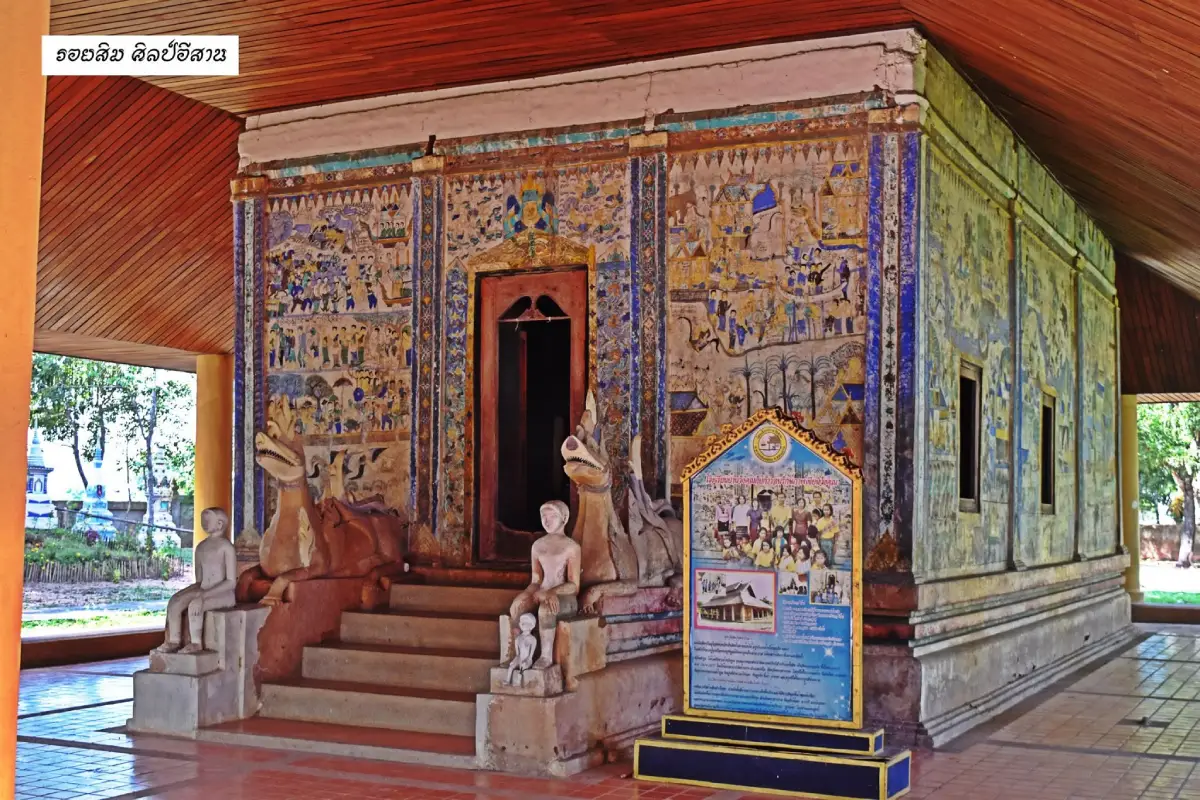
Wat Sa Bua Kaew in Khon Kaen Province is an important community temple in Ban Wang Khun, Nong Mek Subdistrict, Nong Song Hong District. It is best known for its old Isan-style ordination hall, locally called a sim, and for its remarkable mural paintings, or hup taem, found on both the interior and exterior walls. The temple is also noted for the reclining guardian lions and seated human figures at the stairway leading up to the ordination hall. For foreign travelers interested in local art, rural Buddhist culture, Isan mural traditions, and community heritage, Wat Sa Bua Kaew is one of the most meaningful cultural sites in Khon Kaen.
Wat Sa Bua Kaew is located in Ban Wang Khun, Moo 4, Nong Mek Subdistrict, Nong Song Hong District, Khon Kaen Province. It is a local Buddhist temple under the Mahanikaya order and has long served as the spiritual center of the Ban Wang Khun community. The temple is not famous because of grand modern architecture or large-scale tourist facilities. Its true value lies in its old sim, its expressive murals, its folk sculptures, and the cultural memory preserved by the local community. This makes it an essential destination for visitors who want to understand Isan art beyond mainstream tourist routes.
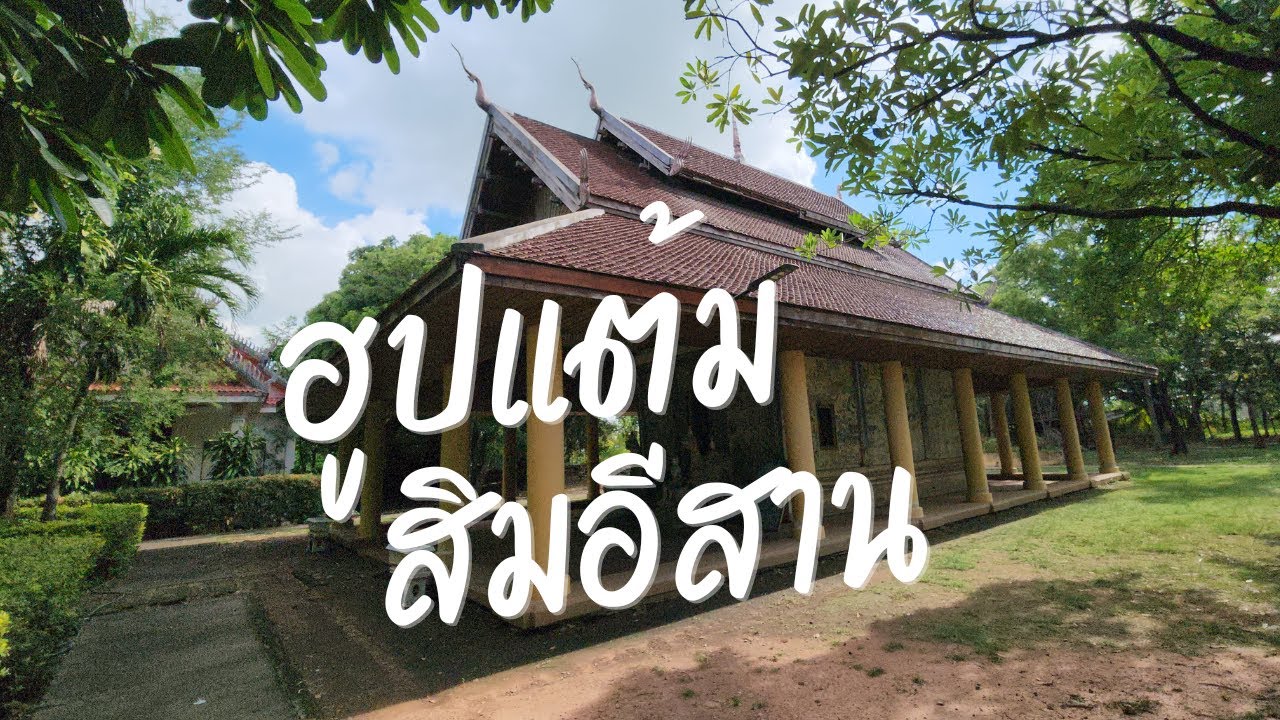
The most important structure at Wat Sa Bua Kaew is its old sim, the Isan term for an ordination hall. The building is made of brick and plaster, with long walls divided into 4 mural sections and shorter walls divided into 2 sections. These divisions create a natural storytelling surface, allowing different episodes to appear across the walls. The architectural form reflects a local Isan approach to sacred buildings: modest, functional, and deeply connected with community craftsmanship. Rather than emphasizing monumentality, the sim communicates through detail, proportion, mural narrative, and handmade sculptural elements.
At the base of the stairway leading to the ordination hall, visitors will see a pair of reclining lion sculptures on the left and right. In front of the two lions are seated human figures with their legs stretched out. These sculptures were created by Luang Pho Phui, also known as Phra Khru Wibun Phatthana Nuyut, who played a central role in the construction of the sim. The design of the lions and human figures was inspired by the sim of Wat Ban Yang in Maha Sarakham Province. Their forms reveal the imagination and craftsmanship of local artisans who translated faith, memory, and regional aesthetics into sacred sculpture.
The lion sculptures at Wat Sa Bua Kaew are not merely decorative objects. They mark the transition from the outer temple ground into the sacred space of the sim. Unlike formal court-style guardian figures, these Isan folk sculptures have a direct, expressive, and approachable character. Their proportions and faces show the freedom of local workmanship rather than strict adherence to royal artistic conventions. The seated human figures add another unusual visual layer, making the entrance to the sim distinctive and memorable. This stairway is one of the first areas visitors should pause to observe carefully.
The history of Wat Sa Bua Kaew is closely tied to the history of Ban Wang Khun. The community is a rural Isan village in Nong Mek Subdistrict, Nong Song Hong District. Many residents have cultural roots connected with Tai-Lao Isan traditions, and the community history includes migration from areas such as Roi Et, Maha Sarakham, and Buriram. After settling, villagers built their homes, their temple, and their shared local identity. In this context, Wat Sa Bua Kaew became more than a place of worship. It became a center of faith, memory, community cooperation, and cultural continuity.
The name “Wat Sa Bua Kaew” is directly connected with the construction of the sim. When Luang Pho Phui initiated the building of the land-based ordination hall to replace an older water-based sim, soil was dug from a pond area and used in the construction. Over time, that pond became a large lotus pond, and the temple came to be known as Wat Sa Bua Kaew, meaning “the temple of the crystal lotus pond.” The name therefore preserves the story of labor, earth, water, brickmaking, and collective faith within the community.
The sim was built during the period of Luang Pho Phui with the participation of villagers. Local memories describe how villagers made bricks from soil mixed with rice husks, fired them, and used them to build the walls of the ordination hall. During the mural painting process, children in the village would gather around the temple, listen to the painters explain the stories, and absorb moral lessons through images. In this way, the murals were not distant works of art. They were educational tools for the community, allowing people who might not read formal texts to understand Buddhist teachings, folk stories, good conduct, wrongdoing, and the consequences of karma through visual storytelling.
The murals of Wat Sa Bua Kaew are the heart of the temple. They appear on all four sides of the interior and exterior walls of the sim and depict a wide range of subjects, including local life, Jataka tales, the life of the Buddha, heaven, hell, folk tales, and regional literature. These murals are not arranged in the strict formal manner of central Thai court painting. Instead, the stories are divided into episodes using band-like separators known as sin thao. At Wat Sa Bua Kaew, these separators resemble flashes of lightning, a notable feature because traditional Isan murals do not commonly use this device in the same way as mural paintings from Ayutthaya or early Rattanakosin periods.
The use of sin thao at Wat Sa Bua Kaew gives the murals a clear narrative rhythm. Viewers can follow the images episode by episode, almost like reading a visual manuscript or watching scenes unfold in a folk performance. The bands help organize a large number of stories across the same wall without removing the vitality of the folk style. This makes the murals valuable not only as religious art but also as evidence of artistic exchange, adaptation, and creativity among Isan mural painters.
One of the most striking qualities of the Wat Sa Bua Kaew murals is the freedom with which the painters depicted trees, leaves, animals, and natural elements. Trees are not simply background decoration. They carry rhythm, movement, and personality through expressive brushwork. Some leaves appear to have been painted with quick, confident touches, creating atmosphere rather than rigid realism. This expressive method has often been compared to the spirit of Western Impressionism, especially in the way color and brush movement are used to suggest life, light, and motion rather than precise academic detail.
The color palette of the murals includes yellow, indigo, red ochre, green, blue, and black. Indigo, yellow, and green appear prominently in many scenes. When the painters wanted to evoke the richness of gold, they often used yellow instead of gold leaf. Indigo and green are used in clouds, sky, and elements that require visual depth, while red ochre warms the composition and connects the paintings to earth, plaster, and the rural Isan world. The result is bright and lively without becoming overly ornamental. The colors feel local, handmade, and closely tied to the materials and visual culture of the region.
The exterior murals of the sim depict episodes from Phra Ram Jataka, the Isan interpretation of the Ramayana tradition. These scenes show major events from the story while also inserting details of local life, such as clothing, hairstyles, gestures, tools, and village surroundings. Visitors therefore do not see only a literary narrative. They also see how local Isan artists interpreted epic stories through the world they knew. The murals function like cultural documents, showing how people in the past understood literature, morality, social life, and sacred storytelling.
Inside the sim, the murals include scenes from the life of the Buddha and selected episodes from Sinxay, an important literary work in the Lao-Isan cultural world. Buddhist biography is a common subject in temple murals throughout Thailand, but at Wat Sa Bua Kaew it is translated into a folk visual language. Figures are direct, gestures are expressive, and some settings feel closer to the Isan village world than to a royal court atmosphere. The inclusion of Sinxay further reflects the cultural roots of Ban Wang Khun and the wider Lao-Isan storytelling tradition.
The murals have value on several levels. Religiously, they teach merit, sin, virtue, wrongdoing, karma, rebirth, and moral conduct. Literarily, they preserve Jataka tales, folk narratives, and regional literature such as Sinxay. Socially, they record clothing, tools, animals, gestures, and everyday life in a rural Isan community. Artistically, they reveal the confidence of local painters who created powerful narrative art with imagination, freedom, and community knowledge. For this reason, Wat Sa Bua Kaew is not only a temple but also an open-air archive of Isan cultural memory.
In addition to the sim and murals, Wat Sa Bua Kaew also has a local temple museum. The museum displays everyday objects, folk tools, old currency, betel sets, palm-leaf manuscripts, metalware, wooden containers, cattle bells, charcoal irons, old gramophones, a wooden preaching seat, and a giant sticky-rice basket. These objects help visitors understand the real-life world behind the images on the walls. After seeing clothing, tools, and rural scenes in the murals, the museum provides material evidence of how people once lived, worked, worshipped, and celebrated in the Isan countryside.
The objects in the museum are not merely antique items. They carry stories about marriage customs, Buddhist learning, domestic life, food culture, craftsmanship, and local memory. Betel containers reflect social etiquette and personal artistry. Palm-leaf manuscripts point to religious learning and traditional scripts. The giant sticky-rice basket connects directly with the food culture of Isan, where sticky rice is central to daily life. By combining the sim, murals, sculpture, and museum, Wat Sa Bua Kaew offers a layered experience that connects visual art with lived culture.
Wat Sa Bua Kaew is also connected with the annual cycle of Isan traditions known as Heet Sip Song. The Ban Wang Khun community preserves merit-making customs throughout the year, including Bun Khao Chi, Bun Phawet, Songkran, the rocket festival, Buddhist Lent, Bun Khao Pradap Din, Bun Khao Sak, the end of Buddhist Lent, Kathin, and Loy Krathong. During these occasions, the temple becomes a space where villagers gather, make merit, exchange stories, and maintain social bonds. The temple is therefore not only a heritage attraction but also a living religious and cultural space.
Visitors should allow at least 1 to 2 hours for a meaningful visit. A good way to experience the temple is to begin with the exterior murals, walking slowly around the sim to follow the narrative scenes. After that, visitors can enter the sim respectfully to view the interior paintings, then continue to the museum to understand the objects and everyday culture behind the imagery. While walking, pay attention to the colors, linework, sin thao dividers, animals, trees, clothing, local gestures, and Dharma script inscriptions. These details turn a simple temple visit into a deeper cultural study.
Photography should be done carefully. The sim and murals are heritage artworks that require preservation. Visitors should not touch the painted walls, lean against them, use flash too closely, or behave in ways that may damage the surfaces. Group visitors or those wishing to see the museum should contact the temple in advance. Morning and early afternoon are good times to visit, as natural light helps reveal the details of the exterior murals. As this is still an active Buddhist temple, respectful dress and quiet behavior are expected.
Wat Sa Bua Kaew is located not far from Nong Song Hong town and can be included in a cultural day trip with Bueng Nong Song Hong, Nong Hu Ling Health Park, Nong Song Hong Walking Street, and Kieng Bueng Farm. Travelers can visit the temple in the morning, have lunch or coffee in Nong Song Hong, and continue to the lake or farm area in the afternoon. This route is suitable for travelers coming from Khon Kaen city or Phon District by private car.
Getting There from Khon Kaen city is straightforward by road. Take Highway 2, the Mittraphap Road, toward Phon District for about 75 km. Then turn left onto Highway 207 toward Nong Song Hong District and continue for about 17 km. Around kilometer markers 27 – 28, you will reach the Ban Wang Khun area. Turn right and continue for about 1 km to Wat Sa Bua Kaew. Travelers using navigation apps can search for Wat Sa Bua Kaew, Ban Wang Khun, Nong Mek Subdistrict, Nong Song Hong District, Khon Kaen Province, or use the coordinates 15.75428, 102.74714.
Travelers coming from Phon District can connect to the road toward Nong Song Hong more quickly than those starting from Khon Kaen city. Visitors arriving from Maha Sarakham, Buriram, or nearby provinces can plan routes through regional roads leading to Nong Song Hong and then continue to Ban Wang Khun. A private car or rental car is the most convenient option because public transport in rural areas may not reach the temple directly. During religious festivals or long weekends, it is advisable to allow extra travel time.
For travelers interested in art history, Wat Sa Bua Kaew is especially valuable because it brings together architecture, mural painting, sculpture, local literature, and community history in one place. The sim shows that rural community art can be deeply sophisticated without imitating court art. The painters used nearby sources of inspiration: local landscapes, folk stories, Buddhist teachings, animals, plants, village life, and regional literature. Their work is accessible at first glance yet rich in cultural meaning.
The temple is suitable for many types of visitors: temple lovers, art enthusiasts, students, researchers, photographers, writers, and international travelers who want to understand northeastern Thailand beyond food and natural scenery. A visit to Wat Sa Bua Kaew reveals that Isan has its own visual language, its own artistic logic, and its own powerful way of telling stories about religion, literature, and everyday life through images.
Visitors should dress modestly because the temple remains a religious site. Shoulders and knees should be covered, shoes should be easy to remove, and behavior should remain respectful. It is also wise to bring drinking water, a hat, or an umbrella on hot days. Wat Sa Bua Kaew is not a place to rush through. The murals and sculptures reward slow observation. The more slowly one walks, the more stories appear on the walls.
Overall, Wat Sa Bua Kaew in Khon Kaen Province is one of the clearest examples of the strength of Isan folk art. Its old sim, murals, guardian lion sculptures, seated human figures, the work of Luang Pho Phui, the local museum, and the cultural memory of Ban Wang Khun make this temple far more than a simple stop for merit-making. It is a place to learn about history, art, faith, storytelling, and the everyday life of Isan people through a living community heritage site.
| Name | Wat Sa Bua Kaew |
| Location | Ban Wang Khun, Moo 4, Nong Mek Subdistrict, Nong Song Hong District, Khon Kaen Province |
| Address | Wat Sa Bua Kaew, Moo 4, Ban Wang Khun, Nong Mek Subdistrict, Nong Song Hong District, Khon Kaen 40190, Thailand |
| Coordinates | 15.75428, 102.74714 |
| Highlights | Old Isan sim, interior and exterior mural paintings, reclining lion sculptures, seated human figures, and Wat Sa Bua Kaew Museum |
| History | The temple was established in 1917. The land-based sim was built during the time of Luang Pho Phui around 1932 and is an important example of Isan folk religious art |
| Name Origin | The name comes from a pond dug to obtain soil for building the sim. The area later became a large lotus pond, giving rise to the name Wat Sa Bua Kaew |
| Distinctive Features | Brick-and-plaster sim with murals depicting local life, Jataka tales, the Buddha’s life, heaven, hell, folk stories, and regional literature using yellow, indigo, red ochre, green, blue, and black |
| Travel Information | From Khon Kaen city, take Highway 2 toward Phon District for about 75 km, turn left onto Highway 207 toward Nong Song Hong for about 17 km, then turn right at Ban Wang Khun and continue for about 1 km to the temple |
| Current Status | Open and operating as a Buddhist temple and cultural heritage site |
| Open Days | Daily |
| Opening Hours | 09.00 – 17.00. Advance contact is recommended for museum visits or group visits |
| Fees | No admission fee |
| Facilities | Parking area, worship areas, old sim, temple museum, mural viewing areas, and basic community temple facilities |
| Main Areas / Zones | Old Isan sim, exterior murals, interior murals, stairway sculptures, Wat Sa Bua Kaew Museum, lotus pond, and community religious activity areas |
| Abbot / Caretaker | Phra Khru Wibun Sarakan (Phu Pannatharo), Abbot of Wat Sa Bua Kaew |
| Main Contact Number | 08 4794 3738 |
| Nearby Tourist Attractions | 1. Wat Sa Bua Kaew Museum, about 0 km 2. Ban Wang Khun Community, about 1 km 3. Bueng Nong Song Hong and Nong Hu Ling Health Park, about 7 km 4. Nong Song Hong Walking Street at Bueng Nong Song Hong, about 7 km 5. Kieng Bueng Farm, Nong Song Hong District, about 8 km |
| Nearby Restaurants | 1. Baan Rim Nam Cafe, about 7 km, Tel. 083-6004433 2. Kieng Bueng Farm / Chawab at Kieng Bueng Farm, about 8 km, Tel. 080-4002297 3. Bonne Cafe & Gym, about 8 km, Tel. 081-8722779 4. Arun Lamai Pla Phao, about 7 km, Tel. 081-4858793 5. Cake Ton Rak, about 7 km, Tel. 097-0428306 6. DCraft Cafe by Dome Residence, about 7 km, Tel. 081-8464156 |
| Nearby Accommodations | 1. Pattaya Resort, about 8 km, Tel. 081-2619504 2. Rim Bueng Resort, about 7 km, Tel. 094-6419569 3. Pa Sak Resort, about 9 km, Tel. 081-0518499 4. Dome Residence Khonkaen, about 7 km, Tel. 088-0777792, 081-8464156 5. The Red House Nong Song Hong, about 7 km, Tel. 087-7211913 |
Frequently Asked Questions (FAQ)
Q: Where is Wat Sa Bua Kaew located?
A: Wat Sa Bua Kaew is located in Ban Wang Khun, Moo 4, Nong Mek Subdistrict, Nong Song Hong District, Khon Kaen Province 40190, Thailand.
Q: What are the opening days and hours of Wat Sa Bua Kaew?
A: The temple is open daily from 09.00 to 17.00. Advance contact is recommended for museum visits or group visits.
Q: Is there an admission fee to visit Wat Sa Bua Kaew?
A: No. There is no admission fee to visit the temple, the sim, the murals, or the general temple grounds during opening hours.
Q: What is Wat Sa Bua Kaew famous for?
A: The temple is famous for its old Isan sim, interior and exterior murals, reclining lion sculptures, seated human figures, and local museum.
Q: What stories are shown in the murals of Wat Sa Bua Kaew?
A: The murals depict local life, Jataka tales, the Buddha’s life, heaven, hell, folk stories, Phra Ram Jataka, and selected episodes from Sinxay, divided into scenes with lightning-shaped sin thao bands.
Q: How can travelers get from Khon Kaen city to Wat Sa Bua Kaew?
A: Take Highway 2 toward Phon District for about 75 km, turn left onto Highway 207 toward Nong Song Hong for about 17 km, then turn right at Ban Wang Khun and continue for about 1 km to the temple.
Q: How long should visitors spend at Wat Sa Bua Kaew?
A: Visitors should allow at least 1 to 2 hours to appreciate the sim, murals, sculptures, and temple museum in detail.
Q: What nearby places can be visited together with Wat Sa Bua Kaew?
A: Visitors can combine the temple with Ban Wang Khun Community, Bueng Nong Song Hong, Nong Hu Ling Health Park, Nong Song Hong Walking Street, and Kieng Bueng Farm.
 Category: ●Places of Worship
 Group: ●Temple
Last Update : 4 MonthAgo
 Last Update : 4 MonthAgo
 Click to Access the Navigation Map GPS
Wat Sa Bua Kaew Map
Recommend

 Art, Culture and Heritage
 Historical Sites and Monuments(7)
 Landmarks and Memorials(3)
 Art, Craft Centres, Tradition(2)
 Museums(4)
 Educational Places
 Museum for Study(2)
Temple(27)
 Other Sacred Sites(5)
 Suburban Living
 Village, Community(3)
 Local Market(1)
 Nature and Wildlife
 National Parks and Marine Reserves(5)
 Mountain (Doi)(1)
 Dam, Reservoir, Lake(4)
 Waterfalls(8)
 Caves(9)
 River, Canal(10)
 Bays and Beaches(3)
 Islands(1)
 Other natural attractions(5)
 Entertainment and Agricultural
 Zoos and Aquariums(2)
 Animal camps and shows(2)
 Farms, Parks and Ecotourism(7)
 Waterpark(3)
 Travel Articles, Recipes
 Travel Review, Food Review(1)


