
lovethailand home >Northeastern Travel Attractions >Kalasin Travel Attractions >Kamalasai >Nong Paen > Wat Pho Chai Semaram (Wat Ban Kom)
TL;DR: Wat Pho Chai Semaram (Wat Ban Kom) is located at Ban Sema, Nong Paen Subdistrict, Kamalasai District, Kalasin Province, open Daily, hours 08.00 – 17.00.
Wat Pho Chai Semaram (Wat Ban Kom)
Open Days: Daily
Opening Hours: 08.00 – 17.00
Wat Pho Chai Semaram, also known as Wat Ban Kom, in Kalasin Province is an old Buddhist temple in Ban Sema, Nong Paen Subdistrict, Kamalasai District. It stands opposite the entrance to the ancient city of Fa Daet Song Yang, one of the most important Dvaravati cultural landscapes in Northeastern Thailand. The temple is especially significant because local villagers collected and preserved many sandstone sema stones found in and around the ancient city. These stones are not ordinary boundary markers. They are sacred Buddhist objects, archaeological evidence, and carved historical documents that reveal the depth of early Buddhist culture in Kalasin.
For foreign travelers, Wat Pho Chai Semaram is one of the best places to understand the relationship between a living Thai temple and an ancient archaeological landscape. The temple is not a large royal monastery or a newly built tourist attraction. Its value lies in the rows of weathered sandstone sema stones, the local museum, the connection with Fa Daet Song Yang, and the way the community continues to care for objects that are more than a thousand years old. Visiting this temple gives travelers a direct encounter with Dvaravati Buddhist art in its local setting.
Fa Daet Song Yang, also known as Fa Daet Sung Yang, was an ancient city located in the area of Ban Sema in present-day Nong Paen Subdistrict. Archaeological evidence from the area includes moats, earthworks, ancient religious remains, votive tablets, inscriptions, pottery, and many sandstone sema stones. These remains show that the area was once a significant Buddhist community in the Dvaravati cultural sphere of Isan. Kalasin was therefore not only a modern provincial town but also part of a much older network of Buddhist settlements in the Chi and Lam Pao river basins.
The location of Wat Pho Chai Semaram is crucial to its meaning. The temple is located in the same landscape as Fa Daet Song Yang and very close to Phra That Yakhu, the most important surviving monument in the ancient city. Many sema stones discovered in the area were brought to the temple for safekeeping. Some stones remain close to their original find spots, some were collected within the temple, and others were moved to museums such as Khon Kaen National Museum. This distribution shows both the richness of the ancient city and the role of local communities in preserving cultural heritage.
The sandstone sema stones of Fa Daet Song Yang are among the most distinctive cultural objects of Northeastern Thailand. Large sema stones of this type are especially associated with Isan and are rarely found in the same form in other regions of Thailand. They were used to mark sacred Buddhist space, particularly the ritual boundary of an ordination area. Their size, number, and artistic quality suggest that Buddhism was strongly established in this region during the Dvaravati period.
At Wat Ban Kom, visitors can see both plain and carved sema stones. The plain stones are important because they represent the sacred boundary function of the object. The carved stones are especially valuable because they tell Buddhist stories through relief sculpture. Many of the carved sema stones from Fa Daet Song Yang depict scenes from the life of the Buddha and Jataka tales. These images show that Buddhist teaching was communicated not only through texts and sermons but also through visual storytelling carved into stone.
The stones vary in size and condition. Some are tall and imposing, while others are broken or worn by time. Even when the carvings are no longer fully clear, the stones remain historically important. Their shape, thickness, surface, carved lines, and placement all help visitors understand how sacred space was created in the Dvaravati period. They should be viewed slowly and respectfully. These are not decorative garden stones; they are ancient Buddhist boundary markers and cultural evidence of great value.
In Buddhist tradition, sema stones define the sacred boundary for monastic acts. Within this boundary, monks can perform formal rituals such as ordination and recitation of monastic rules. The sema therefore separates ordinary ground from consecrated religious space. The large number of sema stones at Fa Daet Song Yang indicates a well-developed Buddhist ritual system and a community with the resources, craftsmen, and devotion needed to create such monumental stone markers.
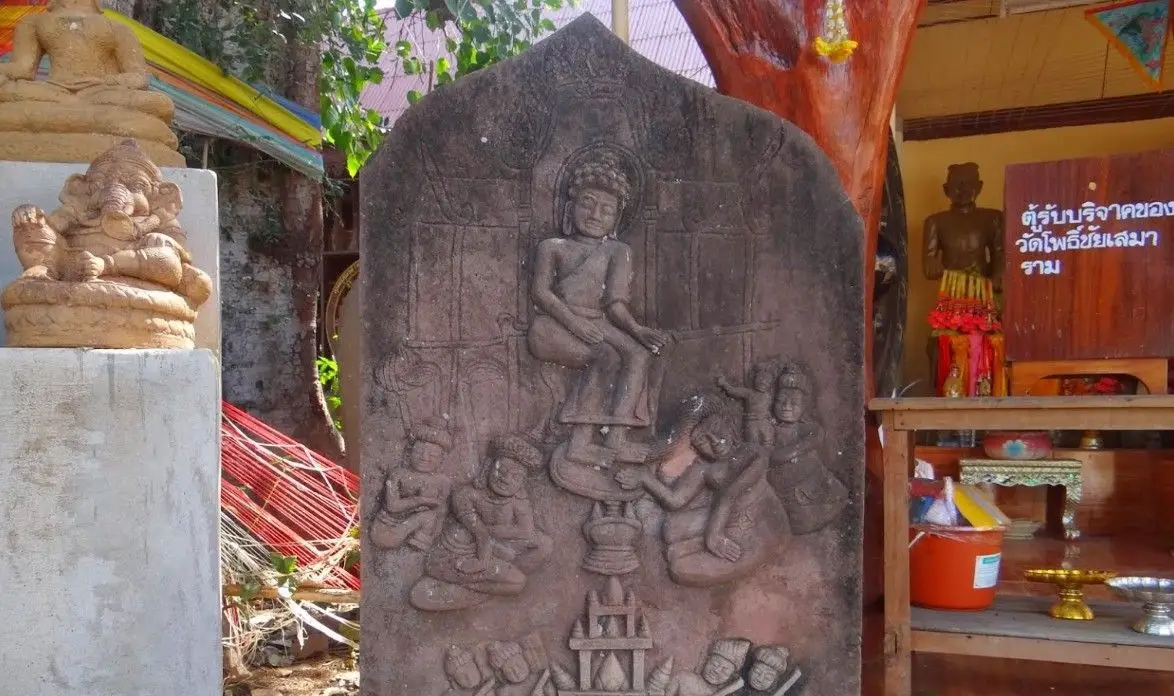
The most famous sema image associated with Fa Daet Song Yang is known as “Phimpha Philap.” This carved stone depicts a scene from the life of the Buddha after his enlightenment, when he returned to Kapilavastu. King Suddhodana, Prince Rahula, and Princess Yasodhara Phimpha appear in the scene. Yasodhara shows the highest form of reverence by spreading her hair to wipe the feet of the Buddha. The image is deeply moving because it combines devotion, sorrow, respect, and spiritual transformation in a single composition.
The original Phimpha Philap sema stone is kept at Khon Kaen National Museum. At Wat Pho Chai Semaram, visitors can see a replica and other sema stones that help explain the original context of this masterpiece. The replica should not be seen merely as a substitute for the museum object. It is meaningful because the temple stands in the landscape where the Fa Daet Song Yang sema tradition originated. Seeing the replica at Ban Sema helps visitors connect the image with the land, the community, and the ancient city that produced it.
The meaning of Phimpha Philap is powerful. The scene is not simply a family reunion. The Buddha has returned not as a prince, but as an enlightened teacher. Yasodhara’s act of wiping his feet with her hair represents profound reverence and the transformation of personal attachment into spiritual devotion. The image therefore communicates both emotional intensity and Buddhist meaning. It shows how Dvaravati artists could use stone relief to express complex human and religious feelings.
The composition also demonstrates the skill of ancient craftsmen. The Buddha is placed as the central sacred figure, while surrounding figures express respect, grief, and devotion. Architectural elements such as palace-like forms and arches suggest a royal setting. Attendants and courtly symbols create the atmosphere of Kapilavastu. Although the image is carved in stone without color, the arrangement of figures allows the story to be read visually. This is why Phimpha Philap is considered one of the most important carved sema images from the Fa Daet Song Yang group.
Other sema stones from the same cultural group show scenes related to Buddhism, Jataka stories, celestial beings, devotees, and sacred architecture. These images reveal how local communities understood Buddhist narratives. The carvings acted as visual sermons. They could teach moral stories and religious ideas to people who may not have read written texts. In this sense, the sema stones functioned as both sacred boundary markers and teaching images.
Wat Pho Chai Semaram is also connected with an ancient inscription known as the Wat Pho Chai Semaram inscription, or KS. 7. This inscription was made on a sandstone sema-shaped object and is written in post-Pallava script in Old Mon. It is dated to around the 14th–15th Buddhist centuries. The inscription is important because it shows that the sema tradition at this site was not only artistic but also textual. It connects stone, language, merit-making, and Buddhist patronage.
The inscription is brief but meaningful. It records the names of donors or creators and expresses the wish that the merit from the act would produce good results in the future. This shows that making sema stones was understood as a religious act of merit. The people who sponsored or created these objects were not only marking sacred space; they were also making offerings for spiritual benefit. The inscription therefore gives a human voice to the ancient stone tradition.
Inside the temple, visitors should pay attention to the sema stones arranged in lines and groups. Their arrangement reflects the local effort to collect and preserve antiquities found in the surrounding ancient city. Some stones are more complete than others, but all deserve respect. Worn surfaces and broken edges are part of their long history. They remind visitors that these objects have survived weather, movement, ritual use, and centuries of change.
The Fa Daet Museum at Wat Pho Chai Semaram helps visitors understand the broader archaeological context. It presents objects associated with the ancient city and provides a local framework for understanding the sema stones. Having a museum within the temple is important because it keeps heritage close to the community. The site is not only a place where ancient objects are stored; it is a place where local history is explained and remembered.
Wat Pho Chai Semaram is suitable for cultural travelers, students, historians, archaeologists, photographers, and anyone interested in early Buddhism in Thailand. A quick visit can provide an impression of the sema stones, but a meaningful visit requires more time. Visitors should allow at least 1 hour, and more if they wish to study the carvings and museum displays carefully. Slow observation is essential because many details are subtle and worn.
The most important rule when visiting is to avoid touching, leaning on, climbing, or placing objects on the sema stones. Although they are made of stone, their surfaces and carved lines can be damaged by repeated contact. Visitors should take photographs from a safe distance and avoid using the stones as props. Respectful behavior is part of preservation. These objects belong not only to the temple but to the cultural heritage of Thailand.
The temple should be visited together with Phra That Yakhu and the wider Fa Daet Song Yang archaeological area. Phra That Yakhu represents the monumental sacred architecture of the ancient city, while Wat Pho Chai Semaram preserves and displays the sema stone tradition. Together, they give a fuller picture of Dvaravati Buddhism in Kalasin. Visiting only one site may give a partial view, but visiting both helps travelers understand the sacred landscape as a whole.
For a broader cultural route, travelers can connect Wat Ban Kom with Wat Si Bun Rueang in Kalasin city. Wat Si Bun Rueang also preserves sema stones from Fa Daet Song Yang. Seeing both temples reveals how the sema heritage of the ancient city has been preserved in different places. Some stones remain near the ancient site, some are kept in city temples, and some are displayed in museums. This pattern tells the story of discovery, preservation, local care, and museum conservation.
One of the special qualities of Wat Pho Chai Semaram is that visitors stand close to the original landscape of the ancient city. The experience is different from seeing an object in a distant museum. At Ban Sema, visitors can see the temple, the village, the entrance to Fa Daet Song Yang, and the sema stones together. This creates a stronger sense of place. It helps visitors imagine how sacred objects, ritual areas, and community life once existed in the same landscape.
Photography at the temple can be rewarding, especially in the morning or late afternoon. Angled light helps reveal the texture of the sandstone and the shallow carved lines. Good subjects include the sema stone rows, the Phimpha Philap replica, the temple grounds, and the surrounding atmosphere of Ban Sema. Visitors should photograph respectfully and avoid climbing onto bases or touching stones to create better compositions.
Visitors should dress respectfully because this is an active Buddhist temple with monks, local worshippers, and community activities. Shoulders and knees should be covered, voices should be kept low, and shoes should be removed where required. If entering the museum or an area where objects are stored, visitors should follow the instructions of monks or caretakers. Cultural travel should support preservation, not add risk to fragile heritage.
The best time to visit is in the morning or late afternoon. Morning visits are cooler and allow time to continue to Phra That Yakhu and other nearby sites. Late afternoon is suitable for photography because the warm light gives depth to the stone surfaces. During the hot season, visitors should bring water, a hat, or an umbrella because some parts of the surrounding area are open and exposed to strong sunlight.
A recommended route begins at Wat Pho Chai Semaram to understand the sema stones, continues to Phra That Yakhu and the Fa Daet Song Yang archaeological landscape, then moves to Kamalasai town for food or refreshments. Travelers with more time can continue to Kalasin city to visit Wat Klang, Wat Si Bun Rueang, Kalasin Museum, and Rongsi Market. This route connects the ancient Dvaravati layer of Kalasin with the later urban heritage of the provincial capital.
Getting There is easiest by private car, rental car, or local hired transport. From Kalasin city, drive toward Kamalasai District and Nong Paen Subdistrict, then continue to Ban Sema and Fa Daet Song Yang. The temple is opposite the entrance to the ancient city and very close to Phra That Yakhu. On map navigation, search for Wat Pho Chai Semaram, Wat Ban Kom, or Wat Pho Chai Semaram Kalasin. Travelers without private transport should first reach Kalasin city or Kamalasai town, then arrange local transport to Ban Sema and agree on a return time.
For students and families, the temple is a useful outdoor classroom. It shows that archaeology is not only found behind museum glass. Ancient objects can remain in a living temple, cared for by monks and local residents. Children can learn how stone carvings tell stories, how sacred boundaries were marked, and how local communities preserve heritage. Adults can understand the connection between religion, art, landscape, and memory.
For foreign visitors, Wat Pho Chai Semaram offers an important lesson about Thai Buddhist history. Thailand’s Buddhist heritage is not limited to famous temples in Bangkok, Ayutthaya, or Chiang Mai. In Isan, Buddhism developed through its own local forms, including large sandstone sema stones, Dvaravati relief carvings, and sacred landscapes tied to ancient settlements. Wat Ban Kom is one of the clearest places to see this regional identity.
The value of Wat Pho Chai Semaram lies not only in the number of sema stones preserved there, but also in its role as a guardian of local memory. Every stone in the temple reminds visitors that the people of Ban Sema continue to live beside the ancient city and continue to care for its remains. Heritage survives not only through official protection or museums, but also through community attachment. This is why the temple remains meaningful as both a sacred place and a cultural site.
Overall, Wat Pho Chai Semaram or Wat Ban Kom is one of the most important places to visit for anyone who wants to understand Fa Daet Song Yang and Dvaravati art in Kalasin. The temple stands opposite the entrance to the ancient city, preserves many sandstone sema stones, displays a replica of the famous Phimpha Philap sema image, and houses the Fa Daet Museum. A visit here reveals the continuity of Buddhism, art, community care, and historical memory in one compact but deeply significant site.
| Name | Wat Pho Chai Semaram, also known as Wat Ban Kom, Kalasin Province |
| Location | Ban Sema, Nong Paen Subdistrict, Kamalasai District, Kalasin Province |
| Address | Moo 7, Ban Sema, Nong Paen Subdistrict, Kamalasai District, Kalasin 46130, Thailand |
| Coordinates | 16.315115, 103.518698 |
| Highlights | A major local collection of sandstone sema stones from Fa Daet Song Yang, large Isan-style boundary stones, the Phimpha Philap replica, and the Fa Daet Museum at Wat Pho Chai Semaram |
| History | An old temple closely connected with Fa Daet Song Yang, a Dvaravati cultural landscape in Ban Sema. Many sema stones found in the ancient city area were collected and preserved at the temple |
| Name Origin | The formal temple name is Wat Pho Chai Semaram, while Wat Ban Kom is the local name linked to Ban Kom or Ban Sema, the community located within the Fa Daet Song Yang ancient city area |
| Distinctive Features | Rows and groups of Dvaravati sandstone sema stones, many associated with Buddhist narratives and Jataka stories, showing the sacred boundary tradition of ancient Isan Buddhism |
| Important Objects / Features | Dvaravati sema stones, Phimpha Philap replica, Fa Daet Museum, antiquity storage area, worship space, and the religious activity area of Ban Sema community |
| About Phimpha Philap | The Phimpha Philap sema image depicts the Buddha returning to Kapilavastu, with King Suddhodana, Prince Rahula, and Princess Yasodhara Phimpha paying homage. Yasodhara spreads her hair to wipe the Buddha’s feet. The original stone is kept at Khon Kaen National Museum |
| Related Inscription | The Wat Pho Chai Semaram inscription, also known as KS. 7, is on a sandstone sema-shaped object. It uses post-Pallava script in Old Mon and is dated to around the 14th–15th Buddhist centuries |
| Related Traditions / Rituals | Buddhist merit-making and temple ceremonies, with cultural links to Phra That Yakhu worship and Fa Daet Song Yang heritage activities in the surrounding area |
| Travel Information | From Kalasin city, travel toward Kamalasai District and Nong Paen Subdistrict, then continue to Ban Sema and Fa Daet Song Yang. The temple stands opposite the entrance to the ancient city and is best reached by private car, rental car, or local hired transport |
| Current Status | Open to visitors as a Buddhist temple and local learning site for Fa Daet Song Yang antiquities |
| Open Days | Daily |
| Opening Hours | 08.00 – 17.00 |
| Fees | No admission fee |
| Facilities | Sema stone viewing area, Fa Daet Museum, worship area, temple courtyard, parking space within or near the temple, and surrounding Ban Sema community facilities |
| Main Areas / Zones | Sema stone rows, Phimpha Philap replica area, Fa Daet Museum, antiquity storage area, temple courtyard, religious activity area, Ban Sema community area, and route to Fa Daet Song Yang Ancient City |
| Abbot / Caretaker | Phra Khru Pho Chai Waraphirak |
| Main Contact Number | 086-040-0159 |
| Nearby Tourist Attractions | 1. Fa Daet Song Yang Ancient City, about 0.4 km 2. Phra That Yakhu, about 0.5 km 3. Local Wisdom Museum, Lak Mueang Subdistrict, about 8 km 4. Wat Pa Phaeng Si Mueang, about 8 km 5. Wat Klang Royal Monastery Kalasin, about 18 km 6. Wat Si Bun Rueang or Wat Nuea, about 18 km 7. Kalasin Museum, about 18 km 8. Rongsi Market Kalasin, about 20 km |
| Nearby Restaurants | 1. Hung Huang OTOP Lifestyle, about 8 km, Tel. 086-356-4496 2. Kuaitiao Mu Maneekan Kamalasai, about 8 km, Tel. 098-409-4892, 093-329-6594 3. Café Amazon, Kamalasai Main Road Branch, about 8 km, Tel. 097-269-1269, 095-757-8180 4. Shabu Bar Kamalasai, about 9 km, Tel. 087-615-6655 5. Suan Sukjai & Cafe Kamalasai, about 9 km, Tel. 063-949-9466 6. 58 Cafe in House, about 9 km, Tel. 097-046-6356 |
| Nearby Accommodations | 1. Cha-Long Boutique Hotel, about 11 km 2. The Grace Kalasin, about 11 km, Tel. 081-303-2298, 085-117-1790 3. TK Residence Hotel, about 12 km, Tel. 095-338-0515 4. Farisa Garden Hotel, about 13 km 5. A.P. Garden Hotel, about 13 km, Tel. 086-354-6193 6. Rimpao Hotel, about 13 km, Tel. 043-813-631 7. Suanrak Resort Kamalasai, about 15 km, Tel. 064-937-7073 |
Frequently Asked Questions (FAQ)
Q: Where is Wat Pho Chai Semaram or Wat Ban Kom located?
A: Wat Pho Chai Semaram is located at Moo 7, Ban Sema, Nong Paen Subdistrict, Kamalasai District, Kalasin Province. It stands opposite the entrance to Fa Daet Song Yang Ancient City and close to Phra That Yakhu.
Q: Why is Wat Pho Chai Semaram important?
A: The temple preserves many sandstone sema stones from Fa Daet Song Yang, making it an important place for understanding Dvaravati Buddhist art and ancient sacred boundary traditions in Northeastern Thailand.
Q: What makes the sema stones at Wat Ban Kom special?
A: They are large sandstone boundary stones strongly associated with Isan. Many are carved with scenes from the life of the Buddha and Jataka stories, showing the distinctive Dvaravati art of the Fa Daet Song Yang group.
Q: What is Phimpha Philap?
A: Phimpha Philap is a famous carved sema image showing the Buddha returning to Kapilavastu, where Princess Yasodhara Phimpha pays deep homage by spreading her hair to wipe the Buddha’s feet. The original stone is kept at Khon Kaen National Museum.
Q: Is there an admission fee for Wat Pho Chai Semaram?
A: No. There is no admission fee. Visitors may view the sema stones and the Fa Daet Museum during the temple’s opening hours and may make merit or donate according to their faith.
Q: What places should be visited with Wat Pho Chai Semaram?
A: Recommended nearby places include Fa Daet Song Yang Ancient City, Phra That Yakhu, the Local Wisdom Museum, Wat Klang Royal Monastery, Wat Si Bun Rueang, Kalasin Museum, and Rongsi Market.
Q: How long should visitors spend at Wat Pho Chai Semaram?
A: A general visit may take about 45 minutes to 1 hour. Visitors who want to study the sema stones and museum displays in detail should allow at least 1.5 hours.
Q: How should visitors behave around the ancient sema stones?
A: Visitors should not touch, lean on, climb, or place objects on the sema stones. Photographs should be taken from a respectful distance because the stones are important antiquities that should be preserved for future generations.
 Category: ●Places of Worship
 Group: ●Temple
Last Update : 4 MonthAgo
 Last Update : 4 MonthAgo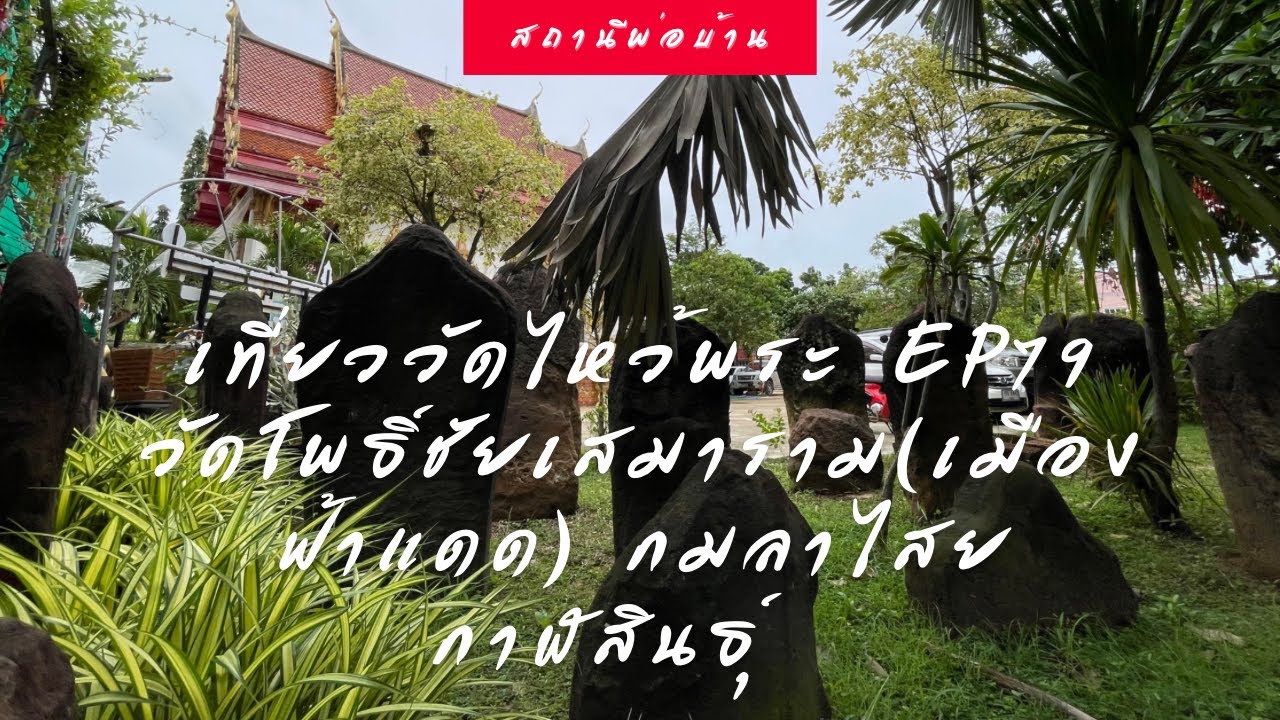
 Click to Access the Navigation Map GPS
Wat Pho Chai Semaram (Wat Ban Kom) Map

 Art, Culture and Heritage
 Historical Sites and Monuments(2)
 Landmarks and Memorials(3)
 Art, Craft Centres, Tradition(4)
 Museums(3)
 Art Gallery(1)
 Educational Places
 Educational Gardens, Farm(1)
Temple(21)
Educational Gardens, Farm(1)
Temple(21)
 Other Sacred Sites(7)
 Suburban Living
 Village, Community(3)
 Nature and Wildlife
 National Parks and Marine Reserves(3)
 Mountain (Doi)(2)
 Dam, Reservoir, Lake(5)
 Waterfalls(4)
 Caves(2)
 River, Canal(3)
 Bays and Beaches(1)
 Other natural attractions(2)
 Entertainment and Agricultural
 Animal camps and shows(1)
 Farms, Parks and Ecotourism(2)
 Travel Articles, Recipes
 Travel Review, Food Review(1)


