
lovethailand home >Central Travel Attractions >Samut Songkhram Travel Attractions >Am Phawa >Wat Pradu > Wat Pradu
TL;DR: Wat Pradu is located at Ban Bang Krari, Moo 2, Wat Pradu Subdistrict, Amphawa District, Samut Songkhram, open Open Daily, hours 08:00-17:00.
Wat Pradu

Open Days: Open Daily
Opening Hours: 08:00-17:00
Wat Pradu Royal Monastery in Samut Songkhram is one of Amphawa’s most historically layered temples. It is not only an old temple with roots in the late Ayutthaya period, but also a royal monastery connected with King Chulalongkorn’s river journey and with a remarkable collection of royal devotional objects preserved inside the temple grounds. Visitors who come here do not simply stop for merit-making. They also encounter an important cultural site where temple history, royal memory, museum collections, and traditional Thai art all come together in one place.
The temple is located in Ban Bang Krari, Moo 2, Wat Pradu Subdistrict, Amphawa District, Samut Songkhram Province. It belongs to the Mahanikaya order and holds the status of a third-class royal monastery. Its setting remains closely tied to the old Amphawa landscape, with local community life and orchard surroundings still shaping the atmosphere around the temple. This gives Wat Pradu a calm and grounded identity that feels very different from more commercial tourist spots in the district.
Wat Pradu dates back to the late Ayutthaya period and is recognized as one of the important historic temples of the Mae Klong region. One of the most significant episodes in its history came during the reign of King Chulalongkorn. On 21 July 1904, the king arrived at the temple during a royal water journey and had breakfast there. This visit became a defining moment in the identity of the temple and explains why so many royal devotional objects are now preserved within its grounds. The temple is therefore tied not only to local religious history but also to a documented moment in royal travel history.
What makes Wat Pradu especially distinctive is the Museum of Royal Devotional Objects of King Chulalongkorn, established in 2000. The museum is housed in a gilded two-storey Thai-style building with five paired roof sections. Inside, it preserves important royal items associated with the temple, including a royal bedstead, ceremonial fans bearing the royal initials, a Narai-on-Garuda ceremonial fan cover, cabinets, food carriers, alms bowls with inlaid lids, betel and tobacco accessories, trays, lamps, and a Paris clock. These are not ordinary objects displayed for decoration. They represent a direct and material connection between the temple and royal patronage.
Another important structure is the pavilion housing the royal boat cabin granted by King Chulalongkorn. Built in 1998, this single-storey Thai-style building preserves the gifted boat cabin associated with the royal visit of 21 July 1904. This makes the temple’s historical narrative tangible. Visitors are not only told that the king once visited, but are also able to see surviving objects linked to that event. In this respect, Wat Pradu offers one of the more concrete royal-history experiences among temples in the Amphawa area.
The temple also contains the Museum of Somdet Phra Nyanasamvara, the Supreme Patriarch, built in 2005. This two-storey Thai-style building with four paired roofs, including a teak upper floor, was created to commemorate the Supreme Patriarch’s visit to Wat Pradu on 3 June 2005. This adds another historical layer to the temple, showing that it has remained significant in modern Buddhist Thailand and not only in the distant past.
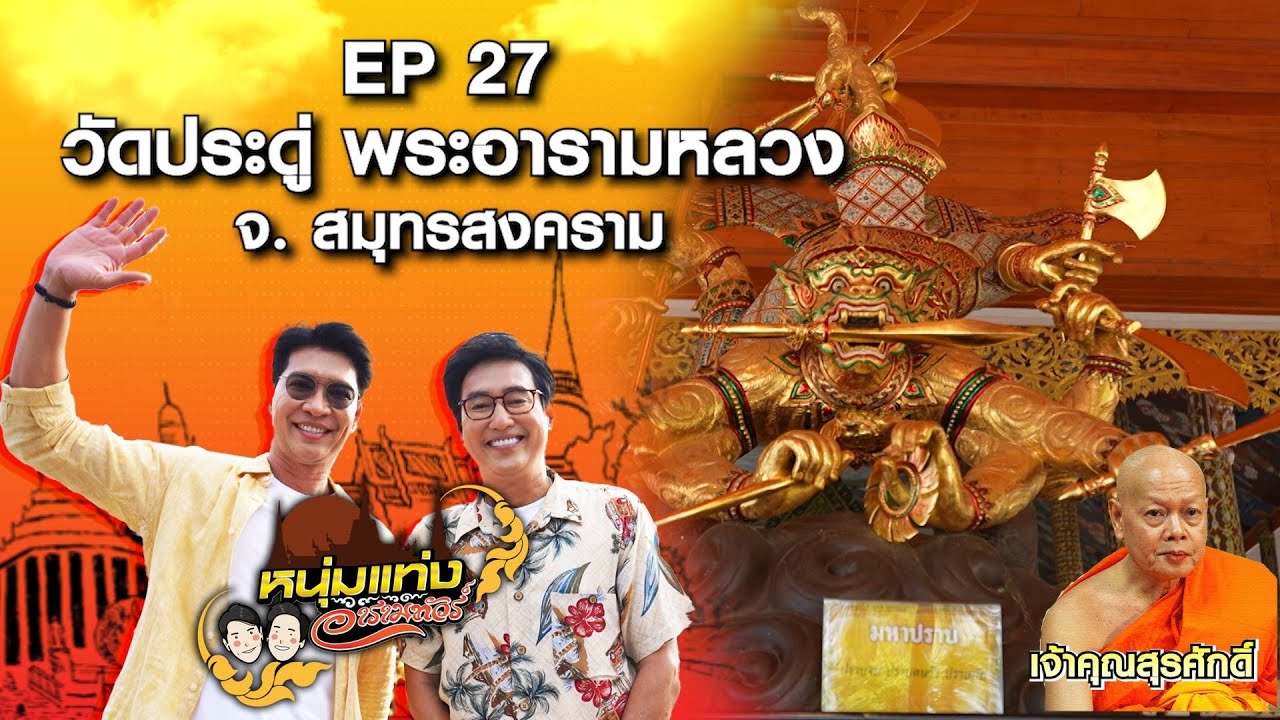
One more notable attraction inside the temple grounds is the Khon Mask and Teacher Head Art Demonstration Center. Established in 2005, this art hall presents the process of making traditional khon masks and ceremonial teacher heads. This is an unusual and highly valuable feature for a temple complex, because it turns Wat Pradu into both a religious destination and a cultural learning center. Visitors interested in Thai classical arts can gain insight into a craft tradition that is rarely presented so directly within a temple setting.
The ordination hall of Wat Pradu is itself a significant artistic site. Behind the principal Buddha image is a mural centered on the Bodhi tree, showing the enlightenment of the Buddha with the chief disciples on either side. Along the window zones stand many sculpted celestial figures celebrating the event. The principal Buddha image is an old Ayutthaya-period sculpture in the Lan Xang style, locally known as Phra Phuttha Chao Yai or Phra Phuttha Chinnasi Barami Saen. This image remains one of the temple’s central devotional focal points and adds deep sacred continuity to the artistic setting of the hall.
Outside the ordination hall stands the sermon hall, whose ceiling and wall paintings preserve traditional imagery associated with the reign of King Rama II. Painted with powder pigments and white clay, the scenes include assemblies of celestial beings, Hanuman in motion, hermits, gandharvas, playful bald figures, and episodes from the life of the Buddha. These paintings expand the temple’s artistic importance far beyond a single hall and make Wat Pradu especially rewarding for visitors who appreciate historic Thai painting traditions.
Behind the ordination hall lies a waterside pavilion, reinforcing the temple’s identity as a riverside religious site. This area adds a quieter, more contemplative dimension to the visit and reflects the old water-based character of Amphawa. Wat Pradu therefore offers a complete environment rather than a single attraction. Its sacred architecture, royal museums, artistic halls, and waterside spaces all work together to create a rich and memorable visit.
In the present day, the temple is also closely associated with Phra Ratchaphawanavajirajarn Vi., widely known as Luang Pho Phra Maha Surasak Atisakkho, who serves as abbot of Wat Pradu Royal Monastery. His contemporary role has helped keep the temple active as a center of worship, Buddhist practice, and community devotion. This gives the monastery a living religious presence rather than making it only a heritage site of the past.
Wat Pradu is particularly well suited to travelers who want a deeper cultural route through Amphawa. Rather than offering only one photogenic building, it provides a full combination of temple architecture, museum collections, mural art, royal memory, and Thai craft heritage. Visitors can move from the ordination hall to the museums, from royal objects to khon mask art, and from sacred imagery to riverside atmosphere without leaving the same temple compound. That makes it one of the most complete cultural temple visits in Samut Songkhram.
Getting There is straightforward from both Amphawa Floating Market and Samut Songkhram town. The temple is located at 54 Moo 2, Wat Pradu Subdistrict, Amphawa District, Samut Songkhram 75110. Travelers with a private car can drive directly into the Wat Pradu area, while those already touring Amphawa can include it in a half-day or full-day heritage route with ease. The road access is simple, and the surrounding area still preserves the local canal-and-orchard atmosphere that makes the journey itself enjoyable.
Most visitors can spend around 1 to 2 hours here, though those interested in museum collections and traditional art may want longer. Wat Pradu is best for travelers who enjoy old temples with real historical substance, not just surface beauty. For anyone looking to understand Amphawa through religion, monarchy, art, and local memory all at once, this royal monastery is one of the clearest and strongest choices in the province.
| Name | Wat Pradu Royal Monastery |
| Location | Ban Bang Krari, Moo 2, Wat Pradu Subdistrict, Amphawa District, Samut Songkhram |
| Address | 54 Moo 2, Wat Pradu, Amphawa, Samut Songkhram 75110, Thailand |
| Highlights | King Chulalongkorn Royal Devotional Objects Museum, royal boat cabin pavilion, Supreme Patriarch museum, khon mask art center, old principal Buddha image in Lan Xang style |
| History | Ancient temple from the late Ayutthaya period, with a major royal historical connection through King Chulalongkorn’s river visit on 21 July 1904 |
| Name Origin | The temple area was associated with a large pradu tree and the canal in front was known as Khlong Pradu, which gave the temple its name |
| Distinctive Features | A royal monastery combining old sacred architecture, royal museum collections, contemporary commemorative museums, and traditional Thai mask-making art in one compound |
| Travel Information | Easy to reach from Amphawa Floating Market and Samut Songkhram town by car via Wat Pradu Subdistrict |
| Current Status | Open to visitors and worshippers as usual |
| Open Days | Open Daily |
| Opening Hours | 08:00-17:00 |
| Fees | Free Admission |
| Facilities | Worship Areas, Museums, Temple Courtyard, Nearby Parking, Walkways Around Main Buildings |
| Main Areas / Zones | Ordination Hall, Sermon Hall, King Chulalongkorn Royal Devotional Objects Museum, Royal Boat Cabin Pavilion, Supreme Patriarch Museum, Khon Mask Art Demonstration Center, Waterside Pavilion |
| Abbot / Caretaker | Phra Ratchaphawanavajirajarn Vi. (Phra Maha Surasak Atisakkho) |
| Main Contact Number | 034-772299 |
| Official Website / Official Page | Facebook: Wat Pradu Royal Monastery |
| Nearby Tourist Attractions | 1. Amphawa Floating Market - 7 km 2. King Rama II Memorial Park - 7 km 3. Amphawa Chaipattananurak Project - 7 km 4. Wat Chulamanee - 9 km 5. Maeklong Railway Market - 11 km |
| Nearby Restaurants | 1. Krua Chao Phraya - 2 km 2. Ruen Saneh Cafe - 6 km 3. Ranjuan Amphawa - 7 km 4. The Kittens Koffie Arts 'n Eats - 7 km 5. The Pomelo Amphawa - 9 km |
| Nearby Accommodations | 1. Baan Suan Sriwara - 1 km 2. Meephawa Resort - 4 km 3. House Of Passion - 6 km 4. ChababaanCham Resort - 7 km 5. Ruentonnum Amphawa - 7 km |
Frequently Asked Questions (FAQ)
Q: Is Wat Pradu Royal Monastery open every day?
A: Yes. The temple is open daily, and general visiting hours are 08:00-17:00.
Q: Is there an entrance fee at Wat Pradu?
A: No. Visitors can enter for worship and sightseeing free of charge.
Q: What is Wat Pradu best known for?
A: It is best known for the museum of King Chulalongkorn’s royal devotional objects, the royal boat cabin pavilion, the old Lan Xang-style principal Buddha image, and the khon mask art center.
Q: Did King Chulalongkorn really visit Wat Pradu?
A: Yes. He visited the temple during a royal water journey on 21 July 1904.
Q: Is Wat Pradu suitable for cultural travelers?
A: Yes. It is especially suitable for visitors interested in temple history, royal heritage, Thai museum collections, and traditional art.
Q: How much time should I spend at Wat Pradu?
A: Most visitors can spend around 1 to 2 hours here, though museum lovers may want longer.
Tel : 034735237
 Tel : 034735237
 Category: ●Places of Worship
 Group: ●Temple
Last Update : 7 MonthAgo
 Last Update : 7 MonthAgo
 Click to Access the Navigation Map GPS

 Art, Culture and Heritage
 Historical Sites and Monuments(2)
 Art, Craft Centres, Tradition(1)
 Museums(6)
 Historic Homes and Cities(1)
Temple(34)
 Church(1)
 Other Sacred Sites(1)
 Research and Development
 Royal Project(2)
 Suburban Living
 Village, Community(6)
 Local Market(2)
 Floating Market(5)
 Nature and Wildlife
 River, Canal(1)
 Bays and Beaches(1)
 Other natural attractions(1)
 Entertainment and Agricultural
 Farms, Parks and Ecotourism(1)
 Waterpark(1)
 Travel Articles, Recipes
 Travel Review, Food Review(1)


