
lovethailand home >North Travel Attractions >Lampang Travel Attractions >Mueang Lampang >Chomphu > Lampang Rajabhat University
TL;DR: Lampang Rajabhat University, Lampang attractions : University, Rajabhat University.

Lampang Rajabhat University
Open Days: Monday – Friday (General Administrative Offices)
Opening Hours: 08:30 – 16:30 (Excluding Public Holidays and University-Designated Holidays)
Lampang Rajabhat University (LPRU) is a public university in Lampang Province, Northern Thailand, located at 119 Moo 9, Lampang–Mae Tha Road, Chomphu Subdistrict, Mueang Lampang District, Lampang 52100. It was founded on June 9, 1971, as Lampang Teachers College and began teaching in 1972. After developing into Lampang Rajabhat Institute, the institution gained university status under the Rajabhat University Act of 2004. Today, it provides higher education through 7 faculties: the Faculty of Education, Faculty of Humanities and Social Sciences, Faculty of Management Science, Faculty of Science, Faculty of Agricultural Technology, Faculty of Industrial Technology, and Faculty of Nursing. Its academic offerings also include graduate diplomas, master's degrees, and doctoral programs. The university's philosophy is to serve as a University for Local Development, while its graduate identity emphasizes a volunteer spirit and social responsibility. In 2026, Lampang Rajabhat University commemorated 55 years since the establishment of its original teachers college and continued its mission of preparing teachers and other professionals, conducting research, preserving cultural heritage, developing innovation, and providing academic services to communities in Lampang and Northern Thailand.
Lampang Rajabhat University's significance lies in its long-standing role in expanding access to higher education across Northern Thailand. Lampang is a historic province with important connections to regional commerce, agriculture, ceramic manufacturing, and Lanna culture. Developing the quality of life of its residents requires professionals with knowledge across different disciplines, particularly teachers who play a fundamental role in the education and development of children and young people. The establishment of Lampang Teachers College in 1971 was therefore part of Thailand's wider efforts to strengthen teacher education and make professional training more accessible outside the capital.
The university is located in Chomphu Subdistrict on the Lampang–Mae Tha Road, which connects local communities with the urban area of Lampang and districts farther south. Its campus includes academic buildings, administrative offices, laboratories, libraries, sports facilities, student accommodation, and green spaces supporting university life. Bringing several faculties together within a shared campus enables academic resources to be used collaboratively and creates opportunities for connections between teaching, research, student activities, and services to the wider community.
The history of Lampang Rajabhat University began on June 9, 1971, when Lampang Teachers College was established in the Ban Nong Hua Ngok area of Chomphu Subdistrict, Mueang Lampang District. The establishment of regional teachers colleges responded to Thailand's growing need for qualified education personnel. As primary and secondary schools expanded across provincial areas, the education system required more teachers with both subject knowledge and professional teaching skills. Regional teacher-training institutions therefore became an essential part of improving access to basic education and supporting the development of local communities.
In 1972, Lampang Teachers College began teaching its first students through the Certificate in Education program, traditionally known in Thai as Po Ko So. This qualification formed an important part of Thailand's earlier teacher-training system. Students received preparation in educational foundations, teaching methods, and skills needed for work in schools. The program marked the beginning of the college's contribution to producing teachers for Lampang and surrounding provinces, particularly in communities where educational opportunities and qualified teaching personnel were still expanding.
In 1973, the college introduced the Higher Certificate in Education, or Po Ko So Sung, allowing students to develop their professional knowledge at a more advanced level. This development reflected efforts to improve the quality of teacher education as the national education system became more complex. Teaching increasingly required the ability to plan lessons, assess student progress, understand learning differences, and create classroom environments that supported children's intellectual and personal development.
The Teachers College Act of 1975 strengthened the academic role of Thailand's teachers colleges by allowing them to provide bachelor's degree education. Lampang Teachers College subsequently expanded into undergraduate teacher education. The transition was significant because it raised the educational qualifications available to future teachers and provided a stronger foundation in academic knowledge, professional methods, and educational theory. It also established an important stage in the college's evolution into a higher education institution.
Another turning point came after the amendment to the Teachers College Act in 1984, which allowed teachers colleges to offer professional fields beyond education. This expanded the possibilities for Lampang Teachers College because it could respond to demand for graduates in business, science, industry, and services. In 1986, the college broadened its undergraduate offerings in liberal arts and science. The change represented a decisive shift from an institution primarily dedicated to training teachers toward a more diversified higher education provider.
While operating as Lampang Teachers College, the institution participated in a network of teacher-training colleges in Upper Northern Thailand alongside colleges in Chiang Mai, Chiang Rai, and Uttaradit. The collaboration developed into the Lanna United Colleges network, providing a framework for academic coordination and the development of teacher education across the region. Lampang Teachers College was selected as the location of the network's administrative office, demonstrating its importance as an educational coordination center in Northern Thailand.
On February 14, 1992, His Majesty King Bhumibol Adulyadej, King Rama IX, graciously bestowed the name Rajabhat Institute upon Thailand's teachers colleges. The word Rajabhat is associated with royal service and became a central element of the educational network's identity. Following the Rajabhat Institute Act of 1995, Lampang Teachers College officially became Lampang Rajabhat Institute. The new status provided a stronger framework for offering academic programs across a wider range of disciplines and expanding the institution's responsibilities in higher education.
The transformation from teachers college to Rajabhat institute involved more than a change of name. It marked the development of an institution capable of preparing graduates in many professional fields rather than focusing solely on teacher education. At the same time, the institution preserved its existing expertise in teaching, educational practice, and school development. Its academic expansion therefore developed alongside the continuing responsibilities established during its first decades as a teachers college.
In 1999, Lampang Rajabhat Institute introduced postgraduate education through the Master of Education in Educational Administration. This expanded its role from providing undergraduate qualifications to supporting advanced professional development for teachers and school administrators. In 2000, the institute also began offering a Graduate Diploma in the Teaching Profession. These programs demonstrated the growing importance of continuing education, educational leadership, curriculum development, and the professional development of people already working in the school system.
During this period, the institute also developed academic partnerships with other educational organizations. Examples included cooperation with Thammasat University in postgraduate education for administrators and collaboration with technical colleges in the region. Such partnerships increased opportunities for working professionals to continue their education without leaving their home provinces for extended periods. They also helped connect educational institutions with regional workforce development needs.
The institution became Lampang Rajabhat University under the Rajabhat University Act of 2004, published on June 14, 2004. Its responsibilities expanded within a university framework covering degree education, research, academic services, cultural preservation, and local development. However, its institutional history continued from the establishment of Lampang Teachers College in 1971. The present university is therefore the outcome of several stages of educational development rather than an entirely new institution founded in 2004.
On June 2, 2019, Lampang Rajabhat University came under the Ministry of Higher Education, Science, Research and Innovation as a result of a restructuring of Thailand's government agencies. The new administrative framework sought closer connections between higher education, scientific research, and innovation. The university nevertheless retained its established Rajabhat mission of serving communities, supporting local development, and improving educational and economic opportunities across its region.
In 2026, Lampang Rajabhat University completed 55 years since its founding and 22 years since its transformation into a university in 2004. These 2 historical periods reflect the continuity of an institution that grew from a teacher-training college into a university providing undergraduate, graduate diploma, master's, and doctoral education. Academic programs have changed over time, but the broader mission of using education to meet local needs remains central to the university's development.
The university's guiding philosophy is University for Local Development. This approach emphasizes the creation of knowledge alongside local wisdom to support sustainable progress. It recognizes that a university's responsibilities extend beyond producing graduates for employment. Universities can also provide resources and expertise to residents, local government agencies, schools, and businesses. Teaching and research are therefore connected with educational improvement, economic opportunities, cultural preservation, and the responsible management of natural resources.
Lampang Rajabhat University's graduate identity emphasizes a volunteer spirit, encouraging students to develop academic competence alongside responsibility toward society. Volunteer-minded graduates are expected to understand community problems, cooperate with others, and use professional knowledge for the public good. This philosophy is reflected in student development activities, community service, experiential learning, and social engineering projects that encourage students to analyze local needs and develop practical solutions through teamwork.
The university emblem incorporates the personal royal seal of King Rama IX, reflecting the history of the Rajabhat name. Its 2 institutional colors are maroon and green, symbolizing the courage to use wisdom and the growth of knowledge. These colors are associated with university identity, official activities, and ceremonies, connecting the present university community with its historical foundations.
The university flower is Kasalong, also known as the Indian Cork Tree flower or Peep in Thai. Its fragrant white flowers are familiar in Northern Thai landscapes and have become part of the university's cultural identity. The university's Buddhist moral maxim is "Viriyena Dukkhamacceti," meaning "Through perseverance one overcomes suffering." The maxim emphasizes determination, patience, and continuous effort as important qualities in education and personal development.
The university's principal Buddha image is Phra Phuttha Phitthayachan, located in the Suan Sam So area associated with the Office of Arts and Culture. The image is important to the university community as a focus of religious ceremonies and cultural activities. It is also connected with commemorative events during the university's foundation anniversary, when staff and students participate in merit-making and other traditional ceremonies.
In 2026, Associate Professor Dr. Kittisak Samuttharak served as President of Lampang Rajabhat University. The university operates through 7 academic faculties and several important support offices, including the Office of the President, Office of Academic Resources and Information Technology, Office of Arts and Culture, and Research and Development Institute. The university also operates a demonstration school associated with its broader educational mission and the development of teaching and learning practices.
The Faculty of Education is the academic unit most closely connected with the university's origins. Its work developed from the teacher-training activities of Lampang Teachers College. The faculty prepares future teachers through subject knowledge, teaching methodology, educational psychology, and practical classroom experience. Academic programs publicized in 2026 included Early Childhood Education, Primary Education, Thai, English, Computer Education, Educational Psychology and Guidance, Social Studies, Chinese Language Teaching, and Physical and Health Education.
The university's teacher education programs also involve subject concentrations taught in cooperation with other faculties, including General Science, Physics, Chemistry, Biology, Mathematics, Industrial Arts, and Music Education. This arrangement enables students to combine disciplinary expertise with professional teaching knowledge. Preparing modern teachers requires collaboration across academic fields because effective teaching depends on both a sound understanding of the subject and the ability to help students learn it. Field experiences and professional practice form important parts of teacher preparation.
Beyond undergraduate education, the Faculty of Education provides a Graduate Diploma in the Teaching Profession and postgraduate programs. These include fields such as Educational Administration, Curriculum and Instruction, Research and Evaluation Methodology, and Educational Management in the Digital Age. Advanced programs support teachers, school administrators, and education professionals wishing to develop expertise in leadership, curriculum improvement, educational innovation, and research methods.
The Faculty of Humanities and Social Sciences offers studies in languages, law, politics, public administration, art, and community development. These disciplines help students understand human societies, institutions, cultural heritage, and public affairs. Language programs, including Thai, English, Chinese, and Foreign Languages for Work and Careers, support communication and professional interaction. Law, Public Administration, and Politics and Government provide knowledge relevant to legal systems, public policy, government institutions, and civic responsibilities.
Other areas of the faculty include Art and Design, Community Development, and Thai for Communication for Foreigners. These fields are connected with tourism, cultural communication, and the economic potential of local knowledge. Lampang has a distinctive heritage of historical architecture, traditional arts, ceramic manufacturing, and community life. Studying these subjects prepares graduates for work in cultural organizations, education, local administration, communication, and international cooperation.
The Faculty of Management Science provides education in Business Administration, Accountancy, Communication Arts, Management, and Tourism and Hospitality. Programs published around 2026 include Digital Business Management, Logistics and International Business Management, Modern Business Management, Business Administration, Accountancy, Communication Arts, and Tourism Innovation and Service Business. These disciplines are important for developing local enterprises by strengthening financial planning, management, marketing, digital communication, and the effective use of business resources.
Logistics and International Business Management addresses transportation, distribution, supply chains, and commercial relationships across markets. Digital Business Management develops knowledge of information systems, online business processes, and the use of data in organizational decisions. These skills are relevant in a province producing industrial goods, ceramics, food, and community products. Local businesses can use such expertise to improve operations, expand distribution channels, and respond to changing consumer expectations.
The Faculty of Science provides academic education and research in basic science, applied science, computing, and public health, as well as teacher education in science-related subjects. Scientific education develops observation, experimentation, data analysis, and critical reasoning skills that can be applied in laboratories, industry, schools, and public health services. In 2026, the faculty organized orientation activities for new students and continued professional activities related to community public health and science education outreach.
The Faculty of Agricultural Technology focuses on agriculture and food-related innovation. Its academic foundations developed from agriculture programs offered during the Rajabhat Institute era. By 2026, its academic work included Agriculture and Food Innovation and Business, connecting agricultural raw materials with food processing, quality management, and product development. Such education supports both agricultural production and the creation of higher-value food products that can contribute to the economy of Lampang and nearby provinces.
Food innovation is particularly relevant to regional economic development because agricultural materials can be transformed into processed foods, beverages, health-oriented products, and goods reflecting local cultural identity. Successful product development requires knowledge of ingredients, manufacturing standards, cost management, and consumer demand. University teaching and research in these areas can therefore help community enterprises improve quality, develop commercial products, and create new economic opportunities.
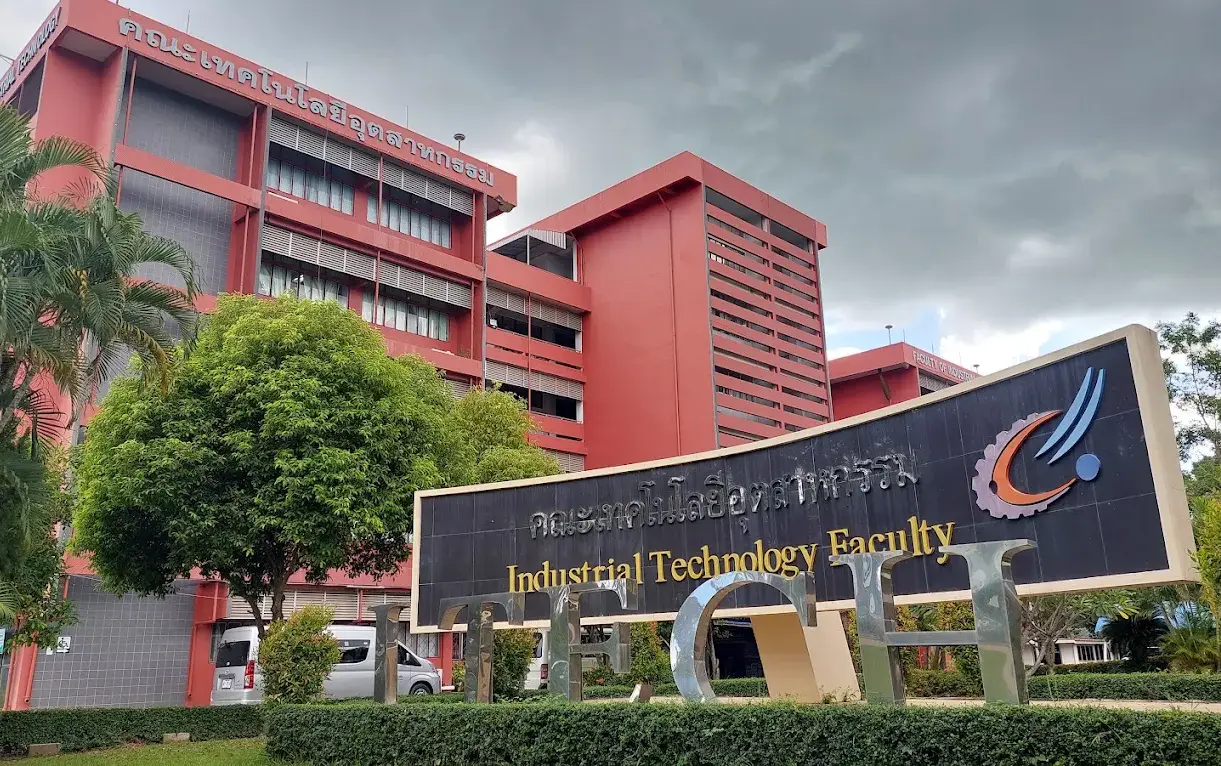
The Faculty of Industrial Technology develops expertise in engineering, manufacturing, and applied technological systems. Its 2026 admissions information included Computer Engineering, Industrial Electrical Engineering, Maintenance Engineering, and Production Engineering, the latter introduced as a new curriculum in 2026. The faculty also provides Software Engineering and Industrial Arts Education and publishes information about Civil Technology and postgraduate studies in Industrial Technology and Innovation Management.
Engineering and industrial technology education are significant to Lampang's economic development. Manufacturers require skilled personnel who understand electrical systems, machinery, production processes, maintenance, and computing technologies. Lampang's ceramic industry also depends on product design, quality control, and efficient manufacturing. Technical education contributes to these needs by developing graduates capable of designing, improving, and maintaining industrial systems while applying modern technologies to practical problems.
The Faculty of Nursing has expanded the university's role in educating healthcare professionals. It introduced its Bachelor of Nursing Science curriculum in 2022, receiving approval from the Thailand Nursing and Midwifery Council during that year. In 2026, the faculty organized a graduation and farewell ceremony for its first cohort of nursing graduates. This milestone demonstrated the development of professional nursing education at Lampang Rajabhat University and its contribution to preparing healthcare personnel for communities and medical services.
Nursing education requires the integration of medical science with structured professional training. The Faculty of Nursing provides specialized laboratories for Anatomy and Physiology, Fundamentals of Nursing, Adult and Older Adult Nursing, and Maternal, Infant, Child, and Adolescent Nursing. Smart classrooms and consultation facilities also support student learning. These resources help students develop technical competence and professional confidence before undertaking clinical placements, with particular emphasis on patient safety and responsible nursing practice.
Lampang Rajabhat University also offers postgraduate education in several academic disciplines. During the 2026 academic year, graduate admissions included fields such as Educational Administration, Educational Management in the Digital Age, Curriculum and Instruction, Mathematics Education, Science Education, Thai Language, Management, Public Policy and Public Law Administration, and Industrial Technology and Innovation Management. Advanced study supports professionals who require research skills, organizational leadership, and specialized academic knowledge.
Research and community engagement are central to the university's local development mission. One notable historical initiative was the University to Tambon Integrated Economic and Social Upgrading Project, known as U2T. In the 2021 fiscal year, Lampang Rajabhat University implemented activities across 80 subdistricts in Lampang and Lamphun provinces and reported the creation of 1,718 employment opportunities. Participants included local residents, recent graduates, and university students. The initiative connected university expertise with community occupations, creative industries, public health, environmental management, and local information systems.
The U2T initiative illustrated how university resources could support development at the subdistrict level. Activities included identifying community needs, collecting local data, creating employment opportunities, and improving professional skills. Community information was used to understand development challenges more accurately and support practical decision-making. The project's approach emphasized connections among livelihoods, environmental sustainability, local economic opportunities, and cooperation between residents and institutions.
The university has also conducted research on Lampang's ceramic heritage and the economic value of local cultural resources. Research supported by national funding organizations has examined how traditional ceramic knowledge can be preserved while developing new products and business opportunities. Lampang is widely associated with pottery and its famous rooster-pattern bowls, making ceramics an important part of the province's cultural and industrial identity. Such projects connect cultural heritage, design, production, and the creative economy.
Student development is another important area of the university's public-service mission. In 2026, the university organized social engineering projects that encouraged students to identify community problems and design locally appropriate solutions. On September 30, 2026, students presented 12 proposed community development projects at the Leelawadee Meeting Room in the Student Development Division Building. This activity encouraged analytical thinking, teamwork, communication, and practical planning, helping translate the university's volunteer-oriented identity into community-focused action.
Research published by the Faculty of Agricultural Technology in 2026 included work on developing healthy food recipes from older residents' local wisdom in Hang Chat District, studying baked products enriched with longan, and turning corn cobs into compost to address environmental problems in Ban Kha Subdistrict. These examples demonstrate how university research can begin with locally available ingredients and practical community needs. They connect food science, traditional knowledge, waste management, and opportunities for economic development.
The Faculty of Education also contributes to improving the quality of schools and teaching in the region. Its activities have included educational development projects for small schools, professional development for teachers, and community-based learning initiatives. Small schools in rural areas may face challenges involving staffing, educational resources, and access to technology. University cooperation can help address these challenges by providing academic knowledge, research methods, and opportunities for professional exchange.
Within the university, several places are closely associated with its history and educational mission. The Lampang Teachers College Memorial commemorates the institution's origins and its pioneering students. The memorial is important to alumni and staff because it preserves the memory of the period when the institution focused on preparing teachers before expanding into a multidisciplinary university. Such landmarks help maintain a connection between current university life and the experiences of earlier generations.
The Phra Phuttha Phitthayachan Pavilion and Suan Sam So are important cultural and religious spaces. They are associated with merit-making and university commemorative ceremonies. The Office of Arts and Culture supports the study and preservation of local traditions, historical knowledge, and Northern Thai cultural heritage. These facilities demonstrate how a modern university can maintain meaningful connections with community beliefs and the cultural knowledge inherited from earlier generations.
The Office of Academic Resources and Information Technology is a central learning resource for students and staff. Its facilities support independent study, access to books, academic publications, digital information, and research materials. The university also provides online learning and information services that help students access educational resources beyond the classroom. Library and information technology services are important in developing research skills, digital literacy, and lifelong learning.
Building 52, associated with the Faculty of Education and the Faculty of Humanities and Social Sciences, accommodates academic activities and university meetings. The Student Development Division Building supports student services, campus activities, and programs designed to improve students' personal and professional skills. Lampang Rajabhat University also has major meeting and event spaces, including its Main Auditorium and Chan Pha Auditorium, which are used for ceremonies, conferences, and activities involving large groups of students and staff.
The university offers student accommodation within and around the campus, together with dining, sports, and recreation facilities. These services support students who arrive from other districts or provinces and help provide a balanced university environment. Specialized academic facilities, such as nursing, science, and engineering laboratories, operate according to their respective safety requirements and teaching schedules. Visitors seeking access to these areas should arrange permission with the responsible faculty.
Cultural traditions are an important part of life at Lampang Rajabhat University. Activities such as Wai Khru ceremonies, new student orientation, university anniversary merit-making, and Lanna cultural projects bring students, lecturers, alumni, and staff together. Such events communicate values of respect, gratitude, community responsibility, and cultural awareness. University learning therefore extends beyond formal academic instruction to include shared traditions and the development of social relationships.
On June 9, 2026, Lampang Rajabhat University celebrated the 55th anniversary of the establishment of Lampang Teachers College with Buddhist chanting and merit-making ceremonies. Activities took place at the Phra Phuttha Phitthayachan Pavilion, the campus spirit shrine, and the university memorial area. The anniversary provided an opportunity to recognize the institution's founders, supporters, and educational development over several generations. It also strengthened the sense of belonging shared by the university community.
On July 9, 2026, the Faculty of Education organized its annual Wai Khru ceremony at the university's Main Auditorium. First-year students entering in the 2026 academic year participated in the event to demonstrate gratitude and respect toward their teachers. Wai Khru is an important Thai educational tradition associated with honoring those who share knowledge. At a university whose history began with teacher training, the ceremony has particular significance because many participants are preparing to become teachers and educational role models themselves.
In June 2026, the university also organized orientation activities for new students at its Main Auditorium. Orientation provides an introduction to university regulations, academic services, student support systems, and campus life. It also helps students establish connections with lecturers and classmates from different backgrounds. For many first-year students, these activities mark the beginning of their relationship with the university's values and its commitment to community service.
Other cultural activities during 2026 included student learning about traditional Lampang patterns and decorative arts. For example, Social Studies students participated in activities involving the drawing of local Lai Lakhon Sai Mu patterns as part of a cultural preservation project. Such activities connect historical knowledge and artistic heritage with practical learning. Preserving local design traditions also helps strengthen students' understanding of Lanna cultural identity and its relevance to contemporary creative work.
For visitors interested in educational tourism, Lampang Rajabhat University provides opportunities to explore the history of teacher education in Northern Thailand, the memorial to Lampang Teachers College, its academic resources, cultural facilities, and the relationship between university research and community development. Organized study visits may focus on social engineering, food innovation, educational development, or research concerning Lampang's ceramic heritage. These activities demonstrate the university's role in connecting academic expertise with regional needs.
Visits to classrooms, laboratories, the demonstration school, and specialized academic facilities should be arranged in advance. Each location operates under its own access regulations and academic schedule, particularly nursing, science, and engineering laboratories where equipment use and safety are important considerations. Public events and cultural activities are announced separately by the university and its departments, and visitors should consult the current schedule before attending.
Getting There to Lampang Rajabhat University is possible using its official address at 119 Moo 9, Lampang–Mae Tha Road, Chomphu Subdistrict, Mueang Lampang District, Lampang 52100, Thailand. Travelers using private vehicles can follow the route from central Lampang toward Mae Tha and use navigation or road signs to locate the campus. Visitors arriving by bus, train, or airplane may first travel to Lampang and then use taxis or available local transportation services to reach the university. The principal regional transport points include Lampang Bus Terminal, Nakhon Lampang Railway Station, and Lampang Airport.
General administrative office hours are Monday to Friday, 08:30–16:30, excluding public holidays. The university's official communications office can be contacted at +66 96 020 1188, while the general administration office uses +66 63 780 2288. Official correspondence can be sent to saraban@lpru.ac.th. Prospective students may also contact the Academic Services Division through the university's published admissions channels. Library services, laboratories, and specialized departments may operate according to separate schedules.
Lampang Province offers several attractions that can complement a university visit. The Dhanabadee Ceramic Museum presents the history of the province's famous rooster-pattern bowls and demonstrates traditional and modern pottery production. Museum Lampang provides another form of learning through exhibitions about the city's people, history, and cultural identity. These attractions extend the educational experience beyond the university campus into places closely connected with Lampang's local economy and heritage.
Historic temples also illustrate the cultural diversity of Lampang. Wat Phra That Mon Cham Sin is associated with Burmese and Shan architectural influences, while other religious sites in the city preserve aspects of Northern Thai Buddhist tradition. The historic Black Bridge, associated with the development of Thailand's railway network, provides another perspective on Lampang's economic and transportation history. Such destinations help visitors understand the connections between culture, trade, technology, and urban development.
Over its 55-year history, Lampang Rajabhat University has developed from a teacher-training college into a comprehensive public university while retaining its central commitment to local development. From the introduction of teacher education in 1972 and the expansion of academic disciplines during the Rajabhat Institute period to university status in 2004 and more recent developments in engineering, food innovation, business, and nursing, the institution has continued adapting to social and economic needs. Its importance to Lampang lies in its educational opportunities, research activities, cultural preservation, and practical support for communities throughout Northern Thailand.
| University Name | Lampang Rajabhat University (LPRU) |
| Institution Type | Public University under the Ministry of Higher Education, Science, Research and Innovation |
| Address | 119 Moo 9, Lampang–Mae Tha Road, Ban Nong Hua Ngok, Chomphu Subdistrict, Mueang Lampang District, Lampang 52100, Thailand |
| Foundation Date | June 9, 1971 |
| First Year of Teaching | 1972, Through the Certificate in Education Program |
| Transition to Rajabhat Institute | 1995, Following the Royal Bestowal of the Rajabhat Name on February 14, 1992 |
| University Status | 2004, under the Rajabhat University Act of 2004 |
| Institutional Age in 2026 | 55 Years Since the Establishment of Lampang Teachers College |
| Historical Names | 1. Lampang Teachers College 2. Lampang Rajabhat Institute 3. Lampang Rajabhat University |
| University President in 2026 | Associate Professor Dr. Kittisak Samuttharak |
| Institutional Philosophy | University for Local Development |
| Graduate Identity | Volunteer Spirit Graduates |
| Buddhist Moral Maxim | Viriyena Dukkhamacceti – Through Perseverance One Overcomes Suffering |
| University Colors | Maroon and Green |
| University Flower | Kasalong / Indian Cork Tree Flower |
| University Emblem | Royal Seal of King Rama IX |
| Principal Buddha Image | Phra Phuttha Phitthayachan |
| Faculties | 1. Faculty of Education 2. Faculty of Humanities and Social Sciences 3. Faculty of Management Science 4. Faculty of Science 5. Faculty of Agricultural Technology 6. Faculty of Industrial Technology 7. Faculty of Nursing |
| Degree Levels | Bachelor's Degrees, Graduate Diplomas, Master's Degrees, and Doctoral Programs, Together with Professional Training Courses Published by Individual Departments |
| Important University Units | 1. Office of the President 2. Office of Academic Resources and Information Technology 3. Office of Arts and Culture 4. Research and Development Institute 5. Academic Services Division 6. Student Development Division 7. Lampang Rajabhat University Demonstration School |
| Important Campus Facilities | 1. Lampang Teachers College Memorial 2. Phra Phuttha Phitthayachan Pavilion 3. Suan Sam So 4. Office of Arts and Culture 5. Office of Academic Resources and Information Technology 6. Building 52, Faculty of Education and Faculty of Humanities and Social Sciences 7. Main Auditorium 8. Chan Pha Auditorium 9. Student Development Division Building 10. Nursing Teaching Facilities and Laboratories |
| Academic Strengths | Teacher Education, School Development, Social Engineering, Community Business, Engineering, Food Innovation, Ceramic Cultural Heritage, Public Health, and Nursing Education |
| Important Community Projects | 1. U2T Project Across 80 Subdistricts in Lampang and Lamphun (Fiscal Year 2021) 2. Cultural Heritage Research Supporting Lampang Ceramics 3. Social Engineering and Community Development Projects 4. Food Product Development and Agricultural Waste Utilization Research 5. Small School Education Improvement Projects |
| Cultural Activities and Traditions | June 9 Lampang Teachers College Foundation Anniversary, Wai Khru Ceremonies, New Student Orientation, Volunteer Activities, Lanna Cultural Preservation Programs, and University Commemorative Ceremonies |
| Administrative Open Days | Monday – Friday |
| General Administrative Hours | 08:30 – 16:30 |
| Educational Study Visits | Arrange in Advance for Access to Academic Buildings, Laboratories, the Demonstration School, and Specialized Facilities |
| Facilities | Library, Computer Facilities, Laboratories, Student Accommodation, Cafeterias, Sports Facilities, Auditoriums, and Student Activity Areas |
| Getting There | Via Lampang–Mae Tha Road to Chomphu Subdistrict, Mueang Lampang District, or by Local Transportation from Lampang City, Bus Terminal, Railway Station, or Airport |
| Tourist Attractions in Surrounding Areas | 1. Dhanabadee Ceramic Museum 2. Wat Phra That Mon Cham Sin 3. Museum Lampang 4. Lampang Black Railway Bridge 5. Wat Phra That Doi Phra Chan, Mae Tha District |
| Restaurants and Cafes near the University and in Lampang City | 1. Kaprao Ko Lampang – Tel. +66 82 239 0829 2. Café Amazon, Lampang Rajabhat University Branch – Tel. +66 63 206 9011 3. Nap's Coffee Roaster Lampang – Tel. +66 64 784 7131 4. Racharot Dim Sum Lampang – Tel. +66 63 209 1945 5. The Riverside Restaurant Lampang – Tel. +66 54 221 861 |
| Accommodation near the University and in Lampang City | 1. Premkit Residence – Tel. +66 91 859 7784 2. Tangmo Residence – Tel. +66 88 953 6174 3. Phetcharat Rooms Lampang – Tel. +66 81 895 7729 4. Panichat Resort Lampang – Tel. +66 54 250 017 5. The Space Lampang Hotel – Tel. +66 54 218 999 |
| Corporate Communications Telephone | +66 96 020 1188 |
| General Administration Telephone | +66 63 780 2288 |
| Student Admissions Telephone | +66 95 996 9958 |
| Official Correspondence Email | saraban@lpru.ac.th |
| Official Website | https://www.lpru.ac.th |
| Current Status | Operating as a Public University Offering Undergraduate and Postgraduate Education, Research, and Community Development Services in 2026 |
Academic Programs and Fields of Study at Lampang Rajabhat University, Academic Year 2026 (B.E. 2569)
| Faculty | Academic Programs and Fields Published by the University and Its Faculties |
| Faculty of Education | Bachelor's Degree Bachelor of Education and Published Fields or Concentrations: 1. Early Childhood Education 2. Thai Language Education 3. English Language Education 4. Computer Education 5. Educational Psychology and Guidance 6. Primary Education 7. Social Studies Education 8. Chinese Language Teaching 9. Physical and Health Education Graduate Diploma 1. Graduate Diploma in the Teaching Profession Master's Degree 1. Master of Education in Curriculum and Instruction 2. Master of Education in Educational Administration 3. Master of Education in Research and Evaluation Methodology 4. Master of Education in Educational Management in the Digital Age Doctoral Degree 1. Doctor of Education in Educational Administration 2. Doctor of Education in Educational Management in the Digital Age |
| Faculty of Humanities and Social Sciences | Bachelor's Degree 1. Bachelor of Laws 2. Bachelor of Public Administration in Public Administration 3. Bachelor of Political Science in Politics and Government 4. Bachelor of Fine Arts in Art and Design 5. Bachelor of Arts in Community Development 6. Bachelor of Arts in Chinese 7. Bachelor of Arts in English 8. Bachelor of Arts in Thai 9. Bachelor of Arts in Thai for Communication for Foreigners 10. Bachelor of Arts in Foreign Languages for Work and Careers 11. Bachelor of Education in Music Education (Joint Teacher Education Field) Master's Degree 1. Master of Arts in Thai 2. Master of Arts in Sustainable Local Development Strategies 3. Master of Public Administration in Public Policy and Public Law Administration Doctoral Degree 1. Doctor of Philosophy in Thai Language |
| Faculty of Management Science | Bachelor's Degree 1. Bachelor of Business Administration in Business Administration 2. Bachelor of Business Administration in Digital Business Management 3. Bachelor of Business Administration in Logistics and International Business Management 4. Bachelor of Business Administration in Modern Business Management 5. Bachelor of Arts in Tourism Innovation and Service Business 6. Bachelor of Accountancy 7. Bachelor of Accountancy (Continuing Program) 8. Bachelor of Communication Arts in Communication Arts 9. Bachelor of Management in Management Master's Degree 1. Master of Management in Management Doctoral Degree 1. Doctor of Philosophy in Management |
| Faculty of Science | Bachelor's Degree 1. Bachelor of Education – General Science 2. Bachelor of Education – Physics 3. Bachelor of Education – Chemistry 4. Bachelor of Education – Biology 5. Bachelor of Education – Mathematics 6. Bachelor of Science in Chemistry 7. Bachelor of Science in Applied Science 8. Bachelor of Public Health in Community Public Health Master's Degree 1. Master of Science in Applied Chemistry 2. Master of Education in Mathematics Education 3. Master of Education in Science Education Doctoral Degree 1. Doctor of Philosophy in Mathematics Education 2. Doctor of Philosophy in Science Education |
| Faculty of Agricultural Technology | Bachelor's Degree 1. Bachelor of Science in Agriculture 2. Bachelor of Science in Food Innovation and Business |
| Faculty of Industrial Technology | Bachelor's Degree 1. Bachelor of Engineering in Computer Engineering 2. Bachelor of Engineering in Industrial Electrical Engineering 3. Bachelor of Engineering in Maintenance Engineering 4. Bachelor of Engineering in Production Engineering (New Curriculum, 2026) 5. Bachelor of Science in Software Engineering 6. Bachelor of Education – Industrial Arts Education 7. Bachelor of Technology in Civil Technology (Listed in the Faculty's Program Information) Postgraduate Study 1. Industrial Technology and Innovation Management at Master's and Doctoral Levels, as Listed in the 2026 Postgraduate Admissions Information |
| Faculty of Nursing | Bachelor's Degree 1. Bachelor of Nursing Science (New Curriculum, 2022) Professional Certificate Program 1. Practical Nursing Certificate Program (Admissions Announced in 2026) |
Frequently Asked Questions (FAQ)
Q: Where is Lampang Rajabhat University located?
A: The university is located at 119 Moo 9, Lampang–Mae Tha Road, Chomphu Subdistrict, Mueang Lampang District, Lampang 52100, Thailand.
Q: What are the opening days and hours of Lampang Rajabhat University?
A: General administrative offices operate Monday to Friday, 08:30–16:30, excluding public holidays. The library and specialized departments may have separate service schedules.
Q: When was Lampang Rajabhat University founded?
A: It was founded on June 9, 1971, as Lampang Teachers College. Teaching began in 1972, and the institution became Lampang Rajabhat University in 2004.
Q: How many faculties does Lampang Rajabhat University have?
A: The university has 7 faculties: Education, Humanities and Social Sciences, Management Science, Science, Agricultural Technology, Industrial Technology, and Nursing.
Q: Does Lampang Rajabhat University offer nursing education?
A: Yes. The university provides a Bachelor of Nursing Science program introduced in 2022, supported by specialized nursing laboratories. Its first nursing graduating cohort completed their studies in 2026.
Q: What are Lampang Rajabhat University's principal academic strengths?
A: Its major strengths include teacher education, local development, social engineering, community economic research, food innovation, ceramic cultural heritage, industrial technology, business education, and nursing.
Q: Does the university offer master's and doctoral programs?
A: Yes. Postgraduate programs cover several areas, including Educational Administration, Educational Management in the Digital Age, Management, Mathematics and Science Education, Thai Language, and Industrial Technology and Innovation Management. Admission availability depends on each academic year's official announcements.
Q: Can members of the public visit Lampang Rajabhat University?
A: Visitors may contact the university to arrange educational study visits. Access to academic buildings, laboratories, the demonstration school, and specialized facilities requires permission from the responsible departments.
 Category: ●University
 Group: ●Rajabhat University
Last Update : 1 WeekAgo
 Last Update : 1 WeekAgo

 Click to Access the Navigation Map GPS
Lampang Rajabhat University Map
Recommend

 Art, Culture and Heritage
 Historical Sites and Monuments(2)
 Landmarks and Memorials(5)
 Art, Craft Centres, Tradition(10)
 Museums(4)
 Historic Homes and Cities(1)
 Public university(2)
 Rajamangala University of Technology(1)
Rajabhat University(1)
 Private University(1)
 Places of Worship
 Temple(86)
 Other Sacred Sites(9)
 Research and Development
 Royal Project(2)
 Suburban Living
 Village, Community(3)
 Local Market(2)
 Nature and Wildlife
 National Parks and Marine Reserves(6)
 Mountain (Doi)(4)
 Dam, Reservoir, Lake(11)
 Waterfalls(15)
 Hot Springs(1)
 Caves(12)
 Flower Field(1)
 River, Canal(1)
 Bays and Beaches(1)
 Other natural attractions(4)
 Entertainment and Agricultural
 Animal camps and shows(1)
 Farms, Parks and Ecotourism(2)
 Outdoor and Adventure Activities(2)
 Shopping
 Shopping and Night Market(2)
 Spas and Wellness
 Spas and Wellness(1)
 Travel Articles, Recipes
 Travel Review, Food Review(1)


