
lovethailand home >North Travel Attractions >Lampang Travel Attractions >Mueang Lampang >Wiang Nuea > Wat Tha Ma-O
TL;DR: Wat Tha Ma-O is located at Ban Tha Ma-O, Wiang Nuea Subdistrict, Mueang Lampang District, Lampang Province, open Daily, hours 08.00 – 17.00.
Wat Tha Ma-O

Open Days: Daily
Opening Hours: 08.00 – 17.00
Wat Tha Ma-O in Lampang Province is a historic local Buddhist temple of the Mahanikaya order, located at 304 Ban Tha Ma-O, Wiang Nuea Subdistrict, Mueang Lampang District. The temple is one of Lampang’s most important Burmese-influenced temples and is especially significant for its architecture, sacred objects, teak-trade history, and its rare tradition of classical Pali study. Although it remains a quiet community temple, Wat Tha Ma-O contains layers of cultural meaning connected with Burmese merchants, Buddhist education, and the old urban landscape of Lampang.
The temple occupies 4 rai of land and has one additional monastic land plot of 2 rai and 9 square wah. Its boundaries adjoin roads and private lands, reflecting its location within an old residential and cultural neighborhood. Unlike large tourist temples, Wat Tha Ma-O is closely integrated with the Tha Ma-O community, the old Wiang Nuea area, the Wang River, and nearby historic attractions such as Kad Kong Ta, Ratsadaphisek Bridge, Wat Pong Sanuk Nuea, and Wat Phra Kaew Don Tao Suchadaram.
Wat Tha Ma-O was founded in 1894 during the reign of King Rama V by a Burmese teak merchant named U Chan Ong, also known in some local sources as Maung Chan Ong. He came to Lampang during the period when the city was an important center of the teak trade. Like many wealthy Burmese and Shan patrons of that era, he supported Buddhism by building a temple that reflected the artistic and devotional traditions of his homeland.
During the late 19th and early 20th centuries, Lampang became a major economic center in northern Thailand because of the teak industry. Burmese merchants, Shan communities, craftsmen, monks, and workers settled in the city and contributed significantly to local religious and cultural life. Wat Tha Ma-O is one of the clearest examples of this history, preserving Burmese Buddhist art within the Lanna urban landscape.
The main monastic structures of Wat Tha Ma-O include an ordination hall built in 1934, a sermon hall, a chanting hall, and 8 monks’ residences. The temple also preserves important historic and sacred features, including a Burmese-style shrine structure housing Burmese-style Buddha images and a chedi behind the ordination hall. Together, these elements make Wat Tha Ma-O a valuable destination for those interested in Burmese Buddhist art in northern Thailand.
Wat Tha Ma-O received its consecrated boundary, known as wisungkhamsima, in 1897. The boundary measures 17 meters wide and 30 meters long. The temple later held the formal boundary-marking ceremony on November 25, 1935. This early recognition shows that Wat Tha Ma-O became a fully functioning Buddhist temple soon after its foundation and played an active role in the religious life of the Tha Ma-O community.
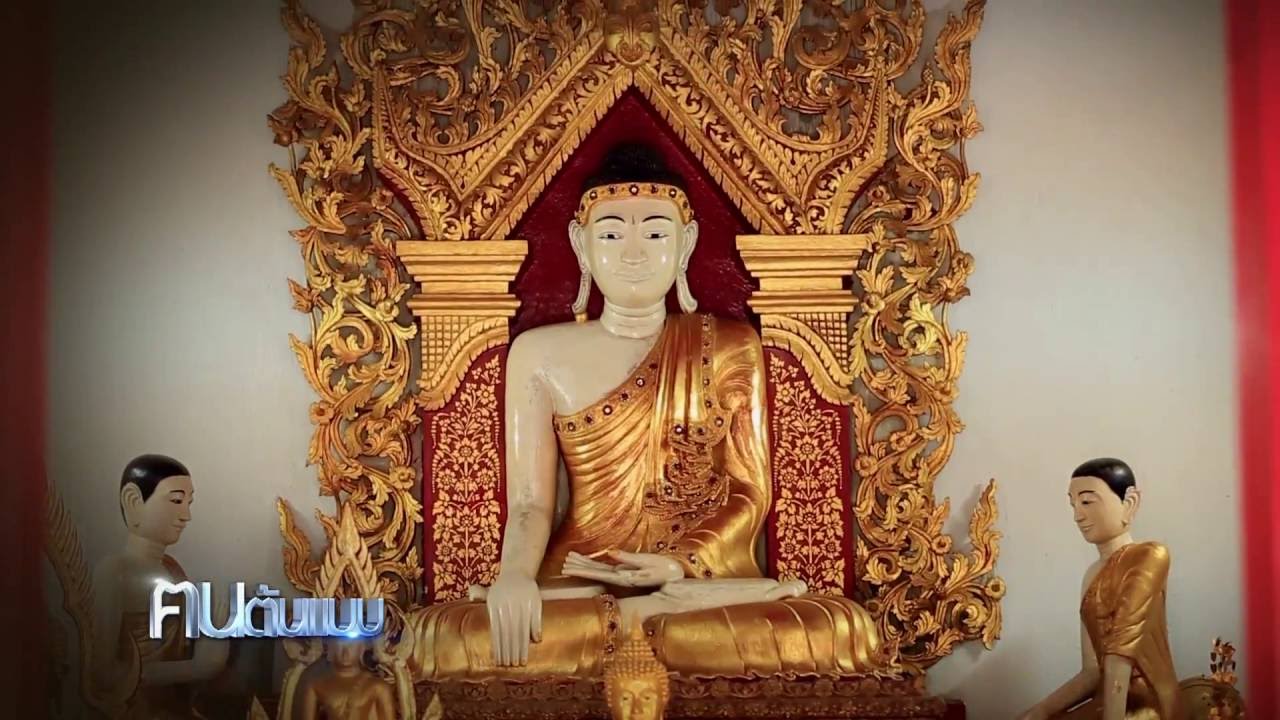
One of the temple’s most distinctive artistic features is the Burmese-style shrine structure. Such structures usually display refined craftsmanship, vertical form, ornamental detail, and a devotional style associated with Burmese Buddhist architecture. Inside the shrine are Burmese-style Buddha images, which reflect the artistic preferences and faith of the Burmese community that helped shape the temple.
The Burmese-style Buddha images at Wat Tha Ma-O differ in character from typical Lanna or Sukhothai Buddha images. Burmese Buddhist imagery often emphasizes royal ornamentation, polished forms, serene facial expression, and refined decorative detail. Their presence in the temple confirms Wat Tha Ma-O’s importance as a cultural and religious center for Burmese-influenced Buddhism in Lampang.
The chedi behind the ordination hall is another important sacred structure. In both Burmese and northern Thai Buddhist traditions, the chedi functions as a place of worship, circumambulation, and symbolic remembrance of the Buddha. Its position behind the ordination hall gives the temple a complete sacred layout and reinforces its identity as a long-established Buddhist monastery.
The temple has been led by several important abbots. From 1894 to 1914, Phra U Nandiya served as abbot. From 1915 to 1936, Phra U Tikkha led the temple. From 1937 to 1966, Phra U Nemindha Aggamahapandita served as abbot. From 1966 onward, Phra U Dhammānanda Dhammācariya, widely known as Phra Bhaddanta Dhammānanda Mahāthera, became one of the most important figures in the temple’s history. In more recent information, the current abbot is listed as Phra Khru Palat Charan Kumaro.
Phra Bhaddanta Dhammānanda Mahāthera is one of the most respected modern figures associated with Wat Tha Ma-O. He was known for his deep knowledge of Pali, Buddhist grammar, and scriptural study. His work helped establish the temple as one of the few places in Thailand where traditional classical Pali grammar continued to be taught. Although he has passed away, his educational legacy remains central to the identity of Wat Tha Ma-O.
Wat Tha Ma-O opened its Buddhist scripture school for Dhamma and Pali studies in 1967. This educational role is one of the main reasons the temple is nationally significant. Wat Tha Ma-O is known for preserving the old style of Pali study traditionally called learning sandhi and mūla, or the study of Kaccāyana grammar. This system is a classical method of Pali grammatical analysis used in Theravada Buddhist countries.
Classical Pali study based on Kaccāyana grammar requires students to analyze word forms, grammatical roots, compounds, and sentence structure in great detail. It is a demanding field of Buddhist learning that allows monks and scholars to approach the Tipitaka through its original language. This form of study was once common in traditional Buddhist education but gradually declined in Thailand from the late reign of King Rama V and became increasingly rare before the mid-20th century.
By the period before 1957, very few Thai monks were still able to master the older system of sandhi and mūla study. Monks who could fully analyze Pali word forms according to Kaccāyana grammar became increasingly difficult to find, and very few monastic schools continued to teach the tradition systematically. Wat Tha Ma-O therefore became important as a rare surviving center of this classical Pali heritage.
The Pali tradition at Wat Tha Ma-O should not be understood simply as language learning. It is a way of preserving access to the original Buddhist scriptures and maintaining a scholarly discipline that has been passed down through Theravada Buddhist history. Students must develop patience, precision, memory, and deep understanding of grammar. This makes the temple not only a religious site but also a living center of Buddhist intellectual culture.
Wat Tha Ma-O is therefore important in several ways. Artistically, it preserves Burmese Buddhist architecture and imagery. Historically, it reflects the role of Burmese teak merchants in Lampang. Educationally, it preserves a rare form of classical Pali grammar study. Culturally, it remains part of the old Tha Ma-O community and the wider historic landscape of Wiang Nuea.
Today, visitors can come to Wat Tha Ma-O to make merit, pay respect to the Buddha images, observe Burmese-style Buddhist art, and learn about the temple’s role in Pali education. Because the temple remains an active religious and educational place, visitors should behave respectfully and avoid disturbing monks or students.
The atmosphere of Wat Tha Ma-O is calm and thoughtful. It is not a temple designed for quick sightseeing alone. Its value is best appreciated by walking slowly, observing the ordination hall, shrine structure, Buddha images, chedi, and the overall character of the old community around the temple. The more time visitors spend here, the more clearly they can see the connections between art, faith, learning, and local history.
The Tha Ma-O neighborhood itself is culturally attractive. It is close to several old temples, the Wang River, Kad Kong Ta Walking Street, Ratsadaphisek Bridge, and other historic landmarks of Lampang. A visit to Wat Tha Ma-O can therefore be included in a walking or short driving route through the old town and Wiang Nuea area.
For art and architecture enthusiasts, Wat Tha Ma-O is an excellent place to study Burmese influence in Lampang. Its shrine form, Buddha images, decorative details, and temple layout all show how Burmese religious art became part of northern Thai urban culture. For students of Buddhism, the temple offers a rare connection to traditional Pali scholarship that has almost disappeared from many modern monastic education systems.
Visitors should dress respectfully, maintain a quiet manner, and ask permission before photographing sensitive areas or people studying inside the temple. Sacred objects and old structures should not be touched. The temple should be approached as both a place of worship and a place of learning.
Getting There is convenient from central Lampang. Travel toward Wiang Nuea Subdistrict and Ban Tha Ma-O. The temple is located at 304 Ban Tha Ma-O and can be reached by private car, motorcycle, local transport, or on foot from some parts of the old town. It can be visited together with Kad Kong Ta Walking Street, Ratsadaphisek Bridge, Wat Pong Sanuk Nuea, Wat Chaeng Hua Rin, and Wat Phra Kaew Don Tao Suchadaram in the same day.
| Name | Wat Tha Ma-O |
| Location | Ban Tha Ma-O, Wiang Nuea Subdistrict, Mueang Lampang District, Lampang Province |
| Address | 304 Ban Tha Ma-O, Wiang Nuea Subdistrict, Mueang Lampang District, Lampang 52000 |
| Temple Type | Local Buddhist temple of the Mahanikaya order |
| Area | Temple land: 4 rai; monastic land: 2 rai and 9 square wah |
| Boundaries | North: road and private land; South: road and private land; East: private land; West: private land |
| Highlights | Historic Burmese-influenced temple in Lampang, Burmese-style shrine, Burmese Buddha images, chedi behind the ordination hall, and traditional classical Pali education |
| History / Significance | Founded in 1894 during the reign of King Rama V by the Burmese teak merchant U Chan Ong or Maung Chan Ong, reflecting the role of Burmese communities and the teak-trade era in Lampang |
| Main Structures | Ordination hall, sermon hall, chanting hall, and 8 monks’ residences |
| Historic Objects / Monuments | Burmese-style shrine housing Burmese-style Buddha images and a chedi behind the ordination hall |
| Consecrated Boundary | Granted wisungkhamsima in 1897; boundary size 17 meters wide and 30 meters long; formal boundary ceremony held on November 25, 1935 |
| Education | Dhamma and Pali scripture school opened in 1967; known for traditional Pali grammar study based on Kaccāyana grammar |
| Important Abbots | Phra U Nandiya, Phra U Tikkha, Phra U Nemindha Aggamahapandita, Phra Bhaddanta Dhammānanda Mahāthera, and Phra Khru Palat Charan Kumaro |
| Travel Information | From central Lampang, travel toward Wiang Nuea Subdistrict and Ban Tha Ma-O. The temple is near the old town area, Kad Kong Ta, and Ratsadaphisek Bridge |
| Current Status | Open for merit-making, worship, Burmese art viewing, and learning about traditional Pali education |
| Open Days | Daily |
| Opening Hours | 08.00 – 17.00 |
| Fees | No admission fee |
| Facilities | Ordination hall, sermon hall, chanting hall, monks’ residences, worship areas, and parking space within or near the temple |
| Abbot / Caretaker | Phra Khru Palat Charan Kumaro |
| Main Contact Number | 054-228819 |
| Nearby Tourist Attractions | 1. Wat Pong Sanuk Nuea, about 1 km 2. Wat Chaeng Hua Rin, about 1 km 3. Kad Kong Ta Walking Street, about 2 km 4. Ratsadaphisek Bridge, about 2 km 5. Wat Phra Kaew Don Tao Suchadaram, about 2 km |
| Nearby Restaurants | 1. Khao Soi Islam, about 1 km 2. Papacraft Cafe Kad Kong Ta, about 2 km 3. Wooden House Cafe, about 2 km 4. Long Jim New York Pizza, about 3 km, Tel. 054-010555 5. Krua Nua Hom Lampang, about 3 km, Tel. 054-323999 |
| Nearby Accommodations | 1. Baan Chiang Guest House Lampang, about 2 km 2. The Riverside Guest House, about 2 km 3. Baan Mae Boonthong, about 2 km 4. The Coconut Hotel Lampang, about 3 km, Tel. 054-821999 5. Wienglakor Hotel Lampang, about 4 km, Tel. 054-225501 |
Frequently Asked Questions (FAQ)
Q: Where is Wat Tha Ma-O located?
A: Wat Tha Ma-O is located at 304 Ban Tha Ma-O, Wiang Nuea Subdistrict, Mueang Lampang District, Lampang Province.
Q: When was Wat Tha Ma-O established?
A: Wat Tha Ma-O was established in 1894 during the reign of King Rama V by a Burmese teak merchant named U Chan Ong or Maung Chan Ong.
Q: What is Wat Tha Ma-O known for?
A: The temple is known for Burmese-style Buddhist art, Burmese Buddha images, a chedi behind the ordination hall, and traditional classical Pali education.
Q: Why is Wat Tha Ma-O important for Pali studies?
A: It is one of the rare temples in Thailand associated with traditional Pali grammar study, including sandhi, mūla, and Kaccāyana grammar.
Q: Who is the current abbot of Wat Tha Ma-O?
A: Recent information lists Phra Khru Palat Charan Kumaro as the abbot.
Q: Is Wat Tha Ma-O open daily?
A: Yes. The temple is open daily from 08.00 to 17.00.
Q: Is there an admission fee?
A: No. Visitors can make merit, worship, and view the Burmese-style art free of charge.
Tel : 054228819
 Tel : 054228819
 Category: ●Places of Worship
 Group: ●Temple
Last Update : 5 MonthAgo
 Last Update : 5 MonthAgo
 Click to Access the Navigation Map GPS
Wat Tha Ma-O Map
Recommend

 Art, Culture and Heritage
 Historical Sites and Monuments(2)
 Landmarks and Memorials(5)
 Art, Craft Centres, Tradition(10)
 Museums(4)
 Historic Homes and Cities(1)
Temple(86)
 Other Sacred Sites(9)
 Research and Development
 Royal Project(2)
 Suburban Living
 Village, Community(3)
 Local Market(2)
 Nature and Wildlife
 National Parks and Marine Reserves(6)
 Mountain (Doi)(4)
 Dam, Reservoir, Lake(11)
 Waterfalls(15)
 Hot Springs(1)
 Caves(12)
 Flower Field(1)
 River, Canal(1)
 Bays and Beaches(1)
 Other natural attractions(4)
 Entertainment and Agricultural
 Animal camps and shows(1)
 Farms, Parks and Ecotourism(2)
 Outdoor and Adventure Activities(2)
 Shopping
 Shopping and Night Market(2)
 Spas and Wellness
 Spas and Wellness(1)
 Travel Articles, Recipes
 Travel Review, Food Review(1)


