
lovethailand home >North Travel Attractions >Sukhothai Travel Attractions >Si Sat Chana Lai >Si Sat Chana Lai > Wat Chang Lom
TL;DR: Wat Chang Lom is located at Inside Si Satchanalai Historical Park, Si Satchanalai Subdistrict, Si Satchanalai District, Sukhothai Province, open Daily, hours 08.00 - 17.00.
Wat Chang Lom
Open Days: Daily
Opening Hours: 08.00 - 17.00
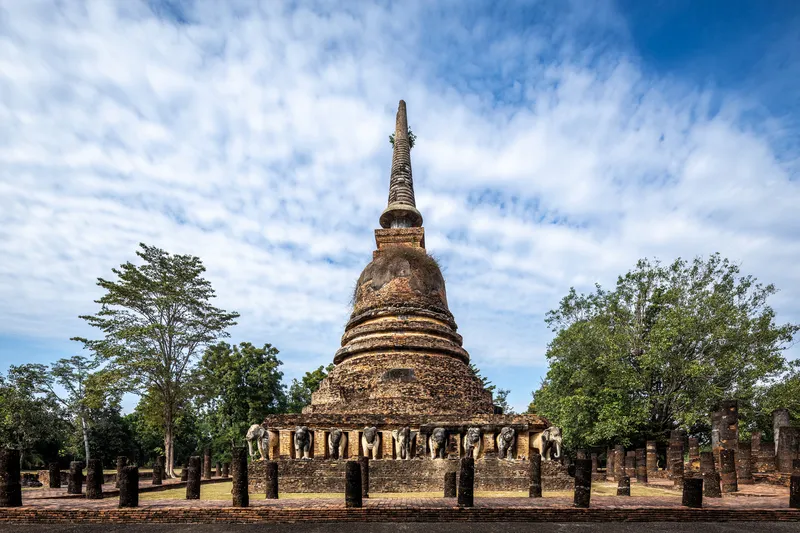
Wat Chang Lom is one of the most important monuments inside Si Satchanalai Historical Park in Si Satchanalai District, Sukhothai Province. Located within the ancient city wall on the plain south of Khao Phanom Phloeng, the temple stands near Wat Chedi Chet Thaeo and forms part of a remarkable group of monuments that reflects the cultural, religious, and architectural prosperity of Si Satchanalai during the Sukhothai period. The most outstanding feature of Wat Chang Lom is its large Lanka-style bell-shaped stupa set on a two-tiered square circumambulatory base. Around the lower base stand 39 full-bodied stucco elephants, with the 4 corner elephants larger and more elaborately decorated than the others.
For foreign travelers, Wat Chang Lom is one of the clearest places to understand the artistic identity of Sukhothai and Si Satchanalai. The temple is not merely a ruin of brick and laterite. It is a carefully designed sacred space where Buddhist devotion, symbolic architecture, sculptural skill, and urban planning come together. The main stupa rises at the center of the temple, while the large viharn in front, smaller viharns, subsidiary stupas, and enclosing wall create a complete religious layout. This arrangement shows that Wat Chang Lom was once an important religious center within the ancient city.
Historically, Wat Chang Lom is significant because scholars have connected it with a temple mentioned in the King Ramkhamhaeng Inscription, which refers to the construction of sacred relics and stupas in Si Satchanalai. The construction period is generally associated with around 1285-1288 CE, corresponding to the late 13th century during the Sukhothai period. This places Wat Chang Lom within an important era when Si Satchanalai was a major city linked to the political, artistic, religious, and economic networks of the Sukhothai Kingdom.
The name “Wat Chang Lom” literally means “the temple surrounded by elephants.” This name comes directly from the 39 stucco elephants that surround the base of the main stupa. In Thai and Buddhist symbolism, the elephant represents strength, stability, royal power, and spiritual support. By placing elephants around the stupa base, the builders created the impression that the sacred monument was being protected and supported by powerful beings. This makes Wat Chang Lom visually memorable and deeply symbolic.
The main stupa of Wat Chang Lom is a Lanka-style bell-shaped stupa, a form associated with Sri Lankan Buddhist influence. During the Sukhothai period, Theravada Buddhism with Sri Lankan connections became highly influential in the region. The presence of a Lanka-style stupa at a major temple in Si Satchanalai therefore reflects the broader religious network of the time. It shows that Sukhothai Buddhism was not isolated, but connected with the wider Buddhist world of Southeast Asia and the Indian Ocean.
The square circumambulatory base of the stupa is also important. In Buddhist practice, circumambulation means walking clockwise around a sacred object as an act of devotion. The elevated base at Wat Chang Lom was designed to allow worshippers to move around the stupa in a ritual manner. This means the architecture was not created only to be seen from the outside. It was designed to guide the body, movement, and devotion of worshippers.
The 39 elephants around the base are among the finest sculptural elements of the temple. They are not merely shallow reliefs attached to the wall. They are full-bodied elephants that project outward from the base, giving a strong sense of weight, presence, and movement. Although many of the elephants have deteriorated over time, the remaining forms still reveal the skill of Sukhothai craftsmen in integrating animal sculpture with sacred architecture.
The 4 corner elephants are larger than the others and display more elaborate stucco decoration around the neck and ankles. This design gives emphasis to the corners of the square base and helps create visual balance. The corner elephants act almost like guardians of the stupa, strengthening the monument both symbolically and architecturally. Their size and ornamentation make them among the most impressive details of the site.
Between the elephant sculptures are laterite lamp posts placed at intervals, while lotus-bud stucco ornaments were once positioned in front of the elephants. These elements added sacred atmosphere to the base of the stupa. The lamp posts may have been associated with ritual lighting, while the lotus is a symbol of purity and Buddhist devotion. Together with the elephants, these details show how the area around the stupa was carefully designed as a ritual and symbolic space.
The second tier of the base contains niches with seated Buddha images in the Mara-Vijaya posture, with Bodhi tree motifs behind them. The commonly cited number is 17 Buddha images, while some architectural descriptions also refer to a larger number of niches on the upper terrace. Although most of the images are now damaged, the surviving remains still show the concept of placing Buddha images around the sacred stupa. This made the monument not only a relic stupa, but also a place for visual devotion to the Buddha.
The Mara-Vijaya posture represents the moment when the Buddha conquered Mara before attaining enlightenment. The Bodhi tree behind the Buddha image reinforces the theme of enlightenment. For ancient worshippers, seeing these Buddha images around the stupa would have recalled the Buddha’s victory over temptation and the path toward awakening. This is one of the reasons Wat Chang Lom is not only architecturally impressive, but also rich in Buddhist meaning.
Above the bell-shaped stupa are the throne-like element and spire, which are characteristic parts of a Lanka-style stupa. Around this upper section are low-relief stucco images of walking disciples, commonly counted as 17 figures. These figures show the refined elegance of Sukhothai art. The walking posture gives a sense of graceful movement, reflecting the Sukhothai artistic preference for balance, softness, and idealized spiritual beauty.
The enclosing wall of Wat Chang Lom forms a square boundary around the main stupa. It defines the sacred area and separates the inner ritual space from the outside. The front and rear entrances functioned as access points, while some side entrances were built as false or closed entrances using brick and laterite. This type of boundary system shows that the temple was carefully planned, with movement and sacred space controlled through architecture.
In front of the main stupa are the remains of a large viharn. This was once the main assembly hall where worshippers gathered for religious ceremonies. The surviving base and columns help visitors understand the original scale of the structure. In the Sukhothai period, the viharn often served as the place where laypeople encountered the Buddha image before proceeding toward the stupa for further acts of devotion.
Besides the main viharn, Wat Chang Lom also contains 2 smaller viharns and 2 subsidiary stupas. These remains indicate that the temple once had multiple sacred and functional areas. The subsidiary stupas may have held religious significance, while the smaller viharns may have supported additional worship or monastic activities. Together, these structures create a fuller picture of Wat Chang Lom as a complex religious center rather than a single isolated monument.
The importance of Wat Chang Lom is closely tied to the ancient city of Si Satchanalai. Si Satchanalai was one of the major cities of the Sukhothai Kingdom and played important roles in administration, religion, trade, and ceramic production. The location of Wat Chang Lom inside the city wall and near Wat Chedi Chet Thaeo shows that it was part of a larger sacred urban landscape. The temple helps visitors understand how religion and city planning were connected in the Sukhothai period.
Compared with other monuments in Si Satchanalai Historical Park, Wat Chang Lom is especially distinctive because of its elephant base. Wat Chedi Chet Thaeo is known for its many different stupa forms, while Wat Nang Phaya is famous for delicate stucco ornamentation. Wat Chang Lom stands out through the power and rhythm of its elephants, the grandeur of the central stupa, and the symbolic strength of its architectural design.
Wat Chang Lom is also an important place for understanding heritage conservation. Many of its stucco sculptures and laterite structures have weathered over centuries. Visitors should avoid climbing on the monument, touching fragile stucco elephants, or entering restricted areas. Responsible travel is essential because the remaining sculptures are irreplaceable evidence of Sukhothai art. Observing from an appropriate distance helps preserve the monument for future generations.
For travelers interested in photography, art history, archaeology, and architecture, Wat Chang Lom is one of the most rewarding stops in Si Satchanalai Historical Park. Early morning and late afternoon are especially suitable for visiting because the light reveals the texture of brick, laterite, and stucco more clearly. The location near Khao Phanom Phloeng also gives the site a peaceful atmosphere, making it ideal for slow exploration.
A visit to Wat Chang Lom should be combined with nearby monuments inside the historical park, especially Wat Chedi Chet Thaeo, Wat Nang Phaya, Wat Khao Phanom Phloeng, and Wat Suan Kaeo Utthayan Yai. Each temple has a different artistic identity. Seeing them together helps travelers understand the richness of Si Satchanalai as a historical city rather than seeing each monument in isolation.
Getting There is most convenient by private car. Travelers should drive to Si Satchanalai District in Sukhothai Province and continue to Si Satchanalai Historical Park. Wat Chang Lom is located inside the ancient city wall and near Wat Chedi Chet Thaeo. After entering the park, visitors can walk or rent a bicycle to explore the monuments. Cycling is one of the best ways to experience the calm and spacious atmosphere of the ancient city.
Visitors should prepare drinking water, a hat, or an umbrella, especially during the hot season. Comfortable walking shoes are recommended because the park includes earth paths, brick areas, and open ancient grounds. Visitors should follow park regulations, avoid touching fragile sculptures, avoid climbing on ancient structures, and keep the area clean. Respectful behavior is part of preserving the cultural value of the site.
Wat Chang Lom is therefore one of the most valuable monuments in Si Satchanalai Historical Park. Its Lanka-style stupa, 39 full-bodied stucco elephants, Buddha niches, walking disciple reliefs, viharn remains, and sacred layout together reveal the artistic and spiritual achievement of the Sukhothai period. Visiting this temple is not only an encounter with an ancient monument, but also a journey into the Buddhist imagination, craftsmanship, and cultural memory of Si Satchanalai.
| Name | Wat Chang Lom |
| Location | Inside Si Satchanalai Historical Park, Si Satchanalai Subdistrict, Si Satchanalai District, Sukhothai Province |
| Address | Si Satchanalai Historical Park, Si Satchanalai Subdistrict, Si Satchanalai District, Sukhothai 64190, Thailand |
| Highlights | A Lanka-style bell-shaped stupa on a two-tiered square base, surrounded by 39 full-bodied stucco elephants and Buddha niches |
| History | Sukhothai period, around the 19th Buddhist century, and associated with the construction of sacred relics and stupas in Si Satchanalai around 1285-1288 CE |
| Name Origin | The name means “temple surrounded by elephants,” referring to the 39 stucco elephants around the base of the main stupa |
| Distinctive Features | Lanka-style stupa, laterite and stucco construction, square circumambulatory base, full-bodied elephants, Buddha niches, walking disciple reliefs, main viharn, smaller viharns, and subsidiary stupas |
| Key Evidence | 39 stucco elephants, seated Buddha niches, Bodhi tree motifs, walking disciple reliefs, stupa base, enclosing wall, viharn remains, and subsidiary stupas |
| Travel Information | Travel by private car to Si Satchanalai Historical Park. Wat Chang Lom is located inside the ancient city wall near Wat Chedi Chet Thaeo. Visitors can walk or rent a bicycle inside the park |
| Current Status | An important archaeological monument inside Si Satchanalai Historical Park under the care of the Fine Arts Department |
| Open Days | Daily |
| Opening Hours | 08.00 - 17.00 |
| Fees | Thai Visitors 20 THB, Foreign Visitors 100 THB |
| Facilities | Visitor center, ticket office, parking area, restrooms, walking routes, and bicycle rental services inside or near the historical park |
| Main Areas / Zones | Elephant-base main stupa, main viharn, 2 smaller viharns, 2 subsidiary stupas, enclosing wall, and circumambulatory terrace |
| Caretaker | Si Satchanalai Historical Park, Fine Arts Department |
| Main Contact Number | 055-950714, 061-2686383 |
| Nearby Tourist Attractions | 1. Wat Chedi Chet Thaeo, about 0.3 km 2. Wat Nang Phaya, about 0.6 km 3. Wat Khao Phanom Phloeng, about 1 km 4. Wat Suan Kaeo Utthayan Yai, about 1 km 5. Sangkhalok Kiln Conservation And Study Center, about 8 km |
| Nearby Restaurants | 1. Krua Si Satchanalai, about 5 km 2. Sukhothai Noodle Si Satchanalai, about 6 km 3. Ban Kaeng Restaurant, about 7 km 4. Ban Tha Chai Cafe, about 8 km 5. Rim Yom Si Satchanalai Restaurant, about 9 km |
| Nearby Accommodations | 1. Si Satchanalai Heritage, about 5 km 2. Resort Ban Phra Ruang Phra Prang Si Satchanalai, about 6 km, Tel. 080-509-7345 3. Nong Or Blue House Resort, about 9 km 4. Baan Akkara Sukhothai, about 10 km 5. Chanalai Resort And Hotel, about 15 km |
Frequently Asked Questions (FAQ)
Q: Where is Wat Chang Lom located?
A: Wat Chang Lom is located inside Si Satchanalai Historical Park in Si Satchanalai Subdistrict, Si Satchanalai District, Sukhothai Province.
Q: What is the main highlight of Wat Chang Lom?
A: The main highlight is the Lanka-style stupa surrounded by 39 full-bodied stucco elephants around its square base.
Q: When was Wat Chang Lom built?
A: Wat Chang Lom dates to the Sukhothai period, around the 19th Buddhist century, and is associated with construction activity around 1285-1288 CE.
Q: Why is it called Wat Chang Lom?
A: The name means “temple surrounded by elephants,” referring to the elephant sculptures around the base of the main stupa.
Q: What are the opening hours of Wat Chang Lom?
A: Wat Chang Lom is inside Si Satchanalai Historical Park, which is open daily from 08.00 to 17.00.
Q: Is there an admission fee?
A: Yes. The admission fee follows Si Satchanalai Historical Park rates: 20 THB for Thai visitors and 100 THB for foreign visitors.
Q: What nearby sites should travelers visit with Wat Chang Lom?
A: Nearby sites include Wat Chedi Chet Thaeo, Wat Nang Phaya, Wat Khao Phanom Phloeng, Wat Suan Kaeo Utthayan Yai, and the Sangkhalok Kiln Conservation and Study Center.
Q: What is the best way to explore Wat Chang Lom and nearby monuments?
A: Walking is suitable for nearby monuments, while renting a bicycle is a good option for exploring several sites inside Si Satchanalai Historical Park.
Tel : 665569 7367
 Tel : 665569 7367
 Category: ●Places of Worship
 Group: ●Temple
Last Update : 5 MonthAgo
 Last Update : 5 MonthAgo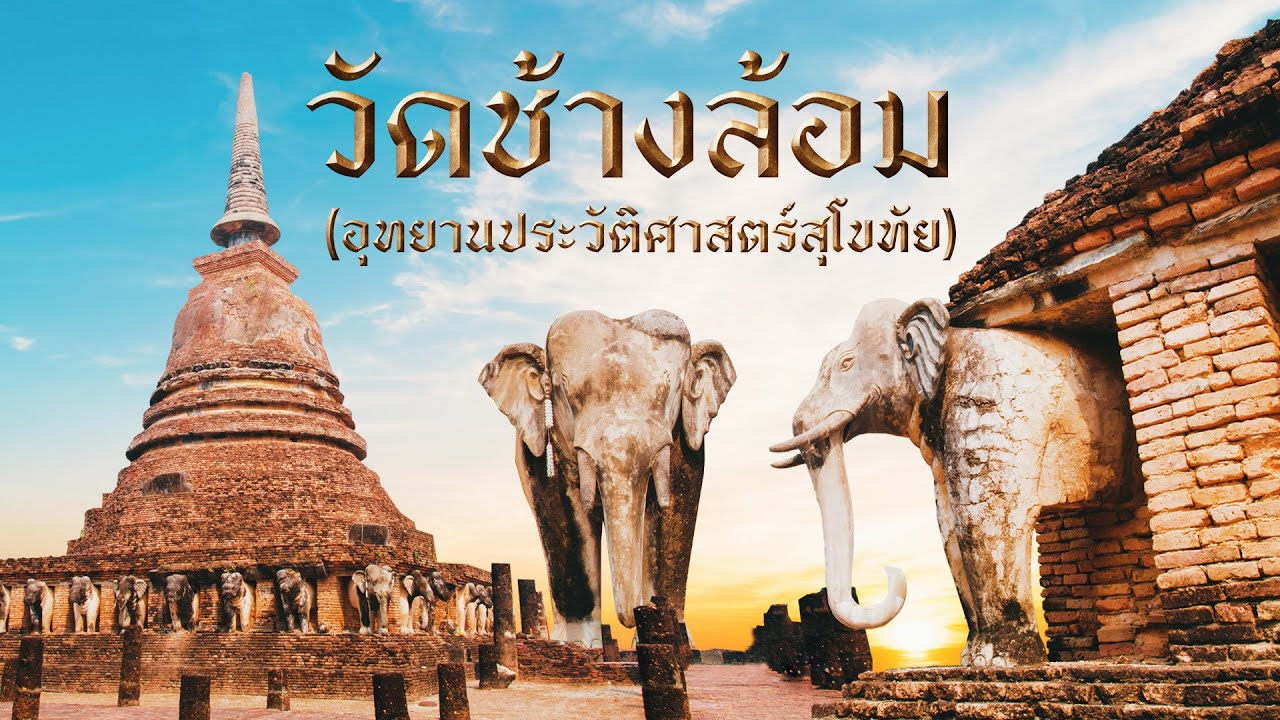
 Click to Access the Navigation Map GPS
Wat Chang Lom Map
Recommend

 Art, Culture and Heritage
 Historical Sites and Monuments(4)
 Landmarks and Memorials(5)
 Art, Craft Centres, Tradition(11)
 Museums(5)
Temple(40)
Museums(5)
Temple(40)
 Other Sacred Sites(10)
 Suburban Living
 Village, Community(3)
 Nature and Wildlife
 National Parks and Marine Reserves(3)
 Mountain (Doi)(2)
 Dam, Reservoir, Lake(4)
 Waterfalls(8)
 Caves(4)
 River, Canal(2)
 Entertainment and Agricultural
 Farms, Parks and Ecotourism(3)
 Travel Articles, Recipes
 Travel Review, Food Review(1)


