
lovethailand home >Central Travel Attractions >Pathum Thani Travel Attractions >Klong Luang >Khlong Nueng > Valaya Alongkorn Rajabhat University Under the Roy..
TL;DR: Valaya Alongkorn Rajabhat University Under the Royal Patronage is located at 1 Moo 20, Phahonyothin Road, Khlong Nueng, Khlong Luang District, Pathum Thani 13180, Thailand, open Monday – Friday (Administrative Office Services), hours 08:30 – 16:30.
Valaya Alongkorn Rajabhat University Under the Royal Patronage
Open Days: Monday – Friday (Administrative Office Services)
Opening Hours: 08:30 – 16:30
Valaya Alongkorn Rajabhat University under the Royal Patronage (มหาวิทยาลัยราชภัฏวไลยอลงกรณ์ ในพระบรมราชูปถัมภ์), commonly known as VRU, is a public university in Pathum Thani Province, Thailand, with an educational history dating back to June 4, 1932. The institution originated as Phetchaburi Wittayalongkorn Teacher Training School, founded through the initiative and generosity of Her Royal Highness Princess Valaya Alongkorn, Princess of Phetchaburi, officially titled Somdet Phra Ratchapituchcha Chao Fa Valaya Alongkorn, Krom Luang Phetchaburi Rajasirindhorn. It became a teachers college in 1970, relocated its educational operations from Bangkok to Pathum Thani in 1972, received royal patronage in 1974, and was granted university status on June 15, 2004. Its main campus is located at 1 Moo 20, Phahonyothin Road, Khlong Nueng, Khlong Luang District, Pathum Thani 13180. Today, the university provides higher education through seven faculties, one college, and an additional educational center in Sa Kaeo Province. Academic disciplines cover teacher education, humanities, social sciences, business administration, natural sciences, technology, agriculture, industrial studies, and public health. VRU is particularly associated with teacher development, community engagement, applied learning, and research contributing to sustainable local development.
Valaya Alongkorn Rajabhat University is distinctive because its institutional history connects the development of education for Thai women with the modern mission of a comprehensive regional university. What began as a small teacher training school on Phetchaburi Road in Bangkok has become an institution responsible for preparing teachers, educating professionals, conducting research, providing academic services, and preserving cultural heritage. Throughout these changes, the university has retained the name of its royal founder and continued to observe traditions commemorating her contribution to Thai education. Its history therefore provides valuable insight into women's education, teacher training, royal involvement in educational development, and the transformation of Thailand's Rajabhat institutions into universities.
The main campus is located near kilometer 48 of Phahonyothin Road in Khlong Nueng, Khlong Luang District, Pathum Thani. The location is close to the provincial boundary with Phra Nakhon Si Ayutthaya and the Nawa Nakhon industrial area. This setting reflects the northward expansion of metropolitan Bangkok and the transformation of the central Thai plain from predominantly agricultural communities into a region combining manufacturing, education, commerce, and residential development. Surrounding communities contain markets, shops, housing, industrial enterprises, and major transportation routes, offering opportunities for cooperation between the university, local residents, and businesses.
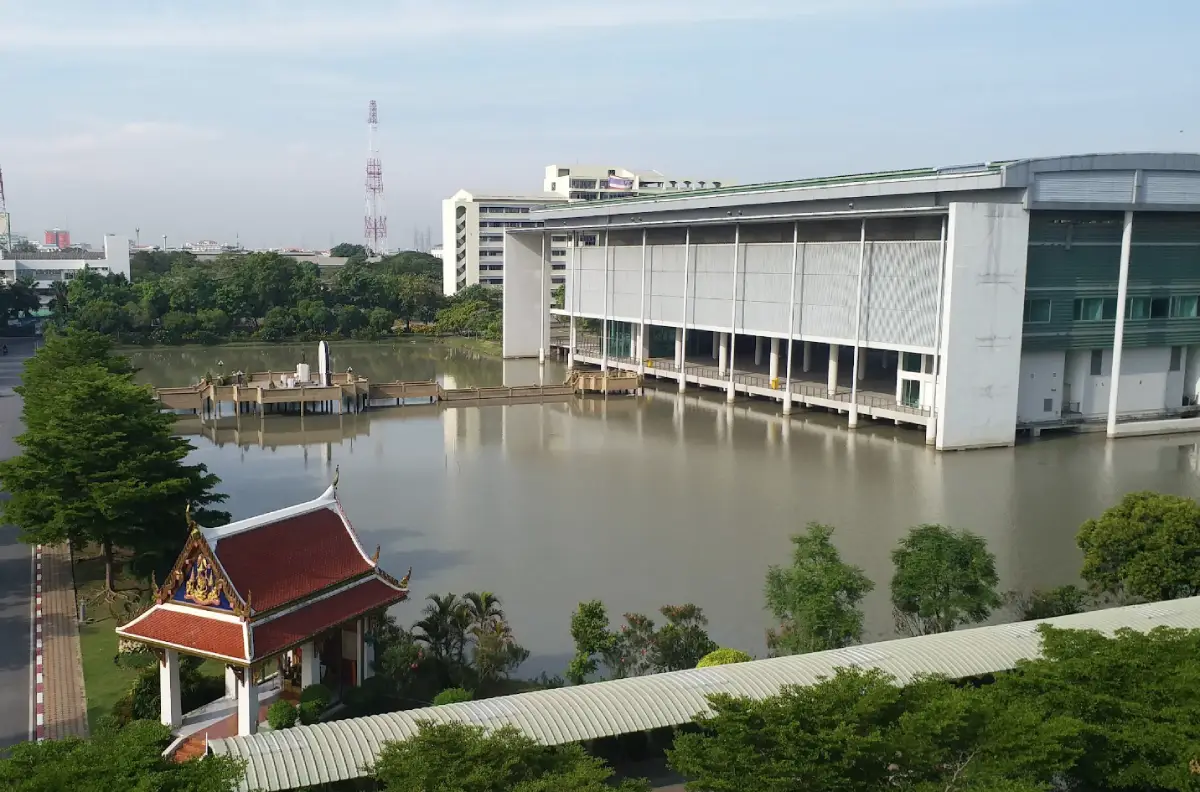
The university campus contains a combination of academic buildings, open spaces, and landscaped areas. Facilities include administrative offices, laboratories, lecture buildings, auditoriums, libraries, sports venues, student residences, and professional training centers. Several notable buildings are connected with institutional anniversaries and members of the Thai royal family, while the monument to the university's royal founder occupies a central place in its historical and ceremonial identity. As a result, the campus offers a setting in which visitors can explore the relationship between educational history, architecture, culture, and local development.
The origins of the university belong to a period when Thailand was placing increasing importance on formal education and the preparation of teachers for schools across the country. Expanding educational opportunities for women was a significant part of this development. Thai society was gradually creating more pathways through which women could gain professional qualifications and contribute to public services, particularly education. Establishing a teacher training school for women therefore represented more than the creation of another educational institution. It helped prepare women to become professional educators who would influence the learning opportunities of future generations.
Princess Valaya Alongkorn, Princess of Phetchaburi, recognized the importance of education for Thai women and donated approximately four rai of land together with a building to the Ministry of Education. This gift made possible the establishment of Phetchaburi Wittayalongkorn Teacher Training School on June 4, 1932. The original location was on Phetchaburi Road in the area now known as Thung Phaya Thai, Ratchathewi District, Bangkok. The school received teacher trainees and upper-secondary students transferred from Benjamarachalai School. This event marked the beginning of the institution that would eventually become Valaya Alongkorn Rajabhat University.
Nilrat Bannasitworasan served as the school's first headmistress and played an important role in establishing its educational administration and teaching arrangements. The school provided both teacher training and general education, supporting students in developing academic knowledge and professional skills. During its earliest years, it used the Thai letter representing the beginning of the word Phetchaburi as a symbol. Green was selected as the school color because of its association with the day of the royal founder's birth. This color later became an important part of the university's continuing institutional identity.
The original name Phetchaburi Wittayalongkorn reflected the royal status of the institution's founder and the importance of learning. As the school changed its name and legal status over subsequent decades, the name Valaya Alongkorn remained a central connection with its origins. Preserving the founder's name ensured that the history of women's teacher education and the princess's educational contribution continued to form part of the institution's identity, even as its programs expanded far beyond teacher training.
On October 1, 1970, the teacher training school was developed into Phetchaburi Wittayalongkorn Teachers College. The change represented the expanding role of teacher education in Thailand and the increasing need for qualified educational personnel. College-level administration and teaching enabled the institution to broaden its academic work, strengthen professional training, and respond more effectively to the needs of the national education system.
The year 1972 marked another major development when the college expanded to its present campus in Pathum Thani Province. The relocation from Bangkok took place during the administration of Director Uaiphon Plengvanich, who coordinated with Pathum Thani Governor Prasit Urairat to secure land belonging to the Crown Property Bureau along Phahonyothin Road at kilometer 48. The original area comprised 294 rai, three ngan, and 72 square wah, providing considerably more space than the institution's former premises in Bangkok.
The new location enabled the college to develop classrooms, laboratories, student accommodation, sports facilities, and supporting infrastructure on a much larger scale. Relocation was therefore more than a change of address. It represented the transformation of an urban teacher training school into a campus capable of accommodating a broader range of teaching and professional activities. Pathum Thani's location between Bangkok and Phra Nakhon Si Ayutthaya also made the college accessible to students from several parts of central Thailand.
On November 14, 1974, King Bhumibol Adulyadej graciously accepted Phetchaburi Wittayalongkorn Teachers College and its alumni association under royal patronage. This event marked a major development in the institution's identity. The designation under the Royal Patronage became part of the institution's official name and remains an important element of its status and historical heritage.
On November 9, 1975, King Bhumibol Adulyadej, accompanied by Queen Sirikit and Princess Sirindhorn, visited the college for the official inauguration of the monument commemorating Princess Valaya Alongkorn, Princess of Phetchaburi. The King also provided 200,000 baht of personal funds toward establishing a foundation named in honor of the princess. The occasion became an important milestone in the history of the institution and helped establish the royal founder's monument as a central location for remembrance and ceremonial activities.
In 1977, the college began offering bachelor's degree education through the Bachelor of Education program. This represented an important advancement in the professional preparation of teachers at higher education level. By 1985, the institution had expanded to cover three broad areas of study: education, liberal arts, and science. This development reflected a gradual transformation from a specialized teacher training college into a multidisciplinary educational institution.
On February 14, 1992, King Bhumibol Adulyadej bestowed the name Rajabhat upon the country's teachers colleges. Phetchaburi Wittayalongkorn Teachers College consequently became Phetchaburi Wittayalongkorn Rajabhat Institute under the Royal Patronage. The Rajabhat Institute Act of 1995 subsequently established the role of Rajabhat institutes as higher education institutions committed to local development. Their responsibilities extended beyond teacher education to include degree programs, research, academic services, and the preservation of arts and culture.
On March 6, 1995, King Bhumibol Adulyadej granted permission for Rajabhat institutes to use his royal personal seal as their official institutional emblem. This created a shared visual identity among Rajabhat institutions throughout Thailand and symbolized the significance of their educational and community development missions.
On February 15, 1999, Princess Maha Chakri Sirindhorn visited the campus to lay a wreath at the monument honoring Princess Valaya Alongkorn and to officially open the professional training building named after the royal founder. The building became associated with the development of practical professional education, particularly as the institution expanded its activities in business and service-related subjects. Its purpose illustrated the growing importance of learning environments that connect academic knowledge with professional practice.
During the 1999 academic year, the institution offered two-year and four-year pathways in business administration. In the following academic year, 2000, it introduced master's degree programs in educational administration and curriculum and instruction. These developments demonstrated a broader educational role, providing opportunities not only for undergraduate teacher education but also for the professional development of educators, school administrators, and graduates seeking advanced academic qualifications.
On February 15, 2001, Princess Galyani Vadhana, Princess of Naradhiwas, visited the institution to pay tribute at the royal founder's monument and officially open the 100th Anniversary Somdet Phra Srinagarindra Building and the Ratchanakharin Meeting Room. The building subsequently became an important administrative and academic venue within the campus. Its historical significance also reflects the institution's continuing relationship with members of the royal family who contributed to Thailand's educational development.
On August 21, 2002, royal permission was granted to rename the institution Valaya Alongkorn Rajabhat Institute under the Royal Patronage, replacing the earlier name Phetchaburi Wittayalongkorn Rajabhat Institute. This change placed the royal founder's name more prominently at the center of the institution's identity. Subsequently, the Rajabhat University Act of 2004 took effect on June 15, 2004, granting the institution university status as Valaya Alongkorn Rajabhat University under the Royal Patronage in Pathum Thani Province.
University status created new opportunities to expand higher education, academic research, and professional cooperation. In the 2006 academic year, the university introduced doctoral programs in educational administration, curriculum and instruction, and public administration. The development of graduate education reflected the institution's growth beyond undergraduate teacher preparation into a university capable of supporting advanced research and professional development.
On May 3, 2012, the University Council approved the acquisition of additional land to the north of the campus, covering 86 rai, three ngan, and 19 square wah. According to the university's historical records, this expansion brought the total main campus area to 381 rai, two ngan, and 91 square wah. The additional space supported future development of educational buildings, facilities, landscaped areas, and infrastructure for students and university personnel.
During the 2010s, the university increasingly developed international education and English-medium programs. In the 2013 academic year, it introduced internationally oriented aviation business education and international education associated with its demonstration school. In the 2014 academic year, selected teacher education programs in mathematics and science were offered in English, together with international studies in English communication. These changes reflected growing recognition of the importance of foreign languages and intercultural competence in education and professional employment.
Valaya Alongkorn Rajabhat University also expanded its educational activities to Sa Kaeo Province. From the 2015 academic year, its programs included public administration, business administration, and science-related studies. Sa Kaeo has an important role within eastern Thailand and the Thai-Cambodian border region, where economic, agricultural, and social conditions differ from those of Pathum Thani. The Sa Kaeo educational center is located at 1177 Moo 2, Tha Kasem, Mueang Sa Kaeo District, Sa Kaeo Province 27000.
As of 2026, the university's rector is Associate Professor Dr. Sombat Kotchasit. The university continues to pursue its responsibilities in teacher development, local development, lifelong learning, and academic cooperation. Its contemporary policies also emphasize digital university development, environmental responsibility, and partnerships with government agencies, communities, and private enterprises. These priorities support the wider objective of applying education and research to meaningful social development.
The university's educational philosophy can be translated as Excellence in Academics, Emphasis on Morality, Leadership in Local Development, and Advancement in Technology. The philosophy expresses a commitment to combining academic knowledge with ethical conduct and community benefit. Its desired graduate identity emphasizes volunteer spirit, professional expertise, moral character, employability, and responsible citizenship. These values represent a continuation of the institution's original teacher education mission in a more diverse contemporary academic environment.
Green is the university's official color, inherited from the earliest teacher training school. The color was selected because of its relationship with the day of Princess Valaya Alongkorn's birth and has continued to represent the institution through successive changes of name and status. Green also evokes nature and the environment, making it particularly appropriate for a university emphasizing sustainable local development. The university's symbolic tree is the golden shower tree, or Cassia fistula, known in Thai as ratchaphruek. Its yellow flowers are associated with prosperity and auspiciousness.
The university's institutional emblem is linked to the royal personal seal of King Rama IX, whose use by Rajabhat institutes was authorized in 1995. The emblem reflects the shared heritage of Rajabhat universities and their connection with educational and local development missions. At the same time, the inclusion of Valaya Alongkorn in the official university name continues to honor the royal founder and the origins of women's teacher education in Thailand.
The monument to Princess Valaya Alongkorn is one of the most important historical and cultural landmarks within the university. It serves as the setting for commemorative ceremonies, particularly on February 15, the anniversary of the princess's passing. On February 15, 2026, the university organized a wreath-laying ceremony at the monument, with the Governor of Pathum Thani presiding and university representatives participating. The event demonstrated the continuing significance of the royal founder's memory within the university community.
The annual wreath-laying ceremony is often associated with the name Valaya Alongkorn Day. It connects current students and personnel with the original establishment of the teacher training school in 1932. The ceremony is an expression of gratitude and institutional remembrance, but it also provides an opportunity to reflect on the social importance of education and the creation of professional opportunities for women.
The 100th Anniversary Somdet Phra Srinagarindra Building is a prominent campus landmark associated with royal heritage and the university's administrative development. It is used for university administration and meetings and contains important institutional spaces. Visitors interested in its history should be aware that it remains an active university building, and access to particular offices and meeting rooms is subject to normal administrative arrangements.
The 60th Anniversary Valaya Alongkorn Building is connected with the university's cultural heritage and institutional history. In April 2026, the university conducted discussions concerning improvements to its interior spaces. The building is significant as a location with potential for supporting cultural learning and activities, reflecting the university's responsibility to preserve and develop Thai arts and cultural knowledge.
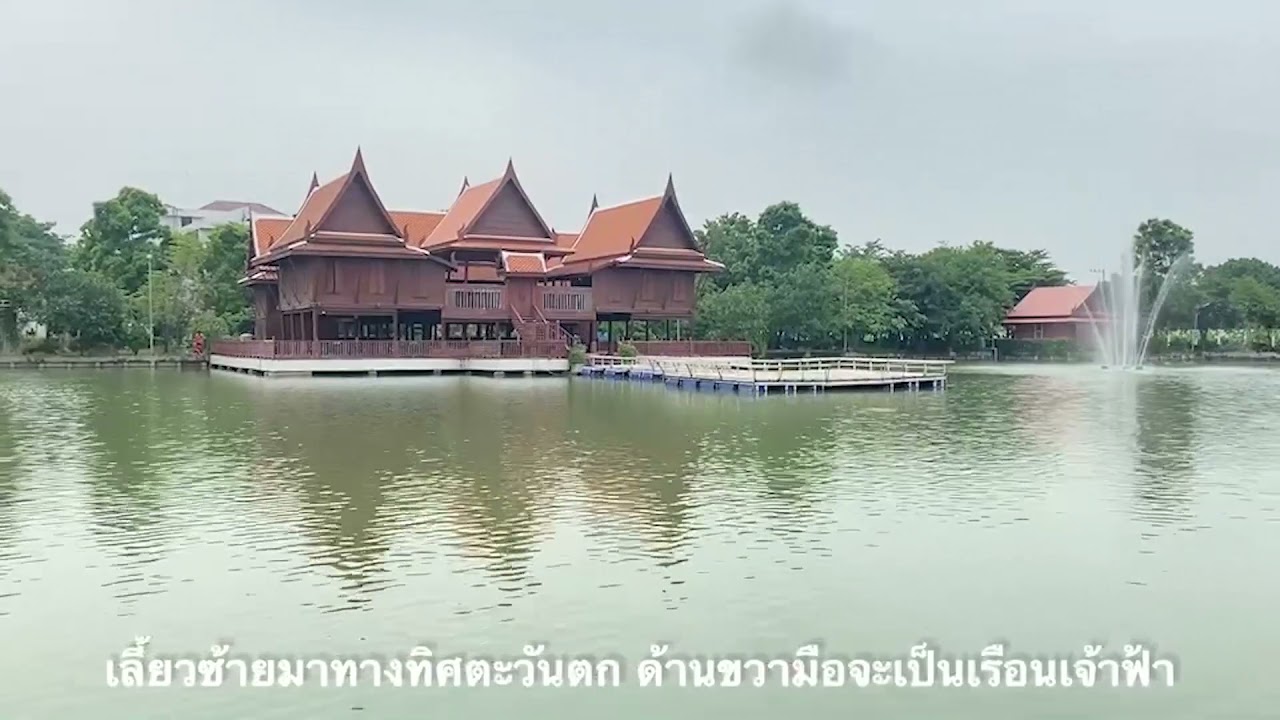
Ruean Chao Fa, or the Princess's Traditional Thai House, is another notable feature of the campus landscape. Its architecture reflects the traditional Central Thai house and provides a setting for learning about vernacular design, building traditions, and the relationship between architecture and climate. The building illustrates how cultural heritage can be presented within a modern university environment and offers an opportunity to understand elements of traditional Thai residential architecture.
The 80th Anniversary Valaya Alongkorn Hall and Valaya Alongkorn Hall are important venues for large university events, including ceremonies, conferences, and academic activities. They are identified as separate facilities on the university's official campus map. Visitors should therefore confirm the exact name of the auditorium when attending an event. Having multiple assembly venues allows the university to accommodate activities of different scales.
The Office of Academic Resources and Information Technology provides essential services supporting teaching, learning, and research. Its resources include library collections, scholarly information, digital databases, and facilities for academic study. As a multidisciplinary university, VRU requires resources across education, literature, sociology, business, science, technology, and public health. The library and information services therefore contribute directly to the university's academic development and its commitment to lifelong learning.
The 75th Anniversary Valaya Alongkorn Building is associated with language learning facilities. Foreign-language education is increasingly important for employment, academic study, and international communication. Dedicated spaces for language instruction help support programs requiring English, Chinese, and other language competencies, together with activities developing students' abilities to work across cultural boundaries.
The university also maintains science buildings, laboratories, and specialized teaching facilities supporting programs in computer science, information technology, environmental science, occupational health, food innovation, nutrition, and other applied scientific disciplines. Laboratory learning enables students to practice systematic observation, experimentation, data analysis, and problem-solving. Such facilities are essential to the development of professionals capable of responding to technological and environmental challenges.
Agricultural education is supported through the Faculty of Agricultural Technology and facilities used for crop production, animal science, and food technology. These disciplines are closely connected with the agricultural history of the central Thai plain and remain important for contemporary food systems and rural development. The university also maintains activities associated with plant genetic resource conservation, supporting botanical knowledge and the responsible management of biological resources.
Professional training facilities include hospitality-related spaces and buildings used for practical business service education. Such environments are relevant to students studying management, hospitality, service industries, and business operations. Practice-oriented learning allows students to gain experience with customer service, workplace organization, resource management, and the professional responsibilities expected in actual businesses.
The Valaya Alongkorn Rajabhat University Demonstration School remains directly connected with the institution's historical mission of teacher education. Its existence supports interaction between educational theory and classroom practice. Teacher education students can learn from real school environments, while lecturers and researchers can explore teaching methods, educational innovation, and curriculum development. This relationship continues the university's long tradition of preparing educators for Thai society.
The campus also includes a central sports stadium, gymnasiums, and the Uaiphon Plengvanich Swimming Pool. These facilities support health, recreation, and sporting activities according to the service arrangements of their respective departments. Sports facilities are important for developing students beyond academic qualifications, encouraging discipline, teamwork, and physical well-being within the wider university community.
The Faculty of Education carries forward the most direct connection with the university's origins. Its academic programs include early childhood education, primary education, mathematics, Thai, English, Chinese, science, and physical education. The faculty combines subject-specific knowledge with educational theory, teaching methods, and supervised professional practice. Training in real schools is especially important because future teachers must learn to translate academic knowledge into effective classroom experiences.
The Faculty of Humanities and Social Sciences offers education in languages, psychology, law, political science, public administration, and related fields. These subjects help students understand individuals, legal systems, public institutions, organizational administration, and social relationships. Humanities and social sciences play an essential role in local development because addressing community challenges requires awareness of social structures, cultural contexts, and the needs of different groups of people.
The Faculty of Management Sciences prepares graduates in business administration, marketing, accounting, logistics, digital business, and modern retail management. Its academic environment is particularly relevant to the economic conditions of Khlong Luang and Nawa Nakhon, where factories, commercial enterprises, and service businesses employ substantial numbers of people. Workplace partnerships and professional training can help students understand organizational operations while developing management, analytical, and entrepreneurial skills.
The Faculty of Science and Technology provides education in computer science, information technology, data science, environmental science, occupational health and safety, nutrition, food innovation, and health-related technologies. These disciplines reflect the growing importance of digital information, scientific analysis, environmental management, and innovation in contemporary employment. Students gain opportunities to develop practical abilities through laboratory work, technological applications, and problem-solving activities.
The Faculty of Industrial Technology focuses on technical and engineering fields, including industrial electrical technology, smart electronics, mechatronics, robotics, electric vehicles, industrial engineering, and industrial design. Its programs emphasize applied learning with technical equipment, control systems, manufacturing processes, and product design. These skills are relevant to the changing requirements of industry, especially the growing adoption of automation and electric vehicle technologies.
The Faculty of Agricultural Technology provides education in agricultural science, crop production, animal science, and food science and technology. Learning involves agricultural processes, farm management, experimentation, product quality, and food processing. These fields enable the university to contribute to local agricultural development through applied research, the transfer of technologies, and support for the sustainable use of natural resources.
The Faculty of Public Health develops professional knowledge relevant to community healthcare and well-being. Its fields include public health, healthcare facility management, environmental health, health and beauty technology, and sports science and health promotion. Public health education supports disease prevention, community health planning, environmental risk management, and the improvement of quality of life, making it an important part of the university's local development mission.
The College of Innovative Management offers programs connected with aviation business innovation, hospitality and hotel management, and innovation-oriented business development. Its educational approach emphasizes cooperation with workplaces and practical professional experience. Hospitality and hotel management are important for Thailand's tourism and service economy, while aviation business programs require communication skills, management knowledge, and familiarity with international service standards.
Valaya Alongkorn Rajabhat University's Sa Kaeo educational center contributes to regional development, particularly in eastern Thailand and the Thai-Cambodian border area. Its programs address agricultural science, organizational management, and political and administrative studies. Providing education in Sa Kaeo expands access to university-level learning for local communities and allows academic activities to respond to the distinctive economic and social needs of the region.
During the 2026 academic year, the university operated an official online admissions system covering undergraduate education, weekday and weekend study formats, graduate programs, and the Graduate Diploma in the Teaching Profession. Some academic offerings had been revised to reflect changing professional standards and employment needs. Fields such as data science, digital technology, modern business management, sports science, and sustainable development illustrate the university's efforts to prepare learners for changing economic and social conditions.
Research and academic services are central to the university's responsibilities. Important supporting units include the Research and Development Institute and the Office of Learning Promotion and Academic Services, working alongside individual faculties. Academic outreach may involve occupational training, the development of community products, agricultural technology, health education, and improvements to local educational practices. These activities connect knowledge produced within the university with the needs of communities and partner organizations.
The King's Philosophy and the Sufficiency Economy Philosophy are important elements of the university's approach to community-oriented development. These ideas emphasize responsible resource use, self-reliance, balanced development, and the long-term strength of communities. Their application in education encourages students to understand that technological progress and economic development should be pursued with attention to social responsibility, environmental protection, and the well-being of people.
The university's proximity to the Nawa Nakhon industrial area creates opportunities to connect professional education with the practical needs of manufacturing and business. Companies in the region require personnel with skills in management, production systems, electrical technologies, industrial engineering, and quality assurance. Internships, practical training, and cooperation with workplaces can help students develop relevant capabilities, while university expertise can contribute to improving professional skills and business processes in the wider community.
Cultural activities play an important role in preserving the university's identity. Major occasions include the commemorative wreath-laying ceremony on February 15 and activities associated with the original institution's foundation on June 4. Individual faculties also organize teacher-honoring ceremonies, cultural performances, student development activities, and community service projects. These events strengthen relationships among students, lecturers, personnel, alumni, and surrounding communities while encouraging respect for the university's history.
The wai khru, or teacher-honoring ceremony, has particular significance at VRU because of the university's origins as a teacher training institution. The ceremony expresses gratitude toward educators and encourages reflection on professional ethics and the responsibilities involved in transmitting knowledge. Although the university now offers programs in many disciplines, respect for teachers and the responsible use of learning remain important values for all students, especially those preparing for professions involving direct public service.
The university also organizes open-house activities to introduce academic programs and learning environments to prospective students and their families. VRU Open House 2026 was an example of a public-facing event providing information about faculties, degree programs, practical workshops, and pathways into higher education. Such activities are valuable because they allow prospective students to relate their interests and abilities to the teaching methods and career opportunities associated with particular disciplines.
For visitors interested in educational heritage, the university offers several significant landmarks connected with the history of women's education and Thailand's Rajabhat university system. The royal founder's monument, the 100th Anniversary Somdet Phra Srinagarindra Building, Ruean Chao Fa, and the 60th Anniversary Valaya Alongkorn Building are particularly relevant to institutional history and cultural learning. The library, science facilities, and agricultural teaching areas demonstrate how the university's contemporary educational mission has expanded beyond its original teacher training role.
Visitors should remember that the university is a functioning educational institution rather than a tourist attraction with unrestricted access to every building. Entry into classrooms, laboratories, the demonstration school, conference facilities, and specialized academic spaces is subject to the relevant regulations and schedules. Groups planning study visits should contact the responsible university department in advance, particularly when guided interpretation or access to facilities normally used for teaching and research is required.
Getting There is possible by private car, public bus, minivan, and taxi. The university is located on Phahonyothin Road near kilometer 48 in Khlong Luang District, Pathum Thani. Drivers traveling from Bangkok can follow Phahonyothin Road northward through Rangsit and Nawa Nakhon toward the Pratunam Phra In area. Visitors coming from Phra Nakhon Si Ayutthaya can approach the campus from the opposite direction along Phahonyothin Road. Identifying the correct university entrance and destination building before departure is advisable.
The university's official transport information identifies connections with minivan services operating around Future Park Rangsit and Pratunam Phra In. Passengers can continue to campus by motorcycle taxi or an available university transport service. Bus route 338 is also listed among the services connecting these transport areas. Travelers should check current destinations, operating hours, and service frequencies, since public transport routes may be adjusted over time.
Those using the SRT Red Line can travel to Rangsit Station before transferring to road transport heading toward Nawa Nakhon or Pratunam Phra In. A further local connection may be required to reach the university entrance. Passengers should allow adequate time for transfers and traffic, especially during busy morning and evening periods along Phahonyothin Road.
For private vehicles, the university identifies parking areas near the 100th Anniversary Somdet Phra Srinagarindra Building, the 75th Anniversary Valaya Alongkorn Building, the Faculty of Education, the Science Teaching Building, and the Learning Promotion Building. Checking the location of the destination office or teaching facility can help reduce unnecessary travel within the campus. Visitors attending large events should also allow additional time for entrance procedures and parking arrangements.
The surrounding area contains several destinations for educational and cultural visits. The Golden Jubilee Museum of Agriculture is particularly relevant to agricultural learning and the Sufficiency Economy Philosophy. Wat Thaweekaranan serves as a local Buddhist temple and cultural landmark, while markets in the Nawa Nakhon area provide an opportunity to observe the everyday economic life of communities shaped by manufacturing and residential development. These places can complement a visit focused on education, culture, and community development.
Valaya Alongkorn Rajabhat University under the Royal Patronage is an important institution in the history of Thai education. Its development from a teacher training school for women in 1932 to a teachers college, a Rajabhat institute, and finally a university in 2004 reflects major changes in access to education and professional development. The university continues to honor its royal founder while fulfilling contemporary responsibilities in teacher education, research, technological learning, academic services, and local development. Its history and present-day activities demonstrate how an institution founded to expand educational opportunities can evolve into a multidisciplinary university while retaining a distinctive commitment to public service and community well-being.
| University Name | Valaya Alongkorn Rajabhat University under the Royal Patronage (VRU) |
| Thai Name | มหาวิทยาลัยราชภัฏวไลยอลงกรณ์ ในพระบรมราชูปถัมภ์ |
| Institution Type | Public University, Rajabhat University System |
| Address | 1 Moo 20, Phahonyothin Road, Khlong Nueng, Khlong Luang District, Pathum Thani 13180, Thailand |
| Road Location | Phahonyothin Road, Kilometer 48, Near Pratunam Phra In and Nawa Nakhon |
| Original Institution Founded | June 4, 1932 |
| Original Institution Name | Phetchaburi Wittayalongkorn Teacher Training School |
| Royal Founder | Princess Valaya Alongkorn, Princess of Phetchaburi |
| First Headmistress | Nilrat Bannasitworasan |
| Teachers College Status | October 1, 1970 |
| Relocation to Pathum Thani | 1972 |
| Royal Patronage Granted | November 14, 1974 |
| Royal Founder's Monument Inaugurated | November 9, 1975 |
| Rajabhat Institute Status | 1992 |
| Valaya Alongkorn Rajabhat Institute Name | 2002 |
| University Establishment Date | June 15, 2004 |
| Institutional Age | 94 Years as of 2026, Counting from the Original Teacher Training School |
| Years as a University | 22 Years as of 2026 |
| Rector in 2026 | Associate Professor Dr. Sombat Kotchasit |
| University Color | Green |
| University Tree | Golden Shower Tree (Cassia fistula) |
| Educational Philosophy | Excellence in Academics, Emphasis on Morality, Leadership in Local Development, and Advancement in Technology |
| Institutional Identity | Local Development University, Volunteer-Minded Graduates, and the Application of the King's Philosophy to Sustainable Development |
| Academic Organization | Seven Faculties and One College |
| Faculties and College | Faculty of Education, Faculty of Humanities and Social Sciences, Faculty of Management Sciences, Faculty of Science and Technology, Faculty of Agricultural Technology, Faculty of Industrial Technology, Faculty of Public Health, and College of Innovative Management |
| Sa Kaeo Educational Center | 1177 Moo 2, Tha Kasem, Mueang Sa Kaeo District, Sa Kaeo 27000, Thailand. Tel. +66 37 447 043 |
| Important Campus Landmarks | Monument to Princess Valaya Alongkorn, 100th Anniversary Somdet Phra Srinagarindra Building, 60th Anniversary Valaya Alongkorn Building, 75th Anniversary Valaya Alongkorn Building, Ruean Chao Fa, 80th Anniversary Valaya Alongkorn Hall, Valaya Alongkorn Hall, University Library, and Professional Training Center |
| Traditions and Cultural Activities | Valaya Alongkorn Day on February 15, Original Institution Foundation Anniversary on June 4, Wai Khru Ceremonies, Student Development Activities, and University Open House Events |
| Campus Facilities | Libraries, Laboratories, Science Center, Demonstration School, Auditoriums, Student Residences, Professional Training Center, Food Center, Sports Stadium, Gymnasiums, Swimming Pool, and Parking Areas |
| Administrative Office Hours | Monday – Friday, 08:30 – 16:30, Excluding Public Holidays |
| Getting There | Via Phahonyothin Road at Kilometer 48, by Private Car, Minivan Connections from Future Park Rangsit or Pratunam Phra In, or Bus Route 338 According to Current Services |
| Nearby Attractions | 1. Princess Valaya Alongkorn Monument, On Campus 2. Ruean Chao Fa, On Campus 3. Golden Jubilee Museum of Agriculture, Khlong Nueng, Tel. +66 2 529 2212 4. Wat Thaweekaranan, Khlong Nueng, Tel. +66 81 278 6955 5. Rong Kluea Market, Nawa Nakhon Area, Near Pratunam Phra In |
| Nearby Restaurants and Cafés | 1. Princess Valaya Cafe, On Campus, Tel. +66 87 044 9032 2. Too Cafe, On Campus, Tel. +66 86 790 0577 3. Café Amazon, Valaya Alongkorn Rajabhat University Branch, Tel. +66 65 393 9749 4. Lab Nua, Nawa Nakhon Branch, Tel. +66 98 258 2218 5. The Cosy Tea Room, Chiang Rak Noi, Bang Pa-in, Tel. +66 89 938 3356 |
| Nearby Accommodation | 1. Valaya Alongkorn Rajabhat University Hotel, On Campus, Tel. +66 2 909 1100 2. SIRI SPACE, Pratunam Phra In, Tel. +66 81 719 2991 3. Royal Inn, Phahonyothin Road, Khlong Nueng, Tel. +66 2 516 9400 4. iRESIDENCE HOTEL PATHUMTHANI, Khlong Nueng, Tel. +66 90 052 6666 5. Nuch Bua Mansion, Nawa Nakhon, Tel. +66 80 205 5580 |
| University Telephone | +66 2 529 0674–77 |
| Academic Affairs and Admissions | +66 2 909 1432 Ext. 322 or 323 |
| University Email | saraban@vru.ac.th |
| Official Website | https://www.vru.ac.th |
| Admissions Website | https://ent.vru.ac.th |
| Current Status | Operating as a Public University in the 2026 Academic Year |
Academic Programs and Fields of Study at Valaya Alongkorn Rajabhat University under the Royal Patronage, Academic Year 2026 (B.E. 2569)
| Faculty of Education | Bachelor's Degrees 1. Bachelor of Education in Early Childhood Education 2. Bachelor of Education in Mathematics 3. Bachelor of Education in English 4. Bachelor of Education in Chinese 5. Bachelor of Education in Thai 6. Bachelor of Education in Primary Education 7. Bachelor of Education in English (English Program) 8. Bachelor of Education in Science 9. Bachelor of Education in Physical Education Master's Degrees 1. Master of Education in Educational Administration Innovation 2. Master of Education in Curriculum and Instruction Doctoral Degrees 1. Doctoral Degree in Educational Administration Innovation (Degree Title Depends on the Curriculum Version) 2. Doctor of Philosophy in Curriculum and Instruction |
| Faculty of Humanities and Social Sciences | Bachelor's Degrees 1. Bachelor of Arts in Psychology 2. Bachelor of Laws 3. Bachelor of Arts in Thai 4. Bachelor of Arts in English 5. Bachelor of Public Administration in Public Administration 6. Bachelor of Political Science in Political Science 7. Bachelor of Arts in Business English 8. Bachelor of Education in Social Studies Master's Degrees 1. Master of Fine Arts in Visual Arts and Design 2. Master of Political Science in Governance Management 3. Master of Public Administration in Public Administration Doctoral Degree 1. Doctor of Philosophy in Visual Arts and Design |
| Faculty of Management Sciences | Bachelor's Degrees 1. Bachelor of Business Administration in General Management 2. Bachelor of Business Administration in Modern Retail Business 3. Logistics and Supply Chain Management 4. Bachelor of Business Administration in Business Administration (Marketing and Human Resource Management Study Concentrations) 5. Bachelor of Accountancy 6. Bachelor of Business Administration in Digital Business 7. Modern Business Management (Continuing Degree Program) Master's Degree 1. Master of Business Administration in Business Management Doctoral Degree 1. Doctor of Philosophy in Business Management |
| Faculty of Science and Technology | Bachelor's Degrees 1. Bachelor of Science in Information Technology (Digital Technology and Animation and Digital Media Concentrations) 2. Bachelor of Science in Computer Science 3. Bachelor of Science in Occupational Health and Safety 4. Bachelor of Science in Environmental Science 5. Bachelor of Science in Nutrition and Dietetics 6. Bachelor of Science in Healthy Food and Beverage Innovation 7. Bachelor of Science in Bio-Product Innovation 8. Bachelor of Science in Data Science 9. Bachelor of Science in Digital Innovation 10. Bachelor of Science in Culinary Science and Service Doctoral Degree 1. Doctor of Philosophy in Innovation for Sustainable Development |
| Faculty of Agricultural Technology | Bachelor's Degrees 1. Bachelor of Science in Agriculture (Crop Production Technology and Animal Science Concentrations) 2. Bachelor of Science in Food Science and Technology Master's Degree 1. Master of Science in Agricultural Technology Management |
| Faculty of Industrial Technology | Bachelor's Degrees 1. Bachelor of Industrial Technology in Industrial Electrical Technology (Continuing Program) 2. Bachelor of Industrial Technology in Industrial Technology, Smart Electronics and Computer Technology Concentration (Continuing Program) 3. Bachelor of Engineering in Mechatronics and Electric Vehicle Engineering (Mechatronics and Robotics Engineering and Electric Vehicle Engineering Concentrations) 4. Bachelor of Engineering in Industrial Engineering 5. Bachelor of Science in Industrial Art Design Master's Degree 1. Master of Science in Technology Management |
| Faculty of Public Health | Bachelor's Degrees 1. Bachelor of Public Health in Public Health 2. Bachelor of Public Health in Healthcare Facility Management 3. Bachelor of Science in Environmental Health 4. Bachelor of Science in Health and Beauty Technology 5. Bachelor of Science in Sports Science and Health Promotion Master's Degrees 1. Master of Public Health in Health Systems Management 2. Master of Science in Sports Science Doctoral Degrees 1. Doctor of Public Health in Health Systems Management 2. Doctor of Philosophy in Sports Science |
| College of Innovative Management | Bachelor's Degrees 1. Bachelor of Business Administration in Aviation Business Management Innovation (International Program) 2. Bachelor of Arts in Hospitality and Hotel Management 3. Bachelor of Business Administration in Trade Innovation Management Master's Degree 1. Master of Business Administration in Entrepreneurship and Business Innovation Design Doctoral Degrees 1. Doctor of Business Administration in Business Administration 2. Doctor of Philosophy in Entrepreneurship and Business Innovation Design 3. Doctor of Philosophy in Environmental Management Innovation |
| Valaya Alongkorn Rajabhat University, Sa Kaeo | Bachelor's Programs Identified in the 2026 Admissions Information 1. Bachelor of Science in Agriculture (Plant Science and Animal Science Concentrations) 2. Bachelor of Business Administration in General Management 3. Bachelor of Political Science in Politics and Governance |
| Graduate School and Graduate Diploma Programs | Graduate Diploma 1. Teaching Profession |
Frequently Asked Questions (FAQ)
Q: Where is Valaya Alongkorn Rajabhat University located?
A: The main campus is located at 1 Moo 20, Phahonyothin Road, Khlong Nueng, Khlong Luang District, Pathum Thani 13180, Thailand, near kilometer 48 of Phahonyothin Road. The university also has an educational center in Sa Kaeo Province.
Q: When was Valaya Alongkorn Rajabhat University founded?
A: The institution originated as Phetchaburi Wittayalongkorn Teacher Training School on June 4, 1932. It was granted university status on June 15, 2004.
Q: Who founded Valaya Alongkorn Rajabhat University?
A: The royal founder was Princess Valaya Alongkorn, Princess of Phetchaburi, who donated land and a building for the original teacher training school. Its first headmistress was Nilrat Bannasitworasan.
Q: What faculties does Valaya Alongkorn Rajabhat University have?
A: The university has seven faculties: Education, Humanities and Social Sciences, Management Sciences, Science and Technology, Agricultural Technology, Industrial Technology, and Public Health. It also has the College of Innovative Management.
Q: What are the university's opening days and hours?
A: General administrative office services are available Monday through Friday, 08:30–16:30, excluding public holidays. Libraries, the demonstration school, professional training facilities, and weekend events may have different schedules.
Q: What is Valaya Alongkorn Rajabhat University known for?
A: The university is recognized for its history in women's teacher education, its role in developing teachers and local communities, and its professional programs in business, science, technology, agriculture, industrial studies, and public health.
Q: What are the important landmarks inside the campus?
A: Important landmarks include the monument to Princess Valaya Alongkorn, the 100th Anniversary Somdet Phra Srinagarindra Building, the 60th Anniversary Valaya Alongkorn Building, Ruean Chao Fa, the 80th Anniversary Valaya Alongkorn Hall, the university library, the science facilities, and professional training buildings.
Q: How do I travel to Valaya Alongkorn Rajabhat University from Bangkok?
A: Follow Phahonyothin Road north toward Rangsit and Pratunam Phra In to approximately kilometer 48. Public transport options include minivan and bus connections from Future Park Rangsit or Pratunam Phra In, followed by suitable local transport to the university.
 Category: ●University
 Group: ●Rajabhat University
Last Update : 2 DayAgo
 Last Update : 2 DayAgo
 Click to Access the Navigation Map GPS
Valaya Alongkorn Rajabhat University Under the Royal Patronage Map
Recommend

 Art, Culture and Heritage
 Historical Sites and Monuments(2)
 Landmarks and Memorials(1)
 Art, Craft Centres, Tradition(2)
 Museums(11)
 Art Gallery(1)
 Educational Places
 Museum for Study(1)
 Library(1)
 Training Center(1)
 Public university(2)
 Rajamangala University of Technology(1)
Rajabhat University(1)
 Private University(7)
 Places of Worship
 Temple(44)
 Mosque(1)
 Other Sacred Sites(1)
 Research and Development
 Royal Project(1)
 Suburban Living
 Local Market(2)
 Floating Market(3)
 Nature and Wildlife
 River, Canal(1)
 Entertainment and Agricultural
 Animal camps and shows(1)
 Stadium(2)
 Amusement Park(1)
 Waterpark(1)
 Travel Articles, Recipes
 Travel Review, Food Review(1)


