
lovethailand home >Central Travel Attractions >Pathum Thani Travel Attractions >Thanya Buri >Rang Sit > Eastern Asia University
TL;DR: Eastern Asia University, Pathum Thani attractions : University, Private University.

Eastern Asia University
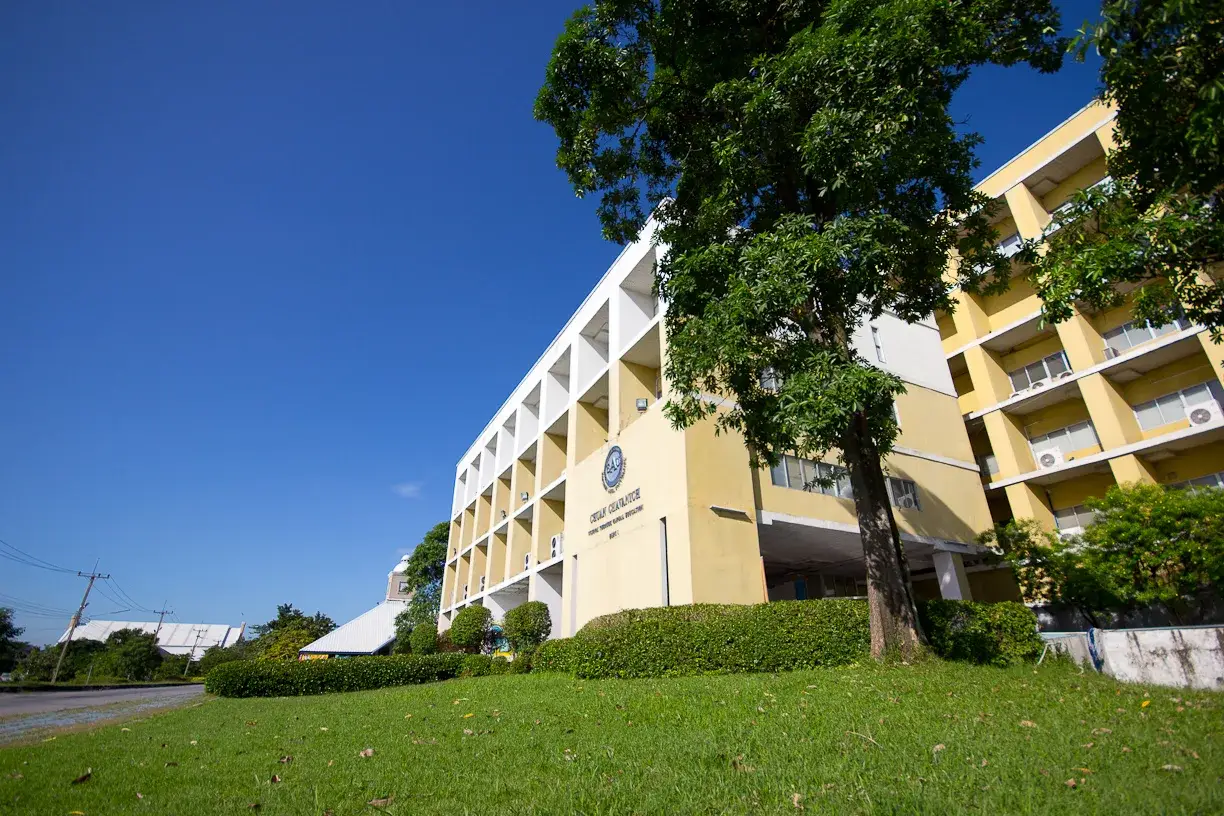
Open Days: Monday – Sunday for the Admissions and Student Guidance Center
Opening Hours: Monday – Friday, 08:30 – 16:30; Saturday – Sunday, 09:00 – 17:00, for student admissions services
Eastern Asia University (EAU) is a private higher education institution located at 200 Moo 1, Rangsit–Nakhon Nayok Road, Khlong 5, Rangsit Subdistrict, Thanyaburi District, Pathum Thani Province, Thailand. Founded by Chuan Chavanich and Manee Chavanich, the university was officially authorized on April 16, 1996, and received permission to begin undergraduate and graduate instruction on October 8, 1997. Occupying approximately 200 rai of land, Eastern Asia University follows the educational philosophy "Wisdom Through Global Education" and the institutional vision "Learning University for Quality and Morality." Its educational mission emphasizes academic knowledge, professional expertise, ethical development, and responsibility toward society. The university offers education in humanities and social sciences, science and technology, and health sciences, with faculties covering business administration, engineering, information technology, aviation, nursing, pharmacy, public health, and liberal arts.
Eastern Asia University is situated in the Khlong 5 area of Rangsit, Pathum Thani Province, a suburban district connected to Bangkok and neighboring provinces by Rangsit–Nakhon Nayok Road. This important transport corridor links the communities of Rangsit and Thanyaburi with areas farther east. The surrounding landscape includes residential developments, educational institutions, shops, restaurants, commercial businesses, and remaining agricultural areas. As a result, the university stands in an environment that reflects both the modernization of the Bangkok metropolitan region and the historical character of the Rangsit communities.
The university campus covers approximately 200 rai and contains academic buildings, administrative offices, laboratories, student activity areas, sporting facilities, and green spaces. Several buildings reflect contemporary architectural approaches designed to accommodate professional education and academic administration. Landscaped outdoor areas and shared spaces provide places for students to meet, relax, and participate in activities outside formal classes. The overall campus environment reflects the university's ambition to combine academic development with personal growth, quality of life, and moral responsibility.
The wider Rangsit area has an important place in the historical development of central Thailand. Its transformation was closely associated with canal construction, agricultural expansion, and settlement along the Rangsit canal system during the late nineteenth and early twentieth centuries. As Bangkok expanded toward its northern suburbs, the districts of Thanyaburi and Khlong Luang experienced increasing development in education, housing, commerce, and transportation. Eastern Asia University was established in 1996 during this continuing transformation, becoming one of the educational institutions contributing to the region's changing social and economic landscape.
The university originated from the educational vision of Chuan Chavanich and Manee Chavanich, who recognized the importance of increasing access to higher education in Thailand. Their objective was to establish an institution where individuals could develop their knowledge and abilities regardless of age, nationality, religion, or socioeconomic background. This commitment reflected the belief that education should support human resource development and provide opportunities for people to improve their lives, expand their capabilities, and prepare for meaningful careers.
Eastern Asia University was established under Thailand's legislation governing private higher education institutions. The Ministry of University Affairs authorized its establishment on April 16, 1996, a date that marks the university's official foundation. On October 8, 1997, it received authorization to provide undergraduate and graduate education. These two milestones have distinct historical meanings: the first concerns the university's legal establishment, while the second marks its authorization to undertake its primary teaching mission.
In its early years, Eastern Asia University focused on engineering, technology, and business administration. Initial academic provision consisted of undergraduate education in three faculties and one master's degree program. These choices reflected Thailand's increasing need for professionally trained personnel during a period of industrial, commercial, and technological development. Engineering and technology education contributed to workforce development for industry, while business administration supported the management and growth of private enterprises.
The Faculty of Business Administration began teaching on October 1, 1997, becoming an important part of the university's early academic development. Over time, its educational provision expanded to include international business management, accounting, management and administration, and graduate studies. These fields provide knowledge relating to organizational management, marketing, business planning, financial analysis, and decision-making within changing economic conditions.
As the institution developed, its academic scope broadened beyond its original specializations. Eastern Asia University introduced programs in humanities, social sciences, science and technology, and healthcare. This expansion allowed the university to serve students with a wider range of interests, including languages, tourism, aviation, nursing, pharmacy, public health, information technology, and engineering. The development of these fields also reflected changes in professional labor demand and the growing importance of specialized knowledge in modern society.
The name "Eastern Asia University" refers to the wider East Asian geographical region and communicates an international educational outlook. It is consistent with the university's ambition to promote broad learning and engagement with knowledge beyond national boundaries. The name should not be confused with a geographical location in eastern Thailand: the university itself is situated in Pathum Thani Province in central Thailand.
The university's educational philosophy, "Wisdom Through Global Education," emphasizes the importance of intellectual development through a broad approach to learning. Its institutional vision, "Learning University for Quality and Morality," expresses a commitment to becoming an organization capable of continuous learning, adaptation, and sustainable improvement. Within this vision, quality refers to achieving recognized standards in academic and professional activities, while morality concerns the ethical values and responsible conduct of students and university personnel.
Eastern Asia University's official colors are blue and white. Blue symbolizes wisdom, while white represents dignity and grace. Together, the colors express the dignity of a person who possesses wisdom. This symbolism is closely connected to the university's emphasis on academic development and ethical conduct, presenting intellectual achievement and personal character as complementary qualities.
The university's symbolic tree is the Suphannika, scientifically known as Cochlospermum regium. This flowering tree is recognized for its bright yellow blossoms and is also known as Fai Kham in northern Thailand. Its ability to grow and develop successfully gives it special symbolic meaning within the university. The institution associates the tree with its hope that students will mature intellectually, develop sound judgment, and establish strong foundations for their future lives.
The Suphannika symbol also appears in university activities and educational support programs. One notable example is the Phet Suphannika Scholarship, which supports talented students with strong academic achievements. In October 2026, Eastern Asia University held a scholarship presentation ceremony for the 2027 academic year, awarding 10 scholarships across several academic disciplines. The program reflects the university's continuing commitment to widening access to higher education and supporting students with academic potential.
Chuan Chavanich and Manee Chavanich remain central figures in the institution's history because of their roles in establishing the university and shaping its educational principles. As of 2026, the university is led by President Dr. Chotirat Chavanich. Its administration includes teams responsible for academic affairs, university management, student development, and administrative support. These departments work together to implement the institution's educational mission and maintain its focus on academic quality and moral responsibility.
One of the notable buildings on campus is the Chuan Chavanich Building, whose name commemorates a university founder. The building includes facilities used for academic and ceremonial activities, including the Suphannika Meeting Room on the first floor. This room has hosted events such as the Faculty of Public Health's foundation anniversary and Mahidol Day activities in 2026. The building therefore connects the university's historical identity with contemporary academic and student activities.
Another important university facility is the Chalermprakiat Building, including the Chalermprakiat 48th Anniversary Building and its Sutthamongkhon Meeting Room. These spaces accommodate meetings, educational activities, and formal ceremonies. In October 2026, the Sutthamongkhon Meeting Room was used for the Phet Suphannika Scholarship presentation. Facilities of this kind support the university's ability to organize seminars, academic conferences, student development programs, and activities involving the wider community.
The university also maintains a central library that supports teaching, learning, and academic research. University library resources contribute to access to academic publications, books, journals, and educational information. The library provides a setting for reading, independent study, and academic work. Access to particular services may depend on the library's regulations and the eligibility of individual users.
Specialized learning environments are an essential feature of professional education at Eastern Asia University. Engineering, information technology, aviation, nursing, pharmacy, and public health require different types of academic preparation and practical training. Teaching in these disciplines combines theoretical knowledge with supervised exercises, project work, professional practice, internships, and activities designed to prepare students for the requirements of their future occupations.
The Faculty of Engineering contributes to the education of technical professionals through programs in Electrical and Energy Engineering and Industrial Engineering. Students in these fields study the application of scientific and mathematical principles to engineering systems, design, analysis, and problem-solving. Professional preparation requires technical competence, systematic reasoning, familiarity with engineering tools, and the ability to collaborate effectively on complex projects.
The Faculty of Information Technology focuses on knowledge related to computer technology and information systems. This field has become increasingly important as organizations adopt digital technologies for business operations, administration, and communication. Students develop skills associated with data management, computing systems, technological analysis, and the application of digital tools to practical problems. Such abilities are relevant to many professional sectors within the modern digital economy.
The Faculty of Business Administration is one of the university's longstanding academic units, having begun instruction in 1997. Published academic offerings include international business management, accounting, and management and administration, together with graduate-level business education. These fields introduce students to the principles of organizational management, business operations, financial analysis, marketing, and strategic decision-making.
The Faculty of Liberal Arts provides education in languages, communication, and tourism. Programs published by the university include Business English, Business Chinese, Business Japanese, and Tourism. These subjects are relevant to professional environments that require international communication and intercultural understanding. Students develop language skills, cultural awareness, and the ability to apply their knowledge in business and service-related situations.
The Faculty of Aviation offers education related to Aviation Business Administration. This discipline focuses on the management and service dimensions of the aviation industry, including organizational processes and the coordination of aviation-related services. Students develop an understanding of how the industry operates and why service standards, safety awareness, effective communication, and professional responsibility are essential within the aviation sector.
The Faculty of Nursing prepares students for professional roles within healthcare services. Nursing education covers human health, patient assessment, nursing care, health promotion, and professional ethics. The program combines classroom instruction with supervised practical training according to curriculum requirements and professional standards. The university also publishes a one-year Practical Nursing Certificate program intended to prepare support personnel for healthcare environments.
The Faculty of Pharmacy provides education in pharmaceutical sciences and the responsible use of medicines. Pharmacy training involves scientific foundations, pharmacology, pharmaceutical production, patient care, and medication safety. In October 2026, the university reported a visit and evaluation by a professional assessment committee associated with the Pharmacy Council of Thailand. This event illustrates the importance of professional standards and external evaluation in pharmaceutical education.
The Faculty of Public Health contributes to the education of professionals involved in health promotion, disease prevention, and community health services. Its published program includes Community Public Health. Students study relationships between health, society, the environment, and human behavior, developing knowledge relevant to community health assessment, communication, prevention, and the planning of health-related activities.
Public health education at Eastern Asia University also includes cultural and professional development activities. On September 22, 2026, the Faculty of Public Health organized foundation anniversary and Mahidol Day events. The activities included Buddhist merit-making, presentations relating to healthy Thai food culture, and a Wellness Tourism project in which students explored approaches to holistic health promotion through tourism-related experiences.
The same program included a professional pledge ceremony, a white coat presentation for third- and fourth-year students, and awards recognizing academic achievement. These activities provided opportunities for students to reflect on professional identity, ethical conduct, and the responsibilities associated with public health practice. The ceremonies also helped connect academic study with the traditions and values of healthcare professions.
At graduate level, Eastern Asia University publishes programs in business administration and education. These include the Master of Business Administration, Master of Education in Educational Administration, Doctor of Business Administration in Marketing, and Doctor of Education in Educational Administration and Transformational Leadership. Graduate studies emphasize advanced knowledge, research skills, academic inquiry, and professional development for individuals seeking greater expertise in their respective fields.
Research and academic service form part of the university's educational mission. Its Research and Innovation Office supports research administration, coordination, project development, and academic activities. Research interests reflect the university's academic disciplines, including engineering, information technology, health sciences, business, and education. Through research and academic service, the university contributes to the creation and exchange of knowledge beyond ordinary classroom teaching.
Eastern Asia University also publishes academic work through its EAU Heritage journals. These publications provide outlets for research articles and academic papers in social sciences and humanities, as well as science and technology. Academic journals play an important role in communicating research findings, encouraging scholarly discussion, and supporting the continued development of knowledge among university academics and external researchers.
In May 2026, the university organized a national academic research presentation conference for the 2025 academic year. Its themes included innovation, health sciences, digital education quality, productive employment, and sustainable development. Conferences of this kind provide opportunities for researchers and participants to exchange findings, discuss contemporary issues, and explore potential applications of research in society.
Educational development in 2026 also included training for academic staff in modern assessment techniques. The university organized a workshop on designing learning assessment rubrics using artificial intelligence. The activity focused on how AI tools could support the development of scoring rubrics aligned with learning outcomes. It demonstrated the university's interest in applying contemporary digital technology to improve teaching and assessment practices.
Student culture at Eastern Asia University includes teacher appreciation ceremonies, student orientation, sports, volunteer activities, religious programs, cultural performances, and professional traditions. These activities complement formal education by encouraging social development, teamwork, personal responsibility, and ethical awareness. Their purposes are consistent with the university's stated vision of developing both academic quality and morality.
The Wai Khru ceremony represents the traditional Thai expression of respect toward teachers and the value of knowledge transmission. White coat ceremonies in the health sciences mark important stages of professional preparation. Historical university activities have also included aviation wing presentation ceremonies, nursing and pharmacy traditions, and cultural programs organized by individual faculties. These events demonstrate the diversity of professional identities within the university.
Music is another component of the university's cultural life. In 2026, the East Wind Chorus participated in a competition featuring the Thai national anthem and royal anthem. The university reported that the choir received a gold medal and an overall championship trophy in the university-level choral category. The achievement highlights the opportunities available for cultural and artistic development alongside academic and professional education.
Physical activity and sport are also part of student development. The university maintains facilities for sports and recreation and supports activities that encourage healthy lifestyles. Participation in sport helps students develop discipline, perseverance, cooperation, and respect for rules. Sporting activities also create opportunities for students from different faculties to establish friendships and strengthen their sense of belonging to the university community.
The university's relationship with surrounding communities is reflected in its academic service and social development activities. One example from 2026 involved students from the Faculty of Business Administration and Faculty of Liberal Arts participating in the Youth Volunteer Project at the Ban Krot Community Enterprise in Phra Nakhon Si Ayutthaya Province. Such activities connect academic learning with community experience and allow students to understand practical challenges facing local businesses and residents.
Eastern Asia University also contributes to the economic and social life of the Khlong 5 area. Students, academic staff, administrative personnel, and visitors generate demand for accommodation, restaurants, convenience stores, transportation, and other services. The university therefore forms part of the community's wider network of educational, commercial, and social activity within Thanyaburi and Rangsit.
For people interested in educational tourism, Eastern Asia University can be a destination for academic visits, university events, or educational guidance activities arranged by the institution. These may include academic conferences, student exhibitions, and information sessions for prospective students. Visits provide opportunities to learn about a Thai private university that emphasizes quality and morality, as well as its approach to professional education in fields relevant to contemporary society.
In 2026, the university announced its EAU Academic & Innovation Showcase as an opportunity to present academic and innovative work. The event's original date of September 29 was rescheduled to October 6, 2026, following heavy rainfall and flooding in several areas. This announcement reflected the university's commitment to student safety while supporting activities intended to promote academic exchange and creative achievement.
Visitors wishing to explore the campus should contact the relevant university office in advance, particularly when requesting access to classrooms, laboratories, libraries, or specialized training facilities. Certain areas are reserved for educational activities or subject to safety regulations. Arranging a visit beforehand helps visitors obtain accurate information about meeting points, building access, and any special conditions.
Getting There by private car is possible via Rangsit–Nakhon Nayok Road toward Thanyaburi and Khlong 5. Eastern Asia University is located at 200 Moo 1, Rangsit Subdistrict, Thanyaburi District, Pathum Thani Province. Travelers coming from Bangkok can follow major routes toward Rangsit before continuing along Rangsit–Nakhon Nayok Road. Searching for Eastern Asia University in a navigation application provides a practical way to locate the campus entrance.
Public transportation options listed by the university include bus route 538 and passenger van services on the Victory Monument–Ban Na and Khlong Rangsit–Nakhon Nayok routes. Travelers should confirm current boarding points, stops, and operating arrangements directly with the service provider before departure because public transport routes and frequencies may change.
Prospective students wishing to apply in person can contact the university's Admissions and Student Guidance Center. Published service hours are Monday through Friday, from 08:30 to 16:30, and Saturday through Sunday, from 09:00 to 17:00. For other departments, such as Academic Affairs, the Graduate School, or the Central Library, visitors should verify the relevant office hours separately because individual departments may operate according to different schedules.
Visitors planning a trip to the Khlong 5 area can combine educational activities at Eastern Asia University with other attractions in Rangsit and Thanyaburi. Nearby destinations include science learning centers, museums, public parks, and family attractions. Travel plans should take account of each destination's opening hours, journey time, and traffic conditions along Rangsit–Nakhon Nayok Road, particularly during the morning and evening commuting periods.
By 2026, Eastern Asia University had completed 30 years since its formal establishment in 1996. Beginning with a commitment to expanding educational opportunities, the institution has developed academic provision across business administration, engineering, technology, languages, aviation, nursing, pharmacy, and public health. Its significance extends beyond the education of graduates to include research, academic service, ethical development, and engagement with the surrounding community. The university's blue and white colors, Suphannika tree, and philosophy of Wisdom Through Global Education continue to represent its institutional identity and educational aspirations.
| University Name | Eastern Asia University (มหาวิทยาลัยอีสเทิร์นเอเชีย), EAU |
| Institution Type | Private University |
| Address | 200 Moo 1, Rangsit–Nakhon Nayok Road (Khlong 5), Rangsit Subdistrict, Thanyaburi District, Pathum Thani Province 12110, Thailand |
| Campus Area | Approximately 200 Rai |
| Foundation Date | April 16, 1996 |
| Teaching Authorization Date | October 8, 1997 |
| Institutional Age In 2026 | 30 Years |
| Founders | Chuan Chavanich and Manee Chavanich |
| President | Dr. Chotirat Chavanich |
| Educational Philosophy | Wisdom Through Global Education |
| Institutional Vision | Learning University for Quality and Morality |
| University Colors | Blue and White, Symbolizing Wisdom and Dignity |
| Symbolic Tree | Suphannika (Cochlospermum regium), Also Known as Fai Kham |
| Faculties | Faculty of Engineering, Faculty of Business Administration, Faculty of Liberal Arts, Faculty of Information Technology, Faculty of Aviation, Faculty of Nursing, Faculty of Pharmacy, and Faculty of Public Health |
| Graduate Studies | Graduate School |
| Major Academic Fields | Business Administration, Engineering, Information Technology, Aviation, Nursing, Pharmacy, Public Health, Languages, and Education |
| Important Campus Buildings | Chuan Chavanich Building, Chalermprakiat 48th Anniversary Building, Suphannika Meeting Room, Sutthamongkhon Meeting Room, and Central Library |
| Traditions And Activities | Wai Khru Ceremonies, Professional Ceremonies, White Coat Presentations, Mahidol Day Activities, Cultural Events, Sports, Research Conferences, and Phet Suphannika Scholarships |
| Admissions Open Days | Monday – Sunday, According to the University Admissions Schedule |
| Weekday Admissions Hours | Monday – Friday, 08:30 – 16:30 |
| Weekend Admissions Hours | Saturday – Sunday, 09:00 – 17:00 |
| Campus Visits | Public Events and Educational Visits Subject to University Announcements and Permission; Classrooms and Specialized Facilities Have Access Restrictions |
| Campus Facilities | Academic Buildings, Meeting Rooms, Laboratories, Central Library, Student Activity Areas, Sports Facilities, Green Spaces, and Parking |
| Getting There | By Car via Rangsit–Nakhon Nayok Road (Khlong 5), Bus Route 538, or Passenger Vans on the Victory Monument–Ban Na and Khlong Rangsit–Nakhon Nayok Routes; Confirm Current Services Before Traveling |
| Nearby Attractions And Learning Centers | 1. Rangsit Science Center for Education 2. Information Technology Museum, NSM 3. National Science Museum, NSM 4. Thosamintra Phirom Park 5. Dream World Theme Park |
| Restaurants In Khlong 5 And Surrounding Areas | 1. Pa Jee Boat Noodles, Khlong 5 2. Boonma Grilled Chicken, Khlong 5 3. Gangnam BBQ, Khlong 5 4. Chef Kai De Café, Khlong 5 5. Kaosoy Garden |
| Accommodation In Khlong 5 And Surrounding Areas | 1. Khlong 5 Resort 2. Pakka Hotel 3. Chaweewan Mansion 4. M.N. City Mansion 5. The Rich Khlong 7 |
| University Telephone | +66 2 577 1028 |
| Admissions Telephone | +66 2 577 1033, +66 2 577 1044 |
| University Email | saraban@eau.ac.th |
| Official Website | https://www.eau.ac.th/ |
| Current Status In 2026 | Operating as a Private University Offering Certificate, Undergraduate, and Graduate Education |
Eastern Asia University Academic Programs And Fields Of Study — Academic Year 2026 (B.E. 2569)
| Faculty / Academic Unit | Programs And Fields Published In The University Course Directory |
| Faculty Of Business Administration | Bachelor's Degrees 1. Bachelor of Accountancy 2. Bachelor of Business Administration in International Business Management 3. Bachelor of Business Administration in International Business Management (English Program) 4. Bachelor of Arts in Management and Administration Master's Degree1. Master of Business Administration Doctoral Degree1. Doctor of Business Administration in Marketing |
| Faculty Of Liberal Arts | Bachelor's Degrees 1. Bachelor of Arts in Business English 2. Bachelor of Arts in Tourism 3. Bachelor of Arts in Business Chinese 4. Bachelor of Arts in Business Japanese |
| Faculty Of Engineering | Bachelor's Degrees 1. Bachelor of Engineering in Electrical and Energy Engineering 2. Bachelor of Engineering in Industrial Engineering |
| Faculty Of Information Technology | Bachelor's Degree 1. Bachelor of Science in Information Technology |
| Faculty Of Aviation | Bachelor's Degree 1. Bachelor of Science in Aviation Business Administration |
| Faculty Of Nursing | Bachelor's Degree 1. Bachelor of Nursing Science Certificate1. Practical Nursing Certificate (One-Year Program) |
| Faculty Of Pharmacy | Professional Degree 1. Bachelor of Pharmacy |
| Faculty Of Public Health | Bachelor's Degree 1. Bachelor of Public Health in Community Public Health |
| Graduate School / Education Programs | Master's Degree 1. Master of Education in Educational Administration Doctoral Degree1. Doctor of Education in Educational Administration and Transformational Leadership |
Frequently Asked Questions (FAQ)
Q: Where is Eastern Asia University located?
A: Eastern Asia University is located at 200 Moo 1, Rangsit–Nakhon Nayok Road (Khlong 5), Rangsit Subdistrict, Thanyaburi District, Pathum Thani Province 12110, Thailand.
Q: What are Eastern Asia University's opening days and hours?
A: The Admissions and Student Guidance Center provides services Monday through Friday from 08:30 to 16:30 and Saturday through Sunday from 09:00 to 17:00. Public holiday arrangements and other department schedules should be checked separately.
Q: When was Eastern Asia University founded?
A: The university was officially established on April 16, 1996, and received authorization to begin undergraduate and graduate instruction on October 8, 1997.
Q: Who founded Eastern Asia University?
A: Eastern Asia University was founded by Chuan Chavanich and Manee Chavanich, who sought to expand higher education opportunities and promote human resource development in Thailand.
Q: Is Eastern Asia University a public or private university?
A: Eastern Asia University is a private university authorized by Thailand's Ministry of University Affairs in 1996.
Q: What faculties does Eastern Asia University have?
A: Its faculties include Engineering, Business Administration, Liberal Arts, Information Technology, Aviation, Nursing, Pharmacy, and Public Health, together with graduate-level academic programs.
Q: What are Eastern Asia University's official colors and symbolic tree?
A: Its official colors are blue and white, symbolizing wisdom and dignity. Its symbolic tree is Suphannika, also known as Fai Kham, representing intellectual growth and maturity.
Q: Can I reach Eastern Asia University by public transport?
A: Public transport options published by the university include bus route 538 and passenger van services on the Victory Monument–Ban Na and Khlong Rangsit–Nakhon Nayok routes. Travelers should verify current services and stopping points before departure.
 Category: ●University
 Group: ●Private University
Last Update : 2 DayAgo
 Last Update : 2 DayAgo
 Click to Access the Navigation Map GPS
Eastern Asia University Map
Recommend

 Art, Culture and Heritage
 Historical Sites and Monuments(2)
 Landmarks and Memorials(1)
 Art, Craft Centres, Tradition(2)
 Museums(11)
 Art Gallery(1)
 Educational Places
 Museum for Study(1)
 Library(1)
 Training Center(1)
 Public university(2)
 Rajamangala University of Technology(1)
 Rajabhat University(1)
Private University(7)
 Places of Worship
 Temple(44)
 Mosque(1)
 Other Sacred Sites(1)
 Research and Development
 Royal Project(1)
 Suburban Living
 Local Market(2)
 Floating Market(3)
 Nature and Wildlife
 River, Canal(1)
 Entertainment and Agricultural
 Animal camps and shows(1)
 Stadium(2)
 Amusement Park(1)
 Waterpark(1)
 Travel Articles, Recipes
 Travel Review, Food Review(1)


