
lovethailand home >Central Travel Attractions >Nakhon Pathom Travel Attractions >Muang Nakhon Pathom >Phra Pathom Chedi > Nakhon Pathom Rajabhat University
TL;DR: Nakhon Pathom Rajabhat University, open Monday – Friday and Sunday (Office of Academic Promotion and Registration), hours 08:30 – 16:30, Excluding Official and University-Designated Holidays.
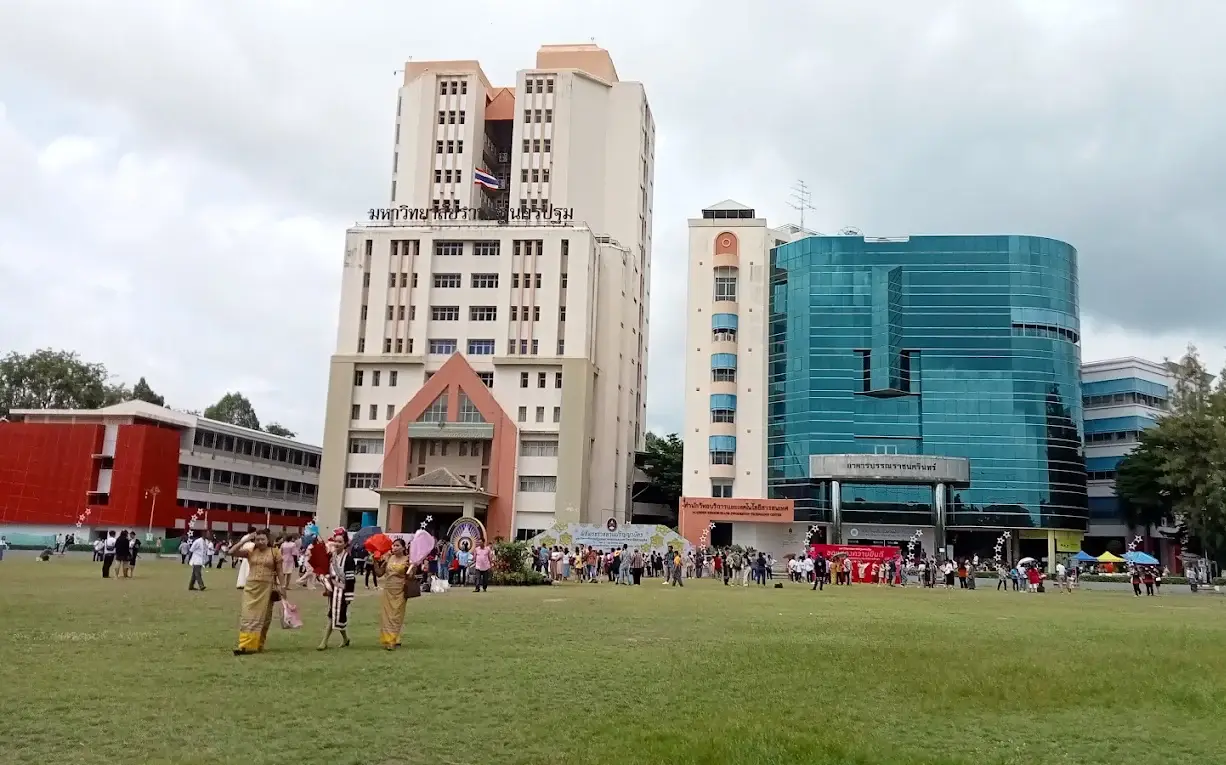
Nakhon Pathom Rajabhat University
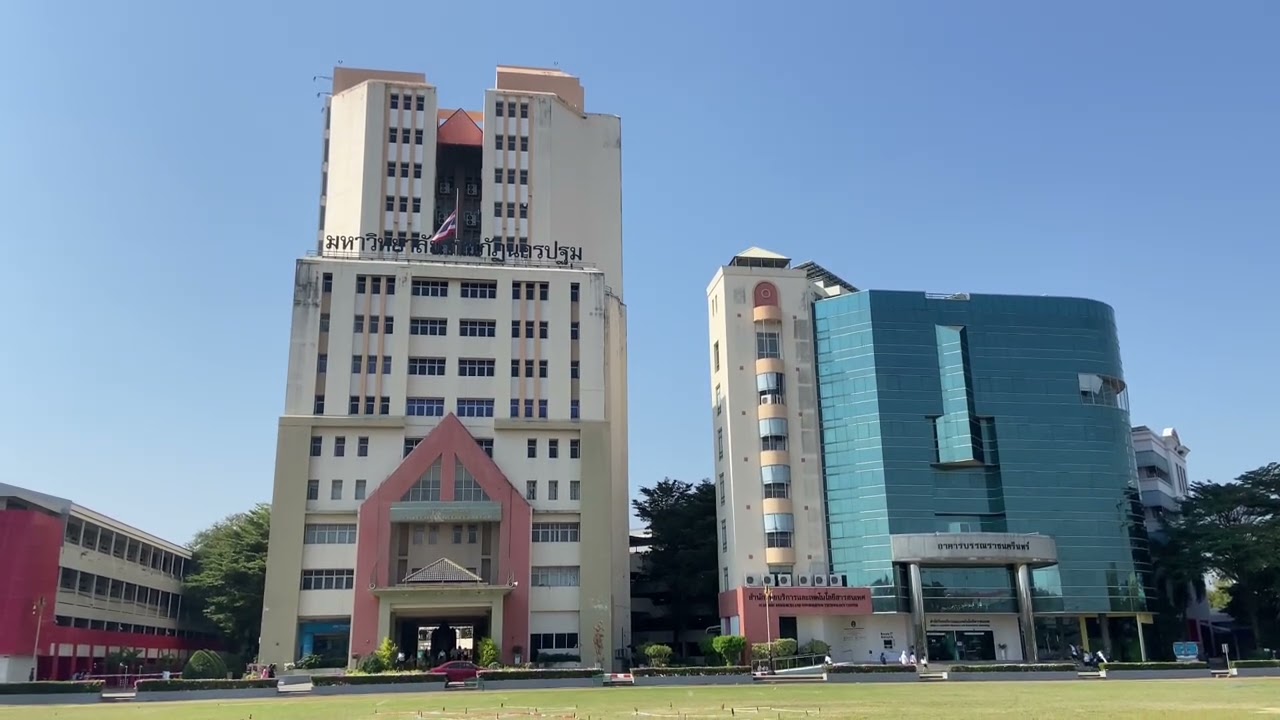
Open Days: Monday – Friday and Sunday (Office of Academic Promotion and Registration)
Opening Hours: 08:30 – 16:30, Excluding Official and University-Designated Holidays
Nakhon Pathom Rajabhat University (NPRU) is located at 85 Moo 3, Malaiman Road, Nakhon Pathom Subdistrict, Mueang Nakhon Pathom District, Nakhon Pathom Province 73000, Thailand. It is a public university with a longstanding tradition of teacher education and an important mission in regional and community development. The institution began in 1936 as Nakhon Pathom Women's Teacher Training School and later developed into Nakhon Pathom Teacher Training School, Nakhon Pathom Teachers College, Nakhon Pathom Rajabhat Institute, and finally Nakhon Pathom Rajabhat University. Its present university status took effect on June 15, 2004, under the Rajabhat University Act. Today, the university comprises five faculties: Education, Humanities and Social Sciences, Science and Technology, Management Science, and Nursing. Its activities also include research, laboratory schools, academic services, and community development projects.
In 2026, Nakhon Pathom Rajabhat University marks 90 years since the establishment of its original institution in 1936. This long history reflects the transformation of Thai education from a period when the country urgently needed teachers for local primary schools to an era in which regional universities educate professionals across a much wider range of disciplines. NPRU now supports studies in education, science, engineering, nursing, public health, business, arts, culture, and community development while retaining the Rajabhat mission of applying knowledge and research to improve people's quality of life.
The university stands along Malaiman Road in Mueang Nakhon Pathom District, west of the main urban center. Nearby landmarks include Wat Mai Pin Kliao and Wat Wang Taku, along with residential communities, restaurants, and student accommodation. The campus contains academic buildings, administrative offices, laboratories, auditoriums, sports facilities, landscaped areas, and a large pond with a pavilion at its center. These spaces create an environment where formal teaching, independent study, recreation, and university activities take place throughout the academic year.
Nakhon Pathom Province is historically important because of its connection with early settlements and Buddhist art associated with the Dvaravati cultural period. Phra Pathom Chedi, one of Thailand's most recognizable religious monuments, is a major symbol of the province. The university's relationship with Nakhon Pathom therefore extends beyond professional education to local history, traditional knowledge, community culture, agriculture, public services, and regional economic development. Academic programs and research activities can draw on the province's distinctive urban and rural communities to develop practical solutions to local challenges.
The university's history began in 1936 with the establishment of Nakhon Pathom Women's Teacher Training School. Its first premises were in the former Nakhon Chai Si Monthon Registry Building at 86 Thesa Road, Phra Pathom Chedi Subdistrict, Mueang Nakhon Pathom District. The school initially admitted only female students and provided training for primary-school teachers. Its creation formed part of Thailand's wider efforts to expand basic education and develop qualified teachers for local schools.
The original school's main responsibility was to prepare teachers capable of educating children in communities throughout the region. Primary-school teachers played an essential role in teaching literacy, numeracy, discipline, and social values. Training institutions were consequently important not only to the education system but also to the development of local communities, especially in areas where qualified teachers were in short supply.
In 1960, the school began admitting male teacher trainees alongside female students. It also introduced the Certificate in Education and initiated a rural teacher training project. These changes broadened access to teacher education and demonstrated the institution's growing responsibility for developing educational personnel across a wider range of communities.
In 1968, Nakhon Pathom Women's Teacher Training School was renamed Nakhon Pathom Teacher Training School to reflect its coeducational character. The following year, in 1969, the institution relocated from 86 Thesa Road to 85 Malaiman Road, opposite Wat Mai Pin Kliao. This is the location occupied by the university today. The move was particularly important because it provided more space for classrooms, educational facilities, and institutional growth.
On January 16, 1970, the institution was renamed Nakhon Pathom Teachers College. It also introduced the Higher Certificate in Education. The change marked another stage in the development of professional teacher education and provided a foundation for a more extensive academic structure.
In 1975, Nakhon Pathom Teachers College began operating under the Teachers College Act of 1975. The legislation expanded the responsibilities of teachers colleges to include research, bachelor's degree education for teachers, professional development, preservation of arts and culture, and academic services for communities. This legal framework helped transform teacher training institutions into broader centers of higher education and community engagement.
In 1978, the college introduced a two-year Bachelor of Education program and began providing additional training opportunities for practicing teachers and educational personnel. A four-year bachelor's degree program followed in 1980. These developments made university-level education more accessible to students in Nakhon Pathom and nearby provinces without requiring them to depend entirely on universities in Bangkok.
Amendments to the Teachers College Act in 1984 allowed teachers colleges to offer academic disciplines beyond teacher education. In 1985, Nakhon Pathom Teachers College introduced associate-level studies in other fields for the first time. They included journalism and public relations, design, food studies, plant science, and electronics. This expansion laid important foundations for the institution's eventual transition into a comprehensive university.
On February 14, 1992, King Bhumibol Adulyadej, Rama IX, bestowed the name “Rajabhat Institute” upon Thailand's teachers colleges. The word “Rajabhat” conveys the idea of people serving the monarch and the nation. It became an essential part of the institutions' shared identity. February 14 is now recognized as Rajabhat Day, when Rajabhat universities commemorate the royal naming and reaffirm their responsibility to serve Thai society.
Following the Rajabhat Institute Act of 1995, Nakhon Pathom Teachers College developed into Nakhon Pathom Rajabhat Institute. The institution expanded academic programs, research, community services, and cultural preservation. It also created opportunities for practicing teachers, community leaders, and members of the public to pursue higher education through programs designed to meet regional educational needs.
In 1997, Nakhon Pathom Rajabhat Institute introduced an expanded educational access project and a Graduate Diploma in the Teaching Profession. In 1998, it established an educational center at Intertech Institute in Sam Phran District, Nakhon Pathom, offering graduate study in educational administration. Another educational center followed in 1999 in Krathum Baen District, Samut Sakhon Province. These developments helped make higher education available to a wider population in Thailand's lower central region.
The Rajabhat University Act was published in the Royal Gazette on June 14, 2004, and came into force on June 15, 2004. Nakhon Pathom Rajabhat Institute consequently became Nakhon Pathom Rajabhat University. This change established its status as a university and provided a framework for developing degree programs, research, administrative services, and academic standards in a more comprehensive manner.
During 2005 and 2006, the university revised its academic structure and curricula to support its expanded responsibilities. Degree offerings grew in engineering, computer-related studies, information technology, physical education, arts, and languages. From 2007 onward, the university continued to develop programs associated with logistics, international business, tourism, applied sciences, and other fields responding to economic and social changes in the region.
The development of nursing education was another important stage in the university's academic expansion. During the late 2000s, the university introduced nursing-related studies, broadening its role beyond teacher education and science into healthcare workforce development. The Faculty of Nursing is now one of the university's five principal faculties and offers graduate education in Community Nurse Practitioner studies.
In 2026, Nakhon Pathom Rajabhat University is led by Assistant Professor Somdet Nilphan as Rector, following his royal appointment in August 2026. The university operates under the vision “High-Competency Graduates, a Stable Organization, Sustainable Communities.” Its educational philosophy emphasizes lifelong learning, professional competence, practical skills, ethics, and the application of knowledge to the changing needs of society.
The university has two official colors: pink and red. They are associated with affection, commitment, courage, and enthusiasm for learning. Its symbolic flower is the bougainvillea, known for its colorful blooms and ability to thrive in warm climates. Bougainvillea represents a distinctive aspect of the university's visual identity. The university also has its own march song, which contributes to a shared sense of belonging among students, staff, and alumni.
The university emblem incorporates the personal royal seal of King Bhumibol Adulyadej, Rama IX. Its design includes the Atthathit Throne, a chakra, the sacred character U or the numeral 9, and a royal white umbrella. The colors of the Rajabhat emblem signify the monarchy, nature, intellectual growth, local arts and culture, and purity of thought. The emblem expresses the relationship between Rajabhat universities and the monarchy, together with their commitment to education for the public good.
Phra Phuttha Si Dvaravati Siri Rajabhat is the university's principal Buddha image. It was created in 2002 and modeled after the ancient white stone Buddha image at Wat Phra Pathom Chedi Ratchaworamahawihan, an important work associated with Dvaravati-period Buddhist art. The university's replica stands near the entrance and connects the institution's identity with Nakhon Pathom's long Buddhist history. It is also a place where members of the university community may pay their respects.
The campus landscape is another defining feature of NPRU. A large pond and a pavilion at its center form an attractive open space surrounded by greenery. The lakeside pavilion provides a setting for relaxation and informal interaction among students. Trees, walkways, and landscaped areas contribute to the university's physical character and create opportunities for recreation between academic activities.
The 50th Birthday Anniversary of Maha Vajiralongkorn Commemorative Building is an important administrative landmark on campus. It accommodates parts of the Office of the President and several university support services. Visitors handling official documents, personnel matters, or administrative business may use this building as a reference point when arranging their appointments. The Office of the President is responsible for general administration, financial operations, student development, planning, resources, and support for the university's academic faculties.
Siriworapanya Auditorium is one of the university's principal ceremonial and conference venues. It hosts major gatherings, meetings, orientations, and graduation activities. The university scheduled its royal graduation ceremony for graduates of the 2024–2025 academic years on September 2, 2026, at Siriworapanya Auditorium. The venue therefore holds particular significance in the memories of graduates and their families.
Pin Kliao Auditorium is another important setting for academic and cultural events. On July 16, 2026, it hosted the university's Wai Khru ceremony, named “Fueang Fa Bucha Khru,” meaning a tribute to teachers associated with the bougainvillea flower. Using the name of the university's symbolic flower connects the ceremony with institutional identity and the Thai tradition of expressing gratitude toward teachers.
The university library and the Office of Academic Resources and Information Technology support teaching, independent study, and research. Their services include books, digital resources, academic databases, and information technology support for eligible users. As education increasingly relies on digital platforms, these services help students gain access to knowledge and strengthen the skills needed for lifelong learning.
The Food Management Building in the Faculty of Science and Technology provides an example of NPRU's practical learning environment. It contains culinary laboratories, food preparation equipment, and specialist teaching facilities. An area known as @Home supports student experience in preparing food and applying culinary knowledge in a practical setting. This approach connects food science, hospitality, service management, and entrepreneurial skills.
The Demonstration School of Nakhon Pathom Rajabhat University is an important part of the university's connection with basic education. Demonstration schools help link educational theory with real classroom practice. They can also support the development of teaching methods, educational media, and learning activities appropriate for children and young people.
The Faculty of Education is closely connected to the institution's original mission of preparing teachers. Its academic fields include Elementary Education, Early Childhood Education, Physical Education, and Exercise and Sports Management. Graduate programs cover Educational Administration, Curriculum and Instruction, and the Teaching Profession. The faculty contributes to the preparation and professional development of educators who can respond to the needs of schools and communities.
The Faculty of Humanities and Social Sciences offers education in languages, culture, politics, public administration, law, community development, fine arts, and tourism. Its programs include teacher education in languages and arts, tourism and hospitality studies, political science, public administration, and digital design. Graduates may apply their knowledge in government, education, business, cultural organizations, and community development.
Arts and cultural studies are especially relevant in Nakhon Pathom because of the province's extensive history. Students specializing in languages, arts, tourism, and community development can contribute to the study of local traditions, handicrafts, historical narratives, and cultural heritage. Digital media and design knowledge can also help communities present their products and cultural activities to broader audiences.
The Faculty of Science and Technology is among the university's most academically diverse faculties. Its programs cover basic and applied sciences, information technology, computing, engineering, agriculture, food, public health, and occupational safety. Curricula revised for 2026 include Microbiology, Computer Science, Software Engineering, Cosmeceutical Chemistry, Food Technology and Innovation, and Multimedia Technology. These developments reflect the university's efforts to keep professional education relevant to contemporary technological and employment needs.
Engineering and technology studies at NPRU are linked to the need for professionals in construction, electrical systems, intelligent control, software development, and industrial technology. Programs in public health and occupational safety contribute knowledge relevant to healthcare, worker protection, and community well-being. Providing these degrees within a regional university gives local students greater opportunities to pursue scientific and technical careers.
The Faculty of Management Science develops professional competence in business and organizational management. Its programs include General Management, Human Resource Management, Marketing, Finance and Investment, International Business, Logistics and Supply Chain Management, Digital Business, Esports Business, Accounting, and Communication Arts. These fields respond to an economy that increasingly depends on digital technologies, effective communication, financial planning, and modern business operations.
The Faculty of Nursing prepares healthcare professionals with the scientific knowledge, clinical skills, and ethical understanding needed for nursing practice. Its academic work relates to patient care, health promotion, disease prevention, and community health. The master's program in Community Nurse Practitioner studies supports the development of healthcare personnel who can respond to the needs of local communities.
Nakhon Pathom Rajabhat University provides undergraduate, graduate diploma, master's, and doctoral education. Its 2026 academic programs include newly revised curricula as well as existing curricula that remain applicable to current students. Prospective students should distinguish a degree program's curriculum status from its admission status. A program may remain active for enrolled students without necessarily admitting new applicants in every round, while a curriculum intended for a later academic year should not be treated as a current-year intake automatically.
Research and academic services are central to the university's regional development mission. Projects may involve community products, packaging design, promotional media, entrepreneurial skills, school improvement, and local social issues. Applied research helps local organizations and residents benefit from university expertise, while academic staff and students gain opportunities to understand practical challenges beyond the classroom.
A notable example from 2026 is an interdisciplinary local development project carried out by the Faculty of Humanities and Social Sciences with the Don Yai Hom community. The project reported 11 activities and 37 outputs related to education, culture, the environment, and quality of life. Its work demonstrates how university knowledge can support community products, local initiatives, and practical development.
Community development is also connected to networks of schools and Buddhist temples in Nakhon Pathom. Collaboration with schools can improve teaching practices and educational resources, while partnerships with temples and local organizations support cultural preservation, public activities, and environmental initiatives. These relationships are part of the university's wider identity as a regional institution serving the public.
February 14 is celebrated as Rajabhat Day in remembrance of the royal naming of Rajabhat institutes in 1992. In 2026, Nakhon Pathom Rajabhat University organized a Rajabhat tribute activity under the theme “People of the King, Servants of the Land.” The event reaffirmed the historical relationship between Rajabhat institutions and the monarchy, as well as their mission to contribute to the welfare of communities and the nation.
The Wai Khru ceremony is another important annual tradition. On July 16, 2026, NPRU held the “Fueang Fa Bucha Khru” teacher appreciation ceremony at Pin Kliao Auditorium. The event gave students an opportunity to show respect to their teachers and continue a Thai cultural tradition centered on gratitude. The reference to bougainvillea, the university's symbolic flower, gave the ceremony a distinctive institutional meaning.
University students and staff also take part in voluntary activities and public events in Nakhon Pathom. In October 2026, the university reported participation in a Kathin merit-making activity at Wat Wang Taku, while NPRU Volunteer students supported the Nakhon Pathom Run near Phra Pathom Chedi. Such activities demonstrate the university's involvement in local religious traditions, community events, and public service.
For new students, orientation activities and information about university services are important parts of adapting to campus life. Prospective applicants can obtain details about academic programs and admissions from the Office of Academic Promotion and Registration, which operates online application services and publishes information about different enrollment categories, including regular and special study arrangements.
Although the 2026 academic year remains in progress, the university began advertising undergraduate admissions for the 2027 academic year in August 2026. The first regular admission round for 2027 was scheduled for August 10 through October 31, 2026. This distinction is important because the academic year currently being taught and the academic year for which applications are being accepted may differ.
For those interested in educational tourism, Nakhon Pathom Rajabhat University offers opportunities to learn about the development of teacher education and community-focused higher education in Thailand. Visitors can explore the significance of the university's emblem, pay respects to Phra Phuttha Si Dvaravati Siri Rajabhat, appreciate the pond and central pavilion, and attend public academic or cultural events. Classroom buildings, laboratories, and restricted areas should only be entered with permission from the relevant university department.
A visit to the university can also be combined with cultural attractions in Mueang Nakhon Pathom. Nearby destinations include Wat Mai Pin Kliao, Wat Wang Taku, Phra Pathom Chedi, Phra Pathom Chedi National Museum, and the Sanam Chandra Palace area. These places introduce visitors to Buddhist traditions, ancient history, local architecture, and community life, making it possible to connect a university visit with a wider understanding of Nakhon Pathom Province.
Getting There from Bangkok is possible by private car via Borommaratchachonnani Road or Phet Kasem Road toward Nakhon Pathom, followed by Malaiman Road according to the chosen route. The university is located at 85 Moo 3, Malaiman Road, with Wat Mai Pin Kliao serving as a useful landmark on the opposite side of the road. Drivers should enter Nakhon Pathom Rajabhat University into their navigation application and check the most suitable campus entrance for their destination building.
Travelers using public transport can take a train to Nakhon Pathom Railway Station and continue to the university by taxi or another available local transport service. Intercity buses between Bangkok and Nakhon Pathom may provide another option, depending on the route and stopping points. Visitors should check the latest transport schedules and allow additional time to travel from the railway station or bus stop to Malaiman Road.
The Office of Academic Promotion and Registration publishes service hours from Monday to Friday and on Sunday, from 08:30 to 16:30. It is closed on Saturdays and designated public or university holidays. Visitors contacting faculties, the Office of the President, libraries, or other departments should check each unit's own service arrangements because operating hours may differ.
Nakhon Pathom Rajabhat University plays an important role in the educational, cultural, and social development of Nakhon Pathom Province. From a women's teacher training school in 1936, the institution has developed into a university comprising five faculties in 2026. It continues to update academic programs and research to address changing professional and community needs while maintaining the Rajabhat traditions of teacher education, cultural preservation, and public service. These commitments remain central to NPRU's contribution to sustainable regional development.
| University Name | Nakhon Pathom Rajabhat University |
| Thai Name | มหาวิทยาลัยราชภัฏนครปฐม |
| Abbreviation | NPRU / มรน. |
| Institution Type | Public University Focused on Local Development |
| Official Address | 85 Moo 3, Malaiman Road, Nakhon Pathom Subdistrict, Mueang Nakhon Pathom District, Nakhon Pathom 73000, Thailand |
| Original Foundation Year | 1936, as Nakhon Pathom Women's Teacher Training School |
| Original Location | 86 Thesa Road, Phra Pathom Chedi Subdistrict, Mueang Nakhon Pathom, Nakhon Pathom |
| Male Teacher Trainees First Admitted | 1960 |
| Renamed Nakhon Pathom Teacher Training School | 1968 |
| Relocation to Malaiman Road | 1969 |
| Nakhon Pathom Teachers College Established | January 16, 1970 |
| Bachelor's Degree Education Began | 1978 for Two-Year Programs; 1980 for Four-Year Programs |
| Rajabhat Royal Naming Date | February 14, 1992 |
| Rajabhat Institute Status | 1995 |
| University Establishment Date | June 15, 2004 |
| Institutional Age in 2026 | 90 Years Since 1936 |
| Rector in 2026 | Assistant Professor Somdet Nilphan |
| University Vision | High-Competency Graduates, a Stable Organization, Sustainable Communities |
| University Colors | Pink and Red |
| University Flower | Bougainvillea |
| University Buddha Image | Phra Phuttha Si Dvaravati Siri Rajabhat, Created in 2002 |
| University Emblem | Royal Seal of King Rama IX and Colors Symbolizing the Monarchy, Wisdom, Nature, and Arts and Culture |
| University Song | Nakhon Pathom Rajabhat University March |
| Faculties | Faculty of Education, Faculty of Humanities and Social Sciences, Faculty of Science and Technology, Faculty of Management Science, and Faculty of Nursing |
| Major Academic and Service Units | Office of Academic Promotion and Registration, Office of Academic Resources and Information Technology, Institute of Research and Development, Office of the President, and NPRU Demonstration School |
| Important Campus Landmarks | 50th Birthday Anniversary of Maha Vajiralongkorn Commemorative Building, Siriworapanya Auditorium, Pin Kliao Auditorium, Pond and Central Pavilion, Phra Phuttha Si Dvaravati Siri Rajabhat, Food Management Building, and @Home Training Area |
| University Traditions and Events | Rajabhat Day on February 14, Fueang Fa Bucha Khru Teacher Appreciation Ceremony, Graduation Ceremonies, Volunteering, Academic Events, and Local Development Activities |
| Academic Promotion and Registration Office Hours | Monday – Friday and Sunday, 08:30 – 16:30; Closed Saturdays and Designated Holidays |
| Educational Visits | Advance Coordination with the Responsible University Department, Especially for Classrooms, Laboratories, Auditoriums, and Restricted Facilities |
| Getting There | Private Car via Borommaratchachonnani Road or Phet Kasem Road and Malaiman Road; Train to Nakhon Pathom Railway Station Followed by Local Transport |
| Nearby Attractions | 1. Wat Mai Pin Kliao, Malaiman Road 2. Wat Wang Taku, Wang Taku Area 3. Wat Phra Pathom Chedi Ratchaworamahawihan, Mueang Nakhon Pathom 4. Phra Pathom Chedi National Museum 5. Sanam Chandra Palace, Mueang Nakhon Pathom |
| Nearby Restaurants and Cafes | 1. Kaprao Ayothaya, NPRU Area, Tel. +66 97 215 5543 2. Khun Ni Boat Noodles x PittaCafe, NPRU Branch, Tel. +66 95 195 5185 3. Rao Lae Nai Rice Porridge, Km 5 Malaiman Road, Tel. +66 97 117 1603 4. Je Daeng Rice Porridge, Malaiman Road, Tel. +66 91 779 1426 5. Café Amazon, Nakhon Pathom Rajabhat University Branch |
| Nearby Accommodation | 1. PP Plus Mansion Nakhon Pathom, Tel. +66 99 146 5959 2. Thaweesap Mansion Nakhon Pathom, Tel. +66 95 531 9549 3. Aleena Residence, Tel. +66 95 541 1123 4. STAND Residence, Tel. +66 95 991 4306 5. At Sleep Nakhon Pathom, Tel. +66 80 769 7900 |
| University Telephone | +66 34 109 300 |
| Undergraduate Admissions Telephone | +66 34 109 300, Extension 3891 |
| Graduate Admissions Telephone | +66 34 109 300, Extension 3900 |
| Official Website | https://www.npru.ac.th |
| Academic Programs Website | https://academic.npru.ac.th/course/ |
| Admissions Website | https://admission.npru.ac.th |
| Current Status in 2026 | Active Public University Providing Higher Education, Research, Administration, and Community Development Services |
Academic Programs and Fields of Study at Nakhon Pathom Rajabhat University, Academic Year 2026 (B.E. 2569)
| Faculty of Education | Bachelor's Degree 1. Bachelor of Education in Elementary Education (2024 Curriculum) 2. Bachelor of Education in Early Childhood Education (2024 Curriculum) 3. Bachelor of Education in Physical Education (2024 Curriculum) 4. Bachelor of Arts in Exercise and Sports Management (2026 Curriculum) Graduate Diploma1. Graduate Diploma in Teaching Profession (2025 Curriculum) Master's Degree1. Master of Education in Educational Administration (2024 Curriculum) 2. Master of Education in Physical Education (2026 Curriculum) 3. Master of Education in Curriculum and Instruction (2026 Curriculum) Doctoral Degree1. Doctor of Philosophy in Educational Administration (2025 Curriculum) |
| Faculty of Humanities and Social Sciences | Bachelor's Degree 1. Bachelor of Education in Music Education (2024 Curriculum) 2. Bachelor of Education in Chinese (2024 Curriculum) 3. Bachelor of Education in English (2024 Curriculum) 4. Bachelor of Education in Thai (2024 Curriculum) 5. Bachelor of Public Administration in Public Administration (2024 Curriculum) 6. Bachelor of Political Science in Political Science (2024 Curriculum) 7. Bachelor of Education in Art Education (2024 Curriculum) 8. Bachelor of Education in Social Studies (2024 Curriculum) 9. Bachelor of Laws in Law (2025 Curriculum) 10. Bachelor of Arts in Tourism, Hotel and Hospitality Industry (2026 Curriculum) 11. Bachelor of Arts in Community Development (2026 Curriculum) 12. Bachelor of Education in Dance Education (2026 Curriculum) 13. Bachelor of Arts in Business English (2026 Curriculum) 14. Bachelor of Arts in Thai for Careers (2026 Curriculum) 15. Bachelor of Fine Arts in Digital Art Design (2026 Curriculum) 16. Bachelor of Fine Arts in Communication Design (2026 Curriculum) |
| Faculty of Science and Technology | Bachelor's Degree 1. Bachelor of Science in Intelligent Control Innovation (2022 Curriculum) 2. Bachelor of Engineering in Civil Engineering (2023 Curriculum) 3. Bachelor of Education in Mathematics (2024 Curriculum) 4. Bachelor of Education in Industrial Education (2024 Curriculum) 5. Bachelor of Education in Computer Education (2024 Curriculum) 6. Bachelor of Education in Biology (2024 Curriculum) 7. Bachelor of Education in Physics (2024 Curriculum) 8. Bachelor of Science in Medical Materials and Devices (2024 Curriculum) 9. Bachelor of Education in General Science (2024 Curriculum) 10. Bachelor of Education in Chemistry (2024 Curriculum) 11. Bachelor of Science in Modern Automotive Systems Technology (2024 Curriculum) 12. Bachelor of Public Health in Public Health (2025 Curriculum) 13. Bachelor of Science in Occupational Health and Safety (2025 Curriculum) 14. Bachelor of Arts in Food Management (2026 Curriculum) 15. Bachelor of Science in Microbiology (2026 Curriculum) 16. Bachelor of Science in Agricultural Innovation and Management (2026 Curriculum) 17. Bachelor of Science in Computer Science (2026 Curriculum) 18. Bachelor of Science in Software Engineering (2026 Curriculum) 19. Bachelor of Science in Cosmeceutical Chemistry (2026 Curriculum) 20. Bachelor of Science in Plant Production Technology (2026 Curriculum) 21. Bachelor of Science in Food Technology and Innovation (2026 Curriculum) 22. Bachelor of Science in Computer Technology (2026 Curriculum) 23. Bachelor of Science in Multimedia Technology (2026 Curriculum) 24. Bachelor of Science in Information Technology (2026 Curriculum) Master's Degree1. Master of Education in Computer Education (2026 Curriculum) 2. Master of Science in Physics (2026 Curriculum) 3. Master of Engineering in Electrical Engineering and Artificial Intelligence (2026 Curriculum) Doctoral Degree1. Doctor of Philosophy in Physics (2026 Curriculum) 2. Doctor of Engineering in Electrical Engineering and Artificial Intelligence (2026 Curriculum) |
| Faculty of Management Science | Bachelor's Degree 1. Bachelor of Business Administration in Human Resource Management (2024 Curriculum) 2. Bachelor of Business Administration in General Management (2024 Curriculum) 3. Bachelor of Business Administration in Logistics and Supply Chain Management (2024 Curriculum) 4. Bachelor of Business Administration in Marketing (2024 Curriculum) 5. Bachelor of Accountancy in Accounting (2024 Curriculum) 6. Bachelor of Business Administration in Finance and Investment (2024 Curriculum) 7. Bachelor of Business Administration in Digital Business (2024 Curriculum) 8. Bachelor of Business Administration in International Business (2024 Curriculum) 9. Bachelor of Business Administration in Esports Business (2024 Curriculum) 10. Bachelor of Communication Arts in Communication Arts (2024 Curriculum) Master's Degree1. Master of Business Administration in Management (2024 Curriculum) |
| Faculty of Nursing | Bachelor's Degree 1. Bachelor of Nursing Science in Nursing (2024 Curriculum) Master's Degree1. Master of Nursing Science in Community Nurse Practitioner (2025 Curriculum) |
Frequently Asked Questions (FAQ)
Q: Where is Nakhon Pathom Rajabhat University located?
A: It is located at 85 Moo 3, Malaiman Road, Nakhon Pathom Subdistrict, Mueang Nakhon Pathom District, Nakhon Pathom Province 73000, Thailand. Wat Mai Pin Kliao is a useful landmark across from the university.
Q: What are the opening days and hours of Nakhon Pathom Rajabhat University?
A: The Office of Academic Promotion and Registration operates Monday through Friday and on Sunday, from 08:30 to 16:30. It closes on Saturdays and designated holidays. Other university departments may have different service hours.
Q: When was Nakhon Pathom Rajabhat University established?
A: The institution originated in 1936 as Nakhon Pathom Women's Teacher Training School. It became Nakhon Pathom Rajabhat University on June 15, 2004.
Q: How old is Nakhon Pathom Rajabhat University in 2026?
A: The institution marks 90 years since its founding in 1936, during which it developed from a teacher training school into a university offering a wide range of academic disciplines.
Q: How many faculties does Nakhon Pathom Rajabhat University have?
A: The university has five faculties: Education, Humanities and Social Sciences, Science and Technology, Management Science, and Nursing. They offer undergraduate and postgraduate programs in various fields.
Q: What is Nakhon Pathom Rajabhat University known for?
A: It has strong historical roots in teacher education and is known for its mission in regional development, applied research, community academic services, science and technology, business, culture, and healthcare education.
Q: Can members of the public visit Nakhon Pathom Rajabhat University?
A: Visitors may attend public events and arrange educational visits in accordance with university regulations. Classrooms, laboratories, auditoriums, and restricted facilities require authorization from the responsible departments.
Q: How can visitors travel from Bangkok to Nakhon Pathom Rajabhat University?
A: Visitors can drive via Borommaratchachonnani Road or Phet Kasem Road before connecting to Malaiman Road. Alternatively, they can take a train to Nakhon Pathom Railway Station and continue to the campus by local transport.
 Category: ●University
 Group: ●Rajabhat University
Last Update : 2 DayAgo
 Last Update : 2 DayAgo
 Click to Access the Navigation Map GPS
Nakhon Pathom Rajabhat University Map
Recommend

 Art, Culture and Heritage
 Historical Sites and Monuments(6)
 Landmarks and Memorials(4)
 Royal Palace(3)
 Art, Craft Centres, Tradition(5)
 Museums(13)
 Art Gallery(1)
 Educational Places
 Educational Gardens, Farm(2)
 Public university(2)
 Autonomous Universities(4)
 Rajamangala University of Technology(1)
Rajabhat University(1)
 Private University(1)
 Places of Worship
 Temple(77)
 Other Sacred Sites(5)
 Research and Development
 Royal Project(1)
 Suburban Living
 Village, Community(3)
 Local Market(3)
 Floating Market(8)
 Nature and Wildlife
 River, Canal(4)
 Other natural attractions(3)
 Entertainment and Agricultural
 Animal camps and shows(1)
 Stadium(1)
 Farms, Parks and Ecotourism(5)
 Theater(1)
 Outdoor and Adventure Activities(2)
 Spas and Wellness
 Spas and Wellness(1)
 Travel Articles, Recipes
 Travel Review, Food Review(1)


