
lovethailand home >Central Travel Attractions >Nakhon Pathom Travel Attractions > 40 Best Places to Visit in Nakhon Pathom Central T..
TL;DR: 40 Best Places to Visit in Nakhon Pathom Central Thailand, open Daily Opening Hours: 05:00 – 20:00.
40 Best Places to Visit in Nakhon Pathom Central Thailand
40 Best Places to Visit in Nakhon Pathom, Central Thailand Nakhon Pathom is one of the easiest provinces to visit from Bangkok, yet it offers far more than a quick stop at Phra Pathom Chedi. The province combines the archaeological heritage of the Dvaravati period, royal architecture from the Rattanakosin era, historic temples along the Tha Chin River, traditional markets, museums, agricultural communities, orchards, historic canals, and major Buddhist landmarks. It is an excellent destination for both a one-day trip from Bangkok and a 2–3 day journey covering several districts.
For first-time visitors, the best place to begin is Nakhon Pathom city. Wat Phra Pathom Chedi Ratchaworamahawihan is the province’s most recognizable landmark, while Sanam Chandra Palace is located only a short distance away. Together, these two attractions introduce visitors to Nakhon Pathom’s story from the ancient Dvaravati period through to the reign of King Rama VI. Travelers with more time can then explore Sam Phran, Nakhon Chai Si, Phutthamonthon–Salaya, and Bang Len.
Nakhon Pathom has a long history closely associated with Dvaravati culture. Archaeological evidence found throughout the province shows that this area was once an important urban settlement and Buddhist center in Central Thailand. The ancient city later declined in importance before undergoing major revival during the reign of King Mongkut, or Rama IV, when Phra Pathom Chedi was extensively restored and the surrounding area was redeveloped. The arrival of the railway and the construction of Sanam Chandra Palace later helped restore Nakhon Pathom’s significance as a regional city.
Geographically, much of Nakhon Pathom lies on fertile lowlands within the Tha Chin River, also known locally as the Nakhon Chai Si River, basin. Natural waterways and man-made canals connect extensive agricultural areas across the province. Rich soil and abundant water have supported orchards, fruit cultivation, orchid farms, rice fields, and other commercial crops for generations. This agricultural landscape is also the foundation of community-based attractions such as Khlong Mahasawat, Wat Lam Phaya Floating Market, Don Wai Market, and many riverside communities.
For easier trip planning, Nakhon Pathom can be divided into several travel zones. Nakhon Pathom city is best for Phra Pathom Chedi, royal sites, and archaeological attractions. Sam Phran is known for Wat Rai Khing, Don Wai Market, riverside culture, and agricultural destinations. Nakhon Chai Si offers museums, historic temples, and old communities. Phutthamonthon–Salaya combines major Buddhist sites, Khlong Mahasawat, universities, and learning centers, while Bang Len is particularly rewarding for floating markets, traditional communities, and agricultural tourism. Planning by zone is much more efficient than repeatedly crossing between districts.
Food is another major reason to visit Nakhon Pathom. The province is known for long-established restaurants in the city as well as riverside community food. Popular local dishes and specialties include Nakhon Pathom-style red pork rice, braised duck at Don Wai Market, roast pork, Thai–Chinese dishes, noodles, traditional Thai sweets, Chinese pastries, and locally made snacks. Pomelo is one of the province’s signature fruits, especially in Nakhon Chai Si and surrounding areas, where pomelo cultivation has been associated with the local agricultural landscape for generations.
Popular souvenirs include fresh pomelo, orchard products, khao lam or sweet sticky rice cooked in bamboo, Chinese pastries, Thai desserts, processed foods, agricultural products, orchids, and community-made goods. Don Wai Market, Wat Lam Phaya Floating Market, Tha Na Market, Sookjai Market, and local markets across the province are particularly good places to shop for regional products directly from local producers.
For accommodation, travelers focusing on Phra Pathom Chedi, Sanam Chandra Palace, and city restaurants should stay in Nakhon Pathom city, where there are many hotels and easy access to evening dining. Those planning to visit Don Wai Market, Wat Rai Khing, and riverside attractions may prefer Sam Phran or accommodation near the Tha Chin River. Salaya is a convenient base for Phutthamonthon, Khlong Mahasawat, the Thai Film Archive, and Mahidol University, while travelers exploring Nakhon Chai Si or Bang Len may prefer smaller resorts or accommodation close to the main roads for easier early-morning travel.
Visitors with only one day can focus on Nakhon Pathom city, beginning at Phra Pathom Chedi before continuing to Sanam Chandra Palace and enjoying local food in town. Another excellent one-day route combines Wat Rai Khing with Don Wai Market in Sam Phran. With two days, travelers can add Nakhon Chai Si and its museums, while a three-day trip makes it possible to include Phutthamonthon, Khlong Mahasawat, and Bang Len for a more complete experience of the province’s history, faith, food, local communities, and agriculture.

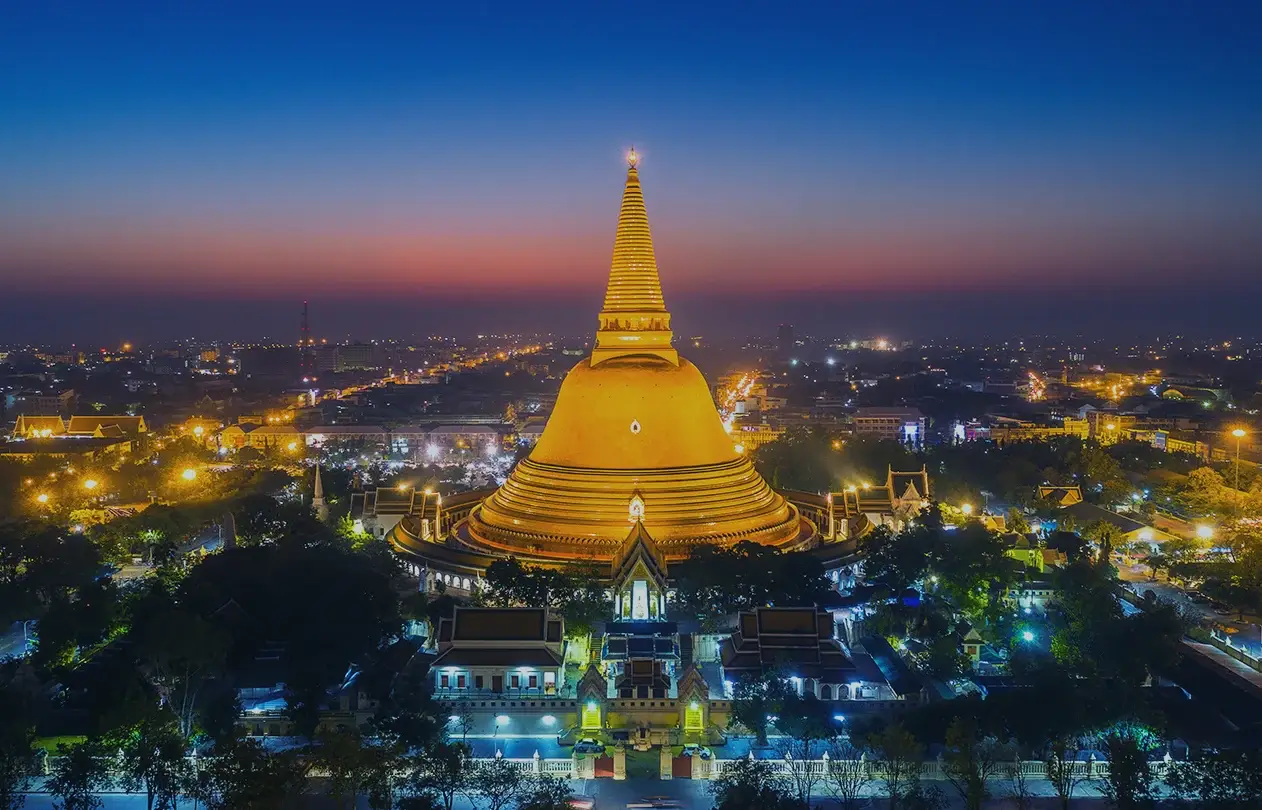
1. Wat Phra Pathom Chedi Ratchaworamahawihan is a first-class royal monastery and the most important landmark in Nakhon Pathom. Located in the heart of the city, the temple is dominated by Phra Pathom Chedi, an immense Buddhist stupa whose golden form rises above the surrounding cityscape and has become the defining symbol of the province.
Highlights: The enormous bell-shaped Phra Pathom Chedi, surrounding viharns, circumambulatory courtyards, Buddhist art and architecture, and the atmosphere of an active religious center closely associated with Dvaravati history and the revival of Nakhon Pathom during the Rattanakosin period.
Archaeological discoveries in the Nakhon Pathom area reveal the importance of the city during the Dvaravati period, when it served as a major center of Buddhist culture in Central Thailand. The original stupa was already an important religious monument long before the present structure was built. During the reign of King Mongkut, Rama IV, a major restoration project began, and the present chedi was constructed around the ancient core.
The current chedi has a monumental inverted-bell form covered with golden tiles. From the lower courtyard, its scale is particularly impressive. Viharns and worship areas surround the central stupa, allowing visitors to walk around the monument, admire the architecture, make merit, and experience a sacred site that remains closely connected to the everyday religious life of local people.
Important activities include merit-making, candlelight processions on major Buddhist holy days, and the annual Phra Pathom Chedi worship festival. During the festival, the area around the temple becomes especially lively, with food stalls, local products, and large numbers of worshippers arriving from across the region.
Phra Pathom Chedi is an ideal starting point for exploring Nakhon Pathom because Sanam Chandra Palace, Noen Wat Phra Ngam, and Phra Pathom Chedi National Museum are all within easy reach. The neighborhood around the temple is also one of the city’s best areas for local food, particularly in the evening.
Open Days: Daily Opening Hours: 05:00 – 20:00
Getting There: From Bangkok, take Phet Kasem Road toward central Nakhon Pathom. Travelers can also take a southern-line train to Nakhon Pathom Railway Station and continue on foot or by local transport to the temple.
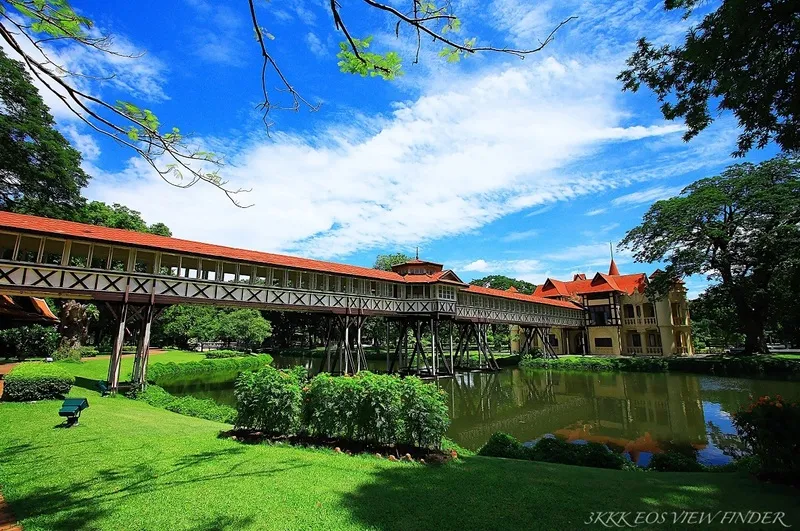
2. Sanam Chandra Palace is one of Nakhon Pathom’s most important royal and architectural sites. Closely associated with King Vajiravudh, or Rama VI, the palace complex includes royal residences, traditional Thai houses, lawns, ponds, mature trees, and buildings combining Thai and Western architectural influences.
Highlights: Chali Mongkol Asana Residence, Mari Ratcharat Banlang Residence, Phiman Pathom Hall, Thap Khwan Residence, Vajariromaya Hall, the Ganesha Shrine, and the Ya Le Monument.
The palace began taking shape in the early 20th century while the future King Rama VI was still Crown Prince. He had become familiar with Nakhon Pathom during visits to pay homage at Phra Pathom Chedi and considered the surrounding area suitable for a royal residence and a base for royal activities.
Chali Mongkol Asana Residence is among the most recognizable buildings in the complex. Its pale walls, red roof, and European-inspired architectural elements give it the appearance of a small castle. Nearby, Mari Ratcharat Banlang Residence is distinguished by its red wooden structure and elevated walkway across a pond, creating one of the palace’s most photogenic settings.
Thap Khwan Residence, by contrast, showcases the elegance of traditional Thai wooden architecture. Other buildings throughout the palace reflect a combination of Thai and Western design ideas, making Sanam Chandra Palace particularly rewarding for visitors interested in architecture, royal history, King Rama VI, and photography.
The palace can easily be visited on the same day as Phra Pathom Chedi. Allow enough time to explore the grounds and read the history of each building. Travelers staying in central Nakhon Pathom will also find many restaurants and evening food areas nearby.
Open Days: Daily Opening Hours: Outdoor areas 05:00 – 09:00 and 16:00 – 20:00 / Interior attractions that are open to visitors 09:00 – 16:00
Getting There: The palace is located on Ratchamankha Road in central Nakhon Pathom, not far from Phra Pathom Chedi. From Bangkok, follow Phet Kasem Road into Nakhon Pathom city and continue to the palace area.

3. Don Wai Market is a historic riverside market in Bang Krathuek, Sam Phran District, and one of Nakhon Pathom’s best-known destinations for food. Many visitors come specifically to eat, shop for local products, and experience the atmosphere of a traditional market beside the Tha Chin River.
Highlights: Braised duck, Thai–Chinese food, traditional Thai desserts, seasonal fruit, local souvenirs, historic market shops, and the riverside setting along the Tha Chin River.
The market stretches along the river near Wat Khongkharam Don Wai. Many vendors are long-established local businesses that have sold food here for generations. One of the market’s greatest attractions is the ability to sample a wide range of dishes within a compact walking area, making it especially popular with families.
Food is the heart of Don Wai Market. Visitors will find Thai and Thai–Chinese dishes, braised duck, river fish, sweets, fruit, snacks, and prepared foods to take home. Weekends and public holidays are generally much busier than weekdays, so an early-morning visit is best for easier walking and a wider choice of food.
The riverside setting also offers a glimpse of community life along both banks of the Tha Chin River. Visitors can combine the market with a visit to Wat Khongkharam Don Wai before or after shopping.
Don Wai Market is particularly easy to combine with Wat Rai Khing. Travelers staying in Sam Phran can use this area as a convenient base for temples, orchards, farms, and other riverside attractions.
Open Days: Daily Opening Hours: 06:00 – 18:00
Getting There: From Bangkok, take Borommaratchachonnani Road toward Nakhon Pathom and continue toward Bang Krathuek and Don Wai. Routes through the Phutthamonthon area can also connect to Sam Phran. Traveling by private car is the most convenient option.
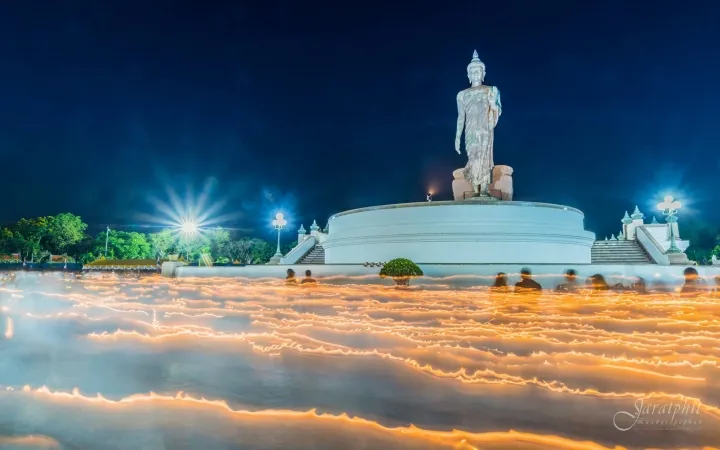
4. Buddhamonthon is one of Thailand’s most important national Buddhist sites. Located in Salaya, Phutthamonthon District, the vast grounds include landscaped gardens, ceremonial areas, ponds, lawns, religious monuments, and a monumental standing Buddha image at the center of the complex.
Highlights: Phra Si Sakkaya Thotsaphonlayan, the principal Buddha image of Buddhamonthon, ceremonial grounds, symbolic sites connected with the life of the Buddha, expansive green spaces, and a peaceful atmosphere.
The principal standing Buddha image forms the visual and spiritual center of Buddhamonthon and can be seen prominently from across the grounds. The complex was designed both as a venue for major Buddhist ceremonies and as a place where visitors can learn about the life and teachings of the Buddha.
Large numbers of worshippers gather here on important Buddhist holy days, while ordinary weekdays and weekends are generally quieter. The spacious grounds are also popular for walking, exercise, and relaxation among the trees and open lawns.
Morning and late afternoon are the most comfortable times to explore because the site is extensive and much of the walking is outdoors. Visitors should allow extra time for moving between different sections of the grounds.
Buddhamonthon fits naturally into a Salaya itinerary together with Mahidol University, the Thai Film Archive, and Khlong Mahasawat. Staying in Salaya makes it easier to begin early and provides access to many restaurants, cafés, and accommodation options.
Open Days: Daily Opening Hours: 05:00 – 19:00
Getting There: From Bangkok, take Borommaratchachonnani Road and connect to one of the Phutthamonthon roads toward Salaya and Phutthamonthon District. A private car is the most convenient option for moving around the large area.
Map (GPS):Open map and directions to Buddhamonthon
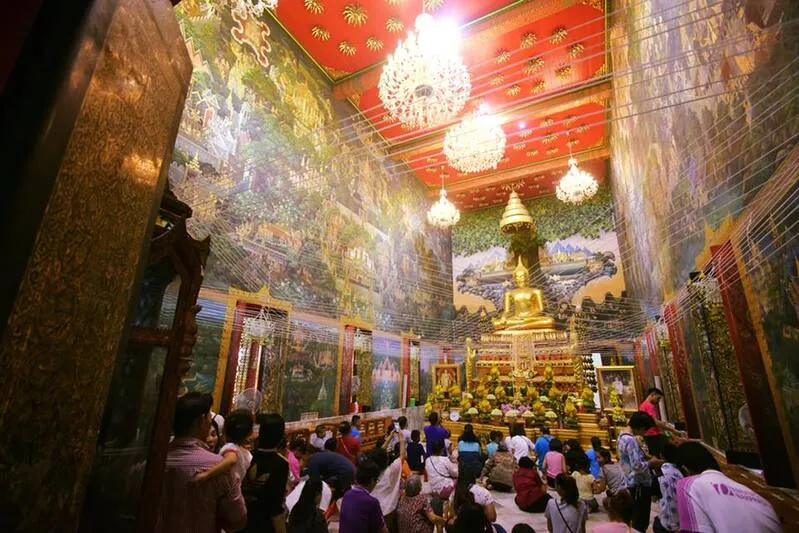
5. Wat Rai Khing Royal Monastery is an important Buddhist temple on the banks of the Tha Chin River in Sam Phran District. It is one of Nakhon Pathom’s major centers of faith and is home to Luang Pho Wat Rai Khing, a highly revered Buddha image visited by worshippers throughout the year.
Highlights: Luang Pho Wat Rai Khing, the ordination hall, the riverside atmosphere, and the annual Wat Rai Khing worship festival, one of Sam Phran’s best-known religious traditions.
Wat Rai Khing has long been closely associated with communities along the Tha Chin River. Most visitors begin by paying respect to Luang Pho Wat Rai Khing inside the ordination hall before exploring the temple grounds and spending time beside the river.
The annual worship festival is the liveliest period of the year, bringing together religious activities, market stalls, local food, and large numbers of devotees. The event reflects the temple’s continuing role as a community center rather than simply a sightseeing attraction.
The riverside location gives the temple an open, relaxed atmosphere and makes it particularly suitable for families and older travelers. Visitors should dress respectfully when entering the ordination hall or other sacred areas.
Wat Rai Khing is very easy to combine with Don Wai Market. Together, the two destinations create one of the best one-day food, culture, and merit-making routes in Sam Phran.
Open Days: Daily Opening Hours: 07:00 – 18:00
Getting There: The temple is located at 51 Moo 2, Rai Khing Subdistrict, Sam Phran District. From Bangkok, travel via Phet Kasem Road or Borommaratchachonnani Road and continue into Sam Phran.
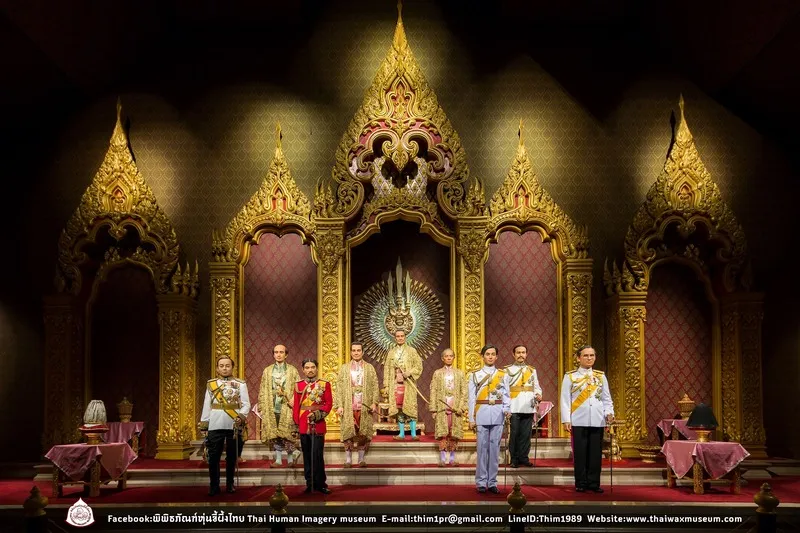
6. Thai Human Imagery Museum is a distinctive museum in Nakhon Chai Si District known for its remarkably lifelike human figures. Instead of conventional wax, the figures are made primarily from fiberglass, a material better suited to Thailand’s heat and humidity while still allowing highly detailed facial features, skin texture, eyes, and expressions.
Highlights: Lifelike figures of important personalities, Buddhist monks, historical figures, scenes of traditional Thai life, and highly detailed fiberglass sculpture.
The museum developed from efforts to create realistic human figures that could withstand Thailand’s tropical climate. Fiberglass was selected instead of traditional wax, allowing the artists to produce durable works while preserving fine details and natural-looking expressions.
The exhibitions cover a wide range of subjects, including Thai history, Buddhism, prominent individuals, and scenes from everyday life in earlier generations. This makes the museum particularly accessible for children and younger visitors who can learn about history through realistic visual displays.
One of the most striking features is the attention paid to facial expressions and the eyes of the figures, which give each subject a strong sense of personality. Visitors who enjoy observing details should allow at least 1–2 hours for the museum.
The museum can be combined with Wat Klang Bang Kaeo, Wat Bang Phra, and Jesada Technik Museum for a varied Nakhon Chai Si day trip that balances temples with educational attractions.
Open Days: Daily Opening Hours: Monday – Friday 09:00 – 17:30 / Saturday, Sunday and public holidays 08:30 – 18:00
Getting There: The museum is located at 43/2 Moo 1, Borommaratchachonnani Road, Km. 31, Khun Kaeo Subdistrict, Nakhon Chai Si District. From Bangkok, follow Borommaratchachonnani Road toward Nakhon Chai Si.

7. Khlong Mahasawat is a community-based agricultural tourism route in Phutthamonthon District, ideal for travelers who want to experience Nakhon Pathom through lotus fields, orchards, farms, canals, and local life rather than conventional sightseeing.
Highlights: Boat trips along Khlong Mahasawat, riverside communities, lotus farms, agricultural gardens, local products, and rural scenery surprisingly close to Bangkok.
Khlong Mahasawat was excavated during the reign of King Rama IV and played an important role in transportation and agricultural development between Bangkok and Nakhon Pathom. Communities along the canal gradually developed around rice farming, orchards, and water-based transport.
The most distinctive way to explore the area is by local boat, stopping at community learning points along the canal. Traveling by water gives visitors a different view of gardens, homes, and agricultural landscapes that cannot be experienced in the same way from the road.
The route is suitable for families, school groups, and travelers interested in community tourism. Hats, drinking water, sunscreen, and light clothing are recommended because many activities take place outdoors.
Khlong Mahasawat is easy to combine with Buddhamonthon and Salaya. Staying in Salaya is particularly convenient for beginning boat and agricultural activities early in the morning.
Open Days: Saturday – Sunday Opening Hours: 08:00 – 16:00
Getting There: Travel through Salaya and the Mahidol University area toward Khlong Mahasawat in Phutthamonthon District. Visitors should confirm the specific boat departure point or community activity they plan to use before traveling.

8. Wat Lam Phaya Floating Market is a community market beside the Tha Chin River in Bang Len District, located next to Wat Lam Phaya. It is best visited in the morning for local food, agricultural products, and the relaxed atmosphere of a traditional riverside market.
Highlights: Local food, river fish, Thai sweets, fruit, agricultural products, community vendors, and views along the Tha Chin River.
The market developed from the close relationship between the temple and the local community. Many vendors sell food and farm products directly from the surrounding area, giving the market a stronger community character than larger purpose-built tourist markets.
Morning is the best time to visit because most shops are open and temperatures are more comfortable. Visitors can buy food and relax beside the river or combine their visit with merit-making at Wat Lam Phaya.
The market is suitable for families and older travelers who prefer a slower pace. Weekends and holidays can become busy, so arriving early makes it easier to walk and provides the widest choice of food.
When exploring Bang Len, it is more efficient to combine Wat Lam Phaya Floating Market with other attractions in Bang Len and Nakhon Chai Si rather than driving back toward Sam Phran on the same day.
Open Days: Saturday, Sunday and public holidays Opening Hours: Approximately 06:00 – 17:00
Getting There: The market is located at Wat Lam Phaya, Lam Phaya Subdistrict, Bang Len District. Traveling by private car is the most convenient option, with routes connecting from Nakhon Chai Si toward Bang Len.

9. Wat Bang Phra is a historic temple in Bang Kaeo Fa, Nakhon Chai Si District, known for Buddhism, respected meditation masters, and the traditional culture of sacred yantra tattooing, particularly through its association with Luang Pho Pern Thitakhuno.
Highlights: The legacy of Luang Pho Pern, Thai sacred tattoo traditions, the Wai Kru ceremony, the historic ordination hall, and the atmosphere of an important Nakhon Chai Si community temple.
Wat Bang Phra has a long history as a religious center for local communities. It later became widely known through Luang Pho Pern, a highly respected monk whose disciples continue to honor his teachings and spiritual legacy.
The temple’s sacred tattoo tradition has attracted interest from both Thai and international visitors. The tradition, however, is not simply about tattoo designs. It is deeply connected to teachers, spiritual discipline, moral conduct, and rituals passed down through generations.
The annual Wai Kru ceremony is one of the temple’s most famous events and attracts large numbers of disciples. Visitors attending during the ceremony should respect the religious nature of the event and avoid disturbing participants.
Wat Bang Phra can be combined with the Thai Human Imagery Museum, Jesada Technik Museum, and Wat Klang Bang Kaeo, all of which are located in the wider Nakhon Chai Si area.
Open Days: Daily Opening Hours: 07:00 – 18:00
Getting There: The temple is located at 1 Moo 3, Bang Kaeo Fa Subdistrict, Nakhon Chai Si District. From Bangkok, take Borommaratchachonnani Road toward Nakhon Chai Si and continue on local roads to the temple.
Map (GPS):Open map and directions to Wat Bang Phra

10. Jesada Technik Museum is a large private transportation museum in Ngio Rai, Nakhon Chai Si District. Its collections include classic cars, motorcycles, microcars, and unusual vehicles from many different periods and countries, making it especially suitable for families, automotive enthusiasts, and visitors interested in transportation technology.
Highlights: Classic cars, rare microcars, unusual vehicle designs, motorcycles, specialist vehicles, and transportation collections from many countries.
The museum grew from a private passion for collecting vehicles before developing into an attraction open to the public. Its strength lies in the variety of the collection. Rather than focusing only on luxury automobiles, the museum also includes working vehicles, compact cars, and machines that reveal how engineering responded to different transportation needs in different periods.
Microcars are among the most memorable exhibits because their proportions and designs are very different from modern cars. Some models reflect European efforts to provide economical personal transportation during the post-war period, making them interesting examples of both industrial design and social history.
Children can learn about the development of transportation from real vehicles, while adults interested in classic cars may spend considerably longer examining individual models. Around 1–2 hours is a reasonable amount of time for most visitors.
Because the museum is in Nakhon Chai Si, it can easily be combined with the Thai Human Imagery Museum, Wat Klang Bang Kaeo, and Wat Bang Phra without excessive backtracking, creating a varied itinerary beyond temples and markets.
Open Days: Tuesday – Sunday and public holidays Opening Hours: 09:00 – 17:00
Getting There: The museum is located at 100 Moo 2, Ngio Rai Subdistrict, Nakhon Chai Si District. From Bangkok, travel along Borommaratchachonnani Road toward Nakhon Pathom, then continue into Nakhon Chai Si and Ngio Rai.
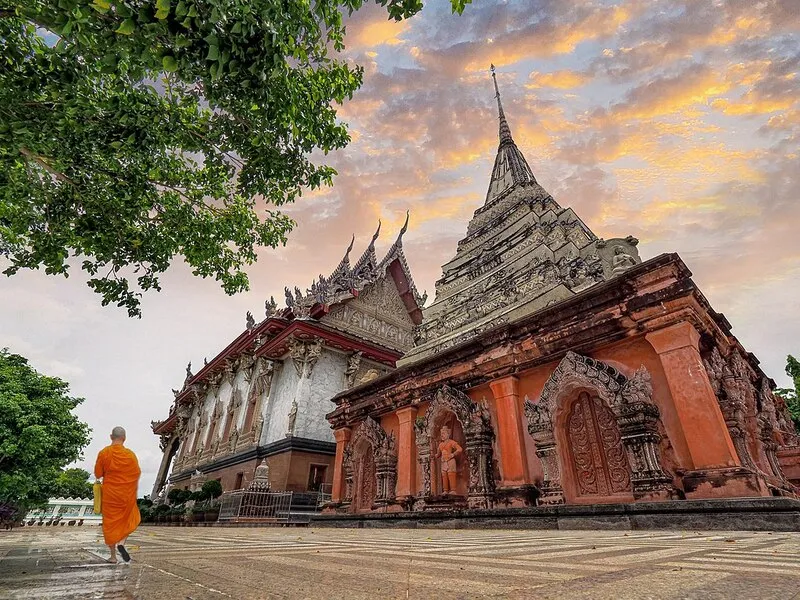
11. Wat Klang Bang Kaeo and Phra Phuttha Withi Nayok Museum is an important historic temple in Nakhon Chai Si District, located close to the Tha Chin River and deeply connected to the riverside community that has developed around this part of the province for generations. The temple contains historic religious buildings, Buddhist art, sacred images, amulets, and the Phra Phuttha Withi Nayok Museum, which preserves the stories of respected monks and the religious heritage of the temple.
Highlights: A historic riverside temple, the Phra Phuttha Withi Nayok Museum, the legacies of Luang Pu Boon and Luang Pu Phoem, traditional Buddhist art, sacred images, amulets, and the atmosphere of an old Nakhon Chai Si community.
The temple was formerly known as Wat Khongkharam, a name that reflects its close relationship with the Tha Chin River. Before roads became the main form of transportation, the river was the principal route linking communities across Central Thailand. People traveled by boat to make merit, trade goods, and visit neighboring settlements, making temples such as Wat Klang Bang Kaeo both religious and social centers.
Several architectural and artistic elements within the temple help illustrate the development of Buddhist temple design in the Nakhon Chai Si river basin. Visitors interested in temple history and Buddhist art should allow time to explore the grounds rather than visiting only the principal shrine, as many of the smaller architectural details and religious objects contribute to the character of the site.
The Phra Phuttha Withi Nayok Museum adds another dimension to the visit by preserving objects and stories related to the temple’s respected monks, particularly the lineages of Luang Pu Boon and Luang Pu Phoem. The museum is especially interesting for visitors who want to learn more about Thai Buddhist amulets, sacred objects, renowned monks, and local religious history.
The surrounding Nakhon Chai Si area has several attractions close together. Wat Klang Bang Kaeo can easily be combined with Tha Na Market, the Thai Human Imagery Museum, and Jesada Technik Museum, making this area ideal for a one-day trip that balances temples, historic markets, and museums without long drives across the province.
Open Days: Temple open daily / Museum open Thursday – Sunday and public holidays Opening Hours: Museum 09:00 – 16:00
Getting There: The temple is located in Nakhon Chai Si Subdistrict, Nakhon Chai Si District. From Bangkok, take Borommaratchachonnani Road toward Nakhon Pathom and continue into central Nakhon Chai Si. Tha Na Market is nearby and can easily be added to the same route.

12. Tha Na Market, also known as the old Nakhon Chai Si market, is a historic riverside market with roots dating back to the reign of King Rama V. It remains an active commercial area today, preserving wooden shophouses, traditional food businesses, and the atmosphere of an old community that has not been completely transformed into a modern tourist complex.
Highlights: Historic wooden shophouses, Nakhon Chai Si community life, local food, traditional shops, sweets, souvenirs, and the riverside atmosphere of an old trading town.
In the past, the Nakhon Chai Si River was an important route for transporting goods and people. The market therefore developed into a regional trading center where both Thai and Chinese families established homes and businesses. The rows of wooden buildings still visible today are reminders of the period when riverside settlements played a major economic role.
Tha Na Market is also popular with food travelers because it contains long-established restaurants, Thai desserts, sweets, noodles, simple rice dishes, and community products. Morning is one of the best times to visit, when the market feels most active and more shops are open than late in the day.
Visitors interested in photography can explore the wooden façades, old shop signs, market lanes, and everyday scenes of vendors at work. Those interested in local history can also observe how the community transitioned from a river-based commercial center into a town shaped by modern road transport.
The market is close to Wat Klang Bang Kaeo, making the two easy to visit together. With additional time, the Thai Human Imagery Museum or Jesada Technik Museum can be added, creating a varied Nakhon Chai Si itinerary with food, religion, history, and museums.
Open Days: Daily Opening Hours: 06:00 – 18:00
Getting There: Tha Na Market is located in Nakhon Chai Si Subdistrict, Nakhon Chai Si District. From Bangkok, follow Borommaratchachonnani Road toward Nakhon Chai Si, then continue to the historic riverside market area. A private car is convenient for combining the market with nearby attractions.
Map (GPS):Open map and directions to Tha Na Market

13. Woodland Muang Mai is an art-oriented attraction in Nakhon Chai Si District featuring a large collection of carved wooden works presented through storytelling and imaginative displays. It is particularly suitable for families, children, woodcraft enthusiasts, and visitors looking for something different from temples and historic markets.
Highlights: Extensive woodcarving collections, the Woodland Tales concept, Thai village displays, wooden artworks from different periods, and exhibitions that combine traditional craftsmanship with fantasy storytelling.
The attraction developed from the Thiw Phai Ngam family’s long-standing collection of wooden art, accumulated over several generations. The collection contains works with artistic, cultural, and craftsmanship value and was eventually developed into a public exhibition space.
One of the key concepts is the presentation of wooden artworks through stories, characters, and imaginative scenes. This narrative approach makes the displays easier for children to understand and creates a different experience from museums where objects are presented individually without a connecting storyline.
Other sections introduce aspects of traditional Thai life and different forms of wood carving. Visitors who appreciate craftsmanship can observe carving techniques, decorative patterns, and the variety of wood used to create different pieces.
Woodland Muang Mai is located in the Nakhon Chai Si area and can be combined with Wat Bang Phra, the Thai Human Imagery Museum, and Tha Na Market. It is a good choice for a family-oriented day focused more on creative attractions and learning than on visiting multiple temples.
Open Days: Daily Opening Hours: 09:00 – 18:00
Getting There: Woodland Muang Mai is located in Don Faek Subdistrict, Nakhon Chai Si District. From Bangkok, travel along Borommaratchachonnani Road toward Nakhon Pathom and continue into Nakhon Chai Si. A private car is the most convenient option.
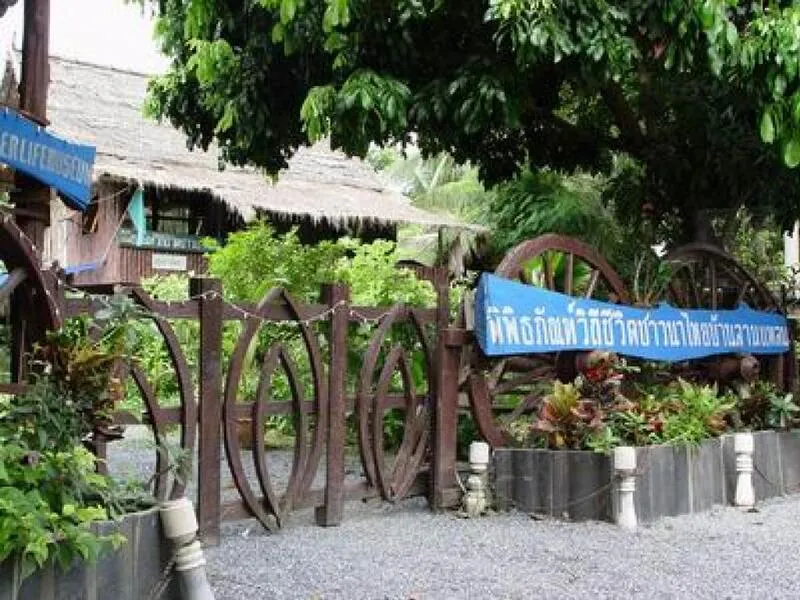
14. Thai Farmer Lifestyle Museum is a small learning center in Ban Lan Laem, Nakhon Chai Si District, preserving tools, household objects, and stories connected with traditional rice farming and rural life in Thailand. It is a useful stop for travelers interested in understanding the agricultural foundations of Nakhon Pathom and Central Thailand.
Highlights: Traditional rice-farming tools, household objects, stories of Thai farmers, local knowledge, and an intimate museum atmosphere rooted in a real local household.
The collection was created through the efforts of local residents who preserved farming tools and household items so they would not disappear as agricultural technology changed. Many of the objects illustrate practical stages of rice cultivation, from preparing the fields to harvesting the crop.
Part of the museum’s charm is that it does not feel like a large institutional museum. Instead, visiting feels closer to entering a home filled with the memories of rural life. The objects remain closely connected to everyday living, making it easier to understand how they were actually used.
The museum is particularly suitable for students, families, and visitors interested in Thai social history. It can help younger visitors understand how traditional rice production depended on labor, seasonal knowledge, water management, and cooperation within the community.
Because this is a small community learning center, contacting the site before visiting is recommended. It can be combined with Tha Na Market, Wat Klang Bang Kaeo, and other Nakhon Chai Si attractions in the same day.
Open Days: Daily; advance contact is recommended Opening Hours: 08:00 – 17:00
Getting There: The museum is located at 9/1 Moo 4, Ban Lan Laem, Nakhon Chai Si–Don Tum Road, Wat Lamut Subdistrict, Nakhon Chai Si District. Traveling by private car is the most convenient option.

15. Bang Luang Market R.S. 122 is a historic market beside the Tha Chin River in Bang Len District. Established in 1903 during the late reign of King Rama V, it preserves a distinctive group of old wooden buildings, traditional shops, and the atmosphere of a long-established Thai–Chinese trading community.
Highlights: Wooden buildings more than a century old, Thai–Chinese community heritage, traditional shops, local food, antiques, old crafts, and a historic riverside atmosphere.
Bang Luang Market once served as an important trading center for communities on both banks of the river, when waterways were the principal means of transportation. Shops developed in rows along the market, serving local residents with food, household goods, services, and traditional trades.
What distinguishes Bang Luang from newly created retro markets is that many of its buildings and businesses have genuine historical roots. Visitors can still see details associated with earlier community life, including wooden shophouses, traditional Chinese medicine shops, antique stores, and traces of long-standing riverside commerce.
Food at the market includes Thai–Chinese dishes, snacks, desserts, and community products. It is best explored slowly from late morning into the afternoon, especially on weekends when more shops are open.
Bang Luang Market is located in the northern part of Bang Len District, so it is more efficient to combine it with Wat Lam Phaya Floating Market and other Bang Len attractions rather than driving back toward Sam Phran on the same day.
Open Days: Saturday, Sunday and public holidays Opening Hours: 09:00 – 17:00
Getting There: The market is located in Bang Luang Subdistrict, Bang Len District. From Bangkok, travel via Borommaratchachonnani Road toward Nakhon Pathom, then continue north toward Bang Len and Bang Luang.

16. Air Orchid is a large orchid farm and agricultural tourism attraction in Bang Len District. It is particularly suitable for photographers, plant lovers, families, and travelers interested in Thailand’s commercial orchid industry, one of the horticultural sectors closely associated with Nakhon Pathom.
Highlights: Large orchid greenhouses, many orchid varieties, propagation and nursery areas, horticultural learning opportunities, and a retail area often described as an orchid supermarket.
The farm covers more than 100 rai and is used for integrated orchid production, from propagation and nursery stages to the selection of mature plants ready for sale. Visitors can therefore see how modern horticulture combines plant knowledge with greenhouse management and commercial production systems.
For general visitors, the greatest attraction is the range of orchid colors, forms, and varieties. The greenhouses are visually appealing and particularly suitable for photography, while plant enthusiasts can also purchase orchids and learn about differences between varieties.
A visit to Air Orchid also helps illustrate Nakhon Pathom’s agricultural identity. In addition to pomelo orchards and fruit farms, the province’s fertile lowlands and favorable growing conditions have supported large-scale orchid and ornamental flower production.
Air Orchid can be combined with Wat Lam Phaya Floating Market or Bang Luang Market as part of a Bang Len route. Morning is the best time for photography and walking through the greenhouse areas before temperatures rise.
Open Days: Daily Opening Hours: 07:00 – 17:00
Getting There: Air Orchid is located in Naraphirom Subdistrict, Bang Len District. From Bangkok, travel via Borommaratchachonnani Road and continue toward Bang Len. A private car is the most convenient option for combining it with other attractions in northern Nakhon Pathom.
Map (GPS):Open map and directions to Air Orchid

17. Thai Film Museum is located within the Thai Film Archive in Phutthamonthon District and presents the history of Thai cinema from the early film era through the development of the modern film industry. It is a rewarding destination for film lovers, families, students, and visitors interested in contemporary Thai cultural history.
Highlights: Thai film history, filmmaking equipment, cameras, posters, photographs, props, the Maya City outdoor area, exhibitions on filmmaking, and stories of important figures in the Thai film industry.
The museum explains how Thai cinema developed from silent and black-and-white film through the introduction of sound, color, and modern production technology. Many exhibits are genuine objects once used in film production or exhibition, giving them cultural and historical value beyond their role as collectibles.
The Thai Film Archive complex also includes Maya City and outdoor displays recreating aspects of cinema history. This means a visit is not limited to indoor galleries; visitors can walk through the grounds, take photographs, and learn about film culture through a variety of settings.
Access to some museum areas may follow scheduled tour rounds, while photography can be restricted inside certain exhibition spaces. Visitors should follow the rules and instructions provided by the Thai Film Archive during their visit.
Its location in Salaya makes the Thai Film Museum easy to combine with Buddhamonthon, Mahidol University, and Khlong Mahasawat. The area works particularly well for families and travelers interested in educational attractions.
Open Days: Wednesday – Sunday Opening Hours: 09:30 – 17:30
Getting There: The Thai Film Archive is located at 94 Moo 3, Phutthamonthon Sai 5 Road, Salaya Subdistrict, Phutthamonthon District. From Bangkok, travel via Borommaratchachonnani Road and Phutthamonthon Sai 5. Public transport routes serving Salaya can also be used.

18. Phra Pathom Chedi National Museum is an important museum for understanding the wider history of Nakhon Pathom. Its collections include archaeological artifacts and religious art from the province, particularly objects from the Dvaravati period that help explain the early development of urban and Buddhist culture in Central Thailand.
Highlights: Dvaravati artifacts, Buddha images, votive tablets, inscriptions, architectural fragments, and archaeological evidence related to ancient Nakhon Pathom.
The museum developed from earlier collections of antiquities found around Nakhon Pathom. Some objects were originally stored and displayed near Phra Pathom Chedi before the collection was systematically organized and developed into a national museum.
The exhibits help visitors understand Nakhon Pathom before the construction of the present form of Phra Pathom Chedi. They illustrate the significance of Dvaravati culture, Buddhism, and wider cultural connections between ancient communities across the Central Plains.
Visitors to Phra Pathom Chedi should consider adding the museum to their itinerary because it explains why the area is historically important beyond the monumental stupa itself. Visiting the museum before or after walking around the chedi provides a clearer understanding of the ancient city.
The museum is suitable for students, families, archaeology enthusiasts, and travelers who want a more systematic introduction to Dvaravati civilization. It can easily be combined with Phra Pathom Chedi and Sanam Chandra Palace.
Open Days: Daily Opening Hours: 09:00 – 16:00
Getting There: The museum is located within the Wat Phra Pathom Chedi Ratchaworamahawihan area in central Nakhon Pathom. Visitors can drive via Phet Kasem Road or take a train to Nakhon Pathom Railway Station and continue to the temple area.
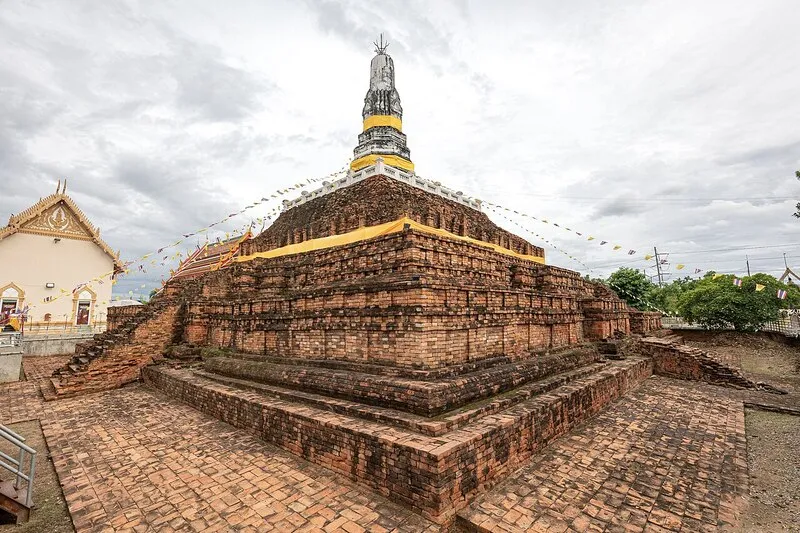
19. Wat Phra Prathon Chedi Worawihan is an important historic temple and archaeological site in Mueang Nakhon Pathom District. The temple contains Phra Prathon Chedi, whose origins are closely connected with the Dvaravati period, making this an essential stop for travelers who want to understand Nakhon Pathom as an ancient city rather than simply the home of Phra Pathom Chedi.
Highlights: Phra Prathon Chedi, Dvaravati archaeological remains, early Buddhist art, an active temple environment, and connections with the history of the ancient Nakhon Chai Si urban area.
Phra Prathon Chedi is an important piece of evidence showing that Nakhon Pathom supported major communities and religious monuments long before the Ayutthaya period. Its archaeological layers and architectural form have therefore attracted long-term interest from historians and archaeologists.
Unlike archaeological ruins that stand separately from modern community life, Phra Prathon Chedi remains within an active Buddhist temple. Visitors therefore experience the ancient remains alongside contemporary religious practices, allowing the past and present to be seen in the same setting.
For visitors who have already explored Phra Pathom Chedi, Phra Prathon Chedi provides a broader understanding of the network of settlements and Buddhist monuments that once existed across the Dvaravati landscape. It demonstrates that ancient religious life in Nakhon Pathom was not concentrated in a single location.
The temple is close enough to central Nakhon Pathom to combine with Phra Pathom Chedi, Sanam Chandra Palace, or Wat Don Yai Hom. Travelers with a strong interest in history should allow enough time to explore the site without rushing.
Open Days: Daily Opening Hours: 06:00 – 20:00
Getting There: The temple is located at 120 Moo 1, Phra Prathon Subdistrict, Mueang Nakhon Pathom District. It is easily reached from central Nakhon Pathom via Phet Kasem Road and is only a short drive from Phra Pathom Chedi.

20. Wat Don Yai Hom is an important temple in Don Yai Hom Subdistrict, Mueang Nakhon Pathom District, widely known through its association with Luang Pho Ngern of Wat Don Yai Hom, one of the highly respected Buddhist monks of Central Thailand.
Highlights: The religious legacy of Luang Pho Ngern, the history of the Don Yai Hom community, temple architecture, and the connection with Noen Phra or Noen Yai Hom, an important archaeological site nearby.
The history of the temple is closely connected with the Don Yai Hom community and earlier religious sites in the area. An ancient temple once stood nearby, with archaeological remains still visible at the location known as Noen Phra, before the community established the present temple during the 19th century.
Wat Don Yai Hom became especially well known through Luang Pho Ngern, a respected monk who played an important religious and community role. Many disciples continue to visit the temple to pay respect to his memory, making it an important destination for travelers interested in renowned Thai monks and Buddhist heritage.
The wider Don Yai Hom area contains several layers of archaeological evidence and local tradition. Travelers interested in history can therefore combine the temple with Noen Phra to better understand the development of the area from ancient religious settlements to the modern community.
The temple has a calm atmosphere suitable for merit-making and an unhurried visit. It can be combined with Wat Phra Prathon Chedi or other attractions in Mueang Nakhon Pathom District, giving visitors both an archaeological and a living religious perspective on the province.
Open Days: Daily Opening Hours: 08:00 – 17:00
Getting There: The temple is located at 257 Moo 3, Don Yai Hom Subdistrict, Mueang Nakhon Pathom District. Travel via Setthakit 2 Road on the Ban Phaeo–Don Yai Hom route. The temple is approximately 9 km from the Phet Kasem Road corridor and is most convenient to reach by private car.
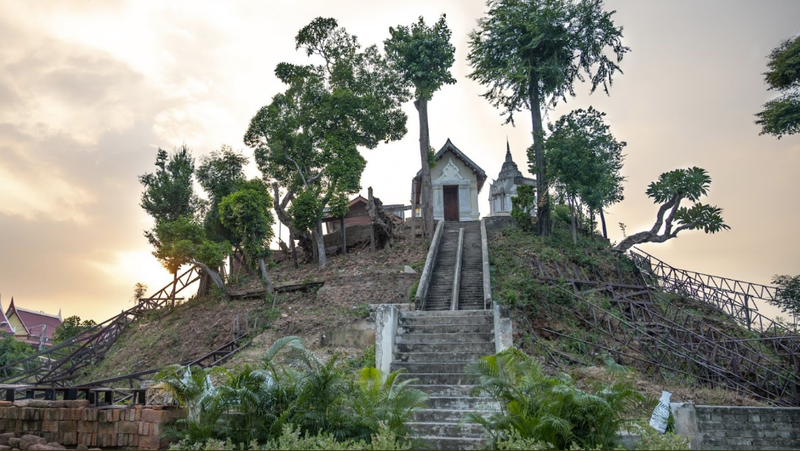
21. Noen Wat Phra Ngam is an important archaeological site in central Nakhon Pathom, located within the grounds of Wat Phra Ngam, also known as Wat Soda Phuttharam. It lies close to Nakhon Pathom Railway Station and Phra Pathom Chedi. Although the site today appears as an archaeological mound within a temple compound, excavations here have revealed significant evidence of Nakhon Pathom’s importance during the Dvaravati period.
Highlights: Dvaravati archaeological remains, traces of an ancient stupa, terracotta votive tablets, stone Buddha images, dharma wheels, crouching deer sculptures, and archaeological evidence connecting the site with the wider ancient city surrounding Phra Pathom Chedi.
The importance of Noen Wat Phra Ngam comes from the variety of artifacts discovered here. These objects reflect Buddhist belief, religious art, and the activities of an ancient urban community. Several finds share artistic characteristics with Dvaravati objects discovered elsewhere in Central Thailand, supporting the view that the modern city center formed part of a much larger ancient settlement.
Terracotta votive tablets and Buddhist objects are among the most interesting discoveries. They demonstrate that Buddhist religious activity was not concentrated solely around Phra Pathom Chedi but extended across a network of sacred sites and monasteries throughout the surrounding ancient city.
Noen Wat Phra Ngam is particularly rewarding for visitors who want to understand Nakhon Pathom’s history in greater depth. A good sequence is to begin at Phra Pathom Chedi National Museum and then continue to the archaeological mound, allowing visitors to connect museum artifacts with the actual landscape in which similar evidence was discovered.
Its location close to the railway station and Phra Pathom Chedi also makes it easy to include in a walking or short-driving route through central Nakhon Pathom. It is best suited to visitors interested in archaeology, history, and cultural travel rather than simply major sightseeing landmarks.
Open Days: Daily Opening Hours: 09:00 – 17:00
Getting There: The site is located at 45 in central Nakhon Pathom near Nakhon Pathom Railway Station. Visitors can travel by train from Bangkok and continue to the temple area, or drive via Phet Kasem Road into central Nakhon Pathom.

22. Wat Phai Lom is an important temple in central Nakhon Pathom located not far from Phra Pathom Chedi. Its history is connected with the development of Nakhon Pathom during the reign of King Rama IV and with Mon communities who participated in the major restoration of Phra Pathom Chedi.
Highlights: A historic temple near Phra Pathom Chedi, connections with Mon settlement history, Buddhist religious buildings, and the atmosphere of a long-established local center of faith.
The area around the temple was once covered by dense bamboo groves. Mon people who came to assist in the restoration of Phra Pathom Chedi lived in the surrounding area. Over time, after the settlement changed, wandering monks began using the quiet bamboo-covered land as a place for meditation and religious practice.
The name “Wat Phai Lom” reflects this earlier landscape, as “phai” means bamboo. The temple’s significance therefore extends beyond its buildings and is closely connected with the history of settlement and the expansion of communities around Phra Pathom Chedi during the Rattanakosin period.
Visitors can pay respect to the Buddha images and explore the temple grounds before continuing to Phra Pathom Chedi, Noen Wat Phra Ngam, or Phra Pathom Chedi National Museum. All of these attractions are located within the city zone and can be visited without long transfers.
Wat Phai Lom is a good choice for travelers planning a merit-making route through central Nakhon Pathom without traveling into the outer districts. Morning is particularly suitable for visiting before the weather becomes hot. Respectful clothing is recommended when entering the temple.
Open Days: Daily Opening Hours: 08:00 – 16:00
Getting There: The temple is located in Phra Pathom Chedi Subdistrict, Mueang Nakhon Pathom District. From Phet Kasem Road, continue into central Nakhon Pathom and turn toward the Wat Phai Lom area. The temple is only a short distance from Phra Pathom Chedi.
Map (GPS):Open map and directions to Wat Phai Lom
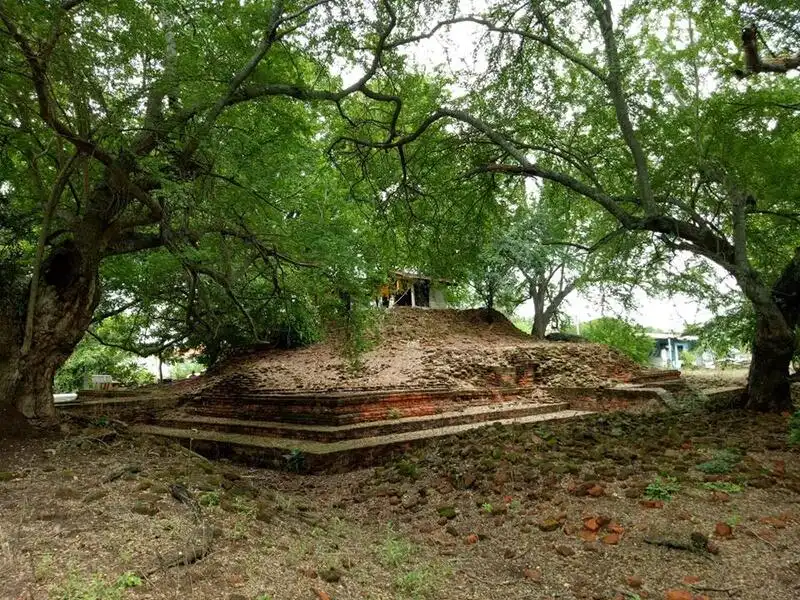
23. Noen Phra (Noen Yai Hom) is an archaeological site near Don Yai Hom in Mueang Nakhon Pathom District. At first glance it may appear to be a quiet earthen mound surrounded by rural land, but important artifacts discovered here demonstrate a clear connection with Dvaravati culture and the early Buddhist history of Nakhon Pathom.
Highlights: An ancient religious mound, stone pillars, crouching deer sculptures, stone Buddha images, fragments of dharma wheels, and archaeological evidence of an important early Buddhist community at Don Yai Hom.
A major discovery occurred in 1936 when Luang Pho Ngern of Wat Don Yai Hom removed bricks from the edge of the mound for construction work at the temple. This led to the discovery of several archaeological objects displaying characteristics associated with Dvaravati art, bringing greater attention to the site as the remains of an ancient religious complex.
Stone pillars and sculptures found here provide evidence of early Buddhist ritual practices. Particularly important are fragments of dharma wheels and crouching deer, symbols strongly associated with the Buddha’s first sermon and frequently found at Dvaravati archaeological sites in Thailand.
The site is also connected with local stories and the historical identity of the Don Yai Hom community. Visitors can combine Noen Phra with Wat Don Yai Hom to follow the development of the area from ancient Buddhist settlement to the modern temple and community.
Noen Phra is most suitable for travelers who value archaeology and historical context rather than large photogenic landmarks. The physical remains are relatively modest, so understanding the site’s history makes the visit considerably more meaningful.
Open Days: Daily Opening Hours: 07:00 – 18:00
Getting There: The site is located near Wat Don Yai Hom in Don Yai Hom Subdistrict, Mueang Nakhon Pathom District. Traveling by private car is the most convenient option, and the archaeological site can easily be combined with Wat Don Yai Hom in the same trip.

24. Silpakorn University, Sanam Chandra Palace Campus, commonly known as “Thap Kaeo,” is one of Silpakorn University’s major campuses. Its setting is closely connected with the Sanam Chandra Palace area, giving the campus a distinctive atmosphere that combines education, art, history, cultural activities, and the landscape of Nakhon Pathom city.
Highlights: A university atmosphere closely associated with art and the humanities, green spaces, academic buildings, cultural activities, and historical connections with Sanam Chandra Palace and the Ganesha Shrine.
The selection of Nakhon Pathom for the campus had strong cultural significance. Sanam Chandra Palace is closely associated with King Rama VI, who had a deep interest in literature, art, archaeology, and cultural development. Nakhon Pathom itself is also one of Thailand’s major archaeological areas.
Ganesha, associated with the Sanam Chandra Palace landscape, also aligns closely with Silpakorn University’s identity. As a deity linked with knowledge and the arts, Ganesha has long been an important symbol of the university, giving the location a deeper cultural connection beyond its practical role as an academic campus.
Today the campus is home to faculties and academic units covering arts, education, science, pharmacy, engineering, and other disciplines, together with cultural and artistic activities. Visitors should remember that this is an active university and respect classrooms, academic spaces, and areas where access may be restricted.
The surrounding neighborhood contains many restaurants, cafés, and student-oriented businesses, making the area a good place to experience contemporary Nakhon Pathom life. The campus can be combined with Sanam Chandra Palace and Phra Pathom Chedi as part of a central-city itinerary.
Getting There: The campus is located near Sanam Chandra Palace in Mueang Nakhon Pathom District. From Bangkok, follow Phet Kasem Road into central Nakhon Pathom, or take a train to Nakhon Pathom Railway Station and continue by local transport to the university.

25. King Vajiravudh Museum is an important place for learning about the life and royal activities of King Vajiravudh, or Rama VI, whose history is deeply connected with Sanam Chandra Palace and Nakhon Pathom. The museum is especially useful for visitors who want to understand the palace beyond its architecture and gardens.
Highlights: The life of King Rama VI, historical documents, photographs, personal objects, education, literature, the Wild Tiger Corps, nation-building ideas, and the historical context of Sanam Chandra Palace.
King Rama VI played an important role in the development of Nakhon Pathom during the early 20th century. Sanam Chandra Palace served not only as a royal residence but also as a setting for royal duties and activities associated with the Wild Tiger Corps, making the area important for understanding his ideas and policies.
The museum presents objects and information covering many areas of the King’s work, including literature, education, administration, and ideas about national identity. These subjects were especially significant during a period when Siam was adapting to changing political, social, and international conditions.
Visiting the museum together with Sanam Chandra Palace provides much greater context. Understanding the person who commissioned and used the palace makes the purpose and character of the surrounding buildings easier to appreciate.
Travelers interested in political history, society, literature, and cultural life during the reign of Rama VI will find the museum particularly rewarding. It can also be easily combined with Silpakorn University and Phra Pathom Chedi.
Open Days: Monday – Sunday Opening Hours: 09:00 – 16:00
Getting There: The museum is located within the Sanam Chandra Palace area in Mueang Nakhon Pathom District. Visitors can drive via Phet Kasem Road into the city or take a train to Nakhon Pathom Railway Station and continue to the palace area.

26. Ya Le Monument commemorates the beloved dog of King Vajiravudh, Rama VI. Located near Chali Mongkol Asana Residence within Sanam Chandra Palace, the monument may be small compared with the surrounding royal buildings, but its story provides a personal and emotional dimension to the history of the palace.
Highlights: The bronze statue of Ya Le, the story of King Rama VI’s beloved dog, the royal poem written in mourning, and the monument’s location in front of Chali Mongkol Asana Residence.
Ya Le was a mixed-breed dog encountered by King Rama VI in Nakhon Pathom and later taken into royal care. Known for intelligence, loyalty, and an ability to respond closely to the King, Ya Le became one of his favorite animals and appears in stories connected with his personal life.
After Ya Le was shot and killed, King Rama VI was deeply saddened and ordered a monument to be created in the dog’s memory. He also composed a written tribute. This personal story gives the modest statue an emotional significance that goes well beyond its role as a decorative feature of the palace grounds.
Visitors to Sanam Chandra Palace should view the monument together with Chali Mongkol Asana Residence. The combination offers a more personal perspective on King Rama VI and complements the larger narratives of royal duties, politics, and administration presented elsewhere in the palace.
The monument is especially appealing to travelers who enjoy small historical details and human stories that make royal history more relatable. It requires relatively little time and fits naturally into a walking route through Sanam Chandra Palace.
Open Days: Daily Opening Hours: Outdoor area 05:00 – 09:00 and 16:00 – 20:00
Getting There: The monument is located inside Sanam Chandra Palace in Phra Pathom Chedi Subdistrict, Mueang Nakhon Pathom District, in front of Chali Mongkol Asana Residence. It is best visited as part of the palace walking route.

27. Sookjai Market is an agricultural and community market in the Sam Phran area focusing on safe food, organic produce, and direct connections between consumers and local farmers. It is particularly suitable for health-conscious travelers, families, and visitors interested in sustainable agriculture.
Highlights: Organic vegetables and fruit, rice, herbs, healthy food, community-made products, locally produced goods, and the relaxed atmosphere of a green market in Sam Phran.
The central idea of Sookjai Market is to provide farmers and producers with a space to sell directly to consumers. Visitors can therefore learn more about where their food comes from while supporting local agricultural networks at the same time.
Products include fresh vegetables, fruit, rice, herbs, prepared food, snacks, and processed products. The market is a good place to eat and shop for souvenirs that differ from those found in conventional tourist markets because there is greater emphasis on production methods and food safety.
Sookjai Market also represents Nakhon Pathom’s identity as an agricultural province close to Bangkok, where farming can be connected with tourism and sustainable consumption. It is especially suitable for families who want children to understand the relationship between food and the farms where it is produced.
The market can be combined easily with Wat Rai Khing, Don Wai Market, and other Sam Phran attractions. Visiting in the morning provides more time to explore the stalls before continuing to other destinations in the area.
Open Days: Saturday – Sunday Opening Hours: 08:00 – 17:00
Getting There: Sookjai Market is located in the Sam Phran area along Phet Kasem Road, near Wat Rai Khing and the Tha Chin River. From Bangkok, follow Phet Kasem Road toward Sam Phran and Nakhon Pathom.

28. Wat Bang Chang Tai is a historic temple in Sam Phran District near the Tha Chin River. Its history dates back to the early Rattanakosin period, and the temple has remained an important spiritual center for generations of residents in the Bang Chang community.
Highlights: Luang Pho Phet, a Chiang Saen-style Buddha image, the ordination hall, and the atmosphere of an old riverside temple along the Tha Chin River.
The temple was established around 1792 during the reign of King Rama I. It was originally known as Wat Bang Chang before the name Wat Bang Chang Tai was adopted to distinguish it from another nearby temple. Its history reflects the importance of the Tha Chin River as a transportation route and foundation for settlement in earlier periods.
The temple’s most important Buddha image is Luang Pho Phet, a Chiang Saen-style seated Buddha image in meditation posture. The image was transported by boat from an old temple in Ayutthaya and has remained an important focus of local devotion.
The ordination hall has been rebuilt and restored through several periods, reflecting changes in both the temple and the surrounding community. Visitors interested in historic temples of Central Thailand can observe the relationship between Buddhist art, local faith, and riverside community life.
Wat Bang Chang Tai can be combined with Wat Rai Khing, Don Wai Market, or Sookjai Market because all are located within Sam Phran District. Together they create a convenient one-day route for merit-making and riverside community travel.
Open Days: Daily Opening Hours: 08:00 – 17:00
Getting There: The temple is located at 46 Moo 1, Bang Chang Subdistrict, Sam Phran District. From Bangkok, use Phet Kasem Road or Borommaratchachonnani Road and continue into Sam Phran and Bang Chang.

29. Blessed Nicholas Bunkerd Shrine is an important Roman Catholic religious site in Sam Phran District. It was created in memory of Blessed Nicholas Bunkerd Kitbamrung, a Thai Catholic priest whose life and sacrifice hold an important place in the history of the Catholic Church in Thailand.
Highlights: The shrine and relics of Blessed Nicholas Bunkerd, a life-size figure, exhibitions about his life and sacrifice, contemporary religious architecture, and the prominent symbolism of the cross within the building.
The site presents the story of his life and ministry as a Catholic priest, including important events that eventually led to his recognition as a martyr and beatified figure within the Catholic Church.
The architecture uses Christian religious symbolism as an important design element. The cross is particularly prominent, representing faith, sacrifice, hope, and the victory associated with Christian belief. The building itself therefore forms an important part of the visitor experience rather than serving only as a container for exhibits.
The shrine also reveals the religious diversity of Nakhon Pathom. Although the province is best known for Buddhist temples, it also contains long-established Christian communities and religious institutions that have contributed to Thailand’s wider history.
Non-Christian visitors are welcome to learn about history, religion, and architecture, but the shrine should be approached with respect. Visitors should dress appropriately, remain quiet, and arrange permission in advance when required.
Open Days: Advance permission required Opening Hours: Visits according to the approved appointment time
Getting There: The shrine is located in Tha Kham Subdistrict, Sam Phran District. From Bangkok, travel via Phet Kasem Road into Sam Phran and continue toward Tha Kham. Traveling by private car is the most convenient option.

30. Saphan Yong, also known as Saphan Yong C.S. 1279, is a riverside restaurant and café attraction in central Nakhon Pathom that combines green surroundings, waterside seating, and the distinctive bridge that has become the defining landmark of the property.
Highlights: The Saphan Yong bridge, riverside atmosphere, green surroundings, café and restaurant spaces, photography spots, and a convenient location near Phra Pathom Chedi and Sanam Chandra Palace.
The atmosphere here is very different from the historical attractions in central Nakhon Pathom. Rather than focusing on archaeology or royal history, Saphan Yong offers a relaxed place to sit among trees and water, making it suitable for lunch, drinks, or a break after visiting Phra Pathom Chedi and Sanam Chandra Palace.
The bridge is the most recognizable feature and serves both as part of the landscape design and as a popular photography location. Its distinctive appearance has become so closely associated with the venue that “Saphan Yong,” meaning the bridge, is the name most visitors remember.
The riverside setting is particularly pleasant from late afternoon into the evening. The atmosphere changes again after dark, making this a practical final stop after historical attractions in central Nakhon Pathom have closed.
For travelers staying in Mueang Nakhon Pathom District, Saphan Yong provides another evening option close to the restaurant and accommodation areas surrounding Sanam Chandra Palace and the city center.
Open Days: Daily
Getting There: Saphan Yong is located in Mueang Nakhon Pathom District near Phra Pathom Chedi and Sanam Chandra Palace. It is easily reached by car from the city center and works well as a stop after a central Nakhon Pathom sightseeing route.
Map (GPS):Open map and directions to Saphan Yong

31. Wat Huai Chorakhe is a long-established temple in central Nakhon Pathom, located on Phiphit Prasat Road not far from Phra Pathom Chedi. Although it is smaller and less internationally known than the province’s major royal temples, it has played an important role in the religious life of the local community for generations.
Highlights: A historic community temple in central Nakhon Pathom, merit-making areas, Buddhist worship, local religious life, and activities held during major Buddhist holy days.
Wat Huai Chorakhe represents the traditional role of a community temple in Central Thailand. Local residents come here to make merit, offer food and alms, present offerings to monks, and participate in religious ceremonies throughout the year.
The temple becomes especially active on important Buddhist occasions such as Makha Bucha Day, Visakha Bucha Day, Asalha Bucha Day, and the Buddhist Lent period. During these times, worshippers gather for chanting, sermons, merit-making, and other religious activities.
Travelers staying in central Nakhon Pathom can easily combine the temple with Phra Pathom Chedi, Wat Phai Lom, Wat Phra Meru, or Phra Pathom Chedi National Museum because all are located within the city zone.
The temple is particularly suitable for visitors who want to see a genuine local religious site rather than only major tourist landmarks. Visitors should dress respectfully, remain quiet, and avoid disturbing religious activities.
Open Days: Daily Opening Hours: 08:00 – 16:00
Getting There: Wat Huai Chorakhe is located on Phiphit Prasat Road in Mueang Nakhon Pathom District. From Bangkok, take Phet Kasem Road into central Nakhon Pathom and continue toward the Huai Chorakhe area.
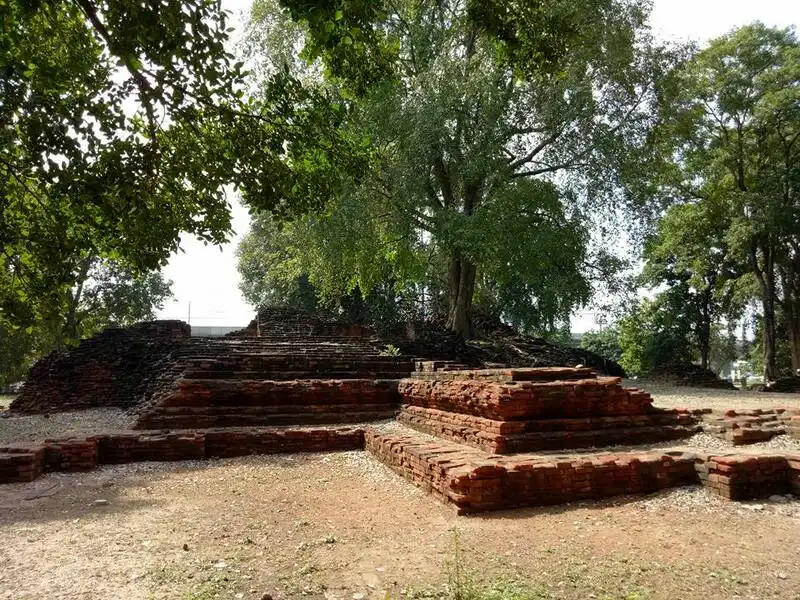
32. Wat Phra Meru is an important archaeological site beside Phet Kasem Road in Mueang Nakhon Pathom District. Today, the site survives mainly as a large archaeological mound, but its historical importance is considerable because it provides evidence of Nakhon Pathom’s prosperity during the Dvaravati period.
Highlights: Dvaravati archaeological remains, a large ancient religious foundation, traces of early Buddhist architecture, and historical connections with ancient Nakhon Pathom and Phra Pathom Chedi.
Wat Phra Meru differs from an active temple because there are no complete religious buildings standing today. Its appeal comes from the visible layers of history embedded in the landscape. Visitors can see traces of what was once a substantial Buddhist monument within the wider sacred network of ancient Nakhon Pathom.
The site is important to archaeologists because its remains and associated evidence correspond with Dvaravati artistic traditions, one of the most significant early cultures of Central Thailand before the Ayutthaya period.
Visiting Wat Phra Meru after Phra Pathom Chedi helps reveal that ancient Nakhon Pathom was not centered on a single monument. Instead, the city contained several religious complexes distributed across the surrounding landscape.
The site is best suited to visitors interested in archaeology and historic landscapes rather than those looking for elaborate temple architecture. Reading about the site before or during a visit will make the surviving remains much easier to interpret.
Open Days: Daily Opening Hours: 09:00 – 17:00
Getting There: Wat Phra Meru is located beside Phet Kasem Road in the Ananta Uthayan area, Huai Chorakhe Subdistrict, Mueang Nakhon Pathom District. It is only a short drive south of Phra Pathom Chedi.
Map (GPS):Open map and directions to Wat Phra Meru

33. Football History Museum of Siam is located at Thap Kaeo Residence within the Sanam Chandra Palace area. This specialized museum tells the story of the origins and development of football in Thailand and is closely connected with King Vajiravudh, Rama VI, who played an important role in promoting the sport in Siam.
Highlights: The history of Thai football, the early Football Association of Siam, football during the reign of King Rama VI, historical documents, photographs, and evidence related to the development of the sport in Thailand.
Football became increasingly popular in Thai society during the early 20th century. King Rama VI regarded sport as a way to develop physical strength, discipline, teamwork, and social unity, giving football an important place in broader efforts to modernize education and public life.
The museum helps visitors understand that Thai football did not begin with today’s professional leagues. Its roots are connected with schools, government institutions, organized clubs, and royal support during a period when Siam was undergoing major social change.
Football fans will discover a different side of Thai sports history, while visitors interested in King Rama VI can explore a royal contribution that is often less discussed than his work in literature, education, and national development.
The museum can easily be visited together with Sanam Chandra Palace, King Vajiravudh Museum, and Ya Le Monument, making the palace area suitable for a half-day historical itinerary.
Open Days: Daily Opening Hours: 09:00 – 16:00
Getting There: The museum is located at Thap Kaeo Residence within Sanam Chandra Palace, Mueang Nakhon Pathom District. It is best visited as part of a tour of the palace complex.

34. Mahidol University, Salaya Campus is the main campus of Mahidol University in Phutthamonthon District. Covering more than 1,000 rai, it is one of the most important centers for education, science, medicine, music, environmental studies, research, and cultural activity on the western side of Bangkok.
Highlights: A spacious green campus, learning and research institutions, museums and cultural spaces, gardens, walking and cycling routes, and easy access to Buddhamonthon and nearby nature and educational attractions.
Salaya has developed from a suburban area into a major educational district with Mahidol University at its center. The campus contains faculties, institutes, research centers, academic facilities, and other institutions covering a wide range of fields.
One of the campus’s most attractive features is its extensive green space and pedestrian-friendly environment. Students and local residents use many public areas for walking, cycling, exercise, and recreation, giving the campus a noticeably more open atmosphere than universities in densely built urban areas.
The surrounding Salaya district contains restaurants, cafés, markets, and accommodation serving students, visitors, and travelers. It is a particularly convenient base for exploring Buddhamonthon, the Thai Film Archive, and Khlong Mahasawat.
Visitors should remember that Mahidol University is an active educational and research institution. Some buildings and academic areas may have restricted access, so travelers should focus on public spaces and follow university regulations.
Getting There: Mahidol University is located in Salaya Subdistrict, Phutthamonthon District. From Bangkok, use Borommaratchachonnani Road or Phutthamonthon Sai 4. Trains on the Southern Line and public transport serving Salaya are also available.

35. Wat Klang Khu Wiang Floating Market is a riverside market in Sampathuan, Nakhon Chai Si District, combining local food, river-based trading traditions, and boat activities. It is a good choice for travelers who want to experience community life along the Nakhon Chai Si River in a setting that differs from Don Wai Market.
Highlights: Traditional food, Thai desserts, seasonal fruit, river fish, community shops, paddle boats, and boat trips along the Nakhon Chai Si River.
The market developed around the traditional lifestyle of riverside communities. In the past, the river served simultaneously as a transportation route, food source, and trading corridor, so shops and community activities naturally developed along the water.
Food is one of the main reasons to visit. Local specialties include river fish, Thai dishes, khanom tan, khanom sai sai, khanom thuai, traditional snacks, and seasonal agricultural products from the Nakhon Chai Si area.
Boat trips offer another perspective on riverside houses, temples, and the landscape of the river basin. They also help visitors understand why the Nakhon Chai Si River, or Tha Chin River, has played such an important role in settlement and local culture for generations.
The market can be combined with Tha Na Market, Wat Klang Bang Kaeo, and the Thai Human Imagery Museum. Morning to late morning is generally the best time to visit for a wider selection of food and more comfortable temperatures.
Open Days: Saturday, Sunday and public holidays Opening Hours: 08:00 – 17:00
Getting There: The market is located in Sampathuan Subdistrict, Nakhon Chai Si District. From Bangkok, take Borommaratchachonnani Road toward Nakhon Pathom, continue into Nakhon Chai Si, and then follow local roads toward Wat Klang Khu Wiang.

36. Mana Orchid Farm is an orchid farm in Bang Toei, Sam Phran District, suitable for flower lovers, collectors, garden enthusiasts, and travelers interested in seeing the commercial horticultural side of Nakhon Pathom.
Highlights: Dendrobium orchids, hundreds of hybrid varieties, a wide range of colors, potted orchids for sale, orchid-care knowledge, and decorative flower services.
The farm has continuously developed orchid cultivation and hybrid breeding, especially varieties with different colors and flower forms. This makes Mana Orchid Farm more than simply a plant shop; it also reflects the expertise of Thai growers in developing commercial ornamental plants.
Visitors can walk through greenhouse and display areas to observe differences between orchid varieties at close range. Travelers particularly interested in Dendrobium orchids will find a broad selection of plants to study and compare.
In addition to enjoying the flowers, visitors can learn basic principles of orchid cultivation, including watering, light requirements, growing media, and adapting care to different environments. This makes the farm useful for both beginners and experienced plant growers.
Its Sam Phran location makes it easy to combine Mana Orchid Farm with Wat Rai Khing, Don Wai Market, or Sookjai Market, adding an agricultural stop to a day otherwise focused on temples and food.
Open Days: Thursday – Tuesday, closed Wednesday Opening Hours: 08:00 – 17:00
Getting There: The farm is located in Bang Toei Subdistrict, Sam Phran District, close to the Borommaratchachonnani Road corridor. It is easily reached by private car from Bangkok and connects conveniently with both Salaya and Sam Phran.

37. Thai Song Dam Village at Ban Sakae Rai is an ethnic community in Nakhon Pathom that continues to preserve the identity of the Thai Song Dam, also known as Tai Dam or Thai Song, through language, clothing, beliefs, rituals, handicrafts, and community traditions.
Highlights: Thai Song Dam culture, traditional dark clothing, textile weaving, local knowledge, community houses, rituals, and opportunities to learn about the culture of a Tai ethnic group living in Nakhon Pathom.
The Thai Song Dam are a Tai ethnic group with a distinctive cultural identity found in several provinces across Central and Western Thailand. Ban Sakae Rai is one of the communities where knowledge and traditions continue to be passed from one generation to another through family and community activities.
One of the most visible characteristics is traditional clothing in black or dark indigo, often accompanied by distinctive woven patterns and handicrafts. Beyond clothing, the community also maintains beliefs connected with ancestors, ceremonial practices, and social relationships that have been preserved for generations.
Tourism here should focus on learning and respecting the community rather than treating the village simply as a photography location. Visiting during a genuine cultural activity or traditional event can provide a much deeper view of the living culture.
The village can be combined with Wat Don Yai Hom and Noen Phra, allowing travelers to experience archaeology, Buddhism, and ethnic culture within the same broader area.
Open Days: Daily Opening Hours: 08:00 – 17:00
Getting There: The village is located at Ban Sakae Rai, Moo 9, Don Yai Hom Subdistrict, Mueang Nakhon Pathom District. Traveling by private car from central Nakhon Pathom through the Don Yai Hom area is the most convenient option.

38. Chaipattana Museum is a permanent educational exhibition of the Chaipattana Foundation located within the Chaipattana Occupational Park in Bo Phlap, Mueang Nakhon Pathom District. It explains the establishment of the foundation and development concepts associated with King Bhumibol Adulyadej, Rama IX, through modern learning media.
Highlights: Royal development projects, the Chaipattana Foundation, royal development principles, occupational development programs, interactive media, and exhibitions suitable for students, families, and visitors interested in community development.
The museum is not designed simply as a biographical exhibition. Instead, it focuses on explaining how development initiatives inspired by royal projects were applied to real conditions involving water, soil, agriculture, occupations, and quality of life.
Interactive presentation techniques make complex development concepts easier to understand, making the museum suitable for young visitors, students, government and private-sector groups, and anyone interested in Thailand’s approaches to local development.
The museum is located within the Chaipattana Occupational Park, which itself supports learning and vocational development. This setting helps connect exhibition content with the practical idea of developing people and creating economic opportunities.
Chaipattana Museum can be combined with Wat Huai Chorakhe, Phra Pathom Chedi, or Sanam Chandra Palace because all are located within Mueang Nakhon Pathom District and can be reached without long transfers.
Open Days: Daily, including weekends and public holidays Opening Hours: 09:00 – 16:30
Getting There: The museum is located within the Chaipattana Occupational Park in Bo Phlap Subdistrict, Mueang Nakhon Pathom District. It is easily reached by car from central Nakhon Pathom.

39. Baan Phu Yai Sukho Orchid Garden is an agricultural learning site in Bang Rakam, Bang Len District, focusing on orchid cultivation and demonstrations of flower-growing methods that reduce dependence on chemical inputs. It is especially suitable for plant enthusiasts and visitors interested in safer agricultural practices.
Highlights: Demonstration orchid gardens, reduced-chemical cultivation, orchid greenhouses, watering techniques, disease and pest management, and the agricultural atmosphere of rural Bang Len.
The main attraction is that this is a real production garden rather than an ornamental attraction created only for tourists. Visitors can see practical orchid management, from greenhouse systems and irrigation to the careful maintenance required to produce healthy plants and high-quality flowers.
The focus on reducing chemical use gives the garden additional value as a learning destination for safer agriculture. It demonstrates how commercial flower production can be developed while reducing potential effects on growers, consumers, and the environment.
Experienced orchid growers can benefit from seeing a working production system, while casual visitors can enjoy the flowers and gain a better understanding of the detailed care behind commercial ornamental plant production.
When exploring Bang Len District, the garden can be combined with Bang Luang Market, Wat Lam Phaya Floating Market, or Air Orchid, creating a full-day route that balances community markets with agricultural tourism.
Open Days: Daily Opening Hours: 08:00 – 17:00
Getting There: The garden is located at Moo 8, Bang Rakam Subdistrict, Bang Len District. Traveling by private car is the most convenient option, with connections from central Bang Len and Bang Luang Market.

40. Owl Art Museum is a specialized museum in Nakhon Chai Si District featuring owl-themed artworks and collectibles from Thailand and other countries. It is well suited to families, children, collectors, and visitors who enjoy smaller museums with a clear artistic theme.
Highlights: Owl-themed artworks made from many materials, international collections, wood, ceramics, metal, contemporary pieces, souvenirs, art activities, and stories about the symbolic meaning of owls in different cultures.
The museum began with a personal interest in owls and memories associated with hearing their calls at night. Over time, this interest developed into a growing collection of owl-related artworks and objects that eventually became large enough to form a dedicated museum.
The collection includes works made from wood, ceramics, metal, and contemporary materials. Together, they show how owls are interpreted differently across cultures. In some traditions, the owl represents wisdom, while in others it is associated with mystery, the night, or the natural world.
The museum is particularly suitable for children and families because its displays are visually accessible and emphasize art rather than requiring visitors to read large amounts of historical information. It also provides a lighter activity to combine with temples and markets in Nakhon Chai Si.
Its location makes it easy to continue to Tha Na Market, Wat Klang Bang Kaeo, the Thai Human Imagery Museum, or Jesada Technik Museum, giving this final attraction a character quite different from the other destinations in the Nakhon Pathom list.
Open Days: Daily Opening Hours: 10:00 – 20:00
Getting There: The museum is located in Nakhon Chai Si District. From Bangkok, use Borommaratchachonnani Road or Phet Kasem Road toward Nakhon Chai Si and continue to the museum using the GPS location.
| No. | Place | District / Area | Category | Highlights |
| 1 | Wat Phra Pathom Chedi Ratchaworamahawihan | Mueang Nakhon Pathom | Temple / History | Phra Pathom Chedi and the province’s most iconic landmark |
| 2 | Sanam Chandra Palace | Mueang Nakhon Pathom | Royal Palace | Architecture and the history of King Rama VI |
| 3 | Don Wai Market | Sam Phran | Market / Food | Braised duck, local food, and Tha Chin riverside market atmosphere |
| 4 | Buddhamonthon | Phutthamonthon | Buddhist Site / Park | Monumental standing Buddha and extensive Buddhist grounds |
| 5 | Wat Rai Khing Royal Monastery | Sam Phran | Temple | Luang Pho Wat Rai Khing and the annual temple festival |
| 6 | Thai Human Imagery Museum | Nakhon Chai Si | Museum | Lifelike fiberglass figures and scenes of Thai history and culture |
| 7 | Khlong Mahasawat | Phutthamonthon | Community / Agriculture | Boat trips, lotus farms, orchards, and canal-side life |
| 8 | Wat Lam Phaya Floating Market | Bang Len | Floating Market | Local food and a relaxed Tha Chin riverside setting |
| 9 | Wat Bang Phra | Nakhon Chai Si | Temple / Culture | Luang Pho Pern, sacred tattoo tradition, and Wai Kru ceremony |
| 10 | Jesada Technik Museum | Nakhon Chai Si | Museum | Classic cars, rare microcars, and unusual vehicles |
| 11 | Wat Klang Bang Kaeo and Phra Phuttha Withi Nayok Museum | Nakhon Chai Si | Temple / Museum | Legacy of Luang Pu Boon and Luang Pu Phoem |
| 12 | Tha Na Market | Nakhon Chai Si | Historic Market | Old wooden shophouses, local food, and riverside heritage |
| 13 | Woodland Muang Mai | Nakhon Chai Si | Art / Family | Woodcarvings and imaginative storytelling |
| 14 | Thai Farmer Lifestyle Museum | Nakhon Chai Si | Museum / Community | Traditional farming tools and rural Thai knowledge |
| 15 | Bang Luang Market R.S. 122 | Bang Len | Historic Market | Century-old wooden buildings and Thai–Chinese heritage |
| 16 | Air Orchid | Bang Len | Agriculture | Large-scale orchid production and orchid retail center |
| 17 | Thai Film Museum | Salaya | Museum | Thai cinema history, filmmaking equipment, and Maya City |
| 18 | Phra Pathom Chedi National Museum | Mueang Nakhon Pathom | Museum / Archaeology | Dvaravati artifacts and early Buddhist history |
| 19 | Wat Phra Prathon Chedi Worawihan | Mueang Nakhon Pathom | Temple / Archaeology | Phra Prathon Chedi and Dvaravati remains |
| 20 | Wat Don Yai Hom | Mueang Nakhon Pathom | Temple | Religious legacy of Luang Pho Ngern |
| 21 | Noen Wat Phra Ngam | Mueang Nakhon Pathom | Archaeology | Dvaravati votive tablets and archaeological remains |
| 22 | Wat Phai Lom | Mueang Nakhon Pathom | Temple | Historic temple near Phra Pathom Chedi with Mon community connections |
| 23 | Noen Phra (Noen Yai Hom) | Don Yai Hom | Archaeology | Dvaravati religious remains and dharma wheel fragments |
| 24 | Silpakorn University, Sanam Chandra Palace Campus | Mueang Nakhon Pathom | Education / Art | Artistic heritage, green campus, and Thap Kaeo atmosphere |
| 25 | King Vajiravudh Museum | Mueang Nakhon Pathom | Museum | Life and royal activities of King Rama VI |
| 26 | Ya Le Monument | Sanam Chandra Palace | Memorial | Memorial to King Rama VI’s beloved dog |
| 27 | Sookjai Market | Sam Phran | Market / Agriculture | Organic produce and community-made food |
| 28 | Wat Bang Chang Tai | Sam Phran | Temple | Luang Pho Phet and historic riverside temple heritage |
| 29 | Blessed Nicholas Bunkerd Shrine | Sam Phran | Christian Heritage | Catholic history, architecture, and the life of Blessed Nicholas Bunkerd |
| 30 | Saphan Yong | Mueang Nakhon Pathom | Café / Restaurant | Riverside atmosphere and signature bridge |
| 31 | Wat Huai Chorakhe | Mueang Nakhon Pathom | Temple | Historic local temple in central Nakhon Pathom |
| 32 | Wat Phra Meru | Mueang Nakhon Pathom | Archaeology | Large Dvaravati religious ruins |
| 33 | Football History Museum of Siam | Sanam Chandra Palace | Sports Museum | Origins of Thai football and King Rama VI |
| 34 | Mahidol University, Salaya Campus | Salaya | Education / Green Space | Large green campus and educational district |
| 35 | Wat Klang Khu Wiang Floating Market | Nakhon Chai Si | Floating Market | Local food and boat trips along the Nakhon Chai Si River |
| 36 | Mana Orchid Farm | Sam Phran | Agriculture | Dendrobium orchids and hybrid varieties |
| 37 | Thai Song Dam Village | Don Yai Hom | Community / Culture | Thai Song Dam traditions, weaving, beliefs, and community culture |
| 38 | Chaipattana Museum | Mueang Nakhon Pathom | Learning Center | Royal development concepts and Chaipattana Foundation projects |
| 39 | Baan Phu Yai Sukho Orchid Garden | Bang Len | Agriculture | Orchid cultivation and reduced-chemical farming practices |
| 40 | Owl Art Museum | Nakhon Chai Si | Art Museum | Owl-themed artworks and collectibles from several countries |
What to See in Nakhon Pathom in 1 Day If you have only one day in Nakhon Pathom and this is your first visit, the most efficient route is to focus on the city center. Begin in the morning at Wat Phra Pathom Chedi Ratchaworamahawihan, then visit Phra Pathom Chedi National Museum to understand the Dvaravati history behind the ancient city. Continue to Sanam Chandra Palace and the museums associated with King Rama VI. In the afternoon, choose either Noen Wat Phra Ngam or Wat Phra Prathon Chedi Worawihan before finishing the day with dinner and an evening walk in central Nakhon Pathom.
For travelers more interested in food and a relaxed family trip, Sam Phran is an excellent alternative. Begin at Wat Rai Khing Royal Monastery, continue to Don Wai Market for lunch and local shopping, then visit Sookjai Market or Mana Orchid Farm before returning to Bangkok. This route is particularly suitable for families and older travelers because the main stops are relatively close to one another.
Nakhon Pathom 2 Days 1 Night Itinerary On the first day, focus on central Nakhon Pathom. Start at Phra Pathom Chedi, visit Phra Pathom Chedi National Museum and Noen Wat Phra Ngam, then continue to Sanam Chandra Palace, King Vajiravudh Museum, and Ya Le Monument. Stay overnight in central Nakhon Pathom, where there are many restaurants and accommodation options.
On the second day, travel to Nakhon Chai Si. Begin at Tha Na Market and Wat Klang Bang Kaeo with the Phra Phuttha Withi Nayok Museum, then choose between the Thai Human Imagery Museum, Jesada Technik Museum, or Woodland Muang Mai according to your interests. On weekends and public holidays, Wat Klang Khu Wiang Floating Market can also be added before returning to Bangkok.
Nakhon Pathom 3 Days 2 Nights Itinerary For a three-day trip, divide the province into zones to avoid unnecessary backtracking. Spend the first day exploring central Nakhon Pathom and its Dvaravati archaeological sites. On the second day, travel through Nakhon Chai Si and Bang Len, choosing from Tha Na Market, Wat Klang Bang Kaeo, museums, Wat Lam Phaya Floating Market, Bang Luang Market, and orchid farms. On the third day, explore Phutthamonthon–Salaya and Sam Phran, including Buddhamonthon, the Thai Film Museum, Khlong Mahasawat, Wat Rai Khing, Don Wai Market, and Sookjai Market.
Planning the trip by geographic zone provides a much better experience than trying to collect as many attractions as possible in a single day. Nakhon Pathom is most rewarding when travelers allow enough time to experience its history, religion, culture, food, community markets, museums, agriculture, and contemporary local life.
Where to Stay in Nakhon Pathom If your main interests are Phra Pathom Chedi, Sanam Chandra Palace, and the historical attractions of the city, staying in Mueang Nakhon Pathom is the most practical option. It allows an early start and provides many restaurants and evening food choices. Travelers focusing on Wat Rai Khing, Don Wai Market, and riverside attractions should consider staying in Sam Phran, while Salaya is the most convenient base for Buddhamonthon, the Thai Film Archive, Mahidol University, and Khlong Mahasawat.
Travelers planning to spend more time in Bang Len or the northern part of the province should choose accommodation close to the major roads or near the first destination planned for the following morning. Attractions such as Bang Luang Market, Wat Lam Phaya Floating Market, Air Orchid, and smaller agricultural sites are more widely dispersed than the attractions in central Nakhon Pathom.
What to Eat in Nakhon Pathom Nakhon Pathom has a diverse food culture shaped by Thai, Chinese, and riverside communities. Popular dishes and local specialties include Nakhon Pathom-style red pork rice, braised duck from Don Wai Market, roast pork, river fish, Thai–Chinese cuisine, noodles, traditional Thai sweets, Chinese pastries, and snacks sold in old community markets.
Pomelo is one of the province’s most famous agricultural products, especially in Nakhon Chai Si and nearby districts where the fruit has been cultivated for generations. Seasonal fruit, organic produce, orchids, processed agricultural products, and community-made goods can also be found at Don Wai Market, Sookjai Market, Tha Na Market, Wat Lam Phaya Floating Market, and other local markets throughout the province.
Frequently Asked Questions (FAQ)
Q: What are the must-visit attractions in Nakhon Pathom?
A: First-time visitors should prioritize Wat Phra Pathom Chedi Ratchaworamahawihan, Sanam Chandra Palace, Don Wai Market, Wat Rai Khing, Buddhamonthon, Tha Na Market, the Thai Human Imagery Museum, Khlong Mahasawat, and the Dvaravati archaeological sites in central Nakhon Pathom.
Q: Can Nakhon Pathom be visited as a day trip from Bangkok?
A: Yes. Nakhon Pathom is one of the easiest day-trip destinations from Bangkok. For the most efficient trip, choose a single zone such as central Nakhon Pathom, Sam Phran, Nakhon Chai Si, or Salaya rather than trying to cross the entire province in one day.
Q: How long does it take to travel from Bangkok to Nakhon Pathom?
A: Travel time is generally around 1–1.5 hours, depending on your starting point, destination, route, and traffic conditions. Weekends and peak hours may require additional travel time.
Q: What are the best family-friendly attractions in Nakhon Pathom?
A: The Thai Human Imagery Museum, Jesada Technik Museum, Woodland Muang Mai, Thai Film Museum, Buddhamonthon, Khlong Mahasawat, Don Wai Market, and the province’s orchid farms are good choices for families because they combine sightseeing with educational experiences.
Q: Where should food lovers go in Nakhon Pathom?
A: Don Wai Market is one of the best-known food destinations in the province. Tha Na Market, Wat Lam Phaya Floating Market, Wat Klang Khu Wiang Floating Market, Bang Luang Market, and Sookjai Market also offer local dishes, traditional desserts, and community products.
Q: What historical attractions should I visit in Nakhon Pathom?
A: Important historical sites include Phra Pathom Chedi, Phra Prathon Chedi, Noen Wat Phra Ngam, Wat Phra Meru, Noen Phra, Phra Pathom Chedi National Museum, and Sanam Chandra Palace. Together, these sites cover Nakhon Pathom’s history from the Dvaravati period to the Rattanakosin era.
Q: Which floating markets are worth visiting in Nakhon Pathom?
A: Wat Lam Phaya Floating Market and Wat Klang Khu Wiang Floating Market are two of the province’s best-known traditional market destinations. Don Wai Market is not a floating market in exactly the same style, but it remains one of the most atmospheric historic markets beside the Tha Chin River.
Q: Are there agricultural attractions in Nakhon Pathom?
A: Yes. Khlong Mahasawat, Air Orchid, Mana Orchid Farm, Baan Phu Yai Sukho Orchid Garden, and Sookjai Market are good choices for travelers interested in agriculture, orchids, organic products, local farms, and community tourism.
Q: Which area is best for staying in Nakhon Pathom for 2–3 days?
A: Stay in central Nakhon Pathom if your priority is history and temples, Sam Phran for Wat Rai Khing and Don Wai Market, or Salaya for Buddhamonthon, the Thai Film Museum, Mahidol University, and Khlong Mahasawat.
Q: What is the best time of year to visit Nakhon Pathom?
A: Nakhon Pathom can be visited throughout the year, although mornings and the cooler months are more comfortable for outdoor sightseeing. Travelers planning to visit floating markets or historic weekend markets should check opening days before traveling because several markets operate mainly on weekends and public holidays.
Q: Can I travel around Nakhon Pathom without a private car?
A: Yes, especially in central Nakhon Pathom, where the railway station is close to Phra Pathom Chedi and several city attractions. For Sam Phran, Nakhon Chai Si, Bang Len, and widely dispersed agricultural sites, a private car or hired vehicle is usually more convenient.
Q: What souvenirs should I buy in Nakhon Pathom?
A: Popular souvenirs include pomelo, khao lam or sweet sticky rice in bamboo, Chinese pastries, Thai desserts, processed food products, organic produce, orchids, and locally made community products.
 Category: ●Travel Articles, Recipes
 Group: ●Travel Review, Food Review
Last Update : 3 WeekAgo
 Last Update : 3 WeekAgo
Recommend

 Art, Culture and Heritage
 Historical Sites and Monuments(6)
 Landmarks and Memorials(4)
 Royal Palace(3)
 Art, Craft Centres, Tradition(5)
 Museums(13)
 Art Gallery(1)
 Educational Places
 Educational Gardens, Farm(2)
 Places of Worship
 Temple(77)
 Other Sacred Sites(5)
 Research and Development
 Royal Project(1)
 Suburban Living
 Village, Community(3)
 Local Market(3)
 Floating Market(8)
 Nature and Wildlife
 River, Canal(4)
 Other natural attractions(3)
 Entertainment and Agricultural
 Animal camps and shows(1)
 Stadium(1)
 Farms, Parks and Ecotourism(5)
 Theater(1)
 Outdoor and Adventure Activities(2)
 Spas and Wellness
 Spas and Wellness(1)
Travel Review, Food Review(1)


