
lovethailand home >Central Travel Attractions >Nakhon Nayok Travel Attractions > 30 Best Places to Visit in Nakhon Nayok Central Th..
TL;DR: 30 Best Places to Visit in Nakhon Nayok Central Thailand, open Daily Opening Hours: 08:00 – 17:00.
30 Best Places to Visit in Nakhon Nayok Central Thailand
30 Best Places to Visit in Nakhon Nayok, Central Thailand brings together some of the best destinations in this easy-to-reach province near Bangkok, including mountains, waterfalls, dams, reservoirs, temples, sacred sites, historic places, and outdoor activities. Travelers with only 1 day should begin with Khun Dan Prakan Chon Dam, Nang Rong Waterfall, Wang Takhrai Waterfall, and Ganesha Park. With 2–3 days, the itinerary can expand to Sarika Waterfall, Chulachomklao Royal Military Academy, reservoirs, and natural attractions around Pak Phli District. Those with 4–5 days can continue farther into Ban Na, Ongkharak, Pak Phli, and outlying communities to experience a broader combination of nature, culture, and local life.
Nakhon Nayok is a relatively small province in Central Thailand, yet it stands out for its abundance of natural attractions. Located within easy reach of Bangkok, the province is bordered by mountain ranges in the north that connect with the Dong Phayayen–Khao Yai forest complex. This geography gives Nakhon Nayok numerous headwater streams, waterfalls, reservoirs, and green landscapes, making it suitable for day trips, weekend breaks, and relaxed 2–3 day getaways.
The province has a varied landscape. Northern and eastern areas are dominated by mountains and forested headwater zones, while central and southern areas consist mainly of plains and agricultural land. This contrast allows visitors to experience many types of attractions in a relatively compact province, from large waterfalls, dams, and reservoirs to orchards, farms, rural communities, and religious sites.
One of the most recognizable landmarks in Nakhon Nayok is Khun Dan Prakan Chon Dam, which sits against a dramatic mountain backdrop and functions both as an important water-management project and as a major tourist attraction. Visitors can enjoy views from the dam crest, take boat trips farther into the reservoir, and connect easily with Nang Rong Waterfall, Wang Takhrai Waterfall, and Sarika Waterfall. The Hin Tang and Sarika areas therefore form the heart of Nakhon Nayok’s tourism route.
Nakhon Nayok is also widely known for its waterfalls. Sarika Waterfall is one of the province’s most famous natural attractions, while Nang Rong Waterfall and Wang Takhrai Waterfall are especially popular with families and groups of friends looking for riverside relaxation, swimming, and picnics. The rainy season through early winter generally brings greener scenery and stronger water flow than the dry season, although travelers should always check current weather and local conditions before visiting.
For travelers interested in large forest ecosystems, Nakhon Nayok is also one of the gateways to Khao Yai National Park. Haew Narok Waterfall is one of the key natural attractions on the Nakhon Nayok side of the park. The large waterfall is surrounded by forest and mountain terrain, making it especially suitable for travelers who enjoy walking in nature and want a more immersive forest experience than the easily accessible riverside attractions closer to town.
Religious and spiritual tourism is another important part of Nakhon Nayok. Ganesha Park is a major pilgrimage destination for devotees of Lord Ganesha, while Wat Phramani is known both for Luang Pho Pak Daeng and the Memorial to the 37th Japanese Division. A visit to Wat Phramani therefore combines Buddhist faith with stories connected to World War II.
Another distinctive destination is Chulachomklao Royal Military Academy. Although primarily a military educational institution, parts of the extensive grounds contain attractions and important sites such as Khao Cha Ngok, Chao Pho Khun Dan Shrine, museums, and viewpoints. Visiting the academy reveals a different side of Nakhon Nayok where military history, education, natural landscapes, and outdoor activities come together.
Nakhon Nayok is also well suited to travelers who enjoy reservoirs and mountain scenery. Huai Prue Reservoir and Wang Bon Reservoir provide peaceful landscapes that feel very different from the province’s busier attractions. These reservoirs are particularly suitable for sightseeing, photography, and relaxed scenic drives during the cooler hours of the morning and late afternoon.
Historically, Nakhon Nayok contains evidence of ancient settlement dating back to the Dvaravati period, with Dong Lakhon Ancient City representing one of the province’s most important archaeological sites. Wat Phramani, meanwhile, preserves another layer of history through its Japanese military memorial connected with World War II. Nakhon Nayok therefore offers more than natural scenery and also provides insight into several periods of Thailand’s past.
Local life remains closely linked with agriculture, including rice cultivation, orchards, vegetable farming, and livestock. Local food often uses fish, seasonal vegetables, fruit, and agricultural products from the surrounding area. Travelers can find local restaurants, community markets, souvenir shops, and cafes throughout the province, especially along the Sarika–Nang Rong route and around Khun Dan Prakan Chon Dam.
Outdoor activities are another major reason to visit Nakhon Nayok. Depending on seasonal conditions and local operators, travelers may find white-water rafting, kayaking, hiking, cycling, ATV riding, and other nature-based activities. Many of these activities depend on water levels, weather, and operational rules, so current conditions should be checked before participating, particularly during the rainy season.
For efficient trip planning, Nakhon Nayok can be divided into several practical sightseeing zones. Hin Tang and Sarika are best for dams, waterfalls, and nature activities. Phrommani is suitable for Chulachomklao Royal Military Academy and military-historical attractions. Pak Phli offers reservoirs, Thai Phuan culture, and quieter rural landscapes, while Ban Na and Ongkharak add temples, community life, agricultural attractions, and sacred sites. Planning by zone helps reduce unnecessary backtracking and makes each day more efficient.

1. Khun Dan Prakan Chon Dam is located at Ban Tha Dan in Hin Tang Subdistrict, Mueang Nakhon Nayok District. It is one of the province’s most important landmarks and appeals to a wide range of visitors, including families, couples, groups of friends, and nature lovers. Surrounded by mountains, the dam offers broad panoramic views across the reservoir and the surrounding landscape.
Highlights: A massive dam crest, mountain and reservoir views, boat trips into the inner reservoir area, scenic viewpoints, and convenient access to Nang Rong Waterfall, Wang Takhrai Waterfall, and other attractions around Hin Tang.
Khun Dan Prakan Chon Dam plays an important role in water management for the province. It stores water for agriculture and domestic use while also helping reduce flood impacts. Beyond its engineering and irrigation functions, the dam has become one of the most popular recreational areas in Nakhon Nayok.
Walking along or visiting the dam crest provides excellent views over both the reservoir and the mountain range behind it. Early morning and late afternoon are particularly pleasant because temperatures are lower and the light is better for photography. Boat trips into the reservoir are another popular activity and offer a different perspective from the views on the dam itself.
The area around the dam is ideal for photography, sightseeing, and as the central stop of a 1-day Nakhon Nayok itinerary. Nang Rong Waterfall and Wang Takhrai Waterfall are only a short drive away, making this one of the easiest sightseeing zones to organize efficiently.
Open Days: Daily Opening Hours: 08:00 – 17:00
Getting There: From central Nakhon Nayok, drive toward Hin Tang Subdistrict using the same general route as Nang Rong Waterfall. A private car is the most convenient option. From Bangkok, travelers can use the Rangsit–Nakhon Nayok route and continue toward the Hin Tang area.

2. Sarika Waterfall is located in Sarika Subdistrict, Mueang Nakhon Nayok District. It is one of the best-known waterfalls in the province and has long been a major natural landmark. Water descends over several rocky levels surrounded by forest and vegetation, creating a lush mountain atmosphere.
Highlights: Multiple waterfall levels, water flowing across rocky cliffs, mountain and forest scenery, rest areas, photography opportunities, and easy connections with Ganesha Park, Wang Takhrai Waterfall, and Lan Rak Waterfall.
Sarika Waterfall is ideal for visitors who want a clear sense of Nakhon Nayok’s mountain environment. The area around the waterfall includes walking paths and places to stop and rest. Water flow varies with the season, and periods with sufficient rainfall generally provide more impressive cascades and greener surroundings.
Visitors should wear shoes with good grip because some areas can be wet and slippery, particularly during or after rainfall. Families traveling with children or older adults should focus on the more accessible areas and avoid unnecessarily steep sections.
Sarika Waterfall works well as the main natural attraction in a Sarika-area itinerary. Ganesha Park can be visited before or after the waterfall because both lie along the same general route, allowing travelers to combine nature and spiritual tourism in the same day.
Open Days: Daily Opening Hours: 08:00 – 17:00
Getting There: From central Nakhon Nayok, follow the Nakhon Nayok–Sarika Waterfall road into Sarika Subdistrict. Traveling by private car is the most convenient option and makes it easy to combine the waterfall with other attractions in the same zone.
Map (GPS):Open Google Maps – Sarika Waterfall

3. Nang Rong Waterfall is located in Hin Tang Subdistrict, Mueang Nakhon Nayok District. This popular waterfall is close to Khun Dan Prakan Chon Dam and Wang Takhrai Waterfall, making it easy to combine several natural attractions into a single full-day trip. Streams flow between rocks and through shaded recreation areas that are especially popular with families and groups of friends.
Highlights: Easily accessible streams and waterfall sections, riverside rest areas, shady trees, and a convenient location near Khun Dan Prakan Chon Dam and Wang Takhrai Waterfall.
Nang Rong Waterfall is suitable for visitors who want to spend several hours by the water without undertaking a long forest trek. Visitors can choose from different areas for relaxing, eating, and enjoying the stream, making the site particularly popular for family day trips.
Water levels vary seasonally, as with other natural waterfalls. During rainy periods, travelers should pay attention to changing water levels, stronger currents, and slippery rocks. Children should always be supervised closely and swimming should be limited to areas considered safe.
Combining Nang Rong Waterfall with Khun Dan Prakan Chon Dam is particularly convenient because both attractions are in the Hin Tang area. Wang Takhrai Waterfall can also be added to the same route without significant backtracking.
Open Days: Daily Opening Hours: 08:00 – 16:00
Getting There: From central Nakhon Nayok, drive toward Hin Tang Subdistrict along the same general route used for Khun Dan Prakan Chon Dam. A private car is the most convenient way to explore several nearby attractions in a single day.
Map (GPS):Open Google Maps – Nang Rong Waterfall

4. Wang Takhrai Waterfall, also known as Wang Takhrai Park, is located at 222 Moo 1, Hin Tang Subdistrict, Mueang Nakhon Nayok District. This long-established natural recreation area is known not only for its streams and water features but also for its extensive landscaped grounds, pools, ornamental gardens, and picnic areas.
Highlights: Streams and natural pools, shaded parkland, ornamental gardens, picnic areas, and facilities suitable for families and full-day relaxation.
Wang Takhrai differs from waterfalls that require visitors to climb through multiple mountain levels. The area focuses more on streams and accessible recreation zones where visitors can sit under trees, enjoy the water, and walk through landscaped surroundings.
The extensive grounds make the attraction suitable for spending several hours. Families with children, older travelers, and groups of friends can enjoy the area without needing to undertake strenuous hiking or climbing.
Wang Takhrai is located close to both Nang Rong Waterfall and Khun Dan Prakan Chon Dam. The 3 attractions can therefore be organized into the same day, beginning with the dam in the morning before spending the late morning or afternoon relaxing at Wang Takhrai or Nang Rong Waterfall.
Getting There: From central Nakhon Nayok, take Highway 3049 along the Sarika–Nang Rong route for approximately 16 kilometers toward Hin Tang Subdistrict. Traveling by private car is the most convenient option.

5. Ganesha Park is located at 24/4 Moo 11 in Sarika Subdistrict, Mueang Nakhon Nayok District. It is one of the province’s best-known spiritual landmarks and a major destination for devotees of Lord Ganesha. The site features several large Ganesha statues, particularly the seated blessing posture and reclining posture that have become signature images of the park.
Highlights: 2 major large-scale Ganesha statues, worship areas, several sacred figures, a strong spiritual atmosphere, and a convenient location for continuing to Sarika Waterfall and Wang Takhrai Waterfall.
Devotees often visit to pray for success in work, finance, personal goals, and life in general. The park is not limited to spiritual travelers, however, because the large statues and sculptural details are also visually impressive for general visitors.
Ganesha Park lies along one of the main routes through the Sarika area, making it easy to include as a stop on the way to or from nearby waterfalls. It is therefore especially suitable for travelers who want to combine spiritual and nature-based attractions within the same day.
Visitors should dress respectfully and allow enough time for worship, walking around the grounds, and observing the details of the different representations of Ganesha. Weekends and major religious periods may be busier than ordinary weekdays.
Open Days: Daily Opening Hours: 07:00 – 18:00
Getting There: Ganesha Park is near Pracha Kasem Intersection on the Nakhon Nayok–Sarika Waterfall road. From Bangkok, use the Rangsit–Nakhon Nayok route to reach the province before continuing toward Sarika Subdistrict. A private car is the most convenient option.
Map (GPS):Open Google Maps – Ganesha Park

6. Chulachomklao Royal Military Academy is located at 99 Moo 1 in Phrommani Subdistrict, Mueang Nakhon Nayok District. The academy occupies an extensive area and contains several important sites. Although it primarily functions as a military educational institution, parts of the grounds are accessible to visitors and form one of Nakhon Nayok’s distinctive sightseeing routes.
Highlights: Khao Cha Ngok, Chao Pho Khun Dan Shrine, military-history areas, viewpoints, and learning sites combining nature, history, and outdoor activities.
The academy is surrounded by mountain terrain and green spaces, giving it a very different atmosphere from a conventional educational campus. Visitors can experience the order and structure of a military institution while also enjoying natural landscapes.
Khao Cha Ngok is one of the best-known places within the area and is suitable for visitors who want to walk to higher ground and enjoy scenic views. Those interested in history can combine the visit with Chao Pho Khun Dan Shrine and museum areas within the academy grounds.
Because this is an active military educational area, visitors should follow entry regulations, signs, and local instructions carefully. Access to particular areas may depend on current institutional activities and regulations.
Open Days: Daily Opening Hours: 08:00 – 16:00
Getting There: The academy is located in Phrommani Subdistrict, Mueang Nakhon Nayok District. From central Nakhon Nayok, drive toward the Khao Cha Ngok area. A private car is the most convenient option for visiting several points within the extensive grounds.

7. Haew Narok Waterfall is located within Khao Yai National Park on the Nakhon Nayok side. This large waterfall is distinguished by its scale, dramatic terrain, and surrounding forest ecosystem, making it ideal for nature travelers who want a deeper forest experience than the riverside attractions closer to town.
Highlights: A large waterfall surrounded by Khao Yai forest, scenic viewpoints, nature-study paths, and dense forest scenery reflecting the ecological richness of the Dong Phayayen mountain range.
Visiting Haew Narok is different from spending time at Nang Rong Waterfall or Wang Takhrai because the focus is on observing the waterfall and surrounding forest rather than swimming. Visitors need to walk from the parking area to the viewing zone, so proper footwear and reasonable physical fitness are recommended.
The surrounding area forms part of Khao Yai National Park’s ecosystem. Visitors should remain quiet, avoid feeding wildlife, take all rubbish away, and follow park regulations. Extra care is needed during wet weather because paths can become slippery.
Haew Narok is particularly suitable for travelers who want to experience the large-scale forest environment of Nakhon Nayok and can be included in a broader Khao Yai itinerary on the Nakhon Nayok side.
Open Days: Daily Opening Hours: 08:00 – 17:00
Getting There: Enter Khao Yai National Park from the Nakhon Nayok side and continue toward the Haew Narok parking area. Traveling by private car is the most convenient option. Allow additional time to walk from the parking area to the waterfall viewpoint.
Map (GPS):Open Google Maps – Haew Narok Waterfall

8. Wang Bon Reservoir is located at Ban Wang Bon, Moo 7, Na Hin Lat Subdistrict, Pak Phli District. This peaceful natural attraction is known for its reservoir scenery, mountain backdrop, and quiet atmosphere, making it particularly appealing to travelers who prefer less crowded places.
Highlights: Reservoir views framed by mountains, a peaceful environment, natural photography opportunities, and a rural Pak Phli route that remains quieter than the province’s major tourism zones.
Wang Bon Reservoir is attractive because of its broad open landscape and surrounding mountains. Visitors can walk, relax, and take photographs, particularly in the morning and late afternoon when temperatures are cooler and the light is softer.
The site is suitable for couples, groups of friends, photographers, and travelers who enjoy slow scenic drives. Its atmosphere is noticeably quieter than Nakhon Nayok’s more famous waterfalls.
Wang Bon Reservoir can be combined with other places in Pak Phli District and nearby reservoir routes to create a full day centered on mountains, water, rural landscapes, and local communities.
Open Days: Daily Opening Hours: 08:00 – 17:00
Getting There: The reservoir is located at Ban Wang Bon in Na Hin Lat Subdistrict, Pak Phli District. From central Nakhon Nayok, a private car is recommended for traveling toward Pak Phli and continuing into the Na Hin Lat area.
Map (GPS):Open Google Maps – Wang Bon Reservoir

9. Huai Prue Reservoir is located in Khao Phra Subdistrict, Mueang Nakhon Nayok District. Surrounded by mountains and green landscapes, the reservoir is a peaceful place for relaxing, watching the light change across the water, taking photographs, and enjoying an unhurried scenic drive.
Highlights: Reservoir and mountain views, open landscapes, sunrise and sunset scenery, and a calm atmosphere suitable for photographers and travelers seeking a quieter side of Nakhon Nayok.
Huai Prue Reservoir is popular for its simple but attractive landscape. The broad water surface reflects the surrounding mountains and sky, making morning and late afternoon particularly rewarding for photography.
The reservoir is better suited to relaxing and enjoying the scenery than to strenuous activities, making it suitable for families, couples, and travelers looking for a peaceful stop within a wider Nakhon Nayok itinerary.
The reservoir can be combined with attractions around Khao Phra and Chulachomklao Royal Military Academy. Visiting in the morning or late afternoon is generally more comfortable than during the hottest part of the day.
Open Days: Daily Opening Hours: 07:00 – 18:00
Getting There: Huai Prue Reservoir is located in Khao Phra Subdistrict, Mueang Nakhon Nayok District. From the provincial center, travel by private car toward the Khao Phra area. It is close enough to be included as a relaxing stop within a wider nature route.
Map (GPS):Open Google Maps – Huai Prue Reservoir
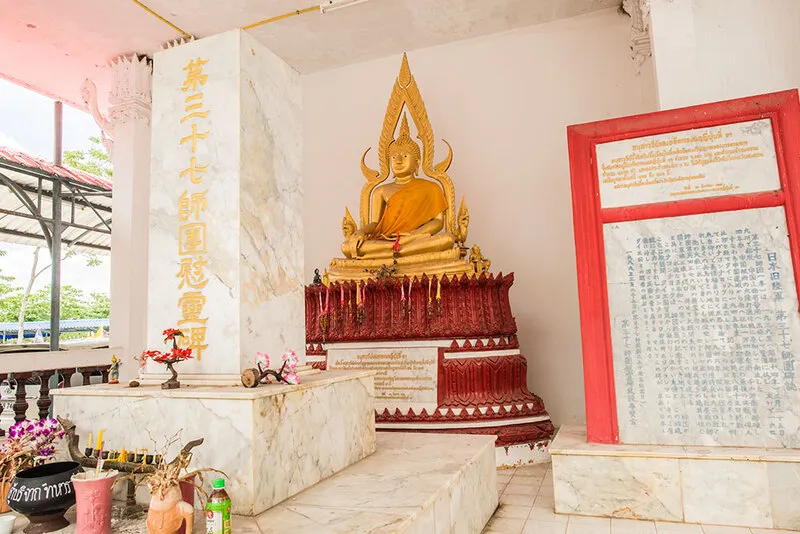
10. Memorial to the 37th Japanese Division at Wat Phramani is located within Wat Phramani at Moo 9 on the Sarika–Nang Rong Road in Ban Yai Subdistrict, Mueang Nakhon Nayok District. The site connects Nakhon Nayok with the history of World War II, while the temple itself is also well known for Luang Pho Pak Daeng, giving visitors both historical and religious reasons to stop here.
Highlights: The memorial to the 37th Japanese Division, World War II history, Luang Pho Pak Daeng, and a convenient location along the Sarika–Nang Rong route that makes it easy to stop before continuing to nearby waterfalls.
The memorial was established in remembrance of Japanese soldiers of the 37th Division who died during the Greater East Asia War period, and remains associated with the preservation of their remains and memory. The site therefore functions both as a place of remembrance and as a historical learning point.
The atmosphere around the memorial is relatively quiet and distinct from the busier worship area associated with Luang Pho Pak Daeng. Visitors should explore respectfully, especially around the sections connected with remembrance of those who died.
A visit to Wat Phramani can therefore combine Buddhist worship, prayer, and historical learning in one stop. The temple also lies on the route toward Sarika and Nang Rong waterfalls, so it can easily be added without requiring a major detour.
Open Days: Daily Opening Hours: 06:00 – 18:00
Getting There: The memorial is located inside Wat Phramani on the Sarika–Nang Rong Road, approximately around kilometer 5 of the main route. Travelers can use Wat Luang Pho Pak Daeng as a practical landmark. A private car is the most convenient way to visit.
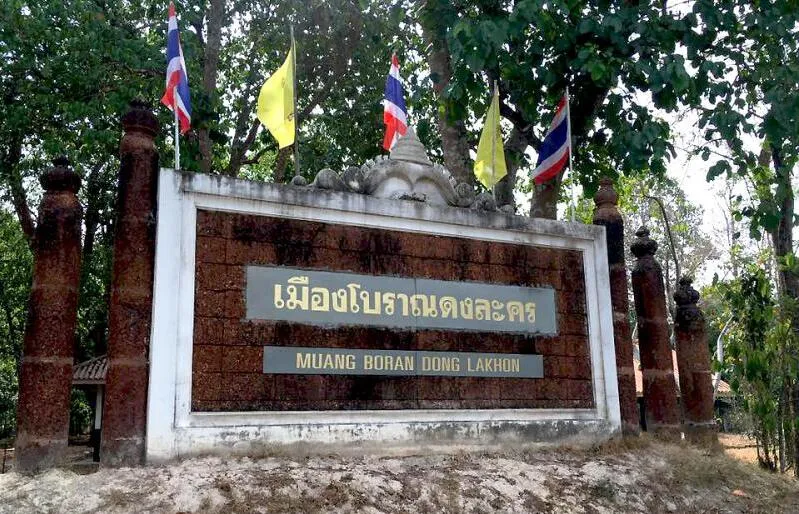
11. Dong Lakhon Ancient City is located in Dong Lakhon Subdistrict, Mueang Nakhon Nayok District. This important archaeological site reveals a historical side of the province that goes far beyond its familiar image of waterfalls and mountains. The ancient city preserves traces of moats, earthen embankments, and former settlement areas that provide evidence of an early community in Central Thailand.
Highlights: Ancient moats and earthen embankments, traces of a Dvaravati-period settlement, archaeological evidence, a peaceful atmosphere, and an educational historical route that contrasts with Nakhon Nayok’s better-known natural attractions.
Dong Lakhon Ancient City developed as a settlement enclosed by a system of moats and earthen walls, a form commonly associated with several Dvaravati-period communities in Central Thailand. These remains demonstrate that the Nakhon Nayok area supported established communities long before the Ayutthaya period.
Part of the appeal lies in exploring the actual landscape rather than simply viewing objects in a museum. Visitors should take time to observe the original boundaries, moat lines, and surrounding terrain to better understand how people in the past selected settlement locations and organized their communities.
The ancient city is particularly suitable for history and archaeology enthusiasts, students, and families looking to add an educational stop to their Nakhon Nayok itinerary. It can be combined with other attractions in the southern part of Mueang Nakhon Nayok District.
Open Days: Daily Opening Hours: 08:00 – 16:00
Getting There: Dong Lakhon Ancient City is located in Dong Lakhon Subdistrict, Mueang Nakhon Nayok District. From the provincial center, traveling by private car is the most practical option and makes it easy to connect the site with other attractions in the same area.
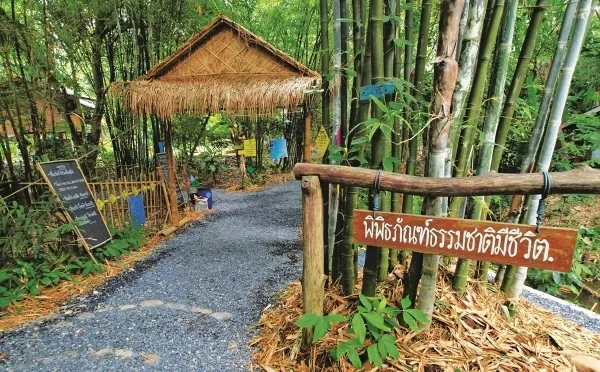
12. Bhumirak Dhamachart Centre is located at 98/1 Moo 2, Ban Tha Dan, Hin Tang Subdistrict, Mueang Nakhon Nayok District, near Khun Dan Prakan Chon Dam. The center presents royal development concepts through practical learning areas focused on soil, water, forests, agriculture, and the balanced use of natural resources.
Highlights: Learning about royal development principles, demonstration areas covering soil, water, forests and agriculture, educational exhibitions, and a convenient location near Khun Dan Prakan Chon Dam and Nang Rong Waterfall.
Bhumirak Dhamachart Centre is especially suitable for visitors who want to understand sustainable development through real examples. The site explains water management, soil restoration, forest conservation, agriculture, and self-sufficient ways of living in a way that makes these ideas easier to understand through direct observation.
The center is valuable for families, students, teachers, and visitors interested in agriculture or environmental management because it goes beyond sightseeing and helps explain how nature, resource management, and local livelihoods are connected.
Combining the center with Khun Dan Prakan Chon Dam creates a particularly useful route because the 2 places are close together but offer different perspectives: one demonstrates large-scale water management while the other focuses on practical resource management and sustainable living.
Open Days: Daily Opening Hours: 08:00 – 17:00
Getting There: The center is located at Ban Tha Dan in Hin Tang Subdistrict, close to Khun Dan Prakan Chon Dam. From central Nakhon Nayok, drive toward the Hin Tang and dam area before following local signs or GPS to the center.

13. Lan Rak Waterfall (Tat Hin Kong Waterfall) is located at Ban Non Bok, Moo 12, Sarika Subdistrict, Mueang Nakhon Nayok District. This natural waterfall has a quieter atmosphere than the province’s larger and more famous waterfalls and is suitable for travelers who want to enjoy streams, forest scenery, and a more relaxed natural setting.
Highlights: Broad rock surfaces and natural streams, shaded surroundings, riverside relaxation areas, and a convenient location in the Sarika zone that can be combined with Sarika Waterfall and Ganesha Park.
A distinctive feature of Lan Rak Waterfall is the way the stream flows across natural rock surfaces and gently sloping terrain rather than dropping from a very high cliff. Visitors can enjoy the stream, walk through the area, and relax without undertaking a long mountain climb.
Water levels depend strongly on seasonal rainfall. During wetter periods, the stream becomes more visible and surrounding vegetation turns greener, although visitors should also take extra care on slippery rocks and around changing water levels.
The site is suitable for couples, groups of friends, and travelers who prefer quieter natural attractions. It works particularly well as an additional stop within a Sarika-area itinerary rather than requiring a separate day.
Open Days: Daily Opening Hours: 07:00 – 17:30
Getting There: Lan Rak Waterfall is located at Ban Non Bok in Sarika Subdistrict. From central Nakhon Nayok, drive toward Sarika and continue along local roads using the GPS location. A private car is the most convenient option.
Map (GPS):Open Google Maps – Lan Rak Waterfall

14. Ka Ang Waterfall is located in Khao Phoem Subdistrict, Ban Na District. Although smaller than Nakhon Nayok’s major waterfalls, it has a distinctive landscape of broad rock surfaces and streams flowing gently across natural stone, making it suitable for travelers who want to explore a quieter part of the province outside the main Mueang Nakhon Nayok tourism route.
Highlights: Broad natural rock platforms, gently flowing water, a quiet atmosphere, forest and mountain surroundings in Ban Na District, and a natural setting with relatively limited development.
Ka Ang Waterfall differs from Sarika and Nang Rong waterfalls because its main appeal is not the height of the waterfall but the way water spreads across the broad rock surface. This creates a relaxed atmosphere suitable for sitting, resting, and enjoying the surrounding landscape.
The rainy season generally provides the clearest view of the waterfall because higher water levels spread across a wider section of rock. During the dry season, water flow can be significantly lower, so the overall experience varies according to natural conditions.
Facilities are more limited than at Nakhon Nayok’s major waterfalls. Visitors should therefore bring drinking water and essential supplies, and all rubbish should be taken away when leaving.
Open Days: Daily Opening Hours: 08:00 – 17:00
Getting There: From Ban Na District, travel toward Khao Phoem Subdistrict and follow the local road to the waterfall. The site is approximately 11 kilometers from the district center, and a private car is the most practical way to reach it.
Map (GPS):Open Google Maps – Ka Ang Waterfall

15. Sai Thong Reservoir is located at Ban Wang Ri in Khao Phra Subdistrict, Mueang Nakhon Nayok District. Surrounded by mountains and green landscapes, this reservoir is well suited to relaxation, sightseeing, and photography, especially for travelers looking for a peaceful natural stop close to town.
Highlights: Reservoir and mountain scenery, a peaceful atmosphere, open landscapes, attractive morning and evening light, and convenient access to Huai Prue Reservoir.
The appeal of Sai Thong Reservoir lies in the simplicity of its landscape. The broad water surface and mountain backdrop create scenic views without the need for extensive tourism infrastructure or organized activities.
Morning and the period before sunset are especially pleasant because temperatures are lower and the softer light adds depth to the mountains and water. Visitors can use the reservoir as a quiet stop before continuing to other places in the Khao Phra area.
Sai Thong Reservoir is suitable for couples, photographers, and travelers who enjoy slow scenic drives. It can be combined with Huai Prue Reservoir and other places around Khao Phra for a relaxed half-day nature itinerary.
Open Days: Daily Opening Hours: 08:00 – 16:00
Getting There: The reservoir is located at Ban Wang Ri in Khao Phra Subdistrict. From central Nakhon Nayok, drive toward the Khao Phra area and continue to the reservoir using GPS.
Map (GPS):Open Google Maps – Sai Thong Reservoir

16. Khlong Si Siet Reservoir is located in Nong Saeng Subdistrict, Pak Phli District. This water-development project lies in foothill terrain and plays an important role in agriculture, domestic water supply, and water security for surrounding communities.
Highlights: A reservoir surrounded by hills, a water-development project associated with royal development principles, a peaceful atmosphere, and a Pak Phli nature route that connects easily with Ancient Thai Phuan House and Wang Bon Reservoir.
The reservoir was developed as an earth dam suited to the local foothill landscape. Its importance therefore extends beyond scenic value to the practical role it plays in supporting agricultural land and nearby communities.
The surrounding area is quiet and natural, making it suitable for sightseeing, photography, or simply taking a break during a rural drive. It is particularly appealing to travelers who prefer places that receive fewer visitors than the province’s major attractions.
A Pak Phli itinerary can combine Khlong Si Siet Reservoir with Ancient Thai Phuan House and Wang Bon Reservoir, creating a full day that includes natural scenery, community culture, and rural landscapes.
Open Days: Daily Opening Hours: 08:00 – 17:00
Getting There: From central Nakhon Nayok, travel toward Pak Phli District and continue into Nong Saeng Subdistrict. A private car is the most convenient option for visiting several attractions in the area.

17. Khao Yai–Nakhon Nayok Jungle Trekking is a conservation-oriented forest trekking activity on the Nakhon Nayok side of the Khao Yai area, with an important starting point around Nang Rong Waterfall. It is suitable for travelers who want a deeper nature experience than simply stopping at roadside viewpoints or easily accessible waterfalls.
Highlights: Forest trekking through Khao Yai ecosystems, waterfall and stream routes, evergreen forest, mountain terrain, nature interpretation, and activities involving local guides and service providers.
The trekking experience allows participants to explore forests, streams, waterways, and mountain terrain at close range. Unlike conventional sightseeing, this type of route requires more time, physical effort, and proper preparation.
The experience also has an educational and conservation dimension. Participants can learn about the relationship between forests, watersheds, plants, wildlife, and local communities, while gaining a clearer understanding of why nature tourism must operate within conservation rules and limits.
This activity is best suited to hikers, adventure travelers, and visitors in good physical condition. Proper trekking footwear, drinking water, and suitable clothing are essential, and arrangements should be made with the responsible organization or guide before entering the route.
Open Days: December – June each year Opening Hours: Contact the responsible organization in advance before joining the activity
Getting There: A major starting point is around Nang Rong Waterfall in Mueang Nakhon Nayok District. Traveling by private car is the most convenient option, and route details, activities, and current access requirements should be confirmed in advance.

18. Ancient Thai Phuan House is located in Nong Saeng Subdistrict, Pak Phli District. This cultural learning site reflects the way of life and identity of Nakhon Nayok’s Thai Phuan community through traditional house forms, household objects, local knowledge, language, food, and cultural traditions passed down through generations.
Highlights: Traditional Thai Phuan houses, household objects, community lifestyle, local wisdom, ethnic culture, and a location that can be combined with Khlong Si Siet Reservoir in Pak Phli District.
The Thai Phuan community is one of the ethnic groups that has played an important role in the cultural identity of Pak Phli. Visiting the ancient house allows travelers to see details that are very different from Nakhon Nayok’s natural attractions, including traditional residential forms, tools used in everyday life, and long-established customs.
The site is suitable for travelers interested in community history, students, families, and visitors who want to understand the people of Nakhon Nayok more deeply. Exploring at a relaxed pace makes it easier to appreciate the details of the house and objects on display.
Ancient Thai Phuan House can be combined with Khlong Si Siet Reservoir and Wang Bon Reservoir to create a Pak Phli itinerary that balances culture and natural scenery within a single day.
Open Days: Daily Opening Hours: 08:00 – 17:00
Getting There: The site is located in Nong Saeng Subdistrict, Pak Phli District. From central Nakhon Nayok, drive toward Pak Phli and continue into the Nong Saeng area. A private car is the most convenient choice for visiting nearby community attractions.

19. Khlong 15 Flower and Ornamental Plant Village stretches along both sides of Khlong 15 Road in Khlong Yai and Bang Pla Kot subdistricts of Ongkharak District. It is one of Thailand’s major centers for cultivating and selling flowers and ornamental plants, and one of Nakhon Nayok’s best examples of agricultural tourism.
Highlights: Plant nurseries and shops lining the road, flowering plants, ornamental trees, large transplanted trees, bonsai, auspicious plants, pots, gardening equipment, and the atmosphere of an agricultural community that has developed into an important plant-trading center.
Khlong 15 is much more than a conventional plant market. Production takes place throughout the area, allowing visitors to see propagation plots, shops, nurseries, and working plant businesses along the same route.
The range of plants is extensive, from small varieties suitable for homes to large landscape trees. Visitors interested in gardening can also speak directly with growers and sellers about light, water, soil, and selecting appropriate species for different spaces.
Khlong 15 is suitable for plant enthusiasts, families, landscape professionals, and photographers. Visitors can spend several hours driving between nurseries, and the area is also a convenient stop for travelers heading between Bangkok and Nakhon Nayok via Ongkharak.
Open Days: Daily Opening Hours: 08:00 – 16:30
Getting There: From Bangkok, take Highway 305 along the Rangsit–Ongkharak–Nakhon Nayok route. At Khlong 15, turn onto the road running through the ornamental plant village. A private car is particularly convenient for visiting several nurseries and transporting purchased plants.

20. Grapefruit IPM Group (Ban Kaeng Sam Chan) is located at Ban Kaeng Sam Chan in Sarika Subdistrict. This community agricultural learning site reflects cooperation among grapefruit growers and the use of Integrated Pest Management, or IPM, to reduce dependence on chemical pesticides.
Highlights: Community grapefruit orchards, IPM farming methods, safe-agriculture learning, sustainable orchard management, and a Sarika-area location that can be combined with several nearby natural attractions.
Ban Kaeng Sam Chan reveals another side of Sarika that is often overlooked by visitors focused only on mountains and waterfalls. The area also supports productive agriculture, and local growers use orchard-management knowledge to improve fruit quality while reducing environmental impacts.
Integrated Pest Management combines several methods to control agricultural pests while reducing reliance on chemicals and maintaining greater ecological balance within orchards. A visit therefore offers more than an opportunity to see fruit cultivation; it also introduces a farming approach centered on safety and sustainability.
The site is suitable for agriculture enthusiasts, students, families, and travelers who want to add a community experience to a nature-based trip. It can be combined with Sarika Waterfall, Lan Rak Waterfall, and other attractions around Sarika.
Open Days: Daily Opening Hours: 09:00 – 17:00
Getting There: The group is based at Ban Kaeng Sam Chan in Sarika Subdistrict. From central Nakhon Nayok, travel by private car toward Sarika. Having a private vehicle also makes it easier to combine the visit with nearby natural attractions.

21. Emerald Buddha Replica (Wat Kiriwan) is located within Wat Kiriwan in Si Nawa Subdistrict, Mueang Nakhon Nayok District. This sacred site is popular with Buddhist travelers and visitors seeking a peaceful spiritual stop, with the replica of the Emerald Buddha serving as one of the temple’s principal objects of worship.
Highlights: A replica of the Emerald Buddha, religious structures within Wat Kiriwan, a peaceful atmosphere, worship areas, and convenient access to attractions around Si Nawa and Sarika.
Wat Kiriwan is an active Buddhist temple and an important religious destination for visitors traveling around Nakhon Nayok. The Emerald Buddha replica adds a distinctive focus to the temple and attracts travelers who come to pay respect and pray for good fortune.
Beyond the main Buddha image, the temple grounds are suitable for quiet walking and religious reflection. The atmosphere is particularly suitable for families, older visitors, and travelers who want a calm break between mountain and waterfall destinations.
When exploring the Sarika side of the province, Wat Kiriwan can be combined with Ganesha Park, Sarika Waterfall, or Khao Nang Buat Replica Buddha Footprint, creating an itinerary that balances nature and spiritual attractions.
Open Days: Daily Opening Hours: 08:00 – 17:00
Getting There: The temple is located in Si Nawa Subdistrict, Mueang Nakhon Nayok District. From central Nakhon Nayok, a private car provides convenient access to the Si Nawa area and onward connections toward Sarika.

22. Jitek Lim Buddhist Sanctuary is located at Ban Bang Hoi in Si Chula Subdistrict, Mueang Nakhon Nayok District. The sanctuary is distinctive for its Chinese-influenced religious architecture and atmosphere, offering a different experience from conventional Thai Buddhist temples.
Highlights: Chinese-style religious architecture, sacred figures, colorful decorative elements, and a quiet environment suitable for worship and photography.
The architectural form and decorative details are among the main reasons to visit. Jitek Lim Buddhist Sanctuary broadens Nakhon Nayok’s religious tourism landscape by introducing visitors to another visual and cultural tradition beyond Thai temple architecture.
The site is suitable for travelers interested in architecture, families, photographers, and visitors curious about the province’s religious diversity. Respectful clothing and behavior are appropriate throughout the grounds.
Jitek Lim Buddhist Sanctuary can be combined with other attractions in Mueang Nakhon Nayok District, particularly for travelers who want to add a cultural and spiritual element to an itinerary otherwise focused on nature.
Open Days: Daily Opening Hours: 08:00 – 16:00
Getting There: The sanctuary is located at Ban Bang Hoi in Si Chula Subdistrict, Mueang Nakhon Nayok District. Traveling by private car is the most convenient option from central Nakhon Nayok.

23. Khao Nang Buat Replica Buddha Footprint is located at Wat Khao Nang Buat in Ban Khao Nang Buat, Sarika Subdistrict, Mueang Nakhon Nayok District. The site combines Buddhist worship with a mountain environment, making it suitable for travelers interested in spiritual destinations and natural scenery at the same time.
Highlights: A replica Buddha footprint, religious structures on elevated terrain, worship areas, and a peaceful atmosphere combining Buddhist faith with nature.
Climbing to the worship area allows visitors to experience both the spiritual character of the site and the surrounding elevated landscape. The mountain setting gives the destination a quieter and more contemplative atmosphere.
The site is suitable for Buddhist travelers, photographers, and visitors interested in sacred places away from the busiest routes. Secure footwear and drinking water are recommended for anyone walking uphill.
Khao Nang Buat can be combined with Wat Kiriwan, Ganesha Park, and Sarika Waterfall to create a route that blends nature and religious tourism within the same area.
Open Days: Daily Opening Hours: 08:00 – 16:00
Getting There: The site is located at 57 Moo 5, Ban Khao Nang Buat, Sarika Subdistrict, Mueang Nakhon Nayok District. From central Nakhon Nayok, travel by private car toward Sarika and continue to Wat Khao Nang Buat.

24. Nakhon Nayok City Pillar Shrine is located on Si Mueang Soi in Ban Yai Subdistrict, Mueang Nakhon Nayok District. It is one of the province’s important sacred sites and is visited by local residents and travelers who come to pay respect and pray for good fortune.
Highlights: The city pillar, a sacred shrine associated with the province, a central location, and a convenient starting point for a spiritual itinerary around Nakhon Nayok.
The shrine functions as an important focus of local belief. Paying respect here is not simply a tourist activity but part of the spiritual traditions maintained by people in the community.
The site is relatively compact and does not require a long visit, making it easy to include before continuing to other attractions in Mueang Nakhon Nayok District or before heading toward the Sarika–Nang Rong route.
Visitors should dress respectfully and maintain a calm atmosphere, particularly during busy periods when many local worshippers may be present.
Open Days: Daily Opening Hours: 06:00 – 18:00
Getting There: The shrine is located at 368 Si Mueang Soi, Ban Yai Subdistrict, Mueang Nakhon Nayok District. It is within the town area and can be reached easily by private car or local transport.

25. Wat Pa Sri Thavorn Nimit is located at Ban Bung Khao in Nong Saeng Subdistrict, Pak Phli District. The forest temple has a quiet atmosphere and is suitable for visitors who want to combine merit-making, meditation, and peaceful natural surroundings.
Highlights: A tranquil forest-temple atmosphere, areas suitable for worship and meditation, a location in the Pak Phli zone, and convenient connections with Ancient Thai Phuan House and Khlong Si Siet Reservoir.
The temple has a calmer atmosphere than temples in the town center, making it particularly suitable for travelers who want a quiet break and a more contemplative religious environment.
Visitors should dress modestly, maintain silence where appropriate, and avoid disturbing areas that are actively being used for meditation or religious practice.
A Pak Phli itinerary can combine Wat Pa Sri Thavorn Nimit with Ancient Thai Phuan House, Khlong Si Siet Reservoir, and community museums, creating a route that includes nature, culture, and religion.
Open Days: Daily Opening Hours: 08:00 – 16:00
Getting There: The temple is located at Ban Bung Khao in Nong Saeng Subdistrict, Pak Phli District. Traveling by private car is the most convenient way to connect it with other attractions in the Pak Phli area.
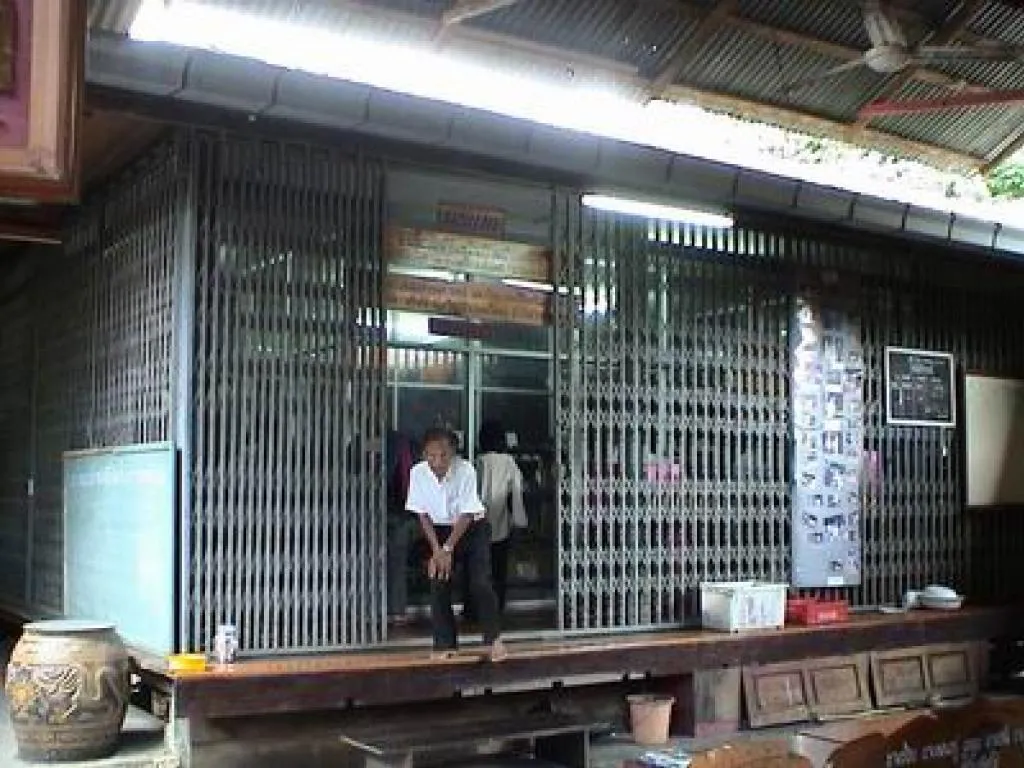
26. Ban Pak Phli Local Museum is located within Wat Pho Pak Phli at Moo 2, Pak Phli Subdistrict, Pak Phli District. The museum preserves stories, local lifestyles, and community knowledge from the Pak Phli area, making it suitable for travelers who want to understand Nakhon Nayok through the history of its people.
Highlights: Traditional household objects, community stories, local lifestyles, and opportunities to learn about the social history of Pak Phli District.
The museum adds an important cultural dimension to a province often associated primarily with natural attractions. Everyday objects, tools, and community narratives help visitors understand traditional occupations, daily routines, and the cultural character of local residents.
The museum is particularly suitable for students, families, cultural travelers, and visitors interested in community history. A visit can be combined with Wat Pho Pak Phli and other places around the district.
Ban Pak Phli Local Museum can also be linked with the Thai Phuan Folk Museum at Wat Fang Khlong and Ancient Thai Phuan House to create a more complete cultural itinerary through Pak Phli.
Getting There: The museum is located inside Wat Pho Pak Phli, Moo 2, Pak Phli Subdistrict, Pak Phli District. A private car is the most convenient option, and visitors should confirm access with the local site before traveling.
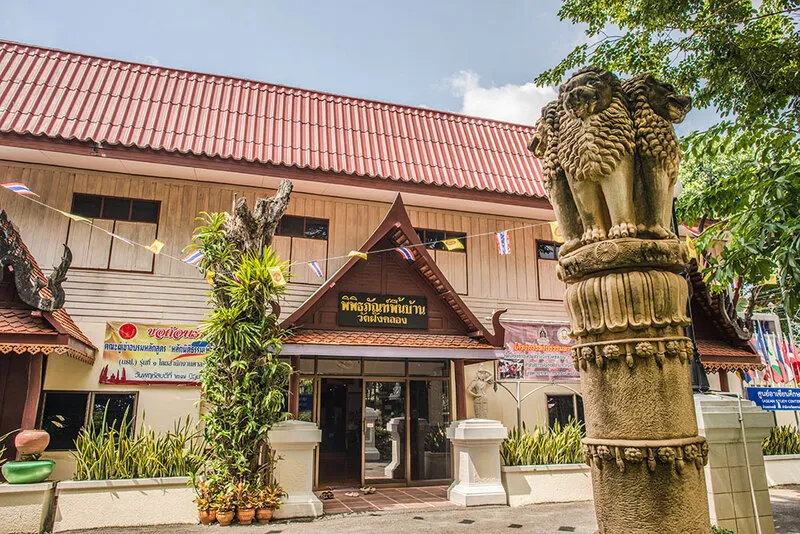
27. Thai Phuan Folk Museum at Wat Fang Khlong is located within Wat Fang Khlong, Moo 4, Ko Wai Subdistrict, Pak Phli District. The museum presents the identity of the local Thai Phuan community through household objects, textiles, traditional clothing, and stories associated with community life.
Highlights: Thai Phuan culture, traditional household items, textiles and clothing, settlement history, and community knowledge from Pak Phli District.
The Thai Phuan community has played an important role in the cultural character of Pak Phli. The museum helps explain the roots of this community through objects and stories directly connected with everyday life.
Visitors interested in culture can learn about clothing, handicrafts, occupational tools, family traditions, and community customs, offering a deeper view of Nakhon Nayok beyond its natural scenery.
The museum is especially suitable for combining with Ancient Thai Phuan House and Ban Pak Phli Local Museum, creating a continuous cultural route within the same district.
Getting There: The museum is located inside Wat Fang Khlong, Moo 4, Ko Wai Subdistrict, Pak Phli District. Traveling by private car is the most convenient option, and visitors should confirm current access with the local site before traveling.

28. Chao Pho Ongkharak Shrine is located at Ban Khlong San Chao in Sai Mun Subdistrict, Ongkharak District. The shrine is an important sacred place for the local community and reflects long-standing beliefs and traditions in the Ongkharak area.
Highlights: A locally revered shrine, community faith, a traditional neighborhood atmosphere, and a location that can be combined easily with Khlong 15 Flower and Ornamental Plant Village.
Chao Pho Ongkharak Shrine serves as a spiritual center for local residents. Travelers interested in local culture can stop to pay respect and observe how sacred places remain connected with everyday community life.
The shrine does not require a long visit, making it a practical stop during an Ongkharak itinerary, particularly for travelers already planning to visit Khlong 15 Flower and Ornamental Plant Village.
Visitors should dress respectfully and follow local customs when paying respect at the shrine.
Open Days: Daily Opening Hours: 08:00 – 17:00
Getting There: The shrine is located at Moo 7, Ban Khlong San Chao, Chao Pho Ongkharak Road, Sai Mun Subdistrict, Ongkharak District. It is conveniently reached by private car from the Rangsit–Nakhon Nayok route.

29. Sacred Well is associated with local belief and spiritual traditions in Nakhon Nayok. It is particularly relevant to travelers interested in places where natural water sources carry cultural, ritual, and symbolic meaning.
Highlights: A water source associated with local belief, cultural traditions, and a quiet atmosphere suitable for respectful worship and reflection.
Sites such as this demonstrate that water can have meaning beyond everyday practical use. Certain natural water sources become connected with rituals, good fortune, and collective memory within a community.
Visitors should respect the atmosphere and local customs of the site and avoid using or touching the water in ways that conflict with established practices.
The Sacred Well can be included as a short cultural stop within a town-based itinerary before continuing to the City Pillar Shrine or other religious sites.
Open Days: Daily Opening Hours: 08:00 – 17:00
Getting There: The site is within Nakhon Nayok Province and is most easily reached by private car using the GPS location as the primary navigation reference.
Map (GPS):Open Google Maps – Sacred Well
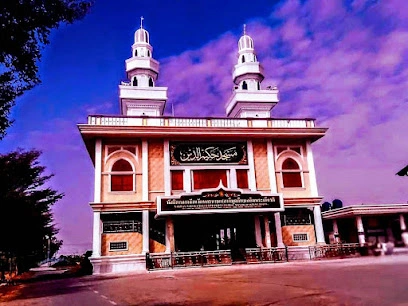
30. Nakhon Nayok Mosque is located at Moo 1 in Chumphon Subdistrict, Ongkharak District. It is an important religious center for the Muslim community in Nakhon Nayok and represents the cultural and religious diversity found within the province.
Highlights: Mosque architecture, an important center of Islamic religious life, prayer areas, and a clear example of cultural diversity in Ongkharak District.
The mosque plays an important role in the Muslim community as a place for prayer, gathering, and community activities. Visitors should therefore approach the site with respect for both the building and those taking part in religious observances.
Travelers interested in architecture or cultural diversity can observe areas open to general visitors while dressing modestly and avoiding disruption during prayer times unless participating appropriately.
Nakhon Nayok Mosque can be combined with Khlong 15 Flower and Ornamental Plant Village and Chao Pho Ongkharak Shrine to create an Ongkharak route that includes agriculture, local communities, and religious diversity.
Open Days: Daily Opening Hours: 08:00 – 17:00
Getting There: The mosque is located at Moo 1 in Chumphon Subdistrict, Ongkharak District. From Bangkok, travelers can use the Rangsit–Ongkharak–Nakhon Nayok route and continue into Chumphon Subdistrict.
Map (GPS):Open Google Maps – Nakhon Nayok Mosque
| Category | Details |
| Hin Tang – Khun Dan Dam Zone | 1. Khun Dan Prakan Chon Dam 2. Nang Rong Waterfall 3. Wang Takhrai Waterfall 4. Bhumirak Dhamachart Centre Best for travelers who want a full day of nature, combining a dam, waterfalls, streams, recreation areas, and environmental learning. |
| Sarika Zone | 1. Sarika Waterfall 2. Ganesha Park 3. Lan Rak Waterfall (Tat Hin Kong Waterfall) 4. Grapefruit IPM Group (Ban Kaeng Sam Chan) 5. Khao Nang Buat Replica Buddha Footprint Suitable for itineraries combining nature, spirituality, community agriculture, and mountain scenery within the same area. |
| Khao Phra – Phrommani Zone | 1. Huai Prue Reservoir 2. Sai Thong Reservoir 3. Chulachomklao Royal Military Academy Best for reservoir views, mountain scenery, military history, viewpoints, and relaxed scenic drives. |
| Khao Yai – Nakhon Nayok Zone | 1. Haew Narok Waterfall 2. Khao Yai–Nakhon Nayok Jungle Trekking Best for nature lovers, hikers, wildlife and ecosystem enthusiasts, and travelers looking for a more immersive forest experience. |
| Pak Phli Zone | 1. Wang Bon Reservoir 2. Khlong Si Siet Reservoir 3. Ancient Thai Phuan House 4. Wat Pa Sri Thavorn Nimit 5. Ban Pak Phli Local Museum 6. Thai Phuan Folk Museum at Wat Fang Khlong Ideal for slow travel focused on nature, Thai Phuan culture, community heritage, reservoirs, and rural landscapes. |
| Ban Na Zone | 1. Ka Ang Waterfall Suitable for travelers seeking a quieter waterfall experience away from the province’s busiest tourism routes. |
| Ongkharak Zone | 1. Khlong 15 Flower and Ornamental Plant Village 2. Chao Pho Ongkharak Shrine 3. Nakhon Nayok Mosque Suitable for agricultural tourism, local community experiences, spiritual sites, and learning about the district’s religious diversity. |
| Town and Historical Attractions | 1. Dong Lakhon Ancient City 2. Nakhon Nayok City Pillar Shrine 3. Memorial to the 37th Japanese Division at Wat Phramani 4. Sacred Well Best for visitors interested in archaeology, history, local belief, and historical stories beyond the province’s natural attractions. |
| Religion and Sacred Sites | 1. Ganesha Park 2. Emerald Buddha Replica (Wat Kiriwan) 3. Jitek Lim Buddhist Sanctuary 4. Khao Nang Buat Replica Buddha Footprint 5. Nakhon Nayok City Pillar Shrine 6. Wat Pa Sri Thavorn Nimit 7. Chao Pho Ongkharak Shrine 8. Sacred Well 9. Nakhon Nayok Mosque |
| Best for Families and Children | Khun Dan Prakan Chon Dam, Nang Rong Waterfall, Wang Takhrai Waterfall, Bhumirak Dhamachart Centre, Ganesha Park, Khlong 15 Flower and Ornamental Plant Village, and Huai Prue Reservoir. |
| Best for Nature Lovers | Sarika Waterfall, Nang Rong Waterfall, Wang Takhrai Waterfall, Haew Narok Waterfall, Lan Rak Waterfall, Ka Ang Waterfall, Khao Yai–Nakhon Nayok Jungle Trekking, Wang Bon Reservoir, Huai Prue Reservoir, Sai Thong Reservoir, and Khlong Si Siet Reservoir. |
| Best for History Lovers | Dong Lakhon Ancient City, Memorial to the 37th Japanese Division at Wat Phramani, Chulachomklao Royal Military Academy, Ban Pak Phli Local Museum, and Thai Phuan Folk Museum at Wat Fang Khlong. |
| Best for Culture and Community Tourism | Ancient Thai Phuan House, Thai Phuan Folk Museum at Wat Fang Khlong, Ban Pak Phli Local Museum, Grapefruit IPM Group (Ban Kaeng Sam Chan), and Khlong 15 Flower and Ornamental Plant Village. |
| Best for Photography | Khun Dan Prakan Chon Dam, Sarika Waterfall, Wang Bon Reservoir, Huai Prue Reservoir, Sai Thong Reservoir, Ka Ang Waterfall, Ganesha Park, and Khlong 15 Flower and Ornamental Plant Village. |
| Best for Adventure | Khao Yai–Nakhon Nayok Jungle Trekking, Haew Narok Waterfall, Chulachomklao Royal Military Academy, and seasonal rafting or kayaking activities around the Nakhon Nayok River and Sarika–Nang Rong area, depending on water levels and current operator availability. |
| Local Food and Souvenirs | Local Nakhon Nayok cuisine commonly features fish, local vegetables, Central Thai flavors, seasonal fruit, grapefruit, agricultural products, Thai desserts, and community-made goods. Restaurants and souvenir shops are widely available around the Sarika–Nang Rong route and central Nakhon Nayok. |
| Important Culture and Traditions | Religious events associated with Luang Pho Pak Daeng, Songkran, Loy Krathong, Kathin ceremonies, temple merit-making festivals, Thai Phuan community traditions, and religious activities within both Buddhist and Muslim communities. |
| Recommended Accommodation Areas | Mueang Nakhon Nayok District: Best for first-time visitors who want easy access to waterfalls, dams, restaurants, and cafes. Sarika – Hin Tang: Best for travelers focusing on waterfalls, Khun Dan Prakan Chon Dam, outdoor activities, and nature-based accommodation. Pak Phli: Best for quiet trips centered on reservoirs and local culture. Ongkharak: Convenient for travelers arriving from Bangkok who want to visit Khlong 15 or stop before continuing toward central Nakhon Nayok. |
| 1-Day Itinerary — Popular Nature Route | Morning: Khun Dan Prakan Chon Dam Late Morning: Bhumirak Dhamachart Centre Lunch: Eat around the Hin Tang area Afternoon: Nang Rong Waterfall or Wang Takhrai Waterfall Evening: Stop at Ganesha Park before returning |
| 1-Day Itinerary — Sarika and Spiritual Route | Morning: Ganesha Park Late Morning: Emerald Buddha Replica at Wat Kiriwan Midday–Afternoon: Sarika Waterfall Late Afternoon: Lan Rak Waterfall or Khao Nang Buat Replica Buddha Footprint Evening: Return to central Nakhon Nayok |
| 1-Day Itinerary — Pak Phli and Community Route | Morning: Ancient Thai Phuan House Late Morning: Thai Phuan Folk Museum at Wat Fang Khlong Lunch: Eat in Pak Phli District Afternoon: Khlong Si Siet Reservoir Evening: Wang Bon Reservoir |
| 2 Days 1 Night in Nakhon Nayok | Day 1: Khun Dan Prakan Chon Dam – Bhumirak Dhamachart Centre – Nang Rong Waterfall – Wang Takhrai Waterfall Day 2: Ganesha Park – Sarika Waterfall – Emerald Buddha Replica at Wat Kiriwan – Nakhon Nayok City Pillar Shrine |
| 3 Days 2 Nights in Nakhon Nayok | Day 1: Khun Dan Prakan Chon Dam – Bhumirak Dhamachart Centre – Nang Rong Waterfall – Wang Takhrai Waterfall Day 2: Sarika Waterfall – Ganesha Park – Lan Rak Waterfall – Grapefruit IPM Group Day 3: Ancient Thai Phuan House – Thai Phuan Folk Museum at Wat Fang Khlong – Khlong Si Siet Reservoir – Wang Bon Reservoir |
| 4 Days 3 Nights in Nakhon Nayok | Day 1: Khun Dan Prakan Chon Dam – Hin Tang Zone Day 2: Sarika – Waterfalls – Spiritual Attractions Day 3: Chulachomklao Royal Military Academy – Huai Prue Reservoir – Sai Thong Reservoir – Dong Lakhon Ancient City Day 4: Ancient Thai Phuan House – Pak Phli Community Museums – Khlong Si Siet Reservoir – Wang Bon Reservoir |
| 5 Days 4 Nights in Nakhon Nayok | Day 1: Khun Dan Prakan Chon Dam – Bhumirak Dhamachart Centre – Nang Rong Waterfall Day 2: Sarika Waterfall – Wang Takhrai Waterfall – Ganesha Park – Lan Rak Waterfall Day 3: Chulachomklao Royal Military Academy – Huai Prue Reservoir – Sai Thong Reservoir – Dong Lakhon Ancient City Day 4: Pak Phli – Ancient Thai Phuan House – Thai Phuan Folk Museum – Khlong Si Siet Reservoir – Wang Bon Reservoir Day 5: Khlong 15 Flower and Ornamental Plant Village – Chao Pho Ongkharak Shrine – Nakhon Nayok Mosque before returning to Bangkok |
| Best Way to Get Around | A private car is the most convenient option because many attractions are spread across different subdistricts and districts, especially waterfalls, reservoirs, and community sites. From Bangkok, Highway 305 along the Rangsit–Nakhon Nayok route is one of the main approaches into the province. |
| Best Time to Visit | Nakhon Nayok can be visited throughout the year. The rainy season through early winter is generally best for waterfalls and lush landscapes, while the cooler months are particularly comfortable for outdoor activities, reservoir sightseeing, and multi-stop day trips. |
| Safety Notes | During rainy weather, check current warnings for flash floods and changing water levels before entering waterfall areas. Wear footwear suitable for wet and slippery surfaces, avoid swimming in restricted zones, and always follow instructions from local staff at waterfalls, dams, and national park areas. |
| Responsible Travel | Do not leave rubbish in natural areas, feed wildlife, remove plants, or collect natural objects from conservation zones. Respect local communities and religious sites, and support local businesses and community products whenever possible. |
Frequently Asked Questions (FAQ)
Q: What are the must-visit attractions in Nakhon Nayok?
A: First-time visitors should begin with Khun Dan Prakan Chon Dam, Sarika Waterfall, Nang Rong Waterfall, Wang Takhrai Waterfall, and Ganesha Park. With more time, add Chulachomklao Royal Military Academy, Haew Narok Waterfall, Wang Bon Reservoir, and Dong Lakhon Ancient City.
Q: How many days should I spend in Nakhon Nayok?
A: One day is enough for a quick trip covering major landmarks, but 2 days and 1 night is more comfortable for exploring the dam, waterfalls, and temples. A 3–5 day trip is better for travelers who also want to visit Pak Phli, Ban Na, Ongkharak, and community attractions outside the main tourism zone.
Q: What is the best 1-day itinerary in Nakhon Nayok?
A: A practical route is Khun Dan Prakan Chon Dam, Bhumirak Dhamachart Centre, Nang Rong Waterfall, and Wang Takhrai Waterfall. If time allows, stop at Ganesha Park before returning. These attractions are geographically convenient and reduce unnecessary backtracking.
Q: What is the best time of year to visit Nakhon Nayok?
A: The rainy season through early winter is particularly suitable for waterfalls and green landscapes because water levels are generally higher and forests are more lush. The cooler months toward the end of the year are also comfortable for outdoor activities and reservoir sightseeing.
Q: Which waterfalls should I visit in Nakhon Nayok?
A: Major choices include Sarika Waterfall, Nang Rong Waterfall, Wang Takhrai Waterfall, Haew Narok Waterfall, Lan Rak Waterfall, and Ka Ang Waterfall. Each offers a different experience, ranging from family-friendly streams and recreation areas to large waterfalls within forest landscapes.
Q: Which Nakhon Nayok attractions are best for families with children?
A: Khun Dan Prakan Chon Dam, Nang Rong Waterfall, Wang Takhrai Waterfall, Bhumirak Dhamachart Centre, Ganesha Park, Khlong 15 Flower and Ornamental Plant Village, and Huai Prue Reservoir are good choices for families because they are relatively accessible and provide activities suitable for different age groups.
Q: Where should I go for spiritual or religious tourism in Nakhon Nayok?
A: Popular spiritual destinations include Ganesha Park, Emerald Buddha Replica at Wat Kiriwan, Khao Nang Buat Replica Buddha Footprint, Nakhon Nayok City Pillar Shrine, Wat Pa Sri Thavorn Nimit, Chao Pho Ongkharak Shrine, and other religious sites throughout the province.
Q: Does Nakhon Nayok have historical attractions?
A: Yes. Dong Lakhon Ancient City is an important archaeological site, while the Memorial to the 37th Japanese Division at Wat Phramani is connected with World War II. Chulachomklao Royal Military Academy also contains sites associated with military history.
Q: Where can I experience local culture in Nakhon Nayok?
A: Pak Phli District is particularly suitable for cultural travel. Important places include Ancient Thai Phuan House, Thai Phuan Folk Museum at Wat Fang Khlong, and Ban Pak Phli Local Museum. Khlong 15 Flower and Ornamental Plant Village in Ongkharak also reflects the province’s agricultural community life.
Q: What are the best places in Nakhon Nayok for photography?
A: Khun Dan Prakan Chon Dam, Huai Prue Reservoir, Sai Thong Reservoir, Wang Bon Reservoir, Sarika Waterfall, Ganesha Park, Ka Ang Waterfall, and Khlong 15 Flower and Ornamental Plant Village all provide strong landscape, nature, or architectural photography opportunities.
Q: Can I travel around Nakhon Nayok without a private car?
A: It is possible to reach Nakhon Nayok by public transport, but visiting several attractions in one day is less convenient without a private vehicle because many waterfalls, reservoirs, and community sites are spread across different areas. Hiring a local vehicle for the day or renting a car is more practical for a multi-stop itinerary.
Q: What should I be careful about when visiting Nakhon Nayok during the rainy season?
A: Check current weather forecasts and flash-flood warnings before visiting waterfalls. Avoid entering the water when currents are strong, wear shoes with good grip, and follow all instructions from local staff and park authorities.
Q: What adventure activities are available in Nakhon Nayok?
A: Outdoor options include Khao Yai–Nakhon Nayok Jungle Trekking, rafting, kayaking, cycling, and other seasonal activities. Availability depends on water levels, weather, and local operators, so current conditions should be checked before travel.
Q: What souvenirs should I buy in Nakhon Nayok?
A: Popular choices include seasonal fruit, grapefruit, agricultural products, processed fruit, Thai desserts, community products, and plants or gardening supplies from Khlong 15 Flower and Ornamental Plant Village.
Q: Where should I stay if I want to visit the dam and waterfalls?
A: The Sarika–Hin Tang area is the most convenient base for travelers focusing on Khun Dan Prakan Chon Dam, Nang Rong Waterfall, Wang Takhrai Waterfall, and Sarika Waterfall because it reduces travel time between the province’s major natural attractions.
 Category: ●Travel Articles, Recipes
 Group: ●Travel Review, Food Review
Last Update : 3 WeekAgo
 Last Update : 3 WeekAgo
Recommend

 Art, Culture and Heritage
 Historical Sites and Monuments(1)
 Landmarks and Memorials(2)
 Art, Craft Centres, Tradition(2)
 Museums(3)
 Educational Places
 Educational Gardens, Farm(1)
 Places of Worship
 Temple(24)
 Church(1)
 Mosque(2)
 Other Sacred Sites(10)
 Suburban Living
 Village, Community(3)
 Local Market(1)
 Nature and Wildlife
 Dam, Reservoir, Lake(7)
 Waterfalls(9)
 Other natural attractions(1)
 Entertainment and Agricultural
 Farms, Parks and Ecotourism(5)
 Waterpark(1)
 Outdoor and Adventure Activities(1)
Travel Review, Food Review(1)


