
lovethailand home >North Travel Attractions >Chiang Rai Travel Attractions >Muang Chiang Rai >Ban Du > Musoe Doi Pu Khai
TL;DR: Musoe Doi Pu Khai is located at Ban Hua Fai, Village No. 13, Ban Du Subdistrict, Mueang Chiang Rai District, Chiang Rai, open Daily, hours 08:00 - 17:00.
Musoe Doi Pu Khai
Open Days: Daily
Opening Hours: 08:00 - 17:00
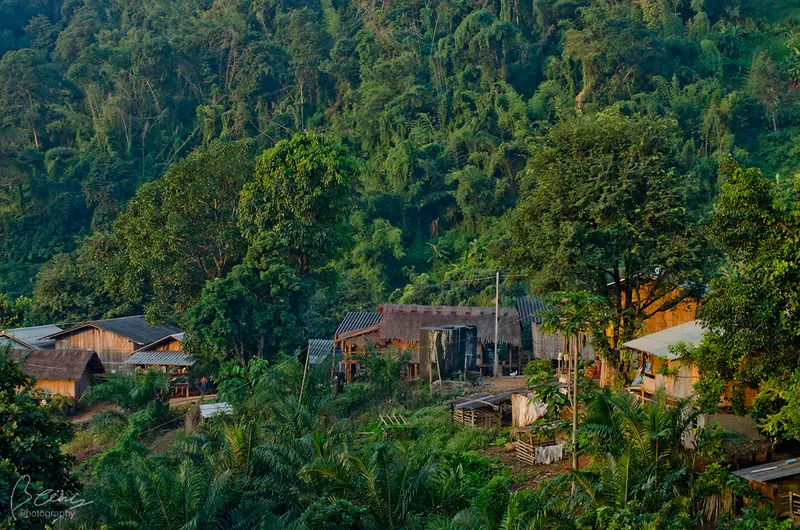
Musoe Doi Pu Khai, also widely known today as Doi Pu Khai, is a community-based cultural destination in Ban Du, Mueang Chiang Rai District. What makes this place special is not only its mountain scenery and peaceful atmosphere, but also the fact that it remains closely tied to the life of an ethnic hill community. Visitors do not come here only for a viewpoint. They come for a living village, local stories, cultural identity, and a slower side of Chiang Rai that still feels grounded and real.
The village sits on elevated ground not far from Chiang Rai city, yet the mood changes noticeably once you head up the hill. The air feels lighter, the landscape opens out, and the pace becomes calmer. This is why Doi Pu Khai appeals to travelers who want something more intimate than the province’s better-known mainstream attractions. It offers mountain atmosphere without requiring a long journey deep into remote terrain, and that balance is one of its strongest advantages.
According to local oral history, the community traces its roots to migration from mountain areas in present-day Myanmar. Elders say that the settlers first came into the region and established themselves in the area before the village identity gradually became clearer over time. The name “Pu Khai” is linked to an early village leader named Mon Pu Khai, while a nearby settlement was associated with another leader and known as Mon Pu Saeng. These naming traditions reflect how closely geography and leadership were tied together in the community’s memory.
In 1982, during the period of village administration under Kamnan Tip Phinit, the two settlements were brought together and the village became known as Musoe Doi Pu Khai. That step gave the place a clearer shared identity and laid the groundwork for what it has become today: a village that still functions as a real community while gradually developing into a cultural tourism destination.
One of the most interesting aspects of Doi Pu Khai is that tourism did not erase the local way of life. Instead, the village seems to have adapted slowly. Infrastructure improved over time, with better access roads, electricity, and some changes to housing and facilities, but the atmosphere remained recognizably that of a hill community. This makes the destination especially appealing to visitors who prefer places with a genuine sense of locality rather than highly commercialized attractions.
In present-day local usage, the community is often described as Lahu, while the older and more familiar term Musoe is still commonly used by the public. For many travelers, both names appear in references to the village, so understanding that connection helps avoid confusion. In practical terms, Doi Pu Khai is a Lahu hill community in the Ban Du area that continues to preserve cultural traditions while also welcoming visitors.
That living culture can still be seen in community events and local traditions. The area remains associated with Khor Ja Ve, also known as the Kin Wor celebration, the New Year festival of the Lahu people. This matters because it shows that Doi Pu Khai is not a staged cultural site. It is a village where traditional identity is still active, and where community life continues on its own rhythm.
Tourism in Doi Pu Khai appears to have grown gradually. In the early phase, visitors came through personal connections, informal stays, and community support. Over time, the idea of staying overnight became more organized, and local accommodation developed into a more recognizable community-based homestay model. This evolution fits the character of the place. The destination does not feel built around mass tourism. It feels like a village that opened itself little by little to travelers who appreciate nature, community life, and cultural depth.
Another layer of the experience is local handicraft. Community-made products such as necklaces, bracelets, woven items, and other handmade goods add an important dimension to the visit. These are not just souvenirs. They represent village skill, household income, and continuity of local knowledge. Buying from the community turns the trip into something more meaningful than sightseeing alone.
Doi Pu Khai also benefits from its proximity to Pong Phra Bat Waterfall, one of the nearby natural attractions associated with the Ban Du side of Chiang Rai. Local storytelling in the area also includes references to ancient rock traces found near the ridge above the waterfall, which have become part of the broader sense of mystery and folklore surrounding the landscape. Even for travelers who are mainly interested in scenery, this gives the area a richer narrative texture.
For practical travel, Doi Pu Khai works well as either a short cultural stop or a slower half-day trip. Some visitors come for the hill atmosphere, café stops, and photographs. Others are more interested in the community itself, the village history, and the chance to stay overnight in or near the area. Because the destination is still close to the city, it can also be combined easily with other attractions around Ban Du and northern Chiang Rai.
What makes the place memorable is the contrast between accessibility and atmosphere. It is near enough to Chiang Rai to visit without difficulty, but once you arrive, it does not feel urban at all. The village setting, mountain air, and cultural surroundings create a sense of distance from the city even though the drive is relatively manageable. That quality makes it attractive for travelers who want a quiet experience without spending hours on the road.
Visitors should remember that this is a living community rather than an open-air display. Respectful behavior matters. Dressing appropriately, keeping noise low, and asking before photographing people or private areas helps preserve the relationship between tourism and the village. This kind of courtesy also makes the visit more rewarding, because the experience becomes one of genuine contact rather than surface-level observation.
Getting There is fairly straightforward from Chiang Rai city or the area around Mae Fah Luang Chiang Rai Airport. Head toward Ban Du and continue in the direction of Pong Phra Bat and the Chiang Rai Rajabhat University side before ascending toward Ban Hua Fai, Village No. 13. Private transport is the most convenient option because it allows flexibility for hill access and for combining the trip with nearby attractions. Travelers planning to stay overnight should contact the accommodation in advance and arrange their trip around the best arrival time.
In summary, Musoe Doi Pu Khai is one of those Chiang Rai destinations that offers much more than a scenic stop. It combines ethnic community history, mountain atmosphere, local craft, ongoing cultural identity, and easy access from the city. For travelers who want to see a quieter and more human side of Chiang Rai, this village is one of the most worthwhile places to consider.
| Name | Musoe Doi Pu Khai |
| Location | Ban Hua Fai, Village No. 13, Ban Du Subdistrict, Mueang Chiang Rai District, Chiang Rai |
| Address | Village No. 13, Ban Hua Fai, Ban Du, Mueang Chiang Rai, Chiang Rai 57100 |
| Highlights | Lahu or Musoe hill community, scenic elevated village atmosphere, cultural tourism, community-based stays, ethnic handicrafts |
| History | Local oral history connects the village to migration from mountain areas in Myanmar, and the merged settlement became known as Musoe Doi Pu Khai in 1982 |
| Name Origin | Named after an early local leader, Mon Pu Khai, while a nearby area was associated with another leader called Pu Saeng |
| Distinctive Features | Hill village environment, local ethnic culture, scenic mountain setting, quiet atmosphere, and routes connecting to nearby natural attractions |
| Travel Information | Travel from Chiang Rai city toward Ban Du, using the route associated with Pong Phra Bat and the Chiang Rai Rajabhat University side, then continue uphill to Ban Hua Fai, Village No. 13. Private transport is the most convenient option |
| Current Status | Active as a cultural community destination, with ongoing traditional activities and continued infrastructure improvement for access to the viewpoint area |
| Open Days | Daily |
| Opening Hours | 08:00 - 17:00 |
| Facilities | Community accommodation in some areas, restrooms, village access road, viewpoint areas, handicraft-related community spaces |
| Main Areas / Zones | Ban Hua Fai Village No. 13, Doi Pu Khai viewpoint zone, nearby Pong Phra Bat side, community stay and handicraft areas |
| Main Contact Number | Phu Kham Fah Community Homestay Enterprise 081-880-2166, Doi Pu Khai handicraft community 064-963-5919 |
| Official Website / Official Page | Ban Du Subdistrict Municipality, Phu Kham Fah Community Homestay Enterprise |
| Nearby Tourist Attractions | 1) Pong Phra Bat Waterfall 5 km 2) Baan Dam Museum 8 km 3) Chiang Rai Rajabhat University 9 km 4) Wat Huay Pla Kang 16 km 5) Wat Rong Suea Ten 18 km |
| Nearby Restaurants | 1) Idrin Cafe 1 km Tel. 095-597-8384 2) Mittraphap Cafe & Restaurant 7 km Tel. 084-194-2935, 094-324-6562 3) RIBS&CO Bandu 8 km Tel. 052-059-956 4) Krua Ros Prod Ban Du 7 km Tel. 083-871-4525, 081-118-6863 5) 9001 Cafe & Bar 8 km Tel. 098-408-8716, 081-502-6649 |
| Nearby Accommodations | 1) Baan Phu Kham Fah Doi Pu Khai 1 km Tel. 062-452-2499 2) Bandu Resort 8 km Tel. 053-175-333 3) SC Palace Hotel 9 km Tel. 084-488-6577 4) B2 Chiang Rai Airport Boutique & Budget Hotel 10 km Tel. 052-009-161, 088-263-2897 5) Kokotel Chiang Rai Airport Suites 10 km Tel. 082-291-8858 |
Frequently Asked Questions (FAQ)
Q: Where is Musoe Doi Pu Khai located?
A: It is located at Ban Hua Fai, Village No. 13, in Ban Du Subdistrict, Mueang Chiang Rai District, Chiang Rai.
Q: What kind of community is Doi Pu Khai?
A: It is known as a Lahu hill community, also commonly referred to by many people as Musoe.
Q: What makes this place worth visiting?
A: It offers mountain scenery, a living ethnic community, local handicrafts, cultural depth, and a quieter side of Chiang Rai close to the city.
Q: Can visitors stay overnight in the area?
A: Yes. There are community-based stays and homestay-style accommodation in or near the Doi Pu Khai area, along with other lodging options in Ban Du.
Q: When is the best time to visit?
A: Morning and late afternoon are especially pleasant because the air is cooler and the hill atmosphere feels at its best.
Q: Does the community still have traditional festivals?
A: Yes. The area remains associated with Khor Ja Ve or Kin Wor, the Lahu New Year celebration, which reflects the village’s ongoing cultural life.
Tel : 053703653
 Tel : 053703653
 Category: ●Suburban Living
 Group: ●Village, Community
Last Update : 7 MonthAgo
 Last Update : 7 MonthAgo
 Click to Access the Navigation Map GPS
Musoe Doi Pu Khai Map
Recommend

 Art, Culture and Heritage
 Historical Sites and Monuments(3)
 Landmarks and Memorials(7)
 Art, Craft Centres, Tradition(6)
 Museums(8)
 Historic Homes and Cities(1)
 Educational Places
 Museum for Study(1)
 Library(1)
 Educational Gardens, Farm(3)
 Places of Worship
 Temple(38)
 Other Sacred Sites(5)
 Research and Development
 Royal Project(9)
Village, Community(16)
Royal Project(9)
Village, Community(16)
 Local Market(5)
 Nature and Wildlife
 National Parks and Marine Reserves(20)
 Mountain (Doi)(20)
 Dam, Reservoir, Lake(8)
 Waterfalls(16)
 Hot Springs(6)
 Caves(8)
 River, Canal(10)
 Sea, Beach(1)
 Other natural attractions(3)
 Entertainment and Agricultural
 Animal camps and shows(1)
 Farms, Parks and Ecotourism(9)
 Waterpark(1)
 Shopping
 Shopping and Night Market(2)
 Call Customer Service in Tourism
 Call Customer Service in Tourism(1)
 Travel Articles, Recipes
 Travel Review, Food Review(1)
 Food Menu, North Recipes(1)


