
lovethailand home >North Travel Attractions >Kamphaeng Phet Travel Attractions >Muang Kamphaeng Phet >Nakhon Chum > Wat Nong Phikun
TL;DR: Wat Nong Phikun is located at Nakhon Chum Subdistrict, Mueang Kamphaeng Phet District, Kamphaeng Phet Province, open Daily, hours No fixed opening hours.

Wat Nong Phikun

Open Days: Daily
Opening Hours: No fixed opening hours
Wat Nong Phikun in Kamphaeng Phet Province is an important archaeological site in Nakhon Chum, on the western side of the Ping River. The site reflects the long history of Buddhism, ancient urban settlement, local belief, and Sukhothai-period architecture in the Kamphaeng Phet area. Its most distinctive feature is a square mandapa placed behind the viharn, functioning as the principal monument of the temple instead of a conventional chedi. Surrounded by traces of a water boundary, ancient brick structures, subsidiary chedis, and local legends, Wat Nong Phikun is a meaningful destination for travelers interested in archaeology, Buddhist heritage, old Nakhon Chum, and the famous amulet tradition of Kamphaeng Phet.
Wat Nong Phikun is located in Nakhon Chum Subdistrict, Mueang Kamphaeng Phet District, Kamphaeng Phet Province. It belongs to the group of ancient monuments on the Nakhon Chum side of the city, a historically important area on the west bank of the Ping River. Nakhon Chum was an old settlement connected with river transport, Buddhist communities, local trade, and the production of ancient Buddhist votive tablets. Wat Nong Phikun is therefore more than an isolated ruin. It is part of a broader cultural landscape linking Nakhon Chum, Kamphaeng Phet, the Ping River, and the UNESCO World Heritage context of Sukhothai, Si Satchanalai, and Kamphaeng Phet.
The name of Wat Nong Phikun is associated with 2 local explanations. One tradition says that the temple was built by Nang Phikun, the daughter of a wealthy man from Ban Pom Setthi. With deep faith in Buddhism, she built the temple as an act of devotion, and local people later called it Wat Nong Phikun after her name. This story gives the temple a refined cultural identity, often described as graceful, gentle, and delicate like a woman, matching the soft and distinctive character of the site’s architectural remains.
Another explanation connects the name with the natural environment. In the past, the area around the temple was said to have a pond and several large phikun trees. The word “nong” refers to a pond or wetland, while “phikun” refers to the fragrant bullet wood tree. This explanation is closely related to the temple plan, as the site was surrounded by water channels on all 4 sides. These water channels functioned as an “udaka sima,” or water boundary, marking a sacred ritual area in Buddhist practice. The name of the temple therefore preserves both the landscape and the religious meaning of the site.
The temple plan is rectangular and faces east. Although a clear boundary wall no longer survives in full form, traces of the surrounding water channels remain important. These channels defined the sacred space and represent a form of temple planning often associated with Sukhothai culture. Water was not only practical but also symbolic. It represented purity, separation from the ordinary world, and the creation of a suitable sacred boundary for Buddhist ritual activities.
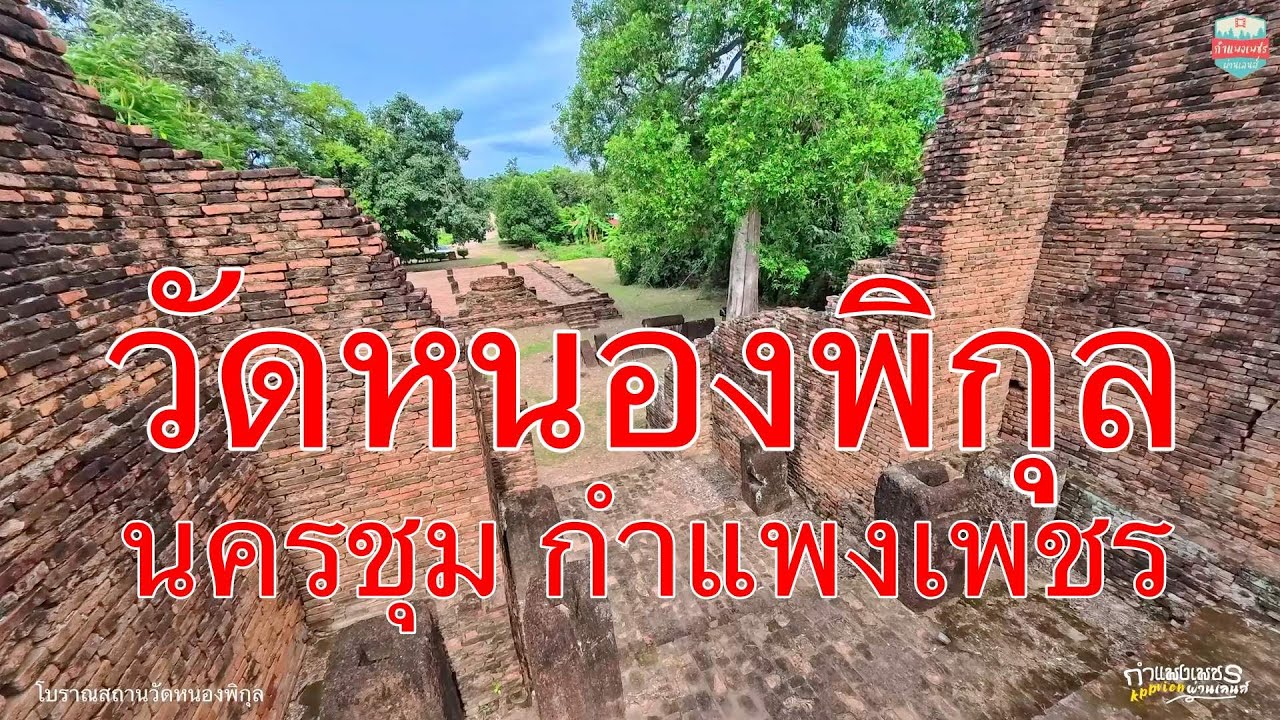
The most important structure at Wat Nong Phikun is the main mandapa, located behind the viharn. This is unusual because many temples use a chedi as the principal monument, while Wat Nong Phikun uses a mandapa in that role. The mandapa is a square brick building with a raised base about 1.50 meters high. It has recessed corners on both the base and the body of the structure. Three sides of the building were enclosed by solid brick walls, while the eastern side served as the entrance. Inside, there were once traces of a large stucco Buddha image, although the original image has collapsed.
The architectural form of this mandapa is comparable to the mandapas at Wat Si Chum and Wat Traphang Thong Lang in Sukhothai. This similarity supports the interpretation that Wat Nong Phikun was created around the early 20th Buddhist century, during the Sukhothai period and continuing into the early Ayutthaya period. The mandapa design emphasizes an enclosed sacred chamber where worshippers would face a large Buddha image directly, creating an atmosphere of focus, devotion, and spiritual presence.
The original roof of the mandapa was made of timber and covered with hooked terracotta roof tiles. It once had a pointed mandapa-style roof, but the upper structure has now collapsed. What remains today are the brick base and lower walls, which still reveal the proportions and strength of the original building. Visitors can walk around the structure to observe the brickwork, recessed corners, entrance orientation, and the relationship between the mandapa and the viharn foundation in front of it.
On the sides and behind the mandapa are 8 subsidiary chedis. Together with traces of a laterite boundary wall, these structures formed the sacred core of the temple. The arrangement shows a clear religious hierarchy: the viharn at the front, the mandapa as the principal monument behind it, and subsidiary chedis surrounding the main sacred area. This makes Wat Nong Phikun an excellent site for understanding the layout of Sukhothai-period Buddhist architecture in the Nakhon Chum area.
In front of the mandapa, outside the former boundary, are the remains of a viharn foundation. This viharn would have been used for Buddhist gatherings, chanting, Dhamma listening, and community ceremonies. Its position in front of the main mandapa shows how worshippers may have moved from a more public religious space toward the principal sacred structure. Behind the former boundary are also several hall foundations, suggesting that the temple once had a larger and more complex layout than what is immediately visible today.
Another important feature is the large ancient brick-lined well, believed to be more than 700 years old. This well reflects how ancient communities managed water and how water was connected with temple life. Water was essential for daily use, ritual practice, and the definition of sacred space. The presence of the well, together with the surrounding water channels, shows that Wat Nong Phikun was closely connected with both religious practice and the practical life of the community.
Archaeologically, Wat Nong Phikun is associated with the Sukhothai period and the early to middle Ayutthaya periods, with an estimated age around the 20th to 22nd Buddhist centuries. This makes it important for understanding the continuation of Buddhist art and settlement in Nakhon Chum. As Nakhon Chum was closely linked with Kamphaeng Phet across the Ping River, Wat Nong Phikun forms part of a wider network of religious monuments in the middle Ping River basin.
There is also an interesting interpretation that the site may once have been a Brahmanical shrine before becoming a Buddhist temple. The area may have originally contained images or sacred objects related to Brahmanical deities such as Brahma, Vishnu, and Shiva. Later, as Buddhism became dominant, Buddha images were installed. The traces of overlapping construction at the site therefore suggest a shift in religious practice and belief. For visitors, this adds another layer of meaning to the ruins, showing that the site preserves not only architecture but also a history of cultural transformation.
Wat Nong Phikun is also well known for its association with ancient votive tablets, especially Phra Nang Kamphaeng and related Kamphaeng amulets such as Phra Kamphaeng Sum Ko. These amulets are valued for their artistic beauty, spiritual meaning, and connection with Kamphaeng Phet’s famous Buddhist amulet tradition. Phra Nang Kamphaeng is especially admired for its graceful form and is traditionally associated with charm, kindness, and auspiciousness. This connection has made Wat Nong Phikun known among both cultural travelers and collectors of ancient Thai Buddhist amulets.
The amulets found in connection with Wat Nong Phikun are not merely objects of devotion. They are also evidence of ancient craftsmanship, religious belief, and artistic taste. Kamphaeng Phet is one of Thailand’s important centers for ancient clay votive tablets, and the amulet traditions associated with the city continue to be widely respected. Wat Nong Phikun therefore connects the physical remains of a temple with the smaller but highly meaningful world of Buddhist votive art.
Artistically, Wat Nong Phikun is different from many other ancient sites in Kamphaeng Phet. Its beauty does not come only from monumentality or completeness. It comes from the relationship between the rectangular plan, water boundary, mandapa, viharn, subsidiary chedis, ancient well, and local legend. The overall impression is calm, refined, and graceful. This quality matches the local story of Nang Phikun and gives the site a gentle identity that makes it memorable.
Wat Nong Phikun is registered as an ancient monument and belongs to the wider heritage landscape associated with Kamphaeng Phet Historical Park and the World Heritage context of early Thai architecture. Its preservation is important not only for the local community but also for the understanding of Sukhothai-related art and religious culture. A visit to Wat Nong Phikun allows travelers to engage with one of the quieter but highly meaningful historical sites of Kamphaeng Phet.
At present, Wat Nong Phikun is an abandoned archaeological site, not an active monastery. There are no resident monks and no abbot. The site is cared for by the Fine Arts Department and related heritage authorities. Visitors should behave as they would at any protected ancient monument: do not climb on the structures, touch or remove bricks or laterite pieces, write on the remains, or leave rubbish behind. Respectful visiting helps protect the site for future generations.
The atmosphere at Wat Nong Phikun is quiet and natural. There are no large modern temple buildings dominating the site, so visitors can appreciate the old brickwork, water channels, open ground, and trees around the monument. Morning and late afternoon are good times to visit because the softer light brings out the texture of the old bricks and the shape of the mandapa. The site is also suitable for careful photography and slow historical exploration.
For travelers interested in cultural routes, Wat Nong Phikun can be combined with other attractions in Nakhon Chum, including Wat Phra Borommathat Nakhon Chum, Nakhon Chum Retro Market, Pom Thung Setthi, Wat Sum Ko archaeological site, and nearby ancient monuments. This route helps visitors understand Nakhon Chum as an old settlement on the west side of the Ping River. When combined with Kamphaeng Phet Historical Park on the opposite side of the river, the trip gives a broader view of the ancient city landscape.
Getting There is convenient because Wat Nong Phikun is located not far from Kamphaeng Phet Bus Terminal. From the Mueang Kamphaeng Phet District Office area, take Highway 101 west toward Nakhon Chum for about 850 meters. Then turn into the lane opposite Kamphaeng Phet Bus Terminal and continue for about 380 meters to reach the archaeological site. Travelers with private cars can use the coordinates 16.470205, 99.509021 for navigation, while those arriving by bus can continue by local transport from the bus terminal.
A visit to Wat Nong Phikun should take around 30 to 60 minutes. Visitors who want to study the site carefully or take photographs may want more time. The best way to explore is to first observe the overall plan, then walk slowly around the mandapa, viharn foundation, subsidiary chedis, water boundary, and ancient well. This allows the visitor to understand how each element relates to the sacred layout of the temple.
Wat Nong Phikun is therefore a valuable destination for travelers interested in history, Buddhist architecture, ancient city landscapes, and Kamphaeng Phet amulets. The site preserves the legend of Nang Phikun, the memory of a pond and phikun trees, a rare mandapa-centered temple layout, an ancient well, and the story of Phra Nang Kamphaeng. It is a quiet but deeply meaningful cultural heritage site that reveals the faith, craftsmanship, and refined imagination of the people of ancient Nakhon Chum.
| Name | Wat Nong Phikun |
| Location | Nakhon Chum Subdistrict, Mueang Kamphaeng Phet District, Kamphaeng Phet Province |
| Address | Soi Aphai Rat, Nakhon Chum Subdistrict, Mueang Kamphaeng Phet District, Kamphaeng Phet 62000, Thailand |
| Coordinates | 16.470205, 99.509021 |
| Highlights | Main mandapa behind the viharn, water boundary, ancient well, Nang Phikun legend, and association with Phra Nang Kamphaeng amulets |
| History | Ancient monument from the Sukhothai to Ayutthaya periods, dated around the 20th–22nd Buddhist centuries, located in the southern aranyik group of Nakhon Chum |
| Name Origin | Linked to the legend of Nang Phikun, daughter of a wealthy man from Ban Pom Setthi; another explanation connects the name with a pond and large phikun trees around the site |
| Distinctive Features | Rectangular temple plan with water channels on all 4 sides, a raised square mandapa with recessed corners, and traces of a large stucco Buddha image inside |
| Travel Information | From Mueang Kamphaeng Phet District Office, take Highway 101 toward Nakhon Chum for about 850 meters, then enter the lane opposite Kamphaeng Phet Bus Terminal for about 380 meters |
| Current Status | Abandoned ancient monument and cultural attraction in Nakhon Chum |
| Open Days | Daily |
| Opening Hours | No fixed opening hours |
| Fees | No admission fee |
| Facilities | Open archaeological area, walking space, and some information signage |
| Main Areas / Zones | Main mandapa, viharn foundation, 8 subsidiary chedis, water boundary, ancient well, and hall foundations behind the former boundary wall |
| Abbot / Caretaker | No resident abbot because it is an abandoned ancient monument; caretaker: Fine Arts Department |
| Main Contact Number | Kamphaeng Phet Historical Park Office, Tel. 055-711-921 |
| Official Website / Official Page | Information is published by the Fine Arts Department, archaeology databases, and cultural environment databases |
| Nearby Tourist Attractions | 1. Kamphaeng Phet Bus Terminal, about 1 km 2. Nakhon Chum Retro Market, about 2 km 3. Wat Phra Borommathat Nakhon Chum, about 2 km 4. Pom Thung Setthi, about 2 km 5. Wat Sum Ko Archaeological Site, about 3 km 6. Kamphaeng Phet Historical Park, about 6 km |
| Nearby Restaurants | 1. Bamee Chakangrao Ton Pho Branch, about 3 km, Tel. 064-356-5152 2. Old Police Station Egg-Wrapped Pad Thai, about 4 km, Tel. 083-213-4894 3. Kuai Tiao Hoi Kha Kamphaeng Phet, about 4 km, Tel. 089-461-1411 4. Tasty Restaurant Kamphaeng Phet, about 5 km, Tel. 055-712-594 5. Tao Handmade Noodle, about 5 km 6. What’s Your Name Cafe and Craft Beer, about 5 km |
| Nearby Accommodations | 1. Scenic Riverside Resort, about 4 km, Tel. 055-722-009 2. The Room Hotel Kamphaengphet, about 4 km, Tel. 062-586-9778 3. Navarat Heritage Hotel, about 5 km, Tel. 055-711-211, 055-711-219 4. Soda Resort Kamphaeng Phet, about 6 km, Tel. 055-711-711, 055-713-123 5. P. Paradise Hotel, about 6 km 6. Techno Riverview Resort, about 7 km |
Frequently Asked Questions (FAQ)
Q: Where is Wat Nong Phikun located?
A: Wat Nong Phikun is located on Soi Aphai Rat in Nakhon Chum Subdistrict, Mueang Kamphaeng Phet District, Kamphaeng Phet Province, not far from Kamphaeng Phet Bus Terminal.
Q: What is Wat Nong Phikun known for?
A: It is known for its main mandapa behind the viharn, surrounding water boundary, ancient well, Nang Phikun legend, and association with Phra Nang Kamphaeng amulets.
Q: Is Wat Nong Phikun an active temple?
A: No. Wat Nong Phikun is an abandoned ancient monument with no resident monks or abbot. It is cared for by the Fine Arts Department.
Q: Is there an admission fee at Wat Nong Phikun?
A: No. There is no admission fee, and the site can be visited daily with no fixed opening hours.
Q: How is Wat Nong Phikun connected with Phra Nang Kamphaeng?
A: Wat Nong Phikun is one of the sites associated with ancient Kamphaeng Phet amulets, including Phra Nang Kamphaeng and related votive tablets valued for their artistic and spiritual significance.
Q: How long should visitors spend at Wat Nong Phikun?
A: Around 30 to 60 minutes is recommended to explore the mandapa, viharn foundation, water boundary, ancient well, and other archaeological remains.
Q: How can visitors get to Wat Nong Phikun?
A: From central Kamphaeng Phet, take Highway 101 toward Nakhon Chum and enter the lane opposite Kamphaeng Phet Bus Terminal. The coordinates 16.470205, 99.509021 can be used for navigation.
Q: What nearby attractions can be visited with Wat Nong Phikun?
A: Nearby attractions include Nakhon Chum Retro Market, Wat Phra Borommathat Nakhon Chum, Pom Thung Setthi, Wat Sum Ko Archaeological Site, and Kamphaeng Phet Historical Park.
 Category: ●Places of Worship
 Group: ●Temple
Last Update : 5 MonthAgo
 Last Update : 5 MonthAgo
 Click to Access the Navigation Map GPS
Wat Nong Phikun Map
Recommend

 Art, Culture and Heritage
 Historical Sites and Monuments(4)
 Landmarks and Memorials(1)
 Art, Craft Centres, Tradition(4)
 Museums(4)
 Historic Homes and Cities(1)
Temple(25)
 Other Sacred Sites(8)
 Research and Development
 Royal Project(2)
 Suburban Living
 Village, Community(2)
 Local Market(2)
 Nature and Wildlife
 National Parks and Marine Reserves(4)
 Mountain (Doi)(2)
 Dam, Reservoir, Lake(4)
 Waterfalls(4)
 Hot Springs(1)
 River, Canal(3)
 Bays and Beaches(2)
 Other natural attractions(1)
 Entertainment and Agricultural
 Farms, Parks and Ecotourism(5)
 Waterpark(1)
 Shopping
 Shopping and Night Market(1)
 Travel Articles, Recipes
 Travel Review, Food Review(1)


