
lovethailand home >North Travel Attractions >Kamphaeng Phet Travel Attractions >Muang Kamphaeng Phet >Trai Trueng > Wat Wang Phra That (Wat Thao Saen Pom)
TL;DR: Wat Wang Phra That (Wat Thao Saen Pom) is located at Tri Trueng Subdistrict, Mueang Kamphaeng Phet District, Kamphaeng Phet Province, open Daily, hours 08.00 – 17.00.
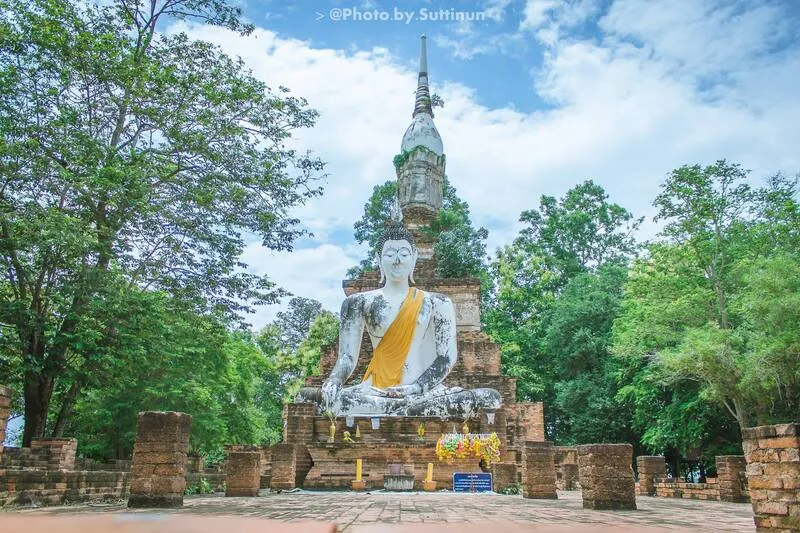
Wat Wang Phra That (Wat Thao Saen Pom)
Open Days: Daily
Opening Hours: 08.00 – 17.00
Wat Wang Phra That, also known as Wat Thao Saen Pom, is an old riverside temple in Tri Trueng Subdistrict, Mueang Kamphaeng Phet District, Kamphaeng Phet Province. The temple is best known for its large lotus-bud-shaped chedi in Sukhothai art, which enshrines sacred relics of the Buddha. Set near the Ping River and connected with the ancient town of Trai Trueng, this temple is an excellent destination for travelers who want to experience Buddhist heritage, local history, ancient architecture, and the quiet atmosphere of a historic community in Kamphaeng Phet.
Wat Wang Phra That is a community temple under the Mahanikaya order of Thai Buddhism. It stands outside the ancient town of Trai Trueng, close to the western bank of the Ping River. The name of the temple reflects both the local landscape and religious belief. In the past, the area in front of the temple had a large natural water basin known locally as a “wang.” Since a sacred relic chedi stood in the area, local people called the place “Wang Phra That,” meaning the water basin of the sacred relic. The name preserves the close relationship between the river, the old settlement, and Buddhist faith in this part of Kamphaeng Phet.
The temple was founded in 1283 and later received its official consecrated boundary on 21 June 2013. In earlier times, the temple did not have monks staying there continuously. Around 1950, monks began to reside at the temple regularly, bringing back its role as a living religious center for the local community. Since then, Wat Wang Phra That has served as a place for merit-making, Buddhist ceremonies, community gatherings, and cultural learning.
The importance of Wat Wang Phra That is closely linked with the ancient town of Trai Trueng, an old settlement along the Ping River. Trai Trueng was an important historic community with traces of moats, earthen walls, and archaeological evidence dating from the Dvaravati period and continuing into the Sukhothai and Ayutthaya periods. Its location along the Ping River made it part of an important communication and trade route connecting northern towns with communities in the Chao Phraya basin. Visiting Wat Wang Phra That therefore offers more than a temple visit; it gives travelers a deeper view of how riverside settlements shaped the history of Kamphaeng Phet.
The most striking structure within the temple is the large lotus-bud-shaped chedi, also known in Thai as a phum khao bin chedi. This architectural form is strongly associated with Sukhothai art. The chedi is built of brick with a graceful layered base, a strong vertical form, and a serene silhouette. Inside the chedi are sacred relics of the Buddha, making it a highly respected religious monument for local people and visitors alike. Its form is simple yet powerful, expressing the balance, dignity, and spiritual calm that characterize Sukhothai Buddhist architecture.
The lotus-bud-shaped chedi at Wat Wang Phra That is one of the reasons this temple is considered one of Kamphaeng Phet’s notable historical sites. It reflects the artistic influence of the Sukhothai period, especially during the centuries when Buddhism flourished across the region. The chedi is not only impressive because of its size; it is important because of its symbolic form, sacred function, and connection to the historical landscape of Trai Trueng.
Near the old water basin in front of the temple and the shrine of Thao Saen Pom, local stories mention an ancient water tunnel that once connected the basin to the base of the chedi. When the Ping River rose, water was said to flow through this tunnel toward the chedi, with a large stone slab covering part of the passage. Although this tunnel is no longer visible today, the story remains part of the local memory of the temple. It adds another layer to the site, showing how sacred architecture, water systems, and local belief were once connected.
The temple compound also contains several religious structures and remains that reveal different phases of construction and restoration. The old viharn was originally built of brick with laterite column bases. It was a raised hall with five-step stairways on both the north and south sides. The structure was once heavily damaged and appeared only as a mound of earth before partial restoration. These remains help visitors understand traditional building techniques in Kamphaeng Phet, where brick and laterite were commonly used in religious architecture.
Luang Pho To is another important Buddha image associated with Wat Wang Phra That. The original image was a large stucco Buddha image located on the viharn. A new image was later created so that local people and visitors could continue to pay respect. The sight of Luang Pho To with the ancient chedi nearby creates one of the most memorable views in the temple, combining devotion, history, and architecture in one quiet space.
The ordination hall of Wat Wang Phra That was expanded and maintained through the cooperation of the local community. Inside is a revered Buddha image known locally as Luang Pho Phet. Many visitors come to pay respect for good fortune and to experience the living faith of the community. Beneath the base of the ordination hall, there are traces of an opening that passes through to both sides, adding another point of interest to the temple’s local stories and physical structure.
The legend of Thao Saen Pom also gives the temple a distinctive cultural identity. The alternative name “Wat Thao Saen Pom” links the site with local folklore and historical memory in Kamphaeng Phet. This makes the temple more than a Buddhist place of worship. It is also a place where legend, community identity, and local storytelling remain part of the visitor experience.
Today, Wat Wang Phra That continues to play an active role in Ban Wang Phra That community. Phra Khru Sumon Wachirasan, the temple’s abbot, has been recognized for supporting religious, artistic, and cultural activities in the area. The temple functions as a moral and cultural learning space, while the wider community preserves local wisdom, traditional food, performing arts, and cultural tourism. This living connection between temple and community makes Wat Wang Phra That different from a deserted ruin; it is a historic site that still serves local life.
The atmosphere of Wat Wang Phra That is peaceful and modest. Unlike crowded tourist temples, this site offers a slower and quieter experience. Visitors can walk around the chedi, pay respect to Buddha images, enjoy the riverside setting, and observe details of brickwork and laterite remains without haste. Morning and late afternoon are especially pleasant times to visit, as the light brings out the texture of the ancient brick and the elegant outline of the chedi.
For travelers interested in history, Wat Wang Phra That can be visited together with the ancient town of Trai Trueng, Chedi Chet Yot, Wat Phra Prang, Wat Phra Borommathat Nakhon Chum, and Kamphaeng Phet Historical Park. These sites together help explain the historical development of the Ping River corridor and the cultural importance of Kamphaeng Phet. A visit to Wat Wang Phra That is therefore ideal for travelers who want to go beyond the main historical park and explore the deeper roots of the province.
From an architectural perspective, the temple is a valuable example of how Buddhist monuments, local materials, and riverside landscapes interact. The lotus-bud-shaped chedi expresses Sukhothai artistic ideals, while the viharn base, laterite columns, brick remains, and restored structures show how sacred spaces were used and renewed over time. Travelers who enjoy Thai architecture can spend time observing the chedi base, brickwork, building orientation, and the relationship between the temple compound and the surrounding landscape.
What makes Wat Wang Phra That memorable is the completeness of the experience. Visitors can pay respect to the Buddha relics, see a major Sukhothai-style chedi, worship Luang Pho To and Luang Pho Phet, learn about Thao Saen Pom, walk near the Ping River, and connect the temple with the ancient town of Trai Trueng. This makes the temple suitable for general travelers, families, students, cultural tourists, photographers, and anyone interested in Thailand’s Buddhist and historical heritage.
Getting There from Kamphaeng Phet town is convenient by private car, rental car, or local hired vehicle. The temple is about 18 km from the town center in Tri Trueng Subdistrict. The route is suitable for a half-day trip, especially if combined with nearby historical sites. Travelers without their own vehicle should first reach Kamphaeng Phet town and then arrange local transport for a more flexible itinerary.
Visitors should dress respectfully, as Wat Wang Phra That is an active Buddhist temple. It is important not to climb on ancient structures, touch or move archaeological remains, or make loud noise near the ordination hall, viharn, and worship areas. Respectful behavior helps preserve both the temple’s sacred atmosphere and its historical value for future generations.
Wat Wang Phra That is one of the important cultural temples in Kamphaeng Phet Province. It combines sacred worship, Sukhothai art, local legend, riverside scenery, and the history of Trai Trueng in one meaningful destination. For travelers who want to understand Kamphaeng Phet beyond its main historical park, this temple is a worthwhile and memorable stop.
| Name | Wat Wang Phra That, also known as Wat Thao Saen Pom |
| Location | Tri Trueng Subdistrict, Mueang Kamphaeng Phet District, Kamphaeng Phet Province |
| Address | Ban Wang Phra That, Moo 4, Tri Trueng Subdistrict, Mueang Kamphaeng Phet District, Kamphaeng Phet 62160, Thailand |
| Coordinates | 16.3731, 99.5669 |
| Highlights | Large Sukhothai-style lotus-bud chedi, Luang Pho To, Luang Pho Phet, Thao Saen Pom Shrine, and peaceful riverside setting near the Ping River |
| History | Founded in 1283 and connected with the ancient town of Trai Trueng, which has archaeological traces from the Dvaravati period through the Sukhothai period |
| Name Origin | The name comes from a large water basin, or “wang,” in front of the temple and the sacred relic chedi located there |
| Distinctive Features | Historic community temple by the Ping River with a major lotus-bud-shaped chedi enshrining sacred Buddha relics |
| Travel Information | About 18 km from Kamphaeng Phet town; best reached by private car, rental car, or local hired vehicle |
| Current Status | Active community temple, worship site, and historical attraction in Tri Trueng Subdistrict |
| Open Days | Daily |
| Opening Hours | 08.00 – 17.00 |
| Fees | No admission fee |
| Facilities | Parking area, worship areas, ordination hall, viharn, temple courtyard, and historical monument area |
| Main Areas / Zones | Lotus-bud-shaped chedi, Luang Pho To Viharn, Luang Pho Phet ordination hall, Thao Saen Pom Shrine, and Ping River area |
| Abbot / Caretaker | Phra Khru Sumon Wachirasan |
| Official Website / Official Page | Tourism information is published by the Tourism Authority of Thailand and Thailand Tourism Directory |
| Nearby Tourist Attractions | 1. Ancient Town of Trai Trueng, about 1 km 2. Chedi Chet Yot, about 2 km 3. Wat Phra Prang, about 2 km 4. Wat Phra Borommathat Nakhon Chum, about 20 km 5. Kamphaeng Phet Historical Park, about 23 km |
| Nearby Restaurants | 1. Krua Khun Krit near Wat Phra Borommathat Nakhon Chum, about 20 km, Tel. 082-780-5129 2. Manager Sticky Rice, about 22 km, Tel. 065-727-5544 3. Ban Rim Nam Kamphaeng Phet, about 22 km 4. Tasty Restaurant Kamphaeng Phet, about 22 km 5. Kam Phaeng Phet Phochana, about 23 km |
| Nearby Accommodations | 1. Scenic Riverside Resort, about 18 km, Tel. 080-361-4656 2. The Room Hotel Kamphaengphet, about 21 km, Tel. 055-714-888 3. Soda Resort, about 21 km, Tel. 055-774-321 4. P. Paradise Hotel, about 22 km, Tel. 055-741-888 5. Wajanaporl Apartment, about 22 km, Tel. 083-165-4823 |
Frequently Asked Questions (FAQ)
Q: Where is Wat Wang Phra That located?
A: Wat Wang Phra That is located at Ban Wang Phra That in Tri Trueng Subdistrict, Mueang Kamphaeng Phet District, Kamphaeng Phet Province, near the Ping River.
Q: What is Wat Wang Phra That famous for?
A: The temple is famous for its large Sukhothai-style lotus-bud-shaped chedi, which enshrines sacred Buddha relics, as well as Luang Pho To, Luang Pho Phet, and the local legend of Thao Saen Pom.
Q: How is Wat Wang Phra That connected with Trai Trueng Ancient Town?
A: The temple is part of the historical landscape of Trai Trueng, an ancient riverside settlement with archaeological evidence from the Dvaravati and Sukhothai periods.
Q: How far is Wat Wang Phra That from Kamphaeng Phet town?
A: The temple is about 18 km from Kamphaeng Phet town and is most convenient to reach by private car, rental car, or local hired vehicle.
Q: Is there an admission fee at Wat Wang Phra That?
A: No. There is no admission fee, and visitors can come for merit-making, worship, and historical sightseeing.
Q: What is the best time to visit Wat Wang Phra That?
A: Morning and late afternoon are good times to visit because the weather is more comfortable and the natural light highlights the ancient brickwork and chedi form beautifully.
Q: Who is the abbot of Wat Wang Phra That?
A: The abbot is Phra Khru Sumon Wachirasan, who supports religious, artistic, and cultural activities in Ban Wang Phra That community.
 Category: ●Places of Worship
 Group: ●Temple
Last Update : 5 MonthAgo
 Last Update : 5 MonthAgo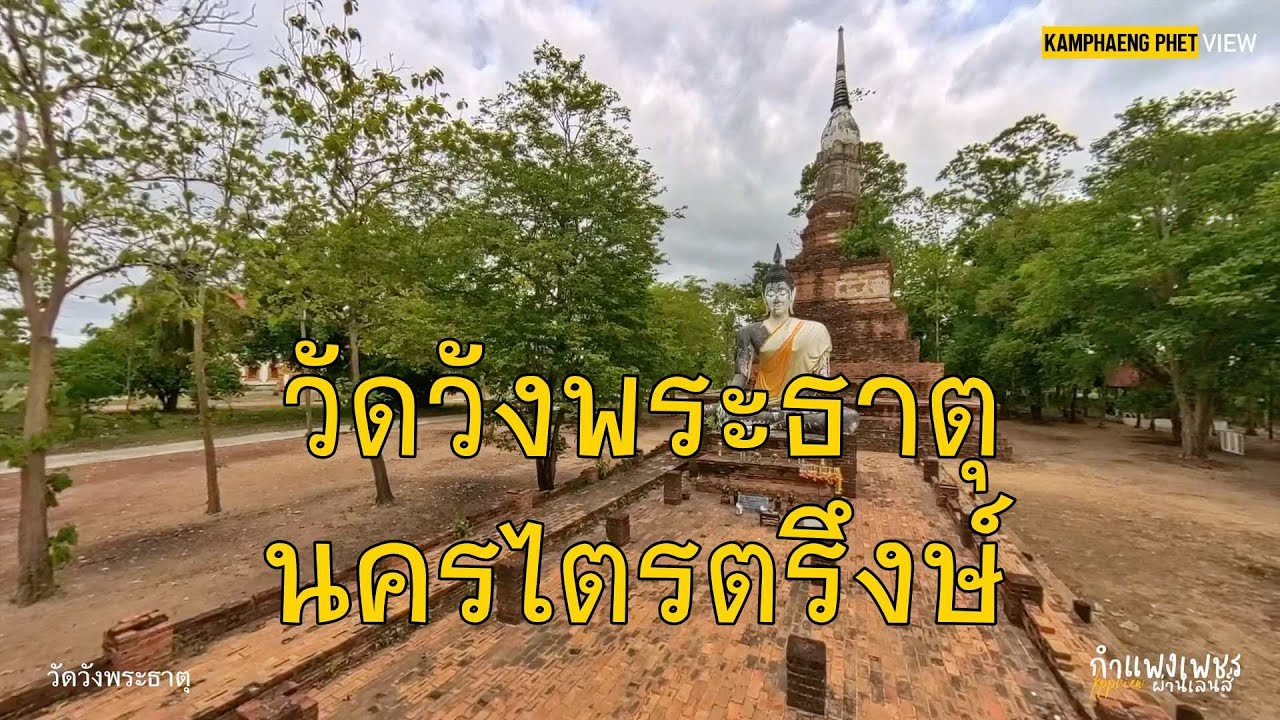
 Click to Access the Navigation Map GPS
Wat Wang Phra That (Wat Thao Saen Pom) Map
Recommend

 Art, Culture and Heritage
 Historical Sites and Monuments(4)
 Landmarks and Memorials(1)
 Art, Craft Centres, Tradition(4)
 Museums(4)
 Historic Homes and Cities(1)
Temple(25)
Historic Homes and Cities(1)
Temple(25)
 Other Sacred Sites(8)
 Research and Development
 Royal Project(2)
 Suburban Living
 Village, Community(2)
 Local Market(2)
 Nature and Wildlife
 National Parks and Marine Reserves(4)
 Mountain (Doi)(2)
 Dam, Reservoir, Lake(4)
 Waterfalls(4)
 Hot Springs(1)
 River, Canal(3)
 Bays and Beaches(2)
 Other natural attractions(1)
 Entertainment and Agricultural
 Farms, Parks and Ecotourism(5)
 Waterpark(1)
 Shopping
 Shopping and Night Market(1)
 Travel Articles, Recipes
 Travel Review, Food Review(1)


