
lovethailand home >North Travel Attractions >Kamphaeng Phet Travel Attractions >Muang Kamphaeng Phet >Nai Muang > Wat Thep Molee
TL;DR: Wat Thep Molee is located at Nai Mueang Subdistrict, Mueang Kamphaeng Phet District, Kamphaeng Phet Province, open Daily, hours 08.00 – 17.00.
Wat Thep Molee

Open Days: Daily
Opening Hours: 08.00 – 17.00
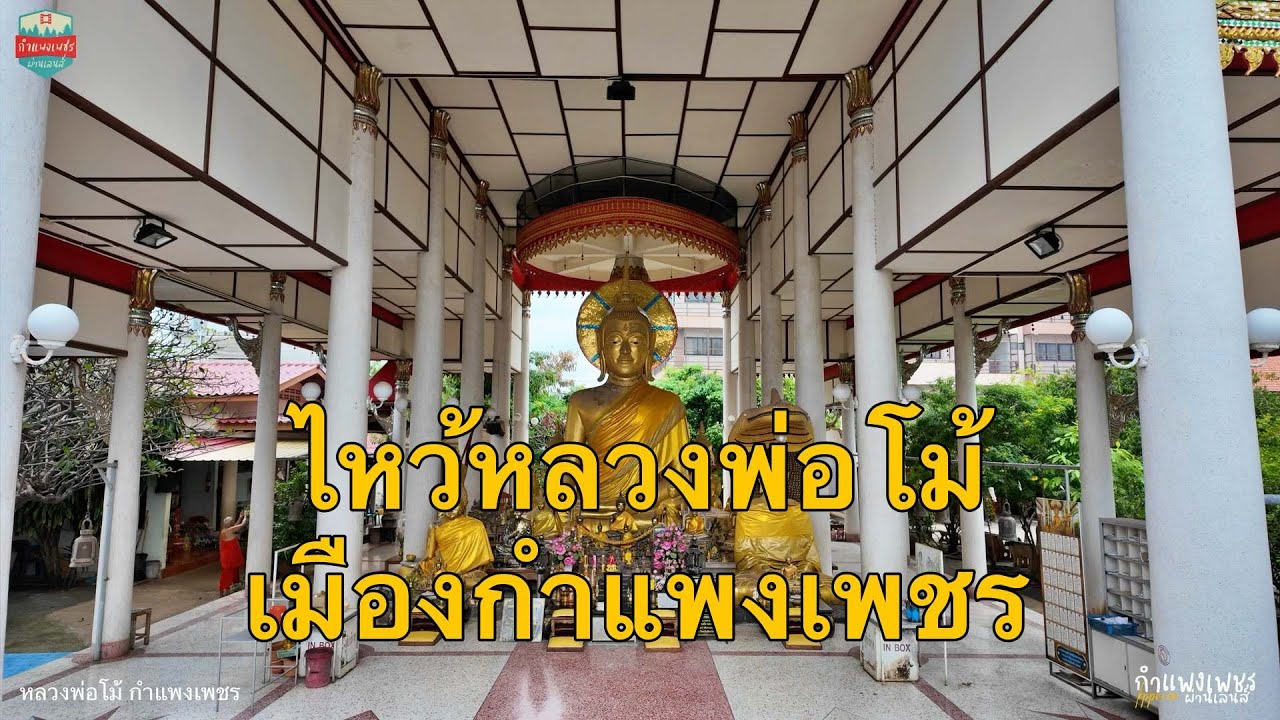
Wat Thep Molee in Kamphaeng Phet Province is an important Buddhist temple in the historic area of old Chakanngrao, a former urban center closely connected with the cultural landscape of Kamphaeng Phet. The temple is well suited for travelers who want to combine merit-making, Buddhist art appreciation, and historical exploration in one visit. Its main highlight is Luang Pho Thep Molee, also affectionately known by local people as “Luang Pho Mo,” a large seated Buddha image in the subduing Mara posture. The image is made of brick and stucco, measuring 10 sok and 1 khuep across the lap and 13 sok and 1 khuep in height. For local devotees, this sacred Buddha image is not only a religious object but also a spiritual anchor of the community and a meaningful reminder of Kamphaeng Phet’s long Buddhist heritage.
Wat Thep Molee is located at 32 Ratchadamnoen 1 Soi 2, Nai Mueang Subdistrict, Mueang Kamphaeng Phet District, Kamphaeng Phet Province 62000. The temple stands in the town center, making it easy to include in a short cultural route around Kamphaeng Phet. Nearby places such as Wat Khu Yang, Wat Bang, Sirichit Park, Shiva Shrine, Kamphaeng Phet National Museum, and Kamphaeng Phet Historical Park help visitors understand the temple within a broader historical setting. For travelers interested in the old town of Chakanngrao, Wat Thep Molee offers a quieter and more intimate perspective than the larger archaeological zones, while still preserving a strong connection to the city’s past.
The significance of Wat Thep Molee lies in its relationship with the historic landscape of Kamphaeng Phet, an area once known as Chakanngrao. This ancient city played an important role in the lower northern region of Thailand and was associated with the wider cultural sphere of Sukhothai-period towns. Although Wat Thep Molee continues to function as a living temple today, its atmosphere and sacred image reflect the continuity of Buddhist faith from the old city period to the present. Visitors can therefore experience not only a temple visit but also a sense of how religion, local memory, and urban history remain connected in modern Kamphaeng Phet.
The most important feature of the temple is Luang Pho Thep Molee, a Buddha image in the subduing Mara posture. This posture represents the moment before the Buddha attained enlightenment, when he overcame Mara through wisdom, virtue, and inner strength. The right hand reaching down toward the earth symbolizes the calling of the earth to witness his accumulated merit. For Buddhist visitors, this image carries a message of steadiness, patience, and victory over inner defilements. For art and history enthusiasts, the image also provides an opportunity to observe the scale, structure, and devotional function of a large brick-and-stucco Buddha image in a living temple setting.
Luang Pho Thep Molee is considered an example of Rattanakosin-period Buddhist art. The image has been carefully restored by building over and protecting the original image inside. This method of restoration is significant because it preserves the sacred core of the older image while strengthening the visible structure for continued worship. The result is a Buddha image that remains central to the temple’s religious life while also demonstrating how Thai communities protect important sacred objects from deterioration caused by time, climate, and continuous use.
Local people often call the sacred image “Luang Pho Mo,” a familiar name that reflects the close relationship between the temple and the surrounding community. This local name gives the temple a distinct cultural identity. It shows that sacred objects in Thai temples are not known only through formal religious titles; they also live through the language, affection, and everyday devotion of local residents. When visitors hear both names, Luang Pho Thep Molee and Luang Pho Mo, they gain a better understanding of the temple’s role as a spiritual place rooted in community memory.
From an artistic perspective, the Buddha image at Wat Thep Molee demonstrates the value of brick-and-stucco craftsmanship in Thai Buddhist art. Brick and stucco have long been used in temple architecture and religious sculpture across historic towns in Thailand. Creating a large Buddha image with these materials requires careful attention to structure, proportion, surface treatment, and symbolic expression. When viewed closely, the image conveys both physical solidity and spiritual calm. Its scale creates a strong visual presence, while the seated posture and serene expression invite quiet reflection.
Wat Thep Molee is suitable for several types of travelers. Devotees can come to pay respect and make merit. Cultural travelers can study the role of a living temple in an old town. Art lovers can observe the form and restoration of a large stucco Buddha image. History-focused visitors can use the temple as an entry point before continuing to the archaeological remains of Kamphaeng Phet Historical Park. The temple may not be large or heavily commercialized, but its value lies in its sacred image, accessible location, and connection with the historical identity of the city.
The atmosphere inside Wat Thep Molee is simple, calm, and closely tied to the local community. Unlike major tourist sites that feel separated from everyday life, this temple remains part of the religious rhythm of the town. Local people continue to visit for merit-making, prayer, and Buddhist observances. This gives the temple a living quality that complements its historical significance. Visitors should take time to walk slowly, observe the temple compound respectfully, and appreciate how the sacred space continues to serve both residents and travelers.
A meaningful visit to Wat Thep Molee begins with paying respect to Luang Pho Thep Molee. Visitors may offer flowers, incense, candles, or other appropriate offerings, then spend a moment sitting quietly in front of the image. Those interested in history can then continue to nearby temples and museums to build a fuller picture of Kamphaeng Phet’s old city. Wat Khu Yang, Wat Bang, Shiva Shrine, Kamphaeng Phet National Museum, and Kamphaeng Phet Historical Park are all suitable additions to the same route. This combination allows travelers to move from a living temple in the present city toward larger historical sites associated with the ancient urban landscape.
Wat Thep Molee is also useful for understanding the conservation of religious objects in local communities. The restoration of Luang Pho Thep Molee, with the original image preserved inside, shows that temple conservation is not only a technical matter. Sacred objects are connected to faith, memory, and community identity. Restoration must therefore balance structural stability, religious appropriateness, and the emotional attachment of devotees. For visitors who are interested in heritage conservation, this temple provides a clear example of how Buddhist art continues to be maintained for worship rather than displayed only as museum material.
In the broader context of Kamphaeng Phet tourism, Wat Thep Molee adds depth to a visit focused on the province’s historical identity. Kamphaeng Phet is widely known for Kamphaeng Phet Historical Park, part of the UNESCO World Heritage grouping associated with Sukhothai and related historic towns. However, the province’s heritage is not limited to archaeological ruins. Living temples, museums, city shrines, old streets, riverside areas, and local communities all help travelers understand Kamphaeng Phet as a city that still carries its history into the present. Wat Thep Molee is one of the places that makes this continuity visible.
For photography, the most important subject at Wat Thep Molee is Luang Pho Thep Molee and the surrounding worship area. Visitors should photograph respectfully, avoid blocking worshippers, and refrain from climbing on or touching sacred structures. The best photographs here do not need to emphasize grandeur alone. They can also capture the calmness of the temple, the dignified scale of the Buddha image, and the quiet character of a historic temple in the town center. This makes the temple suitable for travelers who prefer thoughtful cultural photography rather than hurried sightseeing.
As a Buddhist temple, Wat Thep Molee is connected with the regular cycle of Thai religious life. Visitors may encounter merit-making activities on important Buddhist days such as Makha Bucha Day, Visakha Bucha Day, Asalha Bucha Day, Buddhist Lent, the end of Buddhist Lent, and weekly Buddhist holy days according to the lunar calendar. During these occasions, the temple may be busier with local devotees. Travelers who visit at such times should dress modestly, allow extra time, and follow temple etiquette carefully.
For first-time visitors to Kamphaeng Phet, Wat Thep Molee can be placed at the beginning of a half-day or full-day itinerary. A practical route may begin with paying respect at Wat Thep Molee, then continue to Wat Khu Yang and Wat Bang, followed by Sirichit Park, Shiva Shrine, Kamphaeng Phet National Museum, and finally Kamphaeng Phet Historical Park if time allows. This route reduces unnecessary backtracking and helps visitors understand the town through a gradual progression from living religious sites to historical and archaeological landmarks.
Getting There is convenient by private car, local transport, or hired vehicle within Kamphaeng Phet town. From Phahonyothin Road, enter the town area and continue toward Ratchadamnoen 1 Road. The temple is located at Ratchadamnoen 1 Soi 2 in Nai Mueang Subdistrict. Travelers staying in the town center can easily combine Wat Thep Molee with nearby restaurants, markets, museums, and historic attractions. Those arriving by interprovincial bus can continue to the temple by local transport or hired vehicle.
Visitors should dress respectfully when entering Wat Thep Molee. Shoulders and knees should be covered, voices should be kept low, and the worship area should be treated with care. Photography is acceptable when done respectfully, but visitors should avoid disturbing people who are praying or making merit. Since the temple remains an active religious site for local residents, good manners are essential. A meaningful visit should balance sightseeing, learning, and reverence.
Wat Thep Molee is valuable as a religious site, an art-historical location, and a cultural attraction in Kamphaeng Phet. Visitors can pay respect to an important local Buddha image, observe brick-and-stucco Buddhist craftsmanship, learn about restoration practices, and connect the temple with the wider history of Chakanngrao and Kamphaeng Phet. For travelers who want to experience more than the famous ruins of the historical park, Wat Thep Molee offers a quieter but deeply meaningful stop.
The appeal of Wat Thep Molee lies in the way it shows Kamphaeng Phet as both an ancient city and a living community. The province is not defined only by city walls, fortifications, or archaeological remains. It also includes temples where local people continue to worship, make merit, and preserve inherited faith. Luang Pho Thep Molee serves as a symbolic bridge between the past and the present, between Buddhist art and community devotion, and between travelers and the people who continue to care for this historic temple.
| Name | Wat Thep Molee |
| Location | Nai Mueang Subdistrict, Mueang Kamphaeng Phet District, Kamphaeng Phet Province |
| Address | 32 Ratchadamnoen 1 Soi 2, Nai Mueang Subdistrict, Mueang Kamphaeng Phet District, Kamphaeng Phet Province 62000 |
| Highlights | Pay respect to Luang Pho Thep Molee, also known locally as Luang Pho Mo, a large seated Buddha image in the subduing Mara posture made of brick and stucco |
| History | A temple associated with the historic landscape of old Chakanngrao and Kamphaeng Phet. The visible Buddha image reflects Rattanakosin-period Buddhist art and has been restored by preserving the original image inside |
| Name Origin | The temple name is associated with Luang Pho Thep Molee, while local residents commonly refer to the sacred image as Luang Pho Mo |
| Distinctive Features | A large Buddha image in the subduing Mara posture, measuring 10 sok and 1 khuep across the lap and 13 sok and 1 khuep in height, made of brick and stucco with the original image preserved inside |
| Travel Information | Accessible by private car or local transport via Ratchadamnoen 1 Road in Kamphaeng Phet town. The temple is located at Ratchadamnoen 1 Soi 2 and can be combined with Wat Khu Yang, Wat Bang, Shiva Shrine, and Kamphaeng Phet National Museum |
| Current Status | Open as an active Buddhist temple and cultural attraction in Kamphaeng Phet town |
| Open Days | Daily |
| Opening Hours | 08.00 – 17.00 |
| Fees | No admission fee |
| Main Areas / Zones | Worship area of Luang Pho Thep Molee and the temple compound for merit-making, prayer, and cultural observation |
| Nearby Tourist Attractions | 1. Wat Khu Yang, about 0.1 km 2. Wat Bang, about 0.3 km 3. Sirichit Park, about 0.4 km 4. Shiva Shrine, about 2 km 5. Kamphaeng Phet Provincial Museum, about 2.1 km 6. Kamphaeng Phet National Museum, about 2.3 km 7. Wat Phra Kaeo and Wat Phra That, Kamphaeng Phet Historical Park, about 2.8 km 8. Kamphaeng Phet City Pillar Shrine, about 3.2 km |
| Nearby Restaurants | 1. Candy Co Cafe, opposite Wat Thep Molee, about 0.1 km, Tel. 083-626-2888 2. Bamee Chakanngrao, about 0.8 km, Tel. 055-712-446 3. Tasty Restaurant, about 1.2 km, Tel. 055-712-594 4. Made-to-order local food on Ratchadamnoen 1 Road near Soi 13, about 1 km 5. Horapa Restaurant, about 2 km |
| Nearby Accommodations | 1. Chakungrao Riverview Hotel, about 1.5 km, Tel. 055-714-900 2. Navarat Heritage Hotel, about 1.2 km, Tel. 055-711-211, 055-711-219 3. Scenic Riverside Resort, about 3 km 4. FIG Boutique Hotel, about 4 km, Tel. 080-958-3456 5. The Room Hotel Kamphaeng Phet, about 4 km 6. Ban Suan Phet Resort, about 5 km |
Frequently Asked Questions (FAQ)
Q: Where is Wat Thep Molee located?
A: Wat Thep Molee is located at 32 Ratchadamnoen 1 Soi 2, Nai Mueang Subdistrict, Mueang Kamphaeng Phet District, Kamphaeng Phet Province 62000.
Q: What is Wat Thep Molee known for?
A: The temple is known for Luang Pho Thep Molee, also called Luang Pho Mo, a large brick-and-stucco Buddha image in the subduing Mara posture.
Q: What period is Luang Pho Thep Molee associated with?
A: The visible Buddha image reflects Rattanakosin-period Buddhist art and has been restored by preserving the original image inside.
Q: How is Wat Thep Molee related to old Chakanngrao?
A: The temple is associated with the historic landscape of Kamphaeng Phet when the area was known as Chakanngrao, making it valuable for both religious and historical travel.
Q: Is there an admission fee for Wat Thep Molee?
A: No. Visitors can enter the temple and pay respect without an admission fee.
Q: What attractions can be visited near Wat Thep Molee?
A: Nearby attractions include Wat Khu Yang, Wat Bang, Sirichit Park, Shiva Shrine, Kamphaeng Phet National Museum, and Kamphaeng Phet Historical Park.
Q: How can visitors get to Wat Thep Molee?
A: Visitors can travel by private car or local transport via Ratchadamnoen 1 Road in Kamphaeng Phet town. The temple is located at Ratchadamnoen 1 Soi 2.
Q: What should visitors wear when visiting Wat Thep Molee?
A: Visitors should dress modestly, keep their voices low, and behave respectfully because Wat Thep Molee is an active Buddhist temple used by local worshippers.
 Category: ●Places of Worship
 Group: ●Temple
Last Update : 5 MonthAgo
 Last Update : 5 MonthAgo
 Click to Access the Navigation Map GPS
Wat Thep Molee Map
Recommend

 Art, Culture and Heritage
 Historical Sites and Monuments(4)
 Landmarks and Memorials(1)
 Art, Craft Centres, Tradition(4)
 Museums(4)
 Historic Homes and Cities(1)
Temple(25)
 Other Sacred Sites(8)
 Research and Development
 Royal Project(2)
 Suburban Living
 Village, Community(2)
 Local Market(2)
 Nature and Wildlife
 National Parks and Marine Reserves(4)
 Mountain (Doi)(2)
 Dam, Reservoir, Lake(4)
 Waterfalls(4)
 Hot Springs(1)
 River, Canal(3)
 Bays and Beaches(2)
 Other natural attractions(1)
 Entertainment and Agricultural
 Farms, Parks and Ecotourism(5)
 Waterpark(1)
 Shopping
 Shopping and Night Market(1)
 Travel Articles, Recipes
 Travel Review, Food Review(1)


