
lovethailand home >North Travel Attractions >Kamphaeng Phet Travel Attractions >Muang Kamphaeng Phet >Nai Muang > Wat Ka Lo Thai
TL;DR: Wat Ka Lo Thai is located at Ka Lo Thai Road, Nai Mueang Subdistrict, Mueang Kamphaeng Phet District, Kamphaeng Phet Province, open Daily, hours No Fixed Opening Or Closing Hours.
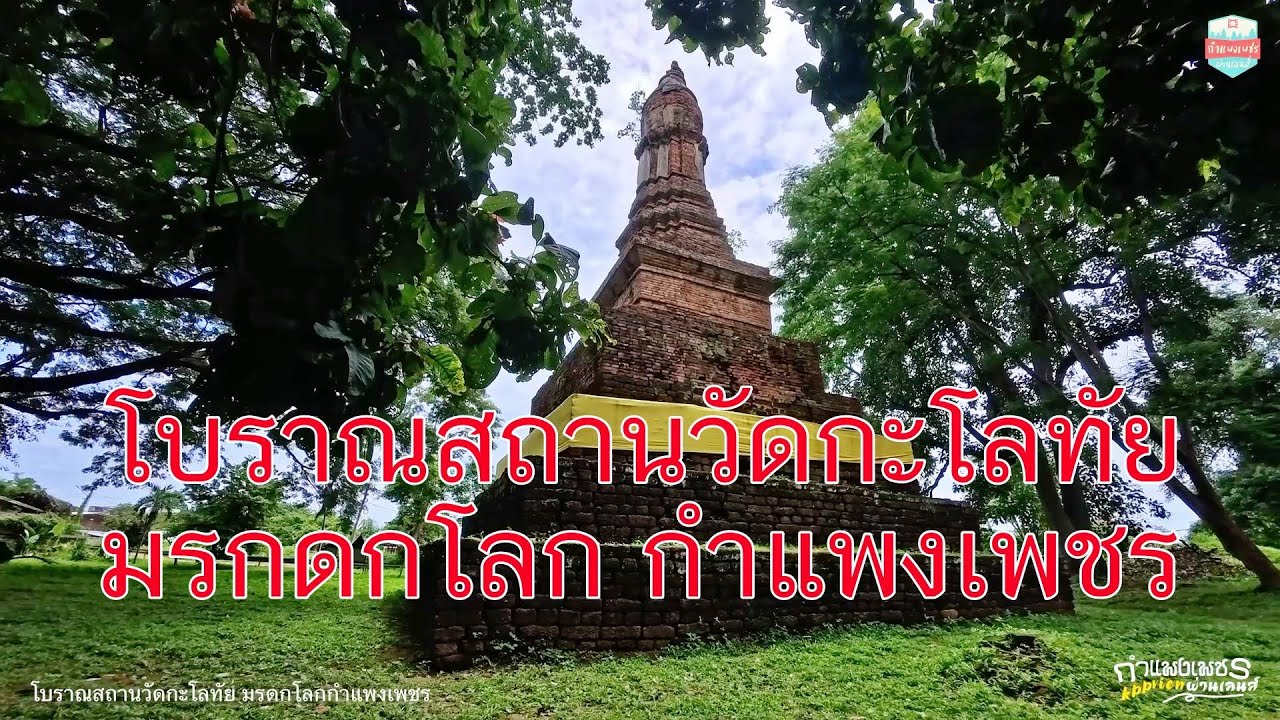
Wat Ka Lo Thai

Open Days: Daily
Opening Hours: No Fixed Opening Or Closing Hours
Wat Ka Lo Thai in Kamphaeng Phet Province is an important historical site located on Ka Lo Thai Road in Nai Mueang Subdistrict, Mueang Kamphaeng Phet District, Kamphaeng Phet Province. The temple is best known for its principal lotus-bud chedi, also called a phum khao bin chedi, a form strongly associated with Sukhothai-period architecture. Today, Wat Ka Lo Thai is an abandoned archaeological site rather than an active monastery, but it remains open for visitors every day without an admission fee. The site helps visitors understand the historical development of Kamphaeng Phet as a major city in the Ping River basin, especially in relation to Buddhism, architecture, local craftsmanship, urban geography, and the political links between Sukhothai and Ayutthaya.
Wat Ka Lo Thai is suitable for travelers who want to explore a compact but historically meaningful ancient site in the center of Kamphaeng Phet. The main chedi still stands prominently within the temple grounds, while traces of the viharn base, subsidiary chedis, and other architectural remains reveal the layout of the former religious compound. Although parts of the site survive only as ruins, the principal chedi remains a powerful piece of evidence for Sukhothai artistic influence. Its square base rises in stepped tiers toward the lotus-bud form above, creating a sense of calmness, balance, and graceful simplicity that is characteristic of Sukhothai art.
Wat Ka Lo Thai is located on the eastern side of Kamphaeng Phet city, outside the ancient city wall but still closely connected with the old urban landscape. Its location near the moat system and the Ping River shows that religious sites in ancient Kamphaeng Phet were not limited to the inner city. They also extended into surrounding areas that formed part of the city’s religious and social environment. Wat Ka Lo Thai therefore helps complete the picture of Kamphaeng Phet as a fortified city, a Buddhist center, and a strategic settlement connected to river routes and overland travel between central and northern Thailand.
The most distinctive feature of Wat Ka Lo Thai is its lotus-bud chedi, known in Thai as a chedi song dok bua tum or chedi song phum khao bin. This form is one of the most recognizable architectural types of Sukhothai art. The lotus bud has deep Buddhist symbolism, representing purity, spiritual awakening, and the ability to rise above worldly impurity. Just as a lotus grows from muddy water and blooms cleanly above the surface, the lotus-bud chedi expresses the Buddhist ideal of liberation and spiritual refinement. The principal chedi at Wat Ka Lo Thai is therefore not merely an old monument; it is an architectural expression of Buddhist meaning.
The structure of the principal chedi demonstrates the skill of ancient builders. The lower section consists of a square base with several receding tiers, giving the monument a strong and stable visual foundation. From the base, the structure rises toward the body and upper lotus-bud form. Although some parts of the upper section have weathered over time, the overall shape still conveys the elegance of Sukhothai architecture. When viewed closely, the chedi reveals the relationship between mass, height, proportion, and simplicity. It is not heavily decorated, but its power comes from balanced form and quiet dignity.
The materials used at Wat Ka Lo Thai include laterite and brick, both of which are common in the ancient monuments of Kamphaeng Phet. Laterite, with its reddish-brown texture, gives the remains a strong and earthy character, while brick was used in parts of the architectural structure. The use of these materials reflects the practical knowledge of local craftsmen who understood how to use available resources to create durable religious monuments. Even after many centuries, the surviving traces of material and construction technique allow visitors to read the history of the site directly from the monument itself.
Archaeologically, Wat Ka Lo Thai is associated with the period from around the 20th to 22nd Buddhist centuries, covering the Sukhothai period, early Ayutthaya period, and middle Ayutthaya period. This long historical span gives the site special value because it reflects continuity and change in both history and art. It shows how Kamphaeng Phet developed from a city connected with the Sukhothai cultural world into a city with an important role in the political system of Ayutthaya. Wat Ka Lo Thai therefore helps visitors understand that Kamphaeng Phet was not important in only one historical period, but remained significant through several phases of Thai history.
The historical identity of Wat Ka Lo Thai is also connected with the name Wat Yom in certain historical accounts. These accounts refer to a large temple used as a temporary royal resting place or military stopover when Ayutthaya kings moved armies through Kamphaeng Phet toward northern cities. This adds another layer of significance to Wat Ka Lo Thai. It was not only a Buddhist site but also a place linked with strategic routes, royal movement, and military history. The city of Kamphaeng Phet was important not only for religion and art but also for politics, defense, and communication.
The use of the temple as a temporary resting place in the past reflects the geographical importance of Kamphaeng Phet. The city stood along the Ping River and on routes connecting the central plains with northern Thailand. This made it a frontier city, a military staging point, and a place of strategic control. Large temples within and around the city could support both religious activities and the needs of travelers, officials, and military groups moving through the region. Wat Ka Lo Thai therefore reflects the close relationship between Buddhism, political authority, and geography in ancient Thailand.
Within the temple grounds, visitors can still observe traces of the viharn and subsidiary chedis. These remains help explain the original layout of the temple more clearly. The viharn would have functioned as an assembly hall for religious ceremonies, Buddha worship, and community gatherings. The subsidiary chedis would have added sacred meaning to the compound. Although many structures now remain only as bases or broken fragments, their arrangement shows that Wat Ka Lo Thai was once a complete religious site, not simply a single chedi standing alone.
The layout of Wat Ka Lo Thai follows principles commonly found in Sukhothai-period Buddhist temples. The viharn was generally placed toward the east, while the principal chedi stood behind it. This arrangement guided worshippers from the front of the temple toward the ritual hall and then toward the chedi, which served as the symbolic sacred center. The spatial sequence shows that ancient Thai temple planning was concerned not only with beauty but also with ritual movement, visual experience, and Buddhist meaning.
The beauty of Wat Ka Lo Thai lies in its simplicity and calmness. The principal chedi is not covered with dense ornamentation, but its beauty comes from proportion, mass, and the gentle upward movement of its form. This restrained elegance is a major characteristic of Sukhothai art, which often emphasizes balance, openness, serenity, and spiritual clarity. At Wat Ka Lo Thai, the monument communicates Buddhist ideals through form rather than excessive decoration.
Wat Ka Lo Thai is also important for understanding lotus-bud chedis in Kamphaeng Phet Province. Similar forms appear at other important sites connected with Sukhothai art, such as Wat Chedi Klang Thung in the Nakhon Chum area and Wat Wang Phra That in nearby surroundings. Comparing these sites shows that Sukhothai artistic influence was not limited to Sukhothai city itself. It extended into Kamphaeng Phet and the Ping River basin, where local builders adapted the style to their own environment and materials. Wat Ka Lo Thai is therefore a valuable example of Sukhothai art in a local Kamphaeng Phet context.
In terms of conservation, Wat Ka Lo Thai is registered as a national ancient monument and is under the care of the Fine Arts Department. This official status is important because it protects the site as part of Thailand’s cultural heritage. Conservation of this kind does not mean rebuilding the temple as a new structure. Instead, it means preserving the original evidence so that the site can be studied, understood, and passed on to future generations. The remaining structures are valuable precisely because they preserve traces of the past.
Visitors to Wat Ka Lo Thai should observe several important details. A good visit begins by viewing the principal chedi from a distance to understand the lotus-bud form and the overall proportions of the monument. After that, visitors can walk closer to examine the laterite and brick materials, the stepped base, and the surviving architectural layers. Walking around the site also reveals how the ancient monument now exists together with modern roads, nearby communities, and everyday city life. This coexistence is one of the distinctive charms of Wat Ka Lo Thai.
Visitors should allow at least 30 to 45 minutes to appreciate Wat Ka Lo Thai properly. The site is not very large, but it rewards slow observation. Travelers can begin by looking at the chedi from the front, then continue to examine the base, the remains of the former viharn, and the subsidiary chedis. A slower visit helps reveal differences in material, traces of deterioration, and the architectural rhythm of the monument. Small historical sites like this should not be rushed, because much of their value lies in details that require careful attention.
Wat Ka Lo Thai has a different atmosphere from the larger monuments inside Kamphaeng Phet Historical Park. Because it is located in the present-day city area, it is easy to reach and can be included in a city-based itinerary. Travelers staying in Kamphaeng Phet town can visit the site conveniently, either as a starting point for exploring the old city or as an additional stop after visiting the historical park. The site shows that Kamphaeng Phet’s heritage is not limited to the formal historical park; ancient monuments are also scattered throughout the living city.
Wat Ka Lo Thai is also connected with local traditions that keep the relationship between the community and the monument alive. One of the important traditions associated with the site is the merit-making procession to wrap cloth around the chedi. Before Buddhist Lent, local residents have gathered for merit-making, ritual offerings, Buddhist chanting, and a procession carrying white cloth around the chedi 3 times before placing the cloth around the monument for auspiciousness. This tradition shows that Wat Ka Lo Thai is not only an archaeological site but also a place of community memory and continuing faith.
The cloth-wrapping ceremony has both religious and social meaning. Religiously, wrapping cloth around a chedi expresses respect for Buddhism and the sacred monument. Socially, the activity brings local people together to prepare offerings, invite monks, organize the procession, circumambulate the chedi, and make merit as a community. Such traditions show that heritage conservation is not the responsibility of government agencies alone. It also depends on local care, participation, and emotional attachment to the site.
For photography enthusiasts, Wat Ka Lo Thai offers several interesting angles. The front view is suitable for capturing the full lotus-bud chedi form. Side angles reveal the stepped base and the relationship between laterite and brick. Views that include surrounding trees help create the atmosphere of an ancient monument within the city. Morning and late afternoon are especially suitable for photography because the light is softer and brings out the texture of the old materials more clearly.
Families and students can use Wat Ka Lo Thai as an outdoor learning site. Because the monument is compact and easy to walk around, it is useful for explaining lotus-bud chedis, Sukhothai art, laterite construction, archaeological conservation, and the role of the Fine Arts Department in protecting cultural heritage. Seeing the monument in a real city setting helps students understand that history is not limited to textbooks. It still exists in actual places, streets, and communities where people live today.
Getting There to Wat Ka Lo Thai is convenient because the temple is located within Mueang Kamphaeng Phet District on Ka Lo Thai Road. Visitors can travel by private car, rental car, motorcycle, or local transport. Those staying in Kamphaeng Phet town can combine the site with the night bazaar area, the Pho Tree Clock Tower roundabout, Kamphaeng Phet City Pillar Shrine, Kamphaeng Phet National Museum, Wat Phra Kaeo, and Wat Phra That in the same route. It is suitable for a half-day or full-day itinerary in the city.
Travelers coming from Bangkok can take Highway 32 through Ayutthaya, Ang Thong, Sing Buri, and Nakhon Sawan, then connect to Highway 1 toward Kamphaeng Phet Province. Once in Kamphaeng Phet city, continue to Ka Lo Thai Road. The site is located within the urban area, and navigation is straightforward. Travelers arriving by bus can get off at Kamphaeng Phet Bus Terminal and continue by local transport into the city.
When visiting Wat Ka Lo Thai, travelers should follow proper behavior for an archaeological site. Visitors should not climb on the chedi, touch or move ancient fragments, write on old materials, or leave rubbish in the area. Ancient monuments that have survived for centuries are fragile. Respectful behavior by visitors is part of cultural conservation and helps preserve the site for future generations.
Wat Ka Lo Thai fits naturally into a historical route around Kamphaeng Phet. With half a day, travelers can visit Wat Ka Lo Thai, Kamphaeng Phet National Museum, Wat Phra Kaeo, Wat Phra That, and the City Pillar Shrine. With a full day, they can add Kamphaeng Phet Historical Park and the Nakhon Chum side, including Wat Phra Borommathat Nakhon Chum. This route helps visitors see Kamphaeng Phet from several perspectives: the old city, Nakhon Chum, city-center archaeological sites, and living communities around the historic landscape.
Wat Ka Lo Thai is valuable in many dimensions. It is a Sukhothai-to-Ayutthaya-period archaeological site, a significant example of a lotus-bud chedi in Kamphaeng Phet, a place linked with royal and military routes in Ayutthaya history, and a monument connected with local community memory through chedi cloth-wrapping traditions. A visit here is not merely a stop at an old ruin. It is an opportunity to read history from a real place and to understand the relationship between religion, city life, community, and ancient Thai craftsmanship.
For travelers interested in Sukhothai art, Wat Ka Lo Thai should not be overlooked. Its lotus-bud chedi confirms the importance of Kamphaeng Phet within the Sukhothai artistic world. The beauty of the site does not depend on perfect preservation. Instead, its value lies in the surviving form, materials, and historical traces that allow present-day visitors to learn from the past. Even after centuries of change, the essential character of the monument remains visible in its proportions, base, and graceful upper form.
Wat Ka Lo Thai in Kamphaeng Phet Province is therefore a worthwhile cultural destination for history travelers, art lovers, students, and anyone who wants to understand Kamphaeng Phet beyond its most famous tourist sites. Although the site is not large, it contains rich stories: a lotus-bud chedi, laterite and brick construction, ancient temple planning, archaeological registration, and community traditions around the chedi. Visiting Wat Ka Lo Thai is a way to experience a quiet but meaningful piece of Thai cultural heritage standing within the modern city of Kamphaeng Phet.
| Name | Wat Ka Lo Thai |
| Location | Ka Lo Thai Road, Nai Mueang Subdistrict, Mueang Kamphaeng Phet District, Kamphaeng Phet Province |
| Address | 76 Ka Lo Thai Road, Nai Mueang Subdistrict, Mueang Kamphaeng Phet District, Kamphaeng Phet 62000, Thailand |
| Coordinates | 16.483935, 99.531288 |
| Highlights | A principal lotus-bud chedi, also known as a phum khao bin chedi, representing Sukhothai-period architectural influence in Kamphaeng Phet |
| History / Period | An archaeological site from the Sukhothai to Ayutthaya periods, dated around the 20th–22nd Buddhist centuries, and associated with Ayutthaya royal and military routes toward northern cities |
| Name Origin | Wat Ka Lo Thai is the present name of the archaeological site, while some historical accounts connect it with the former name Wat Yom |
| Distinctive Features | A stepped square-based principal chedi made of laterite and brick, with a lotus-bud form, together with remains of a viharn, subsidiary chedis, and ancient temple planning |
| Travel Information | Located in Kamphaeng Phet city on Ka Lo Thai Road. Visitors can travel by private car, rental car, motorcycle, or local transport, and combine the visit with Kamphaeng Phet National Museum, Wat Phra Kaeo, Wat Phra That, and Kamphaeng Phet Historical Park |
| Current Status | An abandoned archaeological site registered as a national ancient monument, under the care of the Fine Arts Department, and open to visitors |
| Open Days | Daily |
| Opening Hours | No Fixed Opening Or Closing Hours |
| Fees | No Admission Fee |
| Facilities | City-center archaeological site, walking area around the monument, and roadside or nearby parking where appropriate |
| Main Areas / Zones | Principal lotus-bud chedi, viharn base, subsidiary chedis, archaeological area, and surrounding Wat Ka Lo Thai community area |
| Abbot / Caretaker | Fine Arts Department |
| Main Contact Number | Kamphaeng Phet Historical Park Office, Tel. 055-711921 |
| Official Website / Official Page | Fine Arts Department and the Archaeology Database of Important Sites in Thailand by the Princess Maha Chakri Sirindhorn Anthropology Centre |
| Nearby Tourist Attractions | 1. Pho Tree Clock Tower Roundabout, about 1 km 2. Kamphaeng Phet Night Bazaar, about 1 km 3. Kamphaeng Phet City Pillar Shrine, about 2 km 4. Kamphaeng Phet National Museum, about 3 km 5. Wat Phra Kaeo, Kamphaeng Phet Historical Park, about 3 km 6. Wat Phra That, Kamphaeng Phet Historical Park, about 3 km 7. Kamphaeng Phet Historical Park, about 4 km |
| Nearby Restaurants | 1. Somtam Phitzy & Namkhaeng Sai, Opposite Wat Ka Lo Thai Chedi, about 0 km, Tel. 092-1073865 2. Mu Chum Kamphaeng Phet – Ka Lo Thai, about 1 km, Tel. 090-6978609, 088-9209055 3. MEDEE, about 1 km, Tel. 091-3837294 4. Thammarat Pochana, about 1 km, Tel. 055-714247, 088-2285449 5. Kamphaeng Phet Pochana Nai Ya, about 1 km, Tel. 055-713035 6. Tasty Restaurant, about 2 km, Tel. 055-712594 |
| Nearby Accommodations | 1. Navarat Heritage Hotel, about 1 km, Tel. 055-711211, 055-711219, 081-5335799 2. Hop Inn Kamphaeng Phet, about 3 km 3. Grand The Room Hotel, about 3 km 4. Three J Guesthouse, about 4 km 5. Mai Yai Resort, about 4 km, Tel. 055-774321, 081-3958765 |
Frequently Asked Questions (FAQ)
Q: Where is Wat Ka Lo Thai in Kamphaeng Phet located?
A: Wat Ka Lo Thai is located on Ka Lo Thai Road, Nai Mueang Subdistrict, Mueang Kamphaeng Phet District, Kamphaeng Phet Province, within the city area and easy to access.
Q: What is the highlight of Wat Ka Lo Thai?
A: The highlight is the principal lotus-bud chedi, also known as a phum khao bin chedi, an architectural form strongly associated with Sukhothai art.
Q: Is Wat Ka Lo Thai an active temple with monks?
A: No. Wat Ka Lo Thai is an abandoned archaeological site, not an active monastery with resident monks. It is under the care of the Fine Arts Department.
Q: What are the opening hours of Wat Ka Lo Thai?
A: Wat Ka Lo Thai can be visited daily and has no fixed opening or closing hours according to publicly available archaeological-site information.
Q: Is there an entrance fee for Wat Ka Lo Thai?
A: No. There is no admission fee to visit Wat Ka Lo Thai.
Q: Is there any local tradition connected with Wat Ka Lo Thai?
A: Yes. A local merit-making tradition has included a procession to wrap white cloth around the chedi, with Buddhist chanting, ritual offerings, and circumambulation around the monument for auspiciousness.
Q: What nearby attractions can be visited with Wat Ka Lo Thai?
A: Nearby attractions include the Pho Tree Clock Tower Roundabout, Kamphaeng Phet Night Bazaar, Kamphaeng Phet City Pillar Shrine, Kamphaeng Phet National Museum, Wat Phra Kaeo, Wat Phra That, and Kamphaeng Phet Historical Park.
Q: What should visitors prepare before visiting Wat Ka Lo Thai?
A: Visitors should wear comfortable walking shoes, bring drinking water or sun protection if visiting during the day, and avoid climbing on or touching the ancient structures.
 Category: ●Places of Worship
 Group: ●Temple
Last Update : 5 MonthAgo
 Last Update : 5 MonthAgo
 Click to Access the Navigation Map GPS
Wat Ka Lo Thai Map
Recommend

 Art, Culture and Heritage
 Historical Sites and Monuments(4)
 Landmarks and Memorials(1)
 Art, Craft Centres, Tradition(4)
 Museums(4)
 Historic Homes and Cities(1)
Temple(25)
 Other Sacred Sites(8)
 Research and Development
 Royal Project(2)
 Suburban Living
 Village, Community(2)
 Local Market(2)
 Nature and Wildlife
 National Parks and Marine Reserves(4)
 Mountain (Doi)(2)
 Dam, Reservoir, Lake(4)
 Waterfalls(4)
 Hot Springs(1)
 River, Canal(3)
 Bays and Beaches(2)
 Other natural attractions(1)
 Entertainment and Agricultural
 Farms, Parks and Ecotourism(5)
 Waterpark(1)
 Shopping
 Shopping and Night Market(1)
 Travel Articles, Recipes
 Travel Review, Food Review(1)


