
lovethailand home >North Travel Attractions >Kamphaeng Phet Travel Attractions >Muang Kamphaeng Phet >Nong Pling > Wat Phra Sing
TL;DR: Wat Phra Sing is located at Kamphaeng Phet Historical Park, Aranyik Area, Nong Pling Subdistrict, Mueang Kamphaeng Phet District, Kamphaeng Phet Province, open Daily, hours 08.00 – 17.00.

Wat Phra Sing

Open Days: Daily
Opening Hours: 08.00 – 17.00
Wat Sing in Kamphaeng Phet Province is an important archaeological site in the Aranyik area of Kamphaeng Phet Historical Park. Located outside the northern side of the ancient city wall, the temple reflects the religious, artistic, and architectural prosperity of old Kamphaeng Phet during the cultural transition from the Sukhothai period to the Ayutthaya period. Its rectangular layout faces east, following Buddhist architectural convention, while its major structures were built mainly of laterite, a durable local material widely used in the ancient monuments of Kamphaeng Phet. The temple is especially valuable for visitors who want to understand Buddhist ritual space, ancient craftsmanship, laterite architecture, boundary-stone traditions, and the development of religious monuments in one of Thailand’s UNESCO World Heritage historical cities.
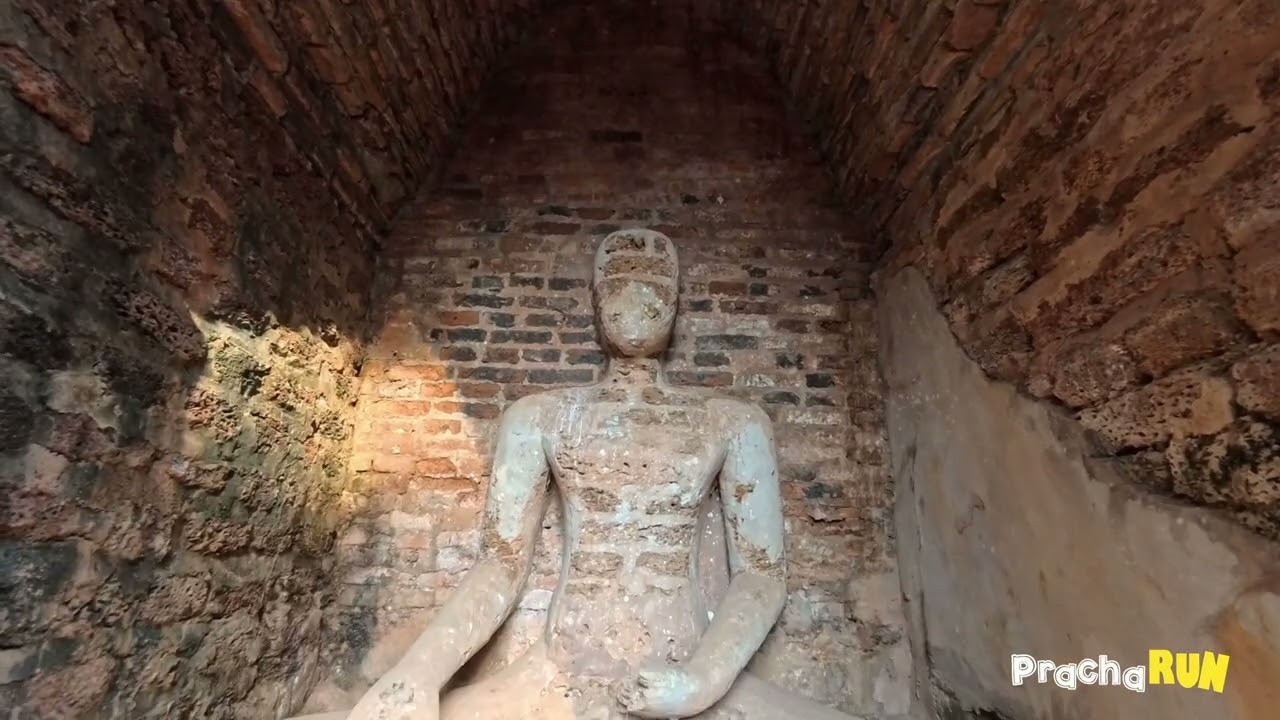
Wat Sing is an ancient temple ruin rather than an active monastery with resident monks. Today, it is preserved as part of Kamphaeng Phet Historical Park under the supervision of the Fine Arts Department. Visitors come here to study the surviving remains of religious architecture rather than to attend regular temple ceremonies. The site includes the remains of a laterite ordination hall, a circumambulatory terrace, bases for slate boundary stones, a monk’s sitting platform, a Buddha image platform, the principal chedi, and traces of decorative sculptures such as lions and guardian figures. Although many upper structures have disappeared over time, the remaining foundations still clearly show the original layout and ritual importance of the temple.
The location of Wat Sing in the Aranyik zone is essential to understanding the religious landscape of ancient Kamphaeng Phet. The Aranyik area was associated with forest monasteries located outside the main urban settlement. Such temples were usually quieter than those inside the city and were suitable for meditation, study, and religious discipline. Many monuments in this area are large and carefully planned, suggesting strong support from local communities and ruling elites. Wat Sing is therefore not merely an isolated ruin; it is part of a wider sacred landscape that reveals how ancient Kamphaeng Phet organized its urban temples and forest temples in a systematic way.
The plan of Wat Sing is rectangular and oriented toward the east. This orientation reflects Buddhist architectural belief, in which the east is associated with light, awakening, and the ceremonial approach to sacred space. In the past, worshippers would have entered from the eastern side, moved toward the main ritual building, and then related visually and spiritually to the principal chedi behind it. The arrangement from east to west shows careful spatial planning and a clear ritual sequence, guiding visitors from the outer approach toward the sacred center of the temple.
Most of the structures at Wat Sing were built from laterite, the characteristic building material of Kamphaeng Phet. Laterite was widely used because it was strong, locally available, and suitable for constructing foundations, walls, pillars, and large architectural masses. When freshly cut, laterite can be shaped more easily before hardening further after exposure to air. This material gives Kamphaeng Phet’s ancient monuments their distinctive reddish-brown surface, a visual identity that differs from many brick-dominated ruins in other historic cities. At Wat Sing, the laterite remains create an impression of strength, simplicity, and permanence.
The main ordination hall of Wat Sing is located on the eastern side of the temple compound. It is a rectangular laterite structure set on a lower supporting base. The base is designed in a decorative moulding style known in Thai architecture as a bua luk kaeo ok kai base, which gives the building both visual weight and refinement. The side walls, built of laterite, rise to about 0.90 meters. Although only the lower parts of the building survive today, they still allow visitors to understand the scale, plan, and internal organization of the sacred structure.
On the eastern platform of the lower base, there were once stucco sculptures of lions and guardian figures. Today, only the laterite cores of these sculptures remain, but their presence is highly significant. They show that the entrance to the ordination hall was once carefully decorated and symbolically protected. Lions represent strength, courage, and guardianship, while guardian figures mark the threshold between the ordinary world and sacred religious space. Their placement at the entrance would have heightened the ceremonial experience of approaching the hall.
The circumambulatory terrace of the ordination hall contains 8 bases for slate boundary stones. Boundary stones, or bai sema, define the sacred limits of an ordination space used for formal monastic ceremonies. Their presence confirms the ritual importance of the building and its role as an ordination hall, or as a structure that was adapted to serve this function in a later period. The careful placement of the boundary stones around the building reflects a precise understanding of sacred space in Buddhist practice.
The slate boundary stones from Wat Sing are decorated with carved floral motifs set within triangular frames. Their edges feature pointed kanok-style ornamentation. These details are not merely decorative; they are important evidence of artistic taste and craftsmanship, particularly in relation to Ayutthaya-period influence. Some of the boundary stones associated with the site are preserved at Kamphaeng Phet National Museum, allowing visitors to connect the archaeological site with the museum’s collection and gain a fuller understanding of the temple’s original artistic richness.
Inside the ordination hall, traces of a monk’s sitting platform remain along the southern wall, together with a Buddha image platform known as a chukchi base. These internal features help explain how the building was used. The monk’s platform provided a place for monks to sit during chanting and ritual ceremonies, while the chukchi base served as the place for the principal seated Buddha image. The arrangement reflects the formal organization of a Buddhist ritual hall, where monks, worshippers, and sacred images each occupied clearly defined spaces.
The main building of Wat Sing also reveals historical change in the use of religious architecture. Based on archaeological evidence and architectural interpretation, the structure may initially have functioned as a viharn during the Sukhothai cultural phase before later being adapted as an ordination hall through the installation of boundary stones. This change shows that ancient religious buildings were not static. They were repaired, adapted, and redefined according to changing ritual needs, religious practice, and social conditions over time.
To the west of the ordination hall stands the principal chedi. It was built on a square base, beginning with a rectangular plinth and continuing upward through moulded base levels. On the lower square base, projecting niches were created on all 4 sides for Buddha images. The body of the chedi was built of brick, while the upper section has collapsed over time. Old photographs and archaeological excavation have revealed fragments of the bell-rim moulding, indicating that the original form was likely a bell-shaped chedi set on a square base.
The bell-shaped chedi on a square base at Wat Sing is closely related to architectural patterns found in the Aranyik area of Kamphaeng Phet, especially when compared with the principal chedi of Wat Kamphaeng Ngam. The layered square base gives the structure solidity and balance before rising toward the bell-shaped upper form, an important symbolic form in Buddhist architecture. This design reflects the architectural development of Kamphaeng Phet, where Sukhothai traditions were blended with local craftsmanship and later artistic preferences.
The 4 directional niches for Buddha images at the base of the chedi have deep religious meaning. They transform the chedi from a monument viewed only from one side into a sacred center that can be approached and understood from every direction. Worshippers could walk around the chedi in circumambulation and encounter Buddhist symbols on all sides. This arrangement reflects Buddhist cosmological concepts and emphasizes the chedi as the spiritual center of the temple compound.
The significance of Wat Sing lies not only in the size or survival of its structures but also in the layers of historical information that can be read from each element. The building bases reveal the temple plan and architectural scale. The laterite shows local construction techniques and material culture. The boundary stones reveal ritual function. The Buddha-image niches express religious symbolism in 4 directions. The lion and guardian sculptures show the importance of sacred thresholds. Every surviving component contributes to the overall meaning of the site.
Artistically, Wat Sing is an important example of Kamphaeng Phet craftsmanship, combining the strength of laterite architecture with the refinement of stucco sculpture and slate carving. Even though many elements are now damaged or survive only as structural remains, visitors can still imagine the original appearance of the temple through its bases, sculpture cores, boundary-stone positions, and archaeological evidence. Seen together, these features demonstrate the skill of ancient craftsmen in architecture, sculpture, and ritual decoration.
Wat Sing is also important for understanding Kamphaeng Phet as a World Heritage city. Kamphaeng Phet was part of the historical network associated with Sukhothai and its related towns. The monuments in this area reflect prosperity in politics, economy, religion, urban planning, and art. Wat Sing, located in the Aranyik forest-monastery zone, helps complete the picture of religious life outside the city wall. It shows that Buddhist life was not limited to the inner city but extended into quieter monastic landscapes dedicated to meditation and spiritual practice.
A visit to Wat Sing should begin with an overview of the temple layout. From a distance, visitors can observe how the main building is aligned toward the east. Walking closer to the ordination hall reveals the decorative base, laterite side walls, and front platform. This area is particularly useful for understanding the relationship between entrance, ritual building, and guardian sculpture. Although the sculptures now survive only as laterite cores, they still help explain the ceremonial and artistic structure of the building.
On the terrace, visitors should observe the 8 boundary-stone bases around the hall. Standing in this area helps explain the meaning of the consecrated boundary used for monastic ceremonies. Boundary stones were not merely decorative stones; they formally marked sacred ritual space. Seeing their original positions at the site gives visitors a clearer understanding of Buddhist ceremonial practice than reading about it in text alone.
From the ordination hall, visitors should continue westward to the principal chedi. The square base, 4 directional niches, and brick superstructure provide important evidence of the chedi’s original form. This area was the symbolic heart of the temple. The chedi functioned as a sacred monument associated with the Buddha, the Dharma, the monastic community, and the accumulation of merit. Its position behind the ritual hall creates a meaningful sequence from assembly and worship toward the deeper spiritual center of the temple.
The surrounding atmosphere of Wat Sing is quiet and shaded, characteristic of the Aranyik area. There are no dense modern buildings around the ruin, allowing visitors to experience the historical landscape more fully. The reddish surface of laterite contrasts with the greenery and natural light, especially in the morning or late afternoon when shadows bring out the texture of the stone. These times are ideal for photography and careful observation of the architectural details.
Wat Sing is suitable for many types of visitors. History enthusiasts can study the temple plan and the transition of religious architecture. Archaeology enthusiasts can observe evidence from excavation and compare the site with objects in the museum. Those interested in Buddhism can learn about ordination halls, boundary stones, and chedi symbolism. Families and students can use the site as an outdoor classroom to understand World Heritage, Thai history, and the importance of preserving archaeological sites.
Conservation is essential at Wat Sing because the laterite, stucco, and carved stone elements have survived for centuries. Climbing on ancient structures, touching fragile surfaces, writing on laterite blocks, or moving archaeological fragments can damage historical evidence. Visitors should follow proper walking routes, avoid entering restricted areas, and keep a respectful distance from fragile remains. Responsible behavior helps preserve Wat Sing as a learning resource for future generations.
To understand Wat Sing more fully, visitors should combine it with nearby monuments in the Aranyik zone, such as Wat Phra Si Iriyabot, Wat Phra Non, Wat Chang Rop, and Wat Awat Yai. Each site has its own distinctive character. Wat Phra Si Iriyabot is known for its large Buddha images in 4 postures. Wat Phra Non is associated with a reclining Buddha and large laterite columns. Wat Chang Rop is famous for its elephant-surrounded chedi. Wat Sing is especially valuable for its ordination hall, boundary stones, and principal chedi that reveal the transformation of religious architecture over time.
Beyond the Aranyik area, visitors can continue to the old city zone inside the city wall to see Wat Phra Kaeo, Wat Phra That, Kamphaeng Phet National Museum, and the Thai House Museum. Visiting the museum after exploring the archaeological sites helps connect field evidence with preserved artifacts, including boundary stones, pottery fragments, Buddha image pieces, and other objects that explain the cultural life of old Kamphaeng Phet.
From the perspective of cultural tourism, Wat Sing helps visitors see Kamphaeng Phet as more than a transit city. It was once a major historical center with extensive religious architecture, distinctive craftsmanship, and deep connections to the Sukhothai cultural world. Wat Sing is one of the sites that shows Kamphaeng Phet’s importance as both a strategic city and a religious center. A careful walk through the temple encourages visitors to see archaeological remains not as silent ruins but as evidence of a sophisticated ancient society.
Visitors who enjoy photography will find several interesting angles at Wat Sing. The front of the ordination hall is suitable for photographing the base and low walls. Side angles show the length of the building and the arrangement of boundary-stone bases. The principal chedi area is useful for capturing the square base and 4 directional niches. Morning and late afternoon light create stronger textures on the laterite surfaces and help reveal the construction lines more clearly.
For a comfortable visit, travelers should wear suitable walking shoes because the site is outdoors and some surfaces are uneven. A hat, umbrella, drinking water, and camera are also useful. During the rainy season, visitors should be careful of slippery ground and avoid walking on wet ancient structures. Those traveling with elderly visitors or children should plan a relaxed schedule and avoid the hottest time of day.
Getting There to Wat Sing is straightforward from Kamphaeng Phet city center. Travel toward Kamphaeng Phet Historical Park in Nong Pling Subdistrict, Mueang Kamphaeng Phet District. The temple is located among the ancient monuments in the Aranyik area. Visitors can reach the site by private car, rental car, or local transport. From Bangkok, the common route follows Highway 32 through Ayutthaya, Ang Thong, Sing Buri, and Nakhon Sawan, then connects to Highway 1 toward Kamphaeng Phet. Once in the city, continue to Kamphaeng Phet Historical Park. The distance within the city is convenient, making the site suitable for a half-day or full-day cultural route.
Visitors should plan according to the opening hours of Kamphaeng Phet Historical Park, which is open daily from 08.00 to 17.00. Admission fees are divided by area: 20 baht per area for Thai visitors, 30 baht for a combined Thai ticket, 200 baht per area for foreign visitors, and 300 baht for a combined foreign visitor ticket. The combined ticket is suitable for travelers who want to visit both the Aranyik area and the old city zone on the same day, allowing a more complete understanding of Kamphaeng Phet as a World Heritage historical city.
Visitors should allow about 45 minutes to 1 hour for Wat Sing if they want to observe the ordination hall, boundary-stone bases, principal chedi, and sculptural traces in detail. If combined with nearby Aranyik monuments, at least half a day is recommended. Wat Sing is not impressive only because of its scale; its real value lies in the historical layers embedded in each architectural element. Walking slowly and observing carefully is the best way to appreciate the site.
Wat Sing is therefore a multidimensional archaeological site with historical, artistic, architectural, ritual, and conservation value. A visit reveals the skill of ancient craftsmen through laterite bases, slate boundary stones, floral carvings, lion and guardian sculptures, and the principal chedi that once formed the spiritual heart of the temple. Although time has damaged many structures, the surviving remains still tell the story of old Kamphaeng Phet with remarkable clarity. Wat Sing is not merely an old temple ruin; it is a cultural learning space that helps visitors understand the prosperity of ancient Thai society and the enduring value of Thailand’s World Heritage legacy.
| Name | Wat Sing |
| Location | Kamphaeng Phet Historical Park, Aranyik Area, Nong Pling Subdistrict, Mueang Kamphaeng Phet District, Kamphaeng Phet Province |
| Address | Kamphaeng Phet Historical Park, Moo 6, Kamphaeng Phet – Sukhothai Road, Ban Bo Sam Saen, Nong Pling Subdistrict, Mueang Kamphaeng Phet District, Kamphaeng Phet 62000, Thailand |
| Coordinates | 16.50244, 99.51374 |
| Highlights | Laterite ordination hall, 8 slate boundary-stone bases, traces of lion and guardian sculptures, principal bell-shaped chedi on a square base, and 4 directional Buddha-image niches |
| History / Period | An ancient monument in the Aranyik area of old Kamphaeng Phet, reflecting artistic and architectural development from the Sukhothai period to the Ayutthaya period |
| Name Origin | The name Wat Sing is associated with the lion sculptures that once decorated the eastern platform of the ordination hall |
| Distinctive Features | Rectangular east-facing temple plan, laterite construction, ordination hall with decorative base, circumambulatory terrace, boundary stones, monk’s platform, Buddha-image platform, and western principal chedi |
| Travel Information | From Kamphaeng Phet city center, travel to Kamphaeng Phet Historical Park in Nong Pling Subdistrict by private car, rental car, or local transport. From Bangkok, use Highway 32 and Highway 1 toward Kamphaeng Phet Province |
| Current Status | An archaeological site within Kamphaeng Phet Historical Park, managed by the Fine Arts Department and open to visitors during park hours |
| Open Days | Daily |
| Opening Hours | 08.00 – 17.00 |
| Fees | Thai Visitors: 20 Baht Per Area / Combined Thai Ticket: 30 Baht / Foreign Visitors: 200 Baht Per Area / Combined Foreign Visitor Ticket: 300 Baht |
| Facilities | Visitor center, parking area, walking routes, information signs, and historical park staff |
| Main Areas / Zones | Ordination hall, circumambulatory terrace, 8 boundary-stone bases, monk’s platform, Buddha-image platform, principal chedi, square base, 4 directional Buddha-image niches, and traces of lion and guardian sculptures |
| Caretaker | Kamphaeng Phet Historical Park, Fine Arts Department |
| Main Contact Number | Kamphaeng Phet Historical Park, Tel. 055-854736 |
| Official Website / Official Page | Fine Arts Department and Kamphaeng Phet Historical Park official page |
| Nearby Tourist Attractions | 1. Wat Phra Si Iriyabot, about 1 km 2. Wat Phra Non, about 1 km 3. Wat Chang Rop, about 1 km 4. Wat Awat Yai, about 2 km 5. Wat Phra Kaeo, Kamphaeng Phet Historical Park, about 4 km 6. Wat Phra That, Kamphaeng Phet Historical Park, about 4 km 7. Kamphaeng Phet National Museum, about 5 km |
| Nearby Restaurants | 1. Kamphaeng Phet Pochana Nai Ya, about 5 km, Tel. 055-713035 2. Thammarat Pochana, about 5 km, Tel. 055-714247, 088-2285449 3. Fatboy’s Burger Bar Kamphaeng Phet, about 5 km, Tel. 095-6343221 4. Tasty Restaurant, about 5 km, Tel. 055-712594 5. Sanyaiya Chicken Noodle Nong Pling Branch, about 3 km |
| Nearby Accommodations | 1. Mai Yai Resort, about 5 km, Tel. 055-774321 2. Three J Guesthouse, about 5 km 3. Scenic Riverside Resort, about 6 km 4. Navarat Heritage Hotel, about 6 km, Tel. 055-711211, 055-711219, 081-5335799 5. P. Paradise Hotel, about 7 km |
Frequently Asked Questions (FAQ)
Q: Where is Wat Sing in Kamphaeng Phet located?
A: Wat Sing is located inside Kamphaeng Phet Historical Park in the Aranyik area, Nong Pling Subdistrict, Mueang Kamphaeng Phet District, Kamphaeng Phet Province.
Q: What is Wat Sing famous for?
A: Wat Sing is known for its laterite ordination hall, 8 slate boundary-stone bases, traces of lion and guardian sculptures, and a principal bell-shaped chedi on a square base.
Q: Is Wat Sing an active temple with resident monks?
A: No. Wat Sing is an ancient temple ruin within Kamphaeng Phet Historical Park. It is not currently an active monastery and is managed by the Fine Arts Department.
Q: What are the opening hours of Wat Sing?
A: Wat Sing is open daily from 08.00 to 17.00, following the operating hours of Kamphaeng Phet Historical Park.
Q: Is there an entrance fee for Wat Sing?
A: Yes. Admission follows the Kamphaeng Phet Historical Park fee structure: 20 baht per area for Thai visitors, 30 baht for a combined Thai ticket, 200 baht per area for foreign visitors, and 300 baht for a combined foreign visitor ticket.
Q: How long should visitors spend at Wat Sing?
A: Visitors should allow about 45 minutes to 1 hour to explore the ordination hall, boundary-stone bases, principal chedi, and surrounding architectural remains in detail.
Q: What nearby attractions can be visited with Wat Sing?
A: Nearby attractions include Wat Phra Si Iriyabot, Wat Phra Non, Wat Chang Rop, Wat Awat Yai, Wat Phra Kaeo, Wat Phra That, and Kamphaeng Phet National Museum.
Q: What should visitors prepare before visiting Wat Sing?
A: Visitors should wear comfortable walking shoes, bring sun protection and drinking water, and avoid climbing on or touching the ancient structures and fragile archaeological remains.
 Category: ●Places of Worship
 Group: ●Temple
Last Update : 5 MonthAgo
 Last Update : 5 MonthAgo
 Click to Access the Navigation Map GPS
Wat Phra Sing Map
Recommend

 Art, Culture and Heritage
 Historical Sites and Monuments(4)
 Landmarks and Memorials(1)
 Art, Craft Centres, Tradition(4)
 Museums(4)
 Historic Homes and Cities(1)
Temple(25)
 Other Sacred Sites(8)
 Research and Development
 Royal Project(2)
 Suburban Living
 Village, Community(2)
 Local Market(2)
 Nature and Wildlife
 National Parks and Marine Reserves(4)
 Mountain (Doi)(2)
 Dam, Reservoir, Lake(4)
 Waterfalls(4)
 Hot Springs(1)
 River, Canal(3)
 Bays and Beaches(2)
 Other natural attractions(1)
 Entertainment and Agricultural
 Farms, Parks and Ecotourism(5)
 Waterpark(1)
 Shopping
 Shopping and Night Market(1)
 Travel Articles, Recipes
 Travel Review, Food Review(1)


