
lovethailand home >Central Travel Attractions >Bangkok Travel Attractions >Lat Phrao >Chorakhe Bua > Wat Lat Pla Khao
TL;DR: Wat Lat Pla Khao is located at Chorakhe Bua Subdistrict, Lat Phrao District, Bangkok, open Daily, hours 08.00 – 17.00.
Wat Lat Pla Khao
Open Days: Daily
Opening Hours: 08.00 – 17.00
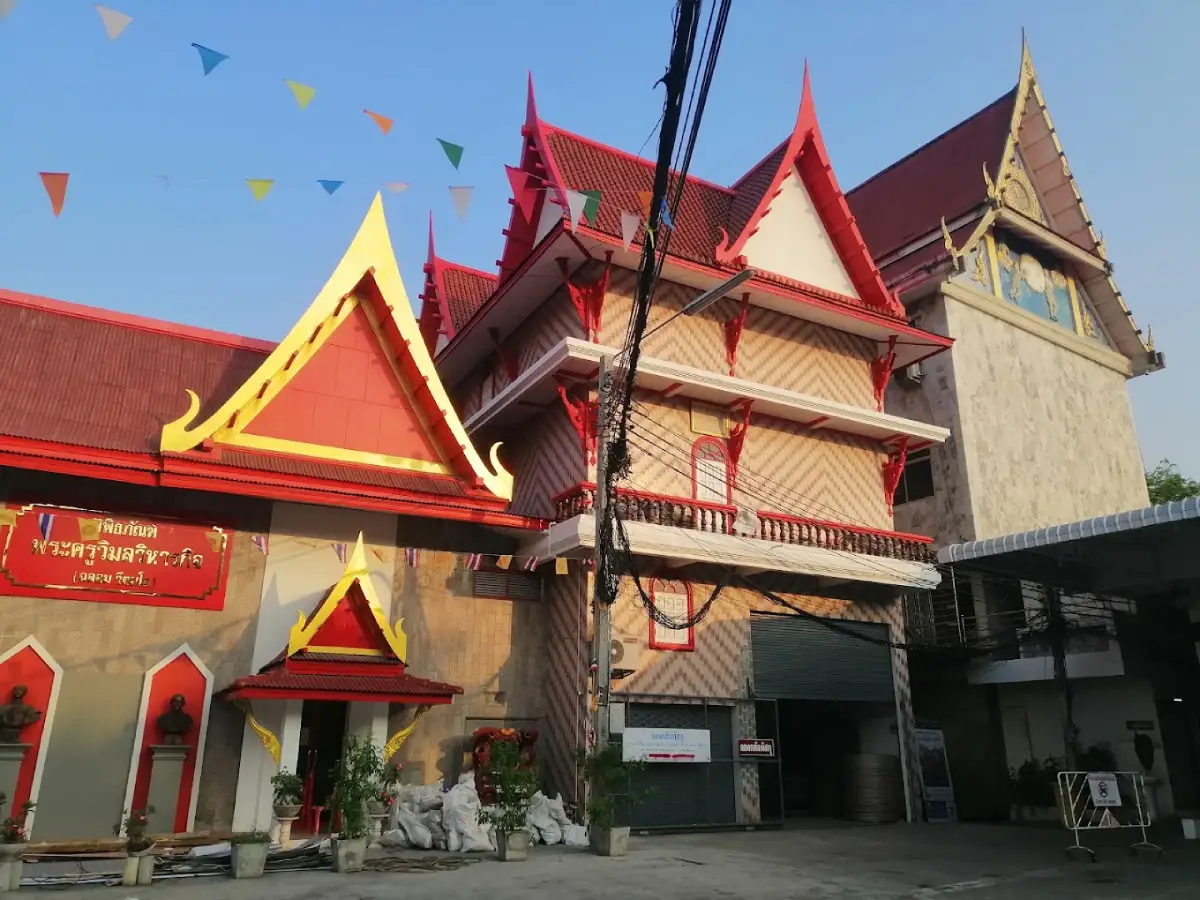
Wat Lat Pla Khao is a historic community temple located at 4 Moo 7, Lat Pla Khao Road, Chorakhe Bua Subdistrict, Lat Phrao District, Bangkok 10230. The temple has roots going back more than 160 years and has long been associated with the people of Lat Pla Khao. Its history began when the area was still a low-lying community shaped by canals, water sources, local homes, and an environment suitable for freshwater fish, especially pla khao. This natural setting gave rise to the original local name and eventually became the name of the temple and the surrounding district. Wat Lat Pla Khao is therefore not only a Buddhist temple but also a cultural landmark that preserves the memory of the old Lat Pla Khao community.
Wat Lat Pla Khao is suitable for visitors who want to make merit, pay respect at a local Buddhist temple, and understand the history of one of Bangkok’s older northern communities. Its value lies in its strong connection to local people rather than in large-scale tourism. The temple was founded through the faith of Amdaeng Duang and Amdaeng Mai, members of the Ketsuwan family line, who donated land for the establishment of a monastic residence. In its early stage, the place was known as “Rab Pla Khao Monastic Residence,” a name linked directly to the landscape and the local community before it gradually became known as Wat Lat Pla Khao.
The old Lat Pla Khao community was once a small settlement in a low-lying area. Its geography was suitable for living, farming, and life near water. The name “Rab Pla Khao” referred to a flat area where pla khao fish were found in large numbers. Pla khao is a freshwater fish familiar to communities living near canals and waterways. As the community grew, the name was used for both the settlement and the monastic residence. Over time, the spoken name changed from “Rab Pla Khao” to “Lat Pla Khao,” and this later became the accepted name of the road, the community, and the temple.
The foundation of Wat Lat Pla Khao is closely connected with Amdaeng Duang and Amdaeng Mai. They were devout Buddhists who donated land for a monastic residence in the Lat Pla Khao community. In that period, donating land for a temple was a major act of faith. It created a spiritual center where local people could make merit, listen to Buddhist teachings, hold ceremonies, and gather for important community occasions. The temple thus became part of local life from its earliest phase.
The original name “Rab Pla Khao Monastic Residence” is historically important because it records the old landscape of the area. The word “rab” described the flat lowland, while “pla khao” referred to the fish that lived in the local waterways. The name was not merely decorative; it reflected the real environment of the old community. When the name gradually became Wat Lat Pla Khao, the original meaning remained embedded in the temple’s identity. Visitors who understand the name can see the temple as a bridge between the old water-based community and the modern urban district of Lat Phrao.
Wat Lat Pla Khao was recognized as a temple around 1892. This recognition marked an important step in the transition from a monastic residence into a fully functioning Buddhist temple. It also reflected the growth of the surrounding community and its need for a stable religious institution. From that point, the temple became an established center for Buddhist ceremonies, merit-making, and local religious life.
Because its history reaches back to the mid-19th century, Wat Lat Pla Khao is one of the older temples in the Lat Phrao and Ram Inthra area. The surrounding district has changed greatly over time. What was once a lowland community has become an urban neighborhood with roads, schools, shops, restaurants, housing estates, markets, and shopping centers. Even as the area changed, the temple continued to serve as a spiritual anchor for local residents. Its presence gives Lat Pla Khao a historical dimension beyond its modern identity as a road and residential district.
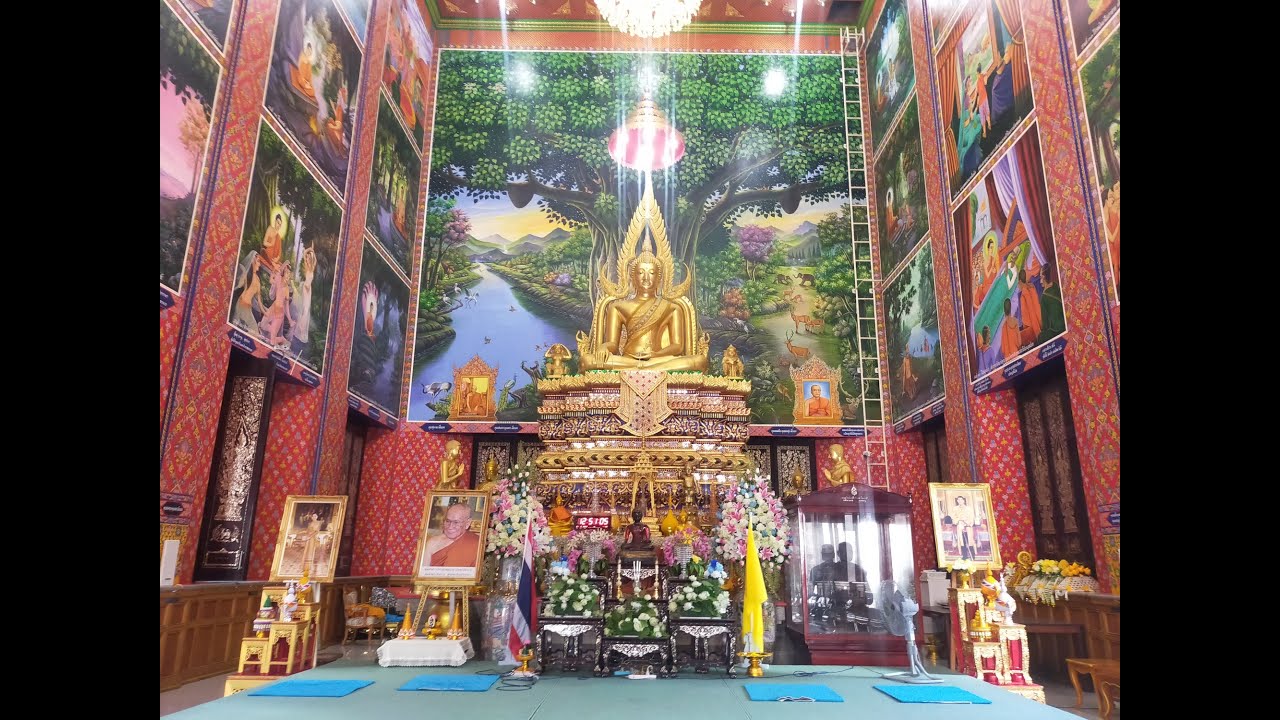
One of the temple’s important objects of local reverence is Luang Pho Noi Phutthasorn. Local people have respected this sacred image for generations. Many visitors come to the temple to make merit, pay respect, and pray according to their personal faith. In cultural terms, Luang Pho Noi represents the long relationship between the temple and the community. This devotion is one of the reasons Wat Lat Pla Khao remains meaningful to people across generations.
The temple is also connected with the local history of Buddhist amulets and restoration activities. Historical accounts mention a Luang Pho Noi medal made in 1966 and temple restoration work in 1978 involving religious ceremonies and participation from respected monks. This part of the temple’s story reflects the role of Wat Lat Pla Khao as a place of faith, local memory, and Buddhist material culture.
At present, Phra Maha Khemanan Piyasilo, Pali Grade 9, serves as the abbot of Wat Lat Pla Khao. He also has an important role in the Lat Phrao monastic community. Under his leadership, the temple continues to function as a place for Buddhist activities, religious education, merit-making, chanting, meditation, and community events. The abbot’s high level of Buddhist textual education also gives the temple a strong association with learning and Dhamma practice.
Wat Lat Pla Khao remains active in community religious life. Activities associated with the temple include chanting, meditation, novice ordination programs, Kathin ceremonies, and Buddhist merit-making events. These activities make the temple a learning space for people of different ages, from children and students to parents and elderly residents. The temple therefore serves religious, educational, and social roles within the Lat Phrao community.
The temple has also adapted to modern life through digital channels. Its official online presence includes options for online merit-making, listening to Dhamma talks, and following temple updates. This allows devotees who cannot visit the temple in person to remain connected with its activities. The digital presence also shows that a historic temple can continue to serve the public while adapting to contemporary behavior and communication habits.
Another notable community feature is the Wat Lat Pla Khao learning library, which has been connected with Bangkok learning activities. This expands the temple’s role beyond religious ceremonies. It gives children, young people, and local residents a place for learning experiences within the temple environment. In this way, Wat Lat Pla Khao functions as a merit-making site, a cultural site, and a community learning space.
For visitors, Wat Lat Pla Khao is relatively easy to reach compared with many older community temples. It is located near Lat Pla Khao Road and not far from Ram Inthra Road, Prasert-Manukitch Road, Phahonyothin Road, and Kaset-Nawamin Road. The surrounding area has schools, restaurants, cafés, markets, and shopping centers. This makes it convenient to combine a temple visit with other stops in the same district. A half-day route can include Wat Lat Pla Khao, Wat Bang Bua, Baan Bang Khen, Lumpinee Boxing Stadium, or the Ram Inthra area.
Getting There is easiest by private car, taxi, or ride-hailing service. Set the destination to Wat Lat Pla Khao, 4 Moo 7, Lat Pla Khao Road, Chorakhe Bua, Lat Phrao, Bangkok 10230, or use the coordinates 13.84654, 100.60471. Visitors coming from Ram Inthra Road can connect directly to Lat Pla Khao Road. Visitors coming from Phahonyothin or Kaset can use Prasert-Manukitch Road or Kaset-Nawamin Road toward Lat Pla Khao.
Public transport is also possible. Routes listed near the temple include the Sukhumvit Line, the Pink Line, and buses such as 1-33, 1071, 1-32E, 1-62, and 178 extra service. Nearby stops include the stop opposite Wat Lat Pla Khao, which is about a 2-minute walk from the temple, and another nearby stop about a 3-minute walk away. For travelers using the Pink Line, Ram Inthra Kor Mor 4 Station is about a 15-minute walk. Bang Bua Station on the Sukhumvit Line is farther away and is better combined with a short taxi or ride-hailing trip.
Travel time should be planned around traffic on Lat Pla Khao Road and Ram Inthra Road, especially during morning and evening rush hours or on weekends. For a quieter visit, late morning is a good period for merit-making and respectful temple exploration. Visitors who want to combine the temple with restaurants, cafés, or nearby attractions can complete the route within half a day without crossing into central Bangkok.
The atmosphere of Wat Lat Pla Khao combines the character of an old community temple with the setting of a modern Bangkok neighborhood. Visitors will find the temple surrounded by homes, shops, roads, and schools. This gives the temple a practical role in everyday community life. A visit is most rewarding when travelers take time to understand the temple’s name, history, and connection with the old Lat Pla Khao settlement.
The temple grounds are used for merit-making, worship, chanting, Dhamma listening, and Buddhist ceremonies. Important areas include the worship area, the place associated with Luang Pho Noi Phutthasorn, spaces for Sangha offerings, community religious areas, and the learning library. Visitors have also mentioned additional worship points such as the Emerald Buddha image, Pu Si Suttho, Ya Pathumma, and Thao Wessuwan, which attract some devotees who come to make merit at the temple.
Proper etiquette is important when visiting Wat Lat Pla Khao. Visitors should dress modestly, speak quietly, keep the grounds clean, avoid disturbing monks or worshippers, and take photographs respectfully. During religious ceremonies, visitors should follow temple guidance and give space to participants. A historic temple that remains active in community life should be approached with respect and patience rather than treated as a quick photo stop.
Wat Lat Pla Khao is more complex than many short online listings suggest. Its story includes the old lowland environment, the name Rab Pla Khao, the land donation by Amdaeng Duang and Amdaeng Mai, the development into Wat Lat Pla Khao, the local reverence for Luang Pho Noi Phutthasorn, ongoing Buddhist activities, and modern digital access. Taken together, these elements make the temple important in religious, cultural, historical, and urban contexts.
For travelers interested in temples and communities in northern Bangkok, Wat Lat Pla Khao is a useful starting point. It can be combined with Wat Bang Bua and Baan Bang Khen for a cultural route, or with The Jas Ramintra, Central Ramindra, and nearby restaurants for a more relaxed local itinerary. Public transport users should start from the nearest convenient train station and continue by short-distance transport to reduce travel time.
The area around Wat Lat Pla Khao has many restaurants and cafés because it is a busy residential neighborhood. Visitors can easily find noodles, rice dishes, cafés, casual restaurants, and family-friendly dining spots before or after making merit. Several restaurants are very close to the temple, making it easy to plan a short visit without long transfers. This is one of the practical advantages of Wat Lat Pla Khao as a Bangkok community temple.
For accommodation, the wider Lat Phrao, Ram Inthra, Kaset-Nawamin, and Bang Khen areas offer hotels, small resorts, serviced apartments, and short-stay options. Visitors should choose accommodation according to their main travel route, such as Ram Inthra, Kaset-Nawamin, Kasetsart University, or Don Mueang Airport. In this part of Bangkok, real travel routes are more important than straight-line distance because roads, turns, and traffic conditions can affect travel time.
Overall, Wat Lat Pla Khao is suitable for local merit-making and for visitors who want to understand Bangkok’s community history. It has a clear historical background, a name connected to the old landscape, a documented origin through land donation, a locally revered sacred image, an active abbot, and present-day religious activities. These elements make the temple worth presenting in detail rather than describing it only by address and opening hours.
On an ordinary weekday, visitors can experience the quiet rhythm of a working community temple. On weekends or Buddhist activity days, the temple becomes livelier with merit-makers, ceremonies, and community gatherings. These two atmospheres show the temple’s dual role: it is a peaceful place for personal worship and a social space where the community comes together.
Wat Lat Pla Khao also helps explain how place names in Bangkok evolve. The change from Rab Pla Khao to Lat Pla Khao reflects spoken language, community memory, and public usage over time. A local name that once described the physical landscape eventually became the name of a road, a community, and a temple known throughout the area. Understanding the name helps visitors understand the history of the place even when the original landscape has changed.
To understand Wat Lat Pla Khao fully, visitors should look at five key themes: the land donation that created the temple, the meaning of Rab Pla Khao and Lat Pla Khao, the temple’s status as an old community temple, the devotion to Luang Pho Noi Phutthasorn, and the temple’s current role in religious activities, learning, and digital communication. These themes give a fuller picture than a simple temple directory entry.
A visit to Wat Lat Pla Khao is best made with intention. Travelers should allow time to appreciate the temple’s history, name origin, and local role. With additional time, the visit can be connected with nearby places that show the diversity of the district, such as Wat Bang Bua, Lumpinee Boxing Stadium, Baan Bang Khen, The Jas Ramintra, and Central Ramindra. This makes Wat Lat Pla Khao a practical and meaningful stop in a northern Bangkok itinerary.
With roots reaching back to the 1860s and recognition as Wat Lat Pla Khao around 1892, the temple deserves to be viewed as one of Bangkok’s older community temples. Its age connects it with the history of the old lowland settlement, the abundance of local waterways, and the faith of people who kept the temple alive through generations. The value of Wat Lat Pla Khao lies in this continuity of faith and its ability to adapt to the present while preserving its original identity.
In conclusion, Wat Lat Pla Khao is a historic temple of the Lat Pla Khao community and Lat Phrao District. Its roots go back more than 160 years to the old Rab Pla Khao monastic residence in a lowland area known for pla khao fish. The temple developed into Wat Lat Pla Khao and remains open for merit-making, worship, Dhamma listening, and Buddhist activities. It is an excellent destination for those who want to visit a local temple in northern Bangkok, learn about the origin of the Lat Pla Khao name, and experience a living community temple within the modern city.
| Name | Wat Lat Pla Khao |
| Location | Chorakhe Bua Subdistrict, Lat Phrao District, Bangkok |
| Address | 4 Moo 7, Lat Pla Khao Road, Chorakhe Bua, Lat Phrao, Bangkok 10230, Thailand |
| Coordinates | 13.84654, 100.60471 |
| Highlights | A historic community temple in Lat Pla Khao with roots going back to the 1860s and a name connected to an old lowland area where pla khao fish were once abundant |
| History | Originally known as Rab Pla Khao Monastic Residence, the temple began from land donated by Amdaeng Duang and Amdaeng Mai of the Ketsuwan family line and was later recognized as Wat Lat Pla Khao around 1892. |
| Name Origin | The original name “Rab Pla Khao” referred to a flat lowland where pla khao fish were found in large numbers. The name later changed in common usage to “Lat Pla Khao.” |
| Distinctive Features | An old private community temple of Lat Pla Khao with Luang Pho Noi Phutthasorn as a locally revered sacred image and an active role in religious, learning, and community activities |
| Travel Information | Private car, taxi, or ride-hailing service is the most convenient option. Use Lat Pla Khao Road, Ram Inthra Road, Prasert-Manukitch Road, or Kaset-Nawamin Road toward Chorakhe Bua. Public transport users can get off near the stop opposite Wat Lat Pla Khao and walk about 2 minutes. |
| Current Status | Open as an active Buddhist temple and community religious site for merit-making, chanting, Dhamma listening, ceremonies, and community activities |
| Open Days | Daily |
| Opening Hours | 08.00 – 17.00 |
| Main Areas / Zones | Merit-making and worship area, Luang Pho Noi Phutthasorn worship area, Buddhist ceremony area, Dhamma listening and chanting channels, online merit-making channels, and Wat Lat Pla Khao learning library |
| Abbot / Caretaker | Phra Maha Khemanan Piyasilo, Pali Grade 9 |
| Main Contact Number | 085-128-4459 |
| Nearby Tourist Attractions | 1. The Jas Ramintra, about 1.9 km 2. Talat Doen Phloen Km.2, about 1.9 km 3. Wat Bang Bua, about 2 km 4. Baan Bang Khen, about 2.5 km 5. Lumpinee Boxing Stadium, about 2.5 km 6. Central Ramindra, about 3 km |
| Nearby Restaurants | 1. Gluttony by The Sin, about 100 m, Tel. 080-823-1487 2. Chak Jai Yentafo Song Khrueang, about 200 m 3. Look Chin Pla Banthat Thong Tee 1 JS100, about 200 m, Tel. 099-262-4645 4. Café Amazon CC1452, about 200 m, Tel. 061-397-7744 5. Dear P Cafe, about 400 m, Tel. 064-691-1178 6. Fast Eddy's Burgers, about 200 m |
| Nearby Accommodations | 1. Skydome Resotel, about 3 km 2. Barefeet Naturist Resort, about 4 km, Tel. 096-889-1112 3. The Bangkok Major Suite, about 5 km, Tel. 02-930-2200 4. Murraya Residence, about 6 km, Tel. 02-538-1400, 086-400-0262 5. Livotel Hotel Kaset Nawamin Bangkok, about 7 km 6. The Quarter Ratchayothin, about 8 km |
Frequently Asked Questions (FAQ)
Q: Where is Wat Lat Pla Khao located?
A: Wat Lat Pla Khao is located at 4 Moo 7, Lat Pla Khao Road, Chorakhe Bua, Lat Phrao, Bangkok 10230, Thailand.
Q: What are the opening days and hours of Wat Lat Pla Khao?
A: Wat Lat Pla Khao is open daily from 08.00 to 17.00.
Q: What is the history of Wat Lat Pla Khao?
A: Wat Lat Pla Khao is a historic community temple with roots going back to the 1860s. It began as Rab Pla Khao Monastic Residence on land donated by Amdaeng Duang and Amdaeng Mai of the Ketsuwan family line.
Q: What does the name Wat Lat Pla Khao mean?
A: The name comes from the older local name “Rab Pla Khao,” meaning a flat lowland where pla khao fish were abundant. Over time, the name changed in common usage to “Lat Pla Khao.”
Q: What is the important sacred image at Wat Lat Pla Khao?
A: Luang Pho Noi Phutthasorn is the sacred image long revered by the Lat Pla Khao community.
Q: Who is the abbot of Wat Lat Pla Khao?
A: The abbot of Wat Lat Pla Khao is Phra Maha Khemanan Piyasilo, Pali Grade 9.
Q: How can travelers get to Wat Lat Pla Khao?
A: The most convenient way is by private car, taxi, or ride-hailing service via Lat Pla Khao Road. Public transport users can get off near the stop opposite Wat Lat Pla Khao and walk about 2 minutes.
Q: What places can be visited near Wat Lat Pla Khao?
A: Nearby places include The Jas Ramintra, Talat Doen Phloen Km.2, Wat Bang Bua, Baan Bang Khen, Lumpinee Boxing Stadium, and Central Ramindra.
 Category: ●Places of Worship
 Group: ●Temple
Last Update : 1 MonthAgo
 Last Update : 1 MonthAgo
 Click to Access the Navigation Map GPS
Wat Lat Pla Khao Map
Recommend

 Phra Nakhon(24)Dusit(17)Khlong San(7)Khlong Toei(3)Jatujak(2)Don Muang(5)Taling Chan(26)Thon Buri(23)Bangkok Noi(31)Bangkok Yai(13)Bang Kapi(5)Bang Kun Tien(15)Bang Khen(3)Bang Kholam(10)Bang Sue(9)Bang Plad(23)Bang Rak(6)Chom Thong(16)Bung Kum(5)Pra Wet(6)Patum Wan(6)Pom Prap Sattru Phai(11)Paya Thai(1)Pra Kanong(4)Pa Sri Charoen(23)Min Buri(7)Yan Na Wa(8)Ratchathewi(4)Rat Burana(6)Lat Krabang(13)Nong Chok(16)Lat Phrao(4)Sathorn(4)Sam Phan Tha Wong(12)Nong Khaem(7)Huai Khwang(3)Suan Luang(7)Din Daeng(2)Lak Si(1)Sai Mai(8)Khan Na Yao(2)Wang Thong Lang(1)Klong Sam Wa(10)Watthana(2)Bang Na(4)Thawi Watthana(3)Bang Khae(5)Thung Khru(4)Bang Bon(3)


