
lovethailand home >North Travel Attractions >Tak Travel Attractions >Mae Sot >Mae Sot > Wat Manee Phraison
TL;DR: Wat Manee Phraison is located at Central Mae Sot Market Area, Mae Sot Subdistrict, Mae Sot District, Tak Province, open Daily, hours 06.00 - 18.00.
Wat Manee Phraison
Open Days: Daily
Opening Hours: 06.00 - 18.00
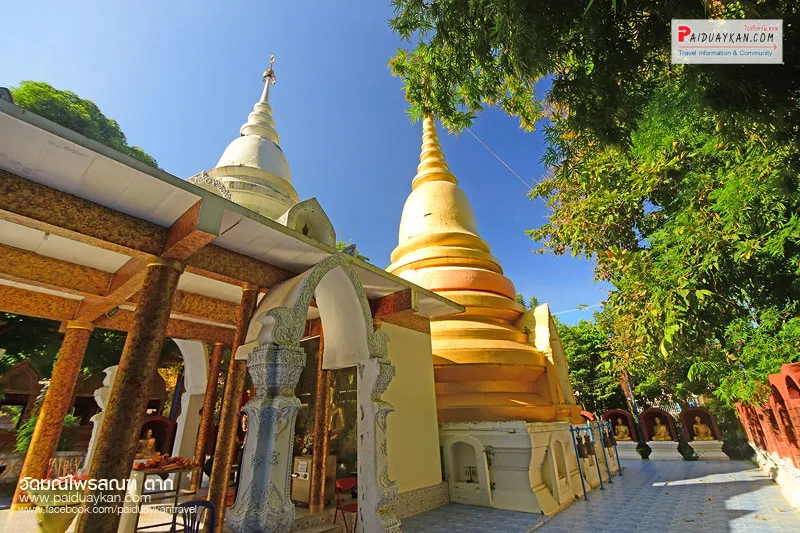
Wat Manee Phraison is one of the most important old temples in Mae Sot District, Tak Province. Located in the heart of Mae Sot Market, the temple has long been closely connected with the daily life of the local community. It serves as a Buddhist place of worship, a spiritual center for residents, and a cultural landmark for travelers who want to understand Mae Sot beyond its reputation as a border trade town. The temple’s most outstanding feature is Chedi Wihan Samphutthe, a highly distinctive structure surrounded by 233 smaller chedis and containing 512,028 small Buddha images inside. This makes Wat Manee Phraison one of the most remarkable temple sites in Thailand for visitors interested in Buddhist devotion, local craftsmanship, and unusual religious architecture.
For travelers who want to experience Mae Sot’s cultural side, Wat Manee Phraison is a valuable stop because it stands in the middle of the old market area. The temple is surrounded by shops, schools, streets, local restaurants, and community activity, yet it remains a calm religious space where people can pray, make merit, and pause from the movement of the town. This relationship between temple and marketplace is one of the most meaningful aspects of Wat Manee Phraison. It shows how Buddhism is woven into the everyday rhythm of Mae Sot, not separated from local life.
The temple has a long history. Wat Manee Phraison was established as a Buddhist temple around 1785 and received its consecrated boundary on 23 August 1956. This long history makes it one of the important religious sites connected with the development of Mae Sot from a local settlement into a major border town of Tak Province. The temple also played a role in Buddhist education, including the teaching of Phra Pariyatti Dhamma. This shows that the temple was not only a place for worship but also a place for learning, moral training, and community formation.
The character of Wat Manee Phraison lies in the combination of an old urban temple atmosphere and unique religious architecture. Within the temple grounds, visitors can find the main chedi, old ordination hall, Buddha image pavilions, shrines, and several areas for worship. Although the temple is located in a busy part of Mae Sot, the inner atmosphere remains peaceful. Visitors can walk slowly through the temple, pay respect to Buddha images, observe the architecture, and feel the presence of a long-standing local Buddhist community.
Chedi Wihan Samphutthe is the most important landmark of Wat Manee Phraison. Its architectural form is unlike ordinary chedis in Tak Province. Around the main chedi are 233 smaller chedis arranged carefully and beautifully, creating a layered visual effect that resembles a sacred floral formation surrounding the central structure. From a distance, the chedi appears balanced and orderly. From a closer view, visitors can see the complexity of the smaller chedis and the craftsmanship that went into the design. This makes Chedi Wihan Samphutthe both a religious monument and an impressive work of local Buddhist art.
The most extraordinary detail of Chedi Wihan Samphutthe is the number of Buddha images enshrined within it. The chedi contains 512,028 small Buddha images, a number that reflects the strength of faith behind its creation. Producing and enshrining such a vast number of Buddha images required devotion, time, resources, and collective participation. Each Buddha image can be understood as an act of merit, a sign of faith in the Triple Gem, and a contribution to the preservation of Buddhism. For this reason, the chedi is not only visually impressive but also spiritually meaningful.
The chedi also has strong symbolic value. The repetition of Buddha images and smaller chedis creates a sense of continuity, devotion, and sacred abundance. Instead of feeling repetitive, the arrangement gives visitors the impression of a vast field of Buddhist faith. The smaller chedis surrounding the main structure can be seen as an architectural expression of collective devotion, where many individual acts of faith gather around a central sacred form. This gives Chedi Wihan Samphutthe a powerful visual and spiritual presence.
Another important highlight of Wat Manee Phraison is its old ordination hall, which is said to be over 200 years old. This old ubosot preserves valuable traces of traditional wooden craftsmanship, especially in the carved wooden gable, roof details, and decorative woodwork. These details reflect the skill of old Mae Sot craftsmen and show how local religious buildings were created with care, patience, and artistic sensitivity. The old ordination hall is therefore important not only as a place for Buddhist rituals but also as evidence of Mae Sot’s historical and artistic heritage.
The old ubosot helps visitors understand another side of the temple. If Chedi Wihan Samphutthe represents large-scale Buddhist devotion through number, structure, and sacred accumulation, the old ordination hall represents the refined skill of traditional woodwork. Its carved details and decorative forms show how craftsmen of the past offered their skill to Buddhism. These wooden elements should be viewed with respect and care, as they are part of the cultural memory of the community and a fragile record of local craftsmanship.
The combination of Chedi Wihan Samphutthe and the old ubosot makes Wat Manee Phraison a temple with several layers of value. Visitors can see both a large and unusual chedi filled with hundreds of thousands of Buddha images and an old wooden ordination hall that reflects local craftsmanship. Together, these structures make the temple a meaningful cultural learning site in Mae Sot. It is not only a place to pray but also a place to understand local history, religious art, and the continuity of Buddhist faith in a border town.
Around the temple are several pavilions and shrines housing Buddha images in different postures. These include Luang Pho Sangkachai, reclining Buddha images, and Buddha images in the Mara Vichai posture. Each image carries its own meaning. Luang Pho Sangkachai is often associated with happiness, abundance, and good fortune. The reclining Buddha represents peace and the passing into final nirvana. The Mara Vichai posture symbolizes the Buddha’s victory over temptation and the firmness of enlightenment. These images allow worshippers to pay respect according to their own faith and intention.
Walking through the temple grounds gives visitors a gradual experience of devotion. Wat Manee Phraison is not a temple with only one point of interest. Its value is distributed across different areas: the chedi, old ubosot, Buddha image pavilions, shrine areas, and community worship spaces. Some areas invite quiet prayer. Some are suitable for observing craftsmanship. Others reveal the connection between the temple and everyday community life. Visitors who take time to walk slowly will understand the temple more deeply than those who stop only for a quick photograph.
Wat Manee Phraison is also important as a spiritual center of the Mae Sot market community. The surrounding area is home to a diverse population, including Thai residents, people of Chinese descent, Myanmar communities, Karen people, Tai Yai people, traders, students, and travelers. As a border town, Mae Sot has always been shaped by movement, trade, migration, and cultural contact. The temple serves as a shared religious space where people from different backgrounds can participate in merit-making, festivals, ceremonies, and Buddhist worship.
On important Buddhist days, Wat Manee Phraison continues to function as an active religious site. Local people come to make merit, listen to sermons, offer alms and necessities to monks, join candlelight processions, and participate in temple activities. These occasions include Makha Bucha, Visakha Bucha, Asalha Bucha, Buddhist Lent, the end of Buddhist Lent, Kathin ceremonies, and other merit-making events. This active use is important because it means the temple is not merely a tourist attraction. It remains a living part of Mae Sot’s religious and community life.
The temple’s role in education also adds to its local importance. Wat Manee Phraison has been connected with Buddhist learning and the teaching of Phra Pariyatti Dhamma. The nearby municipal school associated with the temple area further reflects the long relationship between religious institutions and community education in Mae Sot. This link between temple and learning is common in many Thai communities, where temples historically served as centers of knowledge, literacy, moral training, and social support.
For visitors traveling from Tak town to Mae Sot, the temple is about 86 km from Mueang Tak along the Tak-Mae Sot route. Once in Mae Sot, the temple is easy to reach because it is located in the central market area near important local roads such as Intharakiri Road and Chidwana Road. Visitors arriving from the Thai-Myanmar border area, Rim Moei Market, or the Thai-Myanmar Friendship Bridge can also reach the temple conveniently. This makes Wat Manee Phraison suitable for travelers staying overnight in Mae Sot, day visitors, and those passing through the border district.
Getting There is convenient by private car, local hired vehicle, or local public transport within Mae Sot. From Tak town, follow the Tak-Mae Sot route into Mae Sot District, then continue toward the central market area. The temple is located within the urban community, near Intharakiri Road, Chidwana Road, Mae Sot Market, and Wat Manee Phraison Municipal School. Because it is in a town center, visitors should allow time for traffic, parking, and pedestrian activity around the market area.
A visit to Wat Manee Phraison should not be rushed. Visitors should begin by paying respect at the worship areas, then walk to Chedi Wihan Samphutthe to observe the arrangement of the 233 smaller chedis and the symbolic presence of the 512,028 Buddha images inside. After that, the old ubosot is worth careful attention, especially its wooden gable, roof details, and carved decorative elements. The pavilions and Buddha images around the temple also add depth to the visit. Morning and late afternoon are pleasant times to visit because the light is softer and the weather is usually more comfortable for walking.
Photography should be done respectfully. The chedi and old ubosot are visually striking, but Wat Manee Phraison is still an active place of worship. Visitors should avoid blocking worshippers, disturbing ceremonies, or touching old wooden elements and sacred objects without permission. If monks, local residents, or ceremonies are present, photography should be discreet and considerate. Respectful travel helps preserve both the sacred atmosphere and the cultural value of the temple.
Wat Manee Phraison is suitable for many types of travelers: Buddhist pilgrims, cultural tourists, architecture lovers, photographers, families, and visitors who want to understand the local character of Mae Sot. The temple is easy to combine with the market area, local restaurants, nearby hotels, Wat Thai Wattanaram, Rim Moei Market, the Thai-Myanmar Friendship Bridge, and other attractions in and around Mae Sot. Because it is located in the town center, it can be included in a half-day cultural route without requiring long travel time.
In terms of religious art, Chedi Wihan Samphutthe is especially interesting because the arrangement of many smaller chedis around the main structure is not commonly seen in ordinary Thai temple architecture. The repeated forms create a sense of sacred order and visual rhythm. The vast number of Buddha images inside strengthens the impression of collective merit and Buddhist devotion. For visitors interested in religious symbolism, the chedi can be understood as a visual expression of faith gathered into one architectural form.
The old ubosot, on the other hand, represents the historical depth of the temple. Its wooden carvings and traditional details show the skill of local craftsmen and the artistic taste of Mae Sot in earlier periods. Since wooden structures are vulnerable to weathering and time, visitors should appreciate them with care. These details are part of the temple’s cultural heritage and contribute to the identity of Mae Sot as a town with more than commercial significance.
The importance of Wat Manee Phraison lies not in the size of its grounds but in the density of its stories. It brings together the history of a temple established around 1785, a consecrated boundary granted in 1956, Buddhist education, an old wooden ubosot, a highly unusual chedi, and a living relationship with the market community. These layers make the temple one of the most meaningful cultural stops in Mae Sot. It is a place where visitors can see how religion, art, history, and everyday life remain closely connected.
In summary, Wat Manee Phraison is an old and significant temple in the heart of Mae Sot Market, Tak Province. Visitors can pay respect to Buddha images, admire Chedi Wihan Samphutthe with its 233 surrounding chedis and 512,028 small Buddha images, view the old ubosot with traditional woodcarving, and experience the atmosphere of a living urban temple that continues to serve the Mae Sot community. For anyone traveling to Mae Sot, this temple is a recommended cultural and spiritual stop that reveals the town’s long Buddhist heritage and local identity.
| Name | Wat Manee Phraison |
| Location | Central Mae Sot Market Area, Mae Sot Subdistrict, Mae Sot District, Tak Province |
| Address / Landmark | Located within Mae Sot Municipality, near Intharakiri Road, Chidwana Road, Mae Sot Market, and Wat Manee Phraison Municipal School |
| Highlights | Chedi Wihan Samphutthe, surrounded by 233 small chedis and containing 512,028 small Buddha images |
| History | Established as a temple around 1785, received its consecrated boundary on 23 August 1956, and has long served as an important temple of the Mae Sot community |
| Distinctive Features | Old temple in the heart of Mae Sot Market, featuring Chedi Wihan Samphutthe, an old ubosot, wooden carvings, Buddha image pavilions, and community worship areas |
| Important Sacred Objects / Structures | Chedi Wihan Samphutthe, old ubosot over 200 years old, Buddha image pavilions, Luang Pho Sangkachai, reclining Buddha image, and Mara Vichai Buddha images |
| Chedi Wihan Samphutthe | Surrounded by 233 smaller chedis and containing 512,028 small Buddha images; the main architectural and spiritual highlight of the temple |
| Old Ubosot | Old ordination hall over 200 years old, noted for wooden carvings, gable details, roof ornaments, and traditional Mae Sot craftsmanship |
| Abbot / Caretaker | Phra Khru Prakat Bunyakon (Sakchai Katapunyo) |
| Travel Information | Travel into Mae Sot town and continue to the central market area. The temple is located in an urban community near Intharakiri Road and Chidwana Road, accessible by private car, local hired vehicle, or local songthaew. |
| Distance From Mueang Tak | About 86 km via the Tak-Mae Sot route |
| Current Status | Active temple and important cultural-religious site of Mae Sot, open daily for worshippers and visitors |
| Open Days | Daily |
| Opening Hours | 06.00 - 18.00 |
| Main Contact Number | 086-343-9034 |
| Facilities | Temple courtyard, Chedi Wihan Samphutthe worship area, old ubosot, Buddha image pavilions, merit-making areas, and parking space according to the urban temple setting |
| Main Areas / Zones | Chedi Wihan Samphutthe, old ubosot, Buddha image pavilions, Luang Pho Sangkachai area, reclining Buddha area, Mara Vichai Buddha image area, and temple courtyard |
| Nearby Tourist Attractions | 1. Mae Sot Market, about 1 km 2. Mae Sot Airport, about 3 km 3. Wat Thai Wattanaram, about 6 km 4. Rim Moei Market, about 8 km 5. Thai-Myanmar Friendship Bridge, about 9 km 6. Phra Wo Shrine, about 16 km |
| Nearby Restaurants | 1. Nam Pan Krachai, in front of Wat Manee Phraison, about 0 km, Tel. 094-829-4571 2. One Way Phochana, about 1 km, Tel. 093-198-7167 3. Burger House Mae Sot, in front of Manee School, about 1 km, Tel. 082-923-3193 4. Krua Kan Eng, Intharakiri Road, about 1 km, Tel. 099-170-1789 5. Kafae Mo Din Khanom Chin Khayum, about 3 km, Tel. 055-533-880 6. Khanom Chin Khayum Khun Noi, about 3 km, Tel. 055-533-916 |
| Nearby Accommodations | 1. HOP INN Mae Sot, about 2 km, Tel. 02-080-2222 2. HOP INN Mae Sot Building B, about 2 km, Tel. 063-205-7365 3. Fortune D Hotel Maesot, about 2 km, Tel. 055-036-899 4. Centara Life Hotel Mae Sot, about 2 km, Tel. 055-532-601-8 5. Monte Maesot Hotel, about 4 km, Tel. 065-415-8979, 055-030-808 6. B2 Mae Sot Boutique & Budget Hotel, about 4 km |
Frequently Asked Questions (FAQ)
Q: Where is Wat Manee Phraison located?
A: Wat Manee Phraison is located in the heart of Mae Sot Market, Mae Sot Subdistrict, Mae Sot District, Tak Province, near Intharakiri Road, Chidwana Road, and Wat Manee Phraison Municipal School.
Q: Why is Wat Manee Phraison important?
A: Wat Manee Phraison is an old temple of Mae Sot, established around 1785, and has long served as a spiritual and cultural center of the Mae Sot market community.
Q: What is special about Chedi Wihan Samphutthe?
A: Chedi Wihan Samphutthe is surrounded by 233 smaller chedis and contains 512,028 small Buddha images, making it one of the temple’s most distinctive architectural and spiritual highlights.
Q: Does Wat Manee Phraison have an old ubosot?
A: Yes. The temple has an old ubosot over 200 years old, noted for wooden carvings, gable details, roof ornaments, and traditional craftsmanship of Mae Sot artisans.
Q: What are the opening hours of Wat Manee Phraison?
A: Wat Manee Phraison is generally open daily from 06.00 to 18.00, making morning and late afternoon good times for worship and temple visits.
Q: How can visitors get to Wat Manee Phraison?
A: From Mueang Tak, follow the Tak-Mae Sot route into Mae Sot District, then continue to the central market area. The temple can be reached by private car, local hired vehicle, or local transport within Mae Sot.
Q: What nearby attractions can be visited with Wat Manee Phraison?
A: Nearby attractions include Mae Sot Market, Wat Thai Wattanaram, Rim Moei Market, the Thai-Myanmar Friendship Bridge, Mae Sot Airport area, and Phra Wo Shrine.
Q: What type of travelers should visit Wat Manee Phraison?
A: The temple is suitable for Buddhist visitors, cultural travelers, architecture lovers, photographers, and anyone interested in old temples, unusual chedi design, woodcarving, and the local culture of Mae Sot.
 Category: ●Places of Worship
 Group: ●Temple
Last Update : 5 MonthAgo
 Last Update : 5 MonthAgo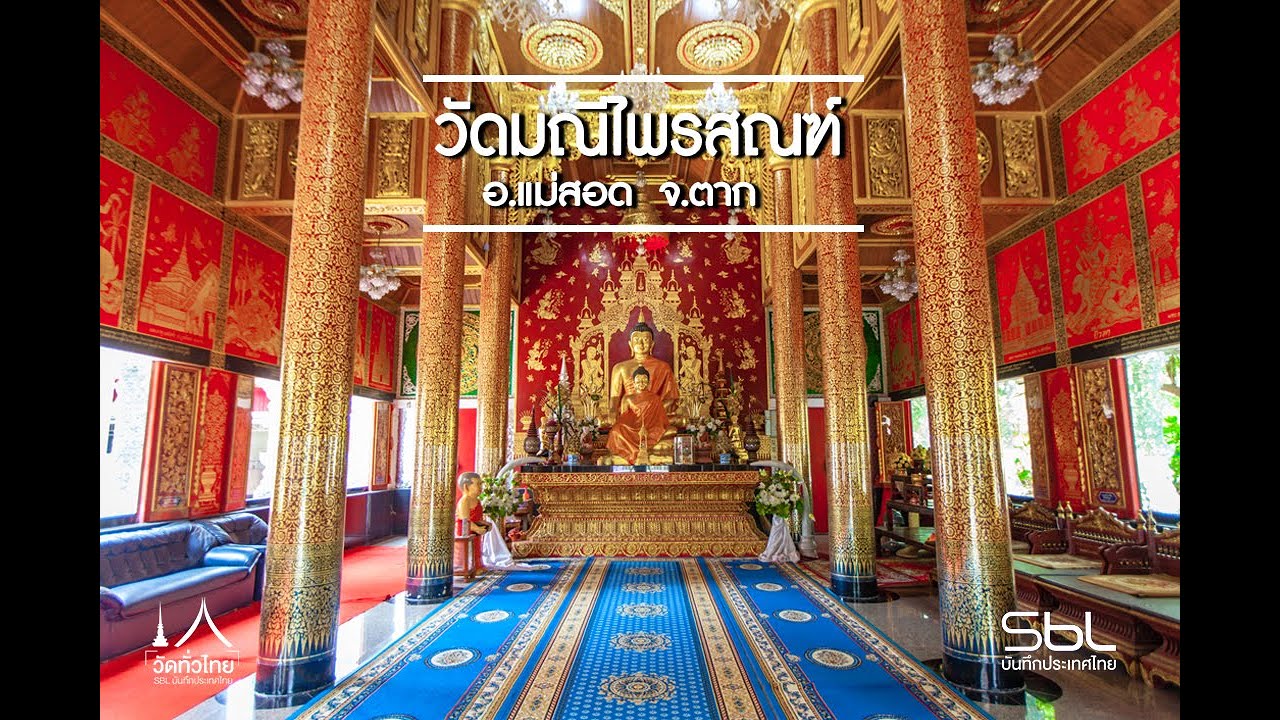
 Click to Access the Navigation Map GPS
Wat Manee Phraison Map
Recommend

 Art, Culture and Heritage
 Historical Sites and Monuments(2)
 Landmarks and Memorials(3)
 Art, Craft Centres, Tradition(6)
 Historic Homes and Cities(2)
 Educational Places
 Educational Gardens, Farm(2)
Temple(22)
Educational Gardens, Farm(2)
Temple(22)
 Other Sacred Sites(9)
 Research and Development
 Royal Project(1)
 Suburban Living
 Village, Community(5)
 Local Market(3)
 Nature and Wildlife
 National Parks and Marine Reserves(11)
 Mountain (Doi)(9)
 Dam, Reservoir, Lake(14)
 Waterfalls(23)
 Hot Springs(2)
 Caves(6)
 River, Canal(1)
 Bays and Beaches(1)
 Islands(1)
 Other natural attractions(1)
 Entertainment and Agricultural
 Farms, Parks and Ecotourism(5)
 Outdoor and Adventure Activities(4)
 Travel Articles, Recipes
 Travel Review, Food Review(1)


