
lovethailand home >North Travel Attractions >Tak Travel Attractions >Mae Sot >Mae Pa > Wat Phothikhun (Wat Huai Toei)
TL;DR: Wat Phothikhun (Wat Huai Toei) is located at Ban Huai Toei, Moo 6, Mae Pa Subdistrict, Mae Sot District, Tak Province, open Daily, hours Open for daytime visits and Buddhist activities.
Wat Phothikhun (Wat Huai Toei)
Open Days: Daily
Opening Hours: Open for daytime visits and Buddhist activities
Wat Phothikhun, also known locally as Wat Huai Toei, is an important forest-practice temple in Mae Pa Subdistrict, Mae Sot District, Tak Province. Located beside Highway 105 on the Tak-Mae Sot route around kilometer marker 69, the temple stands in Ban Huai Toei, Moo 6, before entering Mae Sot town. Wat Phothikhun is known for its peaceful forest-temple atmosphere, its role as a place of Buddhist practice, and especially its extraordinary 3-storey ordination hall designed in the form of a large boat. This distinctive ubosot was built with deep devotion over a period of 18 years by Mr. Somprasong Chaonairai, who dedicated his time, skill, and heart to the project without accepting any wage. For travelers heading toward Mae Sot, the temple is a meaningful stop for worship, meditation, architecture, and quiet reflection.
Unlike many roadside temples that are visited mainly for convenience, Wat Phothikhun has a strong identity as an aranyawasi temple, or forest temple. The word aranyawasi refers to temples or monastic communities that emphasize seclusion, calm surroundings, and spiritual practice. The atmosphere at Wat Phothikhun reflects this character clearly. The temple grounds are quiet, shaded by trees, and arranged in a way that supports contemplation rather than crowds. Visitors who enter the temple often feel a slower rhythm immediately, especially after traveling along the mountainous Tak-Mae Sot road. The contrast between the busy highway and the calm interior of the temple is one of the reasons this place feels memorable.
Wat Phothikhun is located at 64/1 Moo 6, Ban Huai Toei, Mae Pa Subdistrict, Mae Sot District, Tak Province 63110. It is about 11 km from Mae Sot town and not far from Noen Phisawong, the well-known “mysterious hill” on the Tak-Mae Sot road. This location makes the temple easy to include in a Mae Sot itinerary. Visitors coming from Tak town can stop at the temple before reaching Mae Sot, while those staying in Mae Sot can drive back along Highway 105 to visit the temple within a short time. Private cars, rental cars, and local hired vehicles are the most convenient options. Because Highway 105 includes mountain sections and regular traffic, careful driving is recommended, especially during rain or low-visibility conditions.
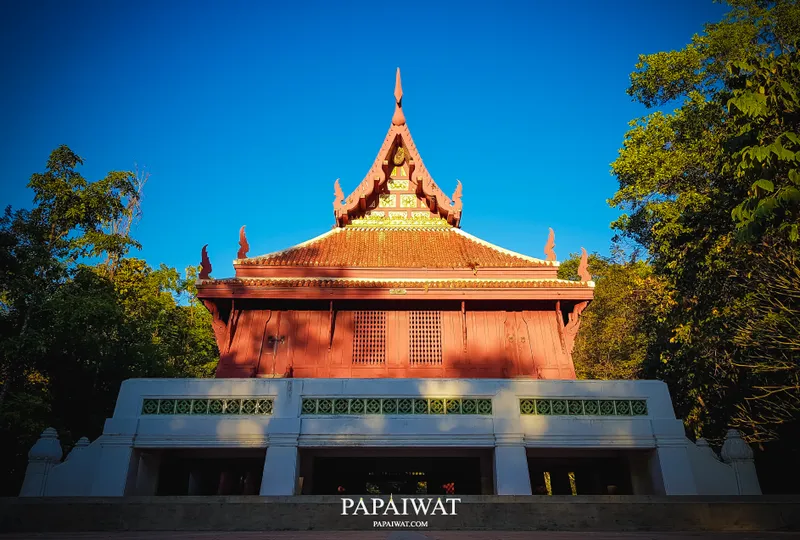
The most remarkable structure at Wat Phothikhun is its 3-storey ordination hall. The building resembles a large boat and is one of the most distinctive religious structures in the Mae Sot area. Each level has its own character. The lower level is simple and undecorated, giving the structure a sense of foundation and stability. The second level begins to show decorative work on the walls, ceiling, and column capitals. The third level functions as the main ubosot, used for Buddhist ceremonies, and is the most elaborately decorated part of the building. Its walls, pillars, and ceiling are filled with intricate low-relief sculpture, painted details, glass ornamentation, and gilded surfaces.
The story behind the ubosot gives it exceptional emotional and cultural value. Mr. Somprasong Chaonairai designed and built the structure with remarkable dedication over 18 years. He devoted his life and spirit to the construction and did not ask for payment. This story transforms the ubosot from a beautiful building into a monument of faith. It represents patience, craftsmanship, self-sacrifice, and devotion to Buddhism. Visitors who know this background often view the building differently. Every detail seems to carry the weight of years of effort, and the structure becomes a visible expression of personal faith turned into public religious heritage.
The boat-like form of the ordination hall is especially meaningful. In Buddhist interpretation, a boat can be seen as a symbol of crossing over: moving from suffering toward wisdom, from confusion toward clarity, and from the unstable world toward the shore of Dhamma. Even for visitors who do not interpret the building symbolically, the shape creates a strong visual impression. The ubosot appears as if it is carrying faith forward through time. Set within the quiet atmosphere of a forest temple, the form feels both imaginative and contemplative. It invites visitors not only to admire the building but also to reflect on the spiritual journey suggested by its shape.
Inside the third level, the ubosot houses a large principal Buddha image used as the focus of worship and ceremonial activity. The interior decorations are carefully composed, combining low-relief sculpture, painting, colored glass, and gilding. These elements create a sacred atmosphere without losing the handmade character of the work. The pillars, walls, and ceiling are not merely decorative surfaces; they are part of a unified artistic environment created through long labor and devotion. Visitors should take time to observe the details slowly, because the value of the building is revealed through close looking rather than a quick glance.
The exterior of the ubosot is also richly decorated with complex patterns. The ornamentation draws from traditional Buddhist and Thai artistic forms, but it is not a simple copy of any standard temple design. Instead, the creator used traditional forms as a foundation and developed them through imagination. The result is a structure that feels rooted in Buddhist art yet strongly individual. This makes the ubosot valuable not only as a religious building but also as a work of local creative expression. It shows how temple art can continue to evolve when shaped by faith, personal vision, and long-term dedication.
From a craftsmanship perspective, the ubosot is impressive because low-relief sculpture requires careful planning, proportion, surface control, and visual balance. When this work is combined with painting, glass decoration, and gilding, the difficulty increases. Each element must relate to the others. If one area is too heavy or too plain, the overall harmony can be lost. The fact that the building maintains a continuous sense of richness and balance shows the patience and concentration behind the work. Wat Phothikhun therefore deserves attention from travelers interested in folk craftsmanship, Buddhist art, and religious architecture outside major urban centers.
Wat Phothikhun is also important as a meditation-practice temple associated with Luang Pho Phra Maha Wiboon Buddhayano, who is remembered as the first abbot of the temple. The temple continues to preserve its role as a place for Dhamma practice and Buddhist education. This identity is important because the temple should not be viewed only as a sightseeing stop. The beautiful ubosot attracts visitors, but the deeper character of Wat Phothikhun lies in its function as a place of practice, restraint, and inner cultivation. Visitors should respect this atmosphere by moving quietly and avoiding behavior that disturbs monks or practitioners.
Publicly available information identifies Phra Khru Suthee Wutthikhun, Dr., as the current abbot of Wat Phothikhun. Under the care of the monastic community, the temple continues to serve local residents, Buddhist practitioners, and visitors traveling along the Tak-Mae Sot route. It remains a place where religion, art, and local devotion meet. For this reason, the temple has value on several levels: as a forest temple, as a place of worship, as a center of Buddhist practice, and as an artistic landmark created through extraordinary personal dedication.
For first-time visitors to Mae Sot, Wat Phothikhun offers a different view of the district. Mae Sot is often associated with border trade, markets, the Thai-Myanmar Friendship Bridge, and multicultural communities. Wat Phothikhun adds another dimension: the quiet spiritual landscape before reaching town. It shows that Mae Sot is not only a commercial border district but also a region with forest temples, Buddhist practice centers, and local religious art. Stopping here before entering the town allows travelers to experience the calmer side of the area.
Photographers and art lovers will find many interesting visual elements at the temple. The large boat-shaped ubosot, the exterior relief patterns, the glass decorations, the gilded details, the interplay of light and shadow, and the forest-temple surroundings all create strong photographic opportunities. However, photography should be done respectfully. Visitors should avoid disturbing religious activities, should not touch decorative surfaces, and should be careful when taking photos inside sacred buildings. The temple is not only an artistic site but also an active place of worship.
Getting There is straightforward by private car or rental car. From Tak town, follow Highway 105 toward Mae Sot and look for the area around kilometer marker 69 in Mae Pa Subdistrict. The temple is located before entering Mae Sot town. From Mae Sot town, drive back along Highway 105 toward Tak for about 11 km. Visitors should watch for temple signs and slow down before entering the temple area. During the rainy season, extra care is recommended because the road can be slippery in some sections and the mountain route may have changing weather conditions.
Wat Phothikhun can be combined with nearby attractions on the Tak-Mae Sot route. Visitors may stop at Noen Phisawong, continue to Mae Sot town, visit Wat Thai Wattanaram, explore Rim Moei Market, or travel onward to the Thai-Myanmar Friendship Bridge. Those interested in nature can also plan further trips to Tararak Waterfall, Mae Kasa Hot Spring, or Khun Phawo National Park, depending on time and road conditions. The temple works well as either the first cultural stop before entering Mae Sot or the final stop before returning toward Tak.
The temple is suitable for many types of travelers: Buddhist visitors, meditation practitioners, cultural tourists, architecture enthusiasts, photographers, and travelers looking for a quiet stop along the mountain road. Although the ubosot is visually striking, the best way to appreciate Wat Phothikhun is not to rush. Visitors should walk slowly through the temple grounds, observe the structure from different angles, and spend time noticing the details of the relief work, glass ornamentation, and gilded surfaces. The temple rewards patience, just as the building itself was created through patience.
Visitors should dress modestly and behave respectfully because Wat Phothikhun is a forest-practice temple. Clothing should be appropriate for entering a Buddhist temple. Voices should be kept low, shoes should be removed before entering designated sacred areas, and visitors should avoid entering monks’ quarters or meditation areas without permission. Those wishing to make merit or ask about temple activities may contact the temple directly through its publicly listed phone number. Respecting the temple’s quiet character helps preserve the atmosphere that makes Wat Phothikhun meaningful.
Wat Phothikhun also stands as an important example of how sacred architecture can emerge from individual devotion and community faith. The story of Mr. Somprasong Chaonairai, who spent 18 years building the ubosot without accepting wages, is central to the temple’s identity. It reminds visitors that Buddhist art is not only about beauty, but also about intention. The ubosot is a physical record of devotion, perseverance, and the wish to create something worthy as an offering to Buddhism.
In summary, Wat Phothikhun, or Wat Huai Toei, is a significant forest-practice temple in Mae Pa Subdistrict, Mae Sot District, Tak Province. Located beside Highway 105 around kilometer marker 69, it is known for its peaceful setting and its extraordinary 3-storey boat-shaped ubosot. Built over 18 years by Mr. Somprasong Chaonairai without wages, the ubosot combines low-relief sculpture, painting, glass decoration, gilding, and imaginative traditional forms. For visitors traveling to Mae Sot, the temple is a recommended stop for worship, Buddhist art, local craftsmanship, and quiet reflection before entering the border town.
| Name | Wat Phothikhun |
| Other Name | Wat Huai Toei |
| Location | Ban Huai Toei, Moo 6, Mae Pa Subdistrict, Mae Sot District, Tak Province |
| Address | 64/1 Moo 6, Ban Huai Toei, Mae Pa Subdistrict, Mae Sot District, Tak Province 63110 |
| Coordinates | Latitude 16.76215, Longitude 98.64786 |
| Highlights | Forest-practice temple beside the Tak-Mae Sot highway, known for its 3-storey boat-shaped ubosot built through 18 years of devotion |
| Distinctive Features | Aranyawasi forest temple with a peaceful atmosphere, suitable for worship, merit-making, meditation practice, and viewing Buddhist art |
| Important Sacred Objects / Structures | 3-storey boat-shaped ubosot, large principal Buddha image, low-relief sculpture, glass decoration, gilded ornamentation, and meditation-practice areas |
| Ubosot | Designed and built by Mr. Somprasong Chaonairai over 18 years without accepting wages; the building resembles a large boat and has 3 levels, with the third level serving as the main ordination hall for Buddhist ceremonies |
| Abbot / Caretaker | Phra Khru Suthee Wutthikhun, Dr. |
| First Abbot | Luang Pho Phra Maha Wiboon Buddhayano |
| Travel Information | Use Highway 105 on the Tak-Mae Sot route. The temple is around kilometer marker 69, before entering Mae Sot town. Private cars and rental cars are the most convenient options. |
| Current Status | Active forest-practice temple and important religious-art attraction in Mae Sot District |
| Open Days | Daily |
| Opening Hours | Open for daytime visits and Buddhist activities |
| Main Contact Number | 055-500-092 |
| Facilities | Temple courtyard, principal Buddha worship area, ubosot, meditation-practice areas, and parking space according to local temple conditions |
| Main Areas / Zones | 3-storey ubosot, principal Buddha area, temple courtyard, meditation-practice area, and exterior art-viewing area around the ubosot |
| Nearby Tourist Attractions | 1. Noen Phisawong, about 1 km 2. LaOr Flower Garden, about 8 km 3. Mae Sot Town, about 11 km 4. Wat Thai Wattanaram, about 16 km 5. Rim Moei Market, about 18 km 6. Thai-Myanmar Friendship Bridge, about 19 km |
| Nearby Restaurants | 1. Local restaurants in Ban Huai Toei and Mae Pa area, about 2-5 km 2. Café Amazon on the Mae Sot route, about 8-10 km 3. Krua Chidwana, about 13 km, Tel. 055-532-614 4. Krua Khun Tu, about 14 km, Tel. 055-533-051 5. Khanom Chin Khayum, about 14 km, Tel. 055-533-916, 084-379-8859 6. Kao Phochana, about 14 km, Tel. 055-531-653, 089-533-2497 |
| Nearby Accommodations | 1. PS Mae Sot Hotel, about 8 km, Tel. 055-536-642 2. Fortune D Mae Sot, about 12 km, Tel. 055-036-899 3. Monte Maesot Hotel, about 12 km, Tel. 065-415-8979 4. Centara Life Hotel Mae Sot, about 12 km, Tel. 055-532-601-8 5. Baan Chokdee And Resort, about 13 km, Tel. 065-393-2998 6. HOP INN Mae Sot, about 14 km, Tel. 02-080-2222 |
Frequently Asked Questions (FAQ)
Q: Where is Wat Phothikhun located?
A: Wat Phothikhun, also known as Wat Huai Toei, is located at 64/1 Moo 6, Ban Huai Toei, Mae Pa Subdistrict, Mae Sot District, Tak Province, beside Highway 105 around kilometer marker 69.
Q: What is Wat Phothikhun known for?
A: The temple is best known for its 3-storey boat-shaped ubosot, designed and built by Mr. Somprasong Chaonairai over 18 years without accepting wages.
Q: What type of temple is Wat Phothikhun?
A: Wat Phothikhun is an aranyawasi forest-practice temple with a quiet atmosphere suitable for worship, merit-making, meditation practice, and peaceful reflection.
Q: What is special about the ubosot at Wat Phothikhun?
A: The ubosot resembles a large boat and has 3 levels. The third level is the main ordination hall, decorated with low-relief sculpture, painting, glass ornamentation, and gilding.
Q: Who built the ubosot at Wat Phothikhun?
A: The ubosot was designed and built by Mr. Somprasong Chaonairai, who devoted 18 years to the project and did not accept any wage.
Q: How can visitors get to Wat Phothikhun?
A: Visitors can use Highway 105 on the Tak-Mae Sot route. The temple is around kilometer marker 69, before entering Mae Sot town. Private cars and rental cars are the most convenient options.
Q: What nearby attractions can be visited with Wat Phothikhun?
A: Nearby attractions include Noen Phisawong, Mae Sot town, Wat Thai Wattanaram, Rim Moei Market, the Thai-Myanmar Friendship Bridge, LaOr Flower Garden, and other Mae Sot attractions.
Q: How should visitors behave at Wat Phothikhun?
A: Visitors should dress modestly, keep their voices low, respect meditation areas, avoid disturbing monks or practitioners, and photograph the ubosot carefully without touching decorative elements.
 Category: ●Places of Worship
 Group: ●Temple
Last Update : 5 MonthAgo
 Last Update : 5 MonthAgo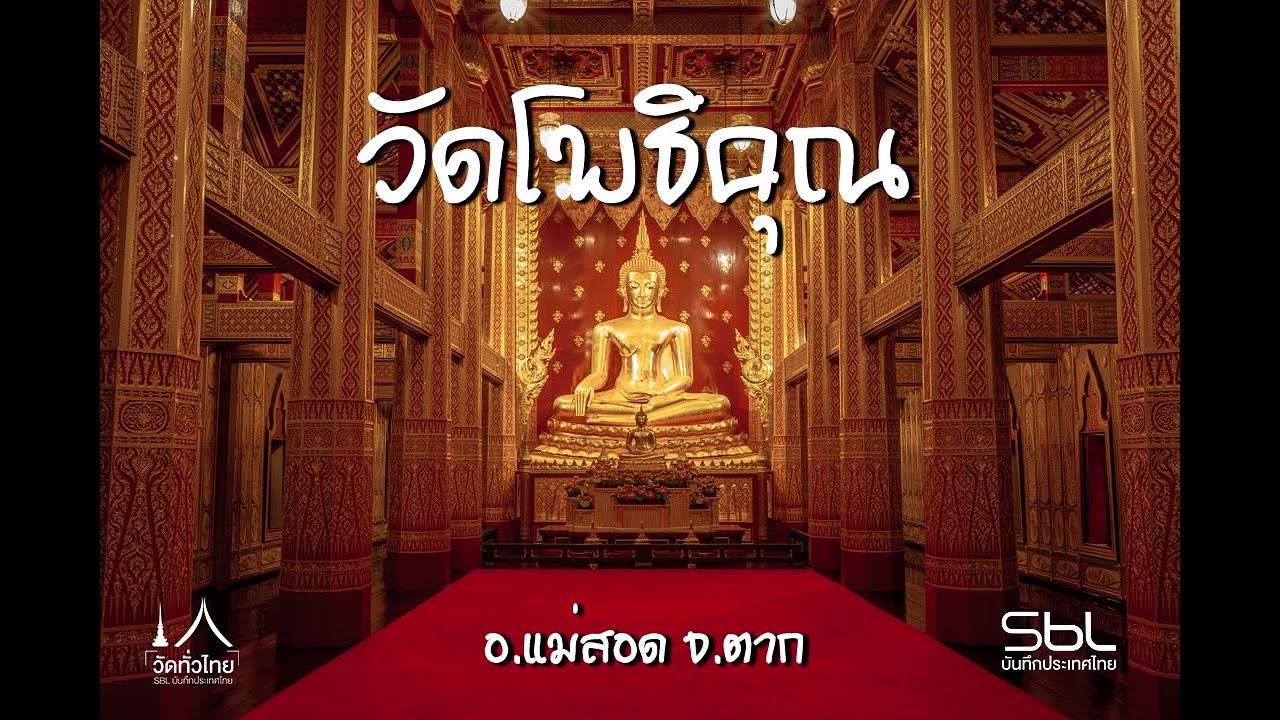
 Click to Access the Navigation Map GPS
Wat Phothikhun (Wat Huai Toei) Map
Recommend

 Art, Culture and Heritage
 Historical Sites and Monuments(2)
 Landmarks and Memorials(3)
 Art, Craft Centres, Tradition(6)
 Historic Homes and Cities(2)
 Educational Places
 Educational Gardens, Farm(2)
Temple(22)
Educational Gardens, Farm(2)
Temple(22)
 Other Sacred Sites(9)
 Research and Development
 Royal Project(1)
 Suburban Living
 Village, Community(5)
 Local Market(3)
 Nature and Wildlife
 National Parks and Marine Reserves(11)
 Mountain (Doi)(9)
 Dam, Reservoir, Lake(14)
 Waterfalls(23)
 Hot Springs(2)
 Caves(6)
 River, Canal(1)
 Bays and Beaches(1)
 Islands(1)
 Other natural attractions(1)
 Entertainment and Agricultural
 Farms, Parks and Ecotourism(5)
 Outdoor and Adventure Activities(4)
 Travel Articles, Recipes
 Travel Review, Food Review(1)


