
lovethailand home >North Travel Attractions >Tak Travel Attractions >Muang Tak >Nong Luang > Wat Bot Mani Si Bun Rueang
TL;DR: Wat Bot Mani Si Bun Rueang is located at Ban Rommani, Taksin Road, Nong Luang Subdistrict, Mueang Tak District, Tak Province, open Daily, hours Daytime visits are recommended.
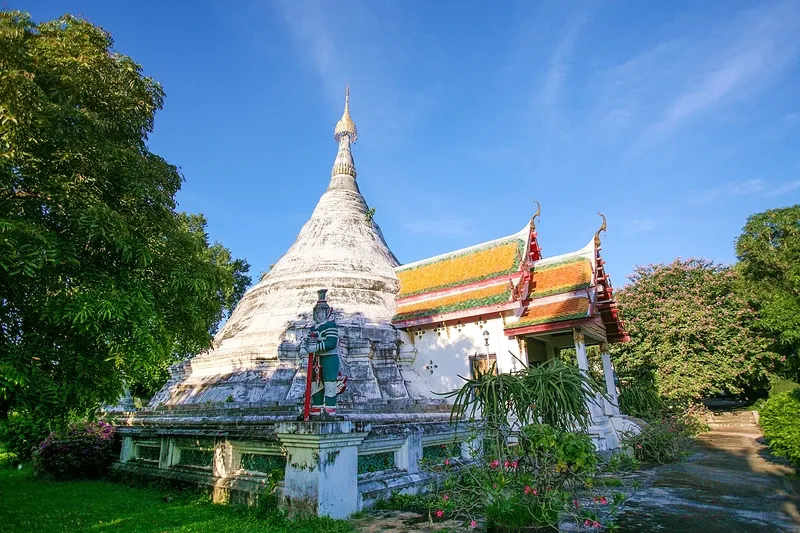
Wat Bot Mani Si Bun Rueang
Open Days: Daily
Opening Hours: Daytime visits are recommended
Wat Bot Mani Si Bun Rueang in Tak Province is one of the old and culturally important Buddhist temples in Mueang Tak District. Located at Ban Rommani on Taksin Road, Nong Luang Subdistrict, the temple is closely connected with Tak’s old town landscape, Buddhist faith, mural painting, Mon-style stupa architecture, and the long-standing spiritual life of the local community. Its key highlights include an ordination hall from the reign of King Rama 4, beautiful mural paintings, a Mon-style stupa containing sacred relics, and the revered Buddha image known locally as Luang Pho Phutthamon.
The temple is suitable for travelers who want to understand Tak beyond ordinary sightseeing. It is located near important old-town landmarks such as King Taksin the Great Shrine, Ban Chin Alley, the Ping River area, and other cultural sites in the town center. A visit to Wat Bot Mani Si Bun Rueang can therefore be part of a meaningful cultural route through historic Tak, combining Buddhist worship, old architecture, local heritage, and quiet urban atmosphere.
Wat Bot Mani Si Bun Rueang was built in 1858 and later restored in 1990. Its long history gives the temple an important place in the religious and cultural development of Tak town. The temple is not only a place for worship, but also a living record of local faith, artistic expression, and community continuity. Visitors who take time to walk slowly through the temple will find layers of history preserved in its buildings, images, murals, and sacred spaces.
One of the most important structures inside the temple is the old ordination hall from the reign of King Rama 4. The hall is valuable not only as a religious building but also as an example of older temple architecture in Tak. Its form, proportions, wall surfaces, decorative details, and sacred interior atmosphere all reflect the devotion of the people who built and maintained the temple across generations.
The mural paintings inside the temple are among its most remarkable features. These murals are appreciated for their beauty, storytelling, and artistic detail. In older Thai temples, murals often served as visual teachings, presenting Buddhist stories, moral lessons, and religious themes to the community. At Wat Bot Mani Si Bun Rueang, the murals are part of the temple’s cultural identity and deserve careful observation.
Visitors should look at the murals slowly, paying attention to figures, gestures, colors, buildings, landscapes, and narrative scenes. Each element helps communicate Buddhist meaning and local artistic taste. These paintings also reflect Tak’s position as a cultural meeting point influenced by Sukhothai, Lanna, central Thai, and riverside communities along the Ping River.
Another highlight is the Mon-style stupa, which contains sacred relics in the upper part of the finial. The presence of a Mon-style stupa shows the cultural diversity of Tak, a province historically connected with movement, settlement, trade, and religious exchange. The stupa is both a sacred object and a visual sign of the broader Buddhist world that shaped the region.
The main Buddha image in the viharn is known locally as Luang Pho Phutthamon. This revered image dates to the Sukhothai period, around the early 19th Buddhist century. Sukhothai Buddha images are widely admired for their graceful form, calm expression, and spiritual elegance. Luang Pho Phutthamon is therefore not only a sacred image for worship but also an important artistic treasure of the temple.
For local worshippers, Luang Pho Phutthamon represents blessing, calmness, and spiritual protection. Visitors often pay respect to the image for peace of mind, good fortune, health, and success. The presence of this Sukhothai-period Buddha image gives the temple a deep historical dimension and connects Tak with one of the most important artistic periods in Thai Buddhist history.
Wat Bot Mani Si Bun Rueang is also important because it remains an active temple. Local residents continue to use it for merit-making, Buddhist ceremonies, and religious observances. This makes the temple a living sacred place, not merely a historic attraction. Visitors should approach it with respect, dress modestly, speak quietly, and avoid disturbing monks or worshippers.
Getting There is convenient from Tak town center. The temple is located on Taksin Road in Nong Luang Subdistrict, near King Taksin the Great Shrine and the old-town area. Travelers can arrive by private car, local transport, or as part of a short cultural route through central Tak. Its location makes it easy to combine with Ban Chin Alley, Wat Sitalaram, the Ping River riverside area, and Rattanakosin 200th Anniversary Bridge.
A visit of around 45 minutes to 1.5 hours is suitable for most travelers. This allows enough time to pay respect to Luang Pho Phutthamon, observe the old ordination hall, admire the mural paintings, walk around the Mon-style stupa, and appreciate the quiet atmosphere of the temple. Visitors with a strong interest in Buddhist art and photography may want to spend more time examining the details.
The best time to visit is in the morning or late afternoon when the weather is more comfortable and the light is softer for photography. On important Buddhist days, the temple may be more active with local religious activities. This can be a good opportunity to observe living Buddhist practice, but visitors should be especially respectful during ceremonies.
For cultural travelers, the temple offers several layers of meaning. The Sukhothai-period Buddha image represents early Thai Buddhist art. The ordination hall from the reign of King Rama 4 reflects a later historical period. The Mon-style stupa shows cultural diversity and religious exchange. The murals preserve visual Buddhist teachings. Together, these elements make Wat Bot Mani Si Bun Rueang one of the most valuable old temples in Tak town.
Photography can be rewarding here, especially around the old buildings, stupa, mural areas, and sacred spaces. However, photography should always be respectful. Visitors should avoid using flash near delicate murals, avoid touching old surfaces, and never disturb monks, local worshippers, or religious activities in progress.
For families, the temple can serve as a gentle learning destination. Children and young visitors can learn about Sukhothai Buddha images, mural paintings, Mon-style stupas, and the role of temples in Thai community life. Visiting a real historic temple helps make cultural and religious knowledge easier to understand than reading about it alone.
Wat Bot Mani Si Bun Rueang is especially suitable for travelers who prefer meaningful cultural sites rather than crowded attractions. It is easy to reach, historically rich, and closely connected with the old town of Tak. A visit here provides worship, art appreciation, local history, and a calm moment within the town center.
Overall, Wat Bot Mani Si Bun Rueang is a temple that should not be missed when visiting Tak Province. Its ordination hall from the reign of King Rama 4, beautiful murals, Mon-style relic stupa, Sukhothai-period Luang Pho Phutthamon, and convenient old-town location make it one of the most rewarding cultural stops in Mueang Tak District.
| Name | Wat Bot Mani Si Bun Rueang |
| Location | Ban Rommani, Taksin Road, Nong Luang Subdistrict, Mueang Tak District, Tak Province |
| Address | 231 Ban Rommani, Taksin Road, Nong Luang Subdistrict, Mueang Tak District, Tak Province 63000, Thailand |
| Approximate Coordinates / Area | Taksin Road, Nong Luang Subdistrict, Mueang Tak District, near King Taksin the Great Shrine |
| Highlights | Ordination hall from the reign of King Rama 4, mural paintings, Mon-style relic stupa, and Luang Pho Phutthamon, a Sukhothai-period Buddha image |
| History | Built in 1858 and restored in 1990, the temple preserves important Buddhist art and local religious heritage in Tak town |
| Name Origin | The name combines auspicious Buddhist meanings associated with the ordination hall, beauty, merit, and prosperity |
| Distinctive Features | A Mahā Nikāya local temple in Tak town with old Buddhist architecture, mural paintings, an important Buddha image, and a distinctive Mon-style stupa |
| Sacred Objects / Key Features | Luang Pho Phutthamon, a Sukhothai-period Buddha image from around the early 19th Buddhist century, mural paintings, old ordination hall, and Mon-style relic stupa |
| Travel Information | From Tak town center, travel along Taksin Road toward Nong Luang Subdistrict. The temple is near King Taksin the Great Shrine and can be reached conveniently by private car or local transport. |
| Current Status | Active Buddhist temple and cultural attraction in Mueang Tak District |
| Open Days | Daily |
| Opening Hours | Daytime visits are recommended |
| Facilities | Temple grounds for worship, merit-making, cultural visits, mural viewing, and stupa viewing; located near restaurants, accommodations, and old-town attractions in Tak |
| Main Areas / Zones | Ordination hall, Luang Pho Phutthamon viharn, Mon-style stupa, mural painting area, stucco details, and old-town temple grounds |
| Abbot / Caretaker | Phra Khru Sutthakitjaphirat, Abbot of Wat Bot Mani Si Bun Rueang |
| Main Contact Number | 055-511650 |
| Nearby Tourist Attractions | 1. King Taksin the Great Shrine, about 0.2 km 2. Ban Chin Alley, about 1 km 3. Wat Sitalaram / Wat Nam Hak, about 2 km 4. Ping River riverside area, about 2 km 5. Rattanakosin 200th Anniversary Bridge, about 3 km |
| Nearby Restaurants | 1. Pad Thai Trok Ban Chin, about 1 km, Tel. 055-511330 2. Im Aroi Khao Tom Mueang Tak, about 2 km, Tel. 062-6156415 3. Khao Tom Mueang Tak Im Aroi, about 2 km, Tel. 081-8872438 4. TARA Kaffee&Patisserie, about 3 km 5. Mae Bang Hua Diat Noodle Shop, about 4 km |
| Nearby Accommodations | 1. Viang Tak Riverside Hotel, about 2 km, Tel. 055-512507, 055-512508 2. Berich Hotel Tak, about 3 km, Tel. 082-4446242 3. HOP INN Tak, about 4 km, Tel. 02-0802222 4. White House Hotel Tak, about 5 km, Tel. 099-2347774 5. BanRai ChernMa Resort, about 8 km, Tel. 055-893030 |
Frequently Asked Questions (FAQ)
Q: Where is Wat Bot Mani Si Bun Rueang located?
A: Wat Bot Mani Si Bun Rueang is located at Ban Rommani on Taksin Road, Nong Luang Subdistrict, Mueang Tak District, Tak Province, near King Taksin the Great Shrine and Tak old town.
Q: When was Wat Bot Mani Si Bun Rueang built?
A: The temple was built in 1858 and restored in 1990.
Q: What are the main highlights of Wat Bot Mani Si Bun Rueang?
A: Highlights include the ordination hall from the reign of King Rama 4, mural paintings, a Mon-style relic stupa, and Luang Pho Phutthamon, a Sukhothai-period Buddha image.
Q: What period is Luang Pho Phutthamon from?
A: Luang Pho Phutthamon is a Sukhothai-period Buddha image from around the early 19th Buddhist century and is highly respected by local people.
Q: Who is the abbot of Wat Bot Mani Si Bun Rueang?
A: The abbot is Phra Khru Sutthakitjaphirat.
Q: How can travelers get to Wat Bot Mani Si Bun Rueang?
A: From Tak town center, travel along Taksin Road toward Nong Luang Subdistrict. The temple is near King Taksin the Great Shrine and can be reached easily by private car or local transport.
Q: What nearby places can be visited with Wat Bot Mani Si Bun Rueang?
A: Nearby places include King Taksin the Great Shrine, Ban Chin Alley, Wat Sitalaram, the Ping River riverside area, and Rattanakosin 200th Anniversary Bridge.
Q: How should visitors behave at the temple?
A: Visitors should dress modestly, speak quietly, avoid touching murals or old objects, avoid disturbing monks and worshippers, and respect the sacred atmosphere of the temple.
 Category: ●Places of Worship
 Group: ●Temple
Last Update : 5 MonthAgo
 Last Update : 5 MonthAgo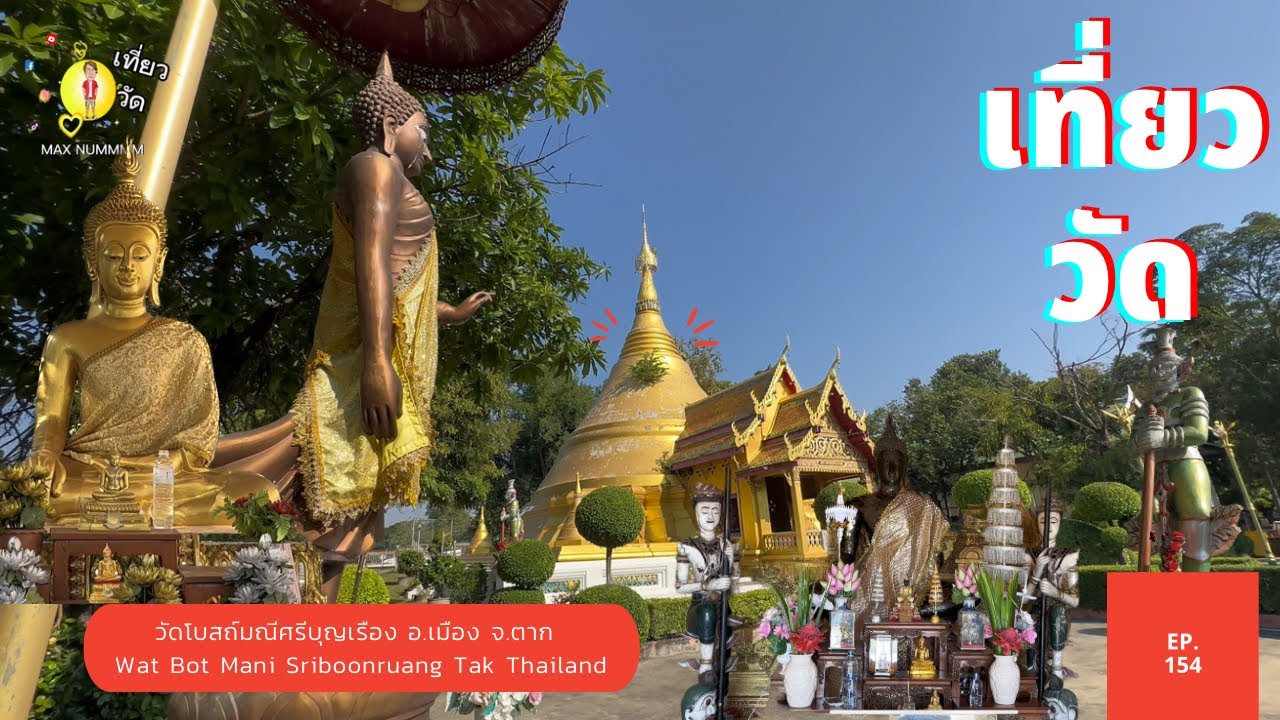
 Click to Access the Navigation Map GPS
Wat Bot Mani Si Bun Rueang Map
Recommend

 Art, Culture and Heritage
 Historical Sites and Monuments(2)
 Landmarks and Memorials(3)
 Art, Craft Centres, Tradition(6)
 Historic Homes and Cities(2)
 Educational Places
 Educational Gardens, Farm(2)
Temple(22)
Educational Gardens, Farm(2)
Temple(22)
 Other Sacred Sites(9)
 Research and Development
 Royal Project(1)
 Suburban Living
 Village, Community(5)
 Local Market(3)
 Nature and Wildlife
 National Parks and Marine Reserves(11)
 Mountain (Doi)(9)
 Dam, Reservoir, Lake(14)
 Waterfalls(23)
 Hot Springs(2)
 Caves(6)
 River, Canal(1)
 Bays and Beaches(1)
 Islands(1)
 Other natural attractions(1)
 Entertainment and Agricultural
 Farms, Parks and Ecotourism(5)
 Outdoor and Adventure Activities(4)
 Travel Articles, Recipes
 Travel Review, Food Review(1)


