
lovethailand home >North Travel Attractions >Tak Travel Attractions >Mae Sot >Tha Sai Luat > Rim Moei Market
TL;DR: Rim Moei Market is located at Mu 2, Highway 105, Tha Sai Luat Subdistrict, Mae Sot District, Tak Province, near Thai–Myanmar Friendship Bridge No. 1, open Daily, hours 08.00 – 18.00.
Rim Moei Market
Open Days: Daily
Opening Hours: 08.00 – 18.00
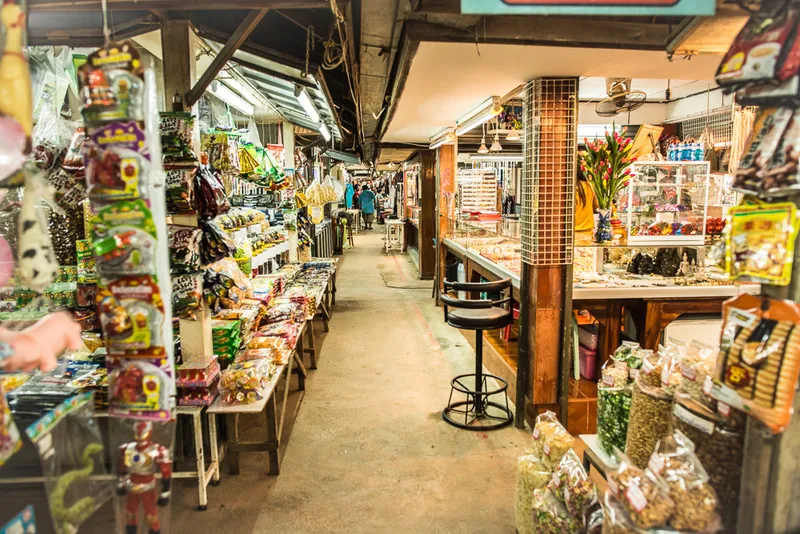
Rim Moei Market in Tak Province is one of the most important border markets in Mae Sot District. Located in Tha Sai Luat Subdistrict at the end of Highway 105, the Tak–Mae Sot route, the market stands close to the Moei River and the Thai–Myanmar Friendship Bridge No. 1. It is a lively place where border trade, local travel, shopping, and cultural exchange come together. For visitors, Rim Moei Market offers more than souvenir shopping. It provides a direct glimpse of Mae Sot’s identity as a border town connected with Myawaddy in Myanmar through goods, people, languages, and everyday movement.
Rim Moei Market is often associated with the far western edge of Thailand because it sits near the Thai–Myanmar border by the Moei River. The river forms a natural border between Thailand and Myanmar, while the nearby bridge represents a modern connection between the two countries. This combination of river, bridge, market, and border traffic gives the area a distinctive atmosphere. Travelers can walk through rows of shops, see products from different sources, and feel the energy of a frontier trading community.
The market is especially well known for gemstones and jewelry. Items such as jade, rubies, colored stones, and gems associated with Myanmar trade can be found in the market. Some are already cut and set into jewelry, while others may be sold as stones or raw materials. Visitors interested in gemstones should shop carefully, compare prices, ask questions, and buy from reliable shops. Gemstone shopping requires knowledge, so travelers should avoid rushing into high-value purchases without checking quality and conditions.
Beyond gemstones, Rim Moei Market sells handicrafts, wooden items, teak-related decorative goods, household products, textiles, local fabrics, spices, dried food, cosmetics, imported goods, and souvenirs from the border area. Some products are connected with Myanmar, while others come through broader trade networks involving China and India. This variety is one of the reasons travelers enjoy walking through the market even if they do not plan to buy expensive items. Small gifts, snacks, fabrics, spices, and local products are easy to find.
The best time to visit Rim Moei Market is from late morning to afternoon, when most shops are open and visitors have enough time to browse. The market opens daily from 08.00 to 18.00. Those who want to shop for specific items, especially gemstones, wood products, or large souvenirs, should arrive earlier in the day to allow time for comparison and questions. Visitors who mainly want to enjoy the border atmosphere can combine the market with the nearby Thai–Myanmar Friendship Bridge and the Moei River area.
The appeal of Rim Moei Market lies not only in its products but also in its real border-market life. Visitors will see Thai and Myanmar traders, local residents, travelers, transport vehicles, and shoppers moving through the same space. Some products have Thai labels, while others come from across the border or from international trade routes. This makes the market feel different from ordinary tourist markets because it is both a shopping destination and a working border economy.
Rim Moei Market helps visitors understand why Mae Sot is one of Thailand’s key border economic districts. Mae Sot is linked with Myawaddy in Myanmar and serves as a gateway for goods and people moving between the two countries. The market is one of the easiest places to see this connection in everyday life. Goods, food, languages, and people from both sides of the border make the market a living example of cross-border exchange.
Travelers coming from Tak town reach the market via Highway 105, the scenic mountain road from Tak to Mae Sot. The route passes Doi Muser, Chao Pho Phawo Shrine, Chao Pho Khun Sam Chon Shrine, and Mae Sot town before continuing toward Tha Sai Luat Subdistrict. The road is beautiful but includes curves and mountain sections, so drivers should check their vehicle and travel carefully. Once in Mae Sot, the market is easy to reach because it is near the Thai–Myanmar Friendship Bridge No. 1.
Getting There is convenient by private car, rental car, local songthaew, or hired vehicle from Mae Sot town. From Tak town, follow Highway 105 to Mae Sot and continue to Tha Sai Luat Subdistrict near the Thai–Myanmar Friendship Bridge No. 1. Travelers already in Mae Sot can use local transport to the market and bridge area. Fares and routes should be confirmed locally before departure because they may change over time.
Facilities at Rim Moei Market include a parking area behind the market, parking near the bridge, toilets, shops, food stalls, and walking areas. On weekends or holidays, the area can become busier than usual, so visitors arriving by car should park only in designated areas and avoid blocking traffic. The area near the market and bridge is used by tourists, local vehicles, transport vehicles, and traders throughout the day.
Rim Moei Market suits several types of travelers. Shoppers will enjoy the variety of souvenirs and imported goods. Visitors interested in gemstones can explore jade, rubies, and colored stones. Cultural travelers can observe the mixture of Thai and Myanmar border life. First-time visitors to Mae Sot will find that the market and bridge provide a quick and clear introduction to the district’s frontier character.
When buying gemstones, visitors should be especially careful. They should ask about the type of stone, origin, weight, quality, and any guarantee provided by the shop. For expensive purchases, it is better to choose shops that can provide documentation. Visitors should compare several shops and avoid buying solely because of sales pressure. For wooden items, antiques, or large decorative pieces, transport rules and legal restrictions should also be considered before purchase.
For food products and souvenirs, visitors should check packaging, expiry dates, and product condition. This is especially important for snacks, spices, cosmetics, dried food, and imported items. Travelers buying a large quantity should ask the shop to pack products securely. Fresh or chilled products should be considered carefully based on travel time and storage conditions.
One of the most interesting parts of visiting Rim Moei Market is seeing how the market, Moei River, and border bridge are connected. The river acts as a natural border, while the bridge creates a formal crossing point between Thailand and Myanmar. The market sits within this border landscape, making it a place where geography and trade can be seen together. This gives Rim Moei Market educational value beyond ordinary shopping.
The market can easily be combined with nearby attractions. A half-day route in Mae Sot can include Wat Thai Wattanaram, King Naresuan the Great Shrine, Rim Moei Market, and the Thai–Myanmar Friendship Bridge No. 1. With more time, travelers can add Mae Kasa Hot Spring, Namtok Pha Charoen, Chao Pho Phawo Shrine, or Chao Pho Khun Sam Chon Shrine. This makes it possible to experience temples, border trade, nature, and roadside sacred sites in one trip.
The recommended visiting time is from late morning to afternoon. During the hot season, visitors should bring drinking water, a hat, or an umbrella. During the rainy season, an umbrella or rain jacket is useful. Since the market is close to the river, travelers should also pay attention to weather conditions during periods of heavy rain in the region.
Photography is possible in many parts of the market, especially around shop signs, products, border scenery, the river, and the bridge. However, visitors should photograph respectfully. They should avoid taking close photos of shops or people without permission, and they should not photograph restricted border areas or officials where it may be inappropriate. Border markets require a more careful approach than ordinary tourist streets.
Food options can be found inside and around the market, while Mae Sot town has many more restaurants and cafés. Travelers can eat simple meals or snacks near Rim Moei Market, then return to Mae Sot town for garden restaurants, local fish dishes, Burmese-influenced food, roti, tea shops, and cafés. Combining market shopping with food in Mae Sot makes the trip more complete.
Most travelers stay in Mae Sot town rather than next to the market because accommodation options are more varied in town. Hotels, budget hotels, resorts, and convenient city accommodations are available within a short drive. Staying in Mae Sot also makes it easier to visit restaurants, temples, the airport, and other attractions before or after visiting Rim Moei Market.
Rim Moei Market is also a useful place for learning about border economics in a simple way. Visitors do not need technical economic knowledge to understand the meaning of the market. Imported products, Myanmar goods, Chinese goods, gemstones, daily-use items, and local trade all show that a border is not only a dividing line. It is also a place where exchange creates livelihoods and cultural contact.
Families traveling with children or older visitors should choose a comfortable time of day, park close to the entrance when possible, and set a meeting point if the group separates while shopping. The market can be busy, so visitors should take care of personal belongings, phones, bags, and young children. A relaxed walking pace makes the visit more enjoyable.
A good way to explore Rim Moei Market is to first walk through the interior rows of shops, then move toward the river and bridge area, and finally return to buy selected souvenirs. This prevents visitors from carrying heavy bags from the beginning and allows them to see the full setting of the market, river, and border bridge.
Today, Rim Moei Market remains one of the most recognizable places in Mae Sot. Even as border trade changes over time, the market continues to welcome travelers from across Thailand. People still come to shop, browse gemstones, buy imported products, and experience the atmosphere of the Thai–Myanmar border by the Moei River. The market remains a strong symbol of Mae Sot’s role as a border town shaped by commerce, travel, and cultural diversity.
Overall, Rim Moei Market is a must-visit place for travelers in Mae Sot, Tak Province. It brings together border trade, gemstones, handicrafts, imported goods, the Moei River, and the Thai–Myanmar Friendship Bridge in one compact area. A visit here shows the clearest side of Mae Sot: a lively border district where economy, culture, geography, and travel meet at the western edge of Thailand.
| Name | Rim Moei Market |
| Other Names | Thai–Myanmar Border Market, Western Border Market by the Moei River |
| Location | Mu 2, Highway 105, Tha Sai Luat Subdistrict, Mae Sot District, Tak Province, near Thai–Myanmar Friendship Bridge No. 1 |
| Address | Rim Moei Market, Mu 2, Highway 105, Tha Sai Luat Subdistrict, Mae Sot District, Tak Province 63110 |
| Highlights | Border market by the Moei River, Myanmar goods, Chinese and Indian products, gemstones, jade, rubies, colored stones, handicrafts, souvenirs, and the Thai–Myanmar Friendship Bridge area |
| Distinctive Features | A lively border-trade market selling consumer goods, gemstones, wooden products, home decorations, spices, textiles, imported goods, and local souvenirs |
| Importance | An important border trading area of Mae Sot, linking Thai–Myanmar commerce, travel, and cultural exchange, with the Moei River as the natural border |
| Travel Information | From Tak town, follow Highway 105 to Mae Sot, then continue to Tha Sai Luat Subdistrict near Thai–Myanmar Friendship Bridge No. 1. From Mae Sot town, local songthaews, hired vehicles, or local transport can be used. |
| Current Status | Open as a border market and major souvenir-shopping destination in Mae Sot District, Tak Province |
| Open Days | Daily |
| Opening Hours | 08.00 – 18.00 |
| Fees | No admission fee |
| Facilities | Parking area behind the market, parking near the bridge, toilets, shops, food stalls, and market walking areas |
| Main Areas / Zones | Gemstone shops, souvenir zone, imported goods zone, handicraft zone, general goods zone, Moei River area, and Thai–Myanmar Friendship Bridge area |
| Caretaker / Information Contact | Tourism Information: Tourism Authority of Thailand, Tak Office, Tel. 055-514-341 to 055-514-343 |
| Local Information | Tha Sai Luat Subdistrict Administrative Organization, Tel. 055-564-000 |
| Nearby Tourist Attractions | 1. Thai–Myanmar Friendship Bridge No. 1, about 0.3 km 2. Moei River Border Viewpoint, about 0.3 km 3. Wat Thai Wattanaram, about 5 km 4. King Naresuan the Great Shrine, Mae Sot, about 7 km 5. Mae Kasa Hot Spring, about 24 km 6. Chao Pho Phawo Shrine, about 18 km 7. Chao Pho Khun Sam Chon Shrine, about 26 km |
| Nearby Restaurants | 1. Food Shops inside Rim Moei Market, about 0.1 km 2. Borderline Tea Garden, about 7 km, Tel. 055-546-584, 093-719-6598 3. Roti Ong Nai Tamnan Mae Sot, about 7 km, Tel. 085-610-0622 4. The Happy Café, about 8 km, Tel. 092-591-2777 5. Khaomao-Khaofang Mae Sot, about 9 km, Tel. 065-242-2248, 081-443-8141 6. Pla Sod Mueang Chot Restaurant, about 12 km, Tel. 089-839-1747 |
| Nearby Accommodations | 1. J2 Hotel Maesot, about 8 km, Tel. 055-536-161, 085-090-4111 2. B2 Mae Sot Boutique & Budget Hotel, about 9 km, Tel. 1328, 055-030-515 3. HOP INN Mae Sot Building A, about 9 km, Tel. 02-080-2222 4. Irawadee Resort, about 10 km, Tel. 055-535-430 5. Centara Life Hotel Mae Sot, about 10 km, Tel. 055-532-601 to 055-532-608 |
Frequently Asked Questions (FAQ)
Q: Where is Rim Moei Market located?
A: Rim Moei Market is located at Mu 2 on Highway 105 in Tha Sai Luat Subdistrict, Mae Sot District, Tak Province, near Thai–Myanmar Friendship Bridge No. 1 and the Moei River.
Q: What are the opening hours of Rim Moei Market?
A: Rim Moei Market is open daily from 08.00 to 18.00. Late morning to afternoon is a good time to visit because most shops are open.
Q: What can travelers buy at Rim Moei Market?
A: Visitors can buy gemstones, jade, rubies, colored stones, handicrafts, wooden products, home decorations, textiles, spices, imported goods, souvenirs, and border-market products.
Q: How can travelers get to Rim Moei Market from Mae Sot town?
A: Travelers can use a private car, local songthaew, hired vehicle, or local transport from Mae Sot town to Tha Sai Luat Subdistrict near the Thai–Myanmar Friendship Bridge.
Q: Is there an admission fee for Rim Moei Market?
A: No. There is no admission fee. Visitors can walk through the market and enjoy the border atmosphere during opening hours.
Q: What should visitors know before buying gemstones at Rim Moei Market?
A: Visitors should buy from reliable shops, ask about the stone type and quality, compare prices, request documentation for expensive items, and avoid rushing into a purchase based only on sales pressure.
Q: What nearby attractions can be visited with Rim Moei Market?
A: Nearby attractions include Thai–Myanmar Friendship Bridge No. 1, the Moei River border area, Wat Thai Wattanaram, King Naresuan the Great Shrine, Mae Kasa Hot Spring, Chao Pho Phawo Shrine, and Chao Pho Khun Sam Chon Shrine.
Q: Is parking available at Rim Moei Market?
A: Yes. Parking is available behind the market and near the bridge area. Visitors should park in designated areas and avoid blocking traffic.
 Category: ●Suburban Living
 Group: ●Local Market
Last Update : 5 MonthAgo
 Last Update : 5 MonthAgo
 Click to Access the Navigation Map GPS
 Art, Culture and Heritage
 Historical Sites and Monuments(2)
 Landmarks and Memorials(3)
 Art, Craft Centres, Tradition(6)
 Historic Homes and Cities(2)
 Educational Places
 Educational Gardens, Farm(2)
 Places of Worship
 Temple(22)
 Other Sacred Sites(9)
 Research and Development
 Royal Project(1)
 Village, Community(5)
Local Market(3)
Village, Community(5)
Local Market(3)
 Nature and Wildlife
 National Parks and Marine Reserves(11)
 Mountain (Doi)(9)
 Dam, Reservoir, Lake(14)
 Waterfalls(23)
 Hot Springs(2)
 Caves(6)
 River, Canal(1)
 Bays and Beaches(1)
 Islands(1)
 Other natural attractions(1)
 Entertainment and Agricultural
 Farms, Parks and Ecotourism(5)
 Outdoor and Adventure Activities(4)
 Travel Articles, Recipes
 Travel Review, Food Review(1)


