
lovethailand home >North Travel Attractions >Chiang Mai Travel Attractions >Hot >Bo Luang > Wat Wang Kong
TL;DR: Wat Wang Kong is located at Ban Wang Kong, Moo 2, Bo Luang Subdistrict, Hot District, Chiang Mai Province, open Daily, hours 08.00 – 17.00.

Wat Wang Kong
Open Days: Daily
Opening Hours: 08.00 – 17.00
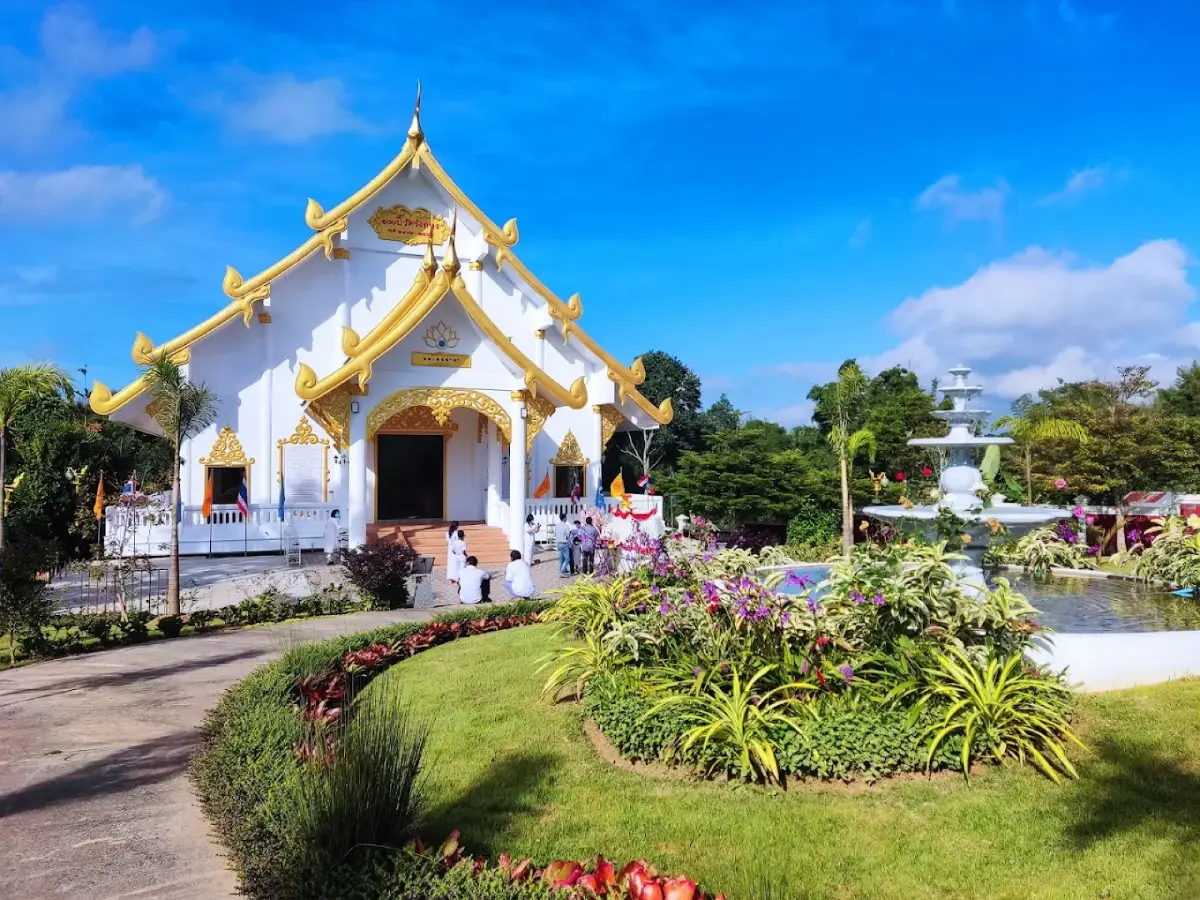
Wat Wang Kong is located in Ban Wang Kong, Moo 2, Bo Luang Subdistrict, Hot District, Chiang Mai Province. It is a local Buddhist temple under the Mahanikaya order and was officially permitted to be established in 1919. The temple is an important religious site for Ban Wang Kong and one of the older community temples in the mountainous Bo Luang area of southern Chiang Mai.
The temple is also known locally as Wat Wang Kong or Wat Wang Kong in the Lanna-style pronunciation “Wang Kong.” The name is connected with the original landscape of the village. In the past, the area had a natural water pool with abundant water throughout the year. The sound of the swirling water was said to resemble the sound of a drum, which led villagers to call the place Wang Kong or Wang Kong. The temple name therefore preserves the memory of water, landscape, and early settlement.
Ban Wang Kong began when villagers moved from Ban Bo Luang to raise animals, cultivate fields, and grow rice in an area with water and natural resources. As more families settled there, the need for a Buddhist place for merit-making, sermons, and ceremonies grew. Wat Wang Kong developed together with the village and became the spiritual center of the community.
The history of Wat Wang Kong began with a small hermitage called Wang Kong. Phra Phet, originally from San Kamphaeng, occasionally stayed at this hermitage. As he became familiar with the villagers, he worked together with the local community, then consisting of about 15 to 20 households, to establish the place as a monastic residence in 1917 under the Mahanikaya order. In the beginning, a merit-making hall and one monk residence were built as wooden structures with thatched roofing on about 1 rai of land.
Around 1919, the local faith community defined a clearer boundary for the village monastery. The site was moved about 50 meters from the original location because a dirt road had been cut through the old temple area. The new area covered about 2 rai, 2 ngan, and 19 square wah. A viharn measuring 6 meters wide and 8 meters long was built, together with a one-story wooden monks’ residence measuring 5 meters wide and 6 meters long. The temple was then named Wat Wang Kong after the village.
Historical records place the temple at No. 37, Ban Wang Kong, Moo 2, Bo Luang Subdistrict, Hot District, Chiang Mai Province. The temple land covered 2 rai, 2 ngan, and 19 square wah, with forest reserve land to the north, south, and west, and a road to the east. This setting shows the temple’s position between village life, local roads, and the forested highland landscape of Bo Luang.
Wat Wang Kong is a registered local Buddhist temple under the Mahanikaya order, with temple registration code 350160407. Its formal temple status confirms that it is part of the Thai Sangha system and continues to support Buddhist practice for monks and laypeople in the local community.
The abbot of Wat Wang Kong is Phra Khru Sunan Niwet, also known as Phra Samroeng Upalakuno. He is responsible for the temple’s religious life and community activities. Contact numbers published for the temple are 086-911-1688 and 085-100-0732, making the temple reachable for those who wish to coordinate religious activities or visits.
The temple’s confirmed religious buildings include a viharn, a bat offering hall, and monks’ residences. The viharn contains murals depicting the life of the Buddha, which give the temple additional artistic and educational value. These murals allow villagers, youths, and visitors to learn Buddhist stories through visual art within the sacred space of the temple.
Important sacred objects at Wat Wang Kong include Phra Sing Sam, small Buddha images, and a wooden Buddha image. The wooden Buddha image is especially meaningful because it reflects local materials, craftsmanship, and the relationship between Buddhist devotion and the forested highland environment of Bo Luang.
Other important areas and facilities associated with the temple include the ubosot, meditation buildings, meditation monk residences, individual lodging buildings, group lodging buildings, dining hall, and rest pavilions. These spaces show that Wat Wang Kong functions not only as a village temple but also as a place for meditation practice, moral training, and Buddhist activities.
Wat Wang Kong has played an active role in Buddhist activities such as annual Kathin ceremonies, local merit-making traditions, meditation practice, Buddhist propagation projects, and youth moral training. These activities make the temple a living religious and social space, not merely a historic place in a temple register.
The annual Kathin ceremony is one of the important Buddhist events at the temple. The ceremony traditionally includes a Kathin procession, circumambulation around the viharn, offering of the Kathin robe, offering of requisites, and food offerings to monks. Such ceremonies strengthen both Buddhist faith and social unity among villagers and supporters.
Bo Luang Subdistrict is a mountainous and forested area located about 40 km from Hot District Office and about 150 km from Chiang Mai city. Agricultural land is limited, and the area is connected by the Hot – Mae Sariang route. Ban Wang Kong therefore belongs to a highland landscape shaped by forests, mountain roads, agriculture, and village communities.
Ban Wang Kong is Moo 2 of Bo Luang Subdistrict. Local school information describes the village as a Buddhist community where many residents work in rice farming, gardening, field cultivation, and general labor. Wat Wang Kong serves as the village temple and plays a central role in local religious and community life.
The main value of Wat Wang Kong lies in its authenticity as a community temple. It grew from a small hermitage into a village temple with a viharn, Buddha murals, sacred images, and meditation facilities. Visitors can see how Buddhist faith developed alongside the growth of Ban Wang Kong itself.
Visitors should pay attention to the viharn, the murals of the Buddha’s life, Phra Sing Sam, the wooden Buddha image, the meditation buildings, and the overall atmosphere of the temple within Ban Wang Kong. The temple is best experienced slowly and respectfully, with attention to the relationship between the temple, local roads, the village, and the surrounding mountain landscape.
Wat Wang Kong is suitable for cultural travelers, visitors interested in Lanna community temples, people traveling along the Hot – Mae Sariang route, and those who want a quiet place for worship before continuing to nearby nature attractions in Bo Luang. The temple offers a grounded view of Buddhism as it exists in everyday village life.
Getting There from Chiang Mai city, take Highway 108 toward Hot District and continue along the Chiang Mai – Hot – Mae Sariang route. From Hot, proceed into Bo Luang Subdistrict and Ban Wang Kong, Moo 2. The route includes mountain sections, curves, and slopes, so drivers should check brakes, tires, fuel, and lights before traveling. Extra time should be allowed, especially during rainy or foggy periods.
Travelers using public transport should first reach Hot District or use transport that passes along the Hot – Mae Sariang route, then arrange local transport to Ban Wang Kong. A private car is the most convenient option because visitors can combine the temple with nearby places such as Bo Kaeo Pine Garden, Doi Bo Luang Forest Park, Wat Bo Luang, Wat Bo Sa-Ngae, Wat Bo Pha Waen, and Wat Na Fon.
A suitable route is to start from central Hot, travel into Bo Luang, visit Wat Wang Kong for worship and cultural learning, and continue to Bo Kaeo Pine Garden and Doi Bo Luang Forest Park. Travelers interested in local Buddhist sites can also include Wat Bo Luang, Wat Bo Sa-Ngae, Wat Bo Pha Waen, Wat Na Fon, and Wat Phra That Doi Liam in the same route.
Visitors should dress modestly, speak quietly, avoid entering monks’ private areas or meditation areas without permission, and keep the temple grounds clean. Photography should be done respectfully, especially during ceremonies, meditation activities, or youth moral training. Wat Wang Kong is a living village temple, so respectful behavior toward monks and local residents is essential.
In summary, Wat Wang Kong is a historic community temple of Ban Wang Kong, Moo 2, Bo Luang Subdistrict, Hot District, Chiang Mai Province. It began as Wang Kong Hermitage, became a monastic residence in 1917, and was officially established as a temple in 1919. Its key values include its origin story connected with a water pool, the viharn with Buddha-life murals, Phra Sing Sam, the wooden Buddha image, meditation facilities, Kathin ceremonies, youth moral training, and its continuing role as the spiritual center of Ban Wang Kong.
| Name | Wat Wang Kong |
| Local Name | Wat Wang Kong / Wat Wang Kong in the local Lanna pronunciation |
| Location | Ban Wang Kong, Moo 2, Bo Luang Subdistrict, Hot District, Chiang Mai Province |
| Address | 111 Moo 2, Ban Wang Kong, Bo Luang Subdistrict, Hot District, Chiang Mai 50240, Thailand |
| Historical Temple Land | No. 37, Ban Wang Kong, Moo 2, covering 2 rai, 2 ngan, and 19 square wah |
| Temple Type | Local Buddhist temple under the Mahanikaya order |
| Temple Registration Code | 350160407 |
| Highlights | Historic community temple of Ban Wang Kong, with origins as Wang Kong Hermitage, a viharn with Buddha-life murals, and active meditation and youth moral training roles |
| History | Began as a monastic residence in 1917 and was officially established as a Buddhist temple in 1919 |
| Name Origin | Named after a water pool whose swirling sound resembled the sound of a drum, leading villagers to call the area Wang Kong or Wang Kong |
| Abbot | Phra Khru Sunan Niwet (Phra Samroeng Upalakuno) |
| Contact | 086-911-1688, 085-100-0732 |
| Important Structures | Viharn, bat offering hall, monks’ residences, ubosot, meditation buildings, meditation monk residences, lodging buildings, dining hall, and rest pavilions |
| Sacred Objects | Phra Sing Sam, small Buddha images, and a wooden Buddha image |
| Distinctive Features | Quiet Lanna village temple in the highland area of Hot District, suitable for worship, merit-making, meditation, and learning about Ban Wang Kong history |
| Community Role | Religious and community space for Kathin, local merit-making, meditation practice, Buddhist propagation, and youth moral training |
| Travel Information | Take Highway 108 from Chiang Mai toward Hot and Mae Sariang, then continue to Ban Wang Kong, Moo 2, Bo Luang Subdistrict |
| Current Status | Open as a community Buddhist temple and religious activity space of Ban Wang Kong |
| Open Days | Daily |
| Opening Hours | 08.00 – 17.00 |
| Local Administrative Contact | Bo Luang Municipality, Tel. 0-5208-1663 |
| Nearby Tourist Attractions | 1. Wat Bo Luang, about 4 km 2. Bo Kaeo Pine Garden, about 8 km 3. Doi Bo Luang Forest Park, about 10 km 4. Wat Bo Sa-Ngae, about 10 km 5. Wat Bo Pha Waen, about 11 km |
| Nearby Restaurants | 1. Rabeang Son Cafe, about 8 km, Tel. 062-079-9411 2. Suanson Coffee&rest, about 8 km, Tel. 098-748-8372 3. Na Samoeng Bo Kaeo Coffee, about 9 km, Tel. 097-165-7479 4. Nueng Diao Restaurant, about 18 km, Tel. 086-915-3716 5. Good Morning Hod, about 40 km, Tel. 091-853-7308 |
| Nearby Accommodations | 1. Tiw Son Resort Hot, about 8 km, Tel. 080-845-1167 2. Doi Bo Luang Forest Park by the Forest Industry Organization, about 10 km, Tel. 092-586-9215 3. Huen Hug Hod The Resort, about 40 km, Tel. 085-030-7356 4. Kiss Hod Resort, about 40 km 5. Gardum House, about 42 km, Tel. 063-119-4959 |
Frequently Asked Questions (FAQ)
Q: Where is Wat Wang Kong located?
A: Wat Wang Kong is located in Ban Wang Kong, Moo 2, Bo Luang Subdistrict, Hot District, Chiang Mai Province 50240.
Q: What is the history of Wat Wang Kong?
A: Wat Wang Kong began as Wang Kong Hermitage, became a monastic residence in 1917, and was officially established as a Buddhist temple in 1919.
Q: What is the origin of the name Wang Kong?
A: The name comes from a water pool whose swirling sound resembled the sound of a drum, leading villagers to call the place Wang Kong or Wang Kong.
Q: Who is the abbot of Wat Wang Kong?
A: The abbot is Phra Khru Sunan Niwet, also known as Phra Samroeng Upalakuno.
Q: What are the important things to see at Wat Wang Kong?
A: Important features include the viharn with Buddha-life murals, Phra Sing Sam, the wooden Buddha image, meditation buildings, and the quiet village temple atmosphere.
Q: What are the opening hours of Wat Wang Kong?
A: The temple is open daily from 08.00 to 17.00.
Q: How can travelers get to Wat Wang Kong?
A: Travelers can take Highway 108 from Chiang Mai toward Hot and Mae Sariang, then continue to Ban Wang Kong, Moo 2, Bo Luang Subdistrict. A private car is the most convenient option.
 Category: ●Places of Worship
 Group: ●Temple
Last Update : 1 MonthAgo
 Last Update : 1 MonthAgo
 Click to Access the Navigation Map GPS

 Muang Chiang Mai(121)Chom Thong(47)Mae Chaem(25)Chiang Dao(33)Doi Saket(68)Mae Taeng(85)Mae Rim(69)Samoeng(29)Fang(71)Mae Ai(59)Phrao(70)San Pa Tong(103)San Kamphaeng(66)San Sai(73)Hang Dong(73)Hot(32)Doi Tao(22)Omkoi(11)Saraphi(74)Wiang Haeng(15)Chai Prakan(28)Mae Wang(32)Mae On(22)Doi Lo(33)Galyani Vadhana(1)


