
lovethailand home >North Travel Attractions >Chiang Mai Travel Attractions >Hot >Bo Luang > Wat Ban Khun
TL;DR: Wat Ban Khun is located at Ban Khun, Moo 3, Bo Luang Subdistrict, Hot District, Chiang Mai Province, open Daily, hours 08.00 – 17.00.

Wat Ban Khun
Open Days: Daily
Opening Hours: 08.00 – 17.00
Wat Ban Khun is located at 129 Moo 3, Ban Khun, Bo Luang Subdistrict, Hot District, Chiang Mai Province. It is a local Buddhist temple under the Mahanikaya order. The temple was officially established in 1927 and received its Wisungkhamsima in 1999. Wat Ban Khun is one of the most important community temples in Bo Luang because it serves not only as a place of worship but also as a center for education, moral training, community development, and youth support in a highland Lua community.
Ban Khun is a highland community with a strong ethnic and cultural identity. The village is associated with the Lua people and was recorded as having 167 households and a population of 750. Wat Ban Khun therefore has a role that goes far beyond ordinary village worship. It is a spiritual, educational, and social center for a mountain community where Buddhism has become a practical force for improving daily life.
The original temple land covered 4 rai and 1 ngan. Its boundaries were connected with rice fields, water sources, and the village itself. This shows that the temple was deeply embedded in the local landscape from the beginning. Later, the temple expanded westward, northward, and southward to support its growing Buddhist, educational, and community work. The temple area eventually expanded to about 80 rai.
Wat Ban Khun was founded in 1927 by Phra Panya Chanma together with Nai Intha and Nai Som. In a remote highland village, establishing a temple was an important act of shared faith. The temple became a place for worship, sermons, merit-making, Buddhist ceremonies, and community gatherings. Over time, Wat Ban Khun grew together with the life of the village.
The early abbots of Wat Ban Khun included Phra Banya, Phra Bing, Phra Chum, Phra Kaew, Phra Naen, Phra Thongkham, Phra Saeng, Phra Kaew, Phra Tem, and Phra Srimun Sanutachitto. These names reflect the continuity of monastic leadership in the village. In 1993, local residents invited Phra Wichan Itthinako to spend the rains retreat at Wat Ban Khun. After that rains retreat, the villagers invited him to continue residing at the temple.
Today, Wat Ban Khun is led by Phra Wachirakit Sophon (Wichan Itthinako). He was formerly known in the ecclesiastical title Phra Khru Sangwon Sitthichot and later received the royal ecclesiastical title Phra Wachirakit Sophon. His role has been central to the transformation of Wat Ban Khun from a village temple into a major Buddhist and educational center for highland communities.
Under his leadership, the temple was developed into a cleaner, more orderly, and more livable place. Students, youths, and villagers were encouraged to join daily chanting and meditation at the temple. This regular practice made Wat Ban Khun a living center of Buddhist discipline, not merely a ceremonial site used only during festivals.
One of the temple’s most important community achievements has been its effort to reduce alcohol consumption and other harmful habits in the village. Through Buddhist teaching, community persuasion, and daily practice, many residents of Ban Khun gradually moved away from alcohol and vices. This gave the temple a direct role in improving family life, community stability, and moral awareness.
In 2001, Phra Wichan Itthinako saw the importance of education for highland youths. Many families in remote mountain areas did not give enough priority to formal education, and young people were often used as laborers. The lack of educational opportunity increased social risks and limited their future. Wat Ban Khun responded by creating an educational pathway through Buddhist schooling.
The temple opened a Buddhist scripture school named Wat Ban Khun Triam Phutthasat School. The school allowed novice monks to study Dhamma, Pali, and general education together. In its first year, the school opened lower secondary classes from Mathayom 1 to Mathayom 3 with 36 students. As the number of novices increased, the temple later requested permission to open upper secondary classes and received approval in 2007.
Wat Ban Khun Triam Phutthasat School is important because it gives highland novice monks an opportunity to receive both religious and general education. The combination of Dhamma, Pali, and academic subjects helps students develop Buddhist discipline, literacy, general knowledge, and life skills. This makes the school one of the clearest examples of Wat Ban Khun’s role in community development.
Wat Ban Khun was recognized as a temple educational park in 2005 and as a model development temple in 2008. These recognitions show that the temple is more than a local religious site. It functions as a learning space, a moral training center, and a community development institution serving highland youth and villagers.
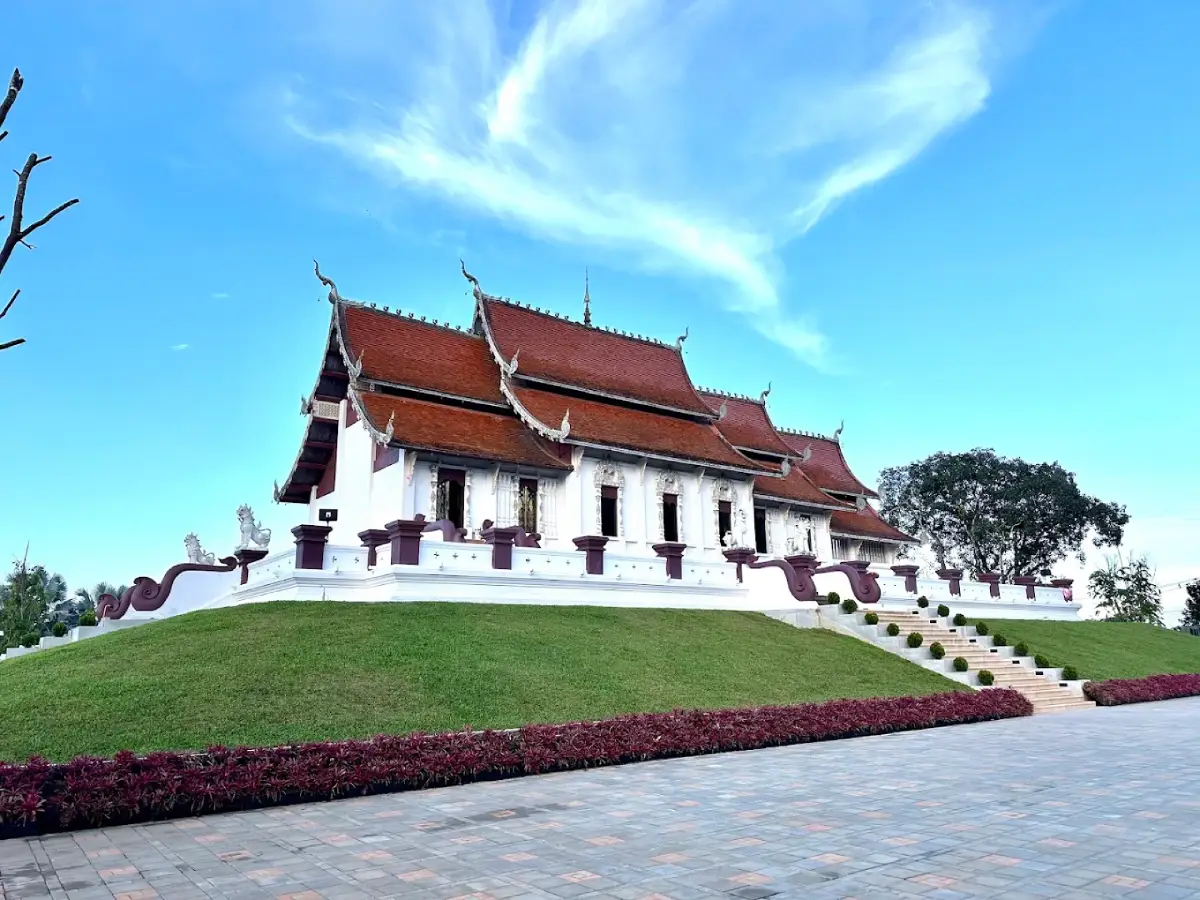
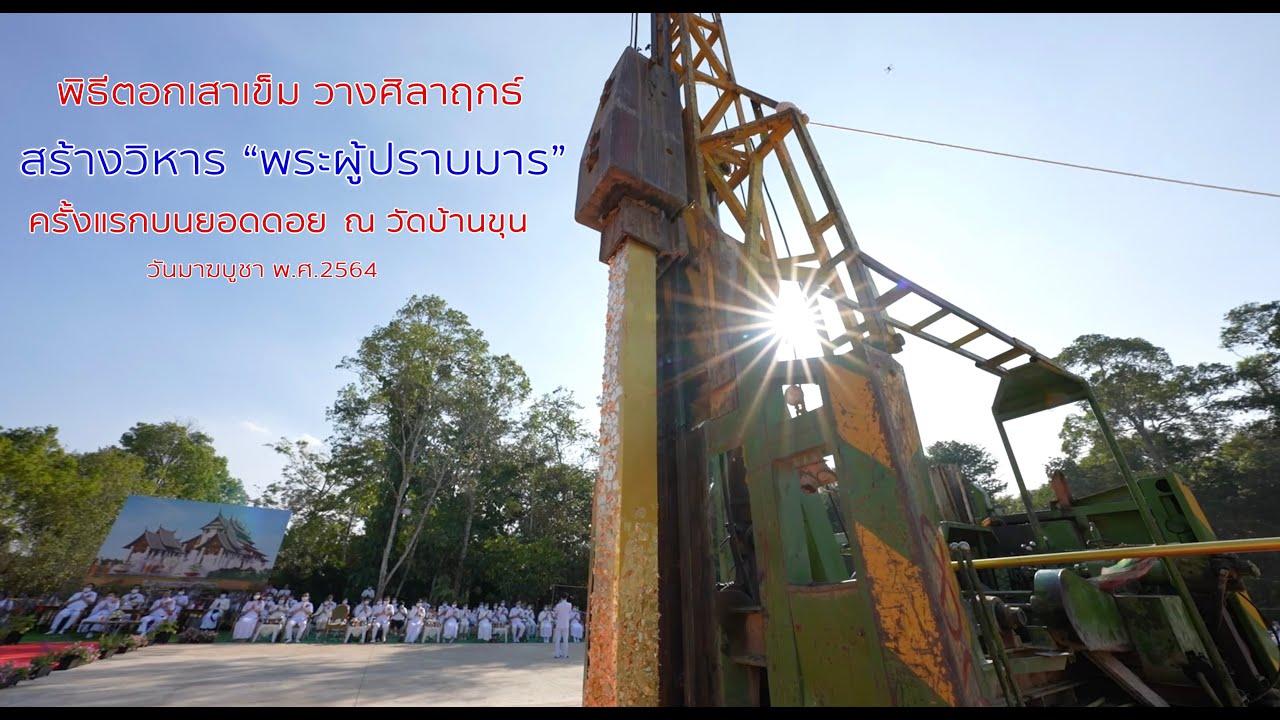
In 2005, the old viharn was demolished because it was badly deteriorated and structurally weak. The local faith community discussed the issue and worked together to remove the old structure. A new building was then constructed as a combined ubosot and viharn, supporting both monastic ceremonies and worship. This combined structure reflects practical temple development in a highland community context.
The confirmed monastic buildings of Wat Ban Khun include a sermon hall and monks’ residences. The temple also has a combined ubosot and viharn, the Buddhist school area, and Phra Chedi Sawan. These spaces together support worship, monastic life, education, community meetings, and religious ceremonies.
Phra Chedi Sawan is an important sacred structure at Wat Ban Khun. In 2015, a ceremony was held to enshrine Buddha relics at Phra Chedi Sawan. Many monks, novices, and highland residents participated in the event. This gave Wat Ban Khun an additional sacred dimension beyond its educational and community roles.
Visitors to Wat Ban Khun should pay attention to the combined ubosot and viharn, the sermon hall, monks’ residences, the Buddhist school area, and Phra Chedi Sawan. The temple is especially meaningful for travelers who want to see how Buddhism can support education and community transformation in a remote mountain area.
The temple’s role in the community is broad and deep. It is the spiritual center of Ban Khun, a place for chanting, meditation, Buddhist study, merit-making, and moral discipline. It also helps reduce harmful habits, supports youth education, and strengthens the sense of responsibility among villagers. This makes Wat Ban Khun one of the most socially significant temples in Bo Luang Subdistrict.
Important Buddhist activities connected with Wat Ban Khun include Kathin, Pha Pa offerings, Buddhist holy days, Buddhist Lent, the end of Buddhist Lent, Makha Bucha, Visakha Bucha, Asalha Bucha, and major faith events connected with Phra Chedi Sawan. These occasions bring monks, novices, villagers, and supporters together to maintain Buddhist practice and community unity.
Wat Ban Khun is suitable for cultural travelers, visitors interested in the Lua community, those studying Buddhist education, and travelers who want to understand how a temple can become a center of community development. It offers more than a brief worship stop. It tells a deeper story about faith, education, discipline, and social change in the highlands of Chiang Mai.
Getting There from Chiang Mai city, take Highway 108 toward Hot District and continue along the Chiang Mai – Hot – Mae Sariang route. From Hot, proceed into Bo Luang Subdistrict and Ban Khun, Moo 3. The route includes mountain sections, curves, and slopes, so drivers should check brakes, tires, fuel, and lights before traveling. Extra time should be allowed, especially during foggy or rainy periods.
Travelers using public transport should first reach Hot District or use a route that passes toward Mae Sariang, then arrange local transport into Ban Khun. A private car is the most convenient option because visitors can combine the temple with nearby places such as Wat Kio Lom, Wat Na Fon, Wat Phra That Doi Liam, Bo Kaeo Pine Garden, and Doi Bo Luang Forest Park.
A suitable travel route is to start from central Hot, travel into Bo Luang, visit Wat Ban Khun to learn about its educational and community role, and then continue to Bo Kaeo Pine Garden and Doi Bo Luang Forest Park. Travelers interested in local Buddhist sites can also include Wat Kio Lom, Wat Na Fon, Wat Phra That Doi Liam, Wat Bo Pha Waen, and Wat Bo Sa-Ngae.
Visitors should dress modestly, speak quietly, avoid disturbing students and novices, and not enter monks’ residences or school areas without permission. Photography should be done respectfully, especially during classes, ceremonies, or community activities. Wat Ban Khun is both a temple and an educational space, so respectful behavior is essential.
In summary, Wat Ban Khun is an important temple of Ban Khun, Moo 3, Bo Luang Subdistrict, Hot District, Chiang Mai Province. Established in 1927 and granted Wisungkhamsima in 1999, the temple is rooted in a Lua highland community and has grown into a center for Buddhist education, youth development, moral training, and community faith. Its combined ubosot and viharn, sermon hall, monks’ residences, Buddhist school, Phra Chedi Sawan, and social role make it one of the most meaningful cultural stops in the Bo Luang area.
| Name | Wat Ban Khun |
| Location | Ban Khun, Moo 3, Bo Luang Subdistrict, Hot District, Chiang Mai Province |
| Address | 129 Moo 3, Ban Khun, Bo Luang Subdistrict, Hot District, Chiang Mai 50240, Thailand |
| Temple Type | Local Buddhist temple under the Mahanikaya order |
| Temple Registration Code | 350160406 |
| Temple Area | Originally 4 rai and 1 ngan, later expanded to about 80 rai |
| Highlights | Temple of the Lua community of Ban Khun, recognized as a temple educational park and model development temple, with a Buddhist scripture school for highland novices |
| History | Established in 1927 and granted Wisungkhamsima in 1999 |
| Founders | Phra Panya Chanma, Nai Intha, and Nai Som |
| Abbot | Phra Wachirakit Sophon (Wichan Itthinako) |
| Contact | 081-951-4789 |
| Important Structures | Combined ubosot and viharn, sermon hall, monks’ residences, Wat Ban Khun Triam Phutthasat School, and Phra Chedi Sawan |
| Educational Role | Wat Ban Khun Triam Phutthasat School is a Buddhist scripture school under the general education division, serving novice monks in secondary education |
| Recognition | Temple educational park in 2005 and model development temple in 2008 |
| Distinctive Features | Highland community temple with strong roles in moral training, education, reducing harmful habits, and youth development |
| Community Role | Spiritual center of Ban Khun, supporting chanting, meditation, Buddhist education, merit-making, Kathin, Pha Pa, and village activities |
| Travel Information | Take Highway 108 from Chiang Mai toward Hot and Mae Sariang, then continue to Ban Khun, Moo 3, Bo Luang Subdistrict |
| Current Status | Open as a community temple, Buddhist school, and spiritual center of Ban Khun |
| Open Days | Daily |
| Opening Hours | 08.00 – 17.00 |
| Local Administrative Contact | Bo Luang Municipality, Tel. 0-5208-1663 |
| Nearby Tourist Attractions | 1. Wat Kio Lom, about 8 km 2. Wat Na Fon, about 10 km 3. Wat Phra That Doi Liam, about 12 km 4. Bo Kaeo Pine Garden, about 15 km 5. Doi Bo Luang Forest Park, about 18 km |
| Nearby Restaurants | 1. Rabeang Son Cafe, about 15 km, Tel. 062-079-9411 2. Suanson Coffee&rest, about 15 km 3. Na Samoeng Bo Kaeo Coffee, about 16 km, Tel. 097-165-7479 4. Nueng Diao Restaurant, about 20 km, Tel. 086-915-3716 5. Good Morning Hod, about 45 km, Tel. 091-853-7308 |
| Nearby Accommodations | 1. Doi Bo Luang Forest Park by the Forest Industry Organization, about 18 km, Tel. 092-586-9215 2. Tiw Son Resort Hot, about 25 km, Tel. 080-845-1167 3. Huen Hug Hod The Resort, about 45 km, Tel. 085-030-7356 4. Kiss Hod Resort, about 45 km, Tel. 080-135-2992 5. Gardum House, about 47 km |
Frequently Asked Questions (FAQ)
Q: Where is Wat Ban Khun located?
A: Wat Ban Khun is located at 129 Moo 3, Ban Khun, Bo Luang Subdistrict, Hot District, Chiang Mai Province 50240.
Q: What is the history of Wat Ban Khun?
A: Wat Ban Khun was established in 1927 by Phra Panya Chanma together with Nai Intha and Nai Som. The temple received its Wisungkhamsima in 1999.
Q: Who is the abbot of Wat Ban Khun?
A: The abbot of Wat Ban Khun is Phra Wachirakit Sophon (Wichan Itthinako).
Q: Why is Wat Ban Khun important for education?
A: The temple is home to Wat Ban Khun Triam Phutthasat School, a Buddhist scripture school that allows highland novice monks to study Dhamma, Pali, and general education.
Q: What are the opening hours of Wat Ban Khun?
A: The temple is open daily from 08.00 to 17.00.
Q: How can travelers get to Wat Ban Khun?
A: Travelers can take Highway 108 from Chiang Mai toward Hot and Mae Sariang, then continue to Ban Khun, Moo 3, Bo Luang Subdistrict. A private car is the most convenient option.
Q: What nearby attractions can be visited with Wat Ban Khun?
A: Nearby attractions include Wat Kio Lom, Wat Na Fon, Wat Phra That Doi Liam, Bo Kaeo Pine Garden, and Doi Bo Luang Forest Park.
 Category: ●Places of Worship
 Group: ●Temple
Last Update : 1 MonthAgo
 Last Update : 1 MonthAgo
 Click to Access the Navigation Map GPS
Wat Ban Khun Map
Recommend

 Muang Chiang Mai(121)Chom Thong(47)Mae Chaem(25)Chiang Dao(33)Doi Saket(68)Mae Taeng(85)Mae Rim(69)Samoeng(29)Fang(71)Mae Ai(59)Phrao(70)San Pa Tong(103)San Kamphaeng(66)San Sai(73)Hang Dong(73)Hot(32)Doi Tao(22)Omkoi(11)Saraphi(74)Wiang Haeng(15)Chai Prakan(28)Mae Wang(32)Mae On(22)Doi Lo(33)Galyani Vadhana(1)


