
lovethailand home >North Travel Attractions >Chiang Mai Travel Attractions >Omkoi >Mon Chong > Wat Ku Phrueksa Ram
TL;DR: Wat Ku Phrueksa Ram is located at Moo 2, Ban Huai Nam Khao, Mon Chong Subdistrict, Omkoi District, Chiang Mai Province 50310, open Community temple; contact the temple or Mon Chong Subdistrict Administrative, hours Daytime travel is recommended.

Wat Ku Phrueksa Ram
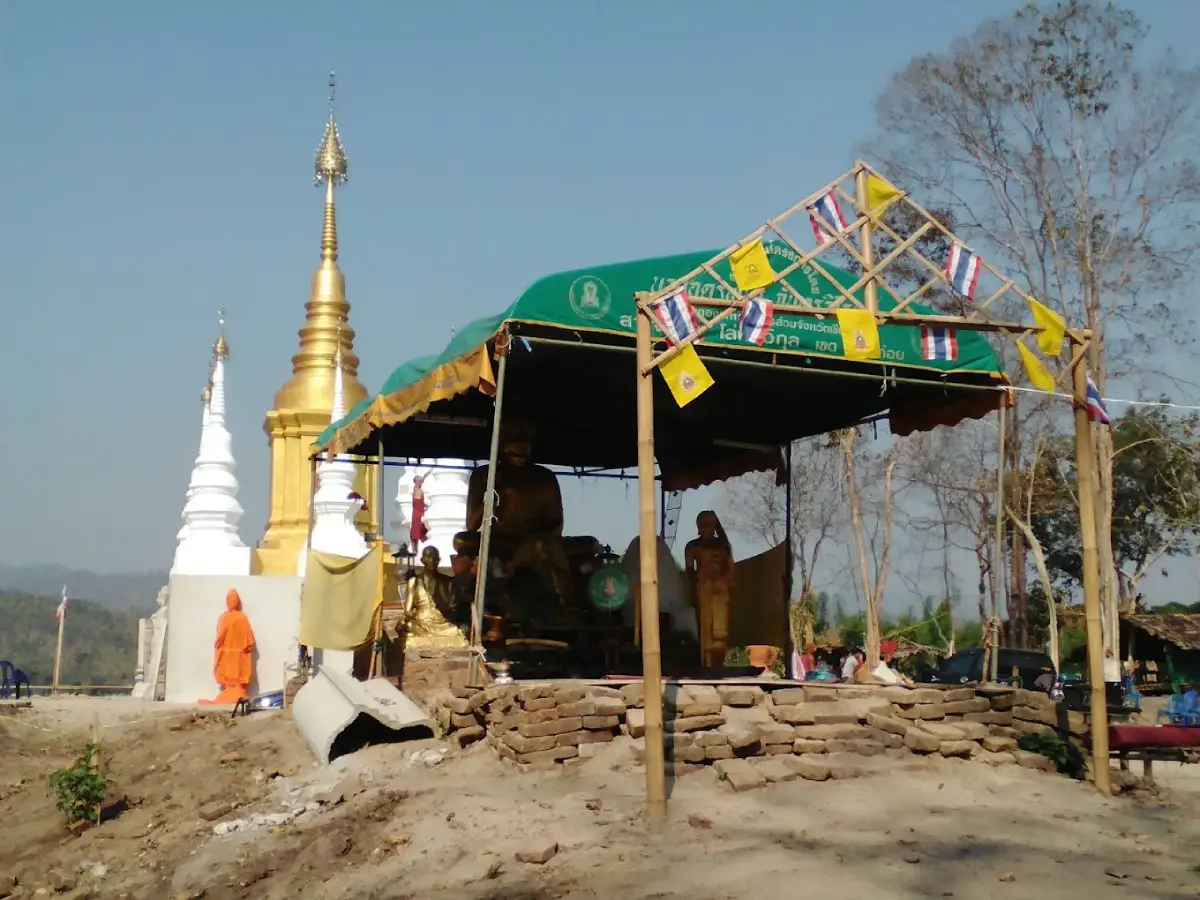
Open Days: Community temple; contact the temple or Mon Chong Subdistrict Administrative Organization before travelling
Opening Hours: Daytime travel is recommended
Wat Ku Phrueksa Ram is located in Moo 2, Ban Huai Nam Khao, Mon Chong Subdistrict, Omkoi District, Chiang Mai Province 50310. It is a local Buddhist temple under the Mahanikaya sect and has been part of the Huai Nam Khao community for more than a century. The temple was officially permitted to be established in 1914, making it one of the long-standing religious places in this highland part of Omkoi. Its value does not come from grand tourist-scale architecture, but from its role as a spiritual center for a remote mountain community.
Wat Ku Phrueksa Ram is suitable for travelers who want to understand Omkoi beyond the well-known trekking route to Doi Mon Chong. Mon Chong Subdistrict is a highland area with mountain villages, diverse ethnic communities, agricultural livelihoods, and Buddhist temples that continue to serve local daily life. Visiting this temple offers a quieter and more grounded view of Chiang Mai: one shaped by village faith, mountain geography, and community relationships rather than mass tourism.
Ban Huai Nam Khao is Moo 2 of Mon Chong Subdistrict in Omkoi District. The area lies in southern Chiang Mai and is much farther from the provincial city than most mainstream tourist routes. Roads in the subdistrict include paved sections, concrete village roads, and mountain routes that require caution, especially during the rainy season. For this reason, visiting Wat Ku Phrueksa Ram should be planned as a highland community trip, not as a quick city temple stop.
The temple’s historical foundation is centered on its official establishment in 1914. In rural northern Thailand, temples were not only religious spaces but also moral, social, and cultural centers. A village temple supported Buddhist ceremonies, merit-making, community gatherings, and local continuity. Wat Ku Phrueksa Ram therefore represents the long-standing presence of Buddhism in Ban Huai Nam Khao and the role of temple life in holding the community together across generations.
The name “Wat Ku Phrueksa Ram” carries a northern Thai cultural tone. The word “ku” in Lanna usage can refer to a stupa-like structure or sacred monument. “Phrueksa” means trees or vegetation, while “aram” means a temple or peaceful religious residence. Taken together, the name evokes an image of a quiet temple connected with greenery, memory, and worship. This meaning fits the character of the temple as a calm community place in a mountainous environment.
One of the distinctive features of Wat Ku Phrueksa Ram is its position within a network of nearby local temples, including Wat Sathan, Wat Mae Tuen Noi, Wat Pa Kha, Wat Sathit Bunwas, and Wat Dong Din Daeng. These temples reflect how Buddhist life is distributed across villages in Omkoi’s mountain landscape. Rather than functioning as isolated attractions, they serve the religious needs of surrounding communities and help maintain the rhythm of Buddhist practice in remote rural areas.
The publicly confirmed architectural details of Wat Ku Phrueksa Ram are limited. The temple functions as a community religious space with areas for Buddhist activities, a temple yard, and facilities used by monks and villagers. Specific details about a viharn, ubosot, stupa, bell tower, or sermon hall should be checked directly on-site or with the temple before publication in a formal architectural guide. For travelers, the most meaningful way to experience the temple is to approach it as a living local temple rather than as a monument-focused tourist site.
Phra Khachonsak Khantisaro is identified as the abbot of Wat Ku Phrueksa Ram in the information used for this article. In a highland community temple, the abbot’s role is especially important. He is responsible not only for religious practice but also for guiding ceremonies, supporting moral education, maintaining the temple grounds, and serving as a point of connection between the temple and local residents. Visitors should therefore treat the temple with the same respect they would give to an active community religious space.
Wat Ku Phrueksa Ram serves as a spiritual anchor for Ban Huai Nam Khao. On Buddhist holy days and during merit-making occasions, villagers can gather at the temple to make offerings, listen to Dhamma teachings, and participate in religious activities. These events help strengthen social bonds because temple life involves cooperation among elders, families, village leaders, young people, and local devotees. This is the quiet but important role of a village temple in a remote mountain area.
Temple traditions in this type of community usually follow the Buddhist calendar, including activities such as Buddhist holy day observances, the Buddhist Lent period, Kathin, robe-offering ceremonies, and seasonal merit-making. Publicly confirmed details for a specific annual festival at Wat Ku Phrueksa Ram are not available, so visitors who want to join a ceremony should contact the temple or Mon Chong Subdistrict Administrative Organization in advance. This is especially important because travel conditions and local schedules in highland areas can change with weather and community activities.
The atmosphere of Wat Ku Phrueksa Ram is best appreciated slowly and respectfully. Visitors should dress modestly, speak quietly, avoid disturbing monks or local residents, and ask permission before photographing people or private community activities. This is not a staged tourist attraction. It is a place of worship and daily community use. Its charm lies in simplicity, sincerity, and its connection with Ban Huai Nam Khao.
Getting There requires travelling from Omkoi District toward Mon Chong Subdistrict and then onward to Ban Huai Nam Khao. The route passes through highland terrain, so travelers should use a vehicle in good condition and check weather and road conditions before departure. Brakes, tires, fuel, and basic supplies should be prepared in advance. If visitors are unfamiliar with the area, contacting local authorities or local residents before travelling is strongly recommended.
Travelers coming from Chiang Mai city should allow plenty of time. Omkoi is a remote district, and the journey involves long driving distances and mountain roads. A same-day return from Chiang Mai city is not ideal for visitors who want to reach Mon Chong comfortably. A better plan is to stay in Omkoi or nearby accommodation first, then travel to Ban Huai Nam Khao during daylight. Night driving is not recommended for drivers unfamiliar with the route.
Wat Ku Phrueksa Ram can be combined with nearby community temples such as Wat Sathan, Wat Mae Tuen Noi, Wat Pa Kha, Wat Sathit Bunwas, and Wat Dong Din Daeng. Travelers interested in nature can also connect the route with the Doi Mon Chong tourism service area, Doi Mon Chong, and other highland attractions. However, Doi Mon Chong is a seasonal nature destination with its own access rules, so visitors should check the current opening period and local requirements before including it in the itinerary.
Restaurants and accommodations are limited near Ban Huai Nam Khao compared with Chiang Mai city or the main Omkoi town area. Visitors should carry drinking water, snacks, and personal necessities. Verified restaurants and accommodations are mostly found in Omkoi town or along the main travel routes. These are practical stops before or after travelling into Mon Chong. If the trip also includes Doi Mon Chong, travelers should arrange transport, meals, accommodation, and local services in advance.
The appeal of Wat Ku Phrueksa Ram is its authenticity. It does not compete with famous Chiang Mai temples in terms of elaborate art or scale. Instead, it represents the living role of a Buddhist temple in a mountain community. It shows that Chiang Mai’s religious landscape includes not only historic city temples and famous pilgrimage sites, but also small village temples that continue to support local faith in remote districts.
Wat Ku Phrueksa Ram is best suited to travelers interested in local temples, highland communities, Omkoi’s cultural geography, and meaningful travel beyond mainstream routes. A visit here helps reveal a quieter side of Chiang Mai: one rooted in village life, Buddhist practice, and the relationship between people and mountain landscapes. With careful planning and respectful behavior, the temple can be part of a thoughtful cultural route through Mon Chong and Omkoi.
In summary, Wat Ku Phrueksa Ram is a Mahanikaya community temple in Ban Huai Nam Khao, Mon Chong Subdistrict, Omkoi District, Chiang Mai Province. Officially established in 1914, it has served the local community for more than 100 years. With Phra Khachonsak Khantisaro as abbot, the temple remains an important spiritual place for the village and a meaningful stop for travelers who want to understand the deeper cultural landscape of Omkoi.
| Name | Wat Ku Phrueksa Ram |
| Type | Local Buddhist temple under the Mahanikaya sect |
| Location | Moo 2, Ban Huai Nam Khao, Mon Chong Subdistrict, Omkoi District, Chiang Mai Province 50310 |
| Address | Ban Huai Nam Khao, Moo 2, Mon Chong Subdistrict, Omkoi District, Chiang Mai 50310, Thailand |
| Coordinates | 17.37753, 98.48268 |
| Highlights | Long-standing village temple in Ban Huai Nam Khao and an important spiritual center for the Mon Chong highland community |
| History | Officially permitted to be established as a temple in 1914, giving it more than 100 years of community history |
| Name Origin | The name combines the Lanna idea of “ku,” a stupa-like sacred structure, with “phrueksa,” meaning trees, and “aram,” meaning temple |
| Distinctive Features | A local mountain community temple that reflects the relationship between Buddhism, village life, and Omkoi’s highland landscape |
| Travel Information | Travel from Omkoi District into Mon Chong Subdistrict and Ban Huai Nam Khao. Use a vehicle in good condition, check local road conditions, and avoid heavy rain or night driving. |
| Current Status | Still listed as a temple in Mon Chong Subdistrict, Omkoi District, Chiang Mai Province |
| Facilities | As a highland community temple, visitors should bring drinking water, snacks, and basic personal supplies |
| Main Areas / Zones | Religious activity area, temple yard, and community-use temple grounds |
| Abbot / Caretaker | Phra Khachonsak Khantisaro |
| Local Contact | Mon Chong Subdistrict Administrative Organization, Tel. 0-520-00-573 |
| Nearby Tourist Attractions | 1. Wat Sathan, about 2 km 2. Wat Mae Tuen Noi, about 2 km 3. Wat Pa Kha, about 2 km 4. Wat Sathit Bunwas, about 3 km 5. Wat Dong Din Daeng, about 3 km 6. Doi Mon Chong Tourist Service Center, Ban Musoe, about 45 km, Tel. 09-2938-9962, 06-4432-3139 7. Doi Mon Chong, about 50 km, Tel. 09-2938-9962, 06-4432-3139 |
| Nearby Restaurants / Omkoi Route | 1. Khao Soi Mae Son Omkoi, about 60 km, Tel. 086-193-7155 2. Muan Kha Nat at Omkoi, about 60 km, Tel. 089-850-7182, 084-378-1567 3. Pat Bar Cafe Omkoi, about 60 km, Tel. 064-345-1059 4. OK Kitchen, about 60 km, Tel. 082-628-9822 5. Phu Fa Restaurant Omkoi, about 90 km, Tel. 053-114-334 |
| Nearby / Omkoi and Mon Chong Accommodations | 1. Mon Chong Homestay, about 45 km, Tel. 085-213-1991 2. Omkoi Phu View Resort, about 60 km, Tel. 081-993-9879, 084-364-6489 3. Omkoi Resort, about 60 km, Tel. 086-188-1910 4. Ban Bon Doi Omkoi The Resort, about 60 km, Tel. 098-651-8314 5. Mae Tuen Resort House, about 35 km, Tel. 093-276-6287 |
Frequently Asked Questions (FAQ)
Q: Where is Wat Ku Phrueksa Ram located?
A: Wat Ku Phrueksa Ram is located in Moo 2, Ban Huai Nam Khao, Mon Chong Subdistrict, Omkoi District, Chiang Mai Province 50310.
Q: What type of temple is Wat Ku Phrueksa Ram?
A: It is a local Buddhist temple under the Mahanikaya sect and serves as an important community temple for Ban Huai Nam Khao.
Q: When was Wat Ku Phrueksa Ram established?
A: Wat Ku Phrueksa Ram was officially permitted to be established as a temple in 1914.
Q: Who is the abbot of Wat Ku Phrueksa Ram?
A: The abbot is Phra Khachonsak Khantisaro.
Q: Who should visit Wat Ku Phrueksa Ram?
A: It is suitable for travelers interested in local temples, highland communities, Buddhist village life, and cultural routes in Omkoi District.
Q: How should visitors prepare for the trip?
A: Visitors should use a well-maintained vehicle, bring water and essential supplies, check the weather, and contact local authorities before travelling into Ban Huai Nam Khao.
Q: What nearby places can be combined with this visit?
A: Nearby route options include Wat Sathan, Wat Mae Tuen Noi, Wat Pa Kha, Wat Sathit Bunwas, the Doi Mon Chong Tourist Service Center, and Doi Mon Chong.
Q: Is there an admission fee for Wat Ku Phrueksa Ram?
A: No verified official admission fee is available. Visitors should mainly prepare for transport, food, and accommodation costs in the Omkoi area.
 Category: ●Places of Worship
 Group: ●Temple
Last Update : 4 WeekAgo
 Last Update : 4 WeekAgo
 Click to Access the Navigation Map GPS
Wat Ku Phrueksa Ram Map
Recommend

 Muang Chiang Mai(121)Chom Thong(47)Mae Chaem(25)Chiang Dao(33)Doi Saket(68)Mae Taeng(85)Mae Rim(69)Samoeng(29)Fang(71)Mae Ai(59)Phrao(70)San Pa Tong(103)San Kamphaeng(66)San Sai(73)Hang Dong(73)Hot(32)Doi Tao(22)Omkoi(11)Saraphi(74)Wiang Haeng(15)Chai Prakan(28)Mae Wang(32)Mae On(22)Doi Lo(33)Galyani Vadhana(1)


