
lovethailand home >North Travel Attractions >Chiang Mai Travel Attractions >Hang Dong >Khun Khong > Wat Thammapradit
TL;DR: Wat Thammapradit is located at Ban Klang, Khun Khong Subdistrict, Hang Dong District, Chiang Mai. Highlights include Long-standing village temple established in 1878, suitable for worship and cultural travel routes around Khun Khong and Baan Tawai.

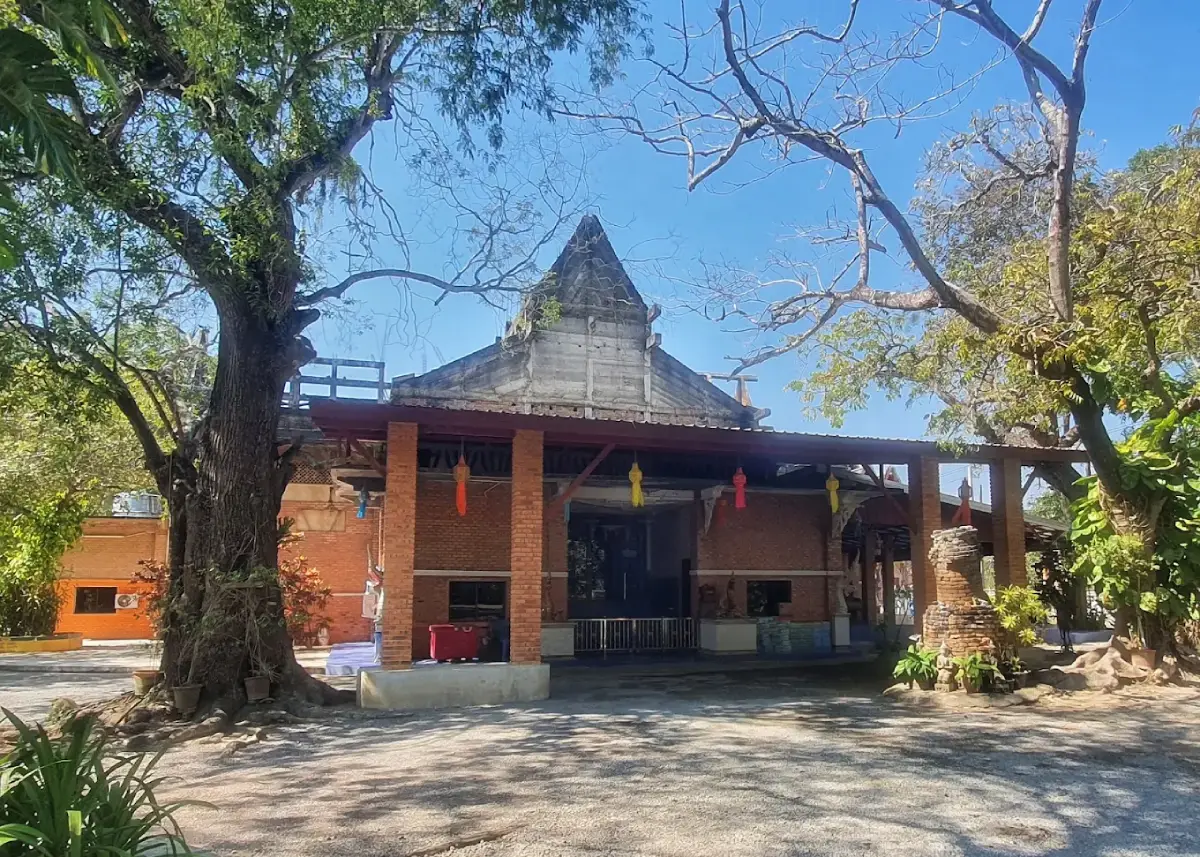
Wat Thammapradit
Operating day: Daily
Operating time: 08.00 - 17.00
Wat Thammapradit, officially listed as Wat Thammapradit Sathan, is a local Maha Nikaya Buddhist temple in Ban Klang, Moo 2, Khun Khong Subdistrict, Hang Dong District, Chiang Mai. The temple was established in 1878 and received its royal consecrated boundary on 23 June 1971. It serves as a spiritual center for the Ban Klang community and can be included in a cultural route connecting Baan Tawai, Wat Tawai, Wat Ton Kaew, and other local temples in Hang Dong.
Wat Thammapradit, or Wat Thammapradit Sathan, is a community Buddhist temple located in Ban Klang, Khun Khong Subdistrict, Hang Dong District, Chiang Mai 50230. It is a local temple under the Maha Nikaya order and is associated with the Ban Klang community. The abbot is Phra Khru Sattha Tham Sathit. The temple is part of a wider cultural landscape in Khun Khong, where village temples, agricultural communities, handicraft areas, and local roads are closely connected.
The name Wat Thammapradit carries a clear Buddhist meaning. “Thamma” refers to Buddhist teaching, moral truth, and the path toward inner peace. “Pradit” suggests creation, establishment, and careful formation. Together, the name can be understood as a place established for the presence of Dhamma and for the spiritual life of the community.
The documented history of Wat Thammapradit Sathan records that the temple was established in 1878. It received its royal consecrated boundary on 23 June 1971. This makes Wat Thammapradit one of the long-standing community temples in Khun Khong Subdistrict. Its history shows that Ban Klang has maintained Buddhist faith and temple-centered community life for more than a century.
The royal consecrated boundary is an important part of the temple’s religious status. In Thai Buddhism, this boundary marks the area where important monastic acts can be performed, including ordination and other formal Sangha ceremonies. Wat Thammapradit is therefore not only a village place of worship, but also a recognized Buddhist temple with a defined role in the ecclesiastical system.
The temple’s setting in Ban Klang is essential to understanding its value. Ban Klang is located in Khun Khong Subdistrict, the same subdistrict as Baan Tawai and several other local temples. The area is part of Hang Dong District, a cultural zone south of Chiang Mai city that includes village communities, temple networks, local roads, agricultural areas, and handicraft traditions. Wat Thammapradit serves as a spiritual center within this landscape.
Khun Khong Subdistrict includes several community temples, such as Wat Khun Khong, Wat Ton Kaew, Wat Tawai, and Wat Wong Metha. Each temple is tied to its own village and reflects the traditional relationship between temple and community in Lanna culture. Wat Thammapradit is one of these local religious sites and works well as part of a quiet temple route through Hang Dong.
The main character of Wat Thammapradit is its calm village-temple atmosphere. It is not a large landmark temple designed for mass tourism. Its value lies in the way it continues to serve the daily religious and social life of the Ban Klang community. Temples like this help visitors understand that Buddhist culture in northern Thailand is not found only in famous city temples, but also in smaller village temples that remain close to local life.
Phra Khru Sattha Tham Sathit, the abbot of Wat Thammapradit, oversees the temple’s religious life and community role. With monastic leadership and active local devotion, the temple remains a living Buddhist site. Visitors should therefore approach the temple with respect, recognizing that it is still used by local residents for merit-making, worship, ceremonies, and community activities.
Publicly available details about specific buildings inside Wat Thammapradit are limited. However, the temple’s recognized status and royal consecrated boundary show its importance as a place for Buddhist practice and community ceremonies. Visitors should respect worship areas, avoid disturbing monks or local devotees, and move quietly around the temple grounds.
Like many Lanna community temples, Wat Thammapradit supports the annual rhythm of Buddhist merit-making. Activities such as Buddhist holy day observances, offerings to monks, Kathin, Pha Pa, and other village-based religious events form part of the temple’s wider role. These activities help keep the relationship between temple and village strong, allowing the community to gather, make merit, and maintain shared traditions.
The role of Wat Thammapradit in Ban Klang is therefore both spiritual and social. It is a place where local people can make merit, dedicate offerings, attend ceremonies, and maintain their connection with Buddhist teaching. In traditional Lanna communities, temples often functioned as religious centers, learning spaces, and gathering places. Wat Thammapradit continues that village-temple role in a quiet and grounded way.
For travelers, Wat Thammapradit is suitable for those interested in local temples, Lanna village culture, and the quieter side of Chiang Mai. A visit here offers a different experience from the famous temples in Chiang Mai’s old city. Instead of crowds and major tourist infrastructure, visitors encounter a temple connected to everyday community life in Hang Dong.
Wat Thammapradit can be combined with nearby cultural attractions. A practical route is to visit Wat Thammapradit in Ban Klang, continue to Baan Tawai Handicraft Village to see woodcarving and Lanna crafts, then visit Wat Tawai or Wat Ton Kaew to understand how temples, local history, and craft traditions connect in Khun Khong Subdistrict. This route gives visitors a fuller picture of Hang Dong beyond its main roads and shopping areas.
Baan Tawai is especially important in this route because it is one of Chiang Mai’s best-known woodcarving and handicraft villages. Combining Wat Thammapradit with Baan Tawai allows travelers to experience both spiritual heritage and living craft culture. The temple route also connects well with Wat Ton Kwen and Royal Park Rajapruek for travelers who have more time.
The best way to experience Wat Thammapradit is to visit quietly, make merit if desired, and observe the atmosphere of a village temple. Visitors should dress modestly, speak softly, and avoid interrupting religious activities. Photography should be done respectfully, especially around worship areas and monastic spaces.
Getting There from Chiang Mai city is most convenient by private car, rental car, or local hired transport. Take the Chiang Mai–Hang Dong road, also known as Highway 108, toward Hang Dong District, then continue onto local roads in Khun Khong Subdistrict and Ban Klang. Travelers unfamiliar with the area can use Wat Thammapradit Sathan, Ban Klang, Khun Khong as the destination and use Baan Tawai as a helpful landmark.
The best time to visit village temples in Hang Dong is in the morning or late afternoon, when the weather is more comfortable. After visiting Wat Thammapradit, travelers can continue to Baan Tawai, nearby restaurants in Hang Dong, or accommodation around Khun Khong and Baan Tawai. A half-day route can include Wat Thammapradit, Baan Tawai, and Wat Tawai. A full-day route can add Wat Ton Kaew, Wat Ton Kwen, or Royal Park Rajapruek.
Wat Thammapradit is a valuable stop for travelers who want to understand Khun Khong beyond its better-known craft village. The temple represents the long-standing relationship between Buddhist faith, village life, and Lanna culture in Hang Dong. Its importance lies not in grand scale, but in its history, its status as a recognized Maha Nikaya temple, and its continuing role as a spiritual center for Ban Klang.
| Name | Wat Thammapradit or Wat Thammapradit Sathan |
| Location | Ban Klang, Khun Khong Subdistrict, Hang Dong District, Chiang Mai |
| Address | Ban Klang, Moo 2, Khun Khong Subdistrict, Hang Dong District, Chiang Mai 50230 |
| Temple Type | Local Buddhist temple under the Maha Nikaya order |
| Highlights | Long-standing village temple established in 1878, suitable for worship and cultural travel routes around Khun Khong and Baan Tawai |
| History | Established in 1878 and received its royal consecrated boundary on 23 June 1971 |
| Name Origin | The name suggests a place established for Dhamma and for the spiritual life of the community |
| Distinctive Features | A quiet community temple in Ban Klang, suitable for merit-making and understanding local Lanna Buddhist life in Hang Dong |
| Community Context | Located in Khun Khong Subdistrict, an area connected with village temples, Baan Tawai handicrafts, and cultural routes in Hang Dong |
| Abbot / Caretaker | Phra Khru Sattha Tham Sathit |
| Travel Information | From Chiang Mai city, take the Chiang Mai–Hang Dong road or Highway 108 toward Hang Dong District, then continue onto local roads in Khun Khong Subdistrict and Ban Klang |
| Current Status | Listed as an active Maha Nikaya local temple in Khun Khong Subdistrict, Hang Dong District, Chiang Mai |
| Nearby Tourist Attractions | 1. Baan Tawai Handicraft Village, about 3 km 2. Wat Tawai, about 3 km 3. Wat Ton Kaew (Khun Khong), about 4 km 4. Wat Khun Khong, about 5 km 5. Wat Ton Kwen or Wat Intharawat, about 9 km |
| Nearby Restaurants | 1. Noodle Shop near Wat Thammapradit Sathan, about 1 km 2. Sathani Khao Kaeng Lae Khanom Chin Baan Tawai, about 3 km 3. Baan Nong Kan Kan Baan Tawai, about 3 km 4. Heng Dee Grocery & Bar, about 4 km 5. Jungle De Cafe Hang Dong Baan Tawai By Tongna Cottage, about 6 km |
| Nearby Accommodations | 1. Baan Tonglong Homestay 2, about 4 km, Tel. 086-185-8796 2. Baan Tawai Lanna Resort, about 4 km 3. Tongna Cottage Natural Resort, about 6 km 4. Buffalo Island Resort, about 7 km 5. North Hill City Resort, about 10 km |
Frequently Asked Questions (FAQ)
Q: Where is Wat Thammapradit located?
A: Wat Thammapradit, or Wat Thammapradit Sathan, is located in Ban Klang, Moo 2, Khun Khong Subdistrict, Hang Dong District, Chiang Mai 50230.
Q: What type of temple is Wat Thammapradit?
A: Wat Thammapradit is a local Buddhist temple under the Maha Nikaya order.
Q: What is the history of Wat Thammapradit?
A: Wat Thammapradit Sathan was established in 1878 and received its royal consecrated boundary on 23 June 1971.
Q: Who is the abbot of Wat Thammapradit?
A: The abbot of Wat Thammapradit is Phra Khru Sattha Tham Sathit.
Q: What is Wat Thammapradit known for?
A: It is known as a long-standing community temple in Ban Klang and as part of the local temple network in Khun Khong, Hang Dong.
Q: Who should visit Wat Thammapradit?
A: It is suitable for travelers interested in local Lanna temples, village culture, Baan Tawai routes, and quiet cultural travel in Hang Dong.
Q: How can travelers get to Wat Thammapradit from Chiang Mai city?
A: Take the Chiang Mai–Hang Dong road or Highway 108 toward Hang Dong, then continue onto local roads in Khun Khong Subdistrict and Ban Klang.
Q: What nearby places can be visited with Wat Thammapradit?
A: Nearby places include Baan Tawai Handicraft Village, Wat Tawai, Wat Ton Kaew, Wat Khun Khong, Wat Ton Kwen, and other attractions in Hang Dong.
 Category: ●Places of Worship
 Group: ●Temple
Last Update : 1 MonthAgo
 Last Update : 1 MonthAgo
 Click to Access the Navigation Map GPS

 Muang Chiang Mai(121)Chom Thong(47)Mae Chaem(25)Chiang Dao(33)Doi Saket(68)Mae Taeng(85)Mae Rim(69)Samoeng(29)Fang(71)Mae Ai(59)Phrao(70)San Pa Tong(103)San Kamphaeng(66)San Sai(73)Hang Dong(73)Hot(32)Doi Tao(22)Omkoi(11)Saraphi(74)Wiang Haeng(15)Chai Prakan(28)Mae Wang(32)Mae On(22)Doi Lo(33)Galyani Vadhana(1)


