
lovethailand home >North Travel Attractions >Chiang Mai Travel Attractions >Saraphi >Chom Phu > Wat Pa Pao
TL;DR: Wat Pa Pao is located at No. 1, Moo 9, Ban Rom Pa Tong, Chomphu Subdistrict, Saraphi District, Chiang Mai Province 50140, open Daily, hours 08.00 – 17.00.

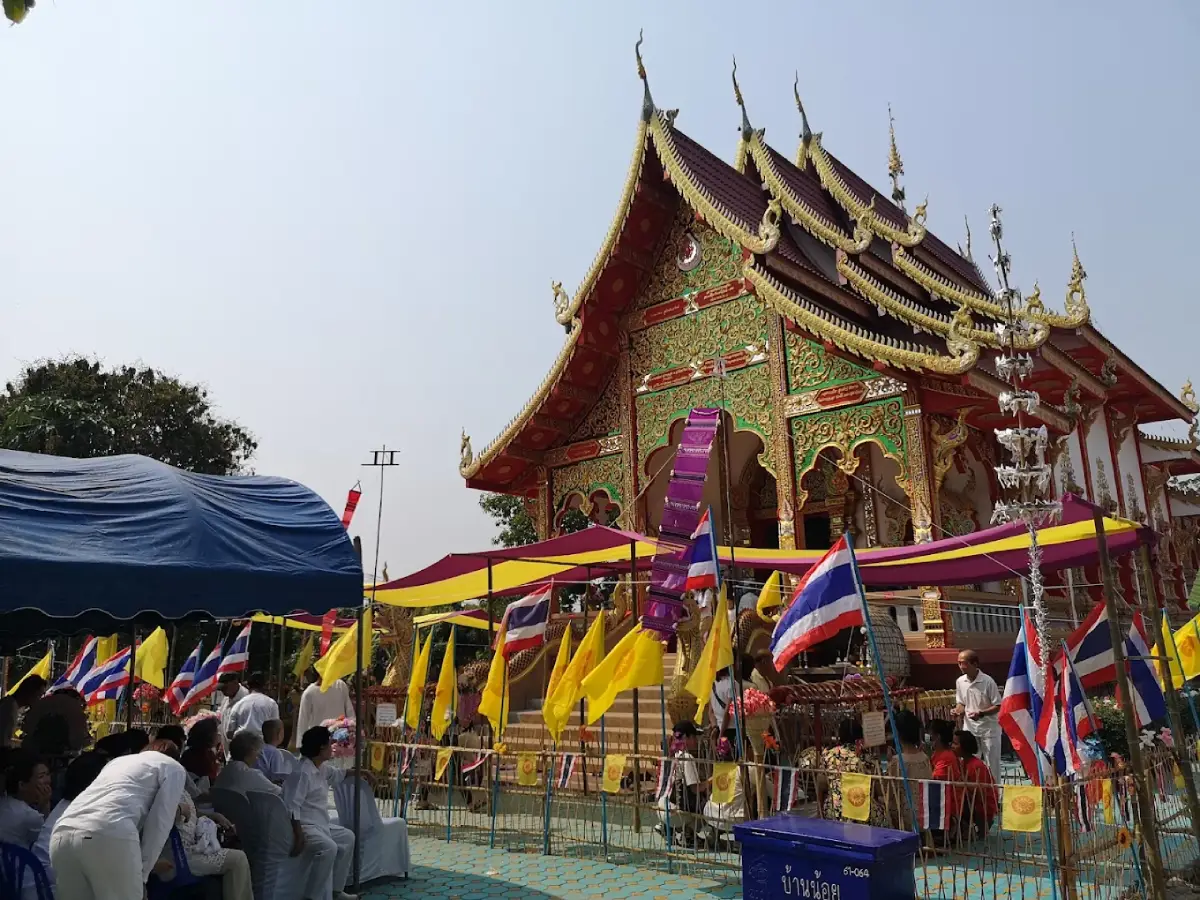
Wat Pa Pao
Open Days: Daily
Opening Hours: 08.00 – 17.00
Wat Pa Pao is located at No. 1, Moo 9, Ban Rom Pa Tong, Chomphu Subdistrict, Saraphi District, Chiang Mai Province 50140. It is a local community temple officially established in 1999. The temple is best referred to as “Wat Pa Pao (Rom Pa Tong)” or “Wat Pa Pao, Chomphu Subdistrict, Saraphi District” to distinguish it from other temples with the same name in Chiang Mai. Its importance lies in its role as the spiritual center of Ban Rom Pa Tong, where local residents continue to make merit, listen to Dhamma, support Buddhist Lent activities, join Kathin, and maintain community traditions.
Wat Pa Pao is suitable for visitors who want to understand Saraphi through a living village temple rather than a large tourist temple. Ban Rom Pa Tong is Moo 9 of Chomphu Subdistrict, an area shaped by village roads, agricultural surroundings, local temples, and community-based Buddhist life. The temple functions as a place for worship, merit-making, annual religious events, and local gatherings. Its value comes from continuity and community use rather than monumental scale.
The name “Wat Pa Pao” carries a local landscape feeling. “Pa” suggests woodland or a shaded natural area, while “Pao” is preserved in the temple name. The temple stands in Ban Rom Pa Tong, a village name that also evokes shade, trees, and rural atmosphere. In this sense, the temple’s name fits the identity of a village temple rooted in the local environment of Chomphu Subdistrict.
Although Wat Pa Pao was officially established in 1999, its importance should not be judged only by age. Many community temples founded or formally registered in the modern period are deeply meaningful because they answer the needs of local residents. Wat Pa Pao gives Ban Rom Pa Tong a Buddhist center close to home, allowing villagers to make merit, host ceremonies, support monks in residence, and maintain a shared spiritual space within the village.
Chomphu Subdistrict helps explain the temple’s role. The subdistrict has several community temples, including Wat Nong Pa Sae, Wat Phaya Chomphu, Ara Pa Kluai, Wat Tha Ton Kwao, Wat Thung Khi Suea, Wat Buppharam, Wat Mae Salap, Wat Si Don Mun, and Wat Pa Pao. These temples serve different villages while forming a wider network of Buddhist and cultural life in Chomphu. Wat Pa Pao is one part of that network, serving Moo 9 and the surrounding community.
Wat Pa Pao serves Ban Rom Pa Tong through Buddhist holy day merit-making, food offerings, Dhamma listening, Buddhist Lent, the end of Buddhist Lent, Kathin, robe-offering activities, Songkran, water-pouring ceremonies for elders, and Yi Peng. These activities help keep Lanna Buddhist culture alive at the village level. They also give residents of different generations a shared place to gather, cooperate, and maintain social ties.
Buddhist Lent activities show the temple’s current community role clearly. Chomphu Subdistrict Municipality and the local cultural council have included Wat Pa Pao (Rom Pa Tong), Moo 9, among the nine temples of Chomphu Subdistrict visited for candle-offering activities. This confirms that the temple remains part of the subdistrict’s active religious and cultural network.
Wat Pa Pao has also been used for Dhamma listening activities during Buddhist Lent. Such events are important in northern Thai Buddhist life because they encourage villagers to listen to teachings, practice generosity, and support monks during the rains retreat. The temple therefore functions as both a religious space and a place of Dhamma learning for the community.
Current merit-making information also shows that Wat Pa Pao has monks in residence and participates in Kathin activities. Kathin is one of the most important annual Buddhist events after the rains retreat. It brings together monks, local residents, and supporters to offer robes and requisites to the temple. For a village temple, Kathin reflects the continuing relationship between the Sangha and the lay community.
The atmosphere of Wat Pa Pao is that of a quiet community temple. Visitors should come with the expectation of making merit, paying respect, and observing village Buddhist life rather than looking for large-scale tourist infrastructure. Its meaning lies in being a real religious space used by Ban Rom Pa Tong residents, not in being a highly commercialized attraction.
Current local and merit-making sources identify Phra Athikan Kachenthep Sutevo as the abbot of Wat Pa Pao. As the abbot, he plays an important role in caring for the temple, guiding ceremonies, coordinating with villagers, and keeping the temple as a peaceful center of faith for Ban Rom Pa Tong. In a village temple, the abbot’s role is closely connected with everyday community life.
The temple also experienced a fire affecting monks’ residence structures in 2021. The incident drew support from monks, local authorities, firefighters, villagers from Ban Rom Pa Tong, and nearby communities. Such events reveal the relationship between a community temple and its supporters: the temple is not only a place where people worship, but also a shared responsibility of the village.
Wat Pa Pao’s role in Ban Rom Pa Tong therefore includes religion, social cohesion, and community cooperation. On ordinary days, it is a calm place to make merit and pay respect. During Buddhist festivals, it becomes a gathering point for the village. During times of repair or hardship, it becomes a focus of community support. This is the essence of a living village temple.
Visitors should understand Wat Pa Pao within the wider context of Chomphu Subdistrict. It is not meant to compete with larger or older temples in Saraphi. Instead, it offers a direct view of how local temples continue to function in everyday village life near Chiang Mai. For travelers interested in community-based culture, this kind of temple helps reveal the living structure of Buddhist society in northern Thailand.
Getting There is convenient because the temple is located in Saraphi District, not far from Chiang Mai city. Visitors can travel from Chiang Mai city toward Saraphi and Chomphu Subdistrict, then continue to Ban Rom Pa Tong, Moo 9. Private car, motorcycle, or local transport can be used. The route is suitable for a half-day or full-day cultural trip combining temples and community attractions in Chomphu.
Wat Pa Pao can be combined with nearby temples and places such as Wat Mae Salap, Wat Si Don Mun, Wat Tha Ton Kwao, Wat Buppharam, Wat Phaya Chomphu and Wang Matcha Phaya Chomphu, Wat Thung Khi Suea, Lan Sai Fai Hin, and Wiang Kum Kam. A meaningful route can begin at Wat Pa Pao to experience a quiet village temple, then continue to Wat Tha Ton Kwao for Kuang River community history and Wat Thung Khi Suea for a revived old temple story.
Wat Tha Ton Kwao adds the history of the Kuang River and Tai Yong-Tai Lue community roots. Wat Thung Khi Suea highlights the revival of an old temple site and ancient stupa remains. Wat Phaya Chomphu and Wang Matcha Phaya Chomphu add a temple, freshwater fish sanctuary, and local devotional dimension. Together, these places give visitors a broader picture of Chomphu Subdistrict’s Buddhist and community landscape.
Restaurants around Wat Pa Pao include local cafés, northern Thai food restaurants, village eateries, and restaurants in Saraphi. Accommodations can be found in Saraphi and nearby Chiang Mai areas, making the temple easy to include in a cultural route that also covers Wiang Kum Kam, Chiang Mai city, or Lamphun.
Visitors should dress modestly, speak quietly, avoid disturbing monks or local residents, and respect the temple’s religious areas. If visiting during Buddhist Lent, Kathin, or a community ceremony, visitors should follow temple guidance and local etiquette. Wat Pa Pao is an active community temple, and a calm, respectful visit allows travelers to appreciate its living role in Ban Rom Pa Tong.
In summary, Wat Pa Pao is a community temple in Ban Rom Pa Tong, Moo 9, Chomphu Subdistrict, Saraphi District, Chiang Mai Province. It is open daily from 08.00 to 17.00 and was officially established in 1999. The temple is important as a quiet village Buddhist center used for merit-making, Buddhist Lent activities, Kathin, Dhamma listening, and local traditions. Its value lies in its continuing role as the spiritual center of Ban Rom Pa Tong and as part of the wider temple network of Chomphu Subdistrict.
| Name | Wat Pa Pao |
| Additional Name | Wat Pa Pao (Rom Pa Tong) / Wat Pa Pao, Chomphu Subdistrict, Saraphi District |
| Type | Local Community Temple |
| Location | No. 1, Moo 9, Ban Rom Pa Tong, Chomphu Subdistrict, Saraphi District, Chiang Mai Province 50140 |
| Address | Ban Rom Pa Tong, Moo 9, Chomphu Subdistrict, Saraphi District, Chiang Mai 50140, Thailand |
| Coordinates / Plus Code | P33C+82C, Chomphu Subdistrict, Saraphi District, Chiang Mai |
| Highlights | Quiet community temple of Ban Rom Pa Tong, suitable for merit-making, Dhamma listening, and learning about village Buddhist life in Chomphu Subdistrict |
| History / Temple Status | Officially established in 1999 and still active in Buddhist and cultural activities of Chomphu Subdistrict |
| Community Context | Located in Ban Rom Pa Tong, Moo 9, Chomphu Subdistrict, and used by local residents for merit-making, Dhamma listening, and annual Buddhist traditions |
| Abbot / Caretaker | Phra Athikan Kachenthep Sutevo |
| Open Days | Daily |
| Opening Hours | 08.00 – 17.00 |
| Local Contact | Chomphu Subdistrict Municipality, Tel. 053-420-779 |
| Community Role | Spiritual center of Ban Rom Pa Tong, place for merit-making, Dhamma listening, Buddhist Lent, Kathin, and Chomphu Subdistrict religious activities |
| Merit Events / Traditions | Buddhist holy day merit-making, Buddhist Lent, end of Buddhist Lent, Kathin, robe offerings, Songkran, water-pouring ceremonies, Yi Peng, candle-offering activities, and Dhamma listening during Buddhist Lent |
| Travel Information | Travel from Chiang Mai city toward Saraphi and Chomphu Subdistrict, then continue to Ban Rom Pa Tong, Moo 9. Private car, motorcycle, or local transport is suitable. |
| Nearby Tourist Attractions | 1. Wat Mae Salap, about 2–4 km 2. Wat Si Don Mun, about 3–5 km 3. Wat Tha Ton Kwao, about 5–8 km 4. Wat Buppharam, about 5–8 km 5. Wat Phaya Chomphu and Wang Matcha Phaya Chomphu, about 6–9 km 6. Wat Thung Khi Suea, about 6–9 km 7. Wiang Kum Kam, about 12–18 km |
| Nearby Restaurants / Chomphu and Saraphi Route | 1. Sarapee Coffee & Tea, Ban Nong Pa Sae, about 4–7 km, Tel. 086-114-6644 2. Aromdee Cafe Saraphi Chiang Mai, about 5–8 km 3. Larb Lung Phueak Saraphi Chiang Mai, about 6–9 km, Tel. 083-321-4073 4. Khrua Khun Ton Khon Sukhothai Mae Salap Chomphu Saraphi, about 6–9 km 5. De’Chill Saraphi, about 7–10 km 6. Suki Saraphi, about 10–14 km |
| Nearby / Saraphi and Chiang Mai Area Accommodations | 1. 9Roomz Hotel, about 10–15 km, Tel. 053-963-829, 095-446-0758 2. Baan Hom Samunphrai, about 10–15 km, Tel. 053-817-362, 081-885-1429 3. Baan Saraphi, about 10–15 km, Tel. 053-321-942 4. Zen Retreat Chiang Mai Villa, about 12–18 km 5. Chiang Mai City Accommodations, about 15–22 km |
Frequently Asked Questions (FAQ)
Q: Where is Wat Pa Pao located?
A: Wat Pa Pao is located at No. 1, Moo 9, Ban Rom Pa Tong, Chomphu Subdistrict, Saraphi District, Chiang Mai Province 50140.
Q: What are Wat Pa Pao’s opening days and hours?
A: The temple is open daily from 08.00 to 17.00.
Q: When was Wat Pa Pao officially established?
A: Wat Pa Pao was officially established in 1999.
Q: Why should the temple be called Wat Pa Pao (Rom Pa Tong)?
A: This temple is located in Ban Rom Pa Tong, Moo 9, Chomphu Subdistrict, Saraphi District. Using the area name helps distinguish it from other temples named Wat Pa Pao in Chiang Mai.
Q: Who is the abbot of Wat Pa Pao?
A: The abbot is Phra Athikan Kachenthep Sutevo.
Q: What is the main highlight of Wat Pa Pao?
A: Its main highlight is its quiet role as a real village temple of Ban Rom Pa Tong, with Buddhist Lent activities, Kathin, Dhamma listening, and community merit-making.
Q: Who should visit Wat Pa Pao?
A: It is suitable for visitors who want to make merit, experience a quiet community temple, and learn about village Buddhist life in Chomphu and Saraphi.
Q: What nearby places can be combined with this visit?
A: Nearby route options include Wat Mae Salap, Wat Si Don Mun, Wat Tha Ton Kwao, Wat Buppharam, Wat Phaya Chomphu, Wat Thung Khi Suea, and Wiang Kum Kam.
 Category: ●Places of Worship
 Group: ●Temple
Last Update : 1 MonthAgo
 Last Update : 1 MonthAgo
 Click to Access the Navigation Map GPS

 Muang Chiang Mai(121)Chom Thong(47)Mae Chaem(25)Chiang Dao(33)Doi Saket(68)Mae Taeng(85)Mae Rim(69)Samoeng(29)Fang(71)Mae Ai(59)Phrao(70)San Pa Tong(103)San Kamphaeng(66)San Sai(73)Hang Dong(73)Hot(32)Doi Tao(22)Omkoi(11)Saraphi(74)Wiang Haeng(15)Chai Prakan(28)Mae Wang(32)Mae On(22)Doi Lo(33)Galyani Vadhana(1)


