
lovethailand home >North Travel Attractions >Chiang Mai Travel Attractions >San Pa Tong >San Klang > Wat Kantharam
TL;DR: Wat Kantharam is located at San Klang Subdistrict, San Pa Tong District, Chiang Mai Province, open Daily, hours 08.00 – 22.00.

Wat Kantharam
Open Days: Daily
Opening Hours: 08.00 – 22.00
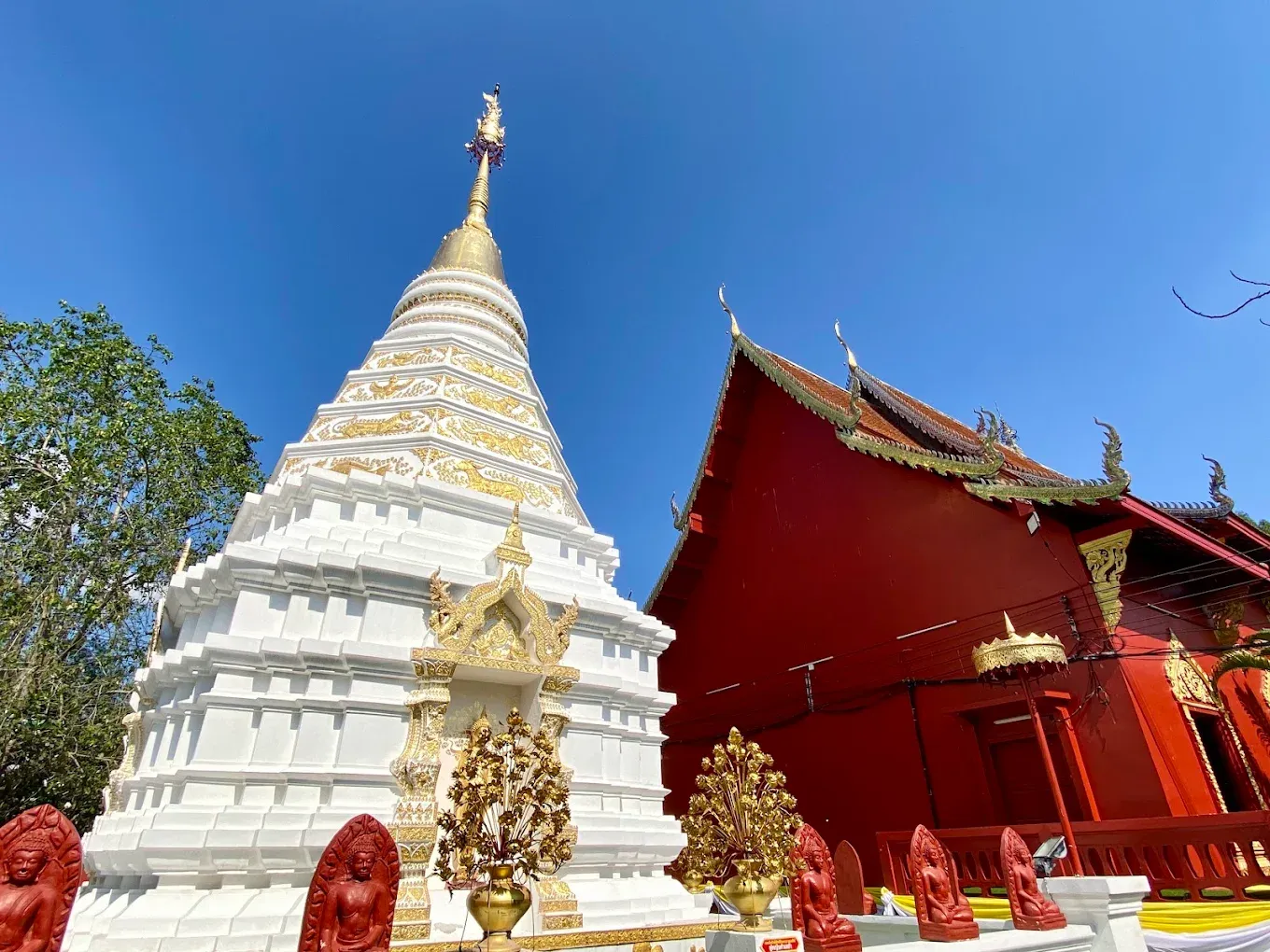
Wat Kantharam (Thung O), also known as Wat Thung O, is a local Mahanikaya temple located at 102 Moo 1, San Klang Subdistrict, San Pa Tong District, Chiang Mai Province. It was founded on 18 April 1942 by Phra Khru Chai Tikkhapanyo and local devotees after relocating from Wat Thung O Noi. The temple covers 9 rai, 2 ngan, and 26 square wah. Today, Wat Kantharam is known as a highly accessible contemporary community temple with many worship zones, including the main viharn, meditation court, Thao Wessuwan shrine, Nine Great Masters courtyard, 189-bell courtyard, Great Fortune Gong, King Naresuan victory bell, and the lakeside Dharma pavilion dedicated to Phra Nak Prok Maha Chakkraphat Ngern Lan.
Wat Kantharam (Thung O) stands along the Chiang Mai – Hot Road in San Klang Subdistrict, San Pa Tong District, Chiang Mai Province. It is a local Buddhist temple under the Mahanikaya order. The temple is closely connected with the Thung O community and has become one of the most visited Buddhist destinations in San Pa Tong because it combines traditional temple functions with contemporary worship spaces, family-friendly photo areas, and organized devotional zones.
The temple was established on 18 April 1942 by Phra Khru Chai Tikkhapanyo together with a group of local devotees. Its founding history is linked to the relocation from Wat Thung O Noi. This makes Wat Kantharam a temple born from continuity rather than separation. The faith of the old temple community was carried into a new location, where monks and lay supporters worked together to create a more suitable religious center for worship, merit-making, Dhamma practice, and community activities.
The name Kantharam carries a peaceful religious meaning. “Kantha” suggests fragrance or refinement, while “aram” refers to a monastery or a place of calm for monks. The local name Wat Thung O connects the temple directly with the village landscape and community memory. Together, the formal name and the local name reflect two layers of identity: the temple as a Buddhist sanctuary and the temple as the heart of the Thung O community.
San Klang Subdistrict is located along the important Chiang Mai – Hot route, one of the main roads connecting Chiang Mai city with San Pa Tong and southern Chiang Mai Province. This gives Wat Kantharam strong accessibility. Visitors traveling from Chiang Mai city can easily include the temple in a half-day or full-day route through San Pa Tong, especially when continuing toward Chom Thong, Doi Inthanon, or nearby old temples.
Although Wat Kantharam began as a community temple, its present identity is distinctly contemporary. It is widely known as an accessible temple for all ages, with areas for merit-making, meditation, worship, family visits, and photography. This broad design allows different groups of visitors to connect with the temple in different ways. Elderly visitors can make merit, families can introduce children to temple etiquette, and younger visitors can experience Buddhist culture through visually engaging spaces.
The main viharn is the most important religious space for visitors to begin their visit. It houses important Buddha images, including a golden Phra Buddha Sothon image, Luang Pho Phra Fon Saen Ha, and Phra Buddha Chinnarat. The viharn should be approached respectfully. Visitors should dress modestly, remove shoes before entering, keep voices low, and treat the Buddha images as sacred objects rather than photo props.
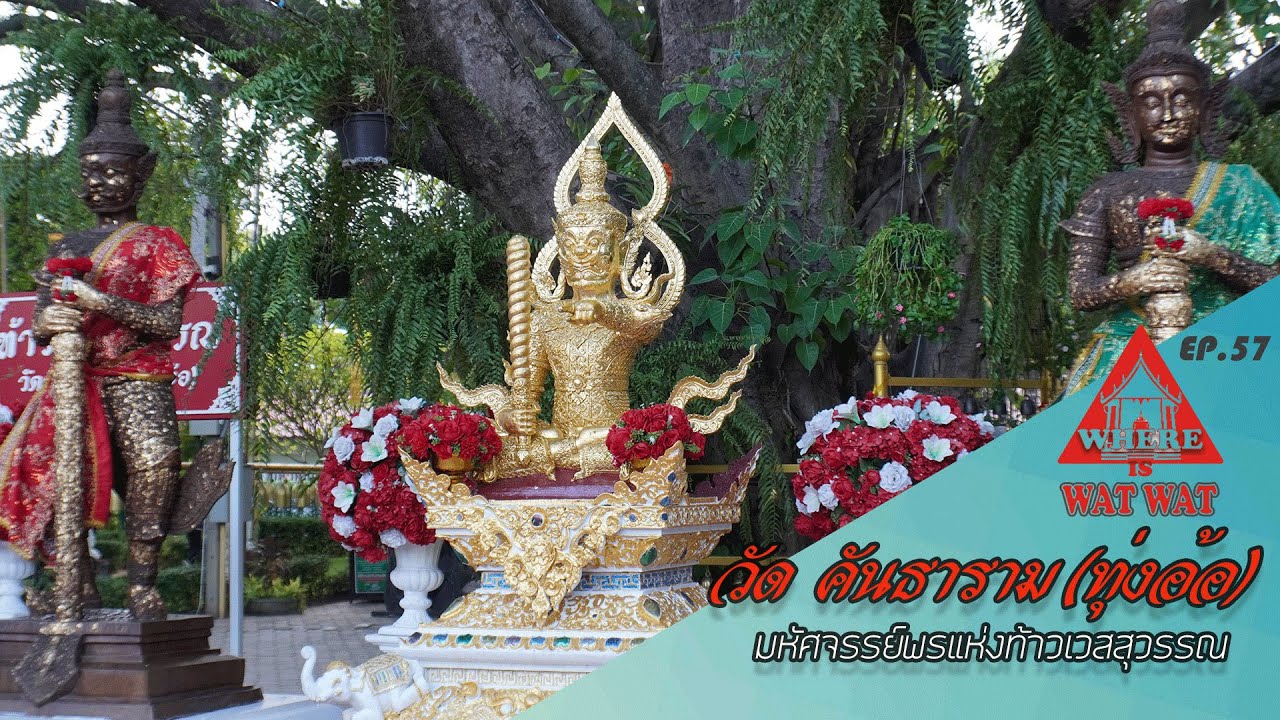
The Thao Wessuwan shrine is one of the most widely recognized highlights of Wat Kantharam. The temple features Thao Wessuwan in the wish-granting posture, along with fierce-faced and deity-faced forms. Many worshippers visit this area according to beliefs related to prosperity, work, reputation, protection, and good fortune. This area should be approached with respect for other devotees, especially during busy periods when visitors are praying or making offerings.
The Nine Great Masters courtyard is another important worship area. It contains figures of respected Buddhist masters such as Khruba Siwichai, Somdet Phutthachan To Phrommarangsi, Luang Pu Thuat, Luang Pho Ruesi Ling Dam, Luang Pu Man Phurithatto, Luang Pu Du Phrommapanyo, and Luang Pu Chai Tikkhapanyo. This courtyard helps connect visitors with the broader lineage of Thai and Lanna Buddhist devotion.
The 189-bell courtyard and the Great Fortune Gong show how Wat Kantharam uses familiar Buddhist and folk symbols in a contemporary setting. Bells and gongs in Thai temples are associated with the sound of merit, the spread of good intention, and auspiciousness. Visitors should use these features respectfully, without excessive noise or playful behavior that would disturb the temple atmosphere.
The meditation court helps preserve the temple’s spiritual center. It includes images of Luang Pho Than Jai, Luang Pho Som Prathana, and Luang Pho Yim. Even though Wat Kantharam has many lively worship and photo zones, the meditation court reminds visitors that a temple is fundamentally a place for mental cultivation, mindfulness, and inner calm.
The royal ancestors pavilion is another significant zone. It includes figures of King Taksin the Great and King Naresuan the Great, along with birthday Buddha images, including a less commonly seen Buddha posture associated with Phra Ketu. This area reflects the Thai temple tradition of combining Buddhist devotion with cultural memory, kingship, and auspicious personal worship.
The Pho Panya pavilion, also known as the pavilion of the two sibling Buddha images, houses old Buddha images more than a century old. This area adds historical depth to the temple. Visitors should observe these images quietly and avoid touching old sacred objects without permission, as such objects preserve the faith of earlier generations.
The King Naresuan victory bell and auspicious elephant passage form another distinctive ritual area. Visitors often take part in symbolic actions here, such as walking under the elephant structure and ringing the bell. These practices should be performed calmly and according to temple guidance, without rushing other visitors or treating the area as a casual amusement feature.
The lakeside Dharma pavilion, formally known as the Dharma pavilion of Phra Nak Prok Maha Chakkraphat Ngern Lan, adds a quieter and more atmospheric dimension to the temple. The pavilion is associated with water, gardens, and a simulated waterfall. It houses a Naga-protected Buddha image, a form that carries meanings of protection, sacred power, and the close relationship between Buddhism and water symbolism in Thai culture.
Wat Kantharam continues to play an active religious and social role. Phra Maha Bandit Yanamethi appears in current ecclesiastical records associated with the temple. The temple is also connected with meditation, merit-making, Buddhist Lent activities, candle offerings, and public-benefit activities. This shows that Wat Kantharam is not only a popular destination but also a living religious institution.
Religious traditions connected with Wat Kantharam include Buddhist holy days, Buddhist Lent, the end of Buddhist Lent, candle offerings, Kathin robe offerings, forest robe offerings, almsgiving, Sangha offerings, meal offerings, and meditation activities. These traditions help maintain the relationship between monks, lay supporters, elderly residents, families, children, and visitors. The temple therefore remains a social and spiritual center of the community.
The main value of Wat Kantharam lies in its ability to combine old and new. Its history begins with a relocation from Wat Thung O Noi, while its present form includes a main viharn, meditation areas, Thao Wessuwan shrine, bells, gongs, old Buddha images, water pavilion, and family-friendly visitor zones. For travelers interested in contemporary Lanna temple culture, Wat Kantharam offers a clear example of how a community temple can adapt to modern visitors while preserving Buddhist functions.
Visitors should dress modestly, remove shoes before entering religious buildings, keep voices low inside the viharn and meditation areas, avoid touching sacred objects, respect monks and elderly worshippers, and follow posted guidance in each worship zone. Wat Kantharam may feel lively and modern, but it remains an active religious place where local people continue to make merit and practice Buddhism.
Getting There is most convenient by private car or rental car. From Chiang Mai city, travel south on the Chiang Mai – Hot Road or Highway 108 toward San Pa Tong District. The temple is located in San Klang Subdistrict along the main road, making it easy to include in a San Pa Tong temple route or a stop on the way toward Chom Thong and Doi Inthanon.
A practical connected route can begin at Wat Kantharam, then continue to Wat Phra Bat Thung O, Wat San Pa Tong, Wat Si Nawarat, Wat Ton Naen Luang, Wat Tha Wang Phrao, and Wiang Tha Kan. Travelers who want to combine this with the Thung Tom temple route can continue to Wat Si Arun, Wat Sop Han, Wat Pa Lan, Wat Rattanaram, and Wat Suphan Rangsri.
Overall, Wat Kantharam (Thung O) is a local Mahanikaya temple with a strong community foundation and a distinctive contemporary identity. Founded on 18 April 1942 by Phra Khru Chai Tikkhapanyo and local devotees after relocating from Wat Thung O Noi, it now serves as a lively spiritual destination with a main viharn, meditation court, Thao Wessuwan shrine, respected masters courtyard, 189-bell courtyard, Great Fortune Gong, lakeside Dharma pavilion, and multiple family-friendly spaces. It is a meaningful stop for visitors exploring Buddhist culture and temple routes in San Pa Tong.
| Name | Wat Kantharam (Thung O) |
| Common Name | Wat Thung O |
| Location | San Klang Subdistrict, San Pa Tong District, Chiang Mai Province |
| Address | 102 Moo 1, San Klang Subdistrict, San Pa Tong District, Chiang Mai 50120, Thailand |
| Coordinates | 18.64174, 98.89958 |
| Temple Type | Local Buddhist Temple Under The Mahanikaya Order |
| Temple Land | 9 Rai, 2 Ngan, 26 Square Wah |
| History | Founded on 18 April 1942 by Phra Khru Chai Tikkhapanyo and local devotees after relocating from Wat Thung O Noi |
| Abbot / Caretaker | Phra Maha Bandit Yanamethi |
| Contact Number | 095-196-9554 |
| Important Zones And Structures | 1. Main Viharn 2. Meditation Court 3. Nine Great Masters Courtyard 4. 189-Bell Courtyard 5. Royal Ancestors Pavilion 6. Great Fortune Gong 7. Pho Panya Pavilion / Two Sibling Buddha Images Pavilion 8. Abbot’s Residence Area 9. King Naresuan Victory Bell 10. Lakeside Dharma Pavilion Of Phra Nak Prok Maha Chakkraphat Ngern Lan 11. Family-Friendly Statue And Photo Areas |
| Important Sacred Objects | Golden Phra Buddha Sothon Image Luang Pho Phra Fon Saen Ha Phra Buddha Chinnarat Thao Wessuwan In Wish-Granting Posture Fierce-Faced And Deity-Faced Thao Wessuwan Images Nine Great Buddhist Masters Phra Nak Prok Maha Chakkraphat Ngern Lan Old Two Sibling Buddha Images |
| Highlights | A contemporary community temple on the Chiang Mai – Hot Road with multiple worship zones, Thao Wessuwan shrine, main viharn, meditation court, 189-bell courtyard, lakeside Dharma pavilion, and family-friendly spaces |
| Community Role | A spiritual center for San Klang and Thung O communities, used for merit-making, Dhamma listening, meditation, Sangha offerings, Buddhist Lent activities, and community Buddhist events |
| Related Traditions | Buddhist Holy Days, Buddhist Lent, The End Of Buddhist Lent, Candle Offerings, Kathin Robe Offerings, Forest Robe Offerings, Sangha Offerings, Meal Offerings, And Meditation Activities |
| Open Days | Daily |
| Opening Hours | 08.00 – 22.00 |
| Travel Information | Private car or rental car is the most convenient option. From Chiang Mai city, travel via the Chiang Mai – Hot Road or Highway 108 toward San Pa Tong District, then continue into San Klang Subdistrict. |
| Current Status | Active local Mahanikaya temple in San Klang Subdistrict, San Pa Tong District, Chiang Mai Province, with continuing worship, meditation, and visitor activities |
| Nearby Tourist Attractions | 1. Wat San Pa Tong, about 2 km 2. Wat Phra Bat Thung O, about 3 km 3. Wat Si Nawarat / Wat Thung Siao, about 6 km 4. Kaomai Lanna, about 6 km 5. Wat Ton Naen Luang, about 10 km 6. Wiang Tha Kan, about 14 km |
| Nearby Restaurants | 1. Fang-Fang Cafe, about 1 km, Tel. 089-950-3966 2. Lake View @ San Pa Tong, about 2 km, Tel. 097-079-8448 3. Khao Soi Pa Daet, Chiang Mai – Hot Road, about 4 km, Tel. 083-566-8813 4. Khrua Na Ban, about 5 km, Tel. 098-376-4358 5. Ton Khao Shop, about 10 km, Tel. 098-792-6440 6. Pla Salawin Restaurant, about 12 km, Tel. 086-919-3851 |
| Nearby Accommodations | 1. Home at 9, about 2 km, Tel. 088-636-2679 2. Kaomai Lanna Resort, about 6 km, Tel. 053-481-201 3. Thai Resort, about 8 km, Tel. 063-096-7000 4. Wanwan Lanna By Pat, about 12 km, Tel. 080-892-7724 5. P Resort & W Resort, about 13 km, Tel. 064-334-4566 |
Frequently Asked Questions (FAQ)
Q: Where is Wat Kantharam (Thung O) located?
A: Wat Kantharam (Thung O) is located at 102 Moo 1, San Klang Subdistrict, San Pa Tong District, Chiang Mai Province 50120.
Q: What are the open days and opening hours?
A: Wat Kantharam is open daily from 08.00 to 22.00.
Q: When was Wat Kantharam founded?
A: Wat Kantharam was founded on 18 April 1942 by Phra Khru Chai Tikkhapanyo and local devotees after relocating from Wat Thung O Noi.
Q: What are the main highlights of Wat Kantharam?
A: Main highlights include the main viharn, Thao Wessuwan wish-granting shrine, Nine Great Masters courtyard, 189-bell courtyard, meditation court, Great Fortune Gong, and lakeside Dharma pavilion.
Q: Is Wat Kantharam suitable for families?
A: Yes. The temple has worship zones, meditation spaces, family-friendly photo areas, and educational elements that help visitors of different ages experience temple culture.
Q: Who is the abbot or caretaker of Wat Kantharam?
A: The current ecclesiastical record associated with Wat Kantharam lists Phra Maha Bandit Yanamethi.
Q: Does Wat Kantharam have a contact number?
A: The contact number listed for Wat Kantharam is 095-196-9554.
Q: What nearby places can be visited with Wat Kantharam?
A: Nearby places include Wat San Pa Tong, Wat Phra Bat Thung O, Wat Si Nawarat, Kaomai Lanna, Wat Ton Naen Luang, and Wiang Tha Kan.
 Category: ●Places of Worship
 Group: ●Temple
Last Update : 1 MonthAgo
 Last Update : 1 MonthAgo
 Click to Access the Navigation Map GPS
Wat Kantharam Map
Recommend

 Muang Chiang Mai(121)Chom Thong(47)Mae Chaem(25)Chiang Dao(33)Doi Saket(68)Mae Taeng(85)Mae Rim(69)Samoeng(29)Fang(71)Mae Ai(59)Phrao(70)San Pa Tong(103)San Kamphaeng(66)San Sai(73)Hang Dong(73)Hot(32)Doi Tao(22)Omkoi(11)Saraphi(74)Wiang Haeng(15)Chai Prakan(28)Mae Wang(32)Mae On(22)Doi Lo(33)Galyani Vadhana(1)


