
lovethailand home >North Travel Attractions >Chiang Mai Travel Attractions >San Kamphaeng >San Kamphaeng > Wat Santiwanaram
TL;DR: Wat Santiwanaram is located at Moo 3, Ban Lao, San Kamphaeng Subdistrict, San Kamphaeng District, Chiang Mai Province, open Contact the temple before visiting, hours Contact the temple before visiting.

Wat Santiwanaram
Open Days: Contact the temple before visiting
Opening Hours: Contact the temple before visiting
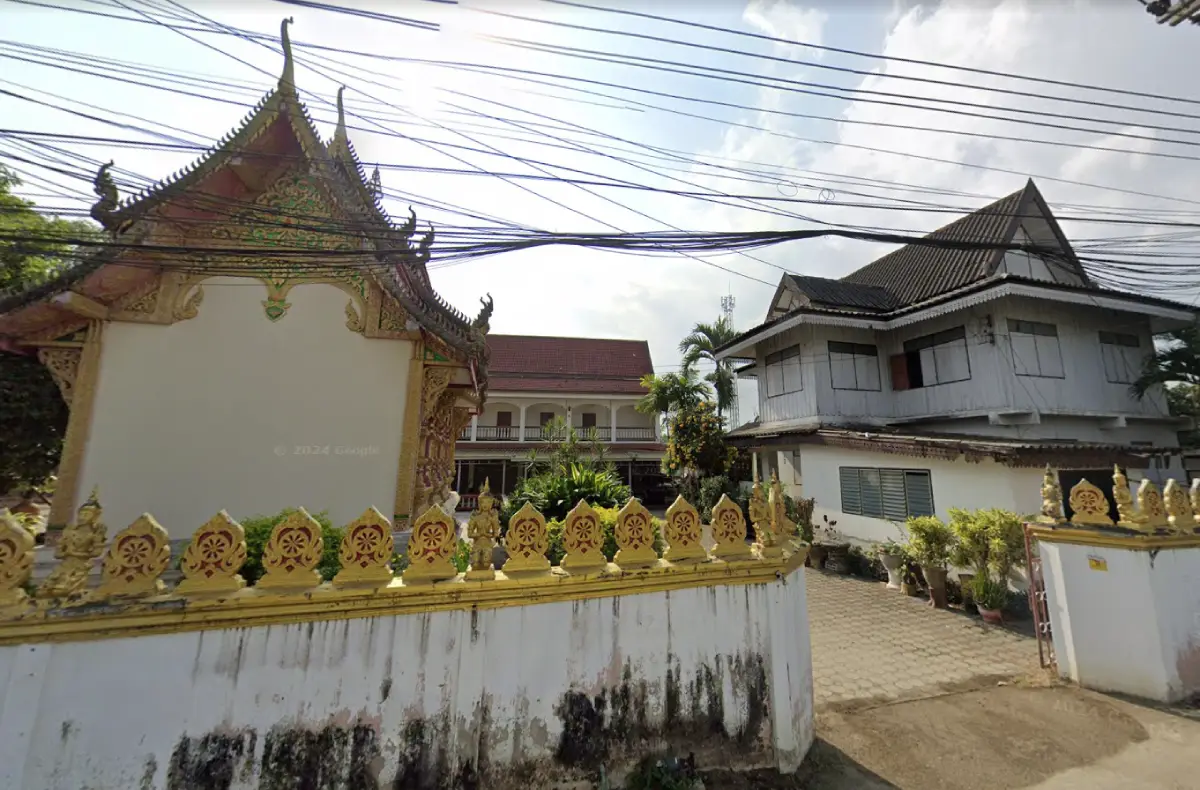
Wat Santiwanaram, also known as Wat Ban Lao, is located at 51 Ban Lao, Santiwan Road, Moo 3, San Kamphaeng Subdistrict, San Kamphaeng District, Chiang Mai Province. It is a private Buddhist temple under the Mahanikaya order and one of the old community temples of Ban Lao. The temple was built and officially established in 1777 and received its royal Wisungkhamsima in 2003. It covers approximately 1 rai, 1 ngan, and 58 square wah. Set within a lived village environment, Wat Santiwanaram remains connected with worship, merit-making, Buddhist ceremonies, and the spiritual life of Ban Lao community.
The importance of Wat Santiwanaram lies in its long history of more than two centuries. Its establishment in 1777 places it among the old community temples of San Kamphaeng. In Lanna society, a temple was not only a place for religious ceremonies. It was also a center for Dhamma listening, ordination, merit-making, community gatherings, and the preservation of local memory. Wat Santiwanaram continues to represent this close relationship between Buddhism and village life.
The name Santiwanaram reflects the temple’s religious character. “Santi” conveys peace and calm, while “wanaram” suggests a monastic place associated with serenity. The local name Wat Ban Lao links the temple directly with Ban Lao, the village where it stands. These two names express different dimensions of the same temple: one emphasizes Buddhist peace, while the other emphasizes community identity and local memory.
Ban Lao in Moo 3 is part of San Kamphaeng Subdistrict, an area with many village temples, including Wat Santiwanaram, Wat San Kang Pla, Wat Ban Noi, Wat Kham Sao, Wat Pa Heo, Wat Si Bun Rueang, Wat Pa Daeng, and Wat San Kamphaeng Luang. This pattern reflects the Lanna community system, where temples and villages develop together. Each temple serves its own village while also forming part of the wider Buddhist and cultural landscape of San Kamphaeng.
The temple’s land is closely connected with the local environment. One side of the temple borders a small stream, while other sides are connected with private longan orchards, private gardens, and Santiwan public road. This setting shows that Wat Santiwanaram is not separated from daily life. It stands within the village landscape, close to local roads, orchards, and the movement of residents. This makes the temple easy for local people to access for Buddhist holy days, ceremonies, and community merit-making.
The royal Wisungkhamsima granted in 2003 is an important milestone in the temple’s formal Buddhist status. Wisungkhamsima is the consecrated boundary used for important monastic acts. Receiving this royal grant strengthened the temple’s religious role and confirmed its ability to support key Sangha ceremonies. Although Wat Santiwanaram is a small village temple, it has a complete role as a functioning Buddhist institution within the community.
The main structures of Wat Santiwanaram include a northern-style viharn, a merit-making pavilion, and monks’ residences. The viharn is the main space for worship, Dhamma listening, ceremonies, and merit-making. The merit-making pavilion supports community ceremonies and religious gatherings, while the monks’ residences support monastic life. Together, these structures show the temple’s role as a practical and active village temple.
The northern-style viharn is the key feature visitors should notice. Inside the viharn are mural paintings depicting the Vessantara Jataka, the Ten Perfections of the Buddha, and the life of the Buddha. These murals are more than decoration. They are visual teachings that communicate Buddhist values through images. The Vessantara Jataka emphasizes generosity, while the Ten Perfections and the Buddha’s life show the path of virtue, discipline, compassion, wisdom, and awakening.
The murals inside the viharn give Wat Santiwanaram educational and artistic value. Visitors interested in Lanna temple art should take time to observe the paintings carefully. In a village temple, murals often functioned as a form of visual Dhamma education for people of all ages. They helped local residents understand Buddhist teachings through stories, symbols, and images. This makes the viharn of Wat Santiwanaram one of the most meaningful parts of the temple.
The important sacred object of Wat Santiwanaram is a Chiang Saen-style Buddha image. Chiang Saen Buddhist art is closely associated with northern Thai and Lanna cultural roots. Its forms are often strong, calm, and deeply devotional. The presence of a Chiang Saen-style Buddha image gives the temple both religious and artistic value. Visitors can pay respect to the image while also appreciating the older artistic heritage of northern Buddhism.
Phra Athikan Sunthon Charanadhammo appears in the temple’s historical abbot list. His name forms part of the administrative and religious memory of Wat Santiwanaram. In village temples, the abbot’s role is central to the care of monks, religious buildings, merit-making activities, and relationships with lay supporters. This connection between monastic leadership and village faith is an important part of the temple’s identity.
Wat Santiwanaram remains connected with contemporary community religious activity. The temple has appeared in San Kamphaeng municipal announcements for the Phra That bathing and robe-wrapping tradition on Visakha Bucha Day, where it is identified as Wat Santiwanaram or Wat Ban Lao. This shows that the temple is still used as an active religious space rather than existing only as an old temple name in historical records.
The Phra That bathing and robe-wrapping tradition is meaningful in Lanna Buddhist culture. It allows local people to show respect to a sacred structure, make merit, reflect on the Three Jewels, and strengthen community unity. Wat Santiwanaram’s role in this tradition links the temple with Buddhist devotion, local ceremony, and Ban Lao community identity. Visitors who come during merit-making events can see how the temple continues to function in real village life.
In addition to the Phra That bathing tradition, Wat Santiwanaram is connected with regular Buddhist community activities such as Buddhist Lent, End of Buddhist Lent, Kathin, robe offerings, Buddhist holy days, and local merit-making events. These activities bring together elders, families, young people, monks, and lay supporters. They keep the temple active as a living center of faith and social connection.
The atmosphere of Wat Santiwanaram is calm and community-oriented. It is not a large tourist landmark, and that is part of its value. Its importance comes from its long history, its connection with Ban Lao, its northern-style viharn, its murals, its Chiang Saen-style Buddha image, and its continued role in local religious events. The temple is suitable for visitors who want to pay respect, make merit, and experience a quiet village temple in San Kamphaeng.
Key points to see at Wat Santiwanaram include the northern-style viharn, the mural paintings, the Chiang Saen-style Buddha image, the merit-making pavilion, the monks’ residences, and the overall village setting. Visitors interested in local history should note the temple’s establishment in 1777 and royal Wisungkhamsima in 2003. Visitors interested in Buddhist art should focus on the murals and sacred image inside the viharn.
Wat Santiwanaram plays several roles in Ban Lao community. Religiously, it is a place for worship, Dhamma listening, merit-making, and Buddhist ceremonies. Culturally, it preserves mural paintings, Buddhist stories, and local faith. Socially, it serves as a gathering place during merit-making and community events. Spatially, it functions as a local landmark connected with Ban Lao, Santiwan Road, and the temple route of San Kamphaeng.
Wat Santiwanaram can be included in a connected cultural route around San Kamphaeng. Nearby places include Wat San Kang Pla, Wat Ban Noi, San Kamphaeng Walking Street, Wat Kham Sao, Wat Pa Heo, Wat San Kamphaeng Luang, and Bo Sang Umbrella Village. This route is suitable for a half-day or full-day trip combining old temples, local food, community markets, Lanna culture, and San Kamphaeng handicrafts.
Visitors should observe proper temple etiquette. Dress modestly, speak quietly, respect the viharn, Buddha image, and merit-making pavilion, avoid disturbing monks or residents, and take photographs respectfully. During Buddhist holy days or merit-making events, visitors should follow the guidance of the temple committee and local residents. Community temples remain living sacred spaces, so respectful behavior helps preserve both the religious atmosphere and local rhythm of life.
Getting There is convenient by private car, rental car, or hired local transport from Chiang Mai city. Take the Chiang Mai–San Kamphaeng route toward San Kamphaeng Subdistrict and continue to Ban Lao in Moo 3. The temple is located on Santiwan Road within the community area. It can be combined with San Kamphaeng Walking Street, Wat Ban Noi, Wat Kham Sao, Wat Pa Heo, Wat San Kamphaeng Luang, and Bo Sang Umbrella Village. Travelers using navigation apps should search for “Wat Santiwanaram San Kamphaeng” or “Wat Ban Lao San Kamphaeng” to reach the correct temple in Chiang Mai.
Wat Santiwanaram is suitable for visitors interested in old village temples, Lanna murals, Chiang Saen-style Buddha images, and quiet cultural routes around San Kamphaeng. Its value lies in the combination of long history, northern-style temple architecture, visual Dhamma teaching, community ceremonies, and local identity. For travelers who want to understand Chiang Mai beyond major landmarks, Wat Santiwanaram offers a grounded view of Buddhist faith and village life in San Kamphaeng.
| Name | Wat Santiwanaram, also known as Wat Ban Lao |
| Location | Moo 3, Ban Lao, San Kamphaeng Subdistrict, San Kamphaeng District, Chiang Mai Province |
| Address | 51 Ban Lao, Santiwan Road, Moo 3, San Kamphaeng Subdistrict, San Kamphaeng District, Chiang Mai 50130, Thailand |
| Map Reference | Ban Lao, Santiwan Road, Moo 3, San Kamphaeng Subdistrict, San Kamphaeng District, Chiang Mai |
| Highlights | An old Ban Lao community temple with a northern-style viharn, murals of the Vessantara Jataka, the Ten Perfections, the life of the Buddha, and a Chiang Saen-style Buddha image |
| History | Built and officially established as a temple in 1777; granted royal Wisungkhamsima in 2003 |
| Distinctive Features | A Lanna community temple connected with Ban Lao, Santiwan Road, northern-style viharn, Buddhist murals, and the Phra That bathing tradition |
| Travel Information | Travel from Chiang Mai city via the Chiang Mai–San Kamphaeng route, then continue to Ban Lao in Moo 3. Search for “Wat Santiwanaram San Kamphaeng” or “Wat Ban Lao San Kamphaeng” in navigation apps. |
| Current Status | Active community Buddhist temple and religious activity space of Ban Lao |
| Temple Type | Private Buddhist temple under the Mahanikaya order |
| Temple Area | 1 rai, 1 ngan, and 58 square wah |
| Abbot Listed In Temple History | Phra Athikan Sunthon Charanadhammo |
| Open Days | Contact the temple before visiting |
| Opening Hours | Contact the temple before visiting |
| Main Areas / Structures | Northern-style viharn, merit-making pavilion, monks’ residences, temple courtyard, and community religious activity areas |
| Important Murals | Murals of the Vessantara Jataka, the Ten Perfections of the Buddha, and the life of the Buddha inside the viharn |
| Important Sacred Object | Chiang Saen-style Buddha image |
| Related Traditions / Activities | Phra That bathing and robe-wrapping tradition, Visakha Bucha Day, Buddhist Lent, End of Buddhist Lent, Kathin, robe offerings, Buddhist holy days, and local merit-making events |
| Nearby Tourist Attractions | 1. Wat San Kang Pla, about 1 km 2. Wat Ban Noi, about 1 km 3. San Kamphaeng Walking Street, about 2 km 4. Wat Kham Sao, about 2 km 5. Bo Sang Umbrella Village, about 5 km |
| Nearby Restaurants | 1. San Kamphaeng Beef Noodle, about 2 km, Tel. 082-685-2863 2. San Kamphaeng Restaurant, about 2 km, Tel. 053-332-935, 053-395-389 3. CM Fresh Pork Pa Heo Market, about 2 km, Tel. 097-037-1286 4. Huen Jai Yong, about 5 km, Tel. 086-671-8710 5. Satesinlp Restaurant, about 7 km, Tel. 053-338-388 |
| Nearby Accommodations | 1. Smile Homestay Sankampaeng, about 1 km 2. 102 Residence, about 2 km 3. ORA HOUSE, about 4 km, Tel. 098-967-0527 4. San Kamphaeng Lake View Resort, about 7 km, Tel. 053-381-039 5. The Vet Boutique Hotel, about 8 km, Tel. 052-011-179, 091-852-5507 |
Frequently Asked Questions (FAQ)
Q: Where is Wat Santiwanaram located?
A: Wat Santiwanaram, also known as Wat Ban Lao, is located at 51 Ban Lao, Santiwan Road, Moo 3, San Kamphaeng Subdistrict, San Kamphaeng District, Chiang Mai 50130, Thailand.
Q: What are the open days and opening hours of Wat Santiwanaram?
A: Visitors should contact the temple before visiting because there is no clear dedicated opening-time notice available for the temple.
Q: What is the history of Wat Santiwanaram?
A: Wat Santiwanaram was built and officially established as a temple in 1777 and received royal Wisungkhamsima in 2003.
Q: What are the important structures at Wat Santiwanaram?
A: Important structures include the northern-style viharn, merit-making pavilion, monks’ residences, temple courtyard, and community religious activity areas.
Q: What is special about the viharn at Wat Santiwanaram?
A: The viharn contains murals of the Vessantara Jataka, the Ten Perfections of the Buddha, and the life of the Buddha.
Q: What important sacred object is found at Wat Santiwanaram?
A: The important sacred object is a Chiang Saen-style Buddha image.
Q: What important tradition is connected with Wat Santiwanaram?
A: The temple is connected with the Phra That bathing and robe-wrapping tradition on Visakha Bucha Day, as well as local Buddhist merit-making events.
Q: What nearby places can visitors combine with Wat Santiwanaram?
A: Visitors can combine the trip with Wat San Kang Pla, Wat Ban Noi, San Kamphaeng Walking Street, Wat Kham Sao, and Bo Sang Umbrella Village.
 Category: ●Places of Worship
 Group: ●Temple
Last Update : 4 WeekAgo
 Last Update : 4 WeekAgo
 Click to Access the Navigation Map GPS

 Muang Chiang Mai(121)Chom Thong(47)Mae Chaem(25)Chiang Dao(33)Doi Saket(68)Mae Taeng(85)Mae Rim(69)Samoeng(29)Fang(71)Mae Ai(59)Phrao(70)San Pa Tong(103)San Kamphaeng(66)San Sai(73)Hang Dong(73)Hot(32)Doi Tao(22)Omkoi(11)Saraphi(74)Wiang Haeng(15)Chai Prakan(28)Mae Wang(32)Mae On(22)Doi Lo(33)Galyani Vadhana(1)


