
lovethailand home >North Travel Attractions >Chiang Mai Travel Attractions >San Kamphaeng >Rong Wuadaeng > Wat Rong Wua Daeng
TL;DR: Wat Rong Wua Daeng is located at Ban Rong Wua Daeng, Moo 3, Rong Wua Daeng Subdistrict, San Kamphaeng District, Chiang Mai Province, open Daily, hours 08.00 – 17.00.

Wat Rong Wua Daeng
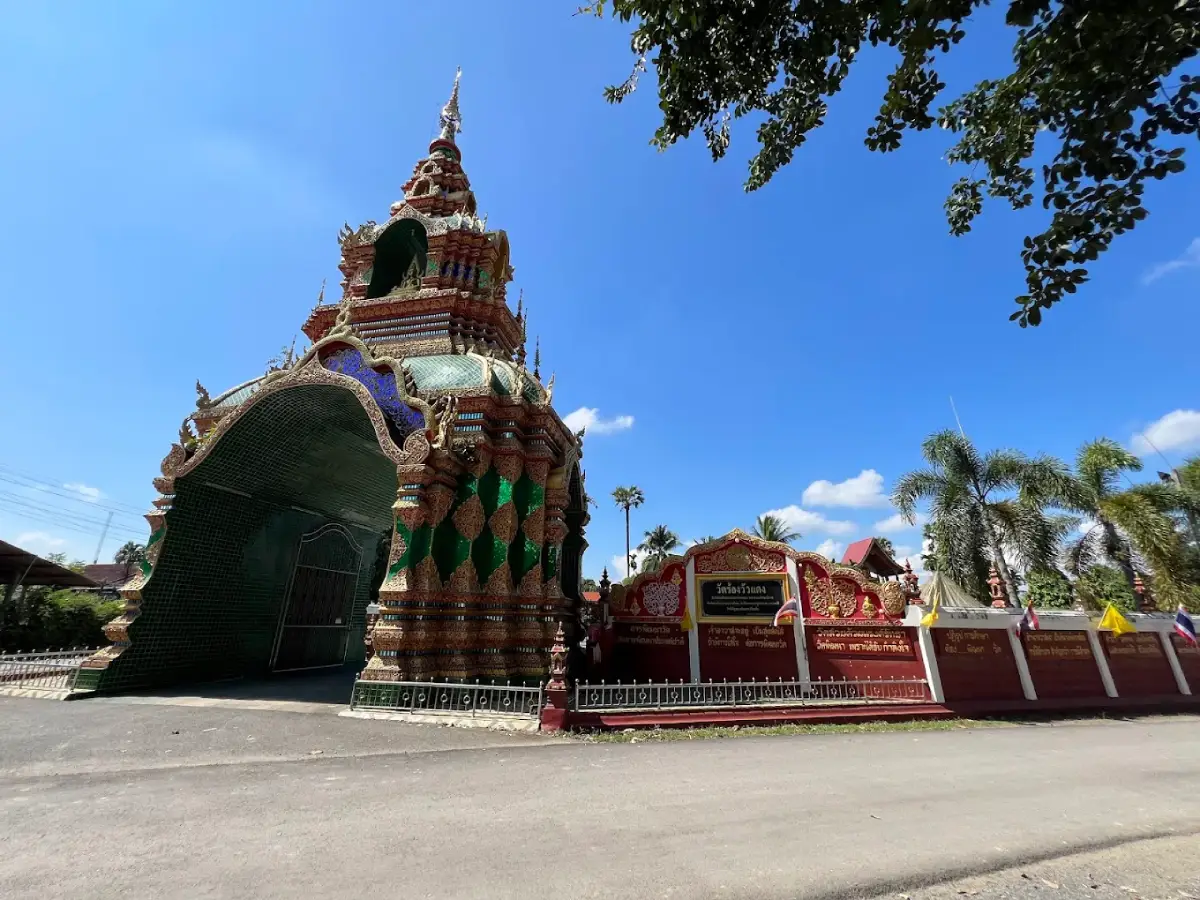
Open Days: Daily
Opening Hours: 08.00 – 17.00
Wat Rong Wua Daeng is located at 35 Moo 3, Ban Rong Wua Daeng, Rong Wua Daeng Subdistrict, San Kamphaeng District, Chiang Mai Province. It is a local Buddhist temple under the Mahanikaya order and one of the most important community temples in Rong Wua Daeng. The temple was officially established in B.E. 2319, or 1776, received its Wisungkham Sima royal boundary in B.E. 2489, or 1946, and was recognized as an exemplary developed temple in B.E. 2542, or 1999. The abbot is Phra Khru Thammakoson Suchitto. Wat Rong Wua Daeng is therefore a historic Buddhist temple with strong community roots, important sacred images, a relic stupa, monastic education, and a notable role in the relationship between homes, temple, and school.
Wat Rong Wua Daeng serves Ban Rong Wua Daeng, Moo 3, in eastern San Kamphaeng. The surrounding area connects Ban Nam Cham, Ban Muang Khiao, Ban Muang Ma Nuea, Ban Muang Ma Tai, Ban Pa Tueng, and other nearby communities through local roads, farmland, schools, markets, and temples. In this setting, the temple is not only a place for worship. It is part of everyday community life, supporting merit-making, Dhamma listening, ceremonies, education, local traditions, and social gatherings.
The name Rong Wua Daeng is closely connected with the local landscape and community memory. In northern Thai usage, the word “rong” is associated with a water channel or stream bed, while “wua daeng” refers to red wild cattle or banteng. Local tradition links the area with a stream flowing down from the hills and with red wild cattle that once lived and fed in the vicinity. The village became known as Rong Wua Daeng, and the temple took the village name. The name therefore preserves the memory of water, wildlife, settlement, and local identity.
The temple’s history is rooted in community faith. Local accounts place the early construction of the temple around B.E. 2303, with Khru Ba Chao Kantha Kantho leading the establishment of the temple east of its present site. The temple was later officially permitted as a Buddhist temple in B.E. 2319. This long history makes Wat Rong Wua Daeng one of the older religious sites in San Kamphaeng and shows the continuity of Buddhist practice in the area across many generations.
Khru Ba Chao Thariya Thariyo later resided at Wat Rong Wua Daeng and played an important role in expanding the temple. He helped extend the grounds westward and developed important structures such as the viharn, monks’ residences, temple walls, and offering hall. This period strengthened the temple’s physical presence and supported its role as a community religious center.
Phra Khru Thammaphanthit, also known as Phra Inpan Pandito, was another major figure in the temple’s development. He became abbot after Khru Ba Chao Thariya and led important improvements. In B.E. 2474, a new viharn was built to replace the deteriorated old hall. In B.E. 2483, a teak monks’ residence was built. In B.E. 2492, a monastic school was established for monks and novices. His work shaped both the physical temple and its role in Buddhist education.
Wat Rong Wua Daeng also has a strong connection with local schooling. The community school associated with the temple later developed into Wat Rong Wua Daeng Srichan Witthaya School. This reflects the traditional Thai and Lanna relationship between homes, temples, and schools. The temple has therefore supported not only religious practice but also the educational development of children, youth, monks, novices, and the wider community.
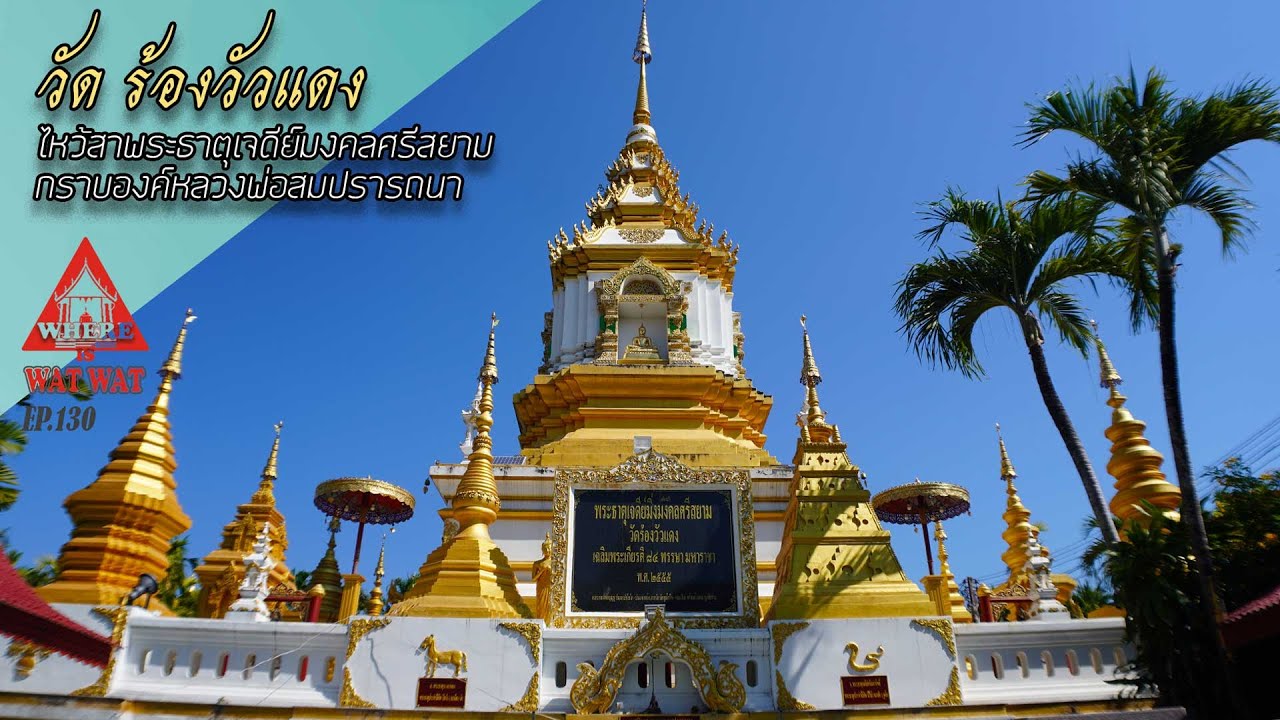
Between B.E. 2510 and B.E. 2514, the temple began building a chedi, but Phra Khru Thammaphanthit passed away before the work was completed. Phra Khru Thammakoson, also known as Khru Ba Luang Inlao Suchitto, became acting abbot in B.E. 2514 and continued the unfinished chedi. The chedi was completed in B.E. 2515. He was later appointed abbot in B.E. 2516 and continued to improve the temple grounds, restore structures, and develop permanent Buddhist buildings.
Phra Khru Thammakoson Suchitto is one of the most significant monks in the modern history of Wat Rong Wua Daeng and San Kamphaeng. His roles included abbot, subdistrict ecclesiastical leader, deputy district ecclesiastical leader, district ecclesiastical leader of San Kamphaeng, and later ecclesiastical adviser. Through his leadership, Wat Rong Wua Daeng developed into a prominent temple for religious practice, education, community activities, and Sangha administration in the district.
The important areas and structures of Wat Rong Wua Daeng include an old Thai-style ubosot with murals of the Buddha’s life, the viharn, sermon hall, monks’ residences, multipurpose hall, chedi, scripture hall, the 60 Years Yanaprayut monks’ residence, and open temple grounds used for community activities. These elements make the temple function as a complete Buddhist and community center.
Important sacred objects at the temple include an antique teak sermon throne decorated with lacquer and gold, and several revered Buddha images such as Luang Pho Somprathana, Luang Pho Than Jai, Luang Pho Phra Phuttha Sihing, Luang Pho Phra Phuttha Chinnarat, Luang Pho Phra Phuttha Sothon, Luang Pho To, Luang Pho Phra Phuttha Ming Mongkhon Phairi Phinat, Luang Pho Phet, and Luang Pho Phra Serm Barami. These sacred images make the temple a meaningful place for worship and merit-making.
Luang Pho Somprathana is one of the most important devotional images at Wat Rong Wua Daeng. The name is associated with aspiration, hope, and auspiciousness. Many visitors come to pay respect for peace of mind and encouragement. Worship should be done respectfully, with awareness that this is a living community temple where local residents continue to practice Buddhism in daily life.
Wat Rong Wua Daeng has been recognized in several areas of temple development. It has been honored as an exemplary developed temple, an outstanding developed temple, a temple with community spaces for Dhamma, well-being, and sports, a Buddhist way-of-life temple, a model temple for attractive public space, an outstanding health-promoting temple, a one-temple-one-subdistrict model, and a Pracharat model temple based on the “home-temple-school” relationship in San Kamphaeng. These recognitions show that the temple plays social, educational, cultural, and wellness roles beyond normal religious ceremonies.
The temple’s role in Ban Rong Wua Daeng covers religion, society, education, and culture. Children and young people learn temple manners, chanting, Dhamma listening, and community traditions. Elderly residents use the temple for merit-making, meditation, and community connection. Working-age residents support temple activities according to their ability. Schools and local agencies also use the temple as a space for public and cultural activities. This makes Wat Rong Wua Daeng a shared space across generations.
Wat Rong Wua Daeng is connected with the northern Thai Buddhist calendar. Important occasions include Songkran, relic bathing traditions, Buddhist Lent, the end of Buddhist Lent, Kathin, Pha Pa offerings, Mahachat sermons, Tan Kuai Salak, and Buddhist holy day activities. These events bring villagers together for offerings, Dhamma listening, merit-making, and the continuation of local Lanna customs.
The relic bathing ceremony is one of the important annual events that shows the relationship between Wat Rong Wua Daeng and its community. During the event, devotees gather to make merit, pay respect to the chedi, listen to sermons, and participate in temple activities. The atmosphere reflects Lanna faith, community cooperation, and the continuing role of the temple as a center of local religious life.
Kathin and Pha Pa offerings are also important parts of temple life. After the end of Buddhist Lent, villagers and devotees offer robes and support to the monks. At a community temple, these events involve much more than formal ritual. Residents help prepare the temple grounds, cook food, welcome relatives, join processions, and make offerings according to their faith. These activities keep the temple closely connected with local families and the wider community.
Rong Wua Daeng Subdistrict contains several Buddhist temples and religious sites, including Wat Wang Than, Wat Ban Mai, Wat Rong Wua Daeng, Wat Muang Khiao, Wat Nam Cham, Wat Muang Ma Nuea, and Wat Muang Ma Tai. This temple network reflects the Lanna pattern in which each village has its own spiritual center. Wat Rong Wua Daeng stands out within this network because of its roles in Sangha affairs, education, development, and community activities.
Wat Rong Wua Daeng is suitable for travelers who want to experience a historic village temple with meaningful depth. Visitors can pay respect to the sacred Buddha images, see the old Thai-style ubosot, observe murals of the Buddha’s life, visit the chedi, walk around the temple grounds, and learn how the temple connects with local education and community development. During festivals, the temple becomes especially lively with monks, villagers, schools, and local agencies working together.
A visit to Wat Rong Wua Daeng can be combined with nearby places such as Wat Nam Cham, Wat Muang Khiao, Wat Muang Ma Nuea, Wat Muang Ma Tai, Vichit Studio, Bo Sang Umbrella Village, and the Bo Sang Handicraft Centre. A half-day trip can focus on Wat Rong Wua Daeng, Wat Nam Cham, and Wat Muang Khiao. A full-day route can add Bo Sang handicraft sites, local cafés, and restaurants in San Kamphaeng.
Getting There is most convenient by private car, rental car, or local hired transport. From Chiang Mai city, travel toward San Kamphaeng District, continue into Rong Wua Daeng Subdistrict, and head to Ban Rong Wua Daeng, Moo 3. The temple is located within a community area near local administrative and public service zones. Visitors should drive carefully through village roads and small intersections. Travelers using ride-hailing or hired transport should arrange the return trip in advance.
The best time to visit is in the morning or late afternoon when the weather is more comfortable. Visitors who plan to make merit may bring flowers, candles, incense, or offerings according to their faith. Modest dress, quiet behavior, and respect for monastic spaces are expected. During relic bathing ceremonies, Mahachat sermons, Kathin, or other community events, visitors should allow extra time for travel and parking.
Wat Rong Wua Daeng is a valuable destination for travelers who want to understand Chiang Mai at the community level. Its name preserves the memory of water channels and red wild cattle. Its history connects with generations of monks and villagers. Its sacred images, chedi, ubosot, murals, monastic education, and community development work make it more than a local temple. For travelers interested in Lanna Buddhism, village culture, and deeper routes in San Kamphaeng, Wat Rong Wua Daeng is a meaningful stop.
| Name | Wat Rong Wua Daeng |
| Location | Ban Rong Wua Daeng, Moo 3, Rong Wua Daeng Subdistrict, San Kamphaeng District, Chiang Mai Province |
| Address | 35 Moo 3, Ban Rong Wua Daeng, Rong Wua Daeng Subdistrict, San Kamphaeng District, Chiang Mai 50130, Thailand |
| Coordinates | 18.74404, 99.17036 |
| Temple Type | Local Buddhist temple under the Mahanikaya order |
| Temple Area | 13 rai, 3 ngan, 52 square wah, with two ecclesiastical land plots totaling 4 rai, 1 ngan, 49 square wah |
| Highlights | Old community temple with a Thai-style ubosot, Buddha-life murals, chedi, Luang Pho Somprathana, important Buddha images, and a strong home-temple-school role |
| History | Early community construction is associated with B.E. 2303. The temple was officially established in B.E. 2319, received Wisungkham Sima in B.E. 2489, and was recognized as an exemplary developed temple in B.E. 2542. |
| Name Origin | The name combines “rong,” associated with a water channel or stream bed, and “wua daeng,” associated with red wild cattle that once lived in the area. |
| Abbot | Phra Khru Thammakoson Suchitto |
| Important Monks | Khru Ba Chao Kantha Kantho, Khru Ba Chao Thariya Thariyo, Phra Khru Thammaphanthit Inpan Pandito, and Phra Khru Thammakoson Suchitto |
| Sacred Objects | Antique teak sermon throne with lacquer and gold, Luang Pho Somprathana, Luang Pho Than Jai, Luang Pho Phra Phuttha Sihing, Luang Pho Phra Phuttha Chinnarat, Luang Pho Phra Phuttha Sothon, Luang Pho To, Luang Pho Phra Phuttha Ming Mongkhon Phairi Phinat, Luang Pho Phet, and Luang Pho Phra Serm Barami |
| Important Areas / Structures | Old Thai-style ubosot, viharn, sermon hall, monks’ residences, multipurpose hall, chedi, scripture hall, 60 Years Yanaprayut monks’ residence, temple courtyard, and community activity areas |
| Local Importance | A spiritual center of Ban Rong Wua Daeng and an important place for religion, education, merit-making, community development, and home-temple-school cooperation in San Kamphaeng |
| Traditions / Temple Events | Songkran, relic bathing traditions, Mahachat sermons, Buddhist Lent, the end of Buddhist Lent, Kathin, Pha Pa offerings, Tan Kuai Salak, and local Buddhist merit-making events |
| Travel Information | From Chiang Mai city, travel toward San Kamphaeng District, continue into Rong Wua Daeng Subdistrict, and head to Ban Rong Wua Daeng, Moo 3. Private car, rental car, or local hired transport is recommended. |
| Current Status | An active Buddhist temple in Rong Wua Daeng Subdistrict, San Kamphaeng District, Chiang Mai Province, with ongoing Buddhist, community, and Sangha activities |
| Open Days | Daily |
| Opening Hours | 08.00 – 17.00 |
| Main Contact Number | 053-332-470 |
| Nearby Tourist Attractions | 1. Wat Nam Cham, about 2 km 2. Wat Muang Khiao, about 1 km 3. Wat Muang Ma Nuea, about 4 km 4. Wat Muang Ma Tai, about 4 km 5. Vichit Studio, about 4 km 6. Bo Sang Umbrella Village / Bo Sang Handicraft Centre, about 8 km |
| Nearby Restaurants | 1. Pad Thai Boran Ban Rong Wua Daeng, about 1 km 2. Kluai Thot Rong Wua Daeng Government Centre Branch, about 2 km 3. Mu Kratha Rong Wua Daeng, about 3 km 4. Sher ga Shaw Farmstay Cafe & Hostel, about 4 km, Tel. 088-268-7446 5. G&M German Sausage, about 6 km, Tel. 053-840-531, 094-708-3737 6. Khao Soi Pu Kha Nuea, about 7 km, Tel. 065-995-6998 |
| Nearby Accommodations | 1. Sher ga Shaw Farmstay Cafe & Hostel, about 4 km, Tel. 088-268-7446 2. Oon Valley Farm Stay, about 6 km, Tel. 064-001-0014 3. LPL Resort, about 6 km 4. Phu Mi Lum Nao House, about 7 km 5. Viewdoi Art and Resort, about 8 km, Tel. 088-866-2562 6. The Puka Boutique Resort, about 9 km |
Frequently Asked Questions (FAQ)
Q: Where is Wat Rong Wua Daeng located?
A: Wat Rong Wua Daeng is located at 35 Moo 3, Ban Rong Wua Daeng, Rong Wua Daeng Subdistrict, San Kamphaeng District, Chiang Mai 50130, Thailand.
Q: What is the history of Wat Rong Wua Daeng?
A: Wat Rong Wua Daeng has community construction history associated with B.E. 2303 and was officially established as a temple in B.E. 2319. It later received Wisungkham Sima in B.E. 2489 and was recognized as an exemplary developed temple in B.E. 2542.
Q: What is the origin of the name Rong Wua Daeng?
A: The name combines “rong,” associated with a stream bed or water channel, and “wua daeng,” associated with red wild cattle that once lived in the area.
Q: Who is the abbot of Wat Rong Wua Daeng?
A: The abbot of Wat Rong Wua Daeng is Phra Khru Thammakoson Suchitto.
Q: What are the main highlights of Wat Rong Wua Daeng?
A: Highlights include the old Thai-style ubosot, Buddha-life murals, chedi, Luang Pho Somprathana, several revered Buddha images, and the temple’s strong role in home-temple-school cooperation.
Q: What are the opening days and hours of Wat Rong Wua Daeng?
A: Wat Rong Wua Daeng is open daily from 08.00 to 17.00.
Q: How can travelers get to Wat Rong Wua Daeng?
A: From Chiang Mai city, travel toward San Kamphaeng District, continue into Rong Wua Daeng Subdistrict, and head to Ban Rong Wua Daeng, Moo 3. Private car, rental car, or local hired transport is recommended.
Q: What nearby places can be combined with Wat Rong Wua Daeng?
A: Nearby places include Wat Nam Cham, Wat Muang Khiao, Wat Muang Ma Nuea, Wat Muang Ma Tai, Vichit Studio, and Bo Sang Umbrella Village.
 Category: ●Places of Worship
 Group: ●Temple
Last Update : 4 WeekAgo
 Last Update : 4 WeekAgo
 Click to Access the Navigation Map GPS
Wat Rong Wua Daeng Map
Recommend

 Muang Chiang Mai(121)Chom Thong(47)Mae Chaem(25)Chiang Dao(33)Doi Saket(68)Mae Taeng(85)Mae Rim(69)Samoeng(29)Fang(71)Mae Ai(59)Phrao(70)San Pa Tong(103)San Kamphaeng(66)San Sai(73)Hang Dong(73)Hot(32)Doi Tao(22)Omkoi(11)Saraphi(74)Wiang Haeng(15)Chai Prakan(28)Mae Wang(32)Mae On(22)Doi Lo(33)Galyani Vadhana(1)


