
lovethailand home >North Travel Attractions >Chiang Mai Travel Attractions >San Kamphaeng >Buak Khang > Wat Roi Phrom
TL;DR: Wat Roi Phrom is located at Ban Roi Phrom, Moo 6, Buak Khang Subdistrict, San Kamphaeng District, Chiang Mai Province, open Daily, hours 08.00 – 17.00.

Wat Roi Phrom
Open Days: Daily
Opening Hours: 08.00 – 17.00
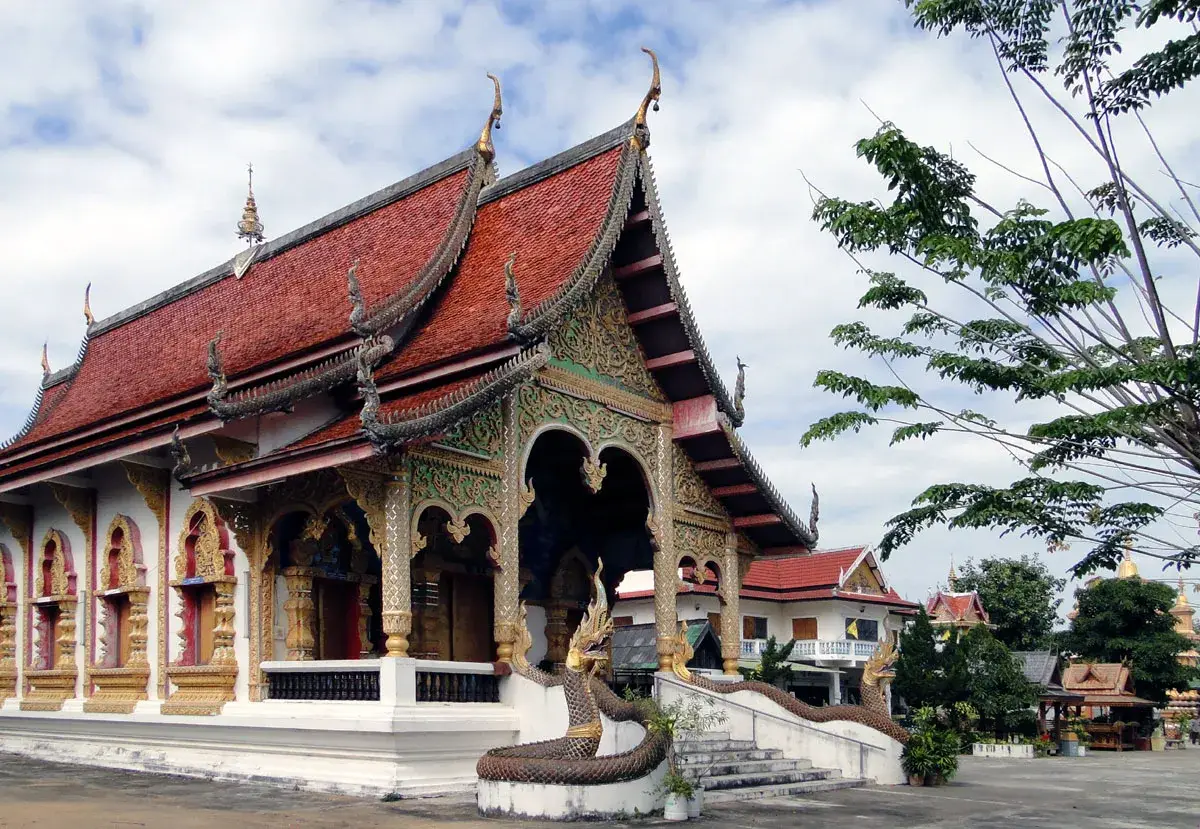
Wat Roi Phrom is located in Ban Roi Phrom, Moo 6, Buak Khang Subdistrict, San Kamphaeng District, Chiang Mai Province. It is a local Buddhist temple under the Mahanikaya order and an important spiritual center for Ban Roi Phrom and the wider Buak Khang community. The temple is suitable for travelers who want to visit a quiet local temple, make merit, learn about Lanna village culture, and connect their trip with the Tai Yong cultural route of Buak Khang. Its main points of interest are its long community history, the temple relic stupa, the annual relic bathing ceremony, and the worship area for Thao Wessuwan.
Wat Roi Phrom is not a large tourist temple in the style of Chiang Mai Old City’s famous landmarks. Its value comes from its role as a village temple that has remained close to everyday community life. Ban Roi Phrom is Moo 6 of Buak Khang Subdistrict, an area known for Lanna and Tai Yong cultural roots. A visit to Wat Roi Phrom therefore reveals a quieter and deeper side of San Kamphaeng, where Buddhist temples, agricultural communities, local merit-making, and village traditions remain closely connected.
The temple’s history is significant because Wat Roi Phrom was officially permitted as a temple in 1757, or B.E. 2300. This makes it one of the older community temples in Buak Khang. Although detailed public records about the original builders, early architectural materials, and the first buildings are not fully available, the establishment year places Wat Roi Phrom within a long religious and community history. The temple has continued to function as a Buddhist center for Ban Roi Phrom and remains part of the temple network of Buak Khang.
Buak Khang Subdistrict gives important context to Wat Roi Phrom. The area is associated with Tai Yong culture and Lanna village life. Several temples in the subdistrict, including Wat Buak Khang, Wat Pa Tan, Wat Ko Sa Liam, Wat Ya Pai, Wat Chang Pian, Wat Ban Pong, and Wat Roi Phrom, form a network of religious places connected with village identity. These temples are not only places for worship. They also serve as spaces for ceremonies, community gatherings, local memory, and the passing of cultural values between generations.
Wat Roi Phrom serves Ban Roi Phrom, Moo 6, as a place for merit-making, Dhamma listening, Buddhist ceremonies, and community events. In northern Thai villages, a temple often functions as both a religious institution and a social center. It connects elderly residents, working families, younger generations, monks, and lay supporters through recurring rituals and seasonal merit-making. This role gives Wat Roi Phrom cultural depth beyond what can be seen from a quick visit.
The temple relic stupa is one of the most important sacred points at Wat Roi Phrom. It is the focus of the annual relic bathing ceremony, a meaningful Lanna Buddhist tradition in which local people and devotees gather to pay respect to the relic stupa. In 2026, the Wat Roi Phrom relic bathing ceremony was scheduled for May 1-2 at Wat Roi Phrom, Ban Roi Phrom, Buak Khang Subdistrict, San Kamphaeng District, Chiang Mai Province. The ceremony included merit-making around the relic stupa, rituals connected with Somdet Ong Pathom, and the Lanna life-prolonging ceremony known as suep chata luang.
Another highlight for faith-based travelers is the worship of Thao Wessuwan. Buak Khang Municipality presents Wat Roi Phrom as a place to pay respect to Thao Wessuwan within the subdistrict’s tourism route. Visitors can make merit, pay respect to the relic stupa, and worship Thao Wessuwan for auspiciousness. Modest dress, quiet behavior, and respect for monastic and ceremonial spaces are expected when visiting the temple.
The confirmed important areas of Wat Roi Phrom include the relic stupa, the Thao Wessuwan worship area, the temple courtyard, and spaces used for Buddhist ceremonies and community merit-making. Detailed public information about the viharn, ubosot, principal Buddha image, bell tower, and sermon hall is not sufficiently documented, so this article focuses only on temple elements that can be presented with confidence. This keeps the content useful while avoiding unsupported architectural claims.
The atmosphere of Wat Roi Phrom is calm and local. It is suitable for visitors who want to experience a village temple rather than a crowded tourist site. The temple’s charm lies in its simplicity, long history, and continuing role in Ban Roi Phrom. Travelers can visit for merit-making, quiet reflection, and an understanding of how Buddhist temples remain central to community life in northern Thailand.
Wat Roi Phrom suits several types of travelers. It is appropriate for those who want to make merit at a peaceful temple near San Kamphaeng, those interested in Tai Yong and Lanna culture, those who wish to worship Thao Wessuwan, and those planning a linked cultural route around Buak Khang. With a good itinerary, the temple can be combined with nearby attractions, northern Thai restaurants, and local accommodation for a half-day or full-day trip.
The main annual event associated with Wat Roi Phrom is the relic bathing ceremony. The temple is also connected with common northern Thai Buddhist occasions such as Songkran, Buddhist Lent, the end of Buddhist Lent, Kathin, Pha Pa offerings, and village merit-making activities. These events are not only religious rituals. They also reinforce community bonds, support the maintenance of the temple, and help younger generations learn local customs through participation.
Wat Roi Phrom plays an important role in Ban Roi Phrom by serving as a shared religious and social space. Local residents use the temple for Buddhist ceremonies, annual merit-making, and community gatherings. Because it stands within the village, the temple is part of daily life rather than a destination separated from the people around it. This is one of the clearest ways to understand the continuing relationship between Buddhism and village society in Lanna culture.
A visit to Wat Roi Phrom becomes more meaningful when combined with nearby cultural places in Buak Khang. Wat Pa Tan is closely associated with the Tai Yong cultural route and is near Wat Roi Phrom. Wat Buak Khang is one of the historically important temples of the subdistrict. Wat Ban Pong is known for its inverted viharn. Baan Jang Nak presents local elephant woodcarving craftsmanship. Air Sport Farm and Cocoon Farm add leisure and agricultural tourism options to the route. Together, these places create a richer cultural itinerary in San Kamphaeng.
Getting There from Chiang Mai city is easiest by private car, rental car, or hired local transport. Travel toward San Kamphaeng District, continue into Buak Khang Subdistrict, and head to Ban Roi Phrom, Moo 6. Because the temple is located within a village community rather than a dense public transport zone, visitors using ride-hailing or hired transport should arrange the return trip in advance. Driving also makes it easier to combine Wat Roi Phrom with nearby temples, restaurants, craft sites, and accommodation.
The best time to visit is in the morning or late afternoon, when the weather is more comfortable. During the annual relic bathing ceremony, visitors should allow more time for travel and parking because local residents and devotees gather in larger numbers than usual. On regular days, the temple is suitable for quiet merit-making and a short cultural stop. Visitors should dress respectfully, avoid entering monks’ private areas without permission, and take photographs with discretion, especially during ceremonies.
Wat Roi Phrom is a valuable community temple for travelers who want to see Chiang Mai beyond the old city and major tourist routes. Its establishment in B.E. 2300, its relic stupa, its annual relic bathing ceremony, the Thao Wessuwan worship area, and its location in Ban Roi Phrom, Moo 6, give the temple a distinct identity within Buak Khang. For travelers interested in Lanna culture, local Buddhism, and quiet temple routes in San Kamphaeng, Wat Roi Phrom is a meaningful stop.
| Name | Wat Roi Phrom |
| Location | Ban Roi Phrom, Moo 6, Buak Khang Subdistrict, San Kamphaeng District, Chiang Mai Province |
| Address | Moo 6, Buak Khang Subdistrict, San Kamphaeng District, Chiang Mai 50130, Thailand |
| Coordinates / Plus Code | P39W+349, Buak Khang Subdistrict, San Kamphaeng District, Chiang Mai 50130, Thailand |
| Temple Type | Local Buddhist temple under the Mahanikaya order |
| Highlights | Village temple of Ban Roi Phrom with a relic stupa, annual relic bathing ceremony, and Thao Wessuwan worship area |
| History | Officially permitted as a temple in B.E. 2300, or 1757 |
| Local Importance | A spiritual center of Ban Roi Phrom, Moo 6, and part of the Tai Yong cultural landscape of Buak Khang |
| Sacred Points | Temple relic stupa, Thao Wessuwan worship area, and Buddhist ceremonial spaces |
| Main Areas / Zones | Relic stupa, Thao Wessuwan worship area, temple courtyard, and community merit-making areas |
| Traditions / Temple Events | Annual relic bathing ceremony, Kathin, Pha Pa offerings, Songkran, Buddhist Lent, and the end of Buddhist Lent |
| Travel Information | From Chiang Mai city, travel toward San Kamphaeng District, continue into Buak Khang Subdistrict, and head to Ban Roi Phrom, Moo 6. Private car, rental car, or hired local transport is recommended. |
| Current Status | Listed as a Buddhist temple in Ban Roi Phrom, Moo 6, Buak Khang Subdistrict, San Kamphaeng District, Chiang Mai Province |
| Open Days | Daily |
| Opening Hours | 08.00 – 17.00 |
| Abbot / Caretaker | Phra Kanoksak Katapunyo |
| Main Contact Number | 053-395-286 |
| Nearby Tourist Attractions | 1. Wat Pa Tan, about 1 km 2. Baan Jang Nak, about 2 km 3. Wat Buak Khang, about 4 km 4. Wat Ban Pong / Inverted Viharn, about 4 km 5. Air Sport Farm, about 6 km 6. Cocoon Farm, about 6 km |
| Nearby Restaurants | 1. Huen Jai Yong, about 2 km, Tel. 086-671-8710 2. Mao Cha Ban Buak Khang Branch, about 4 km, Tel. 088-758-8155 3. Tom Yum Noodles Pat To 1, about 4 km, Tel. 098-730-8110, 087-656-3493 4. PunThai Coffee San Kamphaeng 5, about 4 km, Tel. 093-323-6853 5. Cocoon Eatery, about 6 km, Tel. 086-913-3961 6. San Kamphaeng Restaurant, about 8 km, Tel. 053-332-935, 053-395-389 |
| Nearby Accommodations | 1. Patan Lanna Homestay, about 1 km 2. Boon Homestay & Cafe, about 1 km, Tel. 093-494-8000 3. Sanaepatan Home Resort, about 2 km, Tel. 092-815-5029 4. Huanmaisakngam Resort, about 4 km, Tel. 065-495-5365 5. Baanpong Lodge, about 8 km, Tel. 083-969-6555 6. The Vet Boutique Hotel, about 10 km, Tel. 052-011-179 |
Frequently Asked Questions (FAQ)
Q: Where is Wat Roi Phrom located?
A: Wat Roi Phrom is located in Ban Roi Phrom, Moo 6, Buak Khang Subdistrict, San Kamphaeng District, Chiang Mai 50130, Thailand.
Q: What is the history of Wat Roi Phrom?
A: Wat Roi Phrom is a local Buddhist temple under the Mahanikaya order. It was officially permitted as a temple in B.E. 2300, or 1757, and remains an important temple for Ban Roi Phrom.
Q: What are the main highlights of Wat Roi Phrom?
A: The main highlights are the temple relic stupa, the annual relic bathing ceremony, and the Thao Wessuwan worship area.
Q: What are the opening days and hours of Wat Roi Phrom?
A: Wat Roi Phrom is open daily from 08.00 to 17.00.
Q: Who is the abbot of Wat Roi Phrom?
A: The listed abbot of Wat Roi Phrom is Phra Kanoksak Katapunyo.
Q: What is the important annual event at Wat Roi Phrom?
A: The important annual event is the Wat Roi Phrom relic bathing ceremony, a Lanna Buddhist merit-making event centered on the temple relic stupa.
Q: How can travelers get to Wat Roi Phrom?
A: From Chiang Mai city, travel toward San Kamphaeng District, continue into Buak Khang Subdistrict, and head to Ban Roi Phrom, Moo 6. Private car, rental car, or hired local transport is recommended.
Q: What nearby places can be combined with Wat Roi Phrom?
A: Nearby places include Wat Pa Tan, Baan Jang Nak, Wat Buak Khang, Wat Ban Pong, Air Sport Farm, and Cocoon Farm.
 Category: ●Places of Worship
 Group: ●Temple
Last Update : 1 MonthAgo
 Last Update : 1 MonthAgo
 Click to Access the Navigation Map GPS

 Muang Chiang Mai(121)Chom Thong(47)Mae Chaem(25)Chiang Dao(33)Doi Saket(68)Mae Taeng(85)Mae Rim(69)Samoeng(29)Fang(71)Mae Ai(59)Phrao(70)San Pa Tong(103)San Kamphaeng(66)San Sai(73)Hang Dong(73)Hot(32)Doi Tao(22)Omkoi(11)Saraphi(74)Wiang Haeng(15)Chai Prakan(28)Mae Wang(32)Mae On(22)Doi Lo(33)Galyani Vadhana(1)


