
lovethailand home >North Travel Attractions >Chiang Mai Travel Attractions >Mae Ai >Ban Luang > Wat Watthanaram
TL;DR: Wat Watthanaram is located at Moo 1, Ban Luang Subdistrict, Mae Ai District, Chiang Mai Province. Highlights include Ordination hall, prominent Buddha images, Ten Lives of the Buddha murals, clean shaded grounds, and the annual Phra Phuttha Sihing / Luang.

Wat Watthanaram
Operating day: Daily
Operating time: 08.00 - 17.00
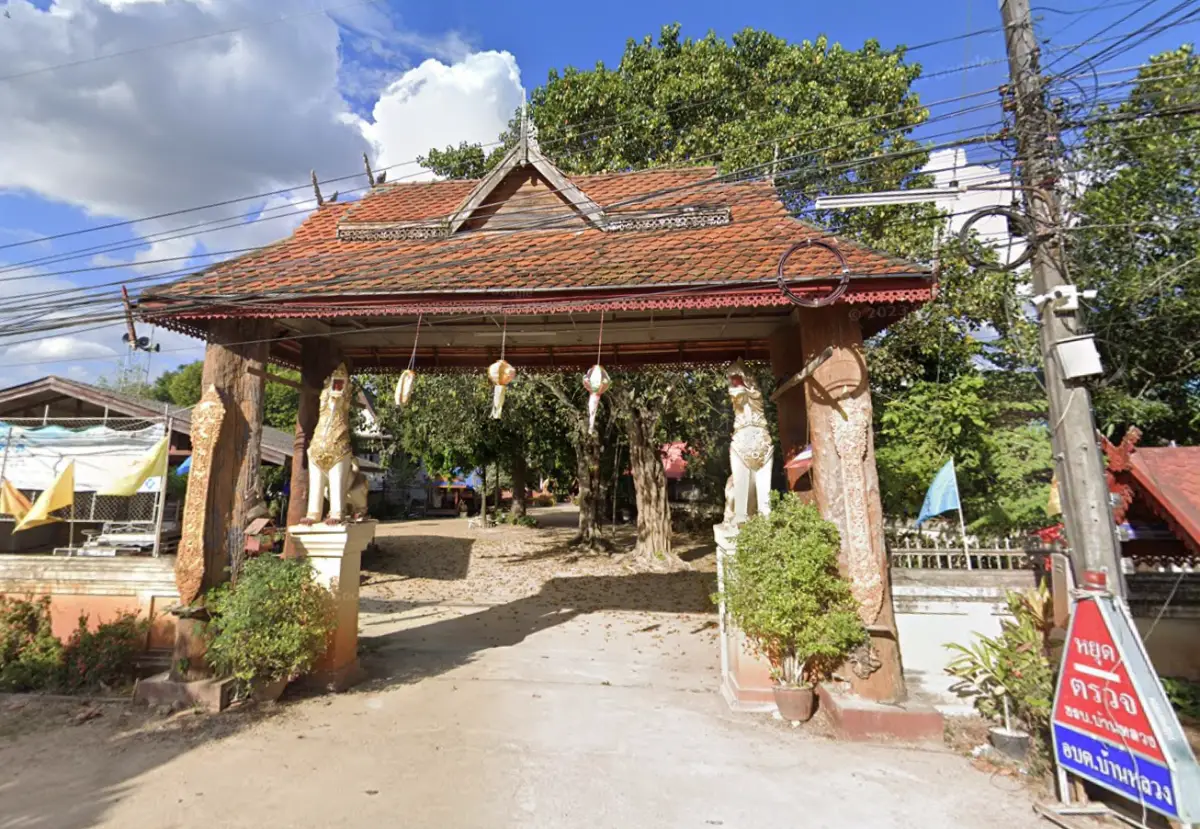
Wat Watthanaram, also locally known as Wat Ban Luang, is a private-sector Buddhist temple under the Mahanikaya order in Moo 1, Ban Luang Subdistrict, Mae Ai District, Chiang Mai Province. It is an important community temple of Ban Luang, with a long history, a graceful ordination hall, prominent Buddha images, murals depicting the Ten Lives of the Buddha, clean temple grounds, shaded trees, and a calm atmosphere suitable for worship, merit-making, Dhamma listening, and meditation.
Wat Watthanaram is located in Ban Luang Subdistrict, an important rural area of Mae Ai District in northern Chiang Mai. Ban Luang lies about 17 kilometers southeast of Mae Ai District center. The landscape includes mountains, lowland farming areas, waterways, village communities, and natural resources connected with local livelihoods. As a main village of the subdistrict, Ban Luang has long been connected with Wat Watthanaram as its spiritual and community center.
Moo 1 Ban Luang is an important community center within the subdistrict. It is connected with local administration, education, transport, community life, and religious activity. Wat Watthanaram serves as one of the village’s key spiritual anchors. Local people come to the temple for Buddhist holy days, merit-making, sermons, religious ceremonies, and community gatherings. The temple therefore functions not only as a place of worship but also as a space that supports the social bonds of Ban Luang.
The history of Wat Watthanaram is closely tied to the development of the Ban Luang community. Local sources state that the temple was built in 1897 and was locally called Wat Ban Luang. The village-based name shows the temple’s direct connection with the community. Later, the temple received its Wisungkham Sima on 29 August 1983, giving it a recognized sacred boundary for important monastic acts under Thai Buddhist tradition.
Phra Athikan Si Nuan was the first abbot of Wat Watthanaram, serving around 1897–1903. This early period was important for laying the foundation of the temple as the religious center of Ban Luang. Establishing a village temple required cooperation between monks, elders, village leaders, and residents. The work included preparing the temple grounds, building monastic structures, supporting monks, and using the temple as a place for moral and religious learning.
The current abbot of Wat Watthanaram is Phra Wisanu Chandawangso, who has served from 2005 onward. As abbot, he continues the temple’s religious leadership and its relationship with the community. A village temple depends on cooperation between monks, novices, local leaders, and lay supporters. The abbot therefore plays an important role as a religious leader, caretaker of the temple, and key link between the temple and the daily life of the community.
The name Wat Watthanaram has an auspicious meaning. “Watthana” suggests growth, development, and flourishing, while “aram” refers to a temple or peaceful religious place. The name therefore suggests a temple of spiritual and cultural growth. The local name Wat Ban Luang reinforces the temple’s identity as the community temple of Ban Luang, giving the temple both religious meaning and strong local identity.
The ordination hall is one of the most important parts of Wat Watthanaram. An ordination hall is a sacred space used for monastic acts and important Buddhist ceremonies. The granting of Wisungkham Sima on 29 August 1983 makes the ordination hall especially meaningful in terms of Buddhist status and ritual function. Inside the ordination hall are prominent Buddha images that serve as important objects of worship for local residents and visitors.
The temple is also notable for its murals depicting the Ten Lives of the Buddha. These murals are important both as religious art and as visual Dhamma instruction. The stories teach virtues such as generosity, compassion, patience, wisdom, effort, and spiritual perfection. Through visual storytelling, visitors can understand Buddhist values in a direct and accessible way.
The Ten Lives murals make Wat Watthanaram meaningful for those interested in Lanna temple art and Buddhist teaching through images. In community temples, murals often serve as educational tools for elders, children, youth, and visitors. They allow people to learn Dhamma without relying only on written texts. The murals therefore combine art, religion, and community learning in one sacred space.
The Buddha images at Wat Watthanaram are the main objects of worship inside the temple. Visitors can pay respect, make merit, and reflect on the Buddha, the Dhamma, and the Sangha. The calm and shaded atmosphere makes the temple suitable for a slow and respectful visit. It is a place where visitors can worship without hurry and spend time in quiet reflection.
The temple grounds are clean, orderly, and shaded by trees. This shaded environment is important for visitors who come to rest, make merit, or practice meditation. Lanna community temples often combine sacred buildings, courtyards, trees, and village surroundings into one living religious space. At Wat Watthanaram, this combination creates a calm atmosphere that supports Buddhist practice and community use.
Wat Watthanaram covers 3 rai, 3 ngan and 75 square wah of temple land, with an additional 2 ngan and 57 square wah of monastic land. Its northern boundary meets the Mae Na Wang River, while the southern boundary meets a village road. The eastern and western sides border occupied land. This setting shows the temple’s close relationship with the river, village roads, and the surrounding community landscape.
The Mae Na Wang River is significant in the Ban Luang area and in the broader local history of Mae Ai. Communities near waterways are often connected with agriculture, settlement, transport, and local culture. Wat Watthanaram, located in this landscape, is therefore not only a temple of Ban Luang but also part of a cultural area shaped by water, farming, and village history.
Wat Watthanaram plays several roles in the Ban Luang community. Religiously, it is a place for worship, merit-making, sermons, precepts, and Buddhist ceremonies. Socially, it is a gathering space for villagers during holy days, festivals, and community events. Culturally, it helps preserve Lanna traditions, annual merit-making, and moral teachings passed through monks, murals, and Buddhist activities.
An important ceremony associated with Wat Watthanaram is the annual bathing ceremony for Phra Phuttha Sihing, also known locally as Luang Pho Phet, held on 16 April every year. This event is connected with the northern Thai New Year and Songkran period. Local residents gather to make merit, bathe the sacred Buddha image, receive blessings, and begin the new year with auspiciousness.
The Phra Phuttha Sihing or Luang Pho Phet bathing ceremony reflects the relationship between Buddhism and Lanna community life. April is a time of cleansing, blessing, and renewal. The temple becomes a place where villagers return to worship together, honor sacred images, and maintain a shared cultural tradition. This annual event keeps the temple active in both memory and practice.
In addition to the annual bathing ceremony, Wat Watthanaram is suitable for regular Buddhist calendar activities such as Buddhist holy day merit-making, Pha Pa, Kathin, Dhamma listening, candlelight ceremonies, and annual village merit-making. During these events, local residents work together to prepare the temple, offer food, receive blessings, and strengthen social unity.
From a cultural perspective, Wat Watthanaram shows the relationship between art, faith, and community life. The ordination hall and Buddha images represent Buddhist devotion. The Ten Lives murals represent Dhamma learning through art. The shaded and clean temple grounds reflect care for sacred space. The annual Phra Phuttha Sihing bathing ceremony shows the continuing role of Lanna tradition in the life of Ban Luang.
Wat Watthanaram is suitable for travelers interested in village temples, historic temples in Mae Ai, murals inside an ordination hall, and northern Thai Songkran traditions. Visitors can pay respect to Buddha images, observe the Ten Lives murals, walk quietly around the shaded temple grounds, and experience the calm atmosphere of Ban Luang. A visit here is best understood as a cultural and spiritual experience rather than a quick photo stop.
The temple’s value lies in its continuity. It began as a village temple in the late 19th century, with Phra Athikan Si Nuan as its first abbot. It later received Wisungkham Sima in 1983 and continues today under Phra Wisanu Chandawangso. This continuity makes Wat Watthanaram an important historical and spiritual marker for Ban Luang and a living example of the relationship between Buddhism and village life in Mae Ai.
Getting There is most convenient by private car, rental car, or local hired transport. From Chiang Mai city, travel north toward Fang and Mae Ai, then continue into Ban Luang Subdistrict and Moo 1 Ban Luang. Travelers can search for “Wat Watthanaram Ban Luang Mae Ai Chiang Mai” or “Wat Ban Luang Mae Ai” in a map application before departure.
From Mae Ai District, Ban Luang Subdistrict is about 17 kilometers away. Wat Watthanaram can be included in a half-day or full-day route through nearby community temples. Travelers coming from Chiang Mai city should allow enough time because Mae Ai is far from the city center. Staying overnight in Mae Ai, Thaton, or Fang makes the journey more comfortable and allows visitors to continue to Wat Thaton, the Kok River area, and other nearby temple routes.
A suitable route begins at Wat Watthanaram or Wat Ban Luang, then continues to Wat Sawang Phaibun or Wat Pa Daet, Wat Si Song Mueang or Wat Pa Ko, Wat Pa Daeng or Wat Udom Phrison, Wat Phra That Sop Fang, Wat Phra Chedi Chiang Phaya or Wat Pa Tueng, and Wat Thaton. This route gives travelers a broad view of Mae Ai’s temple landscape, including historic village temples, community temples, local traditions, and religious sites connected with the natural landscape of northern Chiang Mai.
Visitors should dress modestly, speak quietly, respect monks and worshippers, avoid touching murals or sacred objects inside the ordination hall, and take photographs respectfully. During the Phra Phuttha Sihing or Luang Pho Phet bathing ceremony, visitors should follow the guidance of the temple and local residents to preserve the order and sacred atmosphere of the event.
In summary, Wat Watthanaram in Ban Luang is a Mahanikaya community temple in Mae Ai District, Chiang Mai Province, with value in history, religion, art, and local culture. The temple has an ordination hall, prominent Buddha images, Ten Lives of the Buddha murals, clean shaded grounds, and the annual bathing ceremony for Phra Phuttha Sihing or Luang Pho Phet on 16 April. It is suitable for worship, merit-making, studying Lanna temple art, and experiencing the living Buddhist culture of Ban Luang.
| Name | Wat Watthanaram / Wat Ban Luang |
| Location | Moo 1, Ban Luang Subdistrict, Mae Ai District, Chiang Mai Province |
| Address | Moo 1, Ban Luang Subdistrict, Mae Ai District, Chiang Mai 50280, Thailand |
| Temple Type | Private-Sector Buddhist Temple, Mahanikaya Order |
| Highlights | Ordination hall, prominent Buddha images, Ten Lives of the Buddha murals, clean shaded grounds, and the annual Phra Phuttha Sihing / Luang Pho Phet bathing ceremony on 16 April |
| History | Built in 1897 and granted Wisungkham Sima on 29 August 1983 |
| Local Name | Wat Ban Luang |
| Name Origin | Wat Watthanaram suggests spiritual and cultural growth, while Wat Ban Luang is the village-based local name used by residents |
| Temple Area | Temple land: 3 rai, 3 ngan, 75 square wah; monastic land: 2 ngan, 57 square wah |
| Temple Boundary | North: Mae Na Wang River; South: village road; East and West: occupied land |
| First Abbot | Phra Athikan Si Nuan, around 1897–1903 |
| Abbot / Caretaker | Phra Wisanu Chandawangso, from 2005 onward |
| Main Areas / Zones | Ordination hall, Buddha images, Ten Lives murals, temple courtyard, merit-making area, sermon area, meditation area, and shaded tree area |
| Travel Information | Best reached by private car, rental car, or local hired transport from Chiang Mai toward Mae Ai, then into Ban Luang Subdistrict and Moo 1 Ban Luang |
| Current Status | Listed in temple directories, local references, and travel information sources; no public record found indicating permanent closure |
| Important Traditions / Ceremonies | Annual Phra Phuttha Sihing / Luang Pho Phet bathing ceremony on 16 April, Buddhist holy day merit-making, Pha Pa, Kathin, Dhamma sermons, and annual Lanna community merit-making events |
| Nearby Tourist Attractions | 1. Wat Sawang Phaibun / Wat Pa Daet, about 3 km 2. Wat Si Song Mueang / Wat Pa Ko, about 4 km 3. Wat Pa Daeng / Wat Udom Phrison, about 5 km 4. Wat Phra That Sop Fang, about 8 km 5. Wat Phra Chedi Chiang Phaya / Wat Pa Tueng, about 13 km 6. Wat Thaton, about 28 km |
| Nearby Restaurants | 1. Ban Suan Khun Yai, about 17 km 2. Thaton Hill, about 27 km, Tel. 053-053-669 3. Thaton Chomchan Cafe & Restaurant, about 28 km, Tel. 088-435-4467 4. Thaton Riverview Restaurant, about 28 km, Tel. 053-459-289, 053-373-173-5, 093-256-7969 5. Chanka Sem Restaurant, about 28 km 6. Hompandin Cafe, about 29 km |
| Nearby Accommodations | 1. Ban Suan Khun Yai, about 17 km 2. Yoga Art Home, about 26 km, Tel. 093-261-5558 3. Thaton Hill Resort, about 27 km, Tel. 053-053-669 4. Thaton Chalet, about 28 km 5. Thaton Riverview Resort, about 28 km, Tel. 053-373-173 6. LoveShack @ Thailand, about 29 km |
Frequently Asked Questions (FAQ)
Q: Where is Wat Watthanaram located?
A: Wat Watthanaram is located in Moo 1, Ban Luang Subdistrict, Mae Ai District, Chiang Mai Province 50280.
Q: What is the local name of Wat Watthanaram?
A: Local residents also call Wat Watthanaram “Wat Ban Luang” because it is located in the Ban Luang community.
Q: What is the history of Wat Watthanaram?
A: Wat Watthanaram was built in 1897, with Phra Athikan Si Nuan as its first abbot, and received Wisungkham Sima on 29 August 1983.
Q: Who is the abbot of Wat Watthanaram?
A: The abbot of Wat Watthanaram is Phra Wisanu Chandawangso, who has served from 2005 onward.
Q: What are the main highlights of Wat Watthanaram?
A: Highlights include the ordination hall, prominent Buddha images, Ten Lives of the Buddha murals, shaded clean grounds, and the annual Phra Phuttha Sihing / Luang Pho Phet bathing ceremony on 16 April.
Q: What kind of visit is Wat Watthanaram suitable for?
A: It is suitable for worship, merit-making, observing temple murals, meditation, learning about Lanna community temples, and joining a temple route through Mae Ai.
Q: How can travelers get to Wat Watthanaram?
A: The most convenient way is by private car, rental car, or local hired transport from Chiang Mai toward Mae Ai, then into Ban Luang Subdistrict and Moo 1 Ban Luang.
Q: What places can be visited together with Wat Watthanaram?
A: Nearby places include Wat Sawang Phaibun, Wat Si Song Mueang, Wat Pa Daeng, Wat Phra That Sop Fang, Wat Phra Chedi Chiang Phaya / Wat Pa Tueng, and Wat Thaton.
 Category: ●Places of Worship
 Group: ●Temple
Last Update : 1 MonthAgo
 Last Update : 1 MonthAgo
 Click to Access the Navigation Map GPS

 Muang Chiang Mai(121)Chom Thong(47)Mae Chaem(25)Chiang Dao(33)Doi Saket(68)Mae Taeng(85)Mae Rim(69)Samoeng(29)Fang(71)Mae Ai(59)Phrao(70)San Pa Tong(103)San Kamphaeng(66)San Sai(73)Hang Dong(73)Hot(32)Doi Tao(22)Omkoi(11)Saraphi(74)Wiang Haeng(15)Chai Prakan(28)Mae Wang(32)Mae On(22)Doi Lo(33)Galyani Vadhana(1)


