
lovethailand home >North Travel Attractions >Chiang Mai Travel Attractions >Mae On >Mae Tha > Wat Don Chai (Mae Tha)
TL;DR: Wat Don Chai (Mae Tha) is located at Ban Don Chai, Moo 6, Mae Tha, Mae On District, Chiang Mai 50130, Thailand, open Daily, hours 08.00 – 17.00.

Wat Don Chai (Mae Tha)
Open Days: Daily
Opening Hours: 08.00 – 17.00
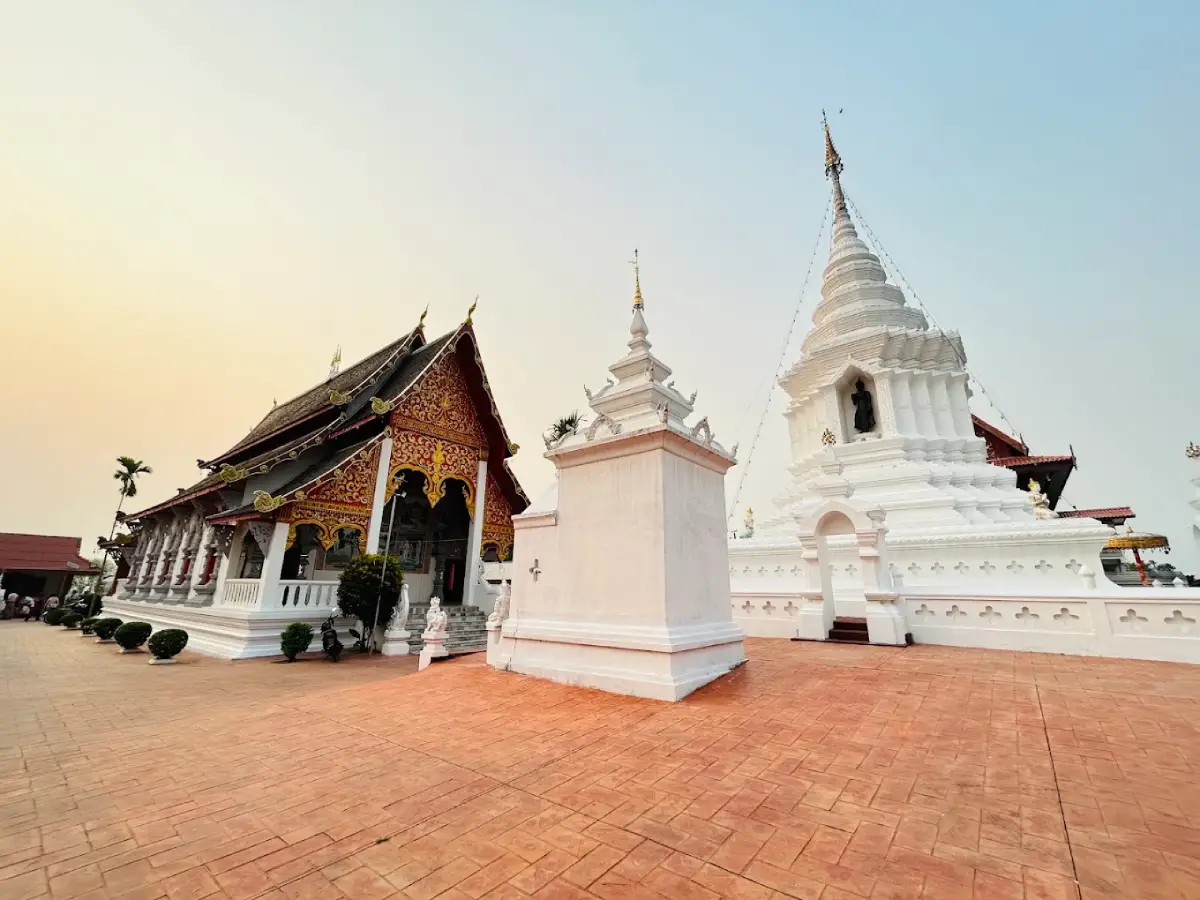
Wat Don Chai (Mae Tha) is a historic community Buddhist temple in Ban Don Chai, Moo 6, Mae Tha Subdistrict, Mae On District, Chiang Mai Province. It belongs to the Mahanikaya monastic order. Official temple registration records 1767 as the year of establishment, while local historical records preserve another major date: in 1845, Kruba Tham Sena moved the temple community from the former Wat Pong Ka site, which repeatedly suffered from flooding, to higher ground in Ban Don Chai. These two dates describe different stages in the temple's development rather than the same event: 1767 represents its official foundation history, while 1845 marks the relocation to the elevated site associated with the present temple.
Wat Don Chai remains an active Buddhist monastery. Records for the 2025 Kathin season listed five monks in residence and identified Phra Athikan Anon Brahmavamso as the abbot. Phra Athikan Samrit Buddhasaro, whose name appears in older descriptions of the temple, served as an earlier abbot. The preserved succession includes Kruba Tham Sena, Kruba Panya, Phra Athikan Samrit Buddhasaro and the current abbot, Phra Athikan Anon Brahmavamso.
The temple occupies approximately 5 rai, 1 ngan and 34 square wah of land in Ban Don Chai. Wat Don Chai School lies along the southern and western sides of the temple grounds, agricultural land borders the northern side, and local houses stand to the east. This physical arrangement is important because it shows how closely the monastery is integrated into village life. The temple, school, homes and farmland form a single community landscape rather than separate zones.
The name Don Chai is closely connected with the landscape. In Thai, “don” refers to raised or higher ground. Local history records that the former temple at Wat Pong Ka experienced recurring flooding, leading Kruba Tham Sena to establish the religious center on higher ground in 1845. The new location reduced the risks associated with flooding and gradually became the religious heart of Ban Don Chai.
When the historical timeline is examined carefully, the two dates connected with Wat Don Chai become particularly meaningful. The official Buddhist temple register lists 1767, while the local community history records the relocation in 1845. Together they reveal that the temple's story did not begin with the move to the present site. Instead, the religious institution had an earlier history before environmental conditions led the community to relocate its center of worship.
Kruba Tham Sena is therefore one of the key figures in the history of Wat Don Chai. His importance lies not only in his place in the early monastic succession but also in the decision to move the temple when the earlier location became impractical. Relocating a temple in nineteenth-century rural northern Thailand required collective labor, materials and support from villagers. Establishing the monastery on higher ground was therefore both a practical response to flooding and an act of community rebuilding.
The viharn is one of the principal religious buildings at Wat Don Chai. It measures approximately 10 metres by 20 metres and was constructed in 1962 as a mixed masonry-and-timber structure. This combination of materials is characteristic of a period when rural temples increasingly adopted modern construction methods while continuing to use timber and traditional building practices. The viharn remains an important space for paying respect to Buddha images and participating in Buddhist activities.
In a Lanna community temple, the viharn is much more than an architectural feature. It is traditionally one of the buildings most closely connected with laypeople, serving as a place for worship, sermons, communal merit-making and important ceremonies. At Wat Don Chai, its role reflects the temple's long position at the center of Ban Don Chai's social and religious life.
The sala kan parian, or preaching and assembly hall, measures approximately 6 by 18 metres. Built in 2004, it combines masonry and timber. Inside is a principal Buddha image in the Mara-Vijaya posture, measuring approximately 60 inches across the lap and around 120 inches in height. The image was created in 2005. The Mara-Vijaya posture represents the Buddha overcoming Mara immediately before enlightenment and is one of the most widely revered iconographic forms in Thai Buddhist art.
The assembly hall supports many activities involving monks and local residents. It can be used for listening to sermons, making merit, offering meals, organizing village religious activities and accommodating gatherings connected with the temple. Its function illustrates the way a rural monastery operates simultaneously as a religious institution and a shared community space.
Wat Don Chai has at least two monks' residences. One is reinforced concrete and another combines masonry with timber. Other facilities include a multipurpose hall, kitchen, guest building, two alms-bowl shelters, an administrative building and a bell tower. Together these structures allow the monastery to support daily monastic life, merit-making ceremonies, food preparation, visitors and community events.
The bell tower is significant beyond its architectural role. In traditional rural temple life, the sound of a bell helped organize the daily rhythm of monastic activity and could also communicate important moments to nearby residents. Its presence at Wat Don Chai reflects the close historical relationship between Buddhist practice and village routines.
The temple also preserves nine ancient Buddha images. Detailed public records do not provide a complete chronology, material description or individual provenance for each image, but their presence demonstrates that Wat Don Chai has accumulated sacred objects across generations. Visitors should treat the images as religious objects rather than museum pieces and avoid unnecessary physical contact.
The Mara-Vijaya Buddha in the assembly hall provides a natural place to begin a visit. Travelers can pay respect here before exploring the viharn, the older Buddha images and the rest of the grounds. A visit to Wat Don Chai is best approached as an opportunity to experience a functioning village monastery rather than simply a photography stop.
One of the most distinctive aspects of Wat Don Chai is its close relationship with the local school. Wat Don Chai School stands immediately beside the temple and shares the temple's name. This arrangement reflects an important pattern in Thai educational history. For generations, monasteries served as local centers of basic learning before modern state schools developed, and many rural schools later emerged beside or from temple-based educational environments.
Wat Don Chai School continues to operate under the Chiang Mai Primary Educational Service Area Office 1. The close proximity of the two institutions means that religion and education remain physically connected within Ban Don Chai. Children grow up in a landscape where the monastery is not a remote place visited only on religious holidays but part of the everyday community environment.
The wider Mae Tha area remains predominantly rural, and the relationship among temples, farmland and village settlements is still visible. This gives Wat Don Chai a very different atmosphere from the major temples in central Chiang Mai. Travelers interested in everyday Lanna culture can experience a quieter form of temple life shaped by agriculture, local families and small community institutions.
Mae Tha Subdistrict contains several Buddhist temples, including Wat Chom Tham, Wat Pong Ka, Wat Si Bun Rueang and Wat Huai Sai. Their distribution across different villages reflects the traditional Lanna pattern in which each settlement maintained its own religious center. Wat Pong Ka has special historical relevance to Wat Don Chai because local history directly connects the two through the nineteenth-century relocation.
Studying Wat Pong Ka together with Wat Don Chai reveals how religious landscapes can change in response to environmental conditions. A temple is not always fixed permanently in one location. Flooding, population movement and community needs can lead to relocation or rebuilding. At Wat Don Chai, the move to higher ground became such an important event that the topography itself is preserved in the temple's name.
The succession of abbots provides another way to understand the temple's continuity. Kruba Tham Sena is followed in surviving records by Kruba Panya. Some intermediate names were not preserved, after which Phra Athikan Samrit Buddhasaro appears in the record, followed by Phra Athikan Anon Brahmavamso. Each period of leadership would have involved responsibility for monks, buildings, ceremonies and relationships with local devotees.
Records from the Chiang Mai Provincial Office of Buddhism during 2022 and 2023 list Phra Athikan Anon together with the telephone number 080-121-6715. The 2025 Kathin database continued to identify him as abbot of Wat Don Chai, providing continuity between the administrative records and the more recent temple activity information.
Kathin is one of the best-documented annual religious events at Wat Don Chai. In 2025, the temple scheduled its Kathin ceremony for 14 October at 09.00, with five monks recorded as residing at the monastery during the rains retreat. In a rural temple, Kathin is more than an offering of robes. It is a major community gathering that often brings together villagers, relatives who have moved elsewhere and supporters from surrounding communities.
The temple is also associated with a Buddha-image water-pouring activity. Such ceremonies reflect northern Thai traditions of paying respect to sacred images and creating merit through ritual bathing. The practice carries meanings of reverence, auspiciousness and spiritual renewal and remains part of the living relationship between temple and community.
Seen together, Kathin, Buddha-image bathing and the regular Buddhist calendar demonstrate that Wat Don Chai continues to function as the spiritual center of Ban Don Chai. Its importance is sustained not only by the age of its buildings but by repeated participation from monks, families, students and local residents.
For travelers, the character of Wat Don Chai lies in its authenticity as a small community monastery. It does not depend on monumental sculptures or purpose-built tourist attractions. Instead, visitors encounter a viharn, an assembly hall, a bell tower, monastic residences, older Buddha images, a school and surrounding farmland. Together these elements show what a functioning rural Lanna temple looks like within its original social setting.
Morning is a practical time to visit because the atmosphere is generally quiet and temperatures are more comfortable. Visitors should avoid disturbing monks' residences and community activities. When a ceremony is taking place, allow local worshippers to use sacred spaces without obstruction.
Temple etiquette should follow normal Thai Buddhist practice. Clothing should cover the shoulders and knees. Shoes should be removed before entering designated sacred buildings. Do not climb onto Buddha-image bases or touch old sacred objects. Permission should be requested before taking close photographs of monks or private religious ceremonies.
Wat Don Chai is also useful for travelers interested in understanding how the different parts of a village monastery function. The viharn serves worship and communal Buddhist practice. The assembly hall accommodates sermons and larger gatherings. Monks' residences support monastic life. The kitchen and alms-bowl shelters become especially important during merit-making events, while the bell tower contributes to the daily rhythm of the monastery.
Public local records do not provide sufficient detail about the temple's ubosot dimensions or construction date, and the current temple register does not list a royal Wisungkhamasima grant for Wat Don Chai. For this reason, the most securely documented architectural features are the viharn, assembly hall, monks' residences, multipurpose structures, bell tower, kitchen, guest building, alms-bowl shelters, administrative building and the collection of ancient Buddha images.
The history of Wat Don Chai is a good example of how local historical research often requires several types of records. The official Buddhist register supplies the 1767 establishment date, while community documentation preserves the story of the 1845 relocation from Wat Pong Ka. When these two layers are read together, a coherent narrative emerges: an earlier religious institution was later relocated to higher ground after repeated flooding.
The adjacent school adds another social dimension. Wat Don Chai School appears in current educational databases and physically borders the monastery on two sides. Its name and location preserve the long connection between monasteries and education in rural Thailand, where learning institutions often developed within or beside temple grounds.
The Mae Tha countryside gives the visit additional character. Agricultural land, small farms, local roads and dispersed settlements remain part of the surrounding landscape. Travelers can combine the temple with Wat Chom Tham, Wat Huai Sai, local organic farming activities and cafés before continuing toward the better-known attractions of Mae On.
Wat Chom Tham is particularly suitable for a combined temple route because it lies within Mae Tha Subdistrict and offers a contrasting experience. Wat Don Chai emphasizes community history, relocation and the intimate atmosphere of a village monastery, while Wat Chom Tham contains larger contemporary devotional monuments. Visiting both in the same day demonstrates the diversity of Buddhist sites within a single subdistrict.
Wat Huai Sai can also be included in a local temple route. Organic farms and cafés in Mae Tha provide another way to understand the area's modern rural economy. Combining temples with locally operated food and agricultural businesses creates a slower itinerary that supports the surrounding community rather than focusing exclusively on major tourist attractions.
Travelers with a full day can continue to Muang On Cave and San Kamphaeng Hot Springs. Muang On Cave combines natural formations with sacred spaces inside the cave, while the hot springs provide a well-established place to relax. Together with Wat Don Chai, these destinations create a route that includes local history, Buddhism, rural community life and natural attractions.
Food options within the Mae Tha area include small local restaurants and cafés. Nearby choices include Khao Soi Ka Kai, Maetha Organic Cafe, Ban Nai Chang Coffee and Suksamer Cafe & Homestay. Travelers continuing toward central Mae On will find additional restaurants and farm cafés. Supporting small local businesses is a practical way to connect a temple visit with the wider community economy.
Accommodation close to Mae Tha is primarily small-scale. Suksamer Homestay, Baan Suan Ta Yai and other local properties provide a rural experience, while travelers who prefer resort-style facilities can stay closer to Ban Sa Ha Khon or On Klang at properties such as Sippa Hotspring Resort and Lakeview Resort.
Getting There is easiest by private car, rental car or hired driver. From Chiang Mai city, travel east through San Kamphaeng toward Mae On and continue into Mae Tha Subdistrict and Ban Don Chai, Moo 6. Drive slowly when entering the village because houses and the school are close to the temple. When using navigation apps, search for “Wat Don Chai Mae Tha Mae On Chiang Mai” to avoid being directed to another temple of the same name.
This name distinction is important because several temples called Wat Don Chai exist within Chiang Mai Province, including temples in Mueang Chiang Mai, Mae Rim, Mae Ai, San Pa Tong and Doi Saket districts. The correct temple for this article is in Moo 6, Mae Tha Subdistrict, Mae On District, beside Wat Don Chai School.
Visitors who want to understand the site more deeply should begin by observing the surrounding village landscape. The school lies immediately beside the monastery, while farmland and houses occupy the other sides. Continue into the religious compound to see the viharn, assembly hall, bell tower and monastic areas. This sequence makes it easier to understand Wat Don Chai as part of the village rather than as an isolated attraction.
Inside the assembly hall, visitors can pay respect to the Mara-Vijaya Buddha image before viewing the older sacred images maintained by the monastery. The value of Wat Don Chai does not come from architectural scale alone. Much of its significance lies in continuity, memory and the fact that generations of local residents have used the temple for important religious and community moments.
During major merit-making events, the temple takes on a different character as residents gather in larger numbers. Kathin is especially important in this respect. Travelers who prefer a quieter experience should visit on an ordinary weekday, while those interested in living community traditions may find festival periods particularly meaningful.
Wat Don Chai is historically important not simply because of its age but because its story can be followed through several clearly recorded stages: official establishment in 1767, relocation from Wat Pong Ka in 1845, construction of the viharn in 1962, development of the assembly hall in 2004 and its Buddha image in 2005, succession of abbots and the continuing relationship with the village school and local community.
For travelers interested in old temples, local history and everyday Lanna culture, reading the history before exploring the grounds greatly improves the visit. The elevated site becomes evidence of environmental adaptation; the viharn represents generations of worship; the old Buddha images preserve layers of devotion; and the school beside the temple reflects the enduring link between Buddhism and education.
A community-focused Mae On itinerary can begin at Wat Don Chai, continue to Wat Chom Tham and organic farming areas in Mae Tha, and then extend to Muang On Cave or San Kamphaeng Hot Springs. This route presents a side of Chiang Mai that differs from the Old City and Mae Kampong circuits by emphasizing village temples, agriculture, local food and rural community life.
Wat Don Chai today is therefore simultaneously a historic temple, a living monastery and a repository of Ban Don Chai's community memory. Resident monks, Kathin ceremonies, the adjacent school and regular merit-making activities demonstrate that the temple has not become a static historical monument. It remains part of the everyday religious and social life of Mae Tha, making it especially valuable for visitors who want to understand how Buddhism and Lanna village culture continue to interact in contemporary Chiang Mai.
| Name | Wat Don Chai (Mae Tha) |
| Type | Community Buddhist Temple, Mahanikaya Order |
| Location | Ban Don Chai, Moo 6, Mae Tha, Mae On District, Chiang Mai 50130, Thailand |
| Official Establishment Year | 1767 |
| Major Historical Event | In 1845 Kruba Tham Sena relocated the temple from the flood-prone Wat Pong Ka site to higher ground in Ban Don Chai |
| Temple Land | Approximately 5 rai, 1 ngan and 34 square wah, title deed no. 1880 |
| Abbot | Phra Athikan Anon Brahmavamso |
| Previous Abbot | Phra Athikan Samrit Buddhasaro |
| Main Contact Number | 080-121-6715 |
| Viharn | Approximately 10 x 20 metres, built in 1962 as a mixed masonry-and-timber structure |
| Assembly Hall | Approximately 6 x 18 metres, built in 2004 as a mixed masonry-and-timber structure |
| Principal Buddha In Assembly Hall | Mara-Vijaya posture, approximately 60 inches across the lap and 120 inches high, created in 2005 |
| Sacred Objects | Nine ancient Buddha images |
| Main Buildings And Areas | Viharn, assembly hall, two monks' residences, multipurpose hall, bell tower, kitchen, guest building, two alms-bowl shelters and administrative building |
| Community Role | Spiritual center of Ban Don Chai, closely connected with Wat Don Chai School, village merit-making and community activities |
| Traditions And Activities | Kathin, Buddha-image water-pouring activities and Buddhist religious observances |
| 2025 Kathin | 14 October 2025 at 09.00; five monks were recorded in residence |
| Open Days | Daily |
| Opening Hours | 08.00 – 17.00 |
| Travel Information | Travel east from Chiang Mai through San Kamphaeng and Mae On to Mae Tha Subdistrict and Ban Don Chai, Moo 6. Private car or rental car is the most convenient option. Search specifically for Wat Don Chai Mae Tha Mae On to avoid other temples with the same name. |
| Current Status | Active Buddhist monastery with resident monks and continuing religious activities |
| Nearby Tourist Attractions | 1. Wat Huai Sai, about 3 km 2. Wat Chom Tham, about 6 km 3. Mae Tha Organic Farming Area, about 4 km 4. Muang On Cave, about 20 km 5. San Kamphaeng Hot Springs, about 22 km |
| Nearby Restaurants And Cafés | 1. Khao Soi Ka Kai, about 2 km, Tel. 099-396-7056 2. Ban Nai Chang Coffee, about 2 km, Tel. 062-190-2595 3. Maetha Organic Cafe, about 3 km, Tel. 096-697-0079 4. Suksamer Cafe & Homestay Mae Tha, about 4 km, Tel. 088-805-3426 5. Villa At On Organic Farm Cafe & Farmstay, about 18 km, Tel. 083-046-6494 |
| Nearby Accommodations | 1. Small Cottage in the Big Forest, about 2 km, Tel. 062-048-7766 2. Suksamer Cafe & Homestay Mae Tha, about 4 km, Tel. 088-805-3426 3. Baan Suan Ta Yai @ Mae Tha, about 5 km, Tel. 081-163-4102 4. Sippa Hotspring Resort, about 22 km, Tel. 094-925-4628 5. Lakeview Resort, about 23 km, Tel. 092-889-5622 |
Frequently Asked Questions (FAQ)
Q: Where is Wat Don Chai in Mae Tha?
A: Wat Don Chai is in Ban Don Chai, Moo 6, Mae Tha Subdistrict, Mae On District, Chiang Mai 50130. It stands beside Wat Don Chai School within the local village community.
Q: When was Wat Don Chai established?
A: The official temple register records 1767 as the establishment year. Local history records another important event in 1845, when Kruba Tham Sena relocated the temple from flood-prone Wat Pong Ka to higher ground in Ban Don Chai.
Q: Who is the current abbot of Wat Don Chai?
A: Phra Athikan Anon Brahmavamso is the current abbot. Phra Athikan Samrit Buddhasaro, who appears in older temple information, was an earlier abbot.
Q: What are the main things to see at Wat Don Chai?
A: Important features include the 1962 viharn, the 2004 assembly hall, the Mara-Vijaya Buddha image, nine ancient Buddha images, the bell tower, monks' residences and other community temple buildings.
Q: What important traditions are held at Wat Don Chai?
A: The temple holds Kathin, Buddha-image water-pouring activities and other Buddhist observances. The 2025 Kathin ceremony was scheduled for 14 October at 09.00.
Q: What are the opening hours of Wat Don Chai?
A: The temple is open daily from 08.00 to 17.00. Morning is generally a good time for a quiet visit and merit-making.
Q: How do I get to Wat Don Chai?
A: From Chiang Mai city, travel through San Kamphaeng toward Mae On, then continue to Mae Tha Subdistrict and Ban Don Chai, Moo 6. Private car or rental car is the easiest option. Search for Wat Don Chai Mae Tha Mae On Chiang Mai to avoid temples with the same name elsewhere in the province.
Q: What can I visit after Wat Don Chai?
A: Nearby options include Wat Huai Sai, Wat Chom Tham, Mae Tha organic farming areas, Muang On Cave and San Kamphaeng Hot Springs, allowing travelers to build a full-day cultural and rural Mae On itinerary.
 Category: ●Places of Worship
 Group: ●Temple
Last Update : 1 MonthAgo
 Last Update : 1 MonthAgo
 Click to Access the Navigation Map GPS
Wat Don Chai (Mae Tha) Map
Recommend

 Muang Chiang Mai(121)Chom Thong(47)Mae Chaem(25)Chiang Dao(33)Doi Saket(68)Mae Taeng(85)Mae Rim(69)Samoeng(29)Fang(71)Mae Ai(59)Phrao(70)San Pa Tong(103)San Kamphaeng(66)San Sai(73)Hang Dong(73)Hot(32)Doi Tao(22)Omkoi(11)Saraphi(74)Wiang Haeng(15)Chai Prakan(28)Mae Wang(32)Mae On(22)Doi Lo(33)Galyani Vadhana(1)


