
lovethailand home >North Travel Attractions >Chiang Mai Travel Attractions >Mae Wang >Ban Kat > Wat Sirichai Nimit
TL;DR: Wat Sirichai Nimit is located at Ban Kio Lae Pa Pao, Moo 3, Ban Kat Subdistrict, Mae Wang District, Chiang Mai 50360, Thailand.

Wat Sirichai Nimit
Operating day: Daily
Operating time: 08.00 - 17.00
Wat Sirichai Nimit, also widely known locally as Wat Kio Lae Pa Pao, is a historic community Buddhist temple in Ban Kio Lae Pa Pao, Moo 3, Ban Kat Subdistrict, Mae Wang District, Chiang Mai 50360, Thailand. It is a public non-royal temple under the Mahanikaya order. The temple traces its history to 1840, when it was founded under the original name Wat Si Sai Mun. The name Wat Sirichai Nimit was officially adopted around 1941, and the temple received its royal consecrated boundary in 1965. Today, the monastery remains closely integrated with village life and contains an ordination hall, Lanna-style viharn, preaching hall, monks’ residences, scripture repository, observance hall, bell tower, kitchen, and communal spaces.
The history of Wat Sirichai Nimit is inseparable from the development of Ban Kio Lae Pa Pao. Local temple history explains that one of the first priorities when the community began to take shape was to establish a monastery that could serve as the spiritual center of the village. The earliest institution was a small monastic residence where monks could stay and practice. The community then invited a monk from Wat Hang Dong in Ban Mae Subdistrict, San Pa Tong District, to become the first abbot.
This pattern reflects the traditional structure of Lanna communities. Once families established homes and agricultural land, a Buddhist temple normally became one of the most important institutions of the village. The temple provided space for worship, merit-making, ordination, funerary rites, Buddhist teaching, and seasonal ceremonies. Wat Sirichai Nimit therefore emerged from the religious and social needs of the community rather than from tourism development.
Historical records state that the original temple, Wat Si Sai Mun, was founded on 12 March 1840. That name remained in use for about a century before the monastery was formally renamed Wat Sirichai Nimit around 1941. Local residents, however, have continued to identify it with the village itself, and the name Wat Kio Lae Pa Pao remains useful when distinguishing the temple from other religious sites.
From 1840 to 2026, the temple’s history extends for approximately 186 years. During that period, Mae Wang underwent major administrative, economic, and infrastructural changes. The area was once connected administratively with San Pa Tong before Mae Wang became a separate district, while roads, electricity, schools, markets, and local services gradually transformed village life. Wat Sirichai Nimit nevertheless remained the Buddhist center of Ban Kio Lae Pa Pao.
An important figure in the early establishment of the temple was Nan Kham Thao Thep, remembered in local history as one of the principal lay leaders behind the creation of the monastery. He was also closely associated with the creation of the principal Buddha image. For a newly established village temple, the principal image was essential because it provided a sacred focus for worship, sermons, ceremonies, and the collective faith of the community.
Older temple records describe a compound of approximately 3 rai and 3 ngan. The northern boundary reached a public road, the southern and western sides bordered public irrigation channels, and the eastern side adjoined local homes. This arrangement reveals a classic rural Lanna landscape in which monastery, houses, agricultural land, roads, and irrigation systems developed side by side.
Irrigation channels were particularly important in northern agricultural communities because they formed part of the traditional muang-fai water-management system. The historical boundaries of Wat Sirichai Nimit therefore help reveal the agricultural environment in which the temple developed. The monastery was not separate from farming life; it formed part of the same social and physical landscape.
Recorded religious buildings include the ubosot or ordination hall, preaching hall, Lanna-style viharn, monks’ residences, scripture repository, observance hall, bell tower, and temple kitchen. A recent visit in March 2025 also noted the viharn, monks’ quarters, ubosot, and bell tower, confirming that these key elements remain visible within the temple complex.
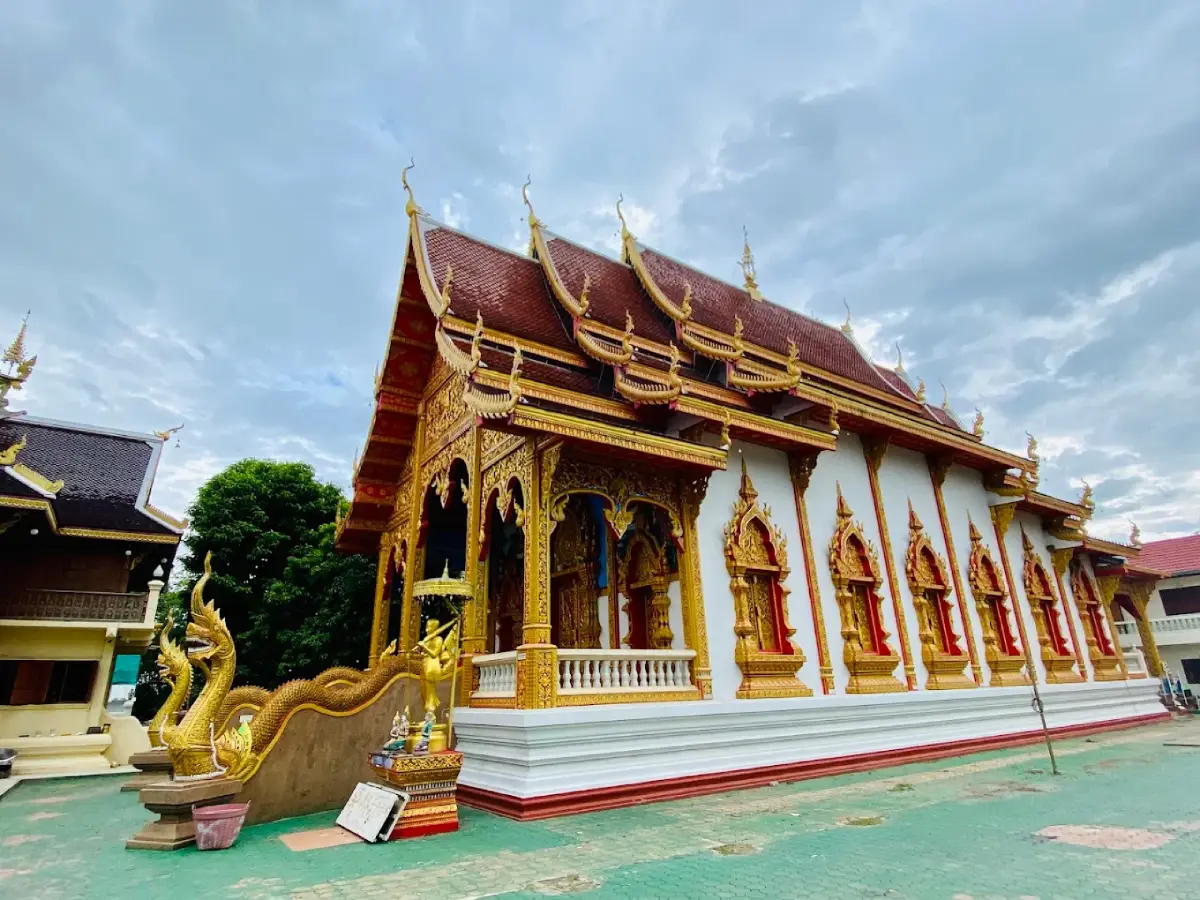
The Lanna-style viharn is one of the most visually interesting features of the monastery. In northern Thai Buddhist culture, the viharn serves as the principal space where lay worshippers gather to pay respect to Buddha images, hear sermons, chant, and participate in ceremonies. Decorative roof forms and naga elements at the stairway give Wat Sirichai Nimit a distinctly northern architectural character.
The ordination hall has a different religious function. It is associated with formal acts of the Sangha, particularly ordination. Wat Sirichai Nimit received its royal consecrated boundary in 1965, formally establishing the sacred area required for important monastic ceremonies under Buddhist discipline.
The preaching hall provides space for larger gatherings, sermons, community merit-making, and religious events. The observance hall reflects the temple’s role in supporting lay practice, while the monks’ residences provide living space for the resident Sangha. Together, these structures show that the temple has long functioned as a complete community monastery rather than a single shrine building.
The scripture repository is particularly important for understanding the educational role of traditional Lanna temples. Such buildings historically protected Buddhist scriptures, palm-leaf manuscripts, and religious texts. Their presence reflects the temple’s function not only as a ceremonial site but also as a center for Buddhist learning and the preservation of knowledge.
This educational dimension continues in the physical relationship between the monastery and Wat Sirichai Nimit School, which stands directly across from the temple. The primary school serves children from Ban Kio Lae Pa Pao and Ban Pong. The close proximity of temple and school reflects the long-established Thai community model in which home, temple, and school support one another.
The continuing strength of this relationship was clearly visible on 10 August 2025, when Wat Sirichai Nimit hosted a traveling Dhamma activity known as “Meet the Monks, Meet the Dhamma.” Monks from the Don Pao and Ban Kat ecclesiastical areas, local government representatives, public officials, community organizations, and residents participated in the program. The event emphasized cooperation among households, temples, and schools.
This 2025 activity demonstrates that Wat Sirichai Nimit remains a living community institution rather than a historic monument whose role belongs only to the past. The temple continues to provide space where monks, schools, government agencies, and residents can work together around Buddhist teaching and community development.
The succession of abbots provides another important framework for understanding the temple’s continuity. The recorded line begins with Phra Athikan Chaiya from 1840 to 1860, followed by Phra Athikan Sitthi from 1860 to 1885, Phra Athikan Kham Ai from 1885 to 1905, Phra Athikan Panya from 1905 to 1929, and Phra Khru Num Dhammachayo from 1929 to 1978.
The next major figure was Phra Khru Sophon Sarakhun, better known as Khruba Bunma Tamonuto. He became one of the best-known religious figures associated with Wat Sirichai Nimit. Born on 28 August 1926 in Ban Kao Rim Wang, Thung Pi Subdistrict, Mae Wang, he spent part of his childhood as a temple boy and later studied under monks in the area before entering monastic life.
After coming to live with Phra Khru Num Dhammachayo at Wat Sirichai Nimit, Khruba Bunma continued his Buddhist education and eventually assumed greater responsibility within the monastery. In 1977 he was appointed acting abbot and later formally became abbot. He subsequently received the ecclesiastical title Phra Khru Sophon Sarakhun.
His contributions extended beyond temple administration. Khruba Bunma supported education, provided assistance to monks and novices, donated educational materials, and maintained relationships with schools and community institutions throughout the Mae Wang area. His long service made him an important link between the temple and several generations of local residents.
Khruba Bunma was also known for his knowledge of northern ritual traditions. Academic research documents a Lanna destiny-extension and misfortune-averting ceremony performed by him at Wat Sirichai Nimit in August 2011. This record is significant because it shows the temple as a site where Buddhist practice and traditional Lanna ritual knowledge continued to coexist.
Phra Khru Sophon Sarakhun passed away on 8 April 2020 at the age of 93. From 2021 onward, the temple has been led by Phra Khru Sangharak Thanat Silasawaro, the latest abbot of Wat Sirichai Nimit. His leadership represents a new stage in the monastery’s history following the long era associated with Khruba Bunma.
Under the current leadership, the temple has continued developing its facilities while preserving the memory of previous generations. A new Lanna-style monks’ residence was constructed to replace an older deteriorated building. The project was also intended to serve as a memorial to former abbots and to provide space where community history could be preserved.
In 2023, the temple also received more than three ngan of land from the Thepchak family as monastic property. The land had been used in connection with a family funeral ceremony, after which the family decided to dedicate it permanently to the temple in memory of their parents and ancestors. Such donations illustrate the deep connection between Buddhist merit-making, family memory, and local temple support.
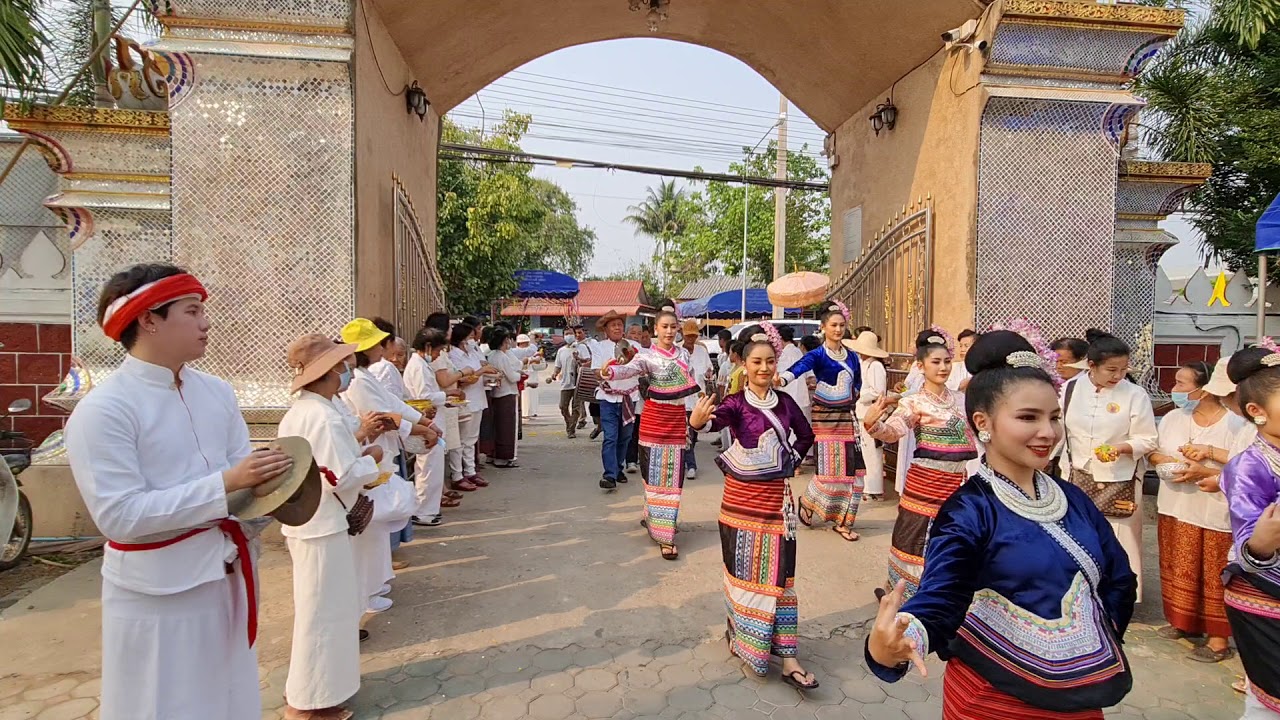
The same period saw a major communal Kathin ceremony at Wat Sirichai Nimit. The program began with a traditional Lanna destiny-extension ceremony before the Kathin procession and offering. Residents of Ban Kio Lae Pa Pao, private supporters, local organizations, and other participants joined the merit-making event.
Kathin remains one of the clearest documented annual Buddhist traditions associated with the temple. The ceremony takes place after the end of Buddhist Lent and allows lay supporters to present robes and other necessities to monks who have completed the rains retreat. At a community temple, Kathin also becomes an important occasion for relatives and former residents to return and make merit together.
The Lanna destiny-extension ceremony represents another distinctive cultural dimension. The ritual combines Buddhist chanting with northern symbolic practices intended to promote well-being and auspiciousness. Its continuing presence at Wat Sirichai Nimit demonstrates the survival of local religious traditions alongside mainstream Buddhist observance.
One of the most attractive architectural features for visitors is the Lanna-style viharn and its decorated naga staircase. The naga sculptures, gilded details, and northern roof forms provide visual interest without turning the temple into a large commercial attraction. Visitors who appreciate craftsmanship should spend time observing the exterior details slowly.
The ubosot is another important structure. Its interior may not remain open throughout the day, as this is an active community temple rather than a ticketed attraction with permanent visitor staffing. Even when the doors are closed, the exterior architecture can still be appreciated, while the viharn may be used for worship when access is available.
The bell tower, preaching hall, scripture repository, monks’ residences, and other buildings complete the functional landscape of the monastery. Together they demonstrate how different spaces within a Buddhist temple support different aspects of religious life: residence, teaching, worship, community gatherings, scripture preservation, and communication within the monastery.
The atmosphere of Wat Sirichai Nimit is generally quiet and local. A March 2025 visitor described the compound as relatively small and uncrowded, with the main religious structures clearly visible. This makes the temple particularly suitable for travelers who prefer community heritage and slower cultural exploration rather than heavily visited tourist sites.
There is no admission fee, and parking is available. A typical visit can take around 30 to 60 minutes, although travelers interested in the history of Khruba Bunma, Lanna religious architecture, or village heritage may wish to spend longer observing the details and the relationship between the monastery and the school opposite.
Wat Sirichai Nimit School adds considerable meaning to the site. The school serves children from Ban Kio Lae Pa Pao and Ban Pong, ensuring that the temple remains physically connected with everyday education. This relationship keeps the monastery integrated into the life of younger generations rather than restricting its role to Buddhist holy days or ceremonies for adults.
Ban Kio Lae Pa Pao itself forms part of the wider Ban Kat community landscape, where agriculture, family networks, local markets, schools, and temples remain closely linked. Ban Kat historically developed as a local trading area, and the northern Thai word “kat” means market. The temple therefore stands within a district where religious and economic community life have developed side by side.
A practical cultural route can begin at Wat Sirichai Nimit and continue to Ban Kat Market, Wat Sopharam, Wat Bun Yuen, Wat Chamlong, Wat Pa Daet, and Wat Ban Mai Pang Toem. Each monastery represents a different chapter in Mae Wang’s history, making a multi-temple route particularly rewarding for travelers interested in community culture.
Wat Chamlong is strongly associated with Shan cultural heritage and the Poy Sang Long tradition. Wat Pa Daet in Ban Nam Ton is connected with an annual sacred-relic bathing ceremony. Wat Ban Mai Pang Toem tells the story of village relocation and communal temple-building. Wat Sirichai Nimit, by contrast, is distinguished by its long history, Lanna viharn, Khruba Bunma heritage, and close relationship with local education.
Food and café options are readily available because the temple lies close to Ban Kat. Blessing Camp Cafe is approximately 1 km away, Lamoon Cha about 1 km, Mae Wang Coffee about 2 km, Phe Khon Buri around 2 km, and the restaurant and café at Raibumrungphol about 4 km away. This makes it easy to combine a temple visit with breakfast, lunch, coffee, or an afternoon break.
Ban Kat is also known for local food traditions, including dishes such as khao som, khao tom yuan, and cho ngiao. Adding local food to a temple itinerary provides a broader understanding of the area because cuisine, Buddhist festivals, migration, and village identity are all closely connected in Mae Wang.
Nearby accommodation ranges from homestays to nature-oriented retreats. Safe House Farmstay is approximately 1 km from the temple. Silver Homestay and Hidden Garden Retreat - Chiang Mai are around 2 km away, Chombua MaeWang approximately 3 km, and Raibumrungphol around 4 km. Staying locally makes it possible to explore Ban Kat temples on one day and continue toward Mae Win or Mae Wang’s natural attractions the next morning.
Travelers with a full day can continue west toward Mae Win for river landscapes, mountain scenery, and outdoor activities, or visit Pha Chor in Mae Wang National Park. Combining an old community temple with local food and natural attractions creates a more complete Mae Wang itinerary than focusing only on adventure tourism.
Getting There from Chiang Mai city, take Highway 108 south through Hang Dong toward San Pa Tong. Continue onto Highway 1013 toward Mae Wang. After reaching the Ban Kat area, follow the local route toward Ban Kio Lae Pa Pao. Wat Sirichai Nimit is located close to Wat Sirichai Nimit School and within easy reach of Ban Kat Market. A private car or rental vehicle is the most convenient option for travelers planning to visit several temples or continue into Mae Win.
Visitors should dress modestly and behave quietly because Wat Sirichai Nimit remains an active Buddhist monastery. Shoes should be removed where required before entering sacred buildings, monks’ residential areas should not be entered without permission, and religious or community ceremonies should always take priority over sightseeing.
Wat Sirichai Nimit is significant on several levels. Historically, it dates to 1840 and began as Wat Si Sai Mun. Architecturally, it preserves the form of a Lanna community monastery with a viharn, ubosot, scripture repository, preaching hall, and bell tower. Religiously, it is associated with Khruba Bunma Tamonuto and living traditions such as Kathin and Lanna destiny-extension ceremonies. Socially, it continues to work closely with the neighboring school and the wider Ban Kio Lae Pa Pao community.
The temple’s strongest quality is continuity. It began as a small monastic residence created by villagers, developed under successive generations of abbots, became closely associated with a respected senior monk, and continues today under a new generation of leadership. Religious activities, education, community support, and Lanna cultural traditions have all remained part of the temple’s identity.
For travelers who want to understand Mae Wang beyond rafting and mountain attractions, Wat Sirichai Nimit offers an important cultural perspective. Nearly two centuries of village history, agricultural landscape, monastic leadership, Lanna architecture, traditional rituals, local schooling, and community merit-making converge in one modest but meaningful temple. A visit therefore offers not only an opportunity to pay respect to the Buddha but also a deeper understanding of how a northern Thai monastery can grow together with its village and remain relevant across generations.
| Name | Wat Sirichai Nimit (Wat Kio Lae Pa Pao) |
| Location | Ban Kio Lae Pa Pao, Moo 3, Ban Kat Subdistrict, Mae Wang District, Chiang Mai 50360, Thailand |
| Latitude | 18.60197 |
| Longitude | 98.80570 |
| Temple Registration Code | 350220104 |
| Temple Type | Public non-royal Buddhist temple, Mahanikaya order |
| Established | 1840 |
| Former Name | Wat Si Sai Mun; renamed Wat Sirichai Nimit around 1941 |
| Royal Consecrated Boundary | Granted in 1965 |
| Current Abbot | Phra Khru Sangharak Thanat Silasawaro |
| Important Former Monk | Phra Khru Sophon Sarakhun, or Khruba Bunma Tamonuto, former abbot and respected Mae Wang senior monk |
| Important Structures | Ubosot, Lanna-style viharn, preaching hall, monks’ residences, scripture repository, observance hall, bell tower, and temple kitchen |
| Highlights | Lanna viharn, naga staircase, nearly two centuries of history, Khruba Bunma heritage, and close links between temple, school, and village |
| Admission Fee | Free admission |
| Facilities | Parking available |
| Major Religious Activities | Kathin ceremony, traditional Lanna destiny-extension rituals, and community Dhamma programs |
| Community Role | Spiritual center of Ban Kio Lae Pa Pao and a community space linking households, the temple, the local school, and Buddhist cultural traditions |
| Getting There | Take Highway 108 from Chiang Mai through Hang Dong and San Pa Tong, then Highway 1013 toward Mae Wang and continue through Ban Kat to Ban Kio Lae Pa Pao |
| Current Status | Active temple listed in current Buddhist temple directories and used for Buddhist and community activities, including a major Dhamma program in 2025 |
| Nearby Attractions and Temples | 1. Ban Kat Market, about 2 km 2. Wat Sopharam, about 2 km 3. Wat Bun Yuen, about 2 km 4. Wat Chamlong, about 3 km 5. Wat Pa Daet, Ban Nam Ton, about 4 km 6. Wat Ban Mai Pang Toem, about 7 km |
| Nearby Restaurants and Cafes | 1. Blessing Camp Cafe, about 1 km, Tel. 098-270-6515 2. Lamoon Cha, about 1 km, Tel. 098-892-5464 3. Mae Wang Coffee, about 2 km 4. Phe Khon Buri, about 2 km, Tel. 053-928-042 5. Raibumrungphol Restaurant and Cafe, about 4 km, Tel. 066-065-8118 |
| Nearby Accommodation | 1. Safe House Farmstay, about 1 km, Tel. 081-671-6041 2. Silver Homestay, about 2 km, Tel. 089-755-6519 3. Hidden Garden Retreat - Chiang Mai, about 2 km, Tel. 080-932-9216 4. Chombua MaeWang, about 3 km, Tel. 081-903-2172 5. Raibumrungphol, about 4 km, Tel. 066-065-8118 |
Frequently Asked Questions (FAQ)
Q: Where is Wat Sirichai Nimit located?
A: Wat Sirichai Nimit is located in Ban Kio Lae Pa Pao, Moo 3, Ban Kat Subdistrict, Mae Wang District, Chiang Mai 50360, Thailand.
Q: When was Wat Sirichai Nimit founded?
A: The temple was founded on 12 March 1840 under the original name Wat Si Sai Mun and was renamed Wat Sirichai Nimit around 1941.
Q: Who is the current abbot of Wat Sirichai Nimit?
A: The latest abbot is Phra Khru Sangharak Thanat Silasawaro, who succeeded the era associated with Phra Khru Sophon Sarakhun, or Khruba Bunma Tamonuto.
Q: Why is Khruba Bunma important to Wat Sirichai Nimit?
A: Khruba Bunma Tamonuto was a long-serving former abbot and respected senior monk of Mae Wang. He contributed to Buddhism, education, community welfare, and the preservation of Lanna ritual traditions before passing away in 2020.
Q: What can visitors see at Wat Sirichai Nimit?
A: Important features include the Lanna-style viharn, naga staircase, ubosot, preaching hall, scripture repository, monks’ residences, observance hall, and bell tower.
Q: Is there an admission fee for Wat Sirichai Nimit?
A: No. Admission is free, and parking is available.
Q: What religious activities are associated with the temple?
A: Documented activities include communal Kathin ceremonies, Lanna destiny-extension rituals, and community Dhamma programs such as the 2025 “Meet the Monks, Meet the Dhamma” event.
Q: What places can be visited together with Wat Sirichai Nimit?
A: Nearby options include Ban Kat Market, Wat Sopharam, Wat Bun Yuen, Wat Chamlong, Wat Pa Daet, and Wat Ban Mai Pang Toem, with additional nature attractions farther west in Mae Wang and Mae Win.
 Category: ●Places of Worship
 Group: ●Temple
Last Update : 4 WeekAgo
 Last Update : 4 WeekAgo
 Click to Access the Navigation Map GPS
Wat Sirichai Nimit Map
Recommend

 Muang Chiang Mai(121)Chom Thong(47)Mae Chaem(25)Chiang Dao(33)Doi Saket(68)Mae Taeng(85)Mae Rim(69)Samoeng(29)Fang(71)Mae Ai(59)Phrao(70)San Pa Tong(103)San Kamphaeng(66)San Sai(73)Hang Dong(73)Hot(32)Doi Tao(22)Omkoi(11)Saraphi(74)Wiang Haeng(15)Chai Prakan(28)Mae Wang(32)Mae On(22)Doi Lo(33)Galyani Vadhana(1)


