
lovethailand home >North Travel Attractions >Chiang Mai Travel Attractions >Mae Rim >San Pong > Wat Mani Pradit
TL;DR: Wat Mani Pradit is located at Moo 7, Ban Rong Koet, San Pong Subdistrict, Mae Rim District, Chiang Mai Province. Highlights include Village temple of Ban Rong Koet with a relocation history from the Ping River because of flooding.

Wat Mani Pradit
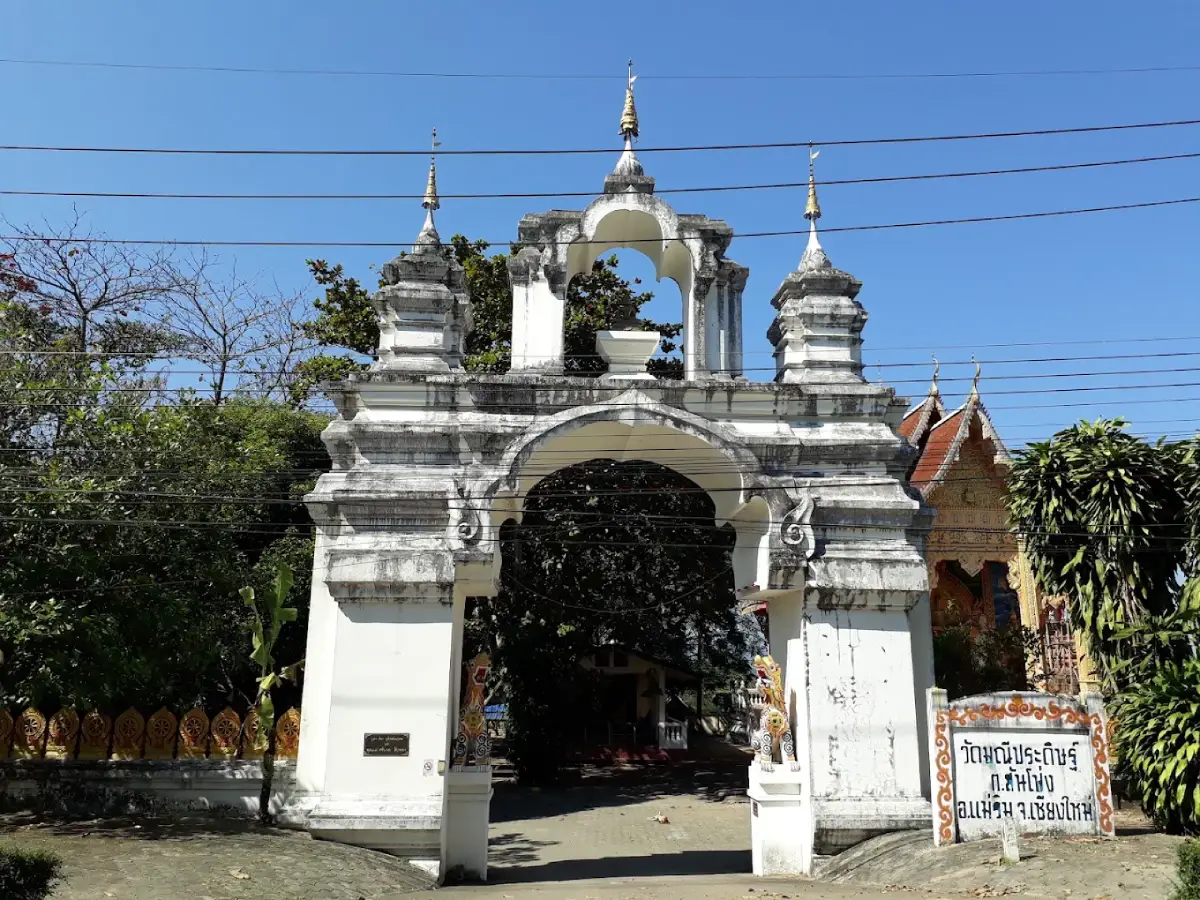
Operating day: Daily
Operating time: 08.00 - 17.00
Wat Mani Pradit, also known locally as Wat Rong Koet, is a Maha Nikaya Buddhist temple located at 25 Moo 7, Ban Rong Koet, San Pong Subdistrict, Mae Rim District, Chiang Mai Province 50180. The temple covers 2 rai, 1 ngan and 52 square wah, and was officially permitted as a Buddhist temple in 1941. Its former name was Wat San Saliam. The temple is historically significant because it was moved from its original riverside location along the Ping River after repeated flooding, showing the close relationship between the temple, the river landscape, and the community of Ban Rong Koet.
Wat Mani Pradit is not a large commercial tourist attraction. Its value lies in its role as a village temple created and preserved through local cooperation. The temple was relocated to its present site in 1941 by Kamnan Kham Manirat and local residents. In the first year after the relocation, monks from Wat Pho Nimit were invited to stay at the temple and serve as acting caretakers. This history makes Wat Mani Pradit an important example of how a community adapts to environmental challenges while preserving its spiritual center.
Ban Rong Koet, Moo 7 of San Pong Subdistrict, belongs to the lower Mae Rim cultural landscape. The area includes agricultural communities, village temples, local roads, and connections to the Chiang Mai–Fang route. San Pong has several community temples, including Wat Sa Chattan, Wat Si Chomphu, Wat San Pong, Wat Pho Nimit, Wat Kumpha Pradit, Wat Nantharam, Wat Phra That Chom Taeng, and Wat Mani Pradit. These temples show how Buddhist life is woven into the structure of local villages.
The former name Wat San Saliam preserves an older layer of local memory, while the present name Wat Mani Pradit has a more auspicious religious meaning. Mani means jewel or precious object, while Pradit means created, made, or established. The name therefore suggests a sacred place created with value and faith. The meaning also resonates with the role of Kamnan Kham Manirat and local people who helped establish the temple in its current location.
The year 1941 is the key historical marker for Wat Mani Pradit. It was the year the temple was officially permitted and the year the community moved the temple from the flood-prone riverbank to the present site. In a village context, relocating a temple is a major decision because a temple is a center of worship, ceremony, memory, and community identity. The relocation required local leadership, village cooperation, and monastic support from a nearby temple.
The current abbot named in contemporary temple activity information is Phra Khru Mani Wan Pradit. The abbot of a village temple plays an important role in maintaining monastic practice, temple buildings, merit-making events, lay support, and community religious life. Wat Mani Pradit remains an active temple rather than only a historical name in a temple registry.
The temple compound functions as a community Buddhist space. Important areas include the worship and ceremony area, temple courtyard, hall, monks’ residence, and spaces used for merit-making and community activities. Public information about detailed architectural features of the viharn, ubosot, chedi, or principal Buddha image is limited, so the temple is best understood through its relocation history, village role, and relationship with Ban Rong Koet.
The worship area is the heart of the temple. It is where monks and local residents chant, listen to sermons, offer donations, observe Buddhist holy days, and join ceremonies. Even when architectural descriptions are not widely published, the religious function of the space is central to the life of the temple. Visitors should enter respectfully, dress modestly, and avoid disturbing monks or local worshippers.
The temple courtyard is also socially important. In northern Thai community temples, the courtyard often becomes a gathering area during Kathin, robe-offering events, funerary merit-making, Buddhist holy days, and village occasions. At Wat Mani Pradit, this function helps connect older residents, families, children, and monks through shared religious and community activities.
The main highlight of Wat Mani Pradit is its history of relocation from the Ping River bank because of flooding. This gives the temple a clear local identity. The story shows how the community recognized the importance of preserving its temple while adapting to changing environmental conditions. The present temple is therefore a result of local resilience, religious faith, and collective action.
The atmosphere of Wat Mani Pradit is calm and local. It is suitable for travelers interested in community temples, village history, and less crowded cultural routes in Mae Rim. Visitors should not expect a major tourist complex. Instead, the temple offers a quieter view of living Buddhist practice in San Pong. It is especially meaningful when visited together with other temples in the same subdistrict.
Temple traditions at Wat Mani Pradit follow the Buddhist and Lanna community calendar. These include Buddhist holy day merit-making, Buddhist Lent, the end of Lent, Kathin, robe-offering events, funerary merit-making, and village merit-making occasions. Recent Kathin information records five monks in residence, showing that the temple continues to take part in contemporary Buddhist practice.
Kathin is one of the most important annual events for a community temple. It takes place after Buddhist Lent and allows lay supporters to offer robes and donations to monks. Robe-offering events can also be held on various occasions to support temple maintenance. For Wat Mani Pradit, merit-making for temple maintenance also continues the spirit of the villagers who helped move and establish the temple in 1941.
The role of Wat Mani Pradit in Ban Rong Koet can be understood in several layers. It is a Buddhist place for worship, sermons, merit-making, and ceremonies. It is a social space where villagers gather. It is a historical reminder of the community’s adaptation to flooding along the Ping River. It is also part of the Lanna relationship between monks, lay supporters, local leaders, and the village.
Wat Mani Pradit is suitable for travelers interested in old community temples, local history, and the temple network of San Pong. It can be visited together with Wat Pho Nimit, Wat Nantharam, Wat Kumpha Pradit, Wat Phra That Chom Taeng, Wat Pa Dara Phirom, Daraphirom Palace Museum, and attractions in lower Mae Rim. A half-day or full-day cultural route is recommended for travelers who want to understand the area beyond headline tourist sites.
Wat Phra That Chom Taeng is a good nearby destination to pair with Wat Mani Pradit because it is an important sacred site in San Pong. Wat Pho Nimit is also especially relevant because monks from that temple were invited to stay at Wat Mani Pradit in the first year after the relocation. Visiting these temples together helps travelers understand the relationship among San Pong’s village temples.
Getting There from Chiang Mai city is convenient by private car, rental car, or hired vehicle. Take Highway 107, the Chiang Mai–Fang Road, toward Mae Rim District, then continue into San Pong Subdistrict and Ban Rong Koet, Moo 7. Visitors using public transport should plan the local transfer from Mae Rim in advance because village temples are not always located on frequent public transport routes.
Wat Mani Pradit is open daily, but official opening hours are not specified in the public sources used for this article. Visitors should plan to visit during daytime, preferably in the morning or late afternoon. These times are suitable for worship, quiet walking, and continuing to other nearby temples or Mae Rim attractions.
Visitors should follow standard temple etiquette. Modest dress is required, shoulders and knees should be covered, shoes should be removed before entering sacred buildings, and loud behavior should be avoided. Photographs of monks, ceremonies, or local worshippers should not be taken at close range without permission. A community temple is a living religious space, so respect for local users of the temple is essential.
Overall, Wat Mani Pradit is a meaningful community temple of Ban Rong Koet and San Pong Subdistrict. Its value lies in its official temple history from 1941, its former name Wat San Saliam, its relocation from the Ping River because of flooding, the role of Kamnan Kham Manirat and local residents, and its connection with Wat Pho Nimit during the first year of the new temple site. For travelers who want a quieter and more locally grounded view of Mae Rim, Wat Mani Pradit is a worthwhile cultural stop.
| Name | Wat Mani Pradit, also known as Wat Rong Koet |
| Location | Moo 7, Ban Rong Koet, San Pong Subdistrict, Mae Rim District, Chiang Mai Province |
| Address | 25 Moo 7, Rong Koet, San Pong, Mae Rim, Chiang Mai 50180, Thailand |
| Temple Area | 2 Rai, 1 Ngan, 52 Square Wah |
| Highlights | Village temple of Ban Rong Koet with a relocation history from the Ping River because of flooding |
| History | Officially permitted as a Buddhist temple in 1941; formerly known as Wat San Saliam and moved to the current site in the same year |
| Name Meaning | Mani means jewel or precious object, while Pradit means created or established; Wat Rong Koet reflects the local village name |
| Distinctive Features | A Maha Nikaya community temple connected with Ban Rong Koet, local Buddhist ceremonies, and the temple network of San Pong |
| Important Structures And Areas | Worship and ceremony area, temple courtyard, hall, monks’ residence, and community merit-making spaces |
| Abbot / Caretaker | Phra Khru Mani Wan Pradit |
| Contact Number | 053-860-833, 089-951-8320 |
| Travel Information | From Chiang Mai city, take Highway 107 or the Chiang Mai–Fang Road toward Mae Rim, then continue into San Pong Subdistrict and Ban Rong Koet, Moo 7. Private car, rental car, or hired vehicle is recommended. |
| Current Status | Active community Buddhist temple for worship, merit-making, sermons, and Buddhist activities of Ban Rong Koet |
| Open Days | Daily |
| Opening Hours | Official hours not specified |
| Admission Fee | Official admission fee not specified |
| Related Traditions / Temple Events | Buddhist holy day merit-making, Buddhist Lent, the end of Lent, Kathin, robe-offering events, funerary merit-making, and Ban Rong Koet community merit-making occasions |
| Nearby Tourist Attractions | 1. Wat Pho Nimit, about 3 km 2. Wat Nantharam, about 4 km 3. Wat Kumpha Pradit, about 5 km 4. Wat Phra That Chom Taeng, about 6 km 5. Wat Pa Dara Phirom, about 8 km, Tel. 053-862-890 6. Daraphirom Palace Museum, about 8 km, Tel. 053-299-175 7. Tiger Kingdom Mae Rim, about 9 km, Tel. 061-268-2669 |
| Nearby Restaurants | 1. Tong O Mae Rim, about 4 km, Tel. 095-452-6949 2. Baan Suan Mae Rim, about 6 km, Tel. 053-297-421, 088-266-5549 3. Mala Mae Rim, about 6 km, Tel. 082-832-2406, 081-185-8902 4. Sala Cafe, about 12 km, Tel. 053-860-996, 086-914-0777 5. The Ironwood, about 15 km, Tel. 085-111-7777, 081-858-3555 |
| Nearby Accommodations | 1. Tung Tong Homestay & Camping, about 1 km 2. Mon Chang Nature Home, about 7 km, Tel. 094-287-4956 3. Mae Rim Grace, about 10 km, Tel. 066-095-7267 4. Four Seasons Resort Chiang Mai, about 11 km, Tel. 053-298-181 5. Raya Heritage, about 16 km, Tel. 053-111-670 to 73 |
Frequently Asked Questions (FAQ)
Q: Where is Wat Mani Pradit located?
A: Wat Mani Pradit is located at 25 Moo 7, Ban Rong Koet, San Pong Subdistrict, Mae Rim District, Chiang Mai Province 50180, Thailand.
Q: What was the former name of Wat Mani Pradit?
A: The former name was Wat San Saliam, while the temple is also known locally as Wat Rong Koet.
Q: Why is Wat Mani Pradit historically important?
A: Wat Mani Pradit was officially permitted as a Buddhist temple in 1941. It was moved from the Ping River bank because of flooding and re-established at its current site through the support of Kamnan Kham Manirat and local residents.
Q: How is Wat Mani Pradit connected with Wat Pho Nimit?
A: In the first year after the temple moved to its current site, monks from Wat Pho Nimit were invited to stay at Wat Mani Pradit and serve as acting caretakers.
Q: Who is the abbot of Wat Mani Pradit?
A: The abbot named in contemporary temple activity information is Phra Khru Mani Wan Pradit.
Q: What are the opening days and hours of Wat Mani Pradit?
A: Wat Mani Pradit is open daily, but official opening hours are not specified.
Q: What nearby places can be visited with Wat Mani Pradit?
A: Nearby places include Wat Pho Nimit, Wat Nantharam, Wat Kumpha Pradit, Wat Phra That Chom Taeng, Wat Pa Dara Phirom, Daraphirom Palace Museum, and Tiger Kingdom Mae Rim.
 Category: ●Places of Worship
 Group: ●Temple
Last Update : 1 MonthAgo
 Last Update : 1 MonthAgo
 Click to Access the Navigation Map GPS

 Muang Chiang Mai(121)Chom Thong(47)Mae Chaem(25)Chiang Dao(33)Doi Saket(68)Mae Taeng(85)Mae Rim(69)Samoeng(29)Fang(71)Mae Ai(59)Phrao(70)San Pa Tong(103)San Kamphaeng(66)San Sai(73)Hang Dong(73)Hot(32)Doi Tao(22)Omkoi(11)Saraphi(74)Wiang Haeng(15)Chai Prakan(28)Mae Wang(32)Mae On(22)Doi Lo(33)Galyani Vadhana(1)


