
lovethailand home >North Travel Attractions >Chiang Mai Travel Attractions >Mae Rim >Mae Raem > Wat Mae Raem
TL;DR: Wat Mae Raem is located at Moo 6, Mae Raem Subdistrict, Mae Rim District, Chiang Mai Province 50180. Highlights include Historic community temple in Mae Raem with a documented early history of land clearing, pavilion construction, monks’ residence, and viharn.

Wat Mae Raem
Operating day: Daily
Operating time: 08.00 - 17.00
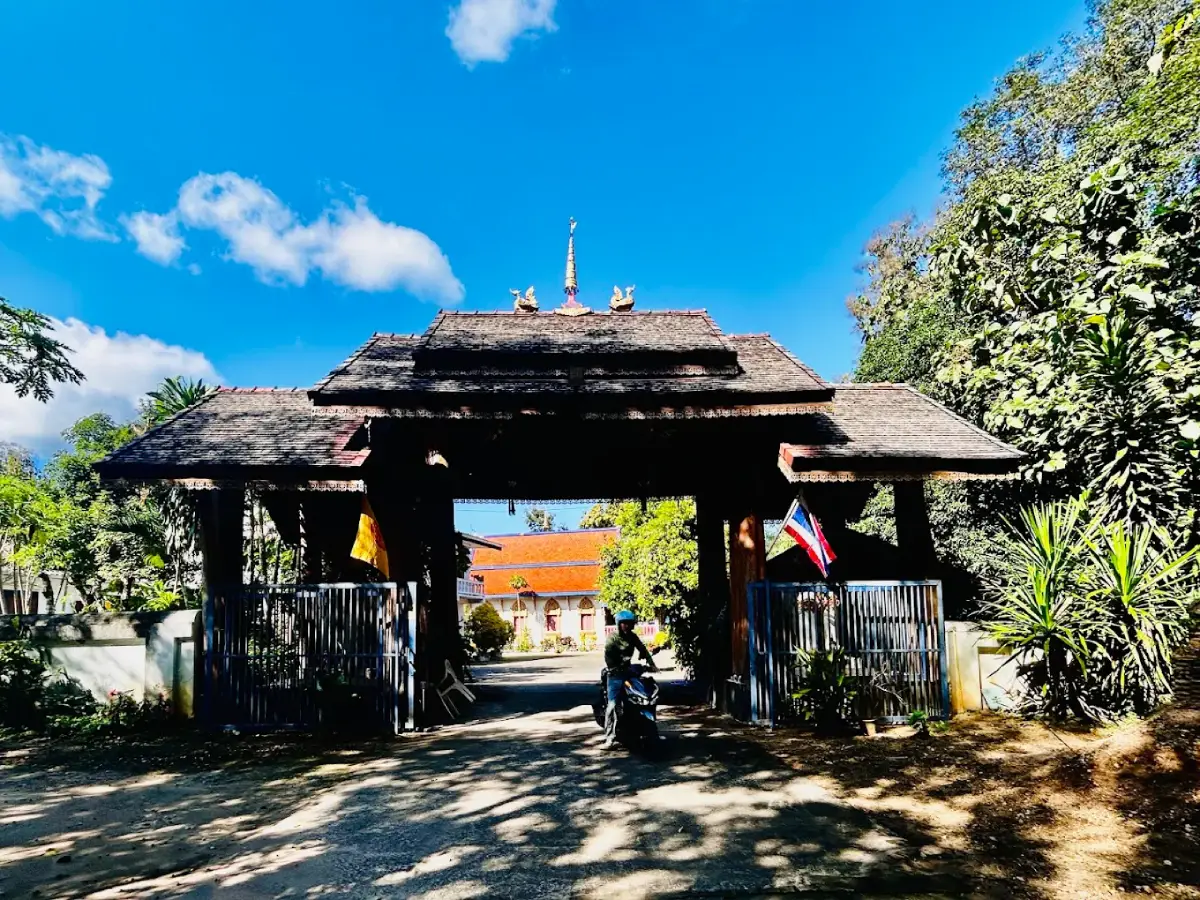
Wat Mae Raem is located at 133/9 Moo 6, Mae Raem Subdistrict, Mae Rim District, Chiang Mai Province. It is a local Buddhist temple with deep community roots, shaped by the faith of monks, temple committee members, and villagers in Mae Raem. Rather than being a large tourist temple, Wat Mae Raem is best understood as a quiet community temple that preserves the memory of how village temples in northern Thailand were built through shared labor, local materials, and collective devotion.
Wat Mae Raem is especially meaningful for travelers who want to understand local Lanna culture beyond the well-known temple circuit of Chiang Mai city. The temple’s history begins with land clearing, the construction of a simple pavilion, monks’ quarters, and later a viharn, or Buddhist assembly hall. These early stages show how a small rural community gradually developed a religious center that became part of everyday life in Mae Raem.
The temple occupies 13 rai and 5 square wah of land and is associated with land title deed number 29390, volume 284, page 90. Its early history records that the site was cleared on Wednesday, March 6, 1882. At that time, Mae Raem was a rural community closely connected with farming, forests, mountain routes, streams, and traditional village life in Mae Rim. The first structure was a simple pavilion roofed with banana leaves, a detail that reflects the modest beginnings of the temple and the use of local materials in the early period.
In its first phase, Wat Mae Raem did not begin with large permanent buildings. It began with a small pavilion that served as a place for religious gatherings, community merit-making, and Buddhist activities. A monks’ residence was later built for resident monks. Phra Mueangchai Khantiko played an important role in this early development. He stayed at the site for 11 Buddhist Lent seasons and helped connect monastic leadership with the faith of local villagers.
A key part of Wat Mae Raem’s history is the participation of around 20 village households. In the context of a rural Lanna community, this number represents a meaningful collective effort. The villagers worked together with the monk and temple committee to build a viharn, transforming the site from a simple religious shelter into a more established temple space. This makes Wat Mae Raem a strong example of a village temple built from local devotion rather than royal patronage or large-scale sponsorship.
The foundation ceremony for the viharn was recorded during April 1–7, 1891. The date was also described using the northern Thai lunar calendar, including the seventh northern month and the Year of the Snake. This detail is culturally important because it shows how the community understood time through both Buddhist and Lanna systems. In northern Thailand, lunar dates, zodiac years, and ritual calendars remain closely connected with temple ceremonies and community memory.
Wat Mae Raem was officially granted temple status in 1882. Over time, it grew from a village religious site into a community temple serving Mae Raem residents. Its importance lies not only in buildings, but also in continuity: monks residing at the temple, villagers supporting temple activities, and the temple functioning as a spiritual center for merit-making, Buddhist observances, Kathin ceremonies, robe-offering events, and other religious activities held according to the Buddhist calendar.
Geographically, Wat Mae Raem is located in Mae Raem Subdistrict, Mae Rim District, Chiang Mai Province. This area links the communities of Mae Rim with nature and cultural routes north of Chiang Mai city. Mae Raem is known for local villages, temples, botanical gardens, waterfalls, natural attractions, and routes leading toward Pong Yaeng and Mon Jam. This makes Wat Mae Raem a suitable cultural stop for travelers exploring the Mae Rim and Mae Raem area.
The atmosphere of Wat Mae Raem is calm and local. It is suitable for travelers who prefer community temples rather than crowded landmark attractions. Visitors can make merit, pay respect to the Buddha, and learn about the temple’s historical connection with Mae Raem village. Its appeal lies in its simplicity and the clear story of how faith, local leadership, and village cooperation shaped a Buddhist temple over time.
Important areas mentioned in the temple’s history include the original pavilion, monks’ residence, and viharn. Detailed public information about an ordination hall, chedi, relic shrine, principal Buddha image, or other major structures is not available in confirmed form, so the temple is best presented through its documented early development and its role as a community religious center. For cultural travelers, this makes Wat Mae Raem valuable as a living village temple rather than a heavily commercialized tourist site.
From a local history perspective, Wat Mae Raem is a useful example of how temples emerged in rural northern Thai communities. A banana-leaf-roofed pavilion, a resident monk, 20 supporting households, and the gradual construction of a viharn together tell a story of practical faith. The temple was not built all at once. It grew step by step through the needs, beliefs, and cooperation of the people who lived around it.
Wat Mae Raem is closely tied to the identity of Mae Raem village. In Lanna society, a temple is not only a place of worship. It is also a place where villagers meet, learn, organize ceremonies, preserve customs, and maintain relationships between generations. Temple events bring people back together through food preparation, offerings, chanting, listening to sermons, and shared work. In this sense, Wat Mae Raem remains part of the social fabric of the community.
For visitors, Wat Mae Raem works well as part of a slow cultural route through Mae Rim. It can be combined with nearby attractions such as Siam Insect Zoo, Mae Sa Waterfall, Queen Sirikit Botanic Garden, Pongyang Jungle Coaster & Zipline, and Mon Jam. This route gives travelers a balanced experience of Buddhist heritage, local community life, nature, mountain scenery, and family-friendly attractions in northern Chiang Mai.
Visitors should dress respectfully, keep their voices low, and avoid disturbing monks or local worshippers. Since Wat Mae Raem is a working community temple, it is important to treat the grounds with courtesy. Photography should be done with care, especially during religious activities. For those visiting as part of a cultural itinerary, the temple offers a quiet opportunity to understand the living relationship between Buddhism and village life in Mae Rim.
Getting There is convenient from Chiang Mai city by traveling north toward Mae Rim District, then continuing into Mae Raem Subdistrict. The temple is located in Moo 6 of Mae Raem and is best reached by private car, rental car, or local transport. Travelers planning a half-day or full-day trip can begin with Wat Mae Raem, then continue to nearby nature attractions, cafés, restaurants, and accommodation areas around Mae Rim, Mae Raem, Pong Yaeng, and Mon Jam.
The temple’s strongest feature is its detailed local history. The 13 rai and 5 square wah temple land, the early clearing of the site in 1882, the first banana-leaf-roofed pavilion, the monks’ residence, Phra Mueangchai Khantiko’s 11 Lent seasons, the 20 village households, and the viharn foundation ceremony in 1891 all make Wat Mae Raem more than a simple stop on the map. It is a cultural record of how a northern Thai community built and preserved its spiritual center.
Today, Wat Mae Raem remains listed as a religious place in Mae Raem Subdistrict, Mae Rim District, Chiang Mai Province. Travelers who wish to make merit, visit respectfully, or ask about temple activities should contact the temple in advance, especially when traveling as a group or planning to attend a specific merit-making event.
In summary, Wat Mae Raem is a historic community temple in Mae Rim District. It is suited to travelers interested in local Buddhist culture, Lanna community history, and quiet temple visits. Its value does not come from grand scale or heavy tourism. It comes from its role as a temple shaped by the people of Mae Raem, preserving the connection between monks, villagers, faith, and northern Thai ways of life.
| Name | Wat Mae Raem |
| Location | Moo 6, Mae Raem Subdistrict, Mae Rim District, Chiang Mai Province 50180 |
| Address | 133/9 Moo 6, Mae Raem Subdistrict, Mae Rim District, Chiang Mai Province 50180, Thailand |
| Coordinates | 18.95656, 98.86392 |
| Highlights | Historic community temple in Mae Raem with a documented early history of land clearing, pavilion construction, monks’ residence, and viharn development through local faith |
| History | The site was cleared and officially granted temple status in 1882. The viharn foundation ceremony was recorded during April 1–7, 1891. |
| Distinctive Features | A local Lanna community temple shaped by monks, temple committee members, and the faith of villagers in Mae Raem |
| Temple Area | 13 rai and 5 square wah; land title deed number 29390, volume 284, page 90 |
| Main Areas / Zones | Pavilion, monks’ residence, viharn, merit-making area, and community Buddhist activity space |
| Abbot | Phra Khru Boontham Dhammathoto |
| Main Contact Number | 053-860-594 |
| Travel Information | Travel from Chiang Mai city toward Mae Rim District, then continue into Mae Raem Subdistrict. Private car, rental car, or local transport is recommended. |
| Current Status | Listed as a religious place in Mae Raem Subdistrict, Mae Rim District, Chiang Mai Province |
| Nearby Tourist Attractions | 1. Siam Insect Zoo, about 7 km 2. Mae Sa Waterfall, about 8 km 3. Queen Sirikit Botanic Garden, about 11 km 4. Pongyang Jungle Coaster & Zipline, about 14 km 5. Mon Jam, about 17 km |
| Nearby Restaurants | 1. 108-1009 Fusion Food Street Food Kitchen, about 7 km, Tel. 099-336-8414 2. Per La Mer Cafe, about 8 km, Tel. 064-269-9795 3. Huen Lung Suea, about 8 km 4. Baan Landai Fine Thai Cuisine Mae Rim, about 10 km, Tel. 064-469-2929 5. Akha Ama Living Factory, about 10 km |
| Nearby Accommodations | 1. U Maerim Chiangmai, about 6 km, Tel. 085-736-7398 2. Monnuea Homestay, about 13 km 3. Phu Fah Sai Homestay Mon Jam, about 17 km, Tel. 091-857-4739 4. Rai Meena Mon Jam Chiang Mai, about 18 km, Tel. 089-261-4555 5. Mae Rim Villa & Pool, about 11 km, Tel. 089-433-9534, 053-465-564 |
Frequently Asked Questions (FAQ)
Q: Where is Wat Mae Raem located?
A: Wat Mae Raem is located at 133/9 Moo 6, Mae Raem Subdistrict, Mae Rim District, Chiang Mai Province 50180, Thailand.
Q: Why is Wat Mae Raem important?
A: Wat Mae Raem is a historic community temple built through the faith and cooperation of monks, temple committee members, and villagers in Mae Raem.
Q: When was Wat Mae Raem established?
A: The temple’s history records that the site was cleared and officially granted temple status in 1882.
Q: What is interesting about Wat Mae Raem?
A: Its key interest is its community-based history, including the first banana-leaf-roofed pavilion, monks’ residence, viharn construction, and its role in Mae Raem village life.
Q: Who should visit Wat Mae Raem?
A: Wat Mae Raem is suitable for travelers interested in local temples, Lanna culture, community history, and quiet Buddhist heritage sites.
Q: How can travelers get to Wat Mae Raem?
A: Travelers can go from Chiang Mai city toward Mae Rim District, then continue into Mae Raem Subdistrict by private car, rental car, or local transport.
Q: What nearby attractions can be visited with Wat Mae Raem?
A: Nearby attractions include Siam Insect Zoo, Mae Sa Waterfall, Queen Sirikit Botanic Garden, Pongyang Jungle Coaster & Zipline, and Mon Jam.
 Category: ●Places of Worship
 Group: ●Temple
Last Update : 1 MonthAgo
 Last Update : 1 MonthAgo
 Click to Access the Navigation Map GPS

 Muang Chiang Mai(121)Chom Thong(47)Mae Chaem(25)Chiang Dao(33)Doi Saket(68)Mae Taeng(85)Mae Rim(69)Samoeng(29)Fang(71)Mae Ai(59)Phrao(70)San Pa Tong(103)San Kamphaeng(66)San Sai(73)Hang Dong(73)Hot(32)Doi Tao(22)Omkoi(11)Saraphi(74)Wiang Haeng(15)Chai Prakan(28)Mae Wang(32)Mae On(22)Doi Lo(33)Galyani Vadhana(1)


