
lovethailand home >North Travel Attractions >Chiang Mai Travel Attractions >Mae Taeng >Ban Pao > Wat Ban Phae
TL;DR: Wat Ban Phae is located at Moo 5, Ban Phae, Ban Pao Subdistrict, Mae Taeng District, Chiang Mai Province.

Wat Ban Phae
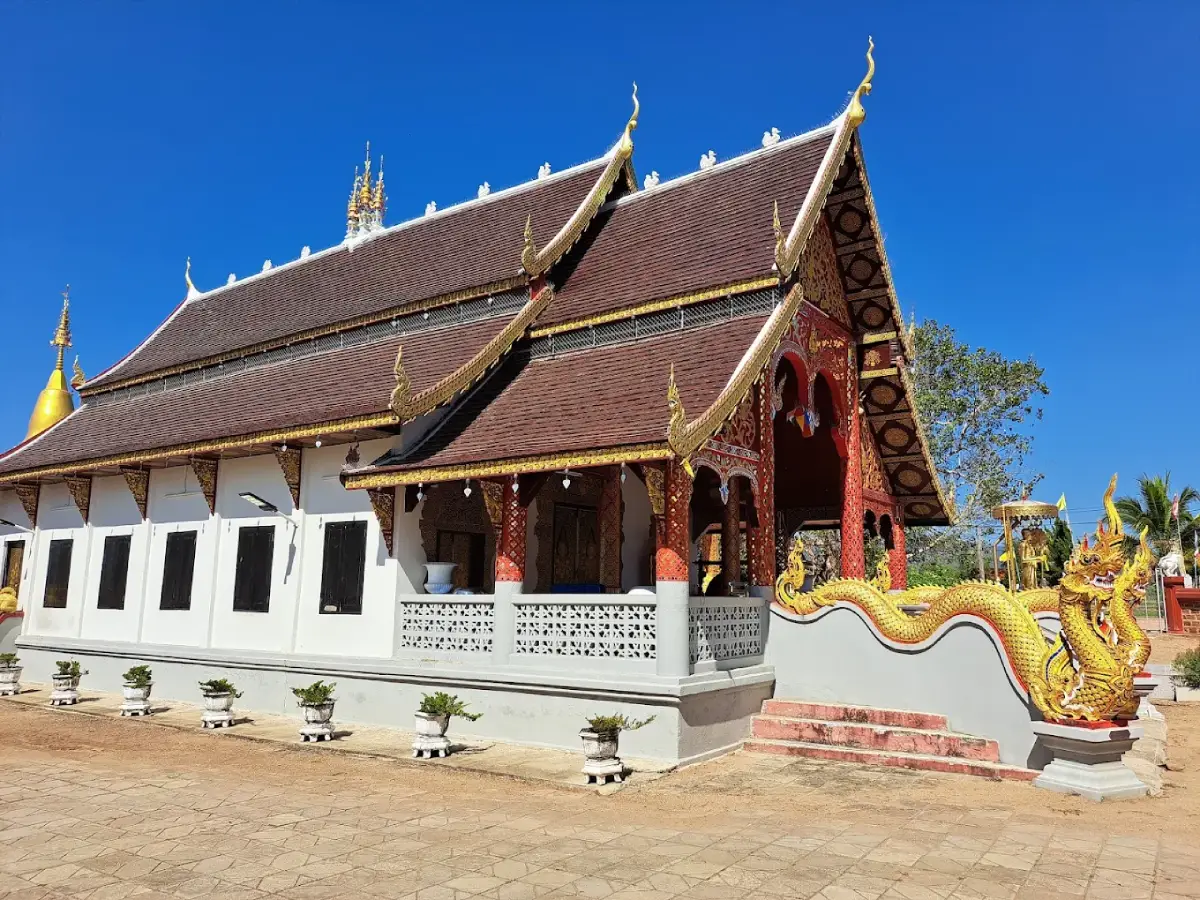
Operating day: Daily
Operating time: 08.00 - 17.00
Wat Ban Phae is a local Buddhist temple at No. 51, Moo 5, Ban Phae, Ban Pao Subdistrict, Mae Taeng District, Chiang Mai Province. It is a community temple under the Mahanikaya order and one of the old village temples in the Ban Pao area. The temple was officially established in 1469, making it a historically significant religious site connected with the long Buddhist roots of Ban Phae, Ban Pao, and Mae Taeng District.
Wat Ban Phae is suitable for travelers who want to make merit, pay respect, and experience a quiet Lanna community temple. It is not a large commercial tourist attraction. Its value lies in its age, its relationship with the village, and its role as a living temple where local residents continue to gather for Buddhist ceremonies, merit-making, Kathin, and village activities.
Ban Phae is part of Ban Pao Subdistrict, an area with historical importance in Mae Taeng District. Ban Pao is connected with the old Ban Pao-Mueang Kaen administrative landscape, the Ping River, agricultural communities, and early settlement routes in northern Chiang Mai. Wat Ban Phae therefore belongs to a wider cultural and religious landscape. It is not merely a village temple, but part of the long-standing temple network that has shaped Buddhist life in Ban Pao.
The temple’s establishment in 1469 shows that Wat Ban Phae has been part of the local religious landscape for centuries. In Lanna society, temples were built by communities as places for worship, Dhamma learning, ordination, merit-making, funerals, and annual ceremonies. Wat Ban Phae therefore preserves part of the religious and social history of the Ban Phae community.
Historical temple information records that Wat Ban Phae has temple land covering 5 rai, 1 ngan, and 37 square wah. Its boundaries are described as adjoining rice fields on all four sides. This detail reflects the agricultural setting of the temple and shows how closely the temple is tied to the village landscape. The temple grew within the same environment where local people lived, farmed, and practiced Buddhism.
The confirmed important structures at Wat Ban Phae include a viharn, monks’ residences, and two alms pavilions. The viharn is the main worship and ceremony space for laypeople. The monks’ residences support monastic life. The alms pavilions connect the temple with merit-making, food offerings, and community Buddhist activities. These structures show that Wat Ban Phae continues to function as a working village temple.
The important sacred objects at Wat Ban Phae include a brick-and-plaster Buddha image in meditation posture and a square chedi. The meditation Buddha image represents calmness and concentration, while the chedi adds historical and sacred meaning to the temple grounds. Visitors should approach these sacred objects respectfully and spend time quietly observing the temple’s atmosphere.
Wat Ban Phae was also known in earlier records as Wat Si Don Chang. This older name preserves a layer of local memory and shows how temple names can shift across time. In northern Thailand, temple names are often tied to villages, fields, groves, waterways, or local terrain. Such names reflect the close relationship between temples and community identity.
Historical records list several former abbots and caretakers, including Khru Ba Kham Ban, Khru Ba Thit, Khru Ba Bim, Khru Ba Suttha, Khru Ba Kham Pan, Phra Khiao Thanuttaro, Luang Pu Kham Mun, and Phra Somchai Boonruang. This continuity of monastic leadership reflects the long-term care that has allowed Wat Ban Phae to remain part of the Ban Phae community over many generations.
Recent Kathin records list the current abbot of Wat Ban Phae as Phra Maha Thiwakon Khattiyasiri and record 5 resident monks. This confirms that the temple remains an active Buddhist site with monks in residence and ongoing religious activities. Wat Ban Phae is therefore not an abandoned temple or a site known only through old records.
Wat Ban Phae serves as a spiritual center for the local community. Villagers use the temple for Buddhist holy days, major Buddhist festivals, family ceremonies, ordination-related activities, funerals, memorial merit-making, and village events. The temple is both a sacred space and a social center where people gather at important moments in life.
Religious activities at Wat Ban Phae follow the Buddhist calendar and Lanna village traditions. These include Buddhist holy days, Makha Bucha, Visakha Bucha, Asalha Bucha, Buddhist Lent, the end of Buddhist Lent, forest robe offerings, and Kathin offerings after Buddhist Lent. A 2025 Kathin listing recorded Wat Ban Phae with a Kathin ceremony on October 12, 2025, at 13.00. Kathin helps support monks, maintain temple buildings, and renew the relationship between the temple and the community.
Wat Ban Phae is part of a wider network of temples in Ban Pao Subdistrict. Nearby temples include Wat Doi, Wat Thung Lom, Wat Ban Pao, Wat Pa Tueng Ngam, Wat Sop Loem, and Wat Mae Loem. This network shows how each village in northern Thai communities traditionally had its own temple as a center of religious and social life.
The atmosphere of Wat Ban Phae is quiet and local. Its appeal does not come from heavy tourism, but from authenticity and continuity. A visit to the temple helps travelers understand Mae Taeng beyond major attractions by seeing the religious foundation of a real village community.
Ban Pao Subdistrict also has a notable natural setting. Some areas are mountainous, and several streams flow toward Mae Ngat Somboon Chon Reservoir. Wat Ban Phae can therefore be connected with cultural and nature-based travel routes in Mae Taeng, including Ban Pao Forest Park, Wat Doi, Wat Thung Lom, Wat Den Sali Sri Mueang Kaen, and Mae Ngat Somboon Chon Dam.
Getting to Wat Ban Phae is easiest by private car or rental car. From Chiang Mai city, take Chotana Road or Highway 107 toward Mae Taeng District, then continue into Ban Pao Subdistrict and Ban Phae using local roads. The route can be combined with nearby temples, local restaurants, and nature attractions in Mae Taeng.
A practical itinerary is to begin at Wat Ban Phae for a quiet temple visit and merit-making, then continue to Wat Doi or Wat Thung Lom to understand the old temple network of Ban Pao. Travelers can then visit Ban Pao Forest Park for nature or continue to Wat Den Sali Sri Mueang Kaen and Mae Ngat Somboon Chon Dam. This route combines history, village culture, temples, local food, and nature in one trip.
Wat Ban Phae is best suited to travelers who are interested in old temples, local Buddhist culture, village history, and less crowded cultural routes. It may not be one of Chiang Mai’s most famous tourist temples, but it has strong local importance. Its establishment year, temple land, viharn, monks’ residences, sacred Buddha image, square chedi, and continuing monastic presence make it meaningful within the religious geography of Mae Taeng.
Visitors should dress modestly, speak quietly, avoid disturbing monks’ residential areas, and respect any ongoing religious activity. If a ceremony or merit-making event is taking place, follow the guidance of monks or local residents. Proper etiquette helps preserve the calm atmosphere of Wat Ban Phae and shows respect for the community that continues to use the temple.
Overall, Wat Ban Phae is an old and meaningful community temple in Ban Pao Subdistrict, Mae Taeng District. With its establishment in 1469, its status as a Mahanikaya local temple, its sacred Buddha image and chedi, and its continuing role as a spiritual center for Ban Phae, the temple is a valuable cultural stop for travelers who want to understand the deeper Buddhist roots of Mae Taeng.
| Name | Wat Ban Phae |
| Location | Moo 5, Ban Phae, Ban Pao Subdistrict, Mae Taeng District, Chiang Mai Province |
| Address | 51 Moo 5, Ban Pao Subdistrict, Mae Taeng District, Chiang Mai 50150, Thailand |
| Temple Type | Community Buddhist Temple Under The Mahanikaya Order |
| Highlights | Old community temple of Ban Pao, established in 1469, with a viharn, monks’ residences, alms pavilions, a meditation Buddha image, and a square chedi |
| History | Officially established as a temple in 1469 and long connected with Ban Phae community life |
| Temple Land | Temple land covers 5 rai, 1 ngan, and 37 square wah, with boundaries adjoining rice fields on all four sides |
| Main Structures | Viharn, Monks’ Residences, And Two Alms Pavilions |
| Sacred Objects | Brick-And-Plaster Buddha Image In Meditation Posture And Square Chedi |
| Distinctive Features | Old village temple connected with Ban Phae, Ban Pao, and the local temple network of Mae Taeng District |
| Abbot / Caretaker | Phra Maha Thiwakon Khattiyasiri |
| Contact Number | 053-843-444 |
| Related Traditions | Buddhist holy day merit-making, Buddhist festivals, forest robe offerings, and Kathin offerings after Buddhist Lent |
| Travel Information | From Chiang Mai city, take Chotana Road or Highway 107 toward Mae Taeng, then continue into Ban Pao Subdistrict and Ban Phae. Private car or rental car is the most convenient option. |
| Current Status | Active community Buddhist temple listed in Mae Taeng temple records |
| Open Days | Daily |
| Opening Hours | 08.00 - 17.00 |
| Nearby Tourist Attractions | 1. Wat Doi, about 3 km 2. Wat Thung Lom, about 7 km 3. Ban Pao Forest Park, about 5 km 4. Wat Den Sali Sri Mueang Kaen, about 17 km 5. Mae Ngat Somboon Chon Dam, about 18 km |
| Nearby Restaurants | 1. Pang Pao Beach, about 8 km, Tel. 080-168-5366 2. Baan Mae Taeng Restaurant, about 12 km, Tel. 083-146-6453, 095-496-3235 3. Sawana Chiang Mai, about 14 km 4. Rabiang Natee, about 16 km 5. Mae Ngat Somboon Chon Dam Restaurant Zone, about 18 km |
| Nearby Accommodations | 1. BaanBonDoi Mae Taeng Chiang Mai, about 2 km 2. Khum AuanG Nuea Resort, about 3 km, Tel. 062-865-9219 3. Royal Ping Garden & Resort, about 7 km, Tel. 081-980-2525 4. Naoat Resort, about 6 km 5. Mountain Float Chiang Mai, about 20 km |
Frequently Asked Questions (FAQ)
Q: Where is Wat Ban Phae located?
A: Wat Ban Phae is located at 51 Moo 5, Ban Pao Subdistrict, Mae Taeng District, Chiang Mai Province.
Q: What type of temple is Wat Ban Phae?
A: Wat Ban Phae is a community Buddhist temple under the Mahanikaya order.
Q: Why is Wat Ban Phae historically important?
A: Wat Ban Phae was officially established in 1469, making it an old community temple of Ban Pao Subdistrict in Mae Taeng District.
Q: What can visitors see inside Wat Ban Phae?
A: Visitors can see the viharn, monks’ residences, two alms pavilions, a brick-and-plaster Buddha image in meditation posture, and a square chedi.
Q: Who is the current abbot of Wat Ban Phae?
A: Recent Kathin records list Phra Maha Thiwakon Khattiyasiri as the abbot of Wat Ban Phae.
Q: What kind of travelers is Wat Ban Phae suitable for?
A: It is suitable for travelers interested in old temples, local Buddhist culture, village history, and quiet community temple visits.
Q: What nearby places can be visited with Wat Ban Phae?
A: Nearby places include Wat Doi, Wat Thung Lom, Ban Pao Forest Park, Wat Den Sali Sri Mueang Kaen, and Mae Ngat Somboon Chon Dam.
Q: How do travelers get to Wat Ban Phae from Chiang Mai city?
A: Take Chotana Road or Highway 107 toward Mae Taeng, then continue into Ban Pao Subdistrict and Ban Phae. Private car or rental car is the most convenient option.
 Category: ●Places of Worship
 Group: ●Temple
Last Update : 1 MonthAgo
 Last Update : 1 MonthAgo
 Click to Access the Navigation Map GPS

 Muang Chiang Mai(121)Chom Thong(47)Mae Chaem(25)Chiang Dao(33)Doi Saket(68)Mae Taeng(85)Mae Rim(69)Samoeng(29)Fang(71)Mae Ai(59)Phrao(70)San Pa Tong(103)San Kamphaeng(66)San Sai(73)Hang Dong(73)Hot(32)Doi Tao(22)Omkoi(11)Saraphi(74)Wiang Haeng(15)Chai Prakan(28)Mae Wang(32)Mae On(22)Doi Lo(33)Galyani Vadhana(1)


