
lovethailand home >North Travel Attractions >Chiang Mai Travel Attractions >Doi Lo >Yang Khram > Wat Yang Kram
TL;DR: Wat Yang Kram is located at Ban Yang Kram, Moo 3, Yang Kram Subdistrict, Doi Lo District, Chiang Mai 50160, Thailand, open Daily, hours 08:00 - 17:00.

Wat Yang Kram
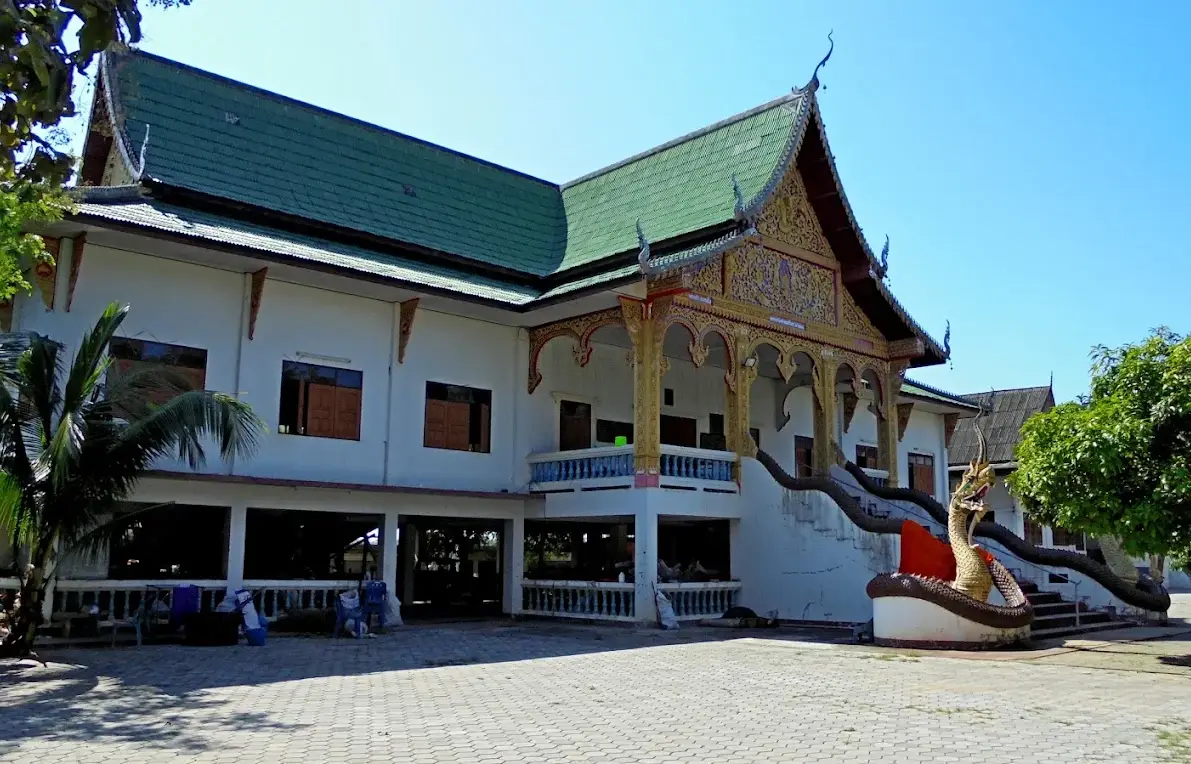
Open Days: Daily
Opening Hours: 08:00 - 17:00
Wat Yang Kram is a community Buddhist temple of the Maha Nikaya order located in Ban Yang Kram, Moo 3, Yang Kram Subdistrict, Doi Lo District, Chiang Mai Province 50160, Thailand. Its official temple code is 350240305. The temple was formally established on 30 September 2002 and has since developed into an important Buddhist center for the surrounding community, supporting merit-making, religious ceremonies, and Buddhist education for local students.
Wat Yang Kram stands in an agricultural part of southern Chiang Mai where villages, farmland, schools, local roads, and Buddhist temples remain closely connected. Unlike a major urban temple developed primarily around tourism, Wat Yang Kram continues to function first and foremost as a religious institution serving local residents.
The temple is located at approximately 18.545100, 98.834876 in Ban Yang Kram. The surrounding subdistrict includes communities such as Don Chai, Huai Nam Khao, Si Daen Mueang, Mai Phatthana, and several other settlements connected by local roads and the wider Chiang Mai-Hot transport corridor.
30 September 2002 is the most important documented date in the modern history of Wat Yang Kram because it marks the temple's official establishment. Its creation gave Ban Yang Kram a formally recognized Buddhist monastery within the Thai Sangha system and established the religious center that continues to serve the area today.
Wat Yang Kram has therefore held official temple status for more than two decades. Its development coincided with an important period in the administrative history of Doi Lo. The district itself was developing from a minor district into the full Doi Lo District that exists today, which was formally established as a full district in 2007.
The temple's value is not based primarily on age. Its importance comes from its role as an active community monastery. Local residents can make merit, attend Buddhist ceremonies, offer food to monks, participate in holy-day observances, and use the temple as a spiritual center close to home.
Phra Khru Wiphat Bunsan (Jeeradej) is the abbot associated with Wat Yang Kram in contemporary ecclesiastical records. The continuing presence of monastic leadership allows the temple to maintain religious activities, administration, and its relationship with the wider Sangha network of Doi Lo.
Wat Yang Kram belongs to the Yang Kram Sangha administrative area together with Wat Mai Phatthana, Wat Nong Lua, Wat Si Sai Mun, Wat Chetawan, Wat Si Daen Mueang, Wat Don Chai, and Wat Ban Tham. These temples form a local religious network serving different villages across the subdistrict.
This distribution of community monasteries reflects a traditional northern Thai settlement pattern. Individual villages often maintain their own temples so that residents can participate in Buddhist life without traveling long distances. Wat Yang Kram serves this function for the Ban Yang Kram community.
The temple also has a continuing role in Buddhist education. In 2025, students from Ban Huai Nam Khao School appeared in national Dhamma-study examination records under Wat Yang Kram at several levels. This demonstrates that the temple's relationship with the younger generation extends beyond festival participation.
Dhamma studies provide Buddhist education for lay students and include Buddhist teachings, history, ceremonies, and moral principles. By supporting students within this system, Wat Yang Kram continues one of the long-standing educational roles traditionally associated with monasteries in northern Thailand.
This educational connection is significant because it links the monastery with schools and families beyond the immediate village. Students from Huai Nam Khao can be affiliated with Wat Yang Kram for Buddhist studies even though they live in another nearby community, illustrating how temple networks function across village boundaries.
Wat Yang Kram is a relatively modern temple compared with some historic monasteries elsewhere in Doi Lo. Visitors should therefore appreciate it primarily as a living community monastery rather than expect a complex dominated by centuries-old monuments.
A visit can begin with paying respect to the Buddha in the religious area open to worship on the day. Visitors can then walk quietly through the temple grounds and observe how the monastery fits into the surrounding village landscape.
The surrounding environment is an important part of the experience. Agricultural land, homes, schools, small roads, and nearby monasteries form a cultural landscape in which Buddhism remains closely connected with everyday community life.
The name “Yang Kram” is shared by the village, subdistrict, and temple, reinforcing the close relationship between the monastery and its locality. No reliable surviving account clearly explains a single historical event behind the place name, so it is best understood as the inherited geographic identity of the community.
Wat Yang Kram is also significant as an example of the continued establishment of Buddhist temples in modern Thailand. Buddhist religious institutions did not stop developing with historic Lanna monasteries. New temples continue to be created as communities grow and require accessible centers for worship and religious education.
Formal recognition as a temple gave Wat Yang Kram a clear institutional place within the Thai Sangha system. The date of 30 September 2002 therefore marks more than the naming of a location; it represents the legal and ecclesiastical establishment of the monastery.
Buddhist community life revolves around regular holy days and major festivals including Makha Bucha, Visakha Bucha, Asalha Bucha, Buddhist Lent, the end of Lent, Kathin, and forest-robe offerings. These activities help maintain relationships among monks, families, and local supporters.
Kathin is particularly important after Buddhist Lent. The exact ceremony date changes every year, so visitors wishing to participate should check local announcements for the current season rather than rely on dates from previous years.
Forest-robe offerings and other merit-making activities also help support the maintenance and religious work of community monasteries. Such events demonstrate the traditional principle that a monastery is sustained through cooperation between the Sangha and lay Buddhist supporters.
On ordinary days, Wat Yang Kram provides a quieter atmosphere suitable for worship and reflection. Morning visits are especially practical because temperatures are cooler and travelers can continue to several nearby cultural sites later in the day.
Visitors should dress modestly, covering shoulders and knees when entering religious buildings, remove shoes where required, speak quietly, and avoid entering monks' residential areas without permission.
Photography of the general temple grounds is usually straightforward, but visitors should ask permission before photographing monks, private ceremonies, funerals, or local residents during religious activities.
General visiting hours are daily from 08:00 to 17:00. No official admission charge is published. Visitors may make voluntary merit donations according to the arrangements available at the temple.
Getting There from central Chiang Mai is straightforward by private car. Follow Highway 108 south through Hang Dong and San Pa Tong into Doi Lo District, then continue toward Yang Kram Subdistrict and Ban Yang Kram, Moo 3.
When using navigation, search for “Wat Yang Kram, Doi Lo, Chiang Mai” or use the approximate coordinates 18.545100, 98.834876. Private transportation is the most convenient option for combining the temple with several nearby stops in one day.
The first useful nearby cultural stop is the Ganesha Himal Museum, approximately 2 kilometers from the temple. The museum contains a large collection of Ganesha images and related art and provides a contrasting cultural experience to a Buddhist village monastery.
Wat Mai Phatthana is approximately 1.8 kilometers away and belongs to the same Yang Kram Sangha network. Visiting both temples provides a compact introduction to community Buddhist life within the subdistrict.
Wat Don Chai lies a short drive north of Wat Yang Kram. Established in 1887, it provides a useful historical contrast with Wat Yang Kram, which received official temple status in 2002.
Wat Ban Tham, approximately 5.5 kilometers away, has a distinctive history connected with an abandoned monastery, wandering monks, community restoration, and a cave within the temple grounds.
Wat Chetawan and Wat Nong Lua are additional temples within the Yang Kram Sangha area and can be added to a longer merit-making or cultural route through the subdistrict.
A practical half-day itinerary can begin at Wat Yang Kram, continue to the Ganesha Himal Museum, Wat Mai Phatthana, and Wat Don Chai, and finish with lunch or coffee in the area. A full-day route can also include Wat Ban Tham, Wat Chetawan, and Wat Nong Lua.
Nearby cafés and restaurants include Hop Chafe, approximately 1.1 kilometers away; Rin Coffee at Doi Lo, approximately 3.7 kilometers away, Tel. 089-953-8276; and Lake Restaurant, approximately 4.4 kilometers away, Tel. 081-606-1426.
Travelers continuing toward the Chiang Mai-Hot Road can also stop at Ta Ton Yon Coffee&Cafe, approximately 7 kilometers away, Tel. 052-000-566, or DOK JIK coffee homemade, Tel. 080-945-3376.
Accommodation options include Green Tree Resort, approximately 1.9 kilometers from the temple, Tel. 063-383-3183; Pimprajan Homestay, approximately 3.6 kilometers away; and Huan Janto Homestay - Metta, approximately 3.9 kilometers away.
The Starly Night Cottage lies approximately 5 kilometers away, Tel. 081-939-5610, while De Aerng Boutique Hotel is approximately 11.5 kilometers away, Tel. 061-316-0822.
Staying overnight in Doi Lo allows travelers to explore community temples at a slower pace and continue the following day toward Chom Thong, Doi Inthanon, or Mae Wang without returning to Chiang Mai city.
Wat Yang Kram adds an important modern dimension to the temple landscape of Doi Lo. Nearby Wat Don Chai dates to 1887, while Wat Yang Kram was officially established in 2002. Together, the two temples demonstrate that community Buddhism in the area has developed continuously across very different historical periods.
The temple's continuing association with Dhamma education in 2025 is particularly important because it shows that the monastery has already developed an educational role despite its relatively recent official establishment.
Its relationship with Ban Huai Nam Khao School also demonstrates that a community temple can serve people beyond the immediate boundaries of its home village.
For cultural travelers, Wat Yang Kram works especially well as the starting point of a wider Yang Kram itinerary rather than as an isolated attraction. Temples, the Ganesha museum, local cafés, accommodation, farmland, and village communities can all be experienced within the same area.
The route between Wat Yang Kram and the Ganesha Himal Museum is especially interesting because it brings together two different forms of religious and artistic culture within the same subdistrict.
Travelers interested in deeper temple history can add Wat Don Chai and Wat Ban Tham to compare a modern community monastery with older institutions that have very different historical backgrounds.
The central strength of Wat Yang Kram is therefore not monumental antiquity but active community relevance. Its place within the Sangha, the presence of an abbot, its relationship with Dhamma education, and its continuing use by local residents all demonstrate that the temple functions as a living Buddhist institution.
Visitors familiar only with Chiang Mai's famous historic city temples may find Wat Yang Kram useful for understanding another side of northern Thai Buddhism: the continuing creation and development of local religious institutions in contemporary rural communities.
The surrounding village context is therefore worth observing. Homes, farmland, local roads, schools, and nearby temples help explain why a modern community monastery remains socially important even without the heavy tourist traffic found at major attractions.
In summary, Wat Yang Kram is a Maha Nikaya community temple officially established on 30 September 2002 in Ban Yang Kram, Doi Lo. Phra Khru Wiphat Bunsan (Jeeradej) serves as abbot, and the temple remains closely connected with Buddhist education through students affiliated with Wat Yang Kram in the 2025 Dhamma-study examination system.
Its importance lies in being an active religious center that has grown together with the modern Yang Kram community. Visitors can worship, make merit, experience the atmosphere of a rural Chiang Mai monastery, and use Wat Yang Kram as a practical starting point for exploring the temples, cultural attractions, cafés, and accommodation of Doi Lo.
| Name | Wat Yang Kram |
| Temple Type | Community Buddhist Temple, Maha Nikaya |
| Temple Code | 350240305 |
| Address | Ban Yang Kram, Moo 3, Yang Kram Subdistrict, Doi Lo District, Chiang Mai 50160, Thailand |
| Coordinates | 18.545100, 98.834876 |
| Established | 30 September 2002 (B.E. 2545) |
| Abbot | Phra Khru Wiphat Bunsan (Jeeradej) |
| Sangha Administration | Yang Kram Sangha Administrative Area, Doi Lo District |
| Buddhist Education | Students from Ban Huai Nam Khao School remained affiliated with Wat Yang Kram in 2025 Dhamma-study examination records |
| Highlights | Active modern community temple with continuing religious and Buddhist education roles and convenient access to cultural attractions in Yang Kram |
| Open Days | Daily |
| Opening Hours | 08:00 - 17:00 |
| Admission | No official admission fee is published |
| Getting There | Follow Highway 108 south from Chiang Mai through Hang Dong and San Pa Tong into Doi Lo, then continue to Ban Yang Kram, Moo 3. Search for “Wat Yang Kram, Doi Lo, Chiang Mai” or use the coordinates. |
| Current Status | Active Maha Nikaya temple with continuing Buddhist education activity recorded in 2025 |
| Nearby Tourist Attractions | 1. Wat Mai Phatthana, about 1.8 km 2. Ganesha Himal Museum, about 2 km, Tel. 053-024-287 3. Wat Don Chai, about 2 km 4. Wat Chetawan, about 2–3 km 5. Wat Ban Tham, about 5.5 km 6. Wat Nong Lua, within the same Yang Kram cultural route |
| Nearby Restaurants And Cafés | 1. Hop Chafe, about 1.1 km 2. Rin Coffee at Doi Lo, about 3.7 km, Tel. 089-953-8276 3. Lake Restaurant, about 4.4 km, Tel. 081-606-1426 4. Ta Ton Yon Coffee&Cafe, about 7 km, Tel. 052-000-566 5. DOK JIK coffee homemade, about 13.3 km, Tel. 080-945-3376 |
| Nearby Accommodations | 1. Green Tree Resort, about 1.9 km, Tel. 063-383-3183 2. Pimprajan Homestay, about 3.6 km 3. Huan Janto Homestay - Metta, about 3.9 km 4. The Starly Night Cottage, about 5 km, Tel. 081-939-5610 5. De Aerng Boutique Hotel, about 11.5 km, Tel. 061-316-0822 |
Frequently Asked Questions (FAQ)
Q: Where is Wat Yang Kram located?
A: Wat Yang Kram is located in Ban Yang Kram, Moo 3, Yang Kram Subdistrict, Doi Lo District, Chiang Mai 50160, at approximately 18.545100, 98.834876.
Q: When was Wat Yang Kram established?
A: The temple was officially established on 30 September 2002 and belongs to the Maha Nikaya monastic order.
Q: Who is the abbot of Wat Yang Kram?
A: Phra Khru Wiphat Bunsan (Jeeradej) is the abbot associated with Wat Yang Kram.
Q: Does Wat Yang Kram have an educational role?
A: Yes. Students from Ban Huai Nam Khao School remained affiliated with Wat Yang Kram in national Dhamma-study examination records in 2025.
Q: What are the opening hours?
A: The temple is generally open daily from 08:00 to 17:00.
Q: Is there an admission fee?
A: No official admission charge is published. Visitors may make voluntary merit donations.
Q: What is special about Wat Yang Kram?
A: Wat Yang Kram is a modern community monastery that remains actively connected with local Buddhist life and Dhamma education while providing convenient access to several cultural attractions in the Yang Kram area.
Q: What nearby places can be visited after Wat Yang Kram?
A: Nearby options include Wat Mai Phatthana, the Ganesha Himal Museum, Wat Don Chai, Wat Chetawan, Wat Ban Tham, and Wat Nong Lua.
 Category: ●Places of Worship
 Group: ●Temple
Last Update : 4 WeekAgo
 Last Update : 4 WeekAgo
 Click to Access the Navigation Map GPS

 Muang Chiang Mai(121)Chom Thong(47)Mae Chaem(25)Chiang Dao(33)Doi Saket(68)Mae Taeng(85)Mae Rim(69)Samoeng(29)Fang(71)Mae Ai(59)Phrao(70)San Pa Tong(103)San Kamphaeng(66)San Sai(73)Hang Dong(73)Hot(32)Doi Tao(22)Omkoi(11)Saraphi(74)Wiang Haeng(15)Chai Prakan(28)Mae Wang(32)Mae On(22)Doi Lo(33)Galyani Vadhana(1)


