
lovethailand home >North Travel Attractions >Chiang Mai Travel Attractions >Chiang Dao >Muang Na > Wat Huai Sai
TL;DR: Wat Huai Sai is located at Ban Huai Sai, Village No. 7, Mueang Na Subdistrict, Chiang Dao District, Chiang Mai Province. Highlights include Community temple of Ban Huai Sai, suitable for worship and for pairing with the Pha Daeng National Park route.
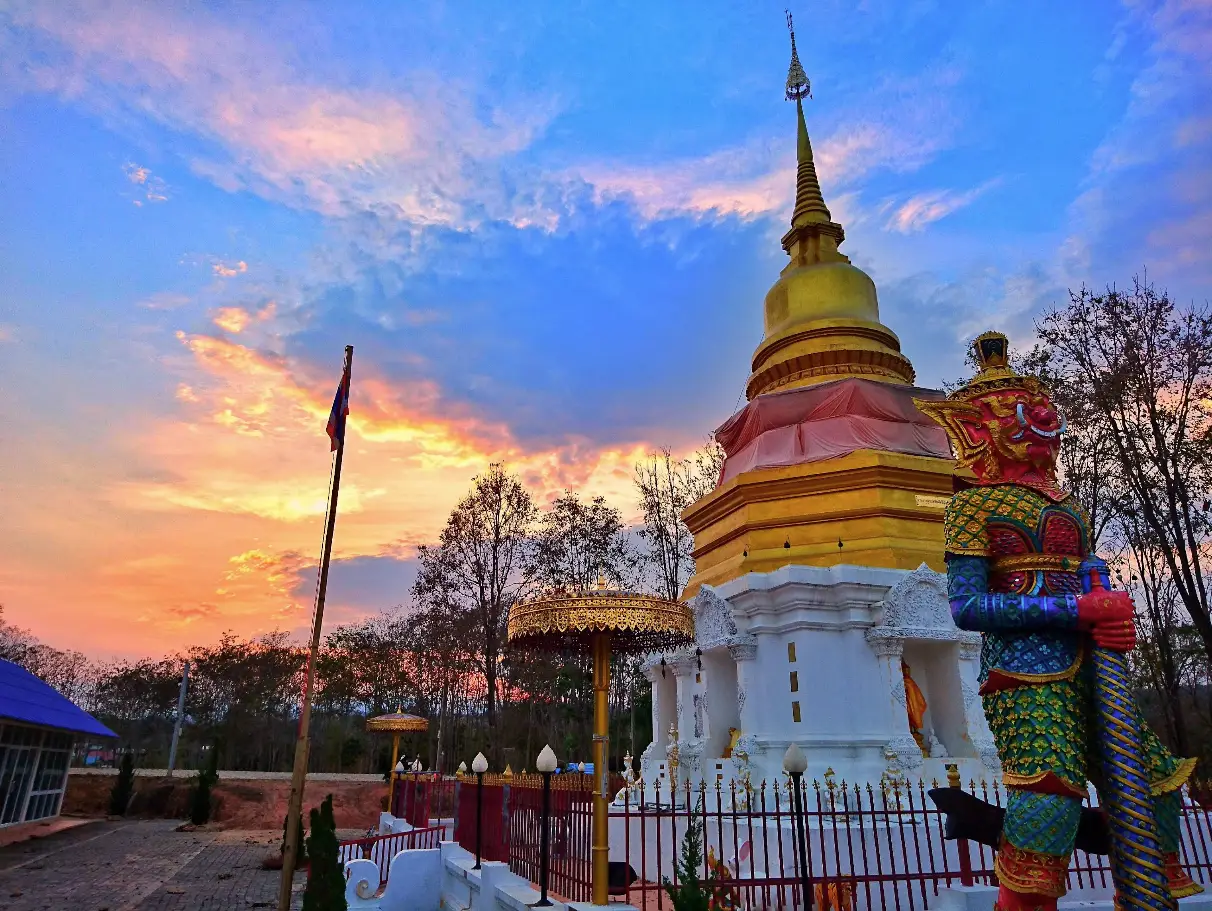
Wat Huai Sai
Operating day: Daily
Operating time: 08.00 - 17.00
Wat Huai Sai is located in Village No. 7, Ban Huai Sai, Mueang Na Subdistrict, Chiang Dao District, Chiang Mai Province. It is a local Buddhist temple under the Maha Nikaya order and serves as an important religious center for the Ban Huai Sai community. The temple was officially permitted to be established in B.E. 2542 (1999) and received its Wisungkhamsima in B.E. 2543 (2000). These milestones confirm Wat Huai Sai as a formally recognized Buddhist temple with a designated boundary for monastic ceremonies. The current abbot is Phra Khru Ophat Sila Wibun Attakhutto, and the temple remains listed in recent temple and Kathin activity information for Chiang Dao.
Ban Huai Sai is a village in Mueang Na Subdistrict, an area of northern Chiang Dao shaped by mountain communities, forests, agriculture, and natural attractions around Pha Daeng National Park. Wat Huai Sai is more than a religious building. It is a shared community space where villagers gather for merit-making, Buddhist ceremonies, annual religious activities, and local occasions. For travelers, the temple offers a calm view of Buddhist village life in a quieter part of Chiang Dao.
The name “Wat Huai Sai” is directly connected with Ban Huai Sai. In northern Thailand, many temples carry the names of their villages because they grow together with the community around them. The word “huai” refers to a small stream or watercourse, a common feature in mountain landscapes, while “Sai” is the local village name. The temple name therefore preserves both the identity of the place and the memory of the community that supports it.
Wat Huai Sai was officially permitted to be established as a temple in B.E. 2542 (1999). Although this makes it younger than some historic temples in Chiang Dao, its role in the local community is still significant. In a rural village, a temple becomes a spiritual home, a place for Buddhist holy days, robe-offering ceremonies, Kathin events, merit-making, and community gatherings. The importance of Wat Huai Sai lies in its active relationship with the people of Ban Huai Sai.
The temple received its Wisungkhamsima in B.E. 2543 (2000). In Thai Buddhism, Wisungkhamsima refers to a formally designated boundary for monastic acts, especially those associated with an ubosot and important Sangha ceremonies. Receiving Wisungkhamsima soon after official establishment shows the development of Wat Huai Sai from a local place of worship into a complete community temple with a recognized religious function.
Wat Huai Sai is a Maha Nikaya community temple. Temples of this kind are closely tied to the daily life of their villages. They serve as places for worship, moral guidance, community ceremonies, and spiritual support. The value of a temple like Wat Huai Sai is not measured by grand scale or commercial tourism, but by its ability to remain useful and meaningful to the people who live around it.
The abbot of Wat Huai Sai is Phra Khru Ophat Sila Wibun Attakhutto. Recent Kathin activity information records five resident monks at the temple. This confirms that Wat Huai Sai continues to function as an active Buddhist temple with monks in residence and ongoing religious activities. The abbot’s role includes leading ceremonies, maintaining the temple grounds, coordinating with laypeople, and preserving the temple as a calm and respectful place for Buddhist practice.
The atmosphere of Wat Huai Sai is simple, quiet, and local. It is suitable for visitors who want to worship, make merit, or pause during a journey through Mueang Na. The temple does not present itself as a large tourist attraction, and that is part of its character. Visitors can experience a working village temple where Buddhist practice remains connected with everyday community life.
The wider Huai Sai area has an interesting community context. Sources on nearby Ban Khun Huai Sai describe a community connected with the Red Lahu ethnic group, agriculture, forest use, and local traditions. While Wat Huai Sai itself is a Maha Nikaya Buddhist temple, the surrounding area reflects the cultural diversity of Mueang Na. This makes the temple and its route valuable for travelers who want to understand local life beyond major tourist destinations.
Mueang Na Subdistrict contains several community temples, including Wat Na Wai, Wat Lo Pa Han, Wat Weluwan, Wat Tham Mueang Na, and Wat Huai Sai. Each temple reflects the identity of its own village. Visiting Wat Huai Sai together with nearby temples helps travelers understand the local Buddhist network of northern Chiang Dao and how temples remain part of rural community structure.
Pha Daeng National Park is the major natural area connected with the Mueang Na route. The park includes mountains, forests, watersheds, waterfalls, and natural hot springs. Important nearby attractions include Sri Sangwan Waterfall and Pong Arng Hot Spring. Wat Huai Sai can therefore be included in a route that begins with worship and merit-making before continuing to nearby natural places.
Sri Sangwan Waterfall is located in the Ban Na Wai area of Mueang Na and is known as a limestone waterfall with water flowing in small tiers through a shaded forest setting. Travelers visiting Wat Huai Sai can continue to Sri Sangwan Waterfall as part of a calm half-day or full-day route combining Buddhist culture and nature.
Pong Arng Hot Spring is another natural attraction in the Mueang Na area. It is a natural hot spring surrounded by forest and mountain scenery, suitable for relaxation after traveling through rural roads. Combining Wat Huai Sai with Pong Arng Hot Spring, Sri Sangwan Waterfall, and nearby villages creates a balanced journey of spiritual calm, local culture, and natural scenery.
Arunothai Village can also be added to the same route. The village is known for its mountain community atmosphere and Yunnan-style food such as noodles, dumplings, steamed buns, and local dishes. Travelers can visit Wat Huai Sai, continue to Arunothai for a meal, and stay overnight in the Mueang Na or Chiang Dao area. This route gives a fuller picture of northern Chiang Dao beyond the more familiar Doi Luang Chiang Dao zone.
Wat Huai Sai is suitable for slow travel. A half-day route can include the temple with Sri Sangwan Waterfall or Pong Arng Hot Spring. A full-day route can also include Arunothai Village, Wat Weluwan, Wat Lo Pa Han, or Wat Na Wai. This style of travel reveals Mueang Na through temples, villages, forests, waterfalls, food, and local accommodations rather than through a single sightseeing stop.
Getting There is easiest by private car, rental car, or local transport. From Chiang Mai, take Highway 107 toward Chiang Dao, then continue toward Mueang Na via Highway 1178 and proceed to Ban Huai Sai, Village No. 7. The Plus Code HXP5+WP8 can be used as a navigation reference. The route includes rural and mountain sections, so careful driving is recommended, especially during rain, fog, or evening travel.
From Chiang Dao town, the route to Mueang Na passes through communities and natural landscapes. Local information places Mueang Na about 29 km from Chiang Dao town, while Ban Huai Sai lies farther along the subdistrict route. Travelers should check navigation before departure and allow enough time, especially because shops, fuel stops, and public services are less frequent than in central Chiang Dao.
Travelers without a private vehicle can take public transport from Chiang Mai to Chiang Dao town and then hire local transport to Mueang Na and Ban Huai Sai. This requires advance planning because local transport to smaller villages is not frequent. For families or small groups, renting a car or hiring a local driver is usually more convenient and allows easier stops at nearby temples and natural attractions.
The best time to visit is in the morning or late afternoon, when the weather is more comfortable and the temple atmosphere is calm. During the cool season or after the rainy season, Mueang Na feels especially fresh, with mountain scenery, forests, and rural landscapes along the route. Travelers should plan the journey at a relaxed pace rather than trying to cover too many stops in a short time.
Visitors should dress politely, speak quietly, avoid disturbing monks, and not enter monastic areas without permission. The temple grounds should be kept clean, and photography should be done respectfully without interrupting religious activities or village life. Wat Huai Sai is an active community temple with resident monks, so respectful behavior toward monks, villagers, and sacred spaces is essential.
Restaurants and accommodations around the wider Mueang Na and Chiang Dao area can be included in the same travel plan. Food stops range from local noodle shops and cafés to Yunnan-style restaurants in Arunothai Village. Accommodation options include homestays in Arunothai and resorts along the Chiang Dao route. Advance planning is useful, especially during holidays or the cool season, because Mueang Na is a rural area with fewer services than central Chiang Dao.
Overall, Wat Huai Sai is a local Maha Nikaya temple of Ban Huai Sai with religious, community, and travel-route value. Established in B.E. 2542 and granted Wisungkhamsima in B.E. 2543, the temple remains active with Phra Khru Ophat Sila Wibun Attakhutto as abbot and five resident monks recorded in recent Kathin information. A visit to Wat Huai Sai adds a quiet cultural dimension to the Mueang Na route and can be meaningfully combined with Pha Daeng National Park, Sri Sangwan Waterfall, Pong Arng Hot Spring, and Arunothai Village.
| Name | Wat Huai Sai |
| Location | Ban Huai Sai, Village No. 7, Mueang Na Subdistrict, Chiang Dao District, Chiang Mai Province |
| Address | Village No. 7, Ban Huai Sai, Mueang Na Subdistrict, Chiang Dao District, Chiang Mai 50170, Thailand |
| Navigation Code | Plus Code HXP5+WP8, Mueang Na, Chiang Dao District, Chiang Mai |
| Temple Type | Community Buddhist Temple Under The Maha Nikaya Order |
| History | Officially established in B.E. 2542 (1999) and granted Wisungkhamsima in B.E. 2543 (2000) |
| Highlights | Community temple of Ban Huai Sai, suitable for worship and for pairing with the Pha Daeng National Park route |
| Distinctive Features | Local Maha Nikaya temple in a rural mountain community, closely connected with Ban Huai Sai |
| Abbot / Caretaker | Phra Khru Ophat Sila Wibun Attakhutto |
| Resident Monks | 5 monks |
| Phone | 053-939-742 |
| Travel Information | From Chiang Mai, take Highway 107 toward Chiang Dao, then continue via Highway 1178 toward Mueang Na and Ban Huai Sai. Best reached by private car, rental car, or local transport. |
| Current Status | Listed in temple and recent Kathin activity databases for Chiang Dao District, Chiang Mai Province |
| Nearby Tourist Attractions | 1. Sri Sangwan Waterfall, about 5 km 2. Pha Daeng National Park, about 5 km 3. Wat Na Wai, Mueang Na, about 6 km 4. Pong Arng Hot Spring, about 8 km 5. Wat Lo Pa Han, Mueang Na, about 8 km |
| Nearby Restaurants | 1. 1991 Cafe', Ban Huai Sai, about 1 km, Tel. 084-345-6933 2. Kuai Tiao Rot Loet & Bubble Tea, about 8 km, Tel. 084-949-3770 3. Ta Yong Yunnan Noodle, Arunothai Village, about 18 km, Tel. 086-193-0569, 089-816-6802 4. Pirom Yunnan Noodle, about 18 km, Tel. 080-849-7963, 053-405-570 5. Chiang Dao Resto, about 29 km, Tel. 053-456-456 |
| Nearby Accommodations | 1. Micha Resort, Arunothai Village, about 18 km, Tel. 091-314-4692 2. Yunnan Home Stay, about 18 km, Tel. 062-426-6052, 089-261-6053 3. Arunothai Phonpawin Kotchaphon Room, about 18 km, Tel. 093-243-6999 4. Marisa Resort & Spa Chiang Dao, about 29 km, Tel. 086-431-6898 5. Chomdoi Resort Chiang Dao, about 30 km, Tel. 081-998-7478 |
Frequently Asked Questions (FAQ)
Q: Where is Wat Huai Sai located?
A: Wat Huai Sai is located in Village No. 7, Ban Huai Sai, Mueang Na Subdistrict, Chiang Dao District, Chiang Mai Province.
Q: When was Wat Huai Sai officially established?
A: Wat Huai Sai was officially permitted to be established as a temple in B.E. 2542 (1999) and received Wisungkhamsima in B.E. 2543 (2000).
Q: Who is the abbot of Wat Huai Sai?
A: The abbot of Wat Huai Sai is Phra Khru Ophat Sila Wibun Attakhutto.
Q: How many resident monks are recorded at Wat Huai Sai?
A: Recent Kathin activity information records five resident monks at Wat Huai Sai.
Q: How can travelers get to Wat Huai Sai?
A: From Chiang Mai, take Highway 107 toward Chiang Dao, then continue via Highway 1178 toward Mueang Na and Ban Huai Sai. The Plus Code HXP5+WP8 can be used as a navigation reference.
Q: What type of travelers should visit Wat Huai Sai?
A: The temple is suitable for travelers who want to worship, make merit, visit a quiet community temple, and combine the trip with Pha Daeng National Park, Sri Sangwan Waterfall, Pong Arng Hot Spring, and Arunothai Village.
Q: What nearby places can be visited with Wat Huai Sai?
A: Nearby places include Sri Sangwan Waterfall, Pha Daeng National Park, Wat Na Wai, Pong Arng Hot Spring, Wat Lo Pa Han, and Arunothai Village.
 Category: ●Places of Worship
 Group: ●Temple
Last Update : 1 MonthAgo
 Last Update : 1 MonthAgo
 Click to Access the Navigation Map GPS
 Muang Chiang Mai(121)Chom Thong(47)Mae Chaem(25)Chiang Dao(33)Doi Saket(68)Mae Taeng(85)Mae Rim(69)Samoeng(29)Fang(71)Mae Ai(59)Phrao(70)San Pa Tong(103)San Kamphaeng(66)San Sai(73)Hang Dong(73)Hot(32)Doi Tao(22)Omkoi(11)Saraphi(74)Wiang Haeng(15)Chai Prakan(28)Mae Wang(32)Mae On(22)Doi Lo(33)Galyani Vadhana(1)


