
lovethailand home >North Travel Attractions >Chiang Mai Travel Attractions >Doi Tao >Bong Tan > Wat Ban Noi
TL;DR: Wat Ban Noi is located at Moo 1, Bong Tan Subdistrict, Doi Tao District, Chiang Mai Province 50260, Thailand. is located in Moo 1, Bong Tan Subdistrict, Doi Tao District, Chiang Mai Province 50260. It is a local Buddhist temple under the Maha Nikaya.

Wat Ban Noi
Operating day: Daily
Operating time: 08.00 - 17.00
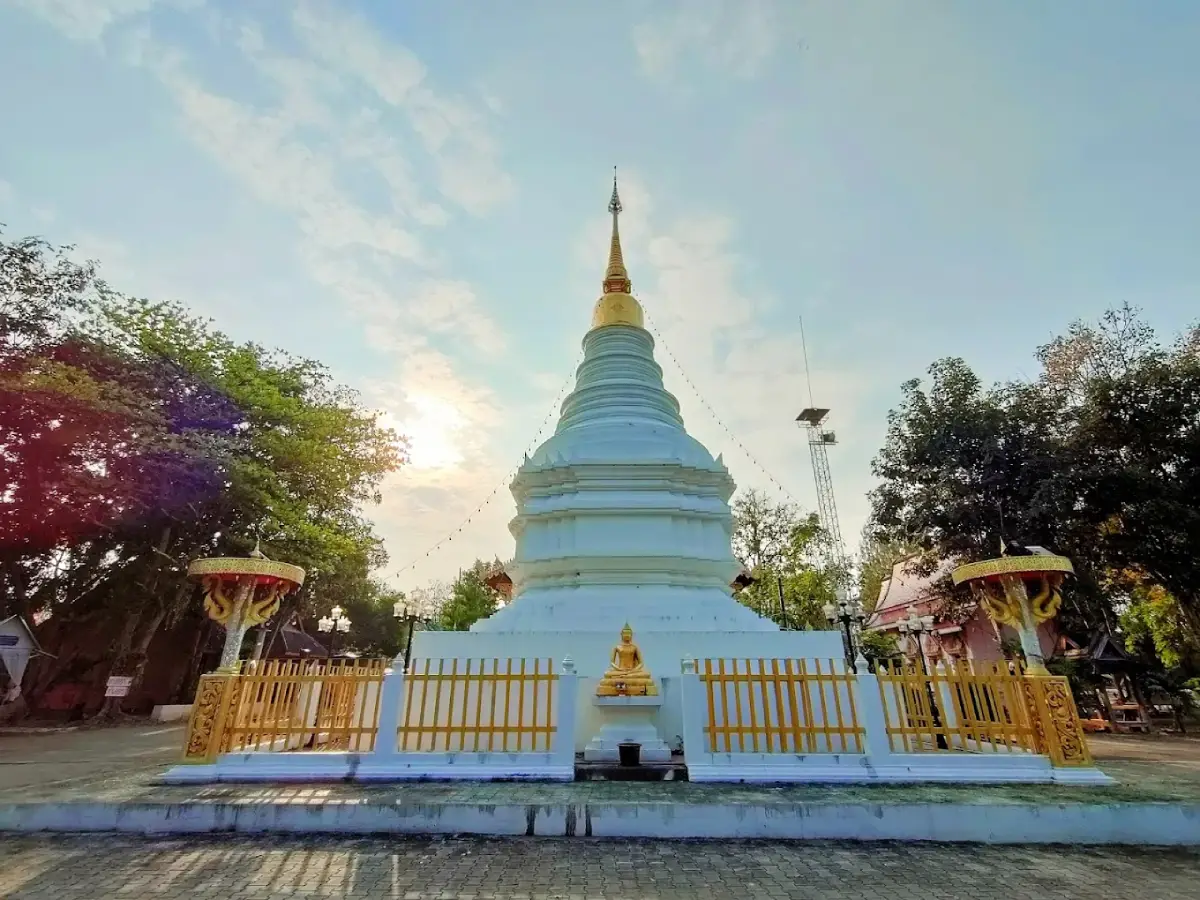
Wat Ban Noi is located in Moo 1, Bong Tan Subdistrict, Doi Tao District, Chiang Mai Province 50260. It is a local Buddhist temple under the Maha Nikaya order. The temple was officially permitted to become a temple in 1907 and received its royal grant of Wisungkhamasima on the first day of 1991. Wat Ban Noi is one of the important community temples of Bong Tan Subdistrict, closely connected with Ban Noi, Ban Huai Rin, the old Ping River settlements, Doi Tao Lake, and the relocation history caused by the construction of Bhumibol Dam.
The history of Wat Ban Noi is deeper than that of an ordinary village temple. The former temple was an old Buddhist site of the Ping River community. Local temple history describes it as a temple that had existed for many generations and was more than 1,347 years old. The old site later became submerged in the area that is now Doi Tao Lake. The former temple stood in the Ping River basin, in Moo 1 of Tha Duea Subdistrict, Hot District, Chiang Mai. It belonged to a riverside community where water, agriculture, travel, and Buddhist life were closely connected.
The old Ban Noi area is also associated with the local story of Nai Noi and Nang Aen, two lovers who were disappointed in love and jumped to their deaths at Pha Wing Chu. This story gives the old landscape a strong layer of local memory. Wat Ban Noi should therefore be understood not only as a temple name but also as part of a wider landscape of stories, faith, loss, and community identity along the Ping River.
The former temple had more than 10 rai of land. Its permanent structures included a viharn, sala, monks’ residences, and several old Buddha images. In 1957, a fire broke out and damaged the monks’ residence, old temple objects, and Buddha images. This was a major loss for the villagers because those objects were not only material possessions; they were sacred items, community heritage, and memories inherited from earlier generations.
In 1964, the construction of Bhumibol Dam caused major changes to the Ping River basin. Water rose and affected many riverside settlements. The old Wat Ban Noi and its village had to relocate from the lowland river area. Moving the temple was difficult because the villagers had to carry their faith, sacred objects, and community life into a new landscape. Wherever the villagers moved, they tried to establish a temple because the temple was the heart of the community.
In 1968, villagers settled in the land allocated by the Bhumibol Dam Self-Help Settlement and rebuilt Wat Ban Noi in the present area. Phra Intra Pabhakaro served as abbot during this important period. He built a sermon hall and monks’ residences so that monks could stay and villagers could make merit, listen to Dhamma, and gather for Buddhist activities. From that point, Wat Ban Noi continued to develop as a functioning community temple.
In 1986, villagers invited Phra Praphan Paphassaro to act in place of the abbot and continue developing the temple. During this period, important permanent structures were developed, including a viharn, ubosot, and a training center for children in the temple. These developments turned Wat Ban Noi from a relocated temple into a more stable religious and community center for Ban Noi and Ban Huai Rin.
Wat Ban Noi has been supported continuously by local devotees, especially residents of Ban Noi and Ban Huai Rin. This relationship gives the temple a wider community role. It is not only the temple of one village but also a shared center of faith for nearby communities. During Kathin, robe-offering ceremonies, Buddhist holy days, and local merit-making events, villagers gather at the temple to support monks, prepare food, listen to teachings, and maintain Buddhist traditions.
Important temple structures include a sermon hall, monks’ residences, sala bat, chanting hall, and kitchen. Temple records also mention a sermon hall, monks’ residences, sala bat, and kitchen, with an important sacred object being a golden Buddha image. These buildings support both monastic life and community activities. The sermon hall is used for Dhamma listening and merit-making, the monks’ residences house monks, the sala bat supports alms-related activities, the chanting hall supports ceremonies, and the kitchen is essential for large community merit-making events.
The golden Buddha image is an important sacred object at Wat Ban Noi. Visitors should pay respect calmly and understand it in relation to the temple’s history of loss and recovery. Although old Buddha images and sacred objects were damaged in the 1957 fire, the continuing presence of a sacred Buddha image in the present temple shows that faith survived the disaster, the relocation, and the rebuilding of the community.
The royal grant of Wisungkhamasima in 1991 is an important milestone. A Wisungkhamasima boundary is associated with formal monastic acts under Buddhist discipline. For Wat Ban Noi, this status confirms the temple’s stable religious role and its ability to support important Buddhist ceremonies within the community.
Bong Tan Subdistrict is important for understanding Wat Ban Noi. The subdistrict includes upland terrain, low areas near Doi Tao Lake, agricultural communities, forests, and waterways. The Ping River passes through the western side of the subdistrict and is connected with villages such as Ban Noi, Ban Huai Rin, Ban Thong, and Ban Nong Phak Bung. The river was once a source of livelihood and identity, but after Bhumibol Dam changed the landscape, many communities had to adapt or relocate. Wat Ban Noi is one of the temples that preserves the memory of that transition.
Ban Noi is one of the local Thai communities in Bong Tan Subdistrict, while the wider subdistrict also includes Karen communities in nearby villages. This gives the area a diverse cultural setting. Wat Ban Noi stands within this landscape of northern Thai village life, ethnic diversity, agriculture, and relocation memory. The temple connects the old riverside past with the present community in Bong Tan.
Religious traditions at Wat Ban Noi follow the rhythm of a northern Thai local temple. Important activities include Buddhist holy days, Makha Bucha, Visakha Bucha, Asalha Bucha, Buddhist Lent, the end of Lent, Kathin, robe-offering ceremonies, memorial merit-making, and community merit events. These activities are not only religious ceremonies but also ways for villagers to meet, cooperate, prepare food, support monks, and pass Buddhist values to younger generations.
The main appeal of Wat Ban Noi is its layered history: an ancient riverside temple, the local story of Pha Wing Chu, the 1957 fire, the 1964 relocation caused by Bhumibol Dam, and the rebuilding of the temple in 1968. These stories make Wat Ban Noi a meaningful cultural and historical stop for travelers who want to understand Doi Tao beyond lake scenery.
Wat Ban Noi is suitable for travelers interested in community temples, Doi Tao history, Lanna culture, and the former Ping River settlements. It should not be seen only as a place for quick sightseeing. Its value lies in the history embedded in the temple grounds: the old temple, damaged sacred objects, relocation, rebuilding, and the continuing relationship between monks and villagers.
Getting There is most convenient by private car, rental car, or local hired transport. From Chiang Mai city, travel south on Highway 108 through Hang Dong, San Pa Tong, Chom Thong, and Hot District. At Hot, continue onto Highway 1103, the Hot – Doi Tao – Mae Tuen route, then proceed into Bong Tan Subdistrict toward Ban Noi, Moo 1. Using the names Wat Ban Noi, Bong Tan Subdistrict, and Doi Tao District together in a navigation app is recommended.
A meaningful travel route can begin at Wat Ban Noi for worship and historical learning, then continue to Wat Ban Thong, Wat Tha Duea, Wat Lai Kaeo, Wat Bong Tan, or Phutthasathan Doi Tok to understand the temple network of Bong Tan Subdistrict. Travelers can then continue to Doi Tao Lake, Phra Borommathat Doi Koeng, and lakeside restaurants in Tha Duea Subdistrict. This route combines temple history, community memory, local faith, and lake scenery in one trip.
Visitors should dress modestly, keep noise low, and respect monks and local residents. If a merit-making event or ceremony is taking place, local worshippers should be given priority. Photography should be done respectfully. Wat Ban Noi is a living community temple with deep meaning for local memory, so a meaningful visit should respect both the sacred space and the people who maintain it.
Overall, Wat Ban Noi is a Maha Nikaya local temple in Bong Tan Subdistrict, Doi Tao District, Chiang Mai Province. It was officially established in 1907, received its Wisungkhamasima in 1991, and carries an important history from the former Ping River settlement now submerged in the Doi Tao Lake area. For travelers seeking a deeper, quieter, and more authentic cultural route in southern Chiang Mai, Wat Ban Noi is one of the most meaningful community temples in Doi Tao.
| Name | Wat Ban Noi |
| Type | Local Buddhist Temple, Maha Nikaya Order |
| Location | Moo 1, Bong Tan Subdistrict, Doi Tao District, Chiang Mai Province 50260, Thailand |
| Open Days | Daily |
| Opening Hours | 08.00 – 17.00 |
| History | Officially established in 1907 and granted Wisungkhamasima on the first day of 1991. The former temple was an old Ping River temple that later became submerged in the present Doi Tao Lake area. |
| Important Events | A fire damaged the old monks’ residence and sacred objects in 1957. The community relocated after the Bhumibol Dam-related flooding in 1964, and the temple was rebuilt in the allocated settlement area in 1968. |
| Important Historical Figures | Phra Intra Pabhakaro And Phra Praphan Paphassaro |
| Important Structures | Sermon Hall, Monks’ Residences, Sala Bat, Chanting Hall, Kitchen, Viharn, Ubosot, And Children’s Training Center |
| Important Sacred Objects | Golden Buddha Image And Old Buddha Images Connected With The Former Temple |
| Related Communities | Ban Noi, Ban Huai Rin, Former Ping River Communities, And Communities In Bong Tan Subdistrict |
| Community Role | Spiritual center for Ban Noi and Ban Huai Rin, used for merit-making, Dhamma listening, Kathin, robe offerings, annual merit events, and Buddhist community activities |
| Travel Information | From Chiang Mai, take Highway 108 through Hang Dong, San Pa Tong, Chom Thong, and Hot, then continue on Highway 1103, the Hot – Doi Tao – Mae Tuen route, toward Ban Noi in Bong Tan Subdistrict. |
| Current Status | Active local Buddhist temple appearing in contemporary Kathin activity records of Doi Tao District |
| Facilities | Temple grounds, courtyard, sermon hall, sala bat, chanting hall, kitchen, worship area, and spaces for community Buddhist activities |
| Nearby Tourist Attractions | 1. Wat Ban Thong, about 3 km 2. Wat Tha Duea, about 5 km 3. Wat Lai Kaeo, about 6 km 4. Phutthasathan Doi Tok, about 8 km 5. Doi Tao Lake, about 10 km |
| Nearby Restaurants | 1. Check In Doi Tao Cafe’ And Resort, about 10 km, Tel. 062-969-8264 2. Krua Than Thip And Ruean Pha Than Thip, about 10 km, Tel. 091-026-4970 3. Ruean Pha Luk Mae Ping, about 10 km, Tel. 081-993-4162, 081-724-5470 4. Ruean Pha Doi Tao Rim Ping, about 10 km, Tel. 081-961-1854, 084-885-5982 5. Bandin In The Doi, about 14 km, Tel. 087-951-6778, 084-810-5058 |
| Nearby Accommodations | 1. Check In Doi Tao Cafe’ And Resort, about 10 km, Tel. 062-969-8264 2. Ruean Pha Than Thip, about 10 km, Tel. 091-026-4970 3. Ruean Pha Luk Mae Ping, about 10 km, Tel. 081-993-4162, 081-724-5470 4. Ruean Pha Doi Tao Rim Ping, about 10 km, Tel. 081-961-1854, 084-885-5982 5. The Creek Resort, about 20 km, Tel. 097-282-8982 |
Frequently Asked Questions (FAQ)
Q: Where Is Wat Ban Noi Located?
A: Wat Ban Noi is located in Moo 1, Bong Tan Subdistrict, Doi Tao District, Chiang Mai Province 50260, Thailand.
Q: When Was Wat Ban Noi Officially Established?
A: Wat Ban Noi was officially established in 1907 and received its Wisungkhamasima on the first day of 1991.
Q: Why Is Wat Ban Noi Connected With Doi Tao Lake?
A: The former temple stood in the Ping River basin before the old area became submerged in what is now the Doi Tao Lake area after the construction of Bhumibol Dam.
Q: What Important Historical Events Are Linked With Wat Ban Noi?
A: Important events include the 1957 fire that damaged old temple objects, the 1964 relocation caused by Bhumibol Dam-related flooding, and the rebuilding of the temple in the allocated settlement area in 1968.
Q: What Important Structures Are Found At Wat Ban Noi?
A: Important structures include a sermon hall, monks’ residences, sala bat, chanting hall, kitchen, viharn, ubosot, and a children’s training center.
Q: How Do Travelers Get To Wat Ban Noi?
A: From Chiang Mai, travel through Hot District and continue on Highway 1103, the Hot – Doi Tao – Mae Tuen route, toward Ban Noi in Bong Tan Subdistrict.
Q: What Nearby Places Can Be Visited With Wat Ban Noi?
A: Nearby places include Wat Ban Thong, Wat Tha Duea, Wat Lai Kaeo, Phutthasathan Doi Tok, and Doi Tao Lake.
 Category: ●Places of Worship
 Group: ●Temple
Last Update : 1 MonthAgo
 Last Update : 1 MonthAgo
 Click to Access the Navigation Map GPS

 Muang Chiang Mai(121)Chom Thong(47)Mae Chaem(25)Chiang Dao(33)Doi Saket(68)Mae Taeng(85)Mae Rim(69)Samoeng(29)Fang(71)Mae Ai(59)Phrao(70)San Pa Tong(103)San Kamphaeng(66)San Sai(73)Hang Dong(73)Hot(32)Doi Tao(22)Omkoi(11)Saraphi(74)Wiang Haeng(15)Chai Prakan(28)Mae Wang(32)Mae On(22)Doi Lo(33)Galyani Vadhana(1)


