
lovethailand home >North Travel Attractions >Chiang Mai Travel Attractions >Muang Chiang Mai >Nong Hoi > Wat Si Bun Rueang
TL;DR: Wat Si Bun Rueang is located at Moo 2, Nong Hoi Subdistrict, Mueang Chiang Mai District, Chiang Mai Province, open Daily, hours 08.00 – 17.00.

Wat Si Bun Rueang
Open Days: Daily
Opening Hours: 08.00 – 17.00
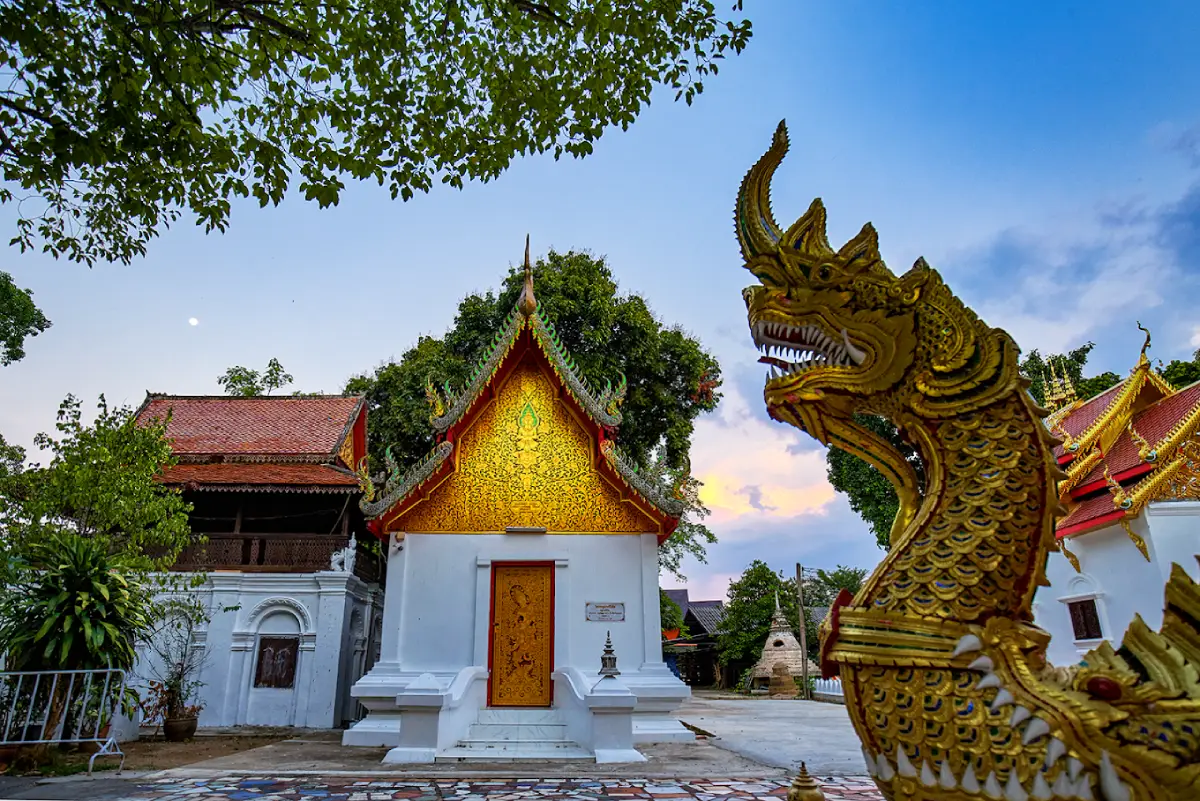
Wat Si Bun Rueang in Nong Hoi Subdistrict, Mueang Chiang Mai District, is an old community temple connected with Lanna history, the Ping River, and the cultural landscape of Wiang Kum Kam. It is a worthwhile stop for travelers who want to explore a quieter side of Chiang Mai beyond the old city walls. The temple is a local Buddhist site under the Mahanikaya order, with resident monks, daily access for worship and visits, and a historical identity linked to the Ban Rong Wua community, King Mangrai-era legends, and the old riverside settlement zone east of the Ping River.
Wat Si Bun Rueang is located at 55 Moo 2, Ko Klang Road, Nong Hoi Subdistrict, Mueang Chiang Mai District, Chiang Mai. The surrounding area is a lived-in community rather than a heavily commercial tourist district. This gives the temple a calm and local atmosphere. It stands about 400 meters east of the Ping River and west of Wiang Kum Kam, making it suitable for travelers who want to combine a temple visit with a historical route around ancient settlements, local markets, and lesser-known cultural sites in southern Chiang Mai city.
The temple was formerly known as Wat Rong Wua or Wat Ban Rong Wua, names that preserve its relationship with the old Ban Rong Wua community. These earlier names are important because they reflect the social history of the neighborhood, while the current name, Wat Si Bun Rueang, conveys a sense of merit, prosperity, and Buddhist devotion. For local residents, the temple has long served not only as a place of worship but also as a community anchor where religious ceremonies, seasonal traditions, and local memories continue to meet.
Historically, Wat Si Bun Rueang is associated with Lanna-era narratives and the time of King Mangrai. Local accounts connect the temple with the creation of an early bridge across the Ping River and with the wider historical geography of Wiang Kum Kam. This makes the temple more than a simple neighborhood monastery. It helps visitors understand how river transport, trade, settlement, and Buddhist patronage shaped the southern part of Chiang Mai before the modern city expanded around it.
Wat Si Bun Rueang received its consecrated boundary in 1850 B.E., making it an important Buddhist site for monastic rites and community religious activities. The temple grounds include key religious structures such as an ordination hall, viharn, chedi, scripture hall, bell tower, monks’ residences, and worship areas. These elements make the temple useful for both cultural sightseeing and quiet merit-making. The site does not rely on spectacle; its value lies in its continuity as a functioning local temple.
One of the most interesting aspects of Wat Si Bun Rueang is its location within the historical orbit of Wiang Kum Kam. Although the temple itself is not listed as a registered archaeological monument, its setting is part of the same lowland landscape shaped by the Ping River. The area’s alluvial plain supported settlements, movement, and trade in earlier periods. Visiting the temple therefore helps travelers see Chiang Mai through a broader historical lens, beyond the better-known temples inside the old city.
The atmosphere inside the temple is peaceful and straightforward. It is best experienced slowly. Visitors can pay respect to the Buddha images, walk around the main religious buildings, observe the local temple layout, and appreciate how the monastery continues to function as part of everyday community life. The temple is especially suitable for travelers interested in local culture, Buddhist practice, and historical neighborhoods rather than crowded landmark tourism.
Wat Si Bun Rueang also remains connected with local seasonal traditions. During the Songkran period, or Lanna New Year, temples in Nong Hoi take part in activities such as offering sand pagodas, tung flags, and zodiac flags. The sand pagoda tradition reflects the belief of returning sand to the temple while making merit and strengthening community bonds. This cultural context adds depth to a visit, showing how the temple continues to support living Lanna customs rather than simply preserving the past.
A notable figure associated with Wat Si Bun Rueang is Phra Khru Suthep Sitthikhun, also known as Luang Por Phan Thewa Pheng Tawan, a former abbot of the temple and former ecclesiastical leader of Nong Hoi Subdistrict. He was widely known among disciples and in Chiang Mai society. For visitors today, this history adds another layer to the temple’s identity, but the main value of the visit remains the calm religious setting, community atmosphere, and connection to the cultural landscape of Nong Hoi and Wiang Kum Kam.
Getting There is easiest by private car, rental car, motorbike, or local ride-hailing service. From Mahidol Road, turn into Mahidol Soi 6 and continue toward Ko Klang Road in Nong Hoi. The temple is located within a residential community, so drivers should proceed carefully. Travelers using a map application should enter the coordinates 18.753628, 98.999682 and confirm that the destination is Wat Si Bun Rueang in Nong Hoi, Mueang Chiang Mai, because there are other temples with similar names in Chiang Mai Province.
The best time to visit is in the morning or late afternoon, when the weather is more comfortable and the light is suitable for photography. Visitors should dress respectfully, speak quietly, and avoid disturbing monks or local worshippers. If taking photographs inside religious buildings, check any temple notices or ask permission first. The temple charges no admission fee, making it a simple and meaningful addition to a Chiang Mai itinerary focused on local temples, history, and community culture.
For a half-day route, Wat Si Bun Rueang can be combined with Wiang Kum Kam, Wat Chedi Liam, Wat Chang Kham, Wat Sao Hin, and Nong Hoi Market. This route gives travelers a more complete picture of southern Chiang Mai: ancient settlement history, Buddhist architecture, riverside communities, local food, and everyday urban life outside the main tourist core.
In summary, Wat Si Bun Rueang is a valuable cultural temple in Nong Hoi for visitors who want to understand Chiang Mai beyond its most famous landmarks. Its strengths are its historical connection with Wiang Kum Kam, its old community names of Wat Rong Wua and Wat Ban Rong Wua, its setting near the Ping River, and its continuing role as a living Buddhist temple for local residents. For travelers who prefer depth over crowds, this temple is a strong addition to a Chiang Mai cultural itinerary.
| Name | Wat Si Bun Rueang |
| Location | Moo 2, Nong Hoi Subdistrict, Mueang Chiang Mai District, Chiang Mai Province |
| Address | 55 Moo 2, Ko Klang Road, Nong Hoi Subdistrict, Mueang Chiang Mai District, Chiang Mai 50000, Thailand |
| Coordinates | 18.753628, 98.999682 |
| Highlights | Old community temple in Nong Hoi linked with Wiang Kum Kam, the Ping River, and Lanna-era historical narratives |
| History | Associated with the Lanna period and the 19th Buddhist century; received its consecrated boundary in 1850 B.E. |
| Name Origin | Formerly known locally as Wat Rong Wua or Wat Ban Rong Wua before becoming widely known as Wat Si Bun Rueang |
| Distinctive Features | A Mahanikaya Buddhist temple with resident monks, a peaceful community setting, an ordination hall, viharn, chedi, scripture hall, and bell tower |
| Travel Information | From Mahidol Road, enter Mahidol Soi 6 and continue toward Ko Klang Road in Nong Hoi. The temple is suitable for travel by private car, rental car, motorbike, or local ride-hailing service |
| Current Status | Open daily for worship and visits |
| Open Days | Daily |
| Opening Hours | 08.00 – 17.00 |
| Fees | No admission fee |
| Facilities | Temple grounds for worship, merit-making, cultural visits, and nearby access to Nong Hoi and Wiang Kum Kam historical routes |
| Main Areas / Zones | Ordination hall, viharn, chedi, scripture hall, bell tower, monks’ residences, and community religious areas |
| Caretaker / Notable Former Abbot | Phra Boontham Punnyathamo appears in public contact listings for the temple. Phra Khru Suthep Sitthikhun, also known as Luang Por Phan Thewa Pheng Tawan, was a notable former abbot |
| Main Contact Number | 053-816-559 |
| Nearby Tourist Attractions | 1. Wiang Kum Kam, about 2 km 2. Wat Chedi Liam, about 2 km 3. Wat Chang Kham, Wiang Kum Kam, about 2 km 4. Wat Sao Hin, Nong Hoi, about 2 km 5. Nong Hoi Market, about 2 km |
| Nearby Restaurants | 1. Krua Rim Nam Nong Hoi, about 1 km, Tel. 096-116-4264 2. Supatra Ahan Tam Sang Nong Hoi, about 2 km, Tel. 082-081-6091 3. Kung Yasothon Rot Saep Nong Hoi 1, about 2 km, Tel. 092-946-8868 4. Mae Jo Bone Soup, Nong Hoi Branch, about 2 km, Tel. 082-685-8000 5. Jaew Hon Saraphi, Nong Phueng Branch, about 3 km, Tel. 098-178-1581 |
| Nearby Accommodations | 1. The Adventure Hotel, about 1 km, Tel. 053-802-444 2. La Mai Hotel Chiang Mai, about 2 km, Tel. 053-140-822 3. De Wiangkumkam, about 3 km 4. Wiang Kum Kam Resort, about 3 km, Tel. 097-949-4227 5. The Park Hotel Chiang Mai, about 4 km, Tel. 053-280-080 |
Frequently Asked Questions (FAQ)
Q: Where is Wat Si Bun Rueang located?
A: Wat Si Bun Rueang is located at 55 Moo 2, Ko Klang Road, Nong Hoi Subdistrict, Mueang Chiang Mai District, Chiang Mai.
Q: What are the opening days and hours of Wat Si Bun Rueang?
A: Wat Si Bun Rueang is open daily from 08.00 to 17.00.
Q: Is there an admission fee for Wat Si Bun Rueang?
A: No. Visitors can enter the temple for worship and sightseeing without an admission fee.
Q: What was Wat Si Bun Rueang formerly called?
A: The temple was formerly known as Wat Rong Wua or Wat Ban Rong Wua, names connected with the local Ban Rong Wua community.
Q: Why is Wat Si Bun Rueang historically interesting?
A: The temple is associated with Lanna history, the Ping River, Wiang Kum Kam, and historical narratives from the King Mangrai era.
Q: How can travelers get to Wat Si Bun Rueang?
A: Travelers can use Mahidol Road, enter Mahidol Soi 6, and continue toward Ko Klang Road, or navigate directly to the coordinates 18.753628, 98.999682.
Q: What nearby places can be visited with Wat Si Bun Rueang?
A: Nearby places include Wiang Kum Kam, Wat Chedi Liam, Wat Chang Kham, Wat Sao Hin, and Nong Hoi Market.
 Category: ●Places of Worship
 Group: ●Temple
Last Update : 1 MonthAgo
 Last Update : 1 MonthAgo
 Click to Access the Navigation Map GPS
Wat Si Bun Rueang Map
Recommend

 Muang Chiang Mai(121)Chom Thong(47)Mae Chaem(25)Chiang Dao(33)Doi Saket(68)Mae Taeng(85)Mae Rim(69)Samoeng(29)Fang(71)Mae Ai(59)Phrao(70)San Pa Tong(103)San Kamphaeng(66)San Sai(73)Hang Dong(73)Hot(32)Doi Tao(22)Omkoi(11)Saraphi(74)Wiang Haeng(15)Chai Prakan(28)Mae Wang(32)Mae On(22)Doi Lo(33)Galyani Vadhana(1)


