
lovethailand home >South Travel Attractions >Trang Travel Attractions >Muang Trang >Thap Thiang > Ko Ngai
TL;DR: Ko Ngai, Trang attractions : Nature and Wildlife, Islands.
Ko Ngai
Open Days: Open According To The Andaman Sea Travel Season, With The Main Travel Period Usually From Mid-October To Mid-May. Access May Be Closed Or Restricted During The Monsoon Season According To Mu Ko Lanta National Park Announcements.
Opening Hours: There Are No Fixed Public Opening Hours Like A Mainland Attraction. Visits Depend On Daytime Boat Schedules, Operators, Sea Conditions, And National Park Announcements.
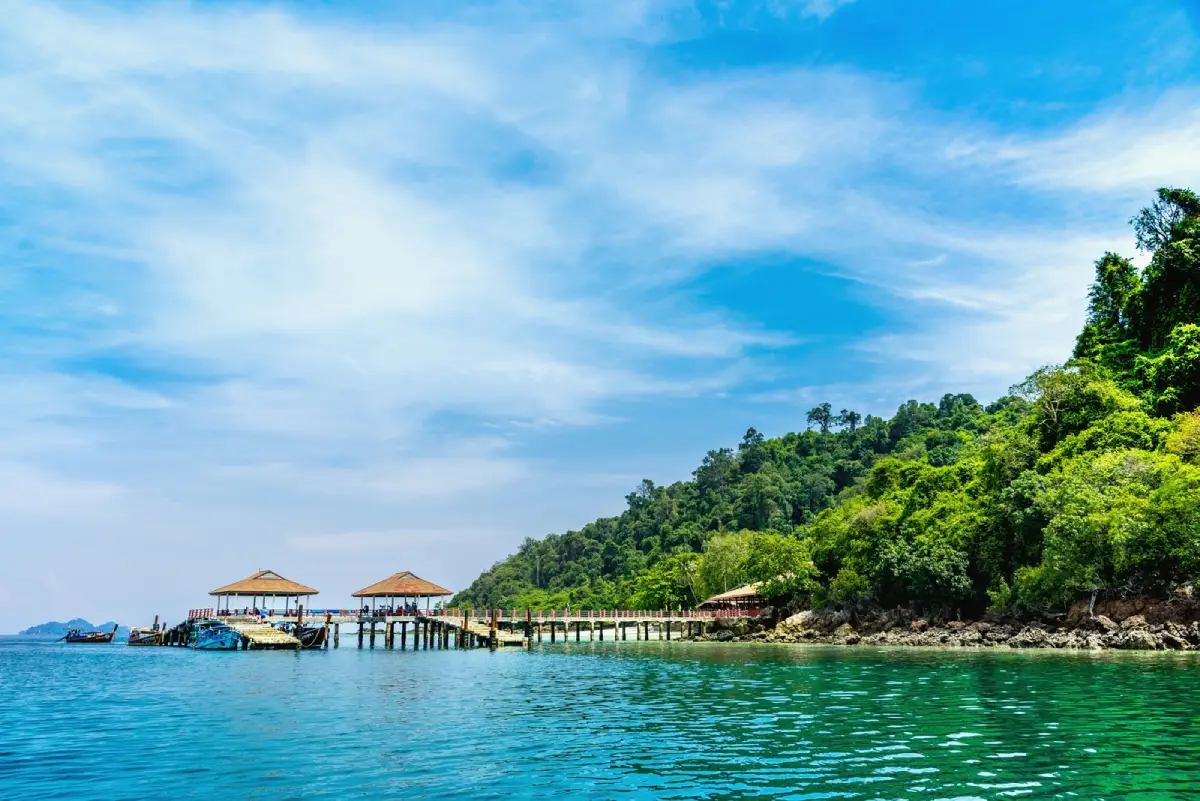
Ko Ngai, also known as Koh Hai, is one of the best-known Andaman Sea islands on the Trang travel route. Administratively, the island belongs to Ko Lanta Yai Subdistrict, Ko Lanta District, Krabi Province, and lies within Mu Ko Lanta National Park. In tourism practice, however, Ko Ngai is strongly associated with Trang because it is conveniently reached from Pak Meng Pier in Trang Province and is often included in the same sea route as Ko Mook, Emerald Cave, Ko Kradan, Ko Chueak, Ko Waen, and Ko Ma. The island is known for its long eastern beach, clear water, white sand, shallow coral reef in front of the beach, colorful fish, peaceful atmosphere, and beachfront resorts suited to slow island stays.
The usual image of Ko Ngai is a small island with blue water, soft white sand, coconut trees, and low-rise beach resorts facing the sea. The front side opens to the Andaman Sea and nearby islands, while the back of the island remains green with hills and forest. There is no large town or busy road network on the island, so visitors spend most of their time with the beach, boats, snorkeling, resort restaurants, and the quiet rhythm of island life. This makes Ko Ngai suitable for travelers who want to slow down rather than move constantly from one attraction to another.
One important point is that Ko Ngai has two identities. Officially, it is part of Krabi Province and Mu Ko Lanta National Park. In travel planning, it is often treated as part of the Trang Sea because the Trang route through Pak Meng Pier is highly practical. Many tour programs from Trang include Ko Ngai together with the famous island route around Ko Mook and Ko Kradan. Explaining both identities helps travelers understand the island correctly: Krabi by administration, Trang by common travel access.
The main beach of Ko Ngai is on the eastern side of the island. This is where most visitors stay because the beach has accommodation, resort restaurants, boat landing points, and shallow coral areas not far from the shore. When the sea is calm and visibility is good, travelers can snorkel from the beach to see fish and coral without joining a long offshore boat trip. This is one of the island’s strongest advantages for travelers who want to stay in one place and still enjoy the underwater world.
The water around Ko Ngai is especially attractive during the main travel season, when the sea is calmer, sunlight is stronger, and rain is less persistent. The color of the water can shift from pale blue to turquoise depending on depth and the sandy seabed. Morning is good for quiet beach walks and soft-light photography. Late morning and early afternoon are often better for snorkeling because sunlight penetrates the water more clearly. Evening is ideal for resting by the sea and enjoying the slower atmosphere of the island.
The shallow reef in front of the beach is a key reason Ko Ngai stands out from many simple beach islands. On suitable days, visitors can see small fish, coral, and other marine life close to shore. However, snorkeling must be done responsibly. Visitors should not stand on coral, touch marine life, feed fish, or kick the reef with fins. Shallow reefs are highly fragile, and damage can occur even from one careless step.
Ko Ngai suits several types of travelers: couples, families, small groups of friends, photographers, slow travelers, and people who enjoy easy-access snorkeling. It is less suitable for travelers looking for nightlife, dense shopping streets, or an entertainment-heavy beach town. The island’s value comes from quietness, natural beauty, and a slower pace. The best way to enjoy Ko Ngai is to stay, rest, swim carefully, snorkel responsibly, and let the sea set the schedule.
Season strongly affects the Ko Ngai experience. The main travel season generally runs from mid-October to mid-May, while the monsoon period from mid-May to mid-October can bring stronger waves, rain, and temporary closures or access restrictions in Mu Ko Lanta National Park. Travelers should check current national park announcements before booking boats or accommodation, especially near the transition months when sea conditions can change quickly.
Recent information confirms that Ko Ngai remains an active tourism and natural area under national park supervision. Mu Ko Lanta National Park prepared tourist service and safety arrangements for the New Year 2026 period, and official news also reported dugong feeding activity around Ko Ngai. This gives the island ecological significance beyond ordinary beach tourism and reinforces the need for careful marine travel.
The dugong record around Ko Ngai is important because dugongs are rare marine mammals linked with seagrass habitats and healthy coastal ecosystems. Boat operators and visitors should navigate carefully, reduce speed in possible dugong areas, avoid chasing wildlife, and avoid making noise or crowding around marine animals. Responsible sea travel should never force wildlife to change behavior or move away from feeding areas.
Main activities on Ko Ngai include beach relaxation, snorkeling, kayaking, photography, resort dining, reading, and joining boat trips to nearby islands. Visitors staying on the island often spend the morning on the beach, snorkel during the clearer part of the day, and relax again in the evening. This rhythm suits Ko Ngai well because the island is not designed for constant movement. It rewards travelers who give it time.
For snorkeling, travelers can choose between the beach reef and boat trips to nearby islands such as Ko Ma, Ko Chueak, Ko Waen, Ko Kradan, and Ko Mook. Beach snorkeling is best when the water is calm and clear. Boat trips are better for those who want several marine viewpoints in one day. Visitors should choose operators with life jackets, clean masks, safe boats, and clear safety instructions.
Ko Ngai can be visited as a day trip, but an overnight stay usually gives a better experience. Day-trippers see the island during busier boat hours, while overnight guests enjoy the early morning and evening when the beach is much quieter. These quieter hours are often the most memorable parts of a Ko Ngai stay.
Getting There from Trang usually starts at Pak Meng Pier in Sikao District. Travelers first reach Pak Meng from Trang town or Trang Airport, then continue by boat to Ko Ngai. Boat time depends on vessel type and sea conditions. Common travel information and resort transfer details indicate about 45–60 minutes by boat from Pak Meng, while some private speedboat transfers may be faster. Advance booking is recommended during the travel season.
Travelers from Krabi or Ko Lanta can use seasonal boat services connecting Ko Lanta, Ko Ngai, and nearby islands, depending on operator schedules. Those arriving by air through Trang should coordinate airport transfer, pier transfer, and boat timing with the accommodation in advance, because missing the boat can affect the entire island plan.
Costs usually include boat transfer, tour package or private transfer, accommodation, meals, and national park fees where applicable. Ko Ngai is within Mu Ko Lanta National Park and is listed among special tourism areas for some fee categories. Travelers should ask whether boat tickets or accommodation packages include national park fees. If not included, cash should be prepared for payment at the designated checkpoint or collection point.
Accommodation on Ko Ngai ranges from beachfront resorts and bungalows to nature-focused island stays. Most properties are located along the main eastern beach or nearby coastal areas. Their strongest advantage is direct access to the sea. Many offer restaurants, beach bars, boat transfers, snorkeling arrangements, kayaks, and activity services. Booking ahead is important during high season because accommodation supply is limited and access depends on boats rather than roads.
Restaurants on Ko Ngai are mostly operated by resorts or accommodations. Travelers should check whether their stay includes breakfast and whether lunch and dinner are available on site. Beach restaurants serve Thai food, seafood, simple international dishes, and drinks with sea views. Guests staying several nights should plan meal costs in advance because the island has fewer independent shops than mainland areas such as Pak Meng or Sikao.
Ko Ngai is strong for photography throughout the day. Morning is best for quiet beach images, clear water, and soft light. Midday is useful for bright sea color and snorkeling scenes. Evening is best for relaxed resort and beach atmosphere. Underwater photographers should use a reliable waterproof camera or case, check seals before entering the sea, and secure equipment to prevent loss while floating or boarding boats.
Important safety issues include sea conditions, currents, seasonal weather, and marine life. In 2026, Portuguese man-of-war jellyfish were reported in parts of Mu Ko Lanta National Park, including Ko Ngai, leading to a temporary closure before the area reopened after conditions improved. This shows why travelers should follow current announcements and avoid entering the water whenever warning notices are in place.
Families traveling with children should choose calm-sea periods, beachfront accommodation with easy access, and properly fitted life jackets for children. Ko Ngai can be family-friendly, but tides, shallow reefs, rocks, and boat activity still require close supervision. Children should not stand on coral, chase marine animals, or swim without adult attention.
Couples and travelers seeking privacy often find Ko Ngai especially suitable. The island does not need many activities to feel complete. A simple day of walking the beach, reading, snorkeling, dining by the sea, and resting in a beachfront room is the island’s core experience. Its appeal is consistent calm rather than short bursts of excitement.
Responsible travel is essential because Ko Ngai is small and environmentally sensitive. Waste, wastewater, reef damage, and resource use affect the island more directly than on the mainland. Visitors should reduce plastic use, use reef-safe sunscreen, avoid leaving trash on the beach, avoid collecting shells, avoid feeding fish, and use resort resources carefully. Low-impact travel helps keep the island attractive in the long term.
A good two-day, one-night plan starts with travel from Trang town or Trang Airport to Pak Meng Pier in the morning, then a boat transfer to Ko Ngai. After check-in, visitors can relax on the beach, snorkel in the afternoon, and enjoy a quiet evening by the sea. The next morning is suitable for beach walking, photography, breakfast, and either returning to the mainland or continuing to nearby islands.
With three days and two nights, Ko Ngai becomes more rewarding. The first day can be used for travel and rest, the second for snorkeling or a boat trip to nearby islands, and the third for a slow morning before departure. This pace allows travelers to enjoy both the island’s calm and the variety of the surrounding Trang Sea without making the trip too rushed.
Nearby islands often connected with Ko Ngai include Ko Ma, Ko Chueak, Ko Waen, Ko Kradan, Ko Mook, and Emerald Cave. The actual route depends on season, sea conditions, and operator judgment. Travelers should not treat any itinerary as fixed because boat routes may be changed for safety. If a guide or captain changes the order of stops due to waves, wind, or visibility, visitors should follow the decision.
Compared with Ko Kradan, Ko Ngai often feels softer and quieter. Ko Kradan is internationally known for its beach beauty and clear water, while Ko Ngai is especially strong for beachfront stays and easy snorkeling from shore. Compared with Ko Mook, Ko Ngai is quieter and has less village life, while Ko Mook has Emerald Cave and a clearer local community atmosphere. Travelers should choose according to travel style: Ko Ngai is excellent for peaceful island rest.
Preparation matters because shops and services on the island are limited. Useful items include personal medicine, seasickness tablets, sun protection, swimwear, beach sandals, a dry bag, power bank, cash, and essential personal items. Travelers with dietary or medical requirements should tell the accommodation in advance. Careful preparation reduces inconvenience once on the island.
In summary, Ko Ngai is one of the most attractive islands on the Trang Sea travel route. Its strongest features are the eastern beach, clear water, white sand, shallow coral reef, fish life, beachfront accommodation, peaceful atmosphere, and convenient access from Pak Meng Pier. Although it belongs administratively to Krabi Province, it remains a major part of the Trang island-travel experience. Visitors should travel in the right season, check national park announcements, and enjoy the island responsibly.
| Name | Ko Ngai / Koh Hai |
| Tourism Context | A Popular Island On The Trang Sea Travel Route, Conveniently Reached From Pak Meng Pier In Trang Province |
| Administrative Location | Ko Lanta Yai Subdistrict, Ko Lanta District, Krabi Province, Within Mu Ko Lanta National Park |
| Address | Ko Ngai, Ko Lanta Yai Subdistrict, Ko Lanta District, Krabi Province 81150, Thailand |
| Coordinates | Approximately 7.4169, 99.2068 |
| Type Of Attraction | Island Destination, Beach Retreat, And Shallow-Reef Snorkeling Site |
| Highlights | Eastern Beach, Clear Water, White Sand, Shallow Coral Reef, Fish Life, Beachfront Resorts, And Peaceful Atmosphere |
| Distinctive Features | A Small Island Suitable For Overnight Beach Stays, Easy Snorkeling, Relaxation, And Trips To Ko Mook, Ko Kradan, Ko Chueak, And Ko Ma |
| Current Status | Active Marine Tourism Area Within Mu Ko Lanta National Park. Access Depends On Season, Sea Conditions, Boat Schedules, And Park Announcements. |
| Open Days | According To The Andaman Sea Travel Season, Mainly From Mid-October To Mid-May |
| Opening Hours | No Fixed Public Opening Hours Like A Mainland Attraction. Visits Depend On Daytime Boat Schedules, Operators, Sea Conditions, And National Park Announcements. |
| Costs | Boat Transfers, Tour Packages, Accommodation, And Meals Are Charged By Operators. Confirm Current Rates Before Travel, Especially In High Season. |
| National Park Fees | Thai Visitors Generally 40 Baht For Adults And 20 Baht For Children / Foreign Visitors For Special Tourism Sites In Mu Ko Lanta National Park 400 Baht For Adults And 200 Baht For Children. Follow The Official Fee Point On The Travel Date. |
| Travel Information | Travel From Trang Town Or Trang Airport To Pak Meng Pier, Then Continue By Boat To Ko Ngai. Boat Time Is About 45–60 Minutes Depending On Vessel Type And Sea Conditions. Seasonal Boats From Ko Lanta May Also Operate. |
| Recommended Activities | Beach Relaxation, Shallow-Reef Snorkeling, Coral Viewing, Kayaking, Photography, Overnight Island Stay, And Nearby Island Trips |
| Facilities | Beachfront Accommodation, Resort Restaurants, Boat Landing Points, Boat Transfers, Snorkeling Services, Kayaks, And Island-Tour Services Through Resorts Or Operators |
| Main Areas / Nearby Zones | Main Eastern Beach, Beachfront Reef, Resort Zone, Boat Landing Area, Ko Ma, Ko Chueak, Ko Waen, Ko Kradan, Ko Mook, And Pak Meng Pier |
| Caretaker / Related Authorities | Mu Ko Lanta National Park, Department Of National Parks, Wildlife And Plant Conservation, With Licensed Boat Operators And Accommodation Providers In The Area |
| Main Contact Number | Mu Ko Lanta National Park, Tel. 075-656-576 |
| Safety Notes | Check National Park Announcements And Sea Conditions Before Travel. Avoid Rough Monsoon Seas, Do Not Touch Or Step On Coral, Do Not Feed Fish, And Follow Boat-Operator Guidance. |
| Nearby Tourist Attractions | 1. Main Eastern Beach Of Ko Ngai, On The Island 2. Beachfront Coral Reef Of Ko Ngai, On The Island 3. Ko Ma, About 3 Km By Sea 4. Ko Chueak–Ko Waen, About 8 Km By Sea 5. Ko Kradan, About 10 Km By Sea 6. Ko Mook And Emerald Cave, About 14 Km By Sea 7. Pak Meng Pier, About 15 Km By Sea 8. Ko Lanta Yai, About 15 Km By Sea |
| Nearby Restaurants | 1. Koh Ngai Camping Restaurant, On The Island, Tel. 084-441-0361 2. Baan Kati Restaurant At Thapwarin Resort, On The Island, Tel. 081-894-3585, 081-719-3633 3. Mayalay Restaurant / Chaolay Beach Bar, On The Island, Tel. 081-894-3585 4. Koh Ngai Resort Restaurant, On The Island, Tel. 081-087-7667, 081-089-1221 5. CoCo Cottage Restaurant, On The Island, Tel. 089-724-9225 6. Koh Ngai Fantasy Resort Restaurant, On The Island, Tel. 02-317-1275 7. Koh Ngai Paradise Beach Resort Restaurant, On The Island, Tel. 095-021-2808 |
| Nearby Accommodations | 1. Thapwarin Resort, On The Island, Tel. 081-894-3585, 081-719-3633 2. Mayalay Resort, On The Island, Tel. 081-894-3585 3. CoCo Cottage, On The Island, Tel. 089-724-9225 4. Koh Ngai Resort, On The Island, Tel. 081-087-7667, 081-089-1221 5. Koh Ngai Fantasy Resort & Spa, On The Island, Tel. 02-317-1275 6. Koh Ngai Paradise Beach Resort, On The Island, Tel. 095-021-2808 7. Koh Ngai Cliff Beach Resort, On The Island, Tel. 075-203-189 |
Frequently Asked Questions (FAQ)
Q: Is Ko Ngai In Trang Or Krabi?
A: Ko Ngai is commonly included in Trang Sea travel routes because it is conveniently reached from Pak Meng Pier in Trang Province. Administratively, it belongs to Ko Lanta Yai Subdistrict, Ko Lanta District, Krabi Province, and lies within Mu Ko Lanta National Park.
Q: What Is Ko Ngai Known For?
A: Ko Ngai is known for its eastern beach, clear water, white sand, shallow reef in front of the beach, fish life, beachfront resorts, and peaceful atmosphere suitable for overnight stays.
Q: When Is Ko Ngai Open For Travel?
A: Ko Ngai opens according to the Andaman Sea travel season, mainly from mid-October to mid-May. During the monsoon season, travelers should check Mu Ko Lanta National Park announcements and boat schedules before traveling.
Q: How Do Travelers Get From Trang To Ko Ngai?
A: Travelers go from Trang town or Trang Airport to Pak Meng Pier, then continue by boat to Ko Ngai. Boat travel usually takes about 45–60 minutes depending on vessel type and sea conditions.
Q: Is Ko Ngai Good For Snorkeling?
A: Yes. The eastern beach has a shallow reef and fish close to shore, making it suitable for snorkeling when the sea is calm. Visitors must avoid standing on coral, touching marine life, or feeding fish.
Q: Are There Restaurants And Accommodations On Ko Ngai?
A: Yes. Ko Ngai has several beachfront accommodations, and most restaurants are operated by resorts. Travelers should book accommodation in advance during the main travel season and confirm meal services before arrival.
Q: Is Ko Ngai Better As A Day Trip Or Overnight Stay?
A: A day trip is possible, but an overnight stay is usually better because visitors can enjoy the beach in the quiet morning and evening hours when day-tour boats are not present.
Q: What Should Travelers Be Careful About On Ko Ngai?
A: Travelers should check sea conditions and park announcements, avoid rough monsoon travel, wear life jackets when boating or snorkeling, avoid touching coral, avoid feeding fish, and follow local operator guidance.
 Category: ●Nature and Wildlife
 Group: ●Islands
Last Update : 2 MonthAgo
 Last Update : 2 MonthAgo
 Click to Access the Navigation Map GPS

 Art, Culture and Heritage
 Historical Sites and Monuments(1)
 Landmarks and Memorials(2)
 Art, Craft Centres, Tradition(3)
 Museums(2)
 Places of Worship
 Temple(15)
 Mosque(1)
 Other Sacred Sites(7)
 Research and Development
 Royal Project(1)
 Suburban Living
 Village, Community(5)
 National Parks and Marine Reserves(6)
 Mountain (Doi)(8)
 Dam, Reservoir, Lake(1)
 Waterfalls(20)
 Hot Springs(1)
 Caves(11)
 Bays and Beaches(11)
Islands(12)
 Other natural attractions(3)
 Entertainment and Agricultural
 Farms, Parks and Ecotourism(8)
 Outdoor and Adventure Activities(1)
 Travel Articles, Recipes
 Travel Review, Food Review(1)
 Southern Food Menu, Southern Food Recipes(1)


