
lovethailand home >South Travel Attractions >Trang Travel Attractions >Kan Trang >Koh Libong > Ko Libong
TL;DR: Ko Libong is located at Ko Libong Subdistrict, Kantang District, Trang Province 92110, Thailand, open Daily According To Passenger Boat Schedules, Local Boat Services, Sea, hours There Are No Fixed Public Opening Hours Like A Mainland Attraction. Daytime.
Ko Libong
Open Days: Daily According To Passenger Boat Schedules, Local Boat Services, Sea Conditions, And The Conservation Guidelines Of Ko Libong Wildlife No Hunting Area
Opening Hours: There Are No Fixed Public Opening Hours Like A Mainland Attraction. Daytime Travel Is Recommended, Especially From Morning To Early Evening According To Boat Schedules And Local Activities.
Ko Libong in Trang Province is the largest island in the Trang Sea and one of the most important natural areas on the lower Andaman coast. The island is located in Ko Libong Subdistrict, Kantang District, Trang Province. Travel sources commonly describe it as covering around 25,000 rai. Around the island are seagrass beds, mangrove forests, coastal forest, quiet beaches, fishing communities, and habitats for rare marine wildlife, especially dugongs. Because dugongs depend on seagrass as their main food source, Ko Libong is not only a beach island but also a major conservation landscape where nature, local livelihoods, and community-based tourism are closely connected.
Ko Libong stands out because it remains strongly local. Visitors do not come here for nightlife, dense shopping streets, or a large resort-town atmosphere. Instead, they find fishing boats, small village roads, rubber plantations, local seafood, sidecar transport, quiet beaches, and coastal communities that continue to live with the sea. Most residents are Muslim, giving the island a calm, modest, and community-oriented character. Travelers should therefore approach Ko Libong with respect for both nature and local life.
The island has been declared part of Ko Libong Wildlife No Hunting Area, which gives it an important role in protecting dugongs, seabirds, shorebirds, and coastal ecosystems. The wildlife office is associated with the Laem Chu Hoi area, a key point for conservation and nature-based travel. Visitors should understand that Ko Libong is not just a sightseeing stop. It is a wildlife habitat, a working island community, and a sensitive coastal ecosystem.
Dugongs are the strongest symbol of Ko Libong. The surrounding seagrass beds provide feeding grounds for these rare marine mammals, making the island one of Thailand’s best-known dugong areas. Recent 2026 surveys continued to record dugongs around Ko Libong, including drone-based monitoring and rescue coordination for rare marine animals. This confirms that Ko Libong remains an active conservation site, not merely a name from older travel guides.
Dugong watching must be done responsibly. Dugongs are easily disturbed and need calm feeding areas. The best approach is to observe from the dugong-watching tower, a hill viewpoint, or from a boat that follows conservation rules. Boats should not chase dugongs, cut across their feeding path, crowd them, feed them, or approach only for close photographs. Seeing a dugong is never guaranteed because it depends on tide, wind, time of day, and the animals’ own behavior. Even without a sighting, Ko Libong remains rewarding because of its beaches, birdlife, fishing villages, seagrass landscape, and slow island atmosphere.
The Aquatic Life Observation Tower, commonly called the Dugong-Watching Tower, is one of Ko Libong’s key landmarks. A long bridge extends about 1 km from the island into the sea, leading to a five-level tower used for observing dugongs and the surrounding marine landscape. During high tide, dugongs may come to feed on seagrass in the nearby waters. The tower is also useful for understanding the scale of the seagrass habitat, the movement of local boats, and the island’s coastal scenery.
Another major viewpoint is Khao Batu Puteh. The name reflects the local Malay language: batu means stone, and puteh means white, corresponding with the limestone and white-rock character of the area around Ban Batu Puteh. From the hill area, visitors can see broader views of the Andaman Sea, seagrass beds, and the coastal landscape linked with dugong feeding grounds. Before hiking or using the viewpoint route, travelers should ask local people or their accommodation about trail conditions, especially after rain.
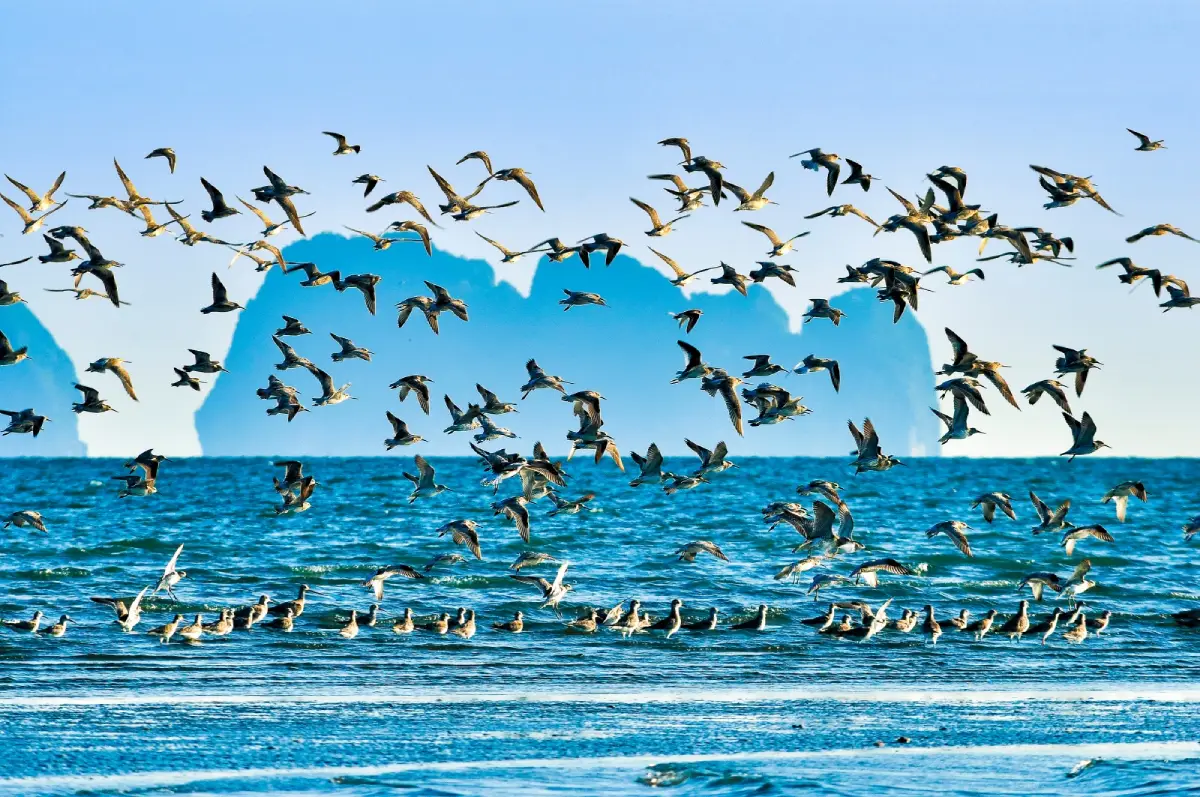
Laem Chu Hoi is closely connected with both conservation and birdwatching. During low tide, the sandy coastal area can connect toward Hat Tup, an important area for seabirds and shorebirds. November to December is especially notable because migratory birds arrive and feed along the coast. Birdwatching should be done quietly, with binoculars or a zoom lens, and from a distance that does not force birds to fly away from feeding areas.
Around Ko Libong are several places worth visiting, including Hat Tup, Laem Chu Hoi, Laem Thuat, Laem To Chai, Hat Thung Ya Kha, Hat Lang Khao, Laem Panyang, Saphan Hin, the freshwater well in the sea, and the island villages. Each area has a different character. Hat Tup and Laem Chu Hoi are strong for birdwatching and low-tide nature. Hat Thung Ya Kha and Hat Lang Khao offer quieter beach scenery. Laem Panyang and Saphan Hin are useful for photography. The villages are best for understanding fishing life, local food, and Muslim coastal culture.
Ko Libong includes several main villages, such as Ban Khok Sathon or Ban Phrao, Ban Batu Puteh, Ban Lang Khao, and Ban Sai Kaeo. Ban Phrao is important because it functions as the main passenger-pier area and entry point. Ban Batu Puteh is linked with the dugong tower and viewpoint. Ban Lang Khao is associated with beaches and western-side scenery. Ban Sai Kaeo is another coastal village with its own landscape and community history. Seeing Ko Libong properly means understanding it as a multi-village island rather than only a dugong-watching spot.
Local life is strongly connected with the sea. Important livelihoods include small-scale fishing, rubber tapping, agriculture, local transport, homestays, seafood restaurants, dried seafood, and community tourism. Local dishes and products include dried Spanish mackerel, southern sour curry with sea fish, squid in black ink, steamed blue crab, seaweed salad, fresh seafood, shrimp paste, dried shrimp, and local chili pastes. Eating at community restaurants or staying in local accommodations helps tourism income reach island residents directly.
Ko Libong suits travelers who prefer slow nature and community travel. A stay of one or two nights is better than a rushed day trip because it gives time for the dugong tower, Batu Puteh viewpoint, Hat Tup at low tide, birdwatching, local seafood, and village walks. A day trip is possible, but it may only show a small part of the island. The quieter morning and evening hours are often the best times to experience Ko Libong’s real atmosphere.
The best time to visit depends on the purpose of the trip. For easier boat travel and calmer seas, the hot season and post-monsoon travel period are generally better. Local climate information describes mid-February to May as a period when the sea is usually less affected by strong waves and wind, while the rainy season from mid-May to late October can bring heavier rain and rougher seas. For migratory birds, November and December are the most important months.
Travel to Ko Libong is mainly by boat. The common route is from Trang town or Kantang District to Hat Yao Pier at Ban Chao Mai, then by passenger boat or long-tail boat to Ban Phrao Pier on Ko Libong. The crossing usually takes about 20–30 minutes depending on the vessel and sea conditions. Older travel information also describes boat services from Chao Mai Pier to Ban Phrao and charter boats taking about 20 minutes. Current boat schedules and prices should be confirmed with accommodations or operators before travel because services can change by season, passenger numbers, and weather.
Getting There from Trang town can be done by private car, rental car, van, or accommodation transfer to Hat Yao Pier or Chao Mai Pier. After arriving at Ban Phrao Pier, travelers can move around the island by local sidecar, local vehicle, or rented motorcycle where appropriate. Roads connect the main villages and beaches, but some sections are narrow or can change with rain and season. Visitors unfamiliar with local roads should use local transport with a driver.
Ko Libong does not have fixed opening and closing hours like a mainland attraction. It is an island community and conservation area, so access depends mainly on boat schedules and sea conditions. Travelers should cross during daylight, avoid unnecessary night crossings, and check the weather forecast before traveling, especially during the rainy season. Anyone with a flight, train, or long-distance bus connection should allow extra time because boat services may be delayed, changed, or temporarily suspended.
Main travel costs include passenger boat or charter boat fare, transport on the island, meals, accommodation, and local activities such as island tours, dugong observation, birdwatching, and beach visits. There is no clearly confirmed separate island-entry ticket like a closed mainland attraction, but service prices should always be checked in advance. This is especially important for dugong-watching boats, sidecar tours, seafood meals, and homestay packages.
Dugong-watching boat trips should use operators who understand conservation. Boats should not chase dugongs, enter restricted seagrass areas, or approach animals aggressively. The presence of buoy-marked conservation zones near Batu Puteh and the dugong tower shows that this area requires careful management. Visitors should treat dugong watching as wildlife observation, not as a close-contact activity.
For birdwatching at Hat Tup and Laem Chu Hoi, low tide is important because mudflats and sand areas become exposed, attracting feeding birds. Visitors should bring water, a hat, beach footwear, binoculars, and a camera with a long lens. They should walk carefully, avoid stepping into fragile areas, avoid loud noise, and never force birds to fly. Good birdwatching depends on patience and respect for nature.
Ko Libong is also strong for photography. Important subjects include the dugong tower bridge, seagrass beds, fishing boats, village scenes, beaches, coastal forest, sunrise around Laem Chu Hoi, sunset on the western side, and everyday island life. When photographing in villages, travelers should respect privacy, ask permission for close portraits, and avoid disturbing homes, mosques, or local work.
Travelers interested in local history will find that Ko Libong has more than natural scenery. Community records describe early settlement by sea people and Muslim groups, the establishment of the island’s first school in 1939, later development of transport and utilities, and village expansion over time. Some areas are also associated with historical traces such as old wall remains, graves of former local rulers, canals, and ponds. These details give Ko Libong cultural depth in addition to its ecological value.
An overnight stay gives a much deeper experience than a quick visit. Morning is good for the dugong tower or viewpoint. Midday can be used for village walks, local meals, or beach visits. Evening is ideal for sunset, seafood, and the quiet island atmosphere. Staying locally also helps distribute tourism income to residents through accommodation, transport, food, and guided activities.
Accommodation on Ko Libong includes beachfront resorts, bungalows, homestays, and small community stays. Travelers should choose according to their purpose. Resorts are better for convenience, meals, and transfers. Homestays are better for community experience. Quieter beach areas are suitable for travelers seeking rest. Before booking, confirm boat transfer, meals, halal food, local transport, phone signal, and activity arrangements such as dugong observation or island touring.
Food is one of the best reasons to stay on the island. Many restaurants are family-run or attached to accommodations. Recommended local-style dishes include steamed blue crab, squid in black ink, southern seafood curry, sour curry with sea fish, fried or dried Spanish mackerel, shellfish, and Muslim coastal dishes. Seafood availability can depend on fishing conditions, so travelers with dietary needs should inform restaurants or accommodations in advance.
A practical two-day, one-night plan starts with a morning transfer from Trang town to Hat Yao Pier, then a boat to Ban Phrao Pier. After check-in, travelers can visit the dugong tower, Batu Puteh viewpoint, Laem Chu Hoi, or nearby beaches. Evening is best for seafood and a quiet island stay. The next morning can be used for another seagrass or village visit before returning to the mainland.
With three days and two nights, Ko Libong becomes more rewarding. Day one can be used for arrival and orientation. Day two can include dugong observation, birdwatching, Hat Tup, Laem Chu Hoi, Hat Thung Ya Kha, Laem Panyang, and local food. Day three can be slower, focusing on village life and the beach before returning. This pace suits travelers who want to understand Ko Libong as a living island, not only as a dugong checkpoint.
Important precautions include sea conditions, tides, boat safety, small island roads, and conservation rules. Wear a life jacket on boats, avoid standing on boat edges, avoid unknown swimming areas, avoid approaching rare marine animals, do not collect seagrass, shells, coral, or marine life, and do not leave waste in the sea. Drone use should not disturb wildlife or communities. A good visit should leave minimal impact.
Useful items include cash, personal medicine, seasickness tablets, a hat, sunglasses, reef-safe sunscreen, beach footwear, dry bag, binoculars for birds, power bank, flashlight, and modest clothing suitable for Muslim community areas. During the rainy season, bring rain protection and extra waterproof storage. Anyone hoping to see dugongs should allow time and flexibility because wildlife follows nature, not a tourist timetable.
In summary, Ko Libong is one of Trang’s most valuable islands for nature, community life, and conservation. Its strongest features are its position as the largest island in the Trang Sea, important seagrass beds, dugong habitat, Ko Libong Wildlife No Hunting Area, dugong-watching tower, Batu Puteh viewpoint, Hat Tup, Laem Chu Hoi, Laem To Chai, Hat Thung Ya Kha, Laem Panyang, seabirds, shorebirds, and local fishing culture. The boat ride from Hat Yao or Chao Mai to Ban Phrao is short, but the real value of the island comes from spending time slowly, respecting local life, and helping protect the ecosystem that allows dugongs, birds, communities, and the Trang Sea to remain connected.
| Name | Ko Libong |
| Location | Ko Libong Subdistrict, Kantang District, Trang Province 92110, Thailand |
| Address | Ko Libong Island Area, Ko Libong Subdistrict, Kantang District, Trang Province 92110; No Single Building Address For The Whole Island |
| Coordinates | Approximate Ko Libong Reference Coordinates: 7.24688, 99.39108 |
| Type Of Attraction | Community Island, Conservation Tourism Area, Seagrass Habitat, Dugong-Watching Area, And Shorebird Site |
| Island Area | About 25,000 Rai According To Main Tourism Sources; The Largest Island In The Trang Sea |
| Highlights | Seagrass Beds, Dugongs, Dugong-Watching Tower, Batu Puteh Viewpoint, Laem Chu Hoi, Hat Tup, Seabirds, Shorebirds, Local Fishing Life, And Muslim Coastal Community |
| Current Status | Active Community Island, Tourism Area, And Conservation Site In The Trang Sea, With Ongoing Dugong Monitoring And Resource Protection In 2026 |
| Open Days | Daily According To Passenger Boat Schedules, Local Boat Services, Sea Conditions, And Conservation Guidelines |
| Opening Hours | No Fixed Public Opening Hours Like A Mainland Attraction. Daytime Travel Is Recommended, Especially Morning To Early Evening According To Boat Schedules And Local Activities. |
| Main Costs | Passenger Boat Or Charter Boat Fare, Island Transport, Meals, Accommodation, And Local Activities Charged By Operators |
| Travel Information | Travel From Trang Town Or Kantang District To Hat Yao Pier At Ban Chao Mai Or Chao Mai Pier, Then Continue By Boat To Ban Phrao Pier On Ko Libong. The Crossing Takes About 20–30 Minutes Depending On Boat Type And Sea Conditions. |
| Recommended Activities | Dugong Observation From The Tower Or Viewpoint, Birdwatching, Village Walks, Beach Visits, Nature Photography, Seafood Dining, Homestay Stays, And Community-Based Travel |
| Facilities | Ban Phrao Pier, Local Sidecar Transport, Local Vehicles, Private Accommodations, Homestays, Community Restaurants, Shops, Dugong-Watching Tower, And Local Tour Services |
| Main Areas / Island Zones | Ban Phrao, Ban Batu Puteh, Ban Lang Khao, Ban Sai Kaeo, Laem Chu Hoi, Hat Tup, Laem To Chai, Hat Thung Ya Kha, Laem Panyang, Saphan Hin, Batu Puteh Viewpoint, And Dugong-Watching Tower |
| Caretaker / Related Authorities | Ko Libong Wildlife No Hunting Area, Ko Libong Subdistrict Administrative Organization, Department Of National Parks, Wildlife And Plant Conservation, Department Of Marine And Coastal Resources, And Local Communities |
| Main Contact Number | Ko Libong Wildlife No Hunting Area, Tel. 075-251-932 / Ko Libong Subdistrict Administrative Organization, Tel. 0-7529-0965 |
| Safety Notes | Check Sea Conditions And Boat Schedules Before Travel. Wear Life Jackets On Boats, Do Not Chase Dugongs, Do Not Disturb Birds, Do Not Collect Seagrass Or Marine Life, Take All Waste Back, And Respect The Muslim Island Community. |
| Nearby Tourist Attractions | 1. Aquatic Life Observation Tower / Dugong-Watching Tower, On The Island 2. Batu Puteh Viewpoint, About 1 Km From The Dugong-Watching Tower 3. Laem Chu Hoi, About 2 Km From The Dugong-Watching Tower 4. Hat Tup, About 3 Km From The Dugong-Watching Tower At Low Tide 5. Laem To Chai, About 5 Km From Ban Phrao Pier 6. Hat Thung Ya Kha / Ban Lang Khao, About 7 Km From Ban Phrao Pier 7. Laem Panyang, About 8 Km From Ban Phrao Pier 8. Saphan Hin Ko Libong, About 8 Km From Ban Phrao Pier 9. Hat Yao Pier At Ban Chao Mai, About 6 Km By Sea From Ban Phrao Pier |
| Nearby Restaurants | 1. Jahnai Seafood Ko Libong, About 1 Km From The Dugong-Watching Tower, Tel. 099-309-5757 2. Andalay Beach Resort Koh Libong Restaurant, About 8 Km From Ban Phrao Pier, Tel. 095-085-8899 3. Libong Beach Resort Restaurant, About 7 Km From Ban Phrao Pier, Tel. 099-114-9006 4. Le Dugong Libong Resort Restaurant, About 8 Km From Ban Phrao Pier, Tel. 087-475-8310 5. FC Libong Restaurant, On The Island 6. Rimlay Seafood, On The Island 7. Kohlibong Restaurant, On The Island |
| Nearby Accommodations | 1. Andalay Beach Resort Koh Libong, About 8 Km From Ban Phrao Pier, Tel. 095-085-8899 2. Libong Beach Resort, About 7 Km From Ban Phrao Pier, Tel. 099-114-9006 3. Le Dugong Libong Resort, About 8 Km From Ban Phrao Pier, Tel. 087-475-8310 4. Andaman Homestay Kohlibong, On The Island, Tel. 091-821-1509 5. Slow Life Homestay Koh Libong, On The Island 6. Libong Anda View, On The Island 7. Koh Libong Beach House Homestay, On The Island |
Frequently Asked Questions (FAQ)
Q: Where Is Ko Libong Located?
A: Ko Libong is located in Ko Libong Subdistrict, Kantang District, Trang Province. It is the largest island in the Trang Sea and an important area for seagrass beds, dugongs, shorebirds, seabirds, and local fishing communities.
Q: What Is Ko Libong Known For?
A: Ko Libong is known for its seagrass beds, dugong habitat, dugong-watching tower, Batu Puteh viewpoint, Laem Chu Hoi, Hat Tup, migratory birds, quiet beaches, seafood, and Muslim coastal community life.
Q: Is Ko Libong Still Open To Visitors?
A: Yes. Ko Libong remains an active community island, tourism destination, and conservation area. Access depends on boat schedules, sea conditions, and local conservation guidelines.
Q: Can Visitors See Dugongs At Ko Libong?
A: There is a chance to see dugongs, especially around seagrass areas near the dugong-watching tower or viewpoints during suitable conditions. However, dugongs are wild animals, so sightings depend on tide, wind, time, and the animals’ behavior. Visitors must not chase or disturb them.
Q: When Is The Best Time For Birdwatching On Ko Libong?
A: November to December is especially good for migratory seabirds and shorebirds. Hat Tup and Laem Chu Hoi are key areas, especially during low tide.
Q: How Do Travelers Get To Ko Libong?
A: Travelers go from Trang town or Kantang District to Hat Yao Pier at Ban Chao Mai or Chao Mai Pier, then take a boat to Ban Phrao Pier on Ko Libong. The crossing takes about 20–30 minutes depending on the boat and sea conditions.
Q: Is Ko Libong Better For A Day Trip Or Overnight Stay?
A: A day trip is possible, but staying one or two nights gives a better experience because visitors have more time for dugong observation, birdwatching, village walks, seafood, and the quieter morning and evening island atmosphere.
Q: How Should Visitors Behave On Ko Libong?
A: Visitors should wear life jackets on boats, avoid chasing dugongs, avoid disturbing birds, avoid collecting seagrass or marine life, take all waste back, use local services respectfully, and respect the Muslim community on the island.
 Category: ●Nature and Wildlife
 Group: ●Islands
Last Update : 2 MonthAgo
 Last Update : 2 MonthAgo

 Click to Access the Navigation Map GPS

 Art, Culture and Heritage
 Historical Sites and Monuments(1)
 Landmarks and Memorials(2)
 Art, Craft Centres, Tradition(3)
 Museums(2)
 Places of Worship
 Temple(15)
 Mosque(1)
 Other Sacred Sites(7)
 Research and Development
 Royal Project(1)
 Suburban Living
 Village, Community(5)
 National Parks and Marine Reserves(6)
 Mountain (Doi)(8)
 Dam, Reservoir, Lake(1)
 Waterfalls(20)
 Hot Springs(1)
 Caves(11)
 Bays and Beaches(11)
Islands(12)
 Other natural attractions(3)
 Entertainment and Agricultural
 Farms, Parks and Ecotourism(8)
 Outdoor and Adventure Activities(1)
 Travel Articles, Recipes
 Travel Review, Food Review(1)
 Southern Food Menu, Southern Food Recipes(1)


