
lovethailand home >South Travel Attractions >Trang Travel Attractions >Kan Trang >Kan Trang > Kantang Railway Station
TL;DR: Kantang Railway Station is located at Kantang Subdistrict, Kantang District, Trang Province, open Daily, hours Station Building Open Daily; Station Museum 09.00 – 16.30; Kantang Municipal.

Kantang Railway Station
Open Days: Daily
Opening Hours: Station Building Open Daily; Station Museum 09.00 – 16.30; Kantang Municipal Railway Library 08.00 – 20.00
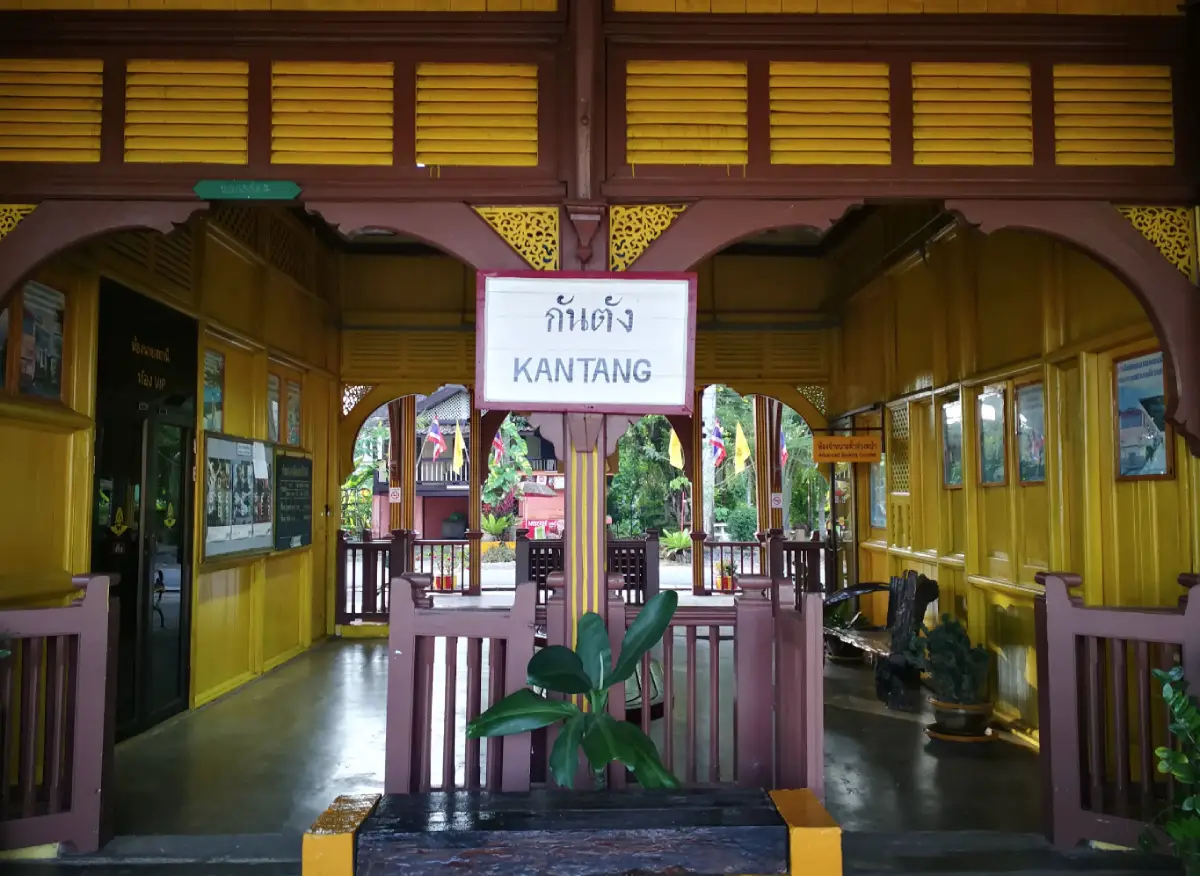
Kantang Railway Station in Trang Province is the terminus of Thailand’s southern railway line on the Andaman side. Its mustard-yellow and brown wooden building, built in the architectural style of the reign of King Rama VI, is more than a photogenic landmark. It is a living historical site that reflects Kantang’s former role as a port town, a trading gateway, and an important transport hub on Thailand’s western coast.
Kantang Railway Station is located on Na Khai Road in Kantang Subdistrict, Kantang District, Trang Province. It is one of the most distinctive railway stations in southern Thailand and the final stop of the southern railway line on the Andaman coast. For many travelers, the first memorable image of the station is its elegant wooden façade painted in mustard yellow with brown trim, the classic station sign, and the calm platform atmosphere that feels very different from larger urban railway stations.
The value of Kantang Railway Station lies not only in its age or architectural charm, but also in its historical role. Kantang was once an important port town connected with regional maritime trade. Goods, passengers, and supplies moved through Kantang between Thailand and neighboring trading destinations such as Singapore, Malaysia, and Indonesia. The railway station became a key link between the port, the western coast, and the inland railway network, making Kantang an important gateway for Trang and the Andaman side of southern Thailand.
The station officially opened on 1 April 1913 during the reign of King Rama VI. Its development was connected to the wider expansion of the southern railway line from Phetchaburi toward the Malay Peninsula, a project that began in the late reign of King Rama V and continued into the reign of King Rama VI. The Kantang–Thung Song branch line was especially important because railway materials, steel rails, machinery, and rolling-stock components were brought in by ship through Kantang Port before being transported onward by rail. This made Kantang Railway Station a vital part of Thailand’s early modern transport infrastructure.
The station building is a single-storey wooden structure with a hipped roof. Its mustard-yellow and brown color scheme has become the station’s visual identity. The building consists of the main station structure and the platform area. At the front, a projecting wooden porch welcomes visitors, while carved wooden details decorate the posts and architectural joints. Old-style wooden doors, ventilation panels, and the vertical timber walls preserve the atmosphere of early twentieth-century railway architecture.
Inside and around the station, visitors can still appreciate the proportions of the original timber work. The open hall, vintage-style doors, wooden railings, and airy ventilation details give the building a warm and graceful character. Behind the main structure is the platform with a separate gabled roof. The supporting posts and carved wooden brackets blend naturally with the front section of the building, making the entire station feel coherent, modest, and carefully crafted.
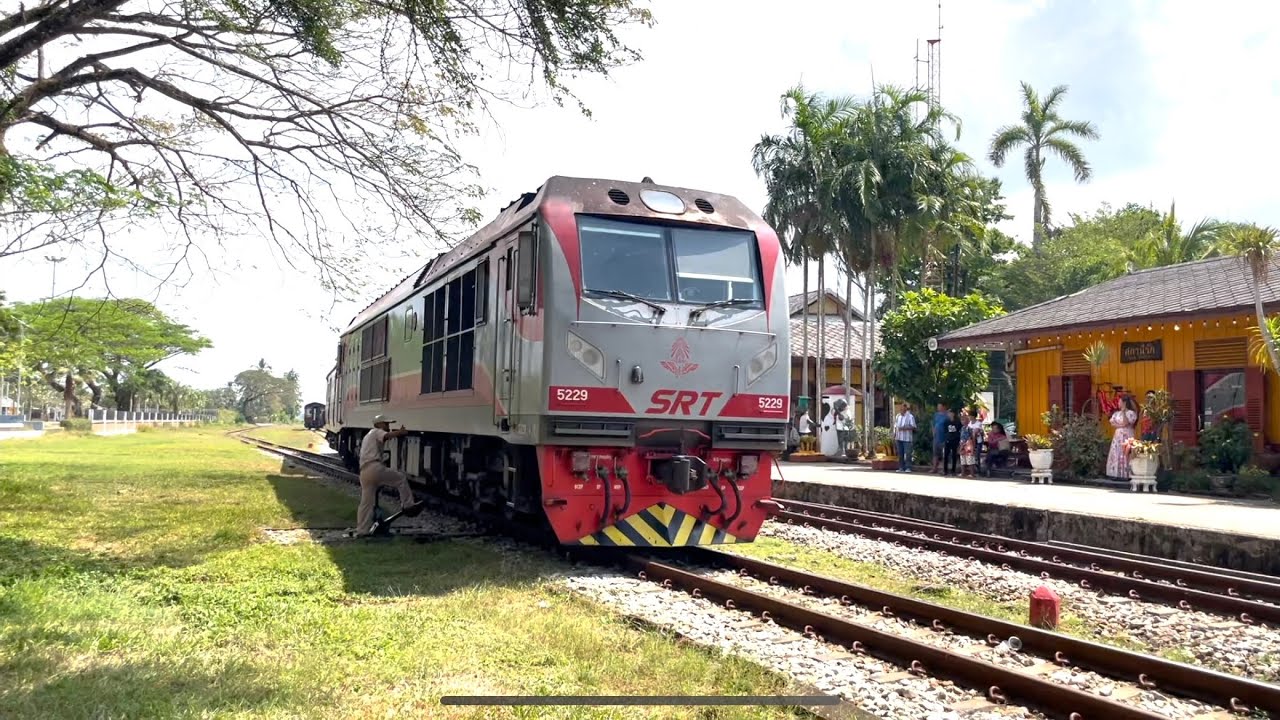
Kantang Railway Station was registered as a historic site by the Fine Arts Department in 1996. That heritage status did not turn the station into a static museum. The station remains in use as a functioning railway station, with railway staff, passenger facilities, a platform, and train services. This makes Kantang Railway Station a rare living heritage site: it is both an active transport facility and a preserved architectural landmark.
The station’s strongest appeal comes from the way past and present exist together. Visitors can walk through a historic railway building that still retains its original character, see traces of railway operations, and experience the quiet mood of a terminus station. Unlike a large transit hub, Kantang Railway Station invites travelers to slow down, observe the timber details, take photographs, and understand how transport shaped the growth of this coastal town.
In the past, a rail extension of about 500 meters connected the station to Kantang Pier. This link supported the movement of goods between rail and sea transport. Although that section of track no longer remains, its story explains why the station was once so important to the economy of Trang and the wider Andaman coast. The station was not simply the end of a railway line; it was part of a larger system connecting trains, ships, traders, officials, and local communities.
Within the station area, visitors can find museum-style displays that introduce the history of Kantang Railway Station and railway operations in earlier times. Objects such as railway tools, the stationmaster’s desk, ticketing elements, timetables, and other working materials help visitors understand how the station functioned in daily life. These exhibits turn a short sightseeing stop into a meaningful cultural visit.
Another notable feature is the Kantang Municipal Railway Library, which is connected with the station environment and uses railway heritage as a learning theme. A former railway carriage has been adapted into a reading and learning space for children, students, and visitors. This gives the station a contemporary community role while preserving its historical character.
The wider station compound also contains elements that deepen its historical value, including railway staff houses, a reception house, an old well, and former railway-related structures. These surrounding features show that a terminal station once required more than a single platform and building. It needed accommodation, maintenance areas, water supply, storage, and operational support. Seeing the station as a complete historical landscape helps travelers appreciate its importance more fully.
For photography lovers, Kantang Railway Station is one of Trang’s most memorable photo spots. The warm mustard-yellow timber façade contrasts beautifully with brown wooden trim and tropical surroundings. Morning and late-afternoon light create especially good conditions for photographing the front porch, the station sign, the carved wooden posts, the platform, and the side angles of the building. Simple clothing in white, cream, brown, or earth tones fits well with the station’s vintage atmosphere.
The station is also remembered by affectionate nicknames such as “Love Station” and “The End-of-the-Line Love Station.” These names match the gentle mood of the place. Kantang Railway Station feels calm, nostalgic, and intimate, giving visitors a sense of arrival rather than transit. Many travelers come for photographs but leave with a deeper impression of Kantang’s identity as an old port town connected to rail, river, and sea.
In a broader cultural route, Kantang Railway Station connects naturally with Kantang Old Town, local street art, Phraya Ratsadanupradit Mahison Phakdi Museum, Kantang Historical Study Center, and the first rubber tree of Thailand. These places together reveal several layers of Kantang’s history: railway heritage, port-town trade, local administration, riverfront life, and the beginning of rubber cultivation as a major economic crop in southern Thailand.
A visit to Kantang Railway Station is ideal for travelers interested in history, architecture, railway culture, and slow travel. A quick visit may take 30 minutes to 1 hour, which is enough for photos and a short walk around the station. Travelers who want to understand Kantang more deeply should allow at least half a day and combine the station with nearby museums, old-town streets, local cafés, and heritage sites.
Getting There is straightforward by train, private car, local van, or local transport. Travelers coming from Bangkok should check the current train schedule through the State Railway of Thailand before departure. From Trang city, the drive to Kantang follows the Trang–Kantang route for about 25 km. Once in Kantang town, head toward Na Khai Road. The station is located within the town area and is convenient for visiting nearby attractions. Travelers using public transport can take a Trang–Kantang van and continue by local transport or on foot depending on the drop-off point.
The best times to visit are morning and late afternoon. Morning visits are good for quieter photos and pairing the trip with breakfast or a café stop in Kantang. Late afternoon offers warmer light on the wooden building and platform. Visitors who want to see the station museum should plan around 09.00 – 16.30, while the Kantang Municipal Railway Library operates from 08.00 – 20.00.
Because Kantang Railway Station remains an active railway facility, visitors should move respectfully through the area. Do not enter restricted working zones, climb onto the tracks, stand in unsafe positions for photographs, or interfere with railway operations. Public areas of the station can be enjoyed for sightseeing and photography, but visitors should always pay attention to train movements, announcements, and station staff guidance.
As a travel destination, Kantang Railway Station offers far more than a quick photo stop. It helps visitors understand how railway transport, river routes, sea trade, and local history shaped the development of Kantang. The beauty of the mustard-yellow wooden building draws people in, but the story of the station as the Andaman-side railway terminus is what gives the place lasting meaning.
A well-paced one-day Kantang itinerary can begin at Kantang Railway Station in the morning, followed by the railway displays and nearby cafés. From there, travelers can continue to Kantang street art, Phraya Ratsadanupradit Mahison Phakdi Museum, Kantang Historical Study Center, and the first rubber tree of Thailand. This route gives a clear and rewarding overview of Kantang’s transport history, port-town heritage, local leadership, and economic transformation.
Kantang Railway Station deserves a place on any cultural travel plan in Trang Province. It is suitable for travelers who appreciate old railway stations, wooden architecture, local history, and meaningful heritage sites. The station’s color and charm make it photogenic, but its historical role as the end of the Andaman railway line makes it one of Kantang’s most important cultural landmarks.
| Name | Kantang Railway Station |
| Thai Name | สถานีรถไฟกันตัง |
| Location | Kantang Subdistrict, Kantang District, Trang Province |
| Address | Na Khai Road, Kantang Subdistrict, Kantang District, Trang 92110, Thailand |
| Coordinates | 7.410827, 99.514648 |
| Highlights | Final station of the southern railway line on the Andaman side, famous for its mustard-yellow and brown wooden station building |
| History | Built in the early Rattanakosin period during the reign of King Rama VI, officially opened on 1 April 1913, and registered as a historic site in 1996 |
| Key Evidence | Original wooden station building, platform, station museum, railway tools, stationmaster’s desk, staff houses, old well, and former railway operational areas |
| Distinctive Features | Single-storey wooden building with a hipped roof, carved wooden posts, old-style doors, ventilation panels, and a separate gabled platform roof |
| Travel Information | Accessible by train, private car from Trang city via the Trang–Kantang route for about 25 km, or by Trang–Kantang local van followed by local transport |
| Current Status | Still operating as an active railway station and open for visitors to see the historic station building |
| Open Days | Daily |
| Opening Hours | Station Building Open Daily; Station Museum 09.00 – 16.30; Kantang Municipal Railway Library 08.00 – 20.00 |
| Fees | Kantang Municipal Railway Library Has Free Admission |
| Facilities | Ticket counter, waiting seats, toilets, drop-off area, motorcycle parking, accessible parking, ramp access, lighting, CCTV, and passenger information display |
| Main Areas / Zones | Station building, platform, station museum, ticketing area, Kantang Municipal Railway Library, front garden, model train, railway staff houses, old well, and former locomotive shed |
| Caretaker | State Railway of Thailand |
| Main Contact Number | Kantang Railway Station Tel. 075-251-015; State Railway of Thailand Call Center Tel. 1690 |
| Official Website / Official Page | State Railway of Thailand and Kantang Municipality Website |
| Nearby Tourist Attractions | 1. Kantang Municipal Railway Library, about 0 km 2. Kantang Street Art, about 0.5 km 3. Phraya Ratsadanupradit Mahison Phakdi Museum, about 1 km 4. Kantang Historical Study Center, about 1 km 5. First Rubber Tree Of Thailand, about 3 km 6. Khuan Tamnak Chan Public Park, about 2 km |
| Nearby Restaurants | 1. Sathani Rak Kantang Station, about 0 km, Tel. 081-979-6806 2. TROPICAL CAFE Trang, about 0.3 km, Tel. 087-627-2174 3. Ling Chen Cafe, about 0.4 km 4. Bang Den Dim Sum Kantang, about 0.5 km, Tel. 084-723-7543 5. Khao Tom Ko Sut Kantang, about 0.7 km, Tel. 087-622-1494, 084-735-9620, 081-272-6308 6. TonYang Cafe At Kantang, about 3 km, Tel. 089-723-1733 |
| Nearby Accommodations | 1. Kantang Park Hotel, about 0.4 km, Tel. 081-752-6312 2. Sirichai Design Hotel, about 0.4 km, Tel. 083-812-4192 3. @Kantang Loftel, about 0.7 km, Tel. 062-080-3555 4. Paprao Resort, about 1 km 5. Thana Inn Hotel & Garden, about 1.5 km |
Frequently Asked Questions (FAQ)
Q: Where is Kantang Railway Station located?
A: Kantang Railway Station is located on Na Khai Road in Kantang Subdistrict, Kantang District, Trang Province 92110, Thailand.
Q: Is Kantang Railway Station still operating?
A: Yes. Kantang Railway Station still operates as an active railway station and also welcomes visitors who want to see its historic wooden building.
Q: Why is Kantang Railway Station famous?
A: It is famous as the final railway station on the Andaman side of Thailand’s southern line and for its beautifully preserved mustard-yellow and brown wooden station building from the King Rama VI era.
Q: What are the opening hours for visitors?
A: The station building can be visited daily. The station museum is open from 09.00 to 16.30, and the Kantang Municipal Railway Library is open from 08.00 to 20.00.
Q: How can travelers get to Kantang Railway Station from Trang city?
A: Travelers can drive from Trang city via the Trang–Kantang route for about 25 km, take a Trang–Kantang local van, or travel by train after checking the latest schedule with the State Railway of Thailand.
Q: Is there an admission fee?
A: The Kantang Municipal Railway Library has free admission. Visitors should follow the rules of the active railway station while exploring the area.
Q: What nearby attractions can be combined with a visit?
A: Good nearby stops include Kantang Street Art, Phraya Ratsadanupradit Mahison Phakdi Museum, Kantang Historical Study Center, the First Rubber Tree of Thailand, and Khuan Tamnak Chan Public Park.
Q: Why is Kantang Railway Station historically important?
A: The station once connected the railway with Kantang Port, helping move goods and passengers between Trang, the Andaman coast, and overseas trading routes in the region.
 Category: ●Art, Culture and Heritage
 Group: ●Historical Sites and Monuments
Last Update : 2 MonthAgo
 Last Update : 2 MonthAgo
 Click to Access the Navigation Map GPS
Kantang Railway Station Map
Recommend
 Historical Sites and Monuments(1)
 Landmarks and Memorials(2)
 Art, Craft Centres, Tradition(3)
 Museums(2)
 Places of Worship
 Temple(15)
 Mosque(1)
 Other Sacred Sites(7)
 Research and Development
 Royal Project(1)
 Suburban Living
 Village, Community(5)
 Nature and Wildlife
 National Parks and Marine Reserves(6)
 Mountain (Doi)(8)
 Dam, Reservoir, Lake(1)
 Waterfalls(20)
 Hot Springs(1)
 Caves(11)
 Bays and Beaches(11)
 Islands(12)
 Other natural attractions(3)
 Entertainment and Agricultural
 Farms, Parks and Ecotourism(8)
 Outdoor and Adventure Activities(1)
 Travel Articles, Recipes
 Travel Review, Food Review(1)
 Southern Food Menu, Southern Food Recipes(1)


